10 Modern Pendant Ceiling Lamp Ideas for Cozy Home Decor | Stylish & Elegant Lighting Inspiration
Picture this. It’s 8pm, you’ve just turned off the overhead lights because they felt too harsh, and now you’re sitting in a room lit by one lamp on the far side, squinting at your phone for actual light. That’s usually a sign the room is missing a proper pendant, not just more lamps. A modern pendant ceiling lamp can do what a flat overhead fixture can’t. It brings warm, focused light down into the space where people actually sit, read, and gather. This article covers 10 pendant styles built around cozy home decor, along with the bulb and placement details that make the difference between a fixture that just hangs there and one that actually shapes how a room feels.
1. Why Pendant Lighting Sets the Mood a Ceiling Fixture Alone Can’t

A standard flush mount or recessed light shines straight down and lights the whole room evenly. That’s useful for cleaning or working, but it flattens a room’s atmosphere. Pendants hang lower, closer to eye level, and cast light in a smaller, more focused pool.
That pool of light is what creates coziness. It draws attention to a specific spot, like a reading chair or a dining table, and leaves the edges of the room slightly dimmer. Our eyes read that contrast as warmth and intimacy, not as insufficient lighting.
A room lit entirely by one bright overhead source almost never feels cozy, no matter how nice the furniture is.
2. Amber and Smoked Glass Pendants for a Warm Amber Glow

Glass pendants in amber, smoked gray, or honey tones filter light before it even reaches the room, giving off a naturally warm cast even with a fairly neutral bulb. This makes them a low effort way to add warmth, since the glass itself is doing some of the work.
Where This Style Fits Best
These pendants tend to look best in living rooms, reading corners, or over a small kitchen table, somewhere the light is meant to feel intimate rather than bright and even. A single amber globe pendant, roughly 8 to 12 inches in diameter, is often enough to anchor a small seating area on its own.
3. Woven Rattan and Wicker Pendants for Natural Texture
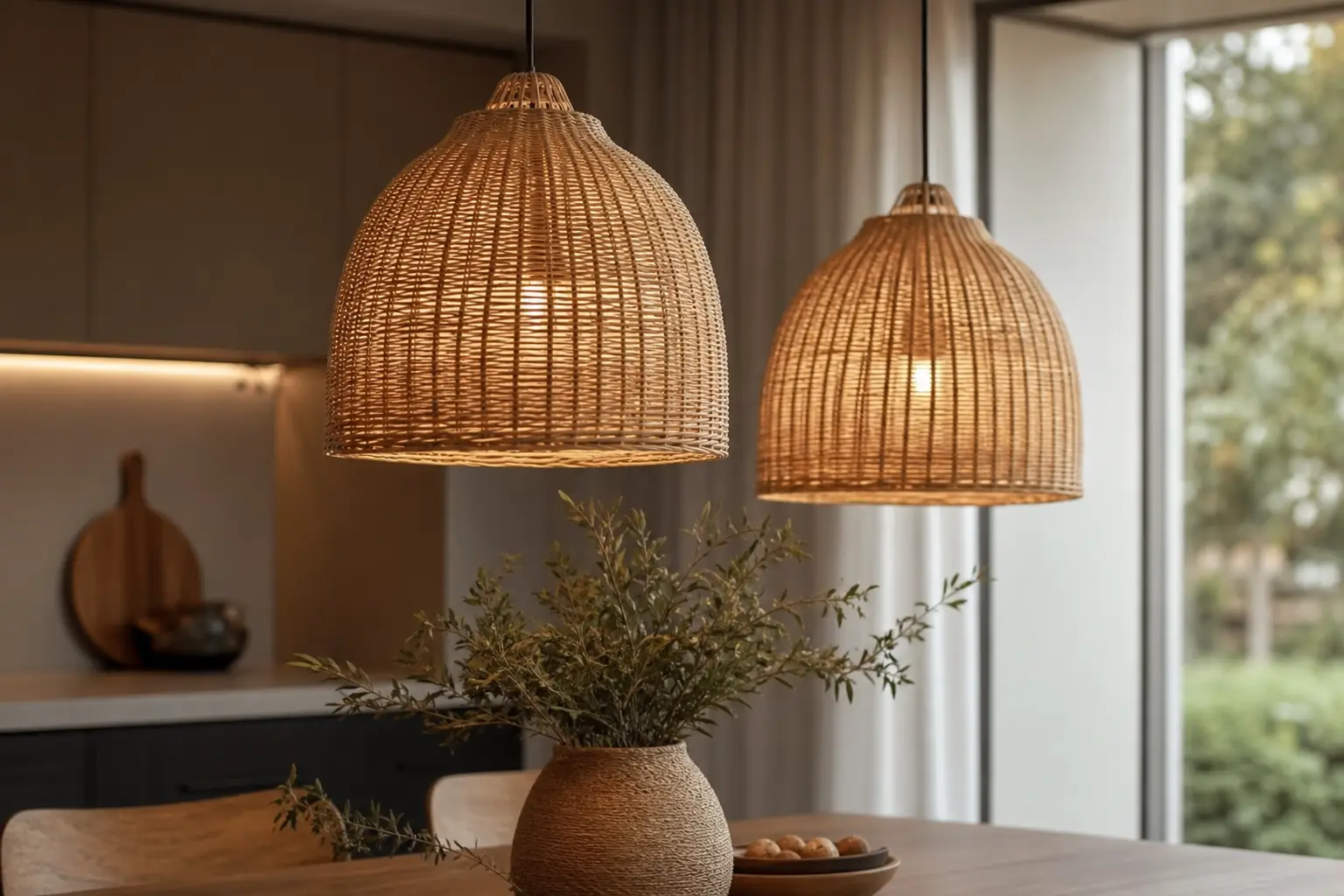
Rattan and wicker pendants let light pass through small gaps in the weave, which creates a dappled, textured pattern on the ceiling and walls rather than one flat beam. That texture alone adds a sense of warmth before you even factor in the bulb color.
These pendants work particularly well in rooms with other natural materials already present, like a wood dining table or woven baskets used for storage. Because the material is lightweight, rattan pendants also suit lower ceilings better than heavier metal or glass fixtures might.
4. Fabric Drum Pendants for a Soft, Diffused Light
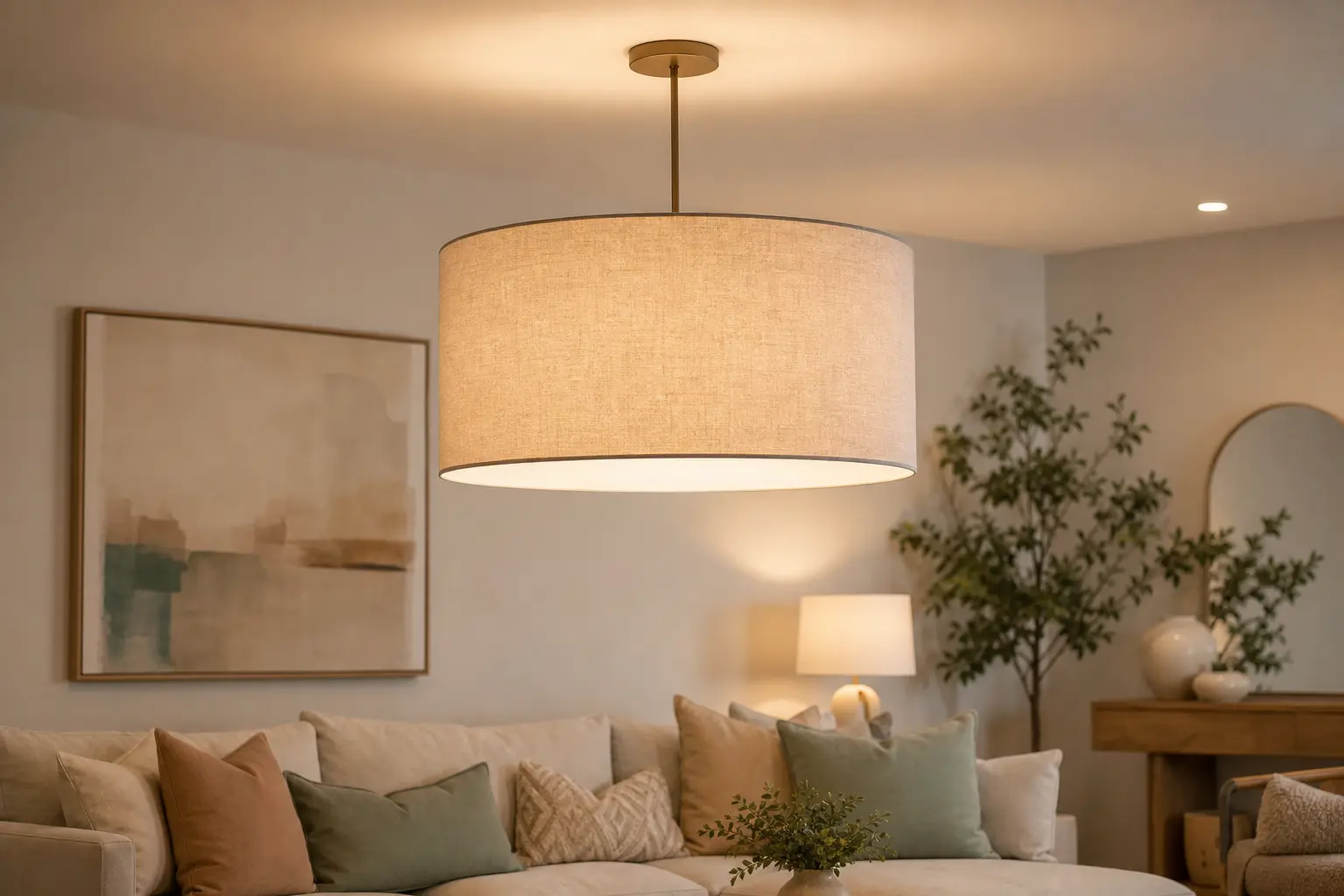
A fabric shade wrapped around the bulb softens and spreads the light in a way that hard materials like metal or glass can’t fully replicate. Linen or cotton drum pendants in cream, oatmeal, or soft gray tones are common choices for bedrooms and living rooms where the goal is gentle, even light rather than a sharp focal glow.
Quick tip: avoid dark colored fabric shades if you want maximum brightness, since darker fabric absorbs more light than it lets through.
5. Paper Lantern Style Pendants for a Relaxed, Airy Feel
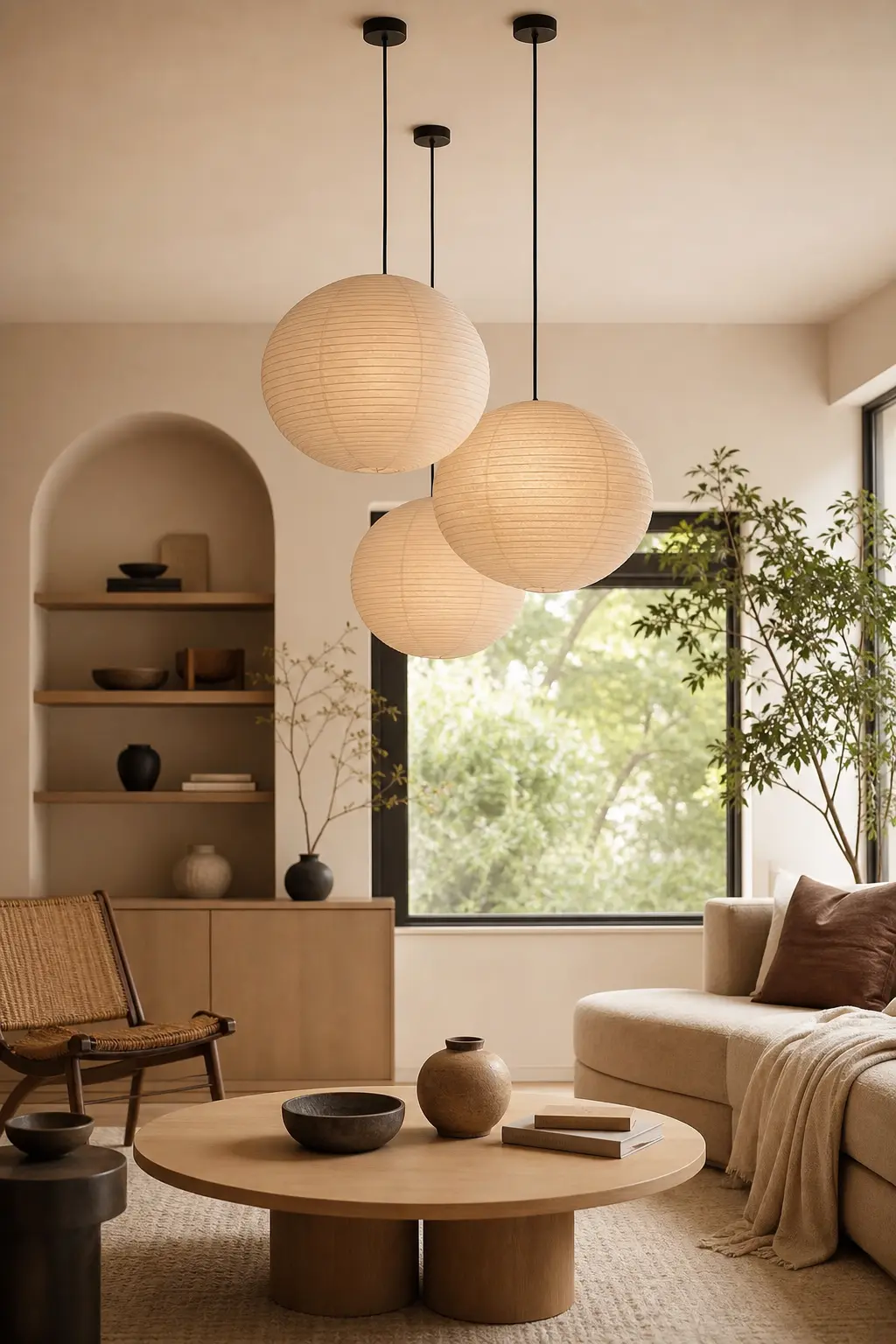
Round paper or rice paper style pendants give off a soft, evenly diffused glow and tend to feel casual rather than formal. They’re a good fit for a reading nook, a home office corner, or a bedroom where you want ambient light without a heavy looking fixture overhead.
Because paper shades are lightweight, they’re also one of the more affordable pendant options, generally landing in a lower price range than glass or metal alternatives of a similar size.
6. Multi Pendant Clusters for Reading Nooks and Corners
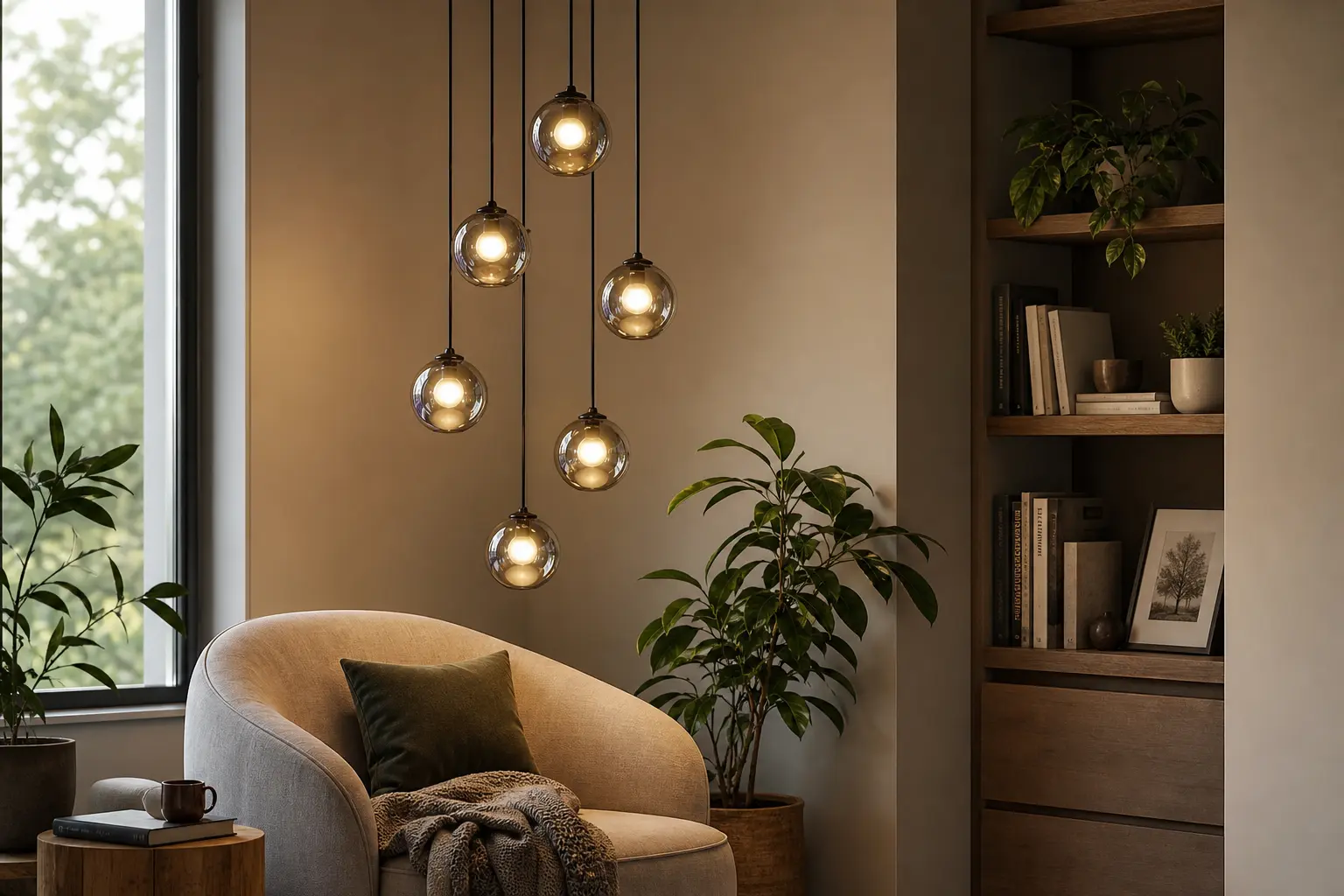
Instead of one large pendant, hanging two or three smaller pendants of varying heights over a reading chair or window seat adds visual interest and gives you more control over exactly where the light lands. This works especially well in a corner that feels a little dead or underused, since the cluster gives it a clear sense of purpose.
Getting the Cluster Right
Keep the pendants close enough together that they read as one grouping, generally within 6 to 10 inches of each other, rather than spread out and looking like separate, unrelated fixtures.
7. Matte Black Dome Pendants for a Grounded Modern Look
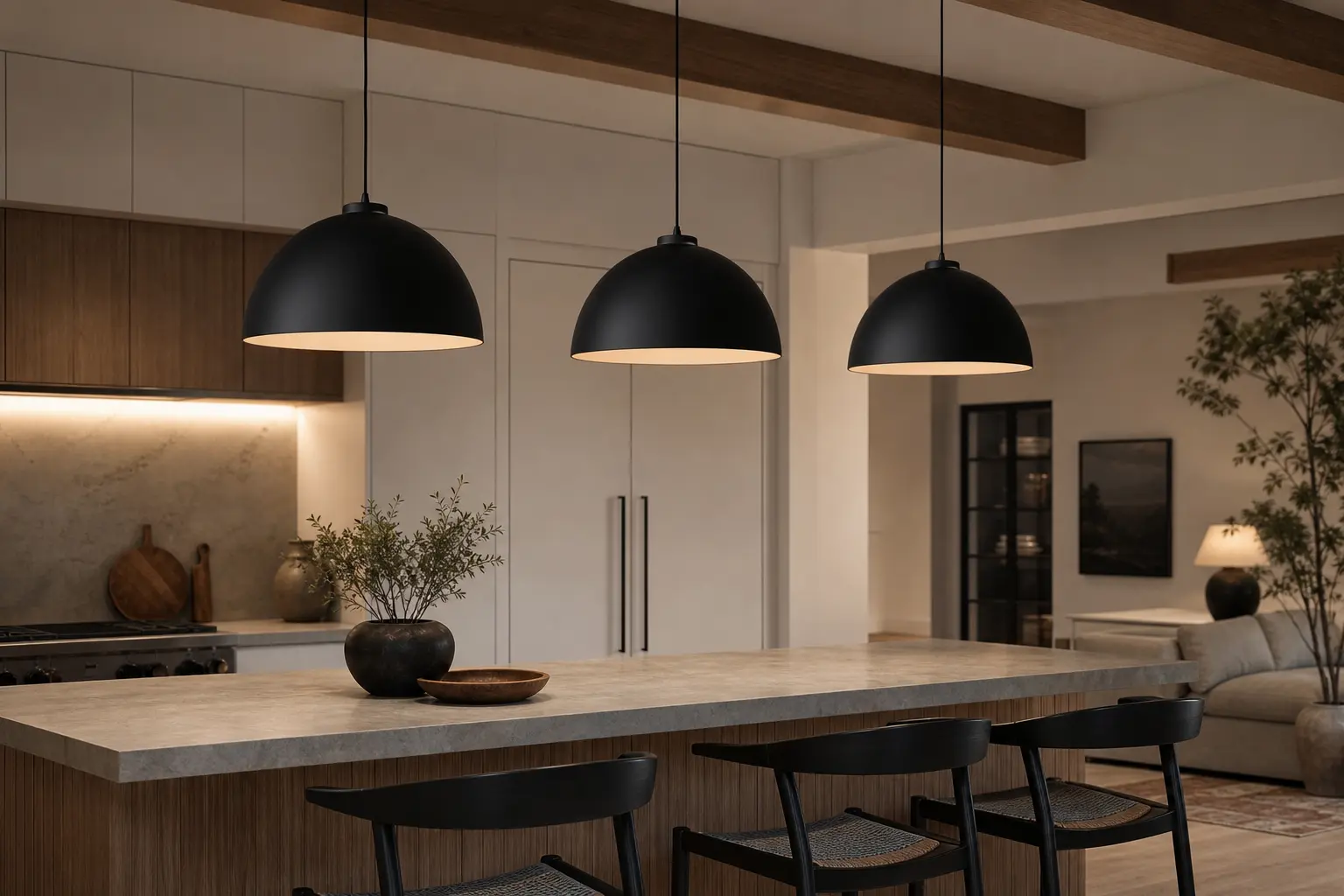
A simple matte black dome pendant is one of the most versatile choices on this list, since it reads as modern without pulling focus the way a bold sputnik or oversized glass fixture might. The dark finish also grounds a room, especially one with a lot of light colored walls, furniture, or flooring.
This style pairs well with warm wood tones and works in nearly any room type, from a kitchen nook to a home office to a bedside reading spot.
8. Choosing the Right Bulb Temperature for Coziness

The bulb matters just as much as the fixture itself. Bulbs are typically labeled by color temperature in Kelvin, and for cozy spaces you generally want to stay in the 2200K to 2700K range, sometimes labeled “warm white” or “soft white” on the packaging. Anything above 3000K starts to shift toward a cooler, more clinical looking light, which works against the warm effect a pendant is meant to create.
Dimmable bulbs are worth the small extra cost here too, since they let you shift the room’s mood between a brighter, more functional light and a dimmer evening glow using the same fixture.
9. Getting Pendant Placement Right in a Living Space
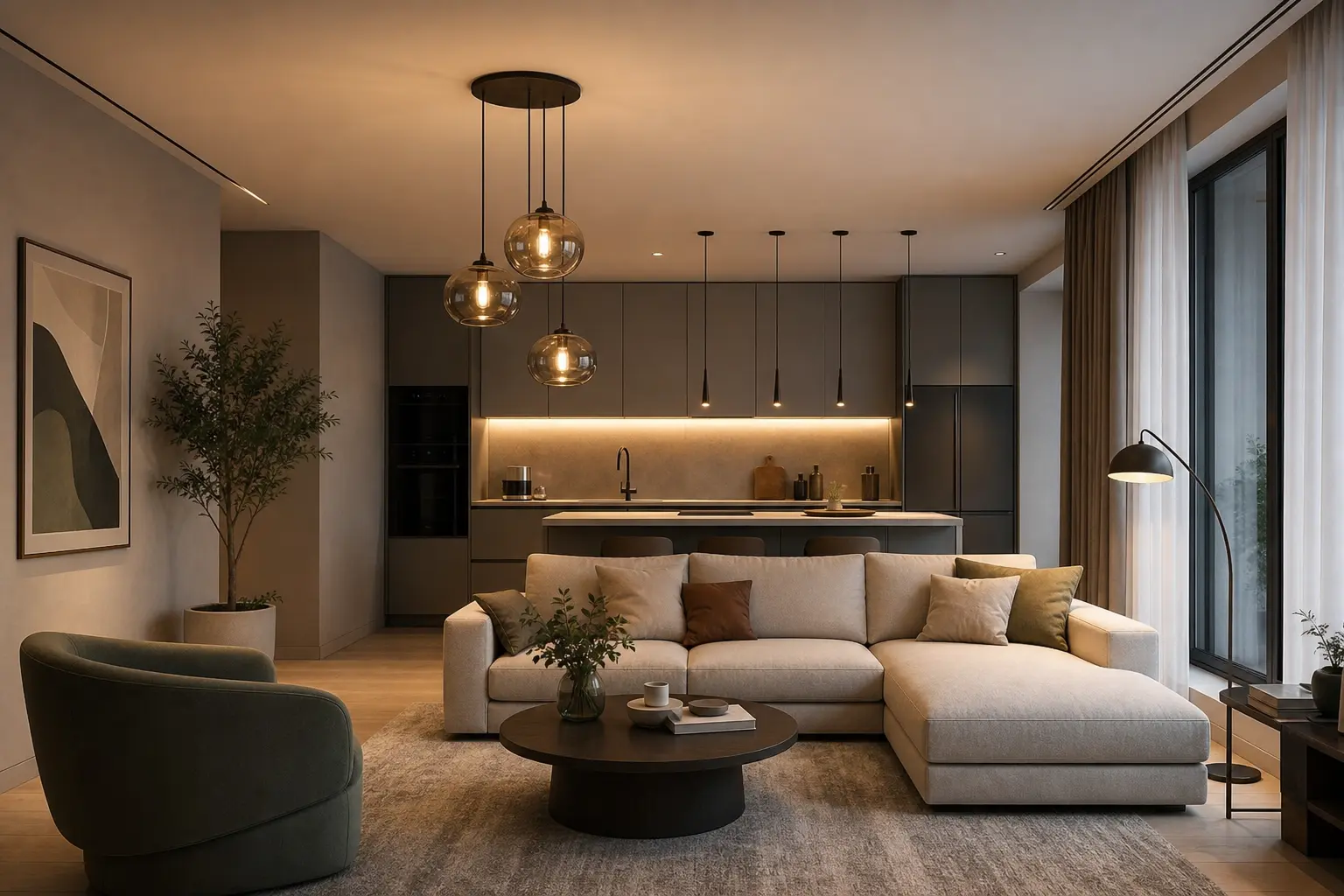
Over a seating area, a pendant generally works best hung so the bottom of the shade sits somewhere between 60 and 66 inches from the floor, low enough to feel intimate but high enough that no one bumps into it while walking through. Over a side table or reading chair specifically, you can hang it slightly lower, since foot traffic in that spot is usually minimal.
If you’re adding a pendant somewhere there wasn’t one before, and it requires new wiring, that installation should be handled by a licensed electrician rather than as a DIY project.
10. Layering Pendants With Other Light Sources
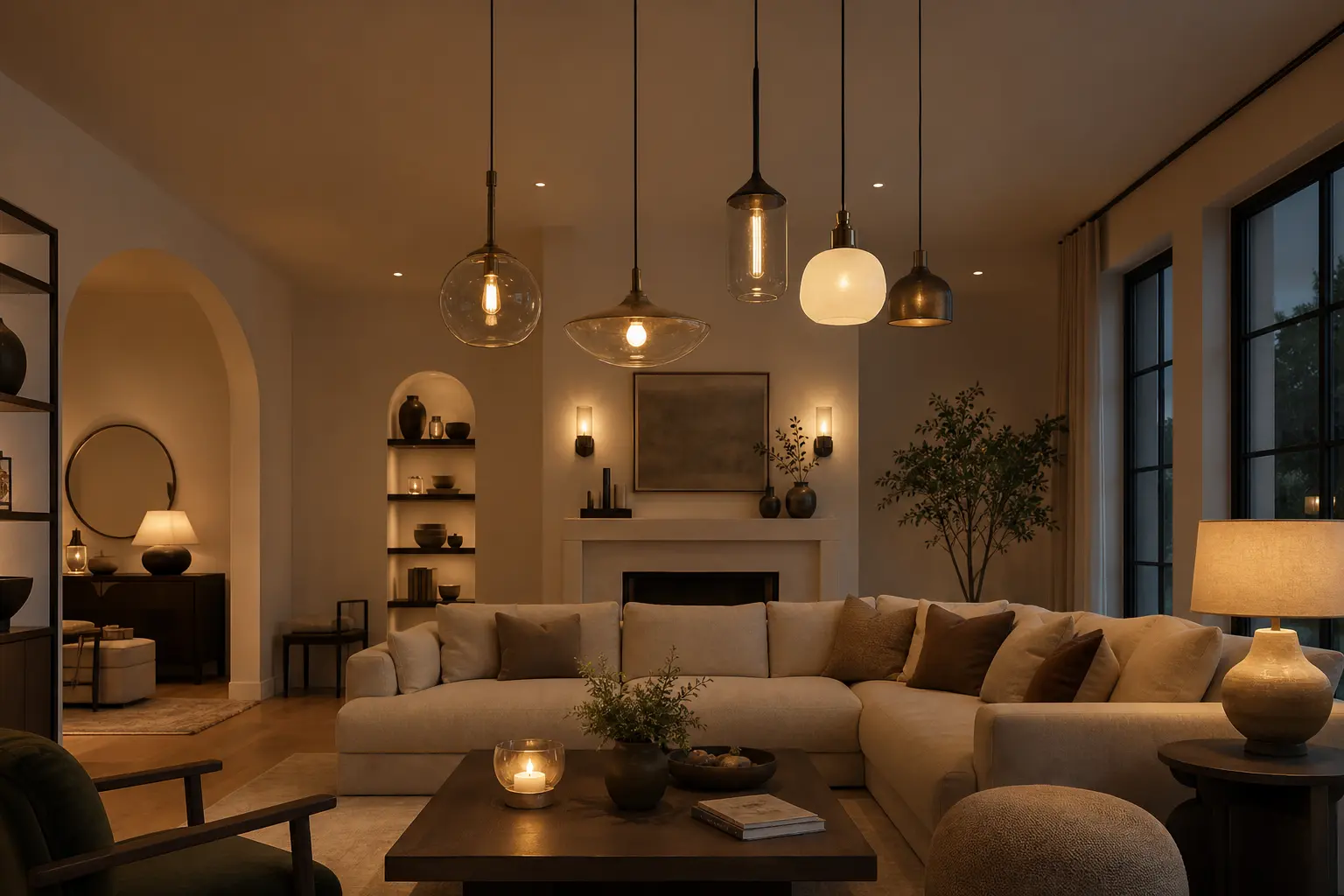
A single pendant almost never needs to do all the lighting work in a room by itself. Pairing it with a floor lamp in another corner, or a couple of small table lamps, creates layered light at different heights, which reads as far cozier than one bright source trying to fill the whole space.
Bold takeaway: aim for at least two or three separate light sources in any room meant to feel cozy, rather than relying on one pendant alone.
Mistakes to Avoid
- Hanging a pendant too high, so it loses the intimate, focused glow that makes it feel cozy
- Choosing a cool white bulb, above 3000K, in a fixture meant to create warmth
- Using one giant pendant to try to light an entire large room evenly, instead of adding a second light source
- Picking a fixture that’s visually too heavy for a low ceiling, which can make the room feel cramped
- Forgetting to check that a dark fabric or solid shade isn’t blocking too much light for the space’s actual needs
- Placing a low hanging pendant directly in a walking path where people will bump their heads
Frequently Asked Questions
What’s the difference between a pendant light and a chandelier? A pendant is generally a single light source hanging from a cord or rod, while a chandelier has multiple arms or bulbs branching from a central point. Pendants tend to feel more minimal, while chandeliers read as more decorative.
How low should a pendant hang in a living room? Over a seating area, aim for the bottom of the shade to sit around 60 to 66 inches from the floor. Adjust slightly lower over a specific chair or table where foot traffic isn’t an issue.
Can pendant lighting work in a room with low ceilings? Yes, as long as you choose a compact, lightweight fixture and hang it high enough to clear head height, generally at least 7 feet from the floor in a walking area.
Do I need a dimmer switch for a cozy pendant light? It’s not required, but it makes a noticeable difference. A dimmable bulb or switch lets you shift between brighter functional light and a softer evening glow using the same fixture.
How many pendants does a small apartment living room actually need? Often just one well placed pendant paired with a floor lamp or table lamp is enough. The goal is layered light from a couple of sources, not a large number of fixtures.
Conclusion
A cozy room usually isn’t about a single perfect purchase. It comes from layering warmer, lower, more focused light instead of relying on one bright fixture up in the middle of the ceiling. Pick a pendant style that fits the materials already in your space, get the bulb temperature and hanging height right, and pair it with at least one other light source in the room. Do that, and almost any of the 10 pendant styles above will make the space feel noticeably warmer the very first evening you turn it on.