10 Designer Small Entryway Ideas With Mirror and Storage
Walking in the front door and immediately tripping over shoes, dropping keys somewhere they’ll never be found, and having nowhere to hang a coat is the everyday reality in a lot of small entryways, and it’s exactly the problem designer small entryway ideas with mirror and storage combinations are meant to solve. The good news is that a genuinely small entry, even one that’s just a few feet of hallway, can handle real storage and still look intentional. It just takes the right scale of furniture and a mirror placed to do double duty. Here’s how to actually pull that off.
1. Start by Defining the Entryway’s Main Job
Before choosing furniture, decide what actually needs to happen in this space every day. Is it mainly shoes coming off, coats going on a hook, or mail and keys getting dropped somewhere specific. Most small entryways try to do all three at once, and that’s fine, but naming the priorities first helps you decide what gets floor space and what doesn’t.
If shoes are the biggest daily pain point, storage for shoes should come before a decorative bench. If keys constantly go missing, a small catch tray near the door matters more than anything else on this list. Solve the real daily friction first, then layer in the design.
2. Choose a Mirror Size and Placement That Actually Works
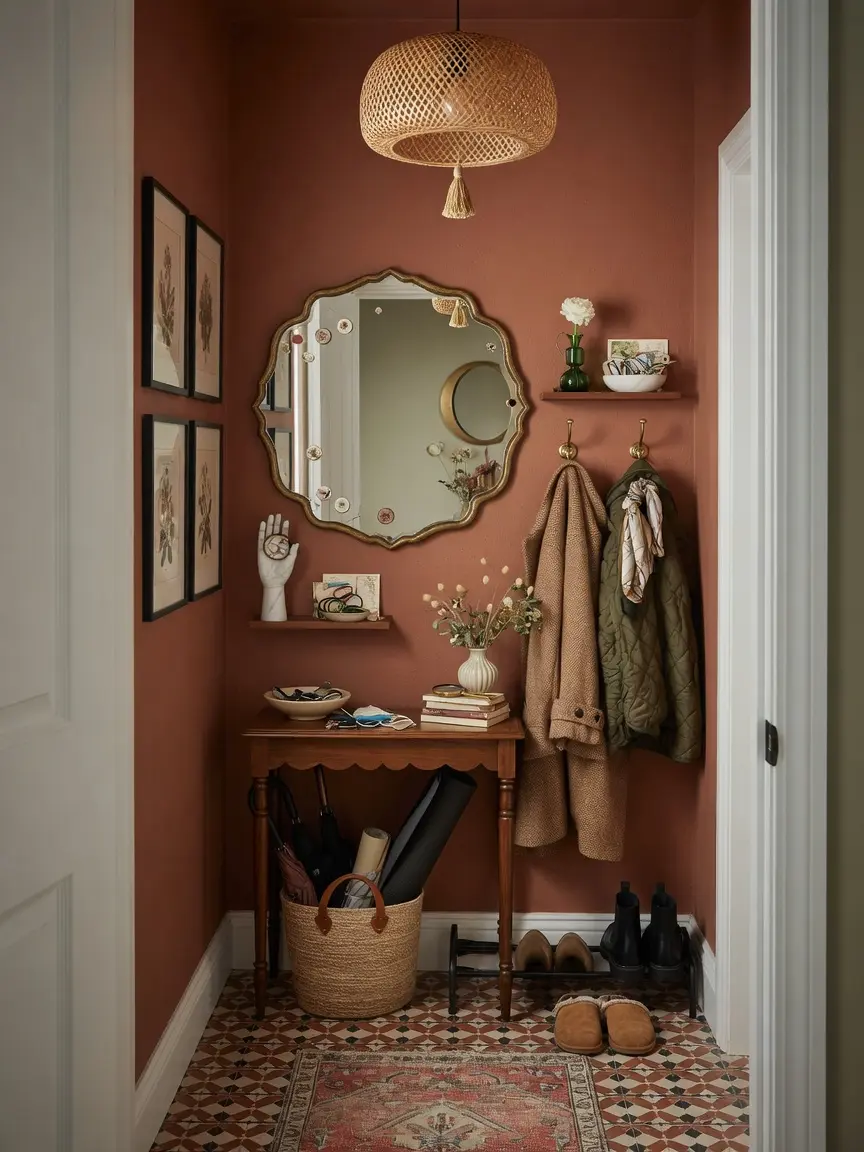
A mirror is one of the hardest working pieces in a small entryway, since it serves a practical purpose, a last look before leaving, while also visually doubling the perceived depth of the space. In a narrow entry, a mirror on the wall opposite the door, rather than beside it, reflects the most light and makes the hallway feel longer rather than wider.
A round or arched mirror softens a space that’s otherwise full of hard rectangular lines, like a console table and a doorframe, and tends to read as more designed than a plain rectangular option. Aim to hang it so the bottom edge sits around 60 to 65 inches from the floor, roughly eye level for most adults, unless the space is specifically meant for full length viewing.
Full Length vs Half Mirror
A full length mirror is useful if you actually check your whole outfit before leaving, but a smaller mirror positioned above a console still handles the light bouncing job just as well and takes up far less wall space. In a genuinely tight entry, the smaller option is usually the more practical pick.
3. Pick a Slim Console or Bench Instead of a Bulky One
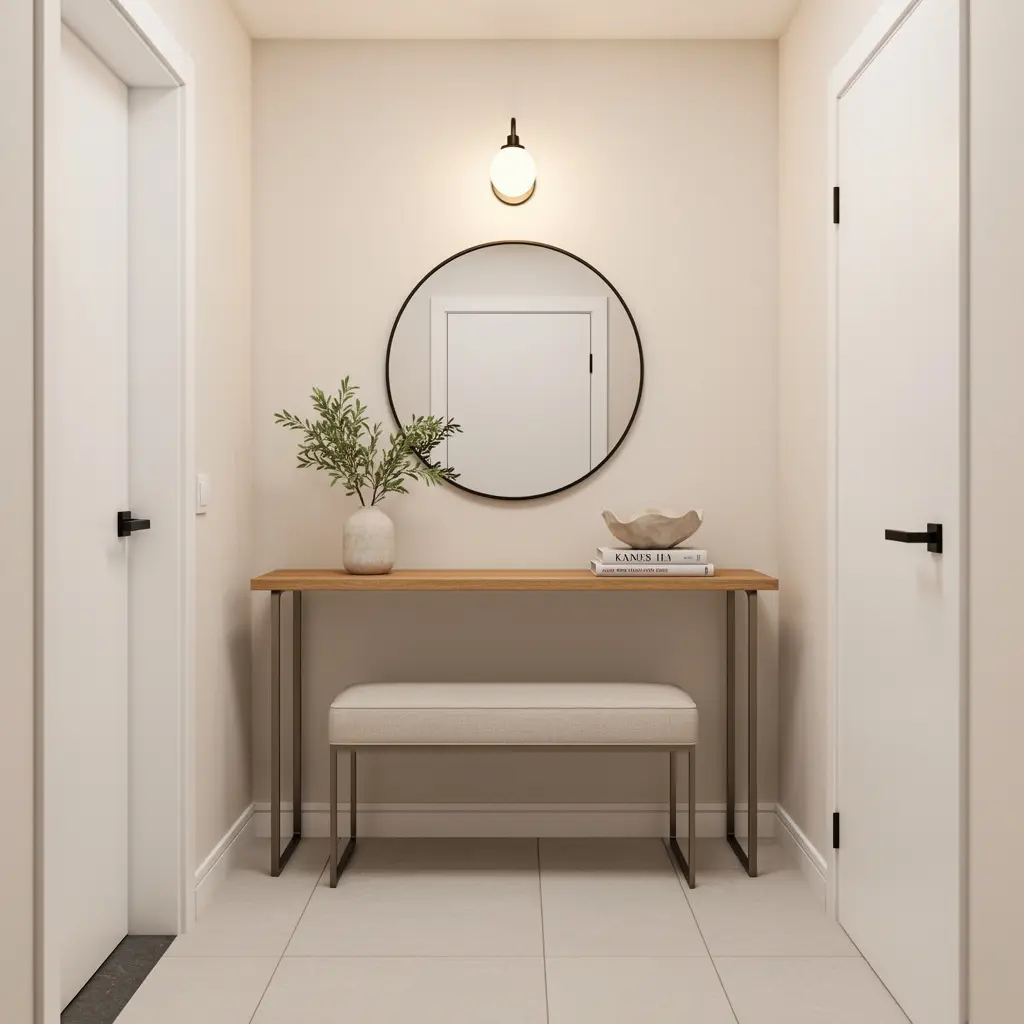
Depth matters more than width in a small entryway. A console table under 14 inches deep, sometimes called a hallway or entry console specifically for this reason, leaves enough walking clearance that the space doesn’t feel like an obstacle course. Compare that to a standard side table depth of 18 to 20 inches, which can eat up more clearance than a narrow hallway can spare.
A console with even one drawer and an open shelf underneath does more work than a decorative surface alone. The drawer handles small items like sunglasses or spare keys, while the open shelf can hold a woven basket for shoes or gloves.
4. Use Wall Hooks to Solve the Coat Pile Problem
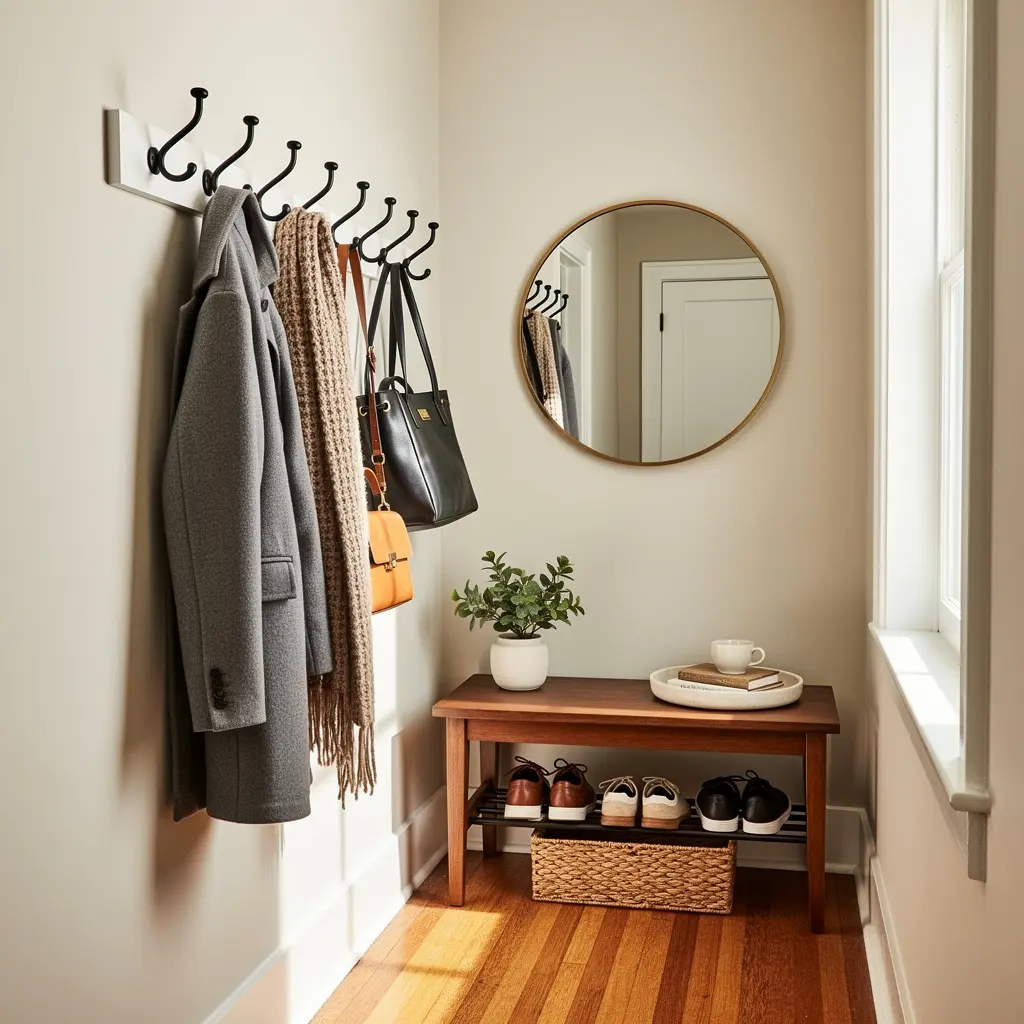
Coats piling on the back of a chair or the nearest doorknob is one of the most common small entryway complaints, and it’s usually solved with something as simple as a row of wall hooks. A set of three to five hooks mounted at varying heights, roughly 60 inches for adults and lower for kids, gives everyone in the household a dedicated spot.
Mixed height hooks, a few higher and one or two lower, also work well for bags and umbrellas in addition to coats. This spreads the visual weight along the wall instead of one crowded hook doing all the work.
5. Add a Landing Zone for Keys, Mail, and Small Items
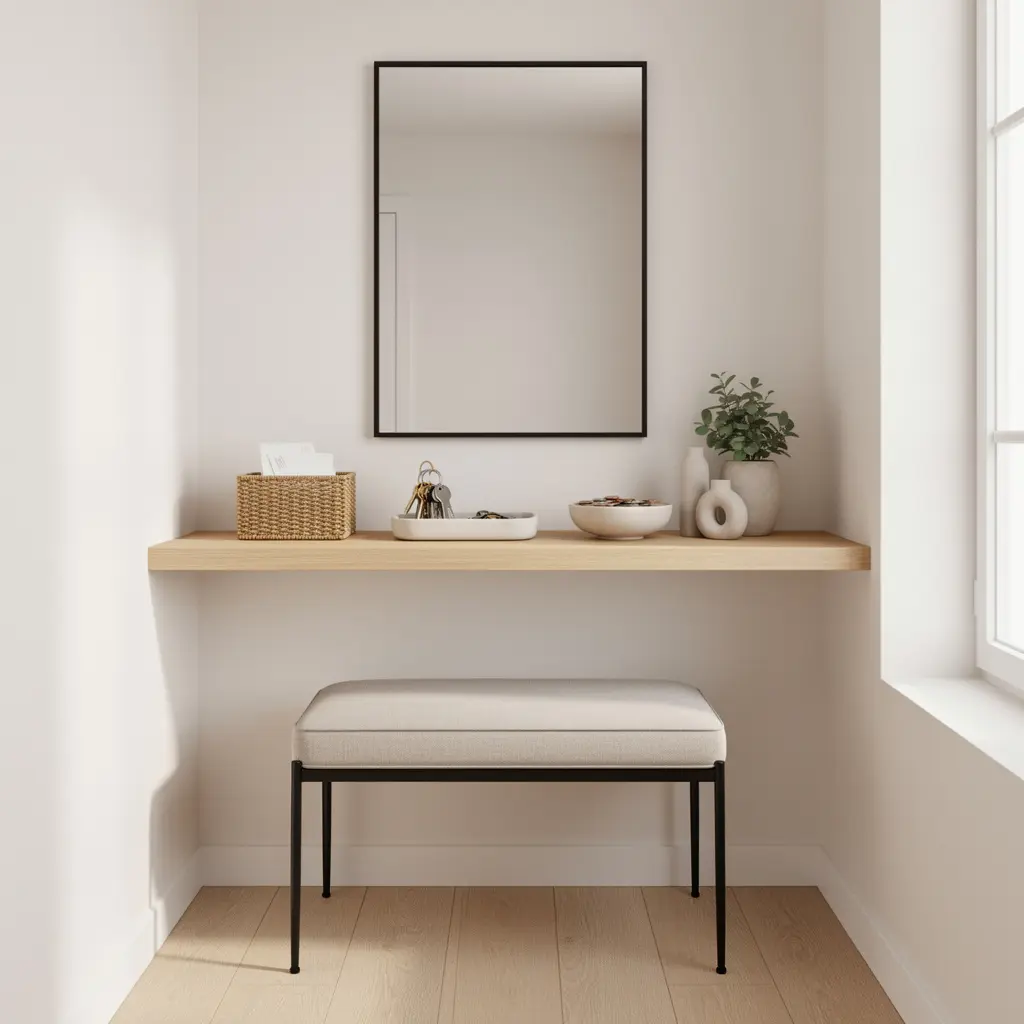
A small dish, tray, or shallow bowl right by the door solves the daily search for keys almost immediately, and it’s one of the cheapest fixes on this list. Placing it directly on the console, ideally near the edge closest to the door, means it catches items on the way in rather than requiring a detour.
If mail is a bigger issue than keys, a slim wall mounted mail sorter above the console keeps paper from spreading across the surface. The goal is one obvious, consistent spot, since an inconsistent system is really no system at all.
6. Solve Shoe Storage Without Blocking the Walkway
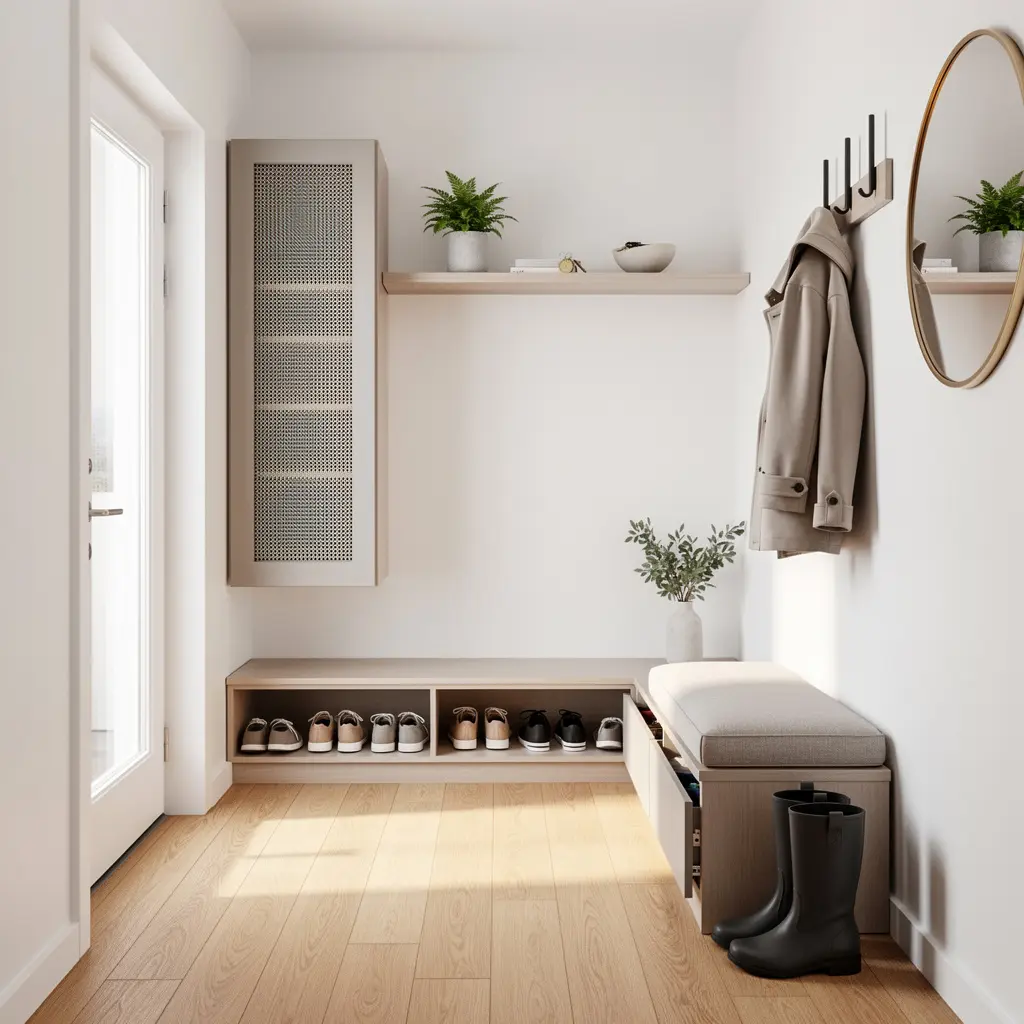
Shoes are usually the biggest volume problem in a small entryway, and an open pile on the floor is both a tripping hazard and a visual mess. A low shoe bench, typically 12 to 14 inches deep, can double as seating for putting shoes on while hiding a few pairs underneath or inside a lift top compartment.
If floor space genuinely doesn’t allow for a bench, a slim vertical shoe cabinet, some as narrow as 8 inches deep, can slide into a corner or beside a doorway without blocking the path. Either option beats an open pile, both for tripping hazards and for how cluttered the space looks the second you walk in.
7. Use Lighting to Make a Windowless Entry Feel Welcoming
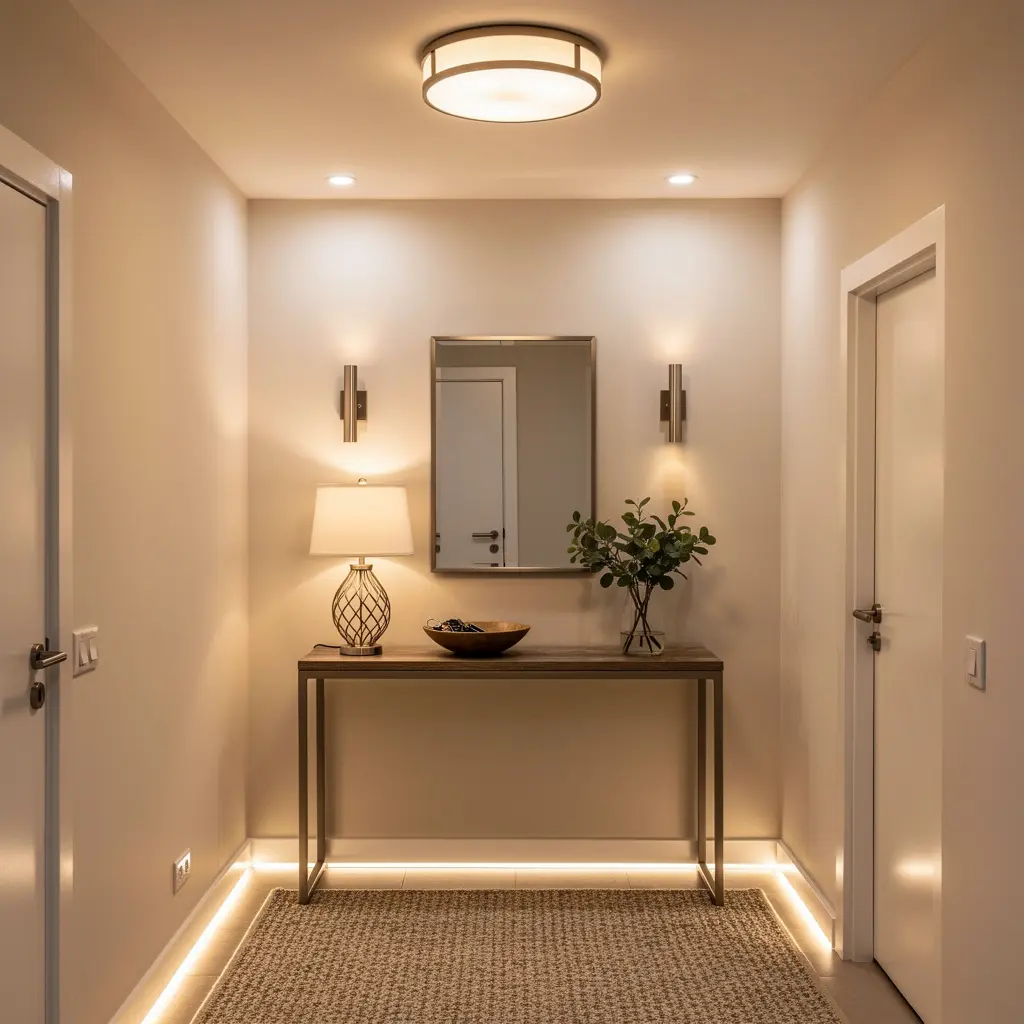
Many small entryways don’t get direct natural light, which can make even a well organized space feel dim and uninviting. A wall sconce on either side of the mirror, or a single flush mount overhead fixture, adds enough warm light to make the space feel intentional rather than like an afterthought hallway.
Warm bulbs, in the 2700K range, tend to feel more welcoming in an entry than cooler daylight bulbs, which can feel closer to office lighting. This is a small swap that changes the whole feel of walking in the door.
8. Layer in One Designer Detail Without Overcomplicating the Space
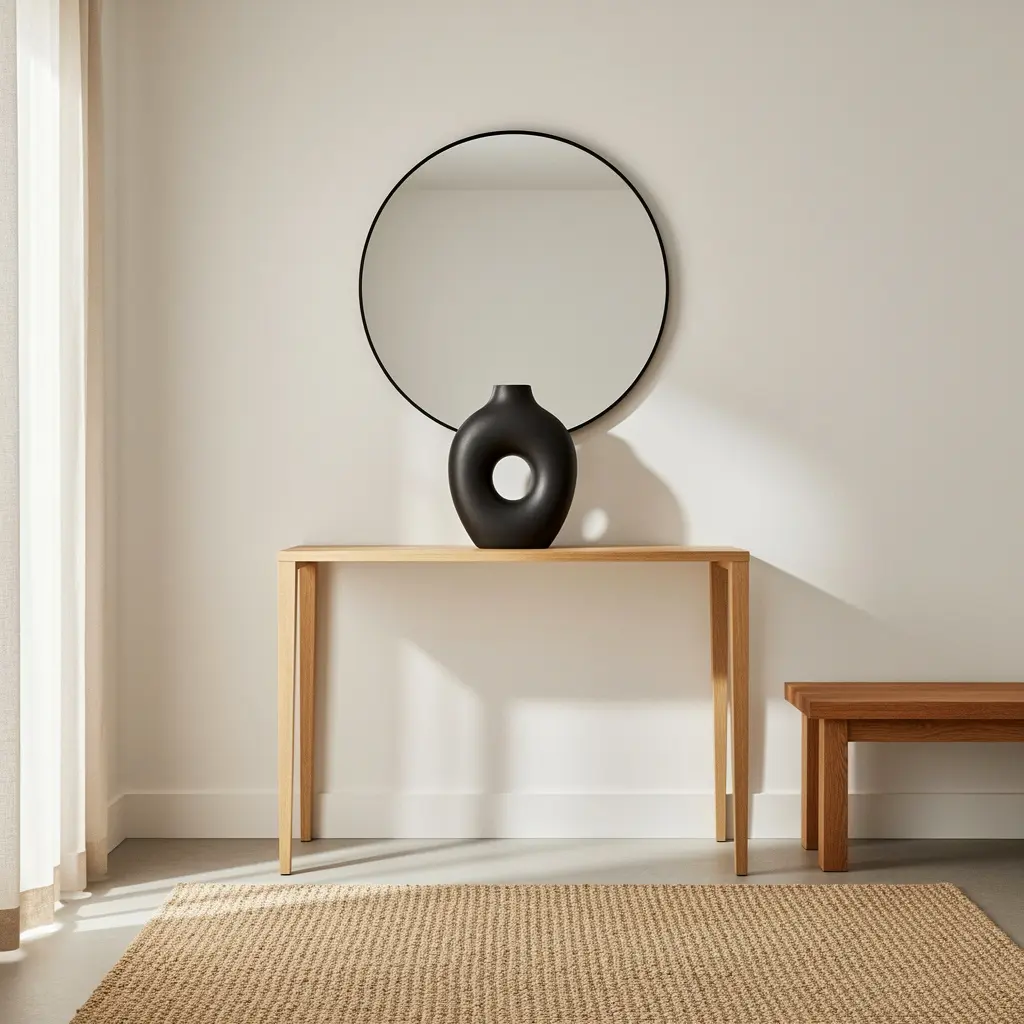
Once the functional pieces are in place, one thoughtful design detail goes a long way in a small entryway, more so than several competing ones. That could be a textured woven basket, a piece of art leaned against the wall beside the mirror, or a single ceramic vase with a few dried stems.
The key word is one. A small entry doesn’t have room, visually or physically, for several decorative moments competing for attention. Pick the detail that feels most like the rest of your home’s style and let it be the accent, rather than adding a handful of smaller pieces that clutter the console surface.
9. Keep the Floor Visually Light With the Right Rug Choice
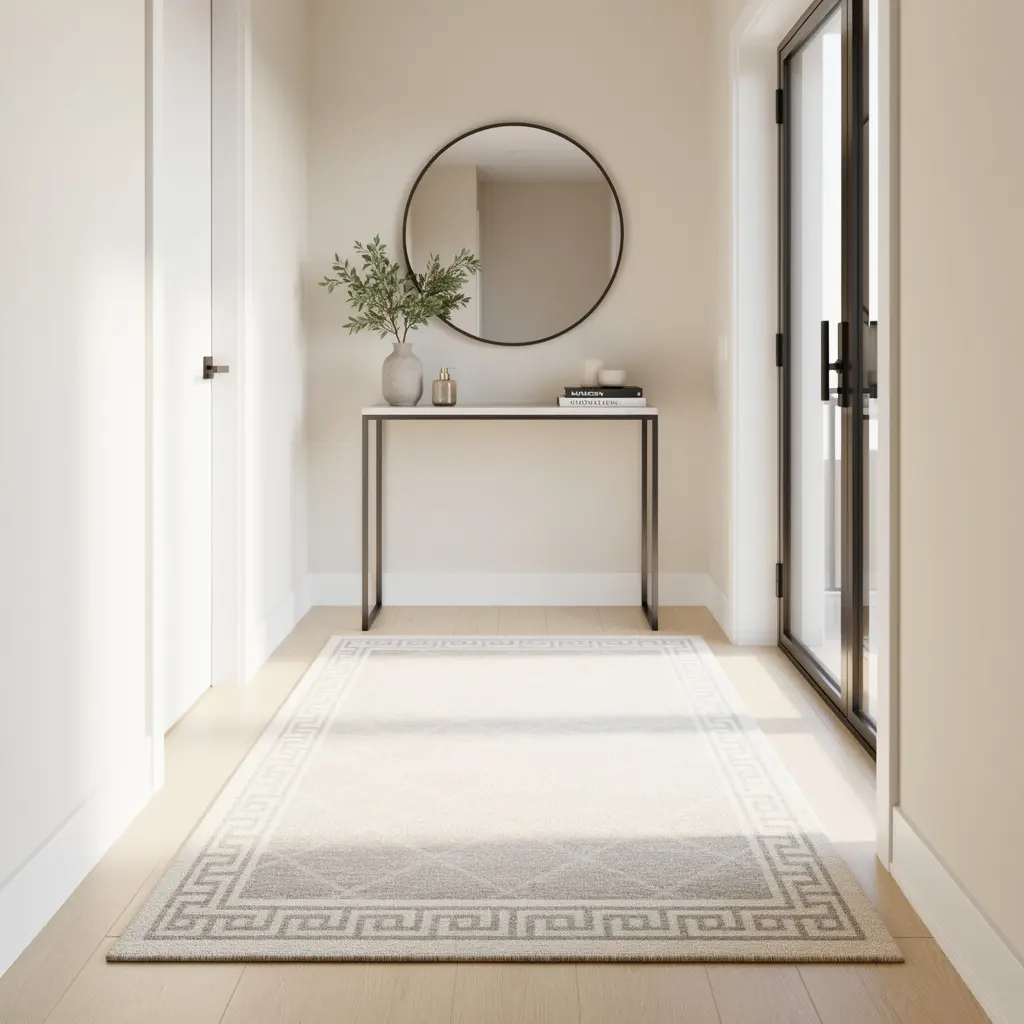
A rug at the entry helps define the space and catches dirt before it travels further into the home, but the wrong size or color can make a small entry feel more closed in. A runner sized to leave a few inches of floor visible on either side, rather than one that spans wall to wall, keeps the floor from feeling boxed in.
Lighter or patterned rugs tend to hide dirt and shoe marks better than a solid dark rug in a high traffic entry, and they also help the space feel less heavy visually. A jute or flatweave option in a small entry adds texture without adding bulk underfoot.
10. Maintain the Space So It Doesn’t Slide Back Into Clutter
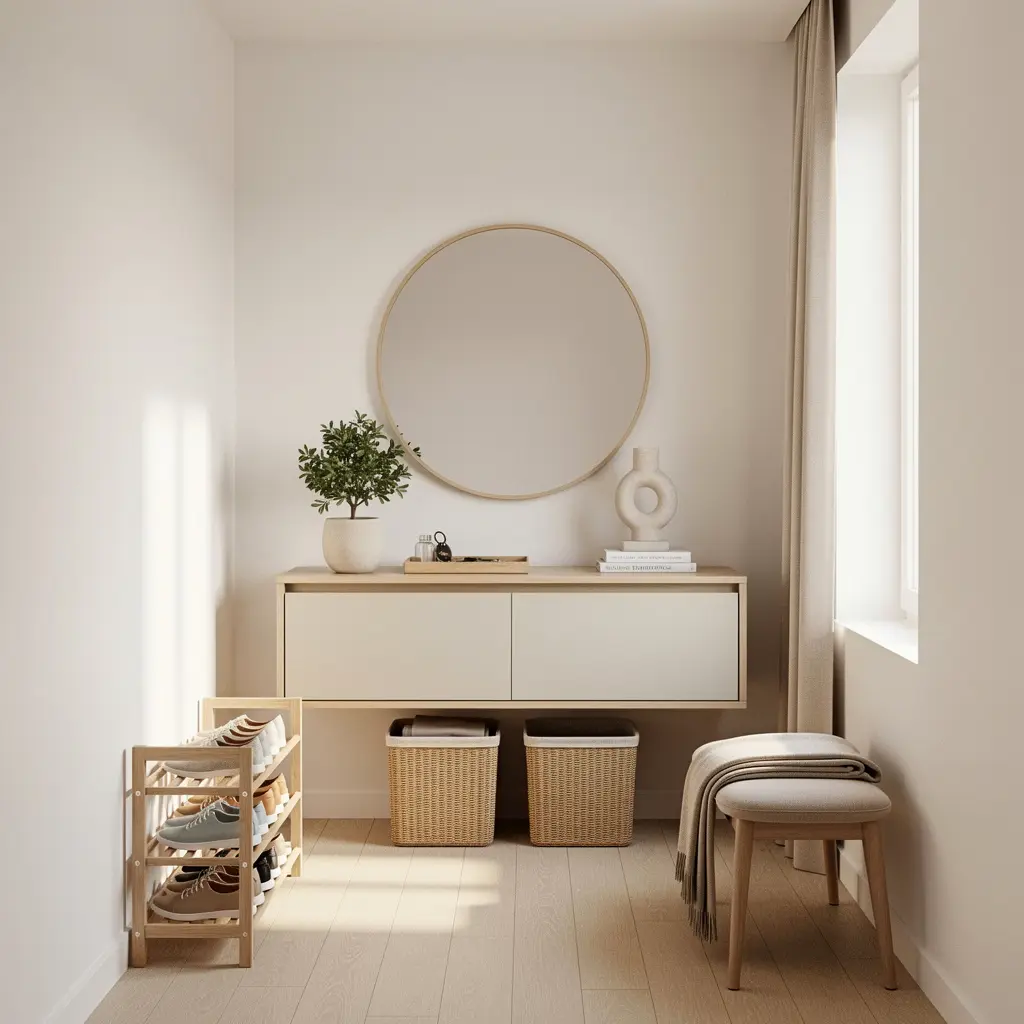
Even a perfectly designed small entryway will slide back into chaos without a quick regular reset. A once a week habit, clearing the console surface and returning shoes to their designated spot, keeps the system working the way it was designed to.
The best designed entryway in the world still needs everyone in the household to actually use the hooks and the tray consistently. If certain habits aren’t sticking after a few weeks, it’s usually worth adjusting the system itself, moving a hook lower, adding a second tray, rather than assuming the space is simply too small to stay organized.
Mistakes to Avoid
- Choosing a console or bench that’s too deep for the available walking clearance
- Hanging the mirror too high or too low relative to eye level
- Leaving shoes in an open pile instead of using a bench or slim cabinet
- Adding too many decorative pieces to the console surface
- Skipping lighting in a windowless entry, leaving the space feeling dim
- Using a rug that spans wall to wall in a genuinely narrow hallway
Frequently Asked Questions
How deep should entryway furniture be in a small space? Aim for consoles or benches under 14 inches deep whenever possible, since standard furniture depths of 18 to 20 inches can eat up too much walking clearance in a tight hallway. Measure the width of the walkway first and subtract the furniture depth to confirm at least 30 inches remains clear.
What size mirror works best over a small entryway console? A mirror close to the width of the console below it, or slightly narrower, tends to look the most proportional. For a console around 30 to 36 inches wide, a mirror in the 24 to 30 inch range usually balances well.
Does a small entryway need a rug? A rug isn’t strictly necessary, but it does help define the space and catch dirt from shoes before it spreads further into the home. If floor space is extremely tight, a smaller mat right at the door can serve a similar purpose without needing a full runner.
How many coat hooks does a small entryway actually need? Three to five hooks generally covers a household of two to four people, with room for a bag or umbrella in addition to coats. It’s better to slightly overestimate than underestimate, since an overflowing single hook defeats the purpose.
Can a small entryway still feel like designer space without built ins? Yes, freestanding furniture chosen at the right scale, paired with a well placed mirror and consistent styling, can look just as intentional as a custom built in. Built ins are a nice upgrade if budget allows, but they aren’t required for the space to feel designed.
Conclusion
A small entryway doesn’t need more square footage to function well, it needs furniture scaled correctly and a system that matches how the household actually uses the space every day. Start with the daily friction points, shoes, keys, coats, solve those first, then let a well placed mirror and one thoughtful design detail do the rest. Once the system is in place, a quick weekly reset is usually all it takes to keep even a few feet of entry hallway looking and functioning like a much larger space.