10 Kitchen Organization and Drawer Storage Ideas for a Tidy Home
A kitchen drawer gets organized on a Sunday afternoon, looks great for about a week, and slowly fills back up with tangled spatulas, loose rubber bands, and a gadget nobody remembers buying. That cycle has less to do with willpower than most people assume. It’s about whether the drawer’s system matches how the kitchen actually gets used day to day. Kitchen organization and drawer storage that lasts comes down to zoning, the right dividers, and a couple of small habits that keep the mess from creeping back in.
None of this requires a total overhaul or an expensive shopping trip. It requires setting up each drawer so the correct home for an item is also the easiest one to reach for, especially in the middle of cooking dinner when nobody wants to think twice about where a spatula goes.
1. Why Kitchen Drawers Get Messy Again So Quickly
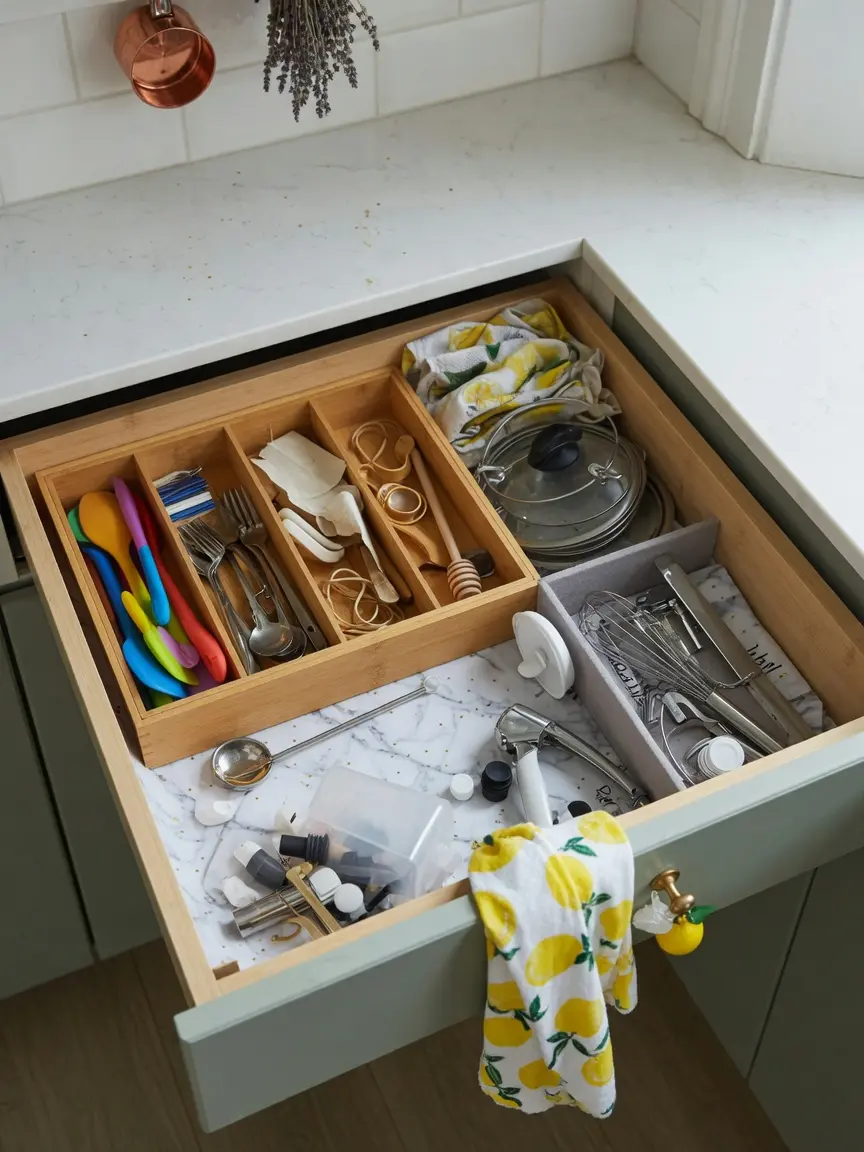
Most drawer organization fails for one simple reason. Putting something away correctly takes more effort than tossing it in loosely. A divider too small for a bulky utensil, a system that requires remembering five different zones for five different item types, and people default to the path of least resistance the moment they’re in a hurry.
The systems that actually stick are the ones where the fast option and the correct option are the same thing. Build a drawer around that principle first, and everything else gets easier to maintain.
Most people jump straight to buying dividers or bins without asking this question first, which is backwards. The container matters far less than whether it’s actually sitting in the spot your hand goes to automatically.
2. Sort Every Drawer by Task, Not by Category Alone
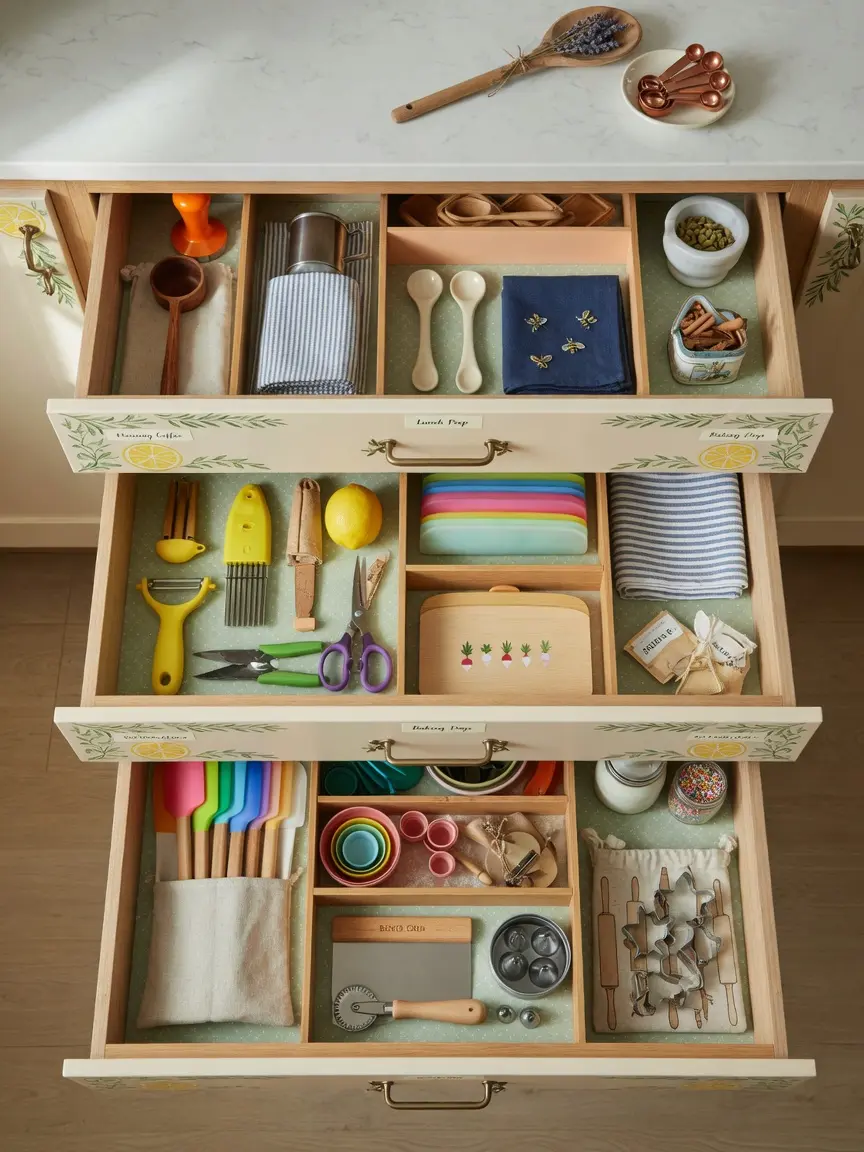
Grouping items by how they’re used together, keeping a can opener, bottle opener, and corkscrew in one section rather than scattering them by type, matches real cooking habits better than a strict category system. A baking drawer with measuring cups, spoons, and a pastry brush together saves time compared to hunting through three separate drawers mid recipe.
Watching How You Actually Cook Before Sorting
Spend a few days paying attention to what you reach for together during normal meal prep. That pattern, more than any generic organizing template, should decide how a drawer gets divided.
3. Use Adjustable Dividers Instead of Fixed Trays

A one piece molded tray only fits the exact set of utensils it was designed for, and it becomes useless the moment your collection changes. Expandable dividers that slide along a track adapt as gadgets get added or swapped out. That matters more in a kitchen than almost any other room in the house.
Bamboo or adjustable plastic divider sets typically run eight to twenty five dollars and include enough pieces to reconfigure a drawer multiple times over the years without buying anything new.
4. Give the Junk Drawer an Actual Boundary
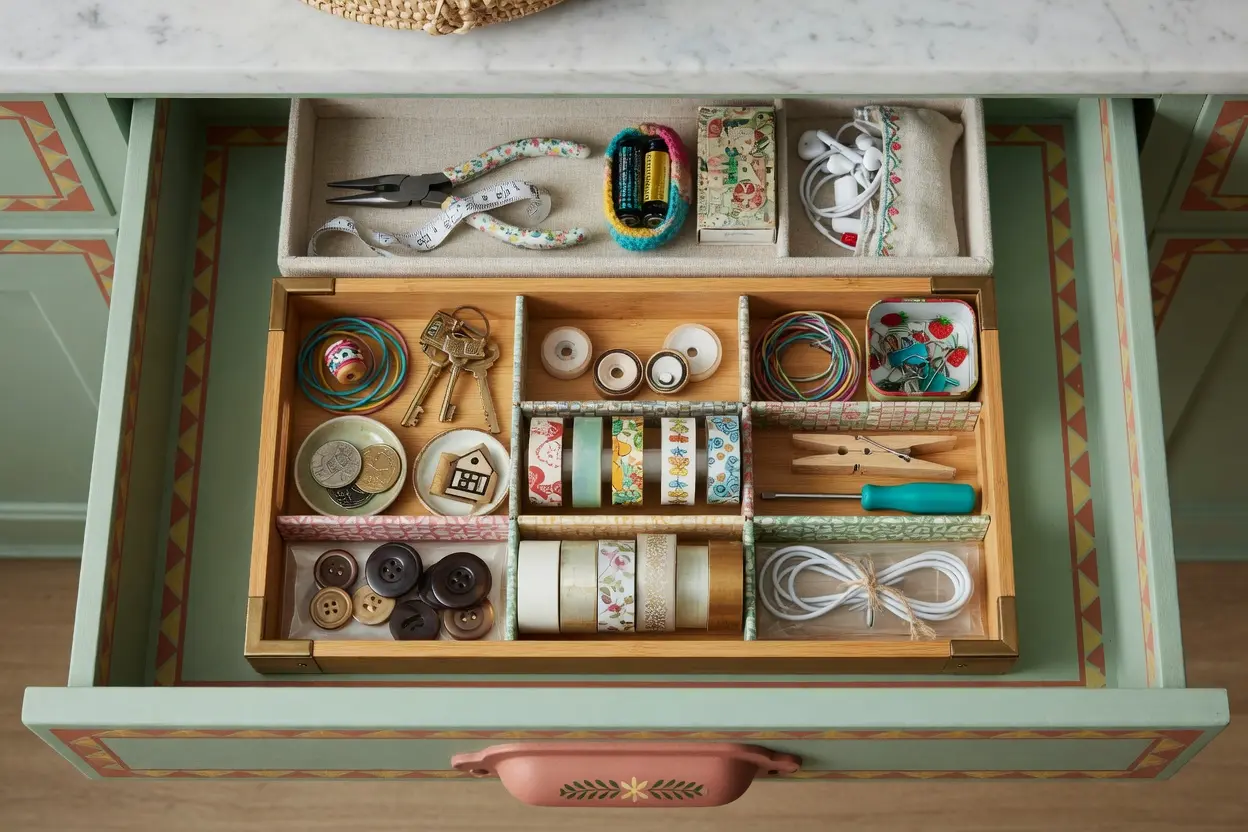
Every kitchen seems to develop one drawer that becomes a catch all for batteries, tape, loose screws, and random small objects with no other home. That’s fine, as long as the drawer has a real boundary and doesn’t turn into a bottomless pit that swallows anything without a clear spot.
A small tray or a few dividers inside the junk drawer, even loosely organized, keeps it from becoming a place where things go to disappear. A junk drawer that’s still searchable beats one that’s just a pile. Even five minutes spent adding basic dividers turns a genuinely chaotic drawer into one you can actually find things in.
5. Store Utensils Standing Up in Deep Drawers
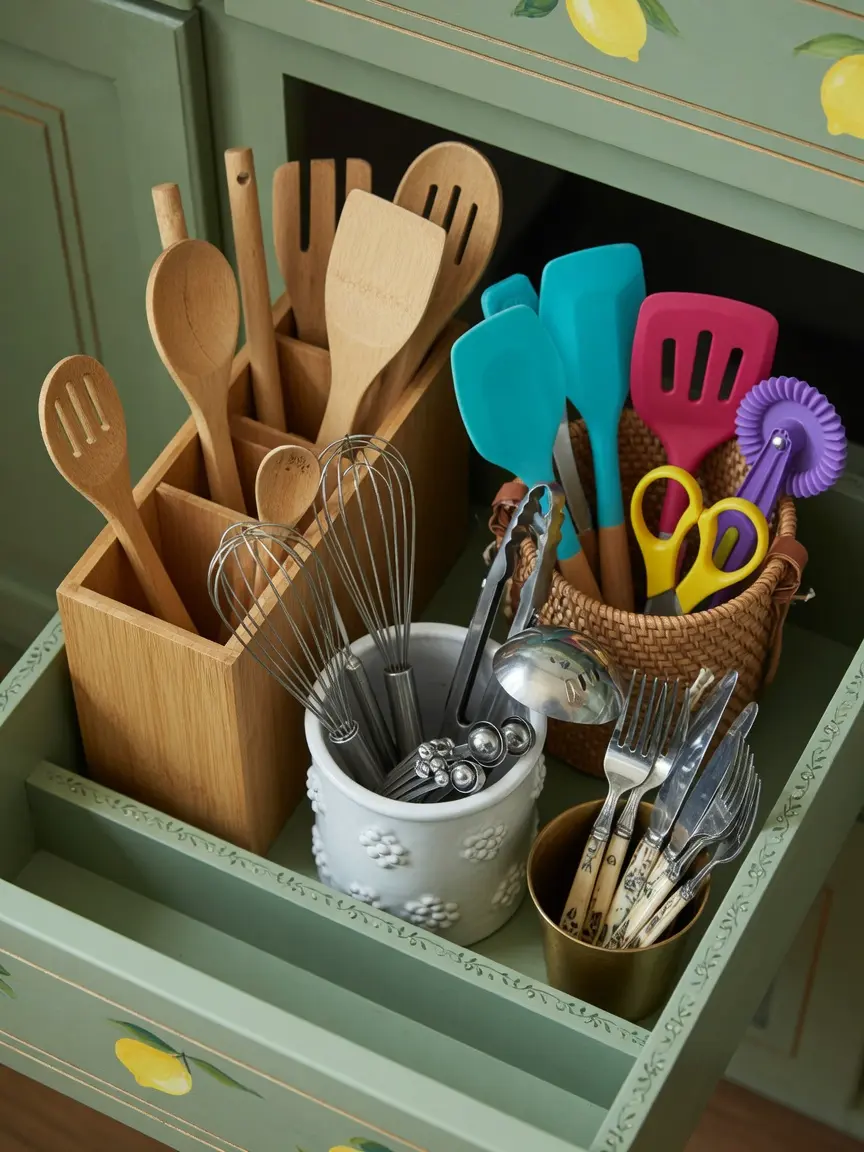
In a drawer deep enough to accommodate it, a vertical utensil organizer, the kind usually reserved for countertop crocks, lets spatulas and spoons stand upright instead of lying flat and tangled together. This works especially well for larger cooking utensils that eat up a lot of horizontal space when stored flat.
Pulling one utensil free from an upright holder takes a fraction of the time it takes to dig through a flat, tangled pile. That difference matters most during actual cooking, when speed counts.
6. Keep a Dedicated Drawer for Daily Use Items Only

The utensils, tools, and gadgets used almost every day, a chef’s knife, a spatula, measuring spoons, deserve a drawer close to the main prep area, separate from items used only occasionally. Mixing daily essentials with rarely used specialty tools slows down the exact moments when speed matters most.
Items used less than once a month, a melon baller, a garlic press nobody actually reaches for, can live farther from the prep zone, in a lower cabinet or a less convenient drawer, freeing up prime real estate for what actually gets used.
7. Use Drawer Liners to Stop Sliding and Noise
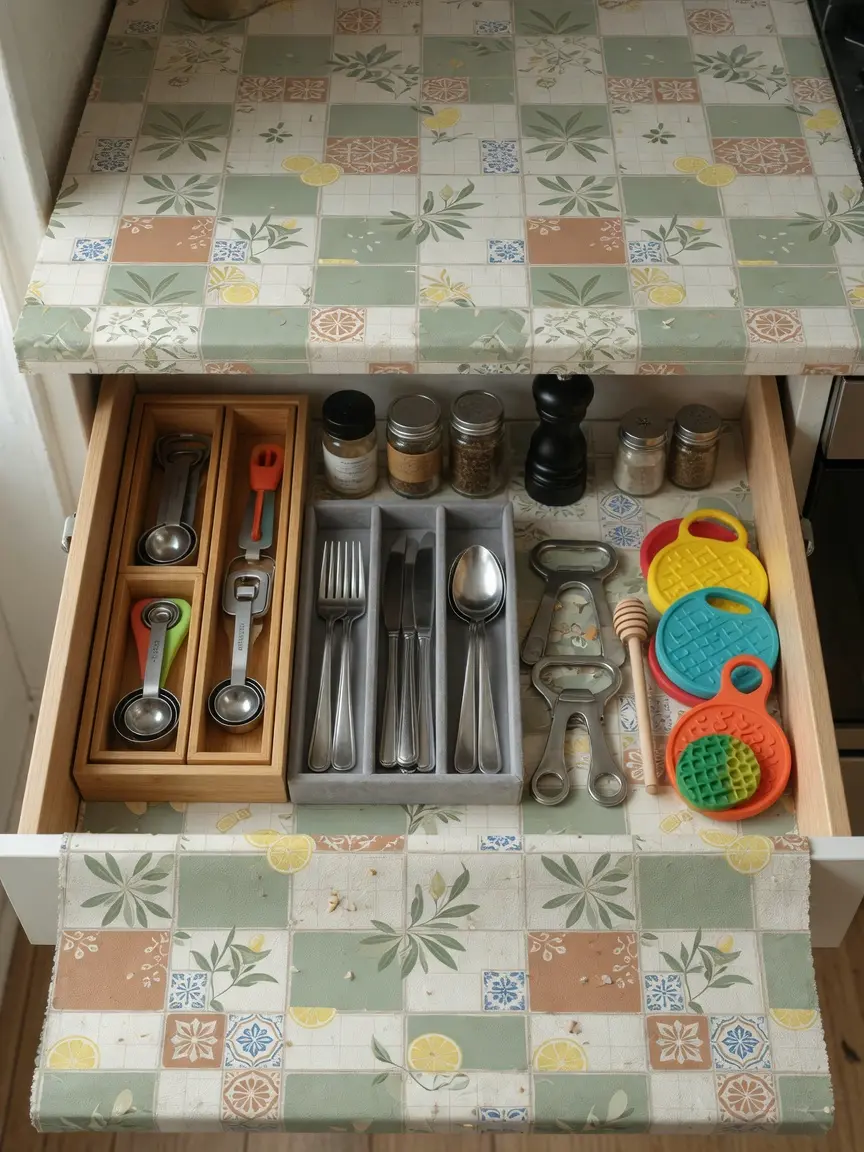
A thin rubber or cork liner keeps utensils from sliding around every time a drawer opens, and it cuts down on the rattling noise loose metal utensils make. Liners cost very little, usually five to fifteen dollars for enough material to cover several drawers, and they take only a few minutes to cut and install.
Liners also protect the drawer’s actual surface from scratches and moisture, which matters for drawers near a sink where water splashes are common. A liner that’s easy to wipe down or replace saves the drawer itself from years of gradual wear that’s hard to reverse later.
8. Measure Before Buying Any Divider or Organizer
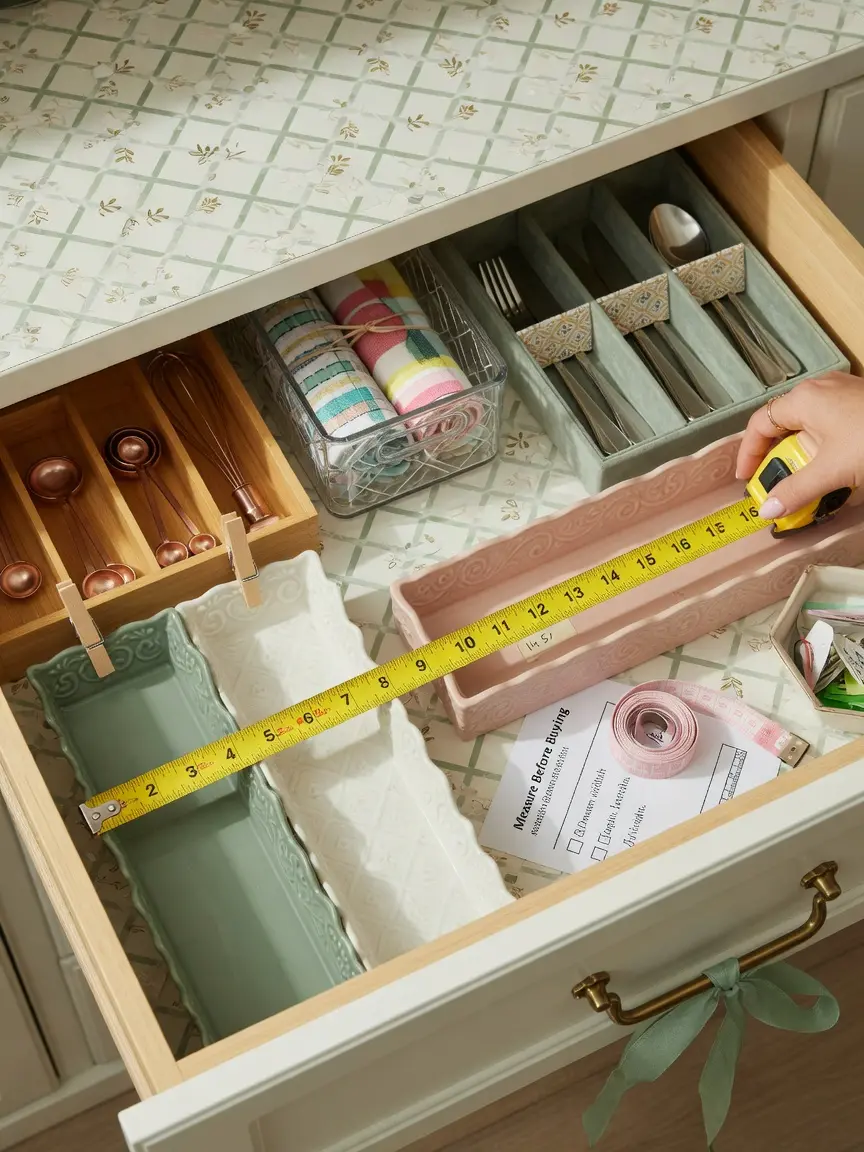
A generic divider set purchased without measuring first often doesn’t fit the drawer’s actual depth or width, leading to gaps or overcrowding. Measure interior length, width, and depth before shopping, and note where any obstructions sit, like a drawer stop or an uneven bottom.
Bring these measurements while shopping, whether online or in store. It prevents the common mistake of buying a set that looks right in a photo but doesn’t match the drawer waiting at home.
9. Label Drawers if More Than One Person Cooks
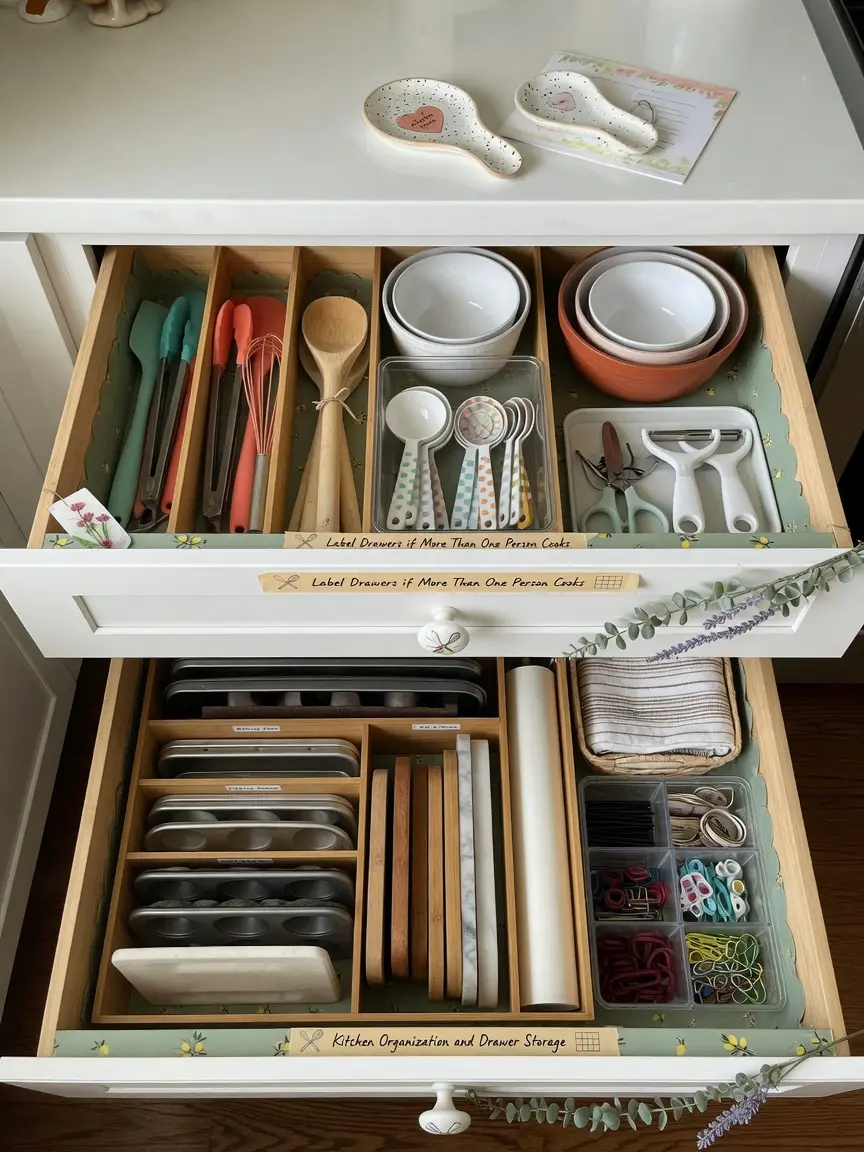
In a household where more than one person cooks or puts groceries and tools away, a small label on the outside or inside edge of a drawer keeps everyone using the same system instead of drifting back into their own habits. This matters more than it sounds like it should. An organization system only one person understands tends to fall apart the first time someone else opens a drawer looking for something specific.
Painter’s tape and a marker work fine for this, and labels can be repositioned easily if the system changes later.
10. Do a Two Minute Reset Instead of a Big Overhaul
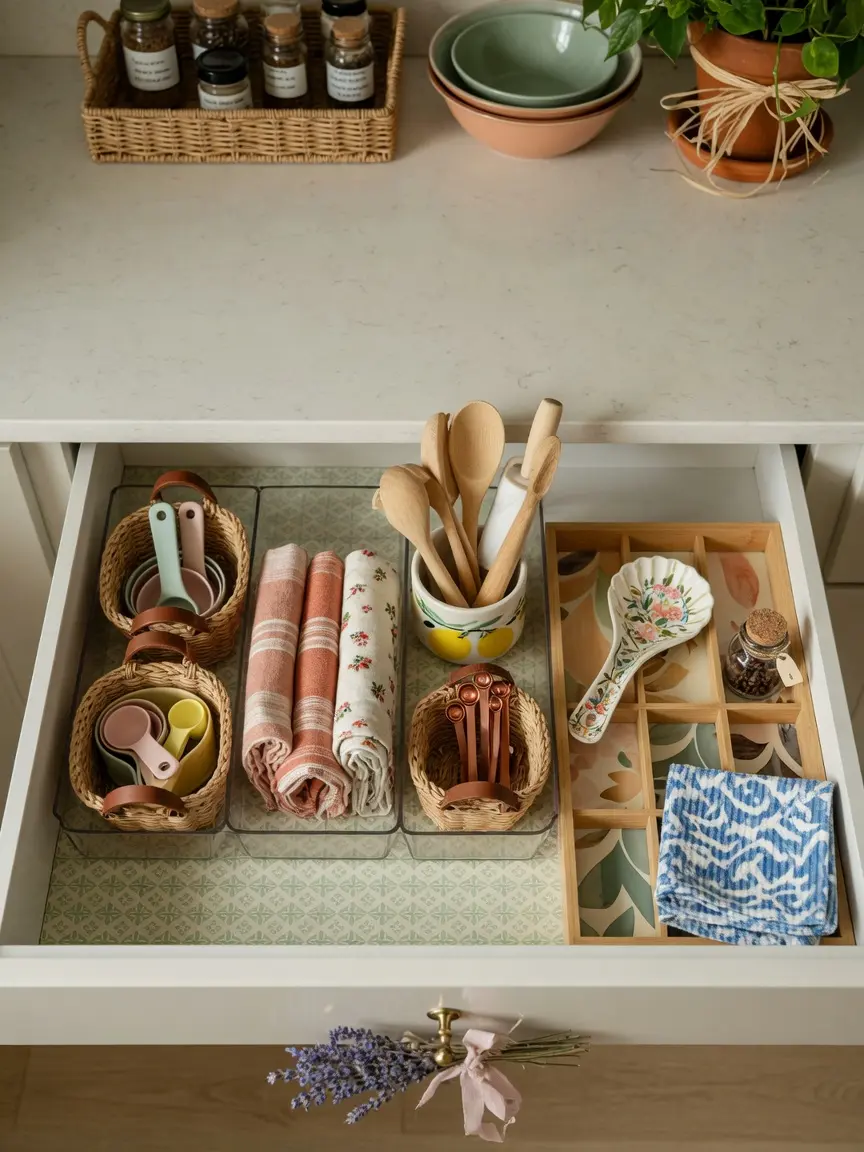
Instead of waiting for a drawer to become chaotic enough to require a full weekend reorganization, a quick two minute straightening every few days, putting stray items back where they belong, catches small messes before they compound into a bigger project. This habit does more for long term organization than any single purchase.
Doing this reset right before or after a grocery trip, when new items are already coming into the kitchen, tends to catch the most drift with the least extra effort.
Mistakes to Avoid
- Buying a fixed tray that doesn’t adapt as your utensil collection changes
- Sorting purely by category instead of by how items actually get used together
- Letting the junk drawer become a boundaryless catch all with no structure
- Skipping measurements before buying dividers or organizers
- Mixing daily use items with rarely used specialty tools in the same drawer
- Waiting for a drawer to become chaotic before doing any tidying at all
Frequently Asked Questions
What’s the best type of drawer divider for a kitchen? Adjustable, expandable dividers that slide along a track hold up better over time than fixed, one piece molded trays, because they adapt as your utensil collection changes.
How do I organize a deep kitchen drawer? A vertical utensil organizer lets items stand upright instead of lying flat and tangled, making better use of the extra depth than a standard flat tray would.
Should I sort utensils by type or by how I use them? Sorting by how items get used together, like grouping baking tools in one section, usually matches real cooking habits better than sorting strictly by category alone.
How often should I reorganize my kitchen drawers? A quick two minute straightening every few days works better than waiting for a full overhaul, since it catches small messes before they build into a bigger project.
Do drawer liners actually make a difference? Yes. They stop utensils from sliding around, reduce noise, and protect the drawer surface from scratches and moisture, all for very little cost.
Conclusion
Kitchen organization and drawer storage that actually lasts comes down to matching the system to real habits, zoning by task, using adjustable dividers, and keeping daily essentials separate from rarely used tools. Measure before buying anything, and build in a quick, regular reset instead of waiting for chaos to force a full overhaul. A drawer system that takes two minutes to maintain will always outlast one that only looked good for the first week. Start with the drawer you use most, get that one working the way you actually cook, and use what you learn there before tackling the rest of the kitchen.