10 Magical Treehouse and Fairy Garden Ideas That Feel Pure Fantasy
A fairy garden starts with one small door and a mushroom figurine. A few weeks later it’s a scattered pile of dollar store trinkets that reads more like clutter than a tiny magical world. Scale and restraint are almost always the missing piece here, not creativity. Not enthusiasm either. Magical treehouse and fairy garden ideas work best when the scene builds around one central feature and stays disciplined about what gets added, rather than growing indefinitely.
Think of it less as decorating and more as world building. A believable miniature scene needs the same internal consistency a movie set does. Everything shares the same scale, the same level of wear, the same unspoken sense of who might live there, even if the whole thing fits into one corner of the yard.
None of this requires a big budget or a weekend of hard labor. It mostly requires slowing down between purchases and asking whether the next piece actually belongs in the story you’ve already started telling.
1. Why Fairy Gardens Often End Up Looking Cluttered Instead of Magical
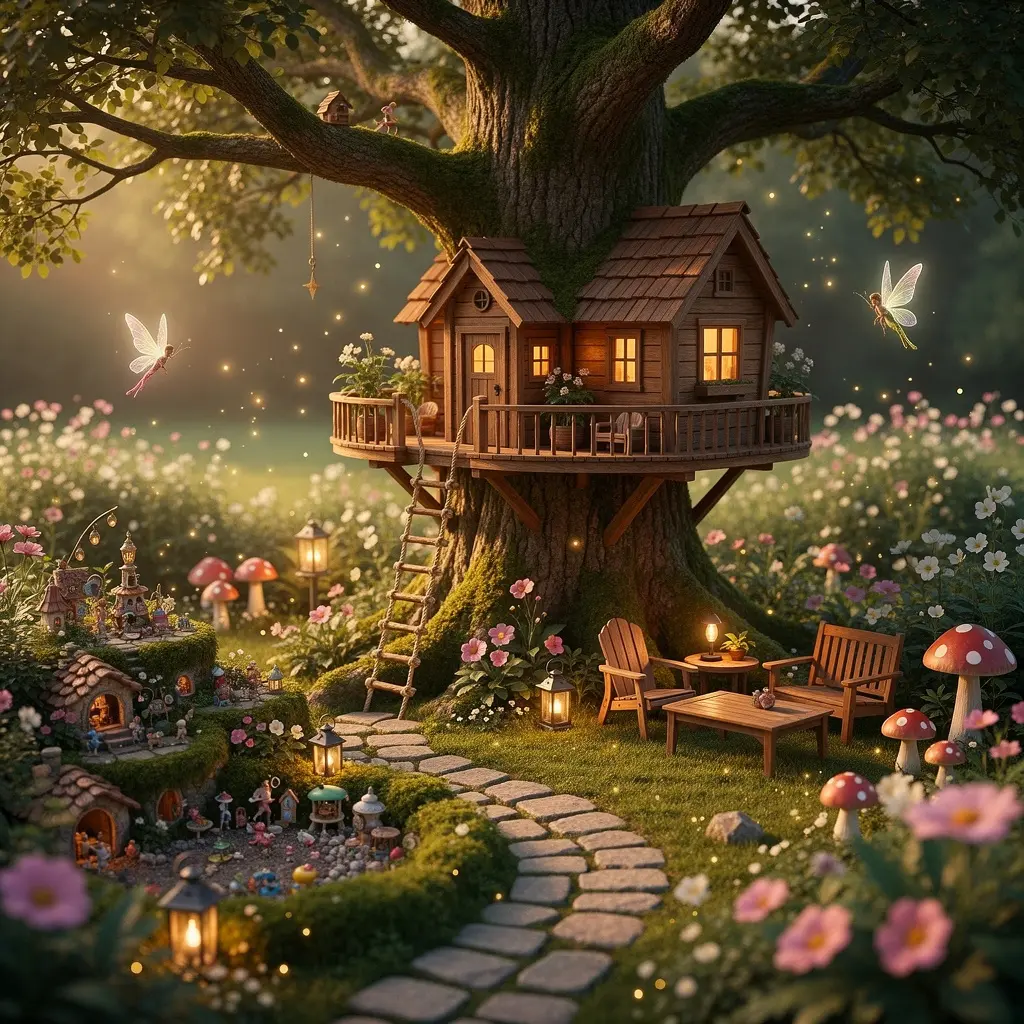
The whole appeal of a fairy garden comes from the illusion of a tiny, complete world. That illusion only holds if every piece feels like it belongs to the same scale and story. Add pieces one at a time over months without a plan, and you usually end up with a scene where nothing quite matches, different scales next to different materials next to wildly different levels of realism, all crammed into the same small footprint.
Real magic in a miniature scene comes from restraint and consistency, not from how many pieces got included. Five well chosen elements almost always beat twenty mismatched ones.
It’s an easy trap to fall into, especially standing in a craft store aisle full of tiny accessories where grabbing one of everything feels harmless. Slow down. Ask whether a new piece actually fits the scene you’ve already built, not just whether it’s cute sitting alone in your hand.
2. Choose One Central Feature to Anchor the Scene
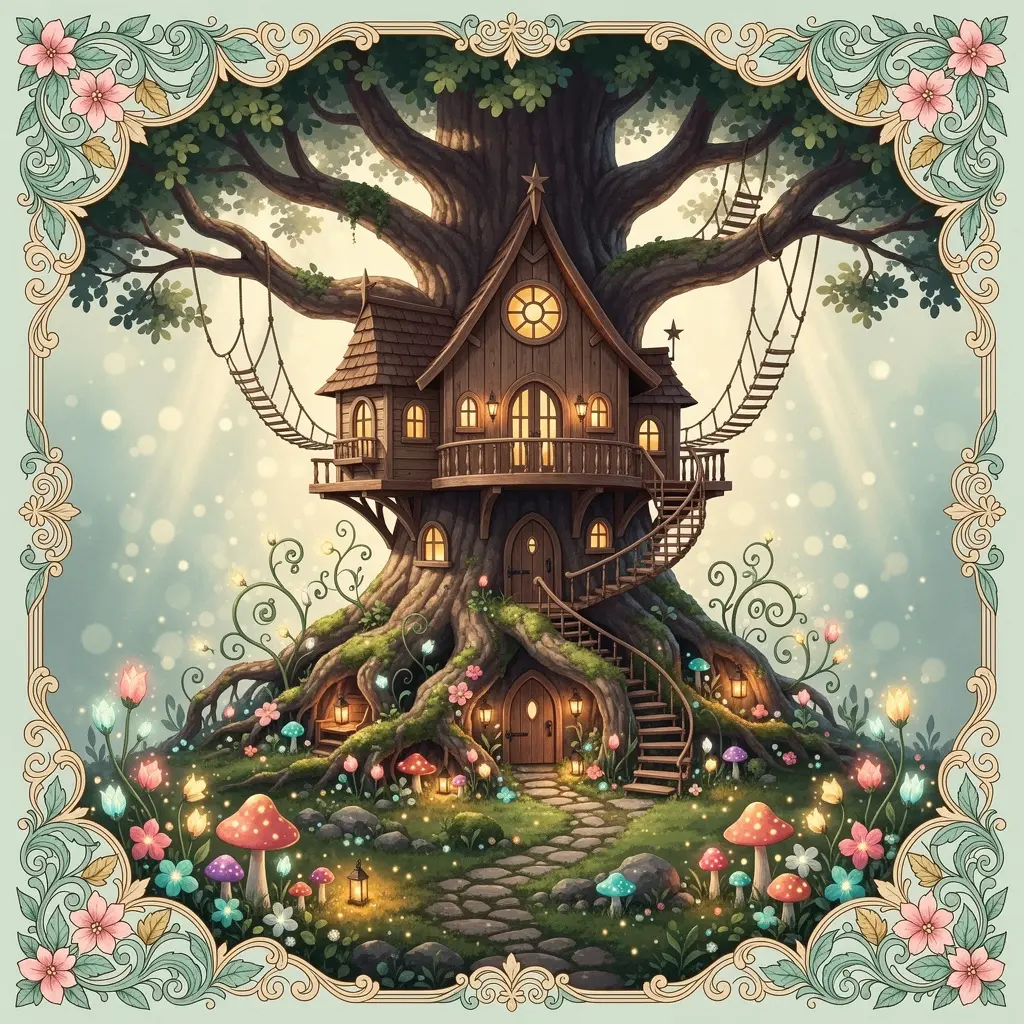
A single standout element gives the whole garden a clear focal point to build around. That might be a tiny door built into a tree trunk. A small bridge crossing a mulch path. A miniature treehouse structure tucked into a low branch. Whatever it is, everything added afterward should support it, not compete with it.
Placing the Anchor Feature First
Decide on and place the central feature before adding a single smaller accessory. Building outward from an established anchor keeps the scale and story consistent in a way that adding pieces at random never quite manages.
3. Use Natural Materials Over Bright Plastic Accessories
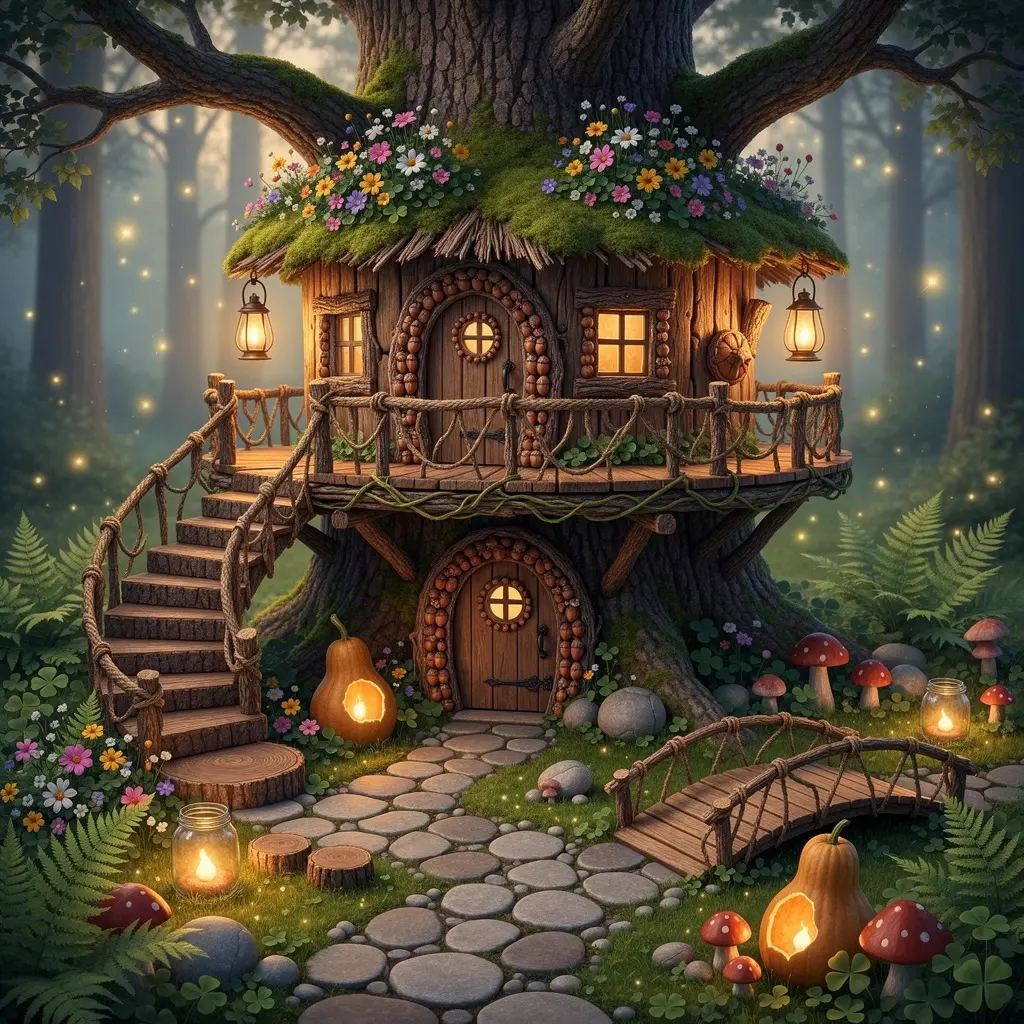
Twigs, bark, small stones, and moss blend into an outdoor setting the way bright plastic mushrooms and glittery figurines never will. A miniature fence built from small sticks. A tiny bench made from a flat stone balanced on two smaller ones. Both look far more magical than anything bought off a shelf.
That doesn’t mean skipping purchased fairy garden accessories entirely. Favor pieces made from wood, resin finished to look like stone or bark, or ceramic. Anything glossy plastic or heavily glittered tends to break the spell.
4. Build a Winding Path Instead of a Straight One
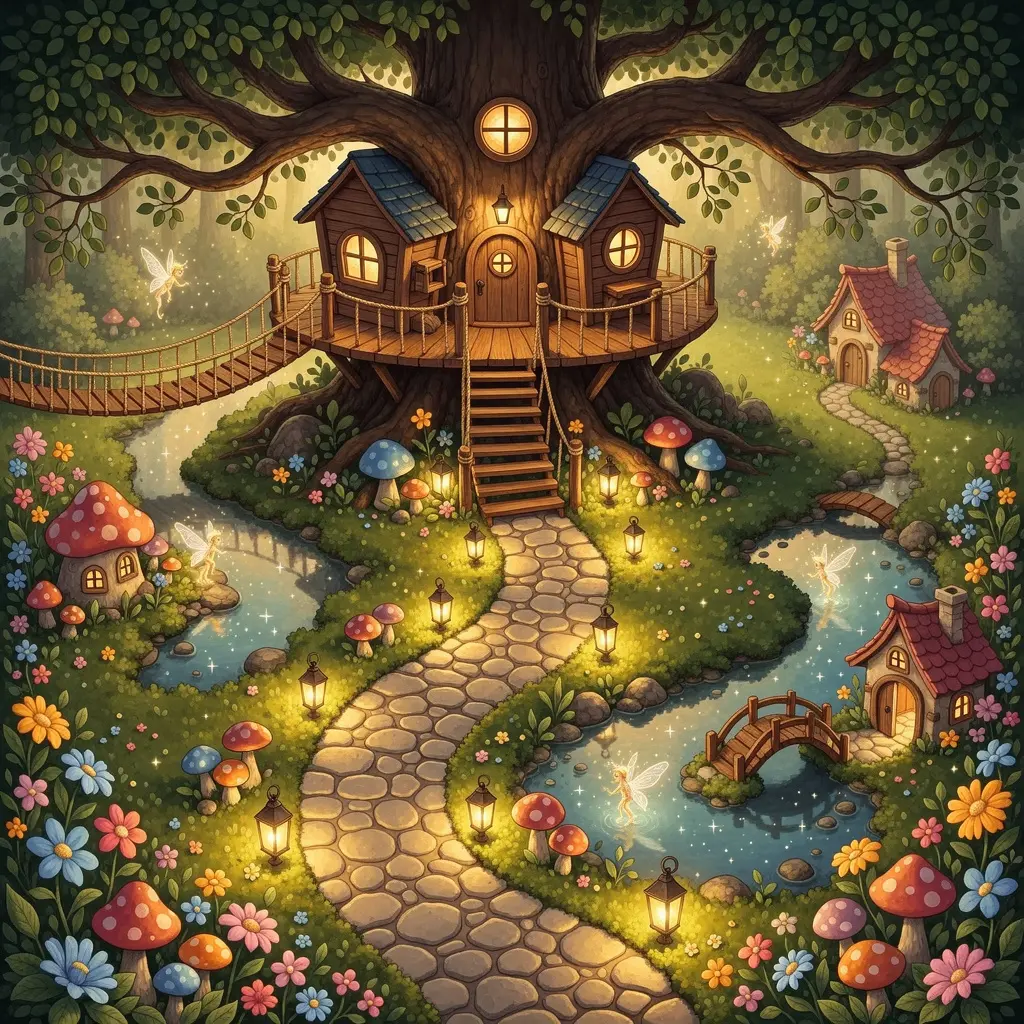
A path made from small pebbles or wood chips, curving through the scene rather than cutting a straight line, mimics the way real paths develop over time. It’s one of the easiest changes that makes a fairy garden feel like an actual, lived in place.
Vary the width slightly as it winds, narrower here, a touch wider there. That small inconsistency reads as more realistic than a perfectly uniform path ever could.
5. Add a Tiny Door to an Existing Tree or Structure
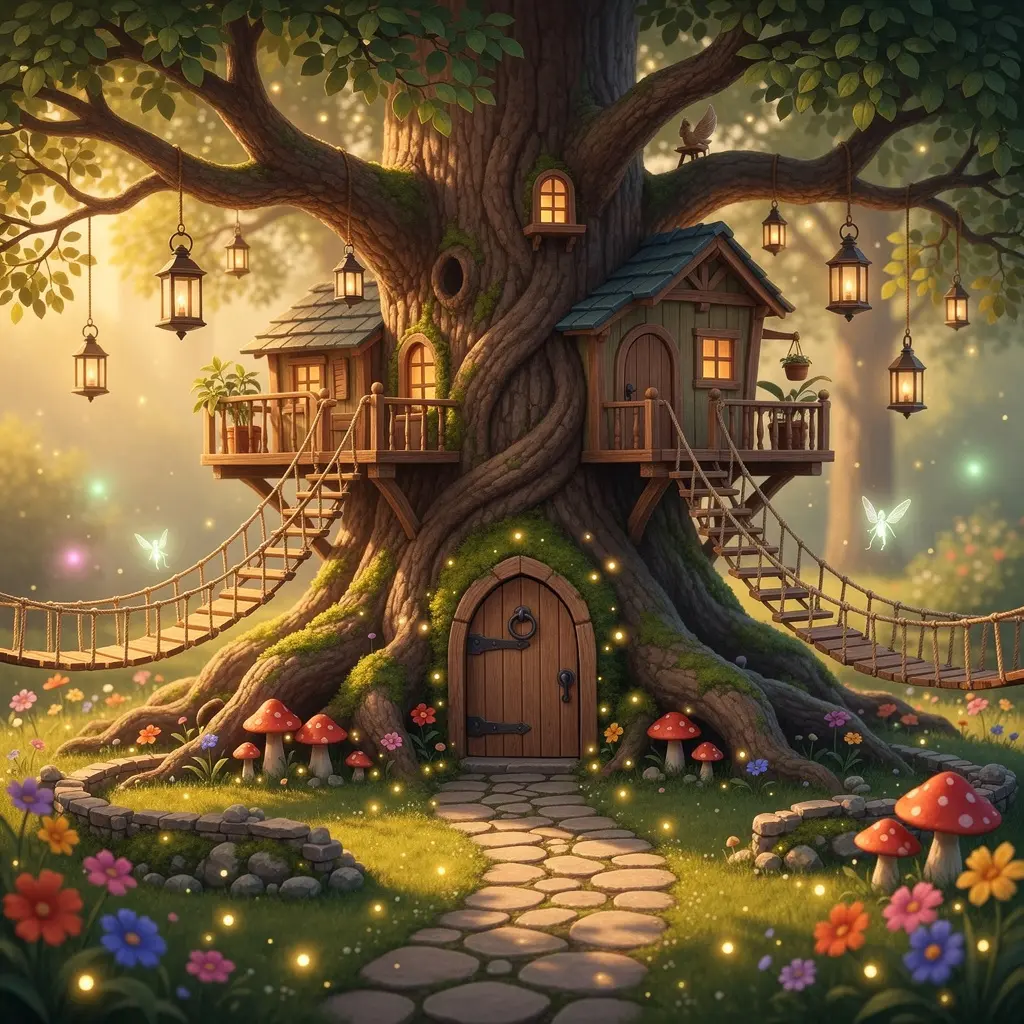
A small wooden door, sized realistically for a fairy or gnome figure and attached at the base of an existing tree trunk, creates instant magic without any major construction. Kids especially tend to believe something actually lives behind it.
Weatherproofing the Door
Seal the door with an outdoor rated finish or a coat of exterior varnish. Left untreated, it warps and fades fast once the weather starts changing, and a piece that only lasts one season isn’t worth the effort of building it well.
6. Scale Everything to the Same Miniature World
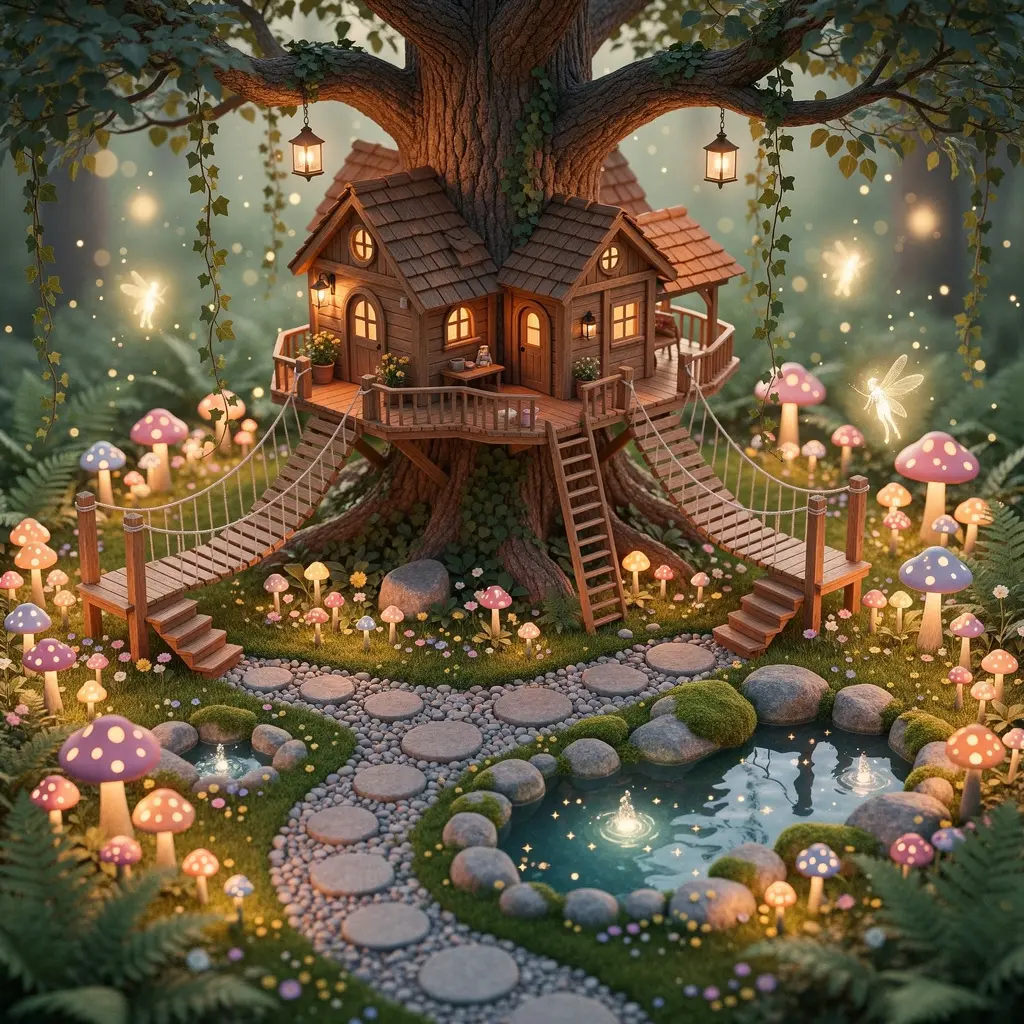
Nothing breaks the illusion faster than mixing scales, a large plastic gnome standing next to a delicate one inch chair, for instance. Check that new pieces roughly match what’s already in the garden before adding them, and the whole scene keeps feeling like one consistent world instead of several unrelated ones stacked together.
A simple trick: pick one reference object, usually the central door or structure, and hold every new piece up against it mentally before deciding whether it belongs.
7. Use Moss and Ground Cover for a Lived In Feel
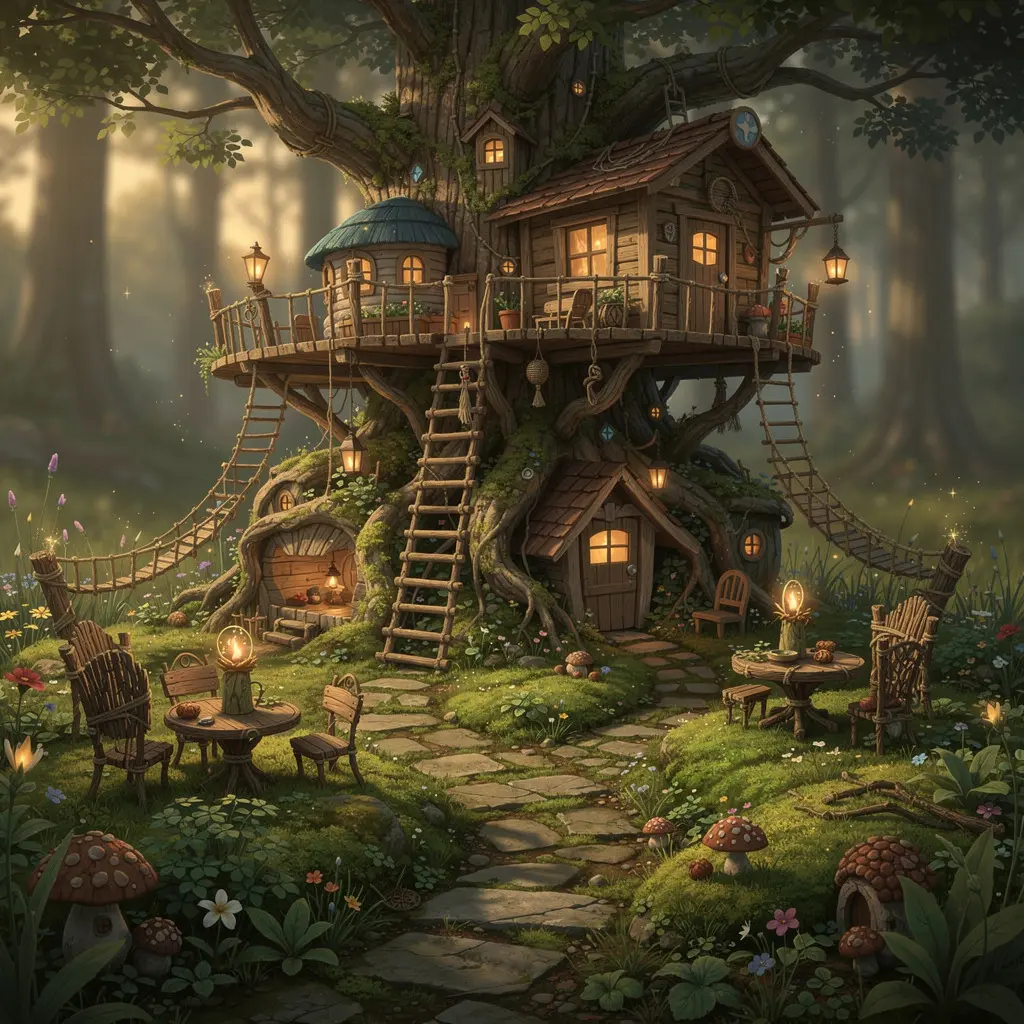
Live or preserved moss over bare dirt or mulch gives a fairy garden a soft, established look that bare ground never quite achieves on its own, no matter how many accessories sit on top of it. Moss also fills the small gaps between stones and structures, so everything feels connected rather than placed on an empty stage.
Preserved moss needs no watering and tolerates whatever light conditions your garden actually gets, which makes it the better choice for a spot that doesn’t see much regular attention. Live moss suits a shadier, consistently moist corner if you’re willing to keep up with it.
8. Add Small Lights for Evening Magic
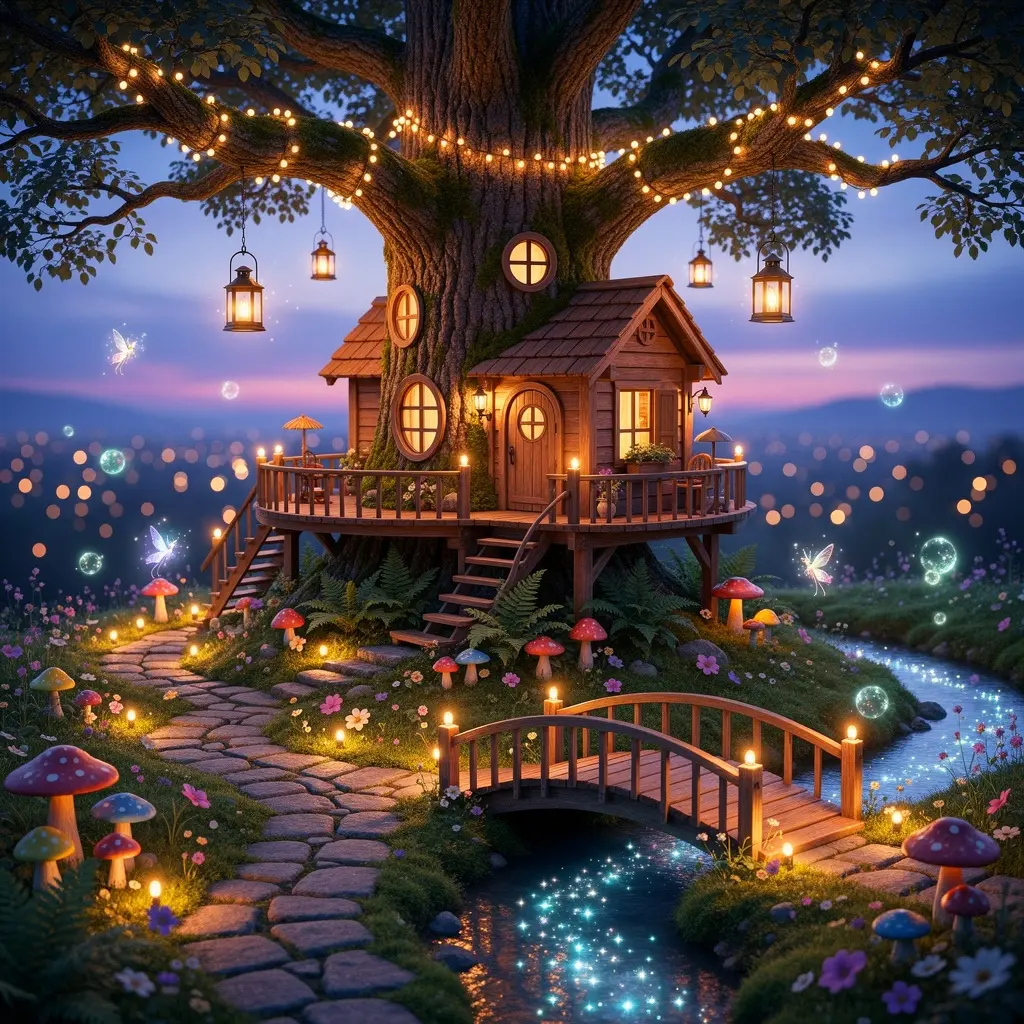
Battery powered fairy lights, tucked into gaps between stones or wound loosely through nearby branches, bring real evening magic to a scene that otherwise vanishes once the sun goes down. Solar powered miniature lanterns work well too, and they skip the battery changing altogether.
Keep the lighting subtle. A handful of small points of light beats a bright, even wash every time, and it looks far less like stage lighting dropped on top of the scene.
9. Incorporate Real Plants Sized for Miniature Scenes

Small succulents, miniature ferns, and low growing ground cover add real, living texture that fits naturally within a fairy garden’s scale. Planted right around the central feature, they soften any hard edges left by stone or wood structures.
Pick plants that stay small on their own rather than pruning something larger down again and again. It saves you the upkeep, and the scene keeps looking intentional instead of like a shrunken version of an oversized garden.
10. Building a Treehouse Element Without a Full Structure
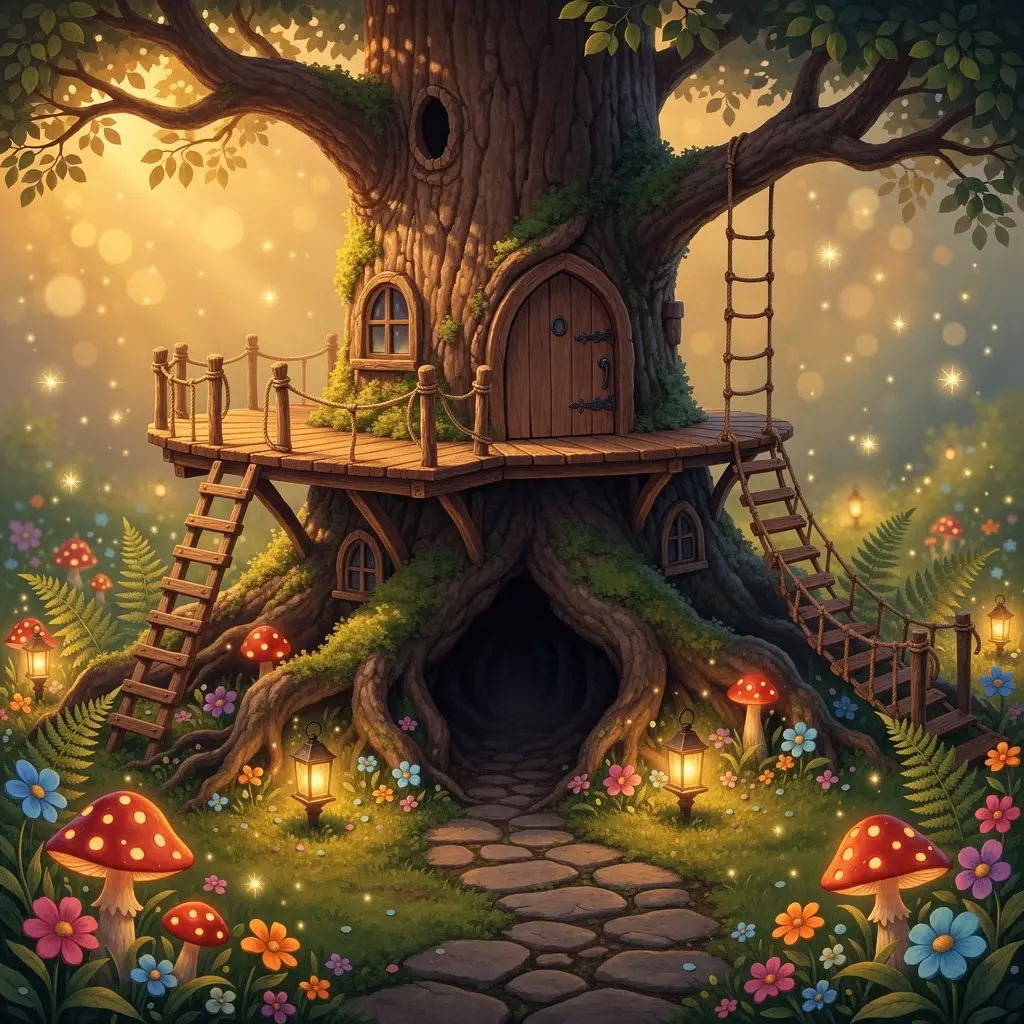
You don’t need a full miniature treehouse to capture the feeling of one. A small platform attached partway up a tree trunk, paired with a tiny rope ladder made from twine and small dowel rungs, suggests an entire structure without the complexity of a real build.
An even simpler version works too. A single small shelf or ledge tucked into a fork in the tree, styled with a couple of miniature accessories, is enough to imply a treehouse exists somewhere above. It also holds up better outdoors over time, since there’s far less exposed wood to weatherproof and maintain.
Mistakes to Avoid
- Adding accessories continuously without a plan or central anchor feature
- Mixing wildly different scales between figures and structures
- Choosing bright plastic pieces over natural materials
- Building a straight, uniform path instead of a winding, varied one
- Skipping a weatherproof finish on any wood elements left outdoors
- Overcrowding the scene instead of keeping the accessory count restrained
Frequently Asked Questions
What makes a fairy garden look magical instead of cluttered? Consistency in scale and materials matters far more than how many accessories get added. Restraint does most of the work here.
Do fairy garden accessories need to be weatherproof? Anything left outside long term should have a weather resistant finish, or untreated wood and some plastics will warp, fade, or crack after repeated exposure to sun and rain.
Can I build a fairy garden without an existing tree? Yes. A small pot, garden bed, or even a patio container works fine. Anchoring the scene around a central feature still matters just as much as it does with a tree based setup.
What’s the easiest way to add a treehouse element? A small platform or shelf built into a fork in the tree, paired with a simple twine ladder, suggests a treehouse structure without a full, load bearing build.
Is moss necessary for a fairy garden to look finished? Not strictly, but it fills gaps and covers bare ground in a way that makes the whole scene feel more established and lived in.
Conclusion
Magical treehouse and fairy garden ideas come together through restraint and consistency far more than sheer volume, one strong central feature, natural materials, and a scale that holds steady across the whole scene. Start with the anchor piece, build the path and ground cover around it, then add smaller details slowly, checking each new piece against the established scale before it goes in. Even a small corner of an existing garden can end up feeling like its own tiny, believable world this way. Don’t try to finish it in a weekend. The best fairy gardens grow slowly, the same way a real, lived in place would.