10 Cozy Sage Green Bedroom Ideas for Small Spaces You’ll Want to Copy
A common assumption trips people up before they even pick up a paint brush: color supposedly shrinks a small room. Sage green proves otherwise. Because it sits closer to a neutral than most greens do, it settles into a small bedroom instead of crowding it. These cozy sage green bedroom ideas for small spaces show exactly how, with the right shade, placement, and a few smart furniture choices along the way.
1. Why Sage Green Doesn’t Overwhelm a Small Room
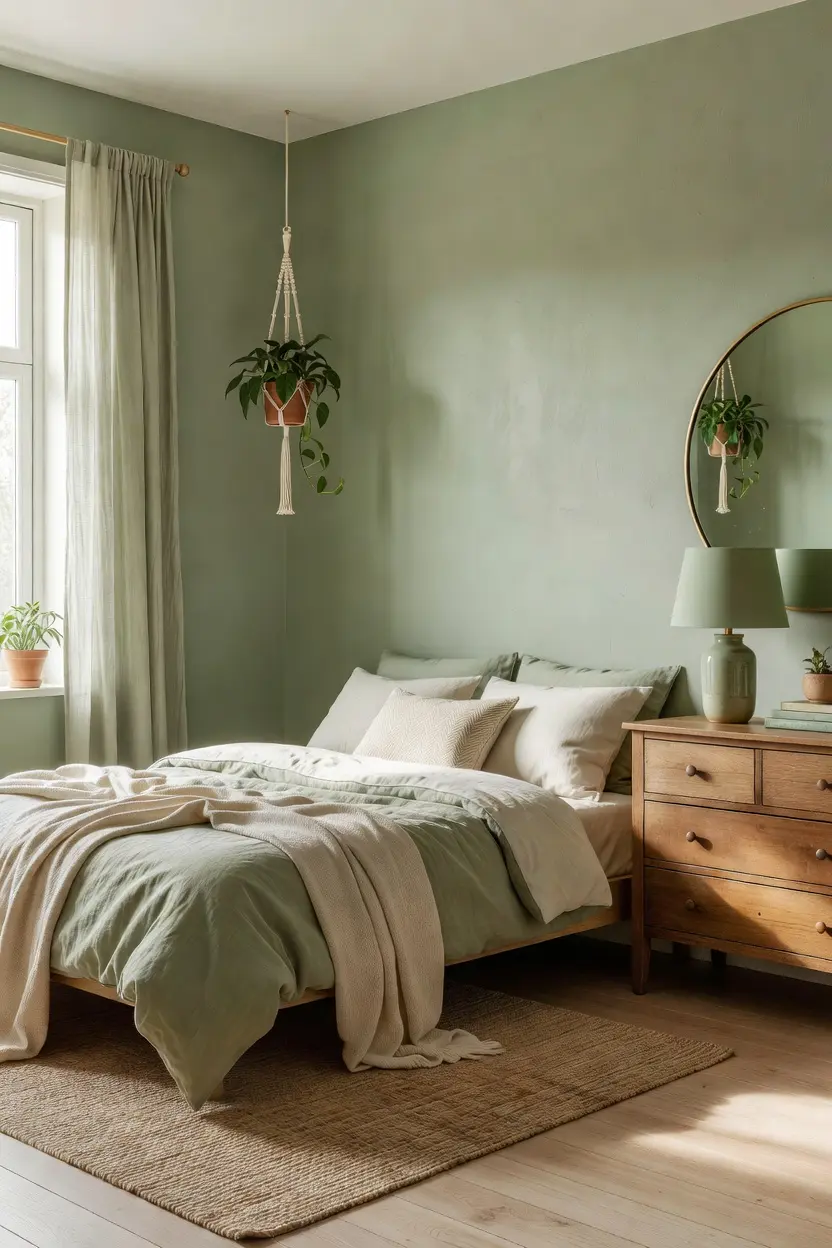
Bright, saturated colors can make a small room feel busy fast, since they demand attention rather than blending into the background. Sage sidesteps that. It reads as calm and grounded, closer to a warm gray than a true green, which is part of why it works in rooms with limited square footage.
There’s a practical upside too. Sage pairs easily with warm wood, black metal, and most bedding tones, so it doesn’t box you into a narrow set of furniture or decor choices the way a bolder color might.
2. Choosing a Sage Shade Suited to a Compact Space
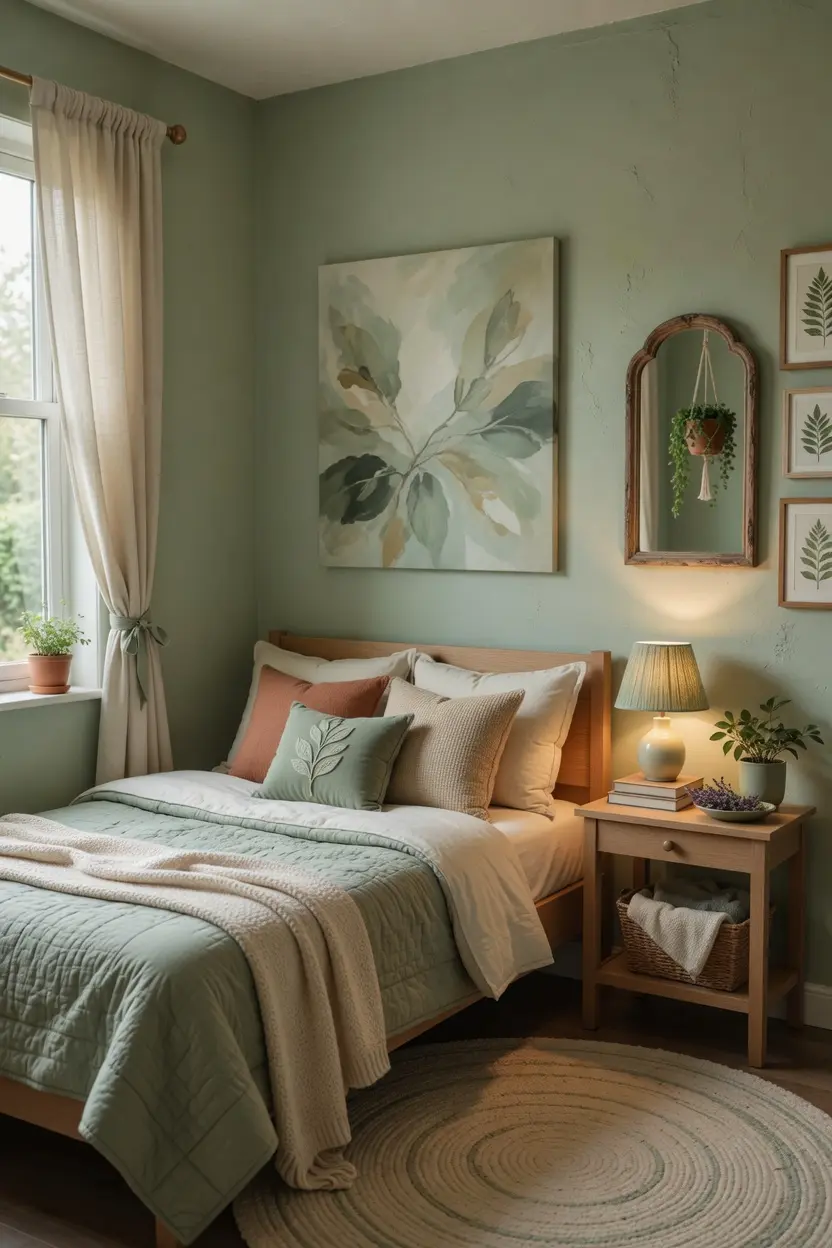
Small rooms often have limited natural light to begin with, sometimes just one window, and that changes which sage shade actually works. A lighter, slightly warmer sage tends to keep a compact room feeling open, while a deep, saturated sage can start to feel heavy without enough light bouncing around to balance it.
North facing bedrooms, with cooler indirect light, generally do better with a warmer sage tone. South or west facing rooms with more direct sun have a bit more room to experiment with a cooler or slightly deeper shade without it feeling flat.
A quick tip that helps: paint a large sample directly on the wall, at least two feet wide, and check it at different times of day. Small rooms shift in light more noticeably than larger ones since there’s less space for light to spread out.
3. Paint Placement Ideas Beyond a Full Accent Wall
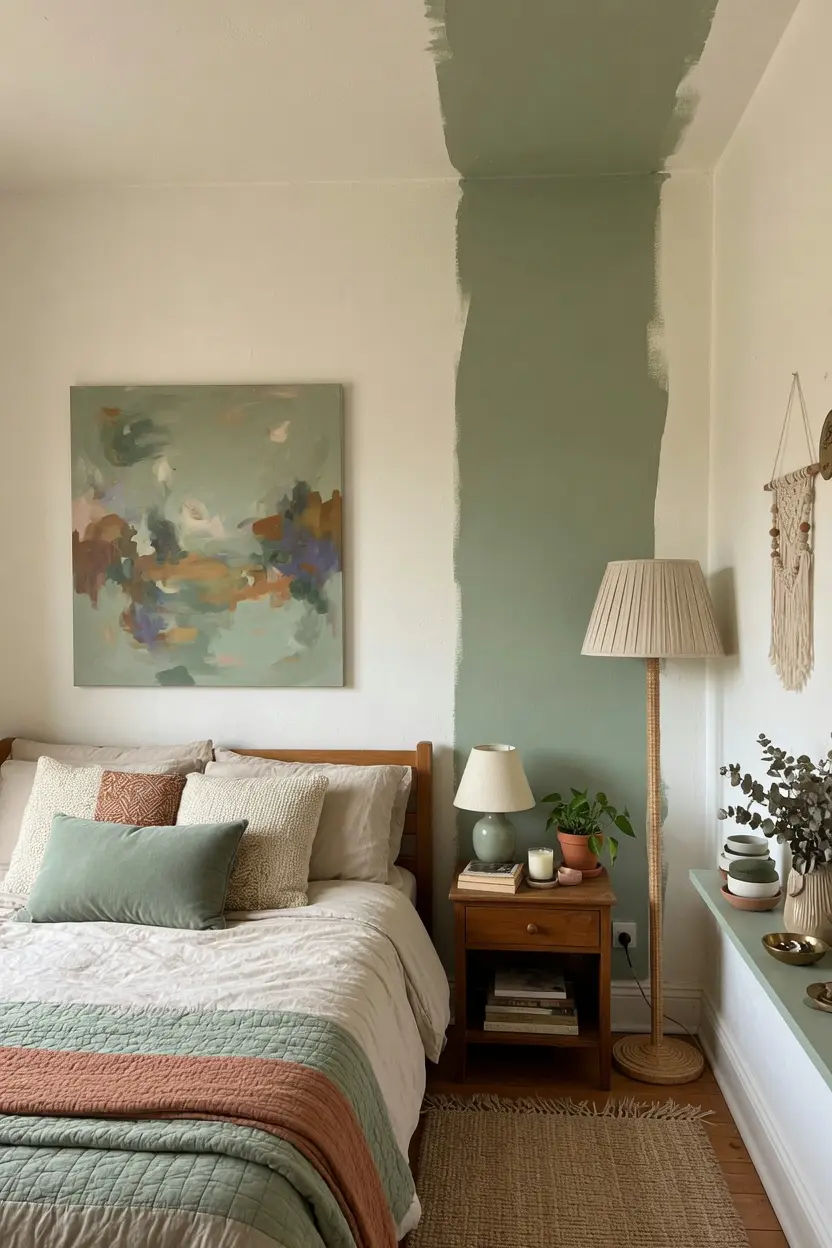
A full accent wall works, but it’s not the only option, and in a small room it’s not always the best one either. Painting just the wall behind the headboard, stopping short of the ceiling, keeps the color contained without making the whole room feel closed in.
Color drenching, where walls, trim, and ceiling all share the same sage tone, removes the visual break a white ceiling usually creates. Counterintuitively, that can make a small room feel larger, not smaller, since there’s no hard stopping point for the eye. Painting only the ceiling sage, while keeping the walls a lighter neutral, is a less common approach but one that adds color from an angle most rooms skip entirely.
Budget for Paint
A gallon of quality paint typically runs 35 to 60 dollars, and a small bedroom usually needs just one gallon. A single accent wall, sized for a small room, often costs under 30 dollars in paint alone.
4. Furniture Scale for a Small Sage Green Bedroom
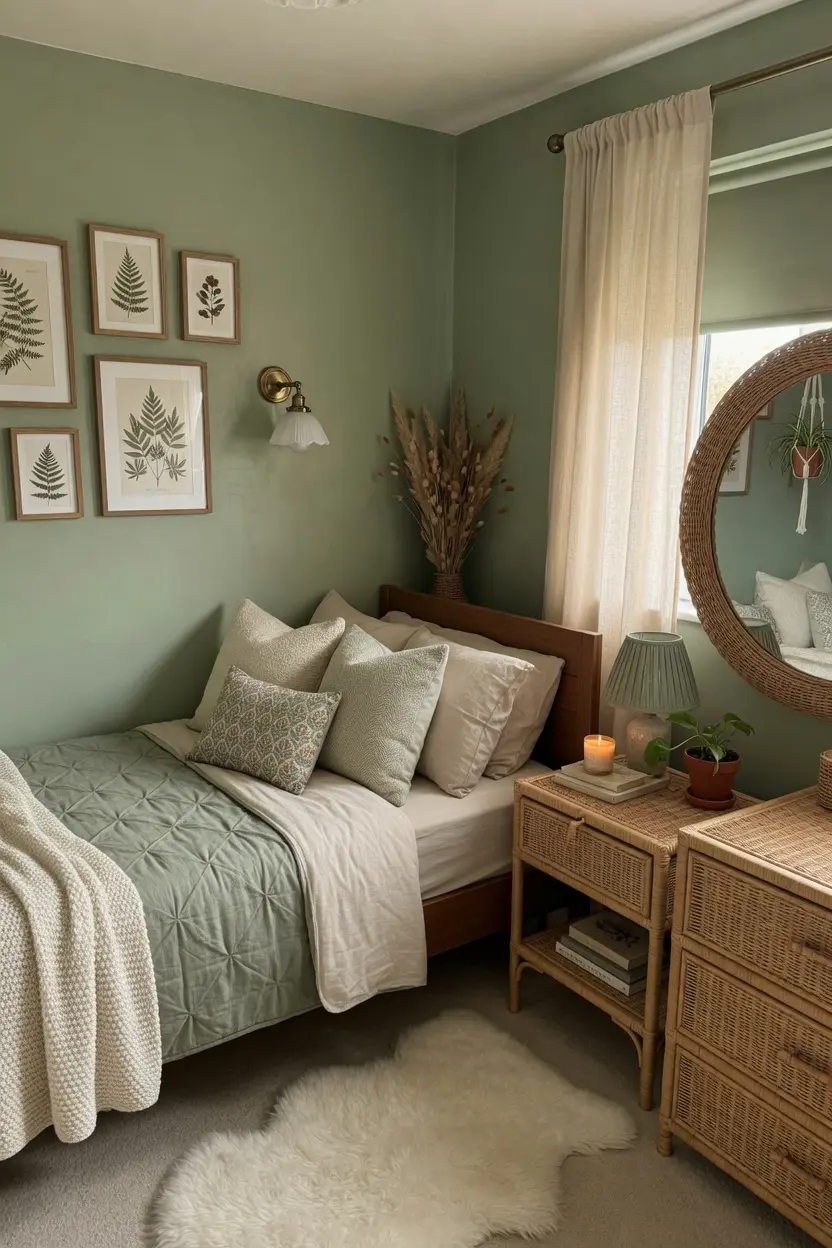
Oversized furniture undercuts a small sage green room fast, no matter how well the color’s chosen. A full size bed frame with a low, simple headboard leaves more of the wall color visible than a tall, bulky headboard would.
Nightstands with exposed legs, rather than a solid base sitting flush on the floor, let light travel underneath, which visually opens up the room in a way a heavier piece can’t. A slim dresser, taller rather than wide, holds a similar amount of storage while taking up less floor space, letting the sage walls stay the focal point instead of competing with bulky furniture.
Key takeaway: furniture scaled correctly for a small room does more for the overall feel than the paint color ever could on its own.
5. Bedding and Textile Choices That Reinforce the Palette

Bedding in a warm white or cream lets sage green walls stand out clearly, especially in a small room where the bed usually dominates the visual space. Layering in a textured throw, something woven or knit rather than smooth cotton, adds depth without introducing a second competing color.
Pillow covers in a slightly different shade of green than the walls, a touch lighter or darker, keep the palette from feeling flat or overly matched. A linen or waffle weave texture on the duvet reads as more considered than a plain cotton sateen, even at a similar price point.
6. Lighting That Keeps a Small Sage Room Feeling Warm
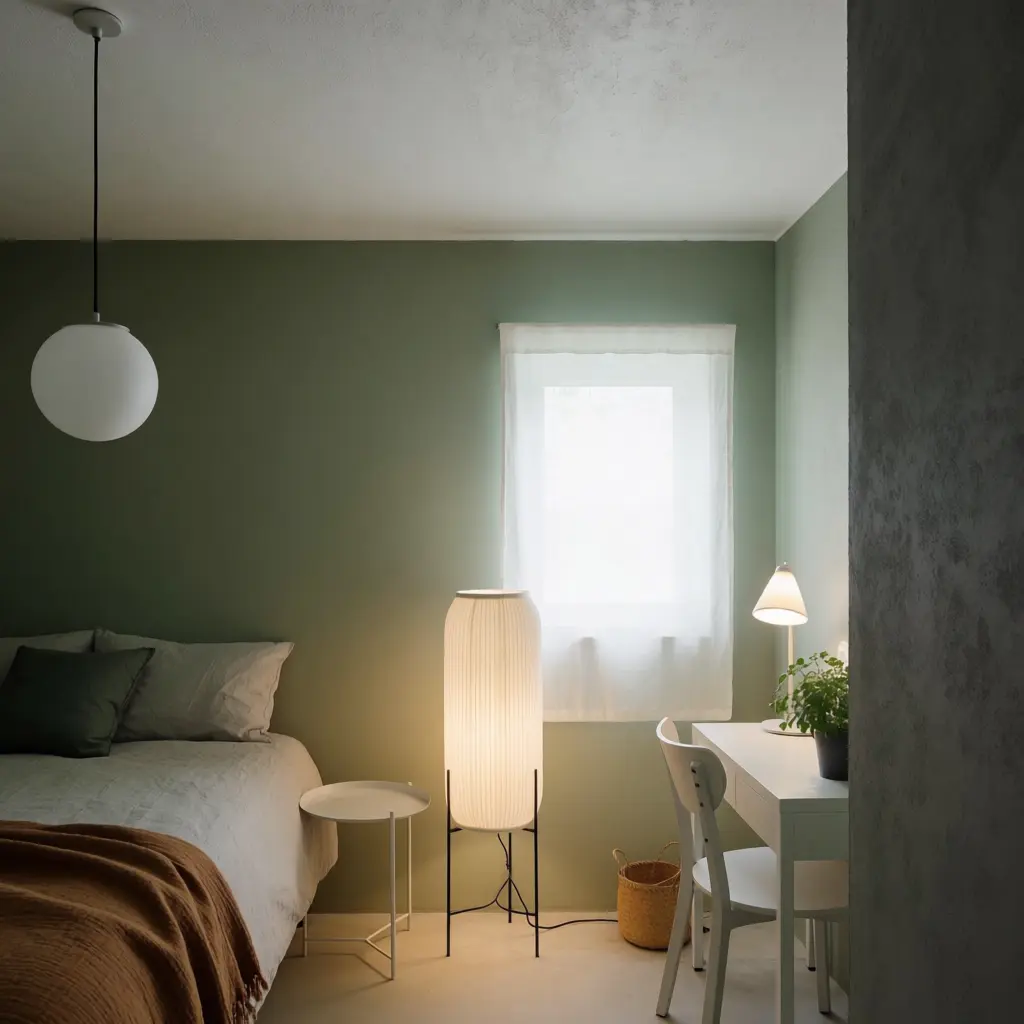
Cool toned lighting pulls sage green toward gray, which can flatten the color and make a small room feel less inviting than it should. Warm white bulbs, generally 2700K to 3000K, keep the green looking rich rather than washed out.
In a small bedroom, a table lamp does more visual work than an overhead fixture alone, since it adds a pocket of warm light at eye level instead of flat light from above. A dimmer switch, where the wiring allows it, lets the room shift from bright and functional during the day to soft and calming at night, a small change that matters more in a compact space than a larger one.
7. Mirror and Reflective Tricks That Add Depth

A well placed mirror does a lot of work in a small sage green bedroom, bouncing light around the room and creating the illusion of more depth than the actual square footage allows. Positioned across from a window, it reflects natural light back into the room rather than letting it stop at one wall.
A mirror leaned against the wall, rather than mounted, often looks less formal and works well against a sage accent wall specifically, since the reflection breaks up the solid color without needing another piece of furniture. Metallic accents, a brass frame or a few small brass details, catch light in a way that adds sparkle without clashing with sage’s earthy undertone.
8. Storage That Doesn’t Interrupt the Calm Look

Storage needs to earn its space in a small room without visually crowding it. Woven baskets, tucked under the bed or stacked on an open shelf, hold extra items without needing a bulky closet system or dresser.
Floating shelves, styled with just a few curated pieces rather than packed full, add storage and display space without eating into the floor space that makes a small room feel workable. Under bed storage, whether a rolling bin or a bed frame with built in drawers, uses space that would otherwise go unused entirely.
9. Budget Ranges for a Small Space Sage Green Refresh

A full small bedroom repaint, walls and trim included, done as a DIY project, typically costs 60 to 120 dollars in paint and supplies. A single accent wall, sized for a small room, runs closer to 25 to 40 dollars.
New bedding in a coordinated palette, a duvet cover, pillow shams, and a throw, generally runs 100 to 220 dollars depending on material, though secondhand and sale finds can bring that down. A leaned or wall mounted mirror, sourced secondhand or from a budget retailer, typically costs 40 to 100 dollars depending on size. A full small space sage green refresh, paint, bedding, and a mirror, often lands somewhere between 200 and 380 dollars total.
10. Finishing Touches That Pull a Small Room Together

A single well placed plant, real or a quality faux version, reinforces sage green’s natural feel without adding bulk or another color to manage. A ceramic lamp base or a small wood tray on the nightstand, styled with just a couple of items, keeps the room feeling calm rather than cluttered.
Artwork with a botanical or abstract nature theme continues the palette’s natural feel without needing to match the wall color exactly. In a small room specifically, leaving some surfaces only partially styled matters more than in a larger space, since visual clutter reads as smaller and busier in a tight footprint.
Mistakes to Avoid
- Choosing a deep, saturated sage in a room with very little natural light
- Skipping furniture scale and buying pieces sized for a bigger room
- Overfilling the small amount of surface space available in a compact room
- Using only cool toned lighting, which washes out sage’s warm undertone
- Painting a full accent wall without considering a partial or ceiling only option
- Ignoring mirror placement, missing an easy way to add depth and light
Frequently Asked Questions
Will sage green make my small bedroom feel smaller? Not if the shade and placement are chosen carefully. A lighter, warmer sage paired with good lighting tends to make a small room feel calm and open rather than closed in.
Do I need to paint the whole room to get the sage green look? No. A single wall behind the headboard, or even just the ceiling, can bring in the color without the commitment or cost of painting the entire room.
What’s the best way to add depth to a small sage green bedroom? A well placed mirror, positioned across from a window or leaned against an accent wall, bounces light around the room and creates a sense of more space than the room actually has.
What furniture works best in a small sage green bedroom? Furniture with a lower profile and visible legs, like a slim nightstand or a low headboard, keeps the room feeling open and lets the sage green walls remain the focal point.
Is sage green a good long term choice for a small bedroom? Yes. Since sage functions closer to a neutral than a true green, it tends to hold up better over time than a brighter, more trend driven color choice.
Conclusion
A small sage green bedroom works because the color and the layout support each other instead of competing. Choose a shade suited to your room’s light, keep furniture scaled to the actual space, and use a mirror or two to add depth where square footage runs short. Done well, a small sage green bedroom can feel just as calm and considered as a much larger room, without needing any more space to do it.