10 Lavender Kitchen Ideas That Feel Timeless, Not Trendy
A lavender kitchen sounds like a bold swing, the kind of color choice that either becomes the best decision in the house or something you’re repainting within two years. In practice, lavender has quietly become one of the more consistently recommended kitchen colors heading into this year, showing up repeatedly in cabinet color mock-ups and new remodels precisely because it manages to feel both soft and sophisticated at once. The difference between a lavender kitchen that ages well and one that feels like a passing trend comes down almost entirely to undertone, material pairing, and how much of the room actually gets covered.
1. Choose a Muted, Gray Undertone Lavender for Millwork
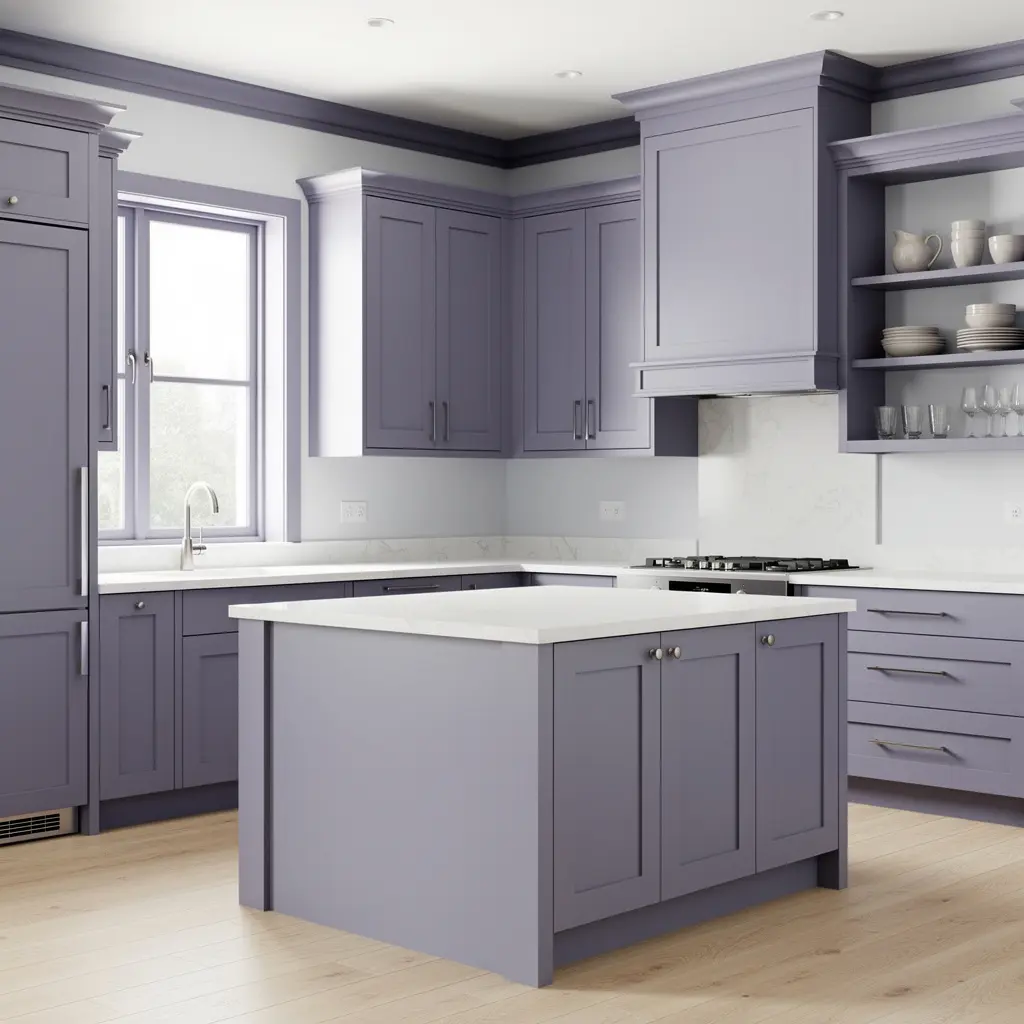
Modern Lavender, a muted, gray leaning shade, keeps showing up in kitchen millwork mock-ups this year alongside similarly quiet, nature adjacent colors. This kind of undertone matters enormously in a kitchen specifically, since cabinetry gets viewed under a mix of natural daylight and task lighting throughout the day, and a true, saturated purple can shift unpredictably between the two. A grayer lavender behaves more like a neutral, holding its tone consistently whether it’s morning light through a window or warm task lighting under the cabinets in the evening.
Testing the Shade Under Kitchen Lighting
Paint a large sample directly on cabinet doors or a section of wall near the sink and stove, then check it under the kitchen’s actual task lighting at night, not just daylight. Kitchens have more varied lighting conditions than almost any other room, so a shade that looks perfect at noon can shift considerably by evening.
2. Pair Lavender Cabinets With Brass or Gold Hardware

Lavender pairs exceptionally well with pale wood and matte brass, a combination that keeps showing up across current kitchen color forecasts for good reason. Warm brass hardware against a cool lavender cabinet creates the kind of contrast that feels deliberate rather than accidental, and it echoes the same warm metal and soft pastel pairing working well in bedrooms and living rooms this year. Silver or chrome hardware can work too, but tends to push the whole kitchen toward a cooler, more clinical feeling than brass does.
3. Mix Lavender With White for a Farmhouse Feel
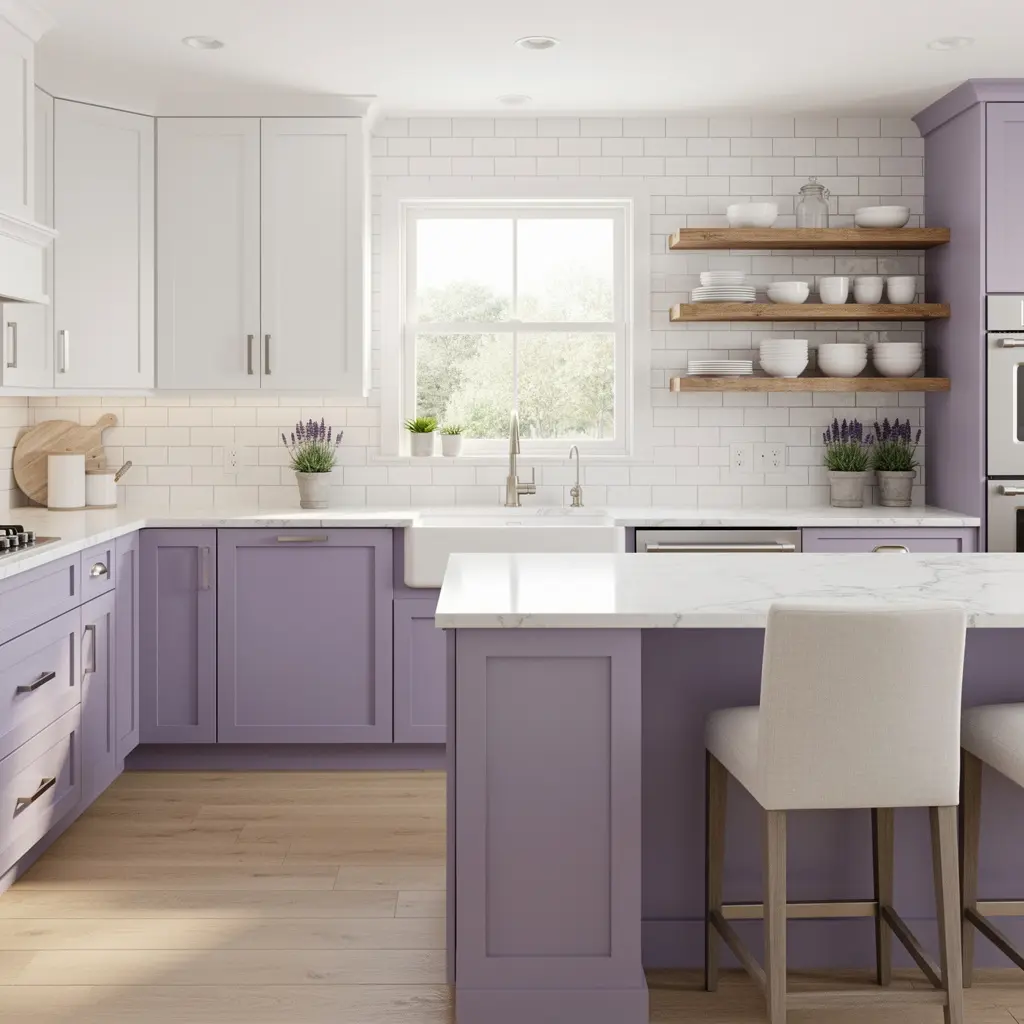
Soft purple cabinets paired with white tile and classic detailing give a kitchen a breezy, farmhouse leaning feel that avoids fading into the background while still staying approachable. This combination works particularly well for anyone nervous about committing to lavender on every surface, since the white keeps the palette light and gives the eye a clear place to rest between cabinet runs. The result tends to read as clean and cheerful rather than heavily themed.
4. Use Marble Counters to Add Structure and Depth
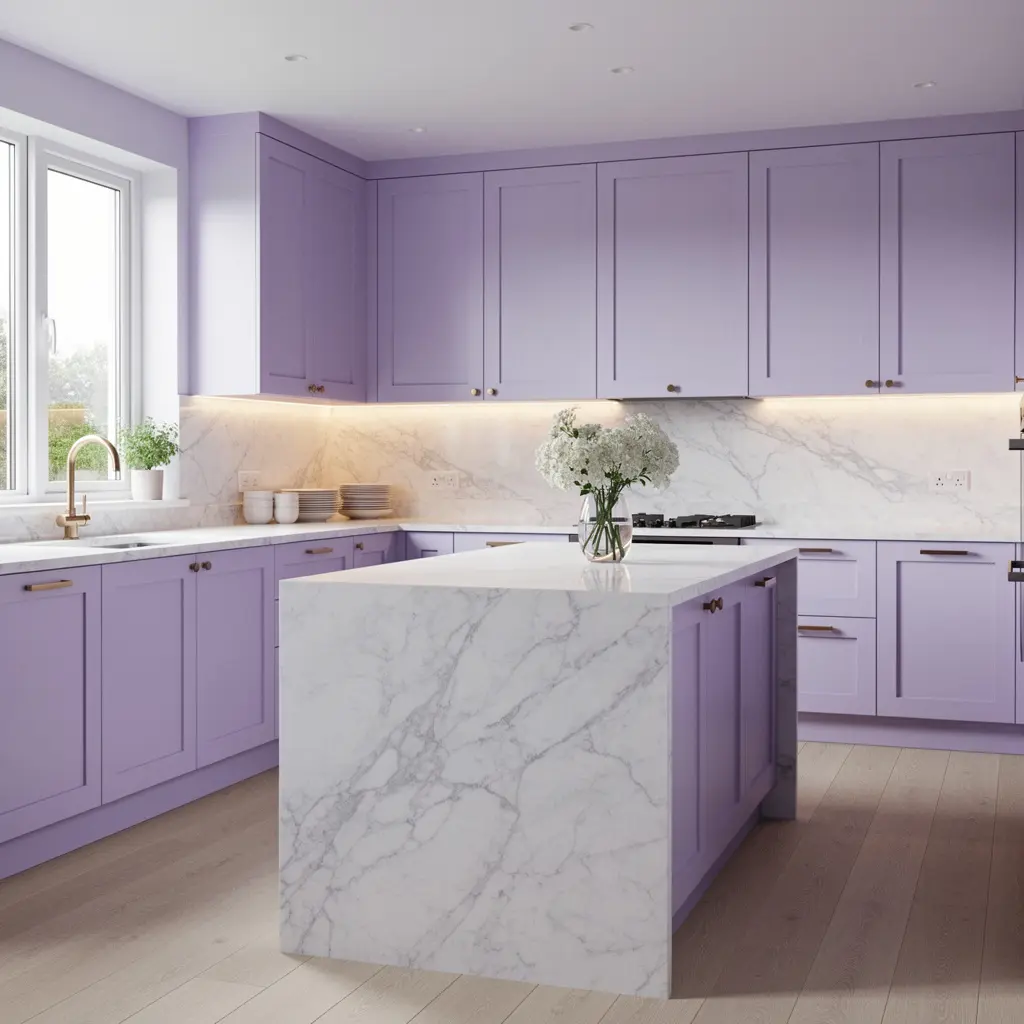
Marble countertops add real depth and visual structure against a soft lavender cabinet, keeping the overall look from feeling flat or overly sweet. The natural veining in marble, or an engineered quartz alternative with a similar look, gives the eye something more complex to focus on beyond a single solid pastel color, which is part of what separates an elevated lavender kitchen from one that feels flat and one note.
A honed rather than polished marble finish tends to suit a lavender kitchen especially well, since the softer sheen matches the calm, muted quality of the cabinet color instead of introducing the high shine that a glossier finish would bring into an otherwise gentle palette.
5. Choose Pale Wood Open Shelving for Warmth

Pale wood tones, whether in open shelving, a butcher block section, or simple trim details, warm up a lavender kitchen the same way wood grounds soft colors in other rooms of the house. This pairing shows up consistently in current kitchen color trend coverage, precisely because the warm undertone of pale wood balances lavender’s cooler cast without fighting it for attention.
6. Consider a Deeper Lavender for Drama and Sophistication
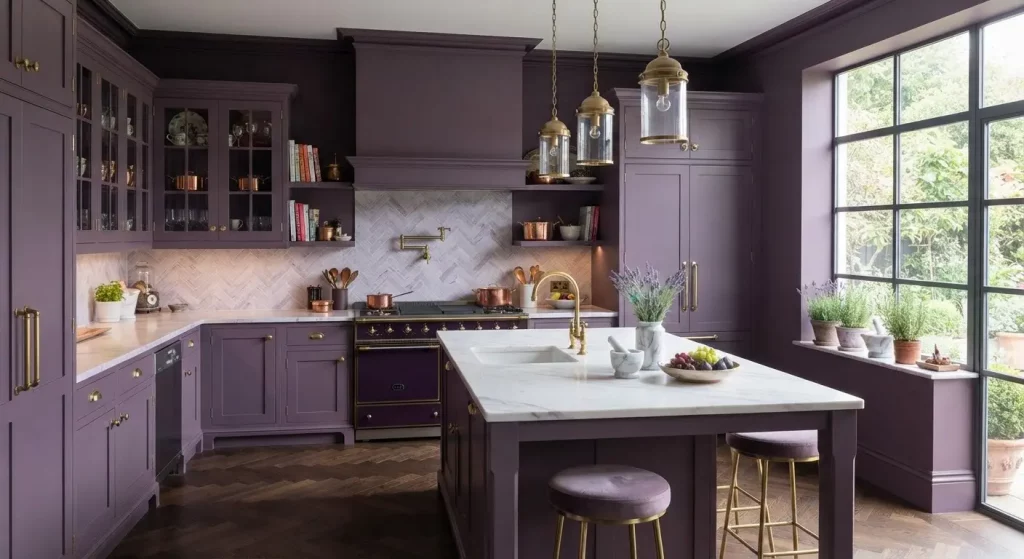
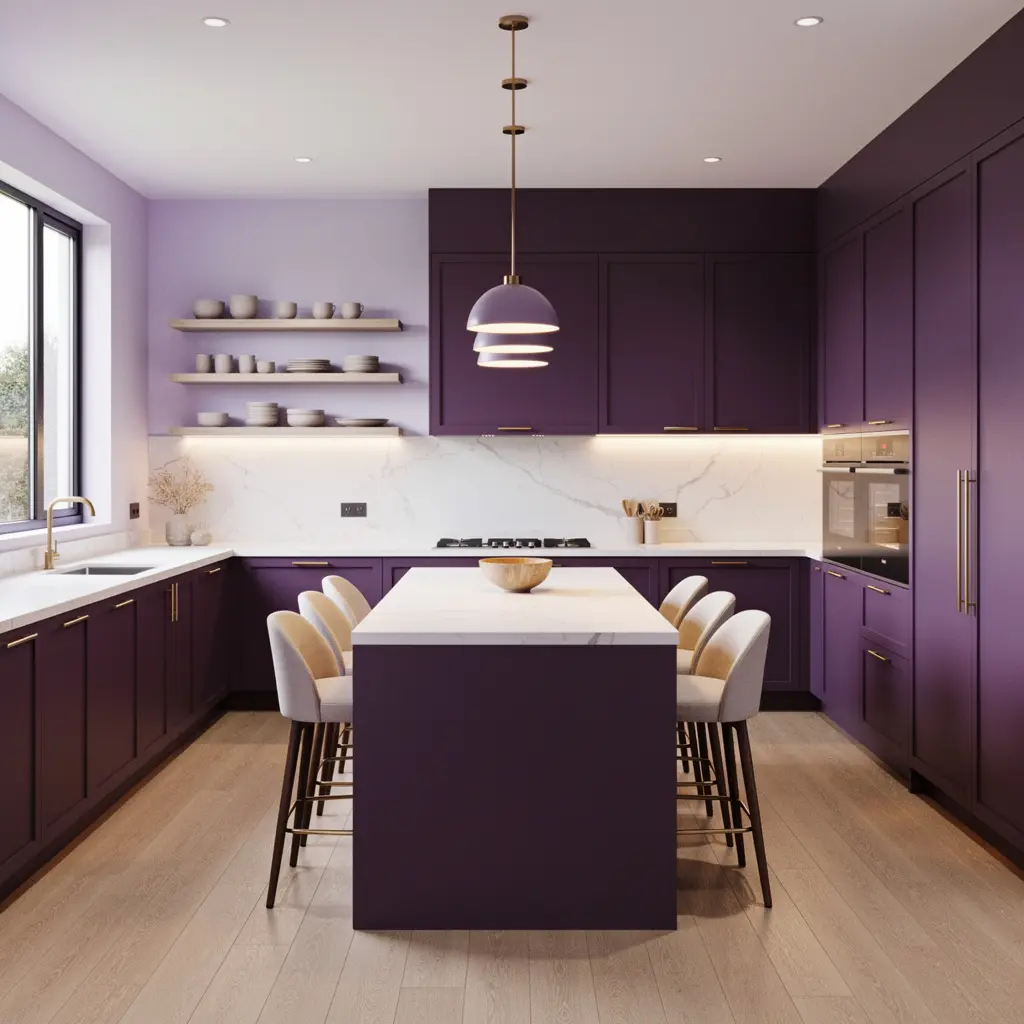
Lighter lavender shades foster a serene, calm feeling, while deeper, more saturated versions add real drama and sophistication instead. A kitchen wrapped in a bolder lavender, paired with brass hardware and marble counters, can feel confidently bold without tipping into overwhelming, especially when the rest of the material palette stays disciplined and doesn’t compete for attention.
Where a Bolder Shade Works Best
A deeper lavender tends to work better on lower cabinets, paired with a lighter countertop and upper cabinets, than it does covering every single surface in the room at full saturation.
7. Add Lavender Through Accessories First
Dish towels, curtains, a lavender vase filled with fresh flowers, or a set of tableware are some of the easiest, lowest commitment ways to bring lavender into a kitchen without touching the cabinetry at all. This approach works especially well for anyone who wants to test how the color feels in the space day to day before deciding whether to commit to something as permanent as painted cabinets.
8. Balance Lavender With a Restorative Dark Accent
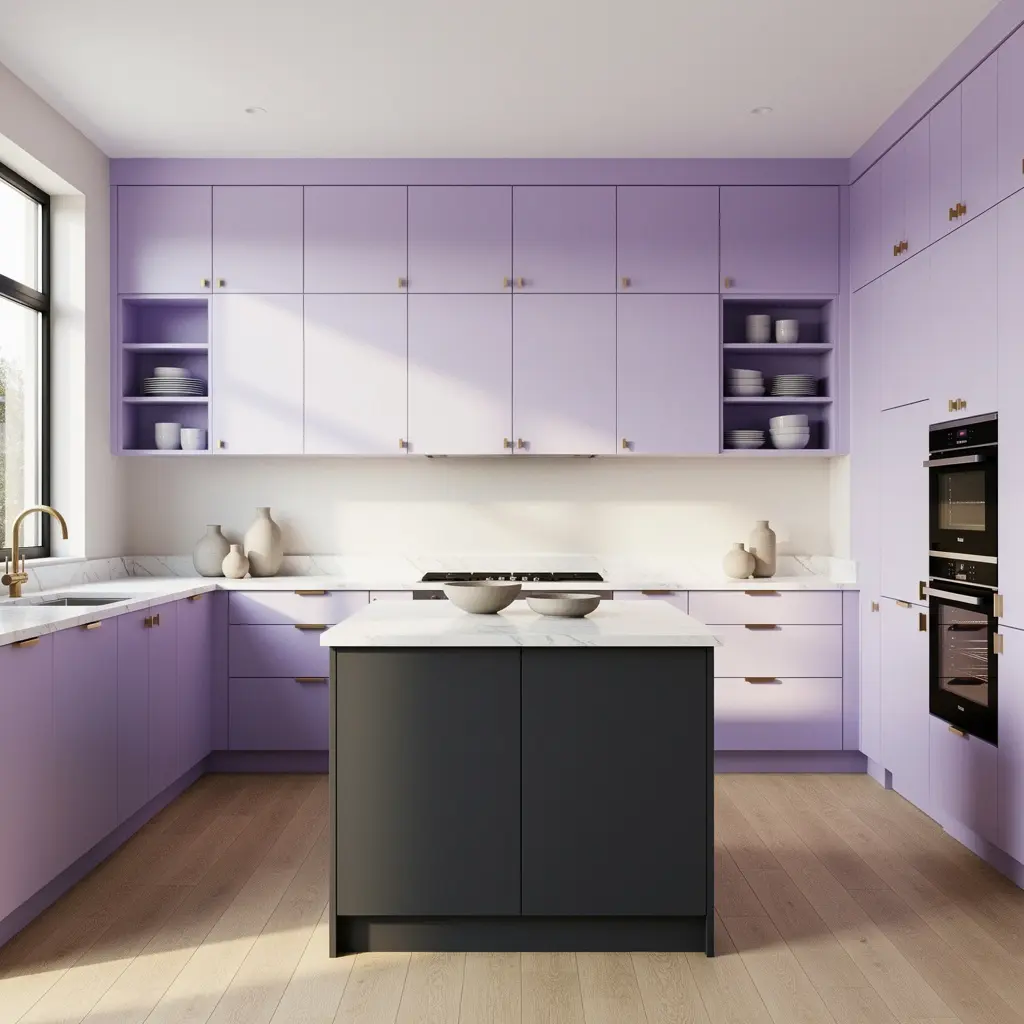
Deeper, moodier tones like plum brown or tarragon are being recommended specifically for lower cabinets when the counters are pale or veined, creating contrast against a lighter lavender used elsewhere in the room. This kind of tonal layering, light lavender above, a deeper grounding color below, keeps a soft palette from feeling flat across the whole kitchen.
9. Keep the Overall Palette to Two or Three Tones

Mixing lavender with just one or two supporting neutrals, white or gray are the most consistently recommended, achieves a balanced, cohesive look rather than a kitchen that feels scattered across too many competing colors. This restraint matters more in a kitchen than almost any other room, since cabinetry, counters, backsplash, and flooring all compete for visual attention within a relatively compact space.
Choosing the supporting tones before shopping for smaller details like a backsplash tile or cabinet knobs makes later decisions easier, since every new addition just needs to fit within that established two or three color range rather than being chosen in isolation.
10. Decide Between a Full Room or a Single Accent
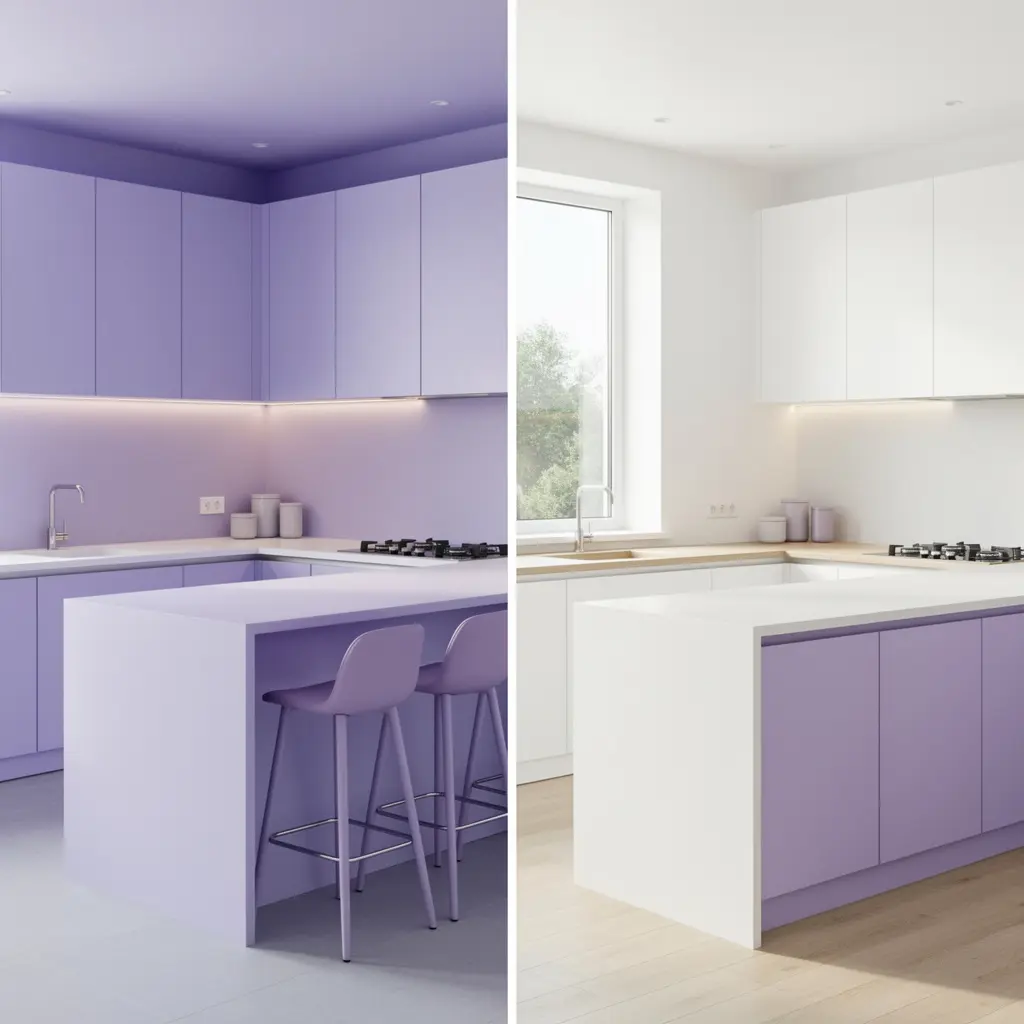
Lavender works both as a full cabinet color and as a single accent, a painted hood, an island, or just the lower cabinets, depending on how much commitment feels right. A single accent lets the color make a real statement without covering every surface, which can be the more practical choice in a kitchen that needs to feel timeless over many years rather than tied to one specific color moment.
Mistakes to Avoid
- Choosing a true, saturated purple instead of a muted, gray undertone lavender that holds up better under mixed lighting
- Pairing lavender with cool chrome hardware instead of warm brass or gold, which tends to soften the overall look
- Covering every surface in the same shade of lavender instead of layering in white, wood, or a deeper accent
- Skipping a countertop with visual texture, like marble or veined quartz, which can leave the kitchen feeling flat
- Committing to a full cabinet repaint before testing the color through smaller accessories first
- Ignoring how the shade shifts under the kitchen’s actual task lighting, not just daylight, before finalizing a color
Frequently Asked Questions
Will a lavender kitchen go out of style quickly? A muted, gray undertone lavender is being positioned as a more lasting choice than a bright, saturated purple, especially when paired with timeless materials like marble and warm wood rather than trend driven finishes.
What hardware works best with lavender cabinets? Brass or matte gold hardware is the most consistently recommended pairing, since the warm metal tone balances lavender’s cooler undertone better than chrome or silver.
Should I paint the whole kitchen lavender or just an accent? Both work. A full cabinet color makes the strongest statement, while a single accent, like an island or a range hood, offers a lower commitment way to bring in the color.
What countertop pairs best with a lavender kitchen? Marble or a marble look engineered quartz adds visual depth and structure that keeps a lavender kitchen from feeling flat or overly sweet.
Is lavender a good choice for a farmhouse style kitchen? Yes. Soft lavender paired with white tile and classic detailing creates a breezy, approachable farmhouse feel that many designers are already installing in new remodels.
Conclusion
A lavender kitchen avoids feeling like a fleeting trend when the shade leans muted and gray, when it’s paired with warm brass hardware and a textured countertop like marble, and when the rest of the palette stays disciplined at two or three tones. Whether it’s a full room commitment or just an accent through a hood, an island, or a set of accessories, lavender offers a calming, elegant option for a kitchen that still needs to hold up over years of daily cooking.