10 Lavender Bedroom Ideas for a Calm, Grounded Retreat
Lavender carries a reputation for being a little precious, the kind of color that works beautifully in a paint swatch and then feels oddly juvenile once it covers four full walls. That worry is exactly what keeps a lot of people from trying it, even though lavender is genuinely one of the more calming, wellness aligned colors available for a bedroom right now. Cool tones like lavender are being pointed to specifically as choices that support restful sleep and a peaceful, grounded atmosphere, and the difference between a fussy lavender room and a sophisticated one almost always comes down to undertone, contrast, and what gets paired around it.
1. Choose a Warm Lavender With a Gray Undertone

A lavender shade with a gray undertone reads almost like a neutral rather than a true pastel, which changes how the whole room behaves. This warmer, grounded version of lavender looks noticeably richer against a crisp white ceiling or wainscoting than a cooler, more purple leaning shade would. Because it functions closer to neutral, it also opens the door to layering in other colors later, a touch of yellow or blush pink, without the room ever feeling overly matched or themed.
Testing a Swatch Before Committing
Paint a large swatch, at least two feet wide, on the actual wall and observe it at different times of day. Lavender shifts more dramatically under changing light than many other colors, so a shade that looks perfect at noon can read colder or flatter by evening.
2. Pair Lavender Walls With Crisp White Trim

White wainscoting or simple white trim against a lavender wall creates definition that keeps the color from spreading into every corner of the room unchecked. This contrast is part of what several designers point to as the trick for keeping lavender sophisticated rather than sweet, since the crisp white breaks up the color and gives the eye somewhere to rest. It also makes the room feel more architecturally finished, since trim detail carries more weight than a single flat color running wall to wall.
3. Add Rust or Terracotta to Keep the Color From Feeling Fussy

A rust or terracotta drapery panel, paired with charmingly simple floral or linen bedding, keeps a lavender room from tipping into overly delicate territory. This warm, earthy accent color sits opposite lavender on the color wheel in a soft, muted way, which adds visual weight without fighting the wall color for attention. A single vintage or abstract art piece nearby reinforces the same grounded, collected feeling rather than a room that looks like one uniform pastel wash.
4. Choose a Vertical Channel Upholstered Headboard

Vertical channel tufting has become one of the standout bedroom furniture trends this year, bringing architectural interest along with a soft, cocooned feeling to the space. Against a lavender wall, this kind of headboard adds texture and shadow line that a flat wood or plain upholstered piece can’t replicate. The vertical lines also draw the eye upward, which makes a smaller bedroom feel a bit taller than it actually is.
5. Layer Neutral Bedding With Subtle Pattern

Rather than matching the bedding directly to the wall color, layered neutral bedding with a bit of subtle pattern adds depth without overwhelming an already calming palette. A soft ivory duvet with a faint stripe or a small scale print keeps the bed from becoming a second, competing block of lavender. This approach is specifically what designers are leaning toward this year, since it gives a room depth without disrupting the overall sense of calm.
Building the bed in layers, a fitted sheet, a lightweight quilt, and a folded throw at the foot, also gives the room a sense of ease rather than a stiff, showroom made appearance. Soft, breathable fabrics like cotton and linen are worth prioritizing here, both for comfort and because their natural texture reads as calmer than something glossy or synthetic against a matte lavender wall.
6. Add Richly Stained Wood Furniture for Warmth
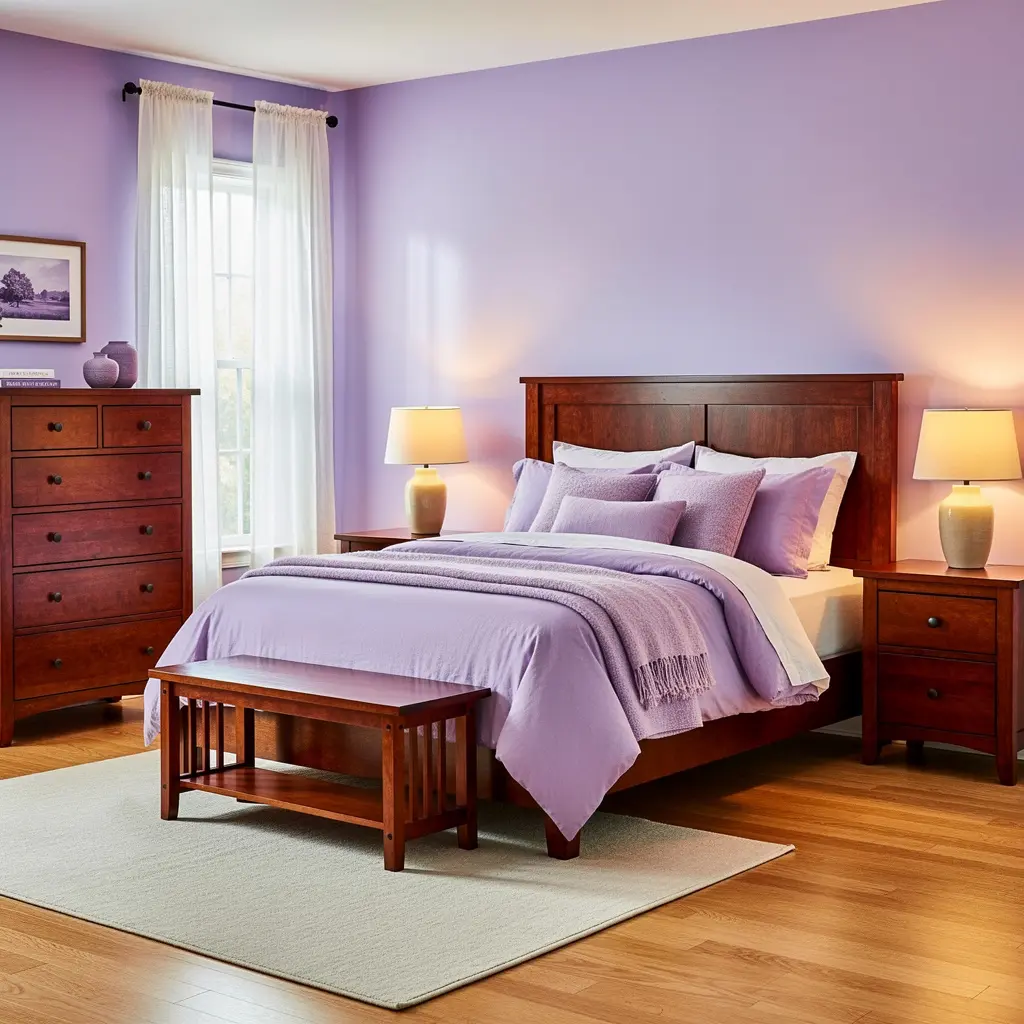
A darker stained wood nightstand or dresser introduces warmth and a sense of craftsmanship that balances lavender’s cooler undertones. This pairing has become a consistent detail in current bedroom design, since rich wood tones ground a pastel wall color the same way a warm accent color does through textiles. Custom drapery details in a similar wood adjacent tone tie the whole room together even further.
7. Use Aromatherapy to Reinforce the Room’s Calm

An aromatherapy diffuser using lavender or sandalwood scent supports the same relaxation the wall color is already working toward, creating a room that engages more than just sight. This kind of layered sensory detail has become part of the broader wellness focused direction bedroom design is taking this year, where every element in the room is chosen to support rest rather than just to look good in a photo.
8. Add Layered Lighting for a Gentle Evening Glow

Combining warm ambient lighting with dim bedside lamps creates a gentle atmosphere that flatters lavender’s cooler tone rather than washing it out. A single harsh overhead light can make lavender look flatter and colder than it actually is, while layered, warmer light sources let the color read as rich and enveloping once the sun goes down. This is one of the simpler additions on this list, but it changes how the whole room feels after dark.
9. Keep Surfaces Decluttered for a Restful Feel

A decluttered layout reduces visual noise and supports the same restful quality lavender is already contributing to the room. Clear nightstands, an edited dresser top, and minimal decor let the wall color and furniture actually stand out instead of competing with everyday clutter. This matters more in a lavender room specifically, since a busier, more cluttered space can undercut the calm, grounded feeling the color is meant to create.
A closed storage solution, a basket for extra throws or a drawer for daily items normally left on top of a dresser, keeps this decluttered look easy to maintain day to day rather than something that only holds up right after a deep clean.
10. Elevate Small Everyday Items

Small, practical upgrades, a tissue box cover, a ceramic tray for jewelry, a fabric covered charging station, are getting real design attention this year rather than being left as an afterthought. In a lavender bedroom, choosing these small items in a warm neutral or wood tone rather than plain plastic keeps even the most mundane objects in the room feeling deliberate rather than out of place.
Mistakes to Avoid
- Choosing a cool, purple leaning lavender instead of a warmer, gray undertone version that reads closer to neutral
- Skipping white trim or wainscoting, which leaves the color with no visual break or contrast
- Matching bedding directly to the wall color instead of layering in neutral tones with subtle pattern
- Relying only on a single overhead light, which can make lavender look flatter and colder in the evening
- Overcrowding surfaces with clutter, which works against the calm, restful quality the color is meant to create
- Skipping a warm accent color like rust or terracotta, leaving the room feeling one note and overly delicate
Frequently Asked Questions
Will lavender make a bedroom feel too young or feminine? Not if the shade leans warm with a gray undertone and is paired with grounding elements like rust textiles, dark wood furniture, and crisp white trim. These choices keep the color reading as sophisticated rather than sweet.
What colors pair best with lavender in a bedroom? Crisp white for contrast, rust or terracotta for warmth, and rich wood tones for grounding are among the most consistently recommended pairings, with blush or soft yellow as optional accents once the base feels neutral enough to support them.
Is lavender a good color for better sleep? Cool tones like lavender are considered naturally calming and are frequently recommended for bedrooms specifically because they support a peaceful, restful atmosphere rather than an energizing one.
Should I paint the whole room lavender or just an accent wall? Either works, though a full room in a warm, neutral leaning lavender tends to feel more cohesive, while an accent wall is a lower commitment way to test the color before committing further.
What furniture style works best with lavender walls? A vertical channel upholstered headboard and richly stained wood nightstands are two of the more consistently recommended pairings, since they add texture and warmth that balance lavender’s cooler undertone.
Conclusion
A lavender bedroom avoids feeling fussy when the shade leans warm, the trim provides real contrast, and a grounding accent color like rust or terracotta keeps the palette from feeling one note. Layer in rich wood furniture, subtle patterned bedding, and gentle evening lighting, and the room feels calming and put together rather than overly sweet. Start with the undertone and trim pairing, since those two choices shape how the rest of the room’s warmth builds from there.