10 Lavender Living Room Ideas That Feel Elevated, Not Sweet
Lavender in a living room sounds risky to a lot of people, more suited to a little girl’s bedroom than a space meant to host guests and survive years of actual daily use. That reputation is already shifting. Color forecasts for this year point to shades like deep plum and softer lavender actually dominating interior design, with dusty, grown up pastels replacing the sweeter, bubblegum leaning purples of years past. The difference between a lavender living room that feels elegant and one that feels juvenile almost always comes down to which shade you pick and what you ground it with.
1. Choose a Dusty, Grown Up Lavender Over a Sweet Pastel

Dusty mauve, soft lavender, and gray washed lilac are the specific tones driving this year’s sofa color trends, chosen precisely because they offer subtle personality without committing to something bold or overly saccharine. A lavender with a gray or brown undertone comes across as far more sophisticated than a clean, bright purple, and it holds up better over years rather than feeling like a passing trend the moment the next color forecast arrives.
Testing Lavender Against Your Existing Light
Lavender shifts noticeably depending on natural light, so bring home a fabric swatch or paint sample and view it in the room at different times of day before committing to furniture or a full wall.
2. Pair a Lavender Sofa With Raw, Natural Materials
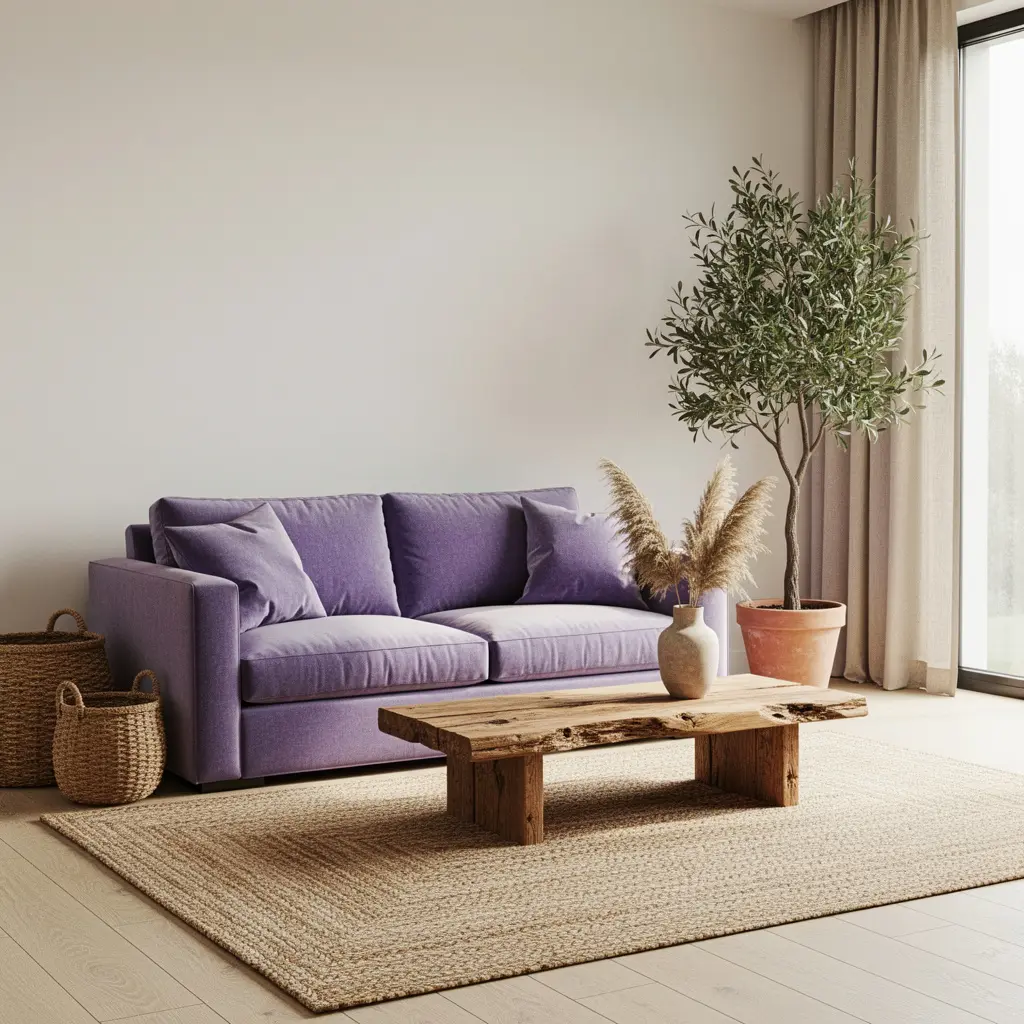
Stone, matte black, brushed gold, and warm woods are the materials lavender and other grown up pastels are being paired with most consistently this year. These raw, tactile finishes keep a soft sofa color from feeling delicate or precious, giving the room a grounded, European inspired softness rather than a flat, one note pastel look. A stone coffee table or a matte black floor lamp next to a lavender sofa does a lot of this grounding work on its own.
3. Add a Lavender Rug for Softness Underfoot
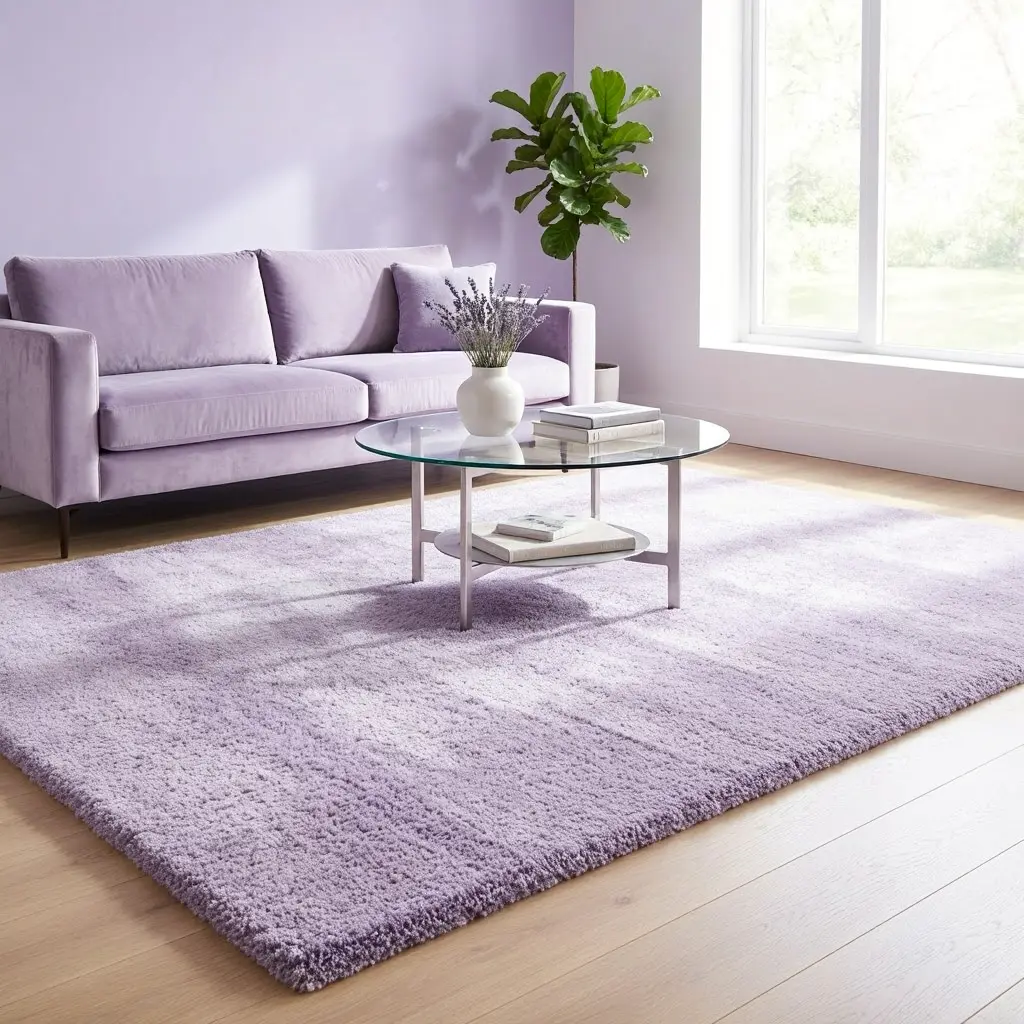
Lavender rugs are gaining real traction this year specifically because the color works beautifully with both warm and cool surrounding tones, making it a flexible choice for contemporary, minimalist, and transitional living rooms alike. A rug in this tone promotes a sense of calm without overwhelming the room, and it’s often a lower commitment way to introduce lavender before deciding whether to extend it to furniture or walls.
A wool or wool blend rug in particular holds color well over years of foot traffic, which matters in a living room more than almost any other room in the house. Placing it under the front legs of the main seating pulls the whole furniture arrangement together instead of leaving the rug feeling like a separate, disconnected element floating in the middle of the floor.
4. Balance Lavender With Deep Plum or Charcoal
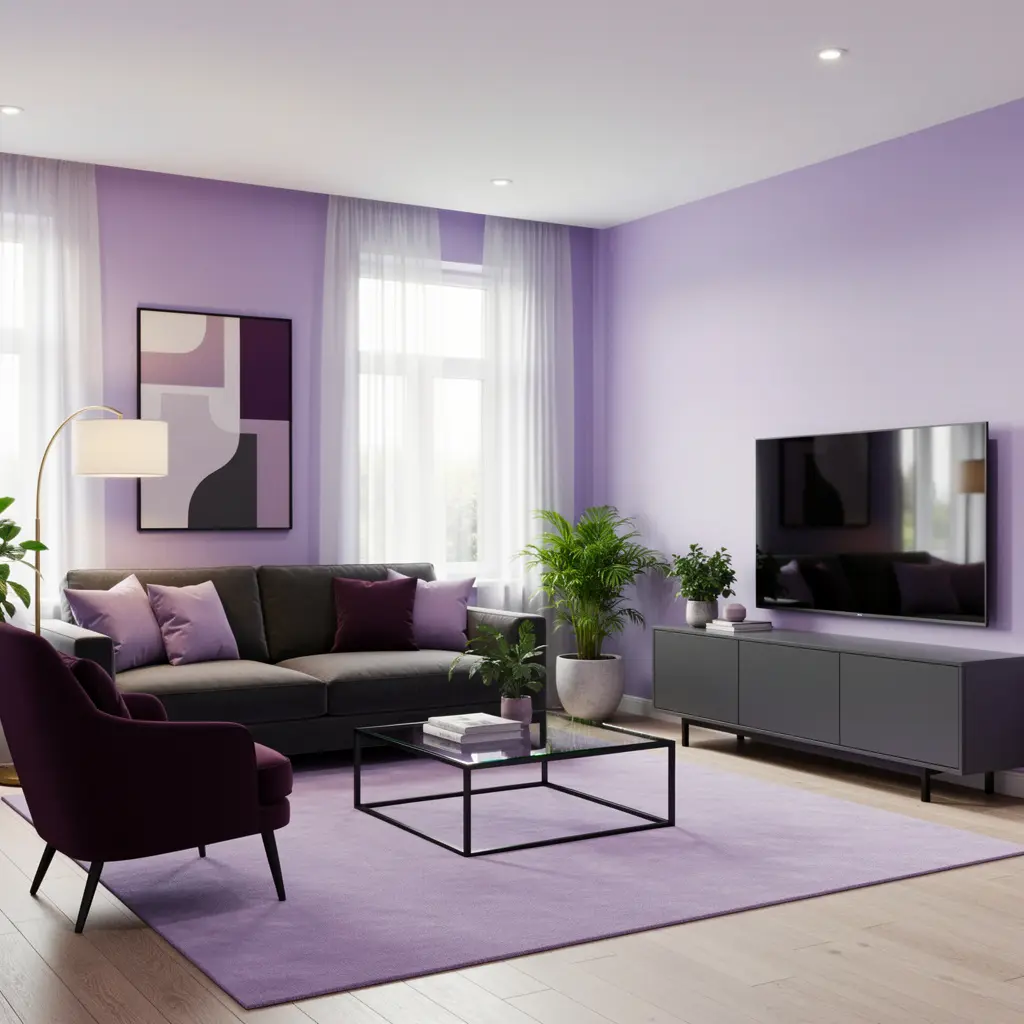
Deep plum sits right alongside lavender in current color forecasts, and pairing the two creates rich tonal depth rather than a room that looks like flat pastel. A charcoal or inky blue accent chair nearby adds further contrast, echoing the broader shift toward darker, more dramatic foundational colors this year rather than an all cream, all soft palette.
Where to Introduce the Darker Tone
A single accent chair, a set of drapery panels, or a textured throw are all lower commitment ways to bring in plum or charcoal without repainting or reupholstering the whole room.
5. Use Brushed Gold or Matte Black Hardware
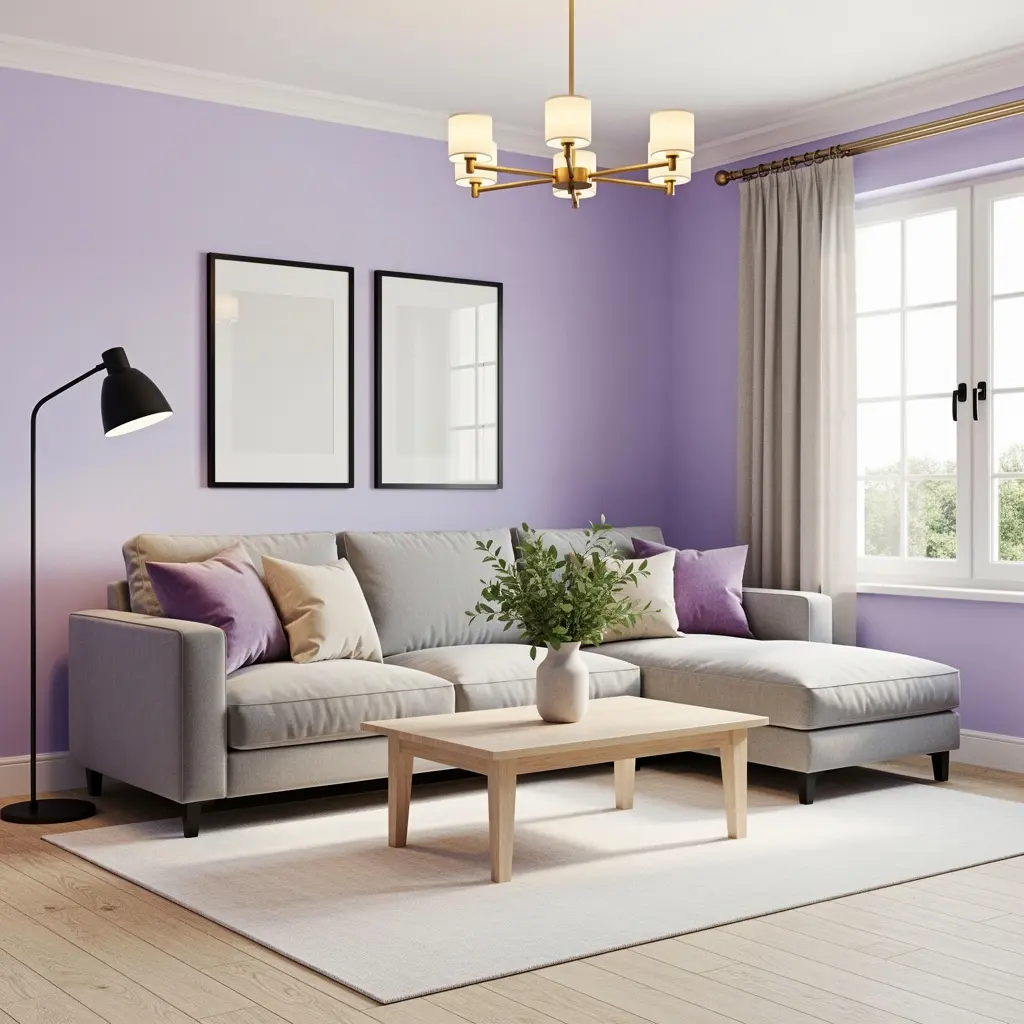
Warm metal finishes like brushed gold, or a cooler matte black for more contrast, both pair naturally with lavender’s cooler undertone. These finishes show up consistently across current living room trend coverage as a way to add sophistication and a slightly luxurious edge without requiring a full furniture change, since a lamp base or a set of drawer pulls can carry this detail on a smaller budget.
6. Choose Tactile Fabrics Like Boucle and Linen
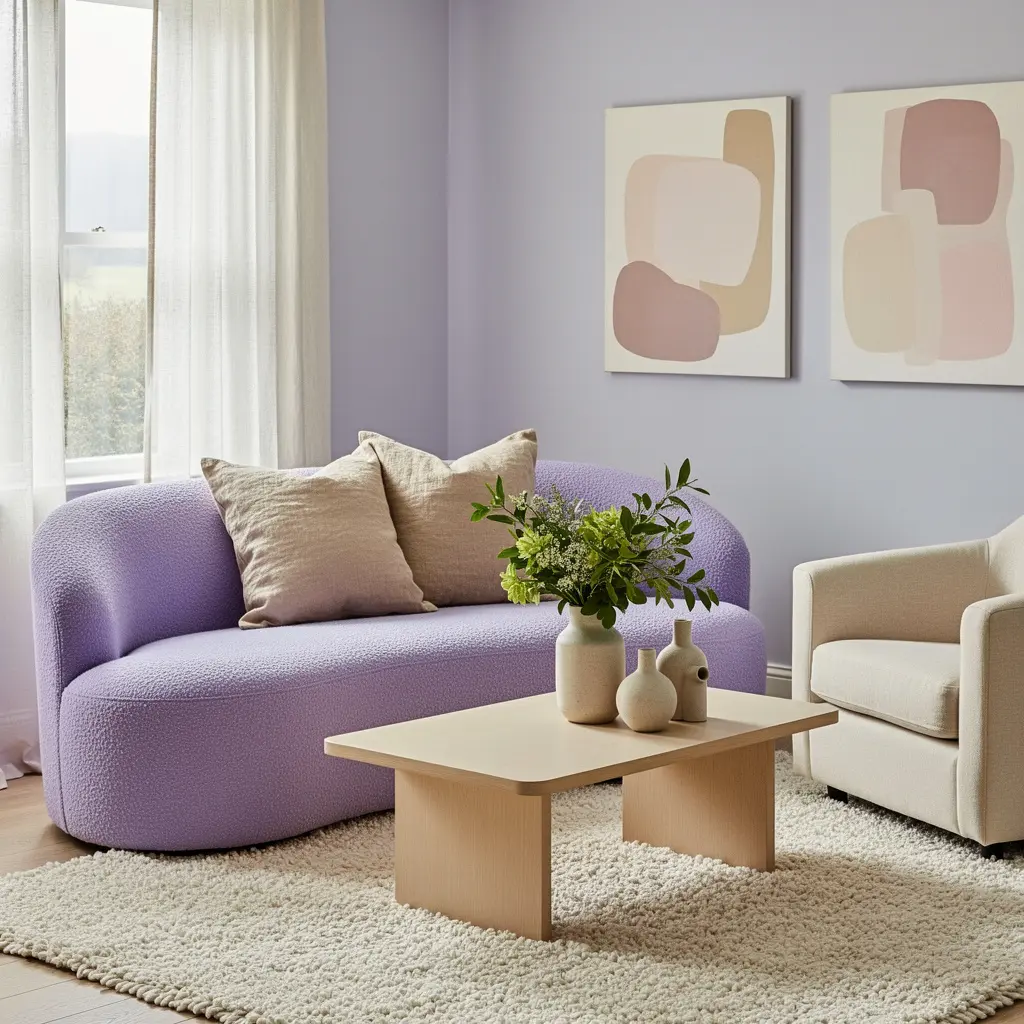
Sofa design this year leans heavily into tactile, natural fabrics, boucle, linen, and velvet in particular, moving away from flatter, high shine surfaces that dominated in previous years. A lavender sofa in a boucle or linen weave feels textured and lived in rather than flat and synthetic, which matters a lot for how sophisticated the color ultimately feels in person.
Velvet adds a different kind of depth, catching light in a way that makes lavender look richer in the evening under lamp light than it does in flat daylight. Whichever fabric you choose, running a hand over the actual swatch before buying is worth the extra step, since texture is difficult to judge from a photo alone.
7. Add Warm Wood Furniture as a Grounding Anchor
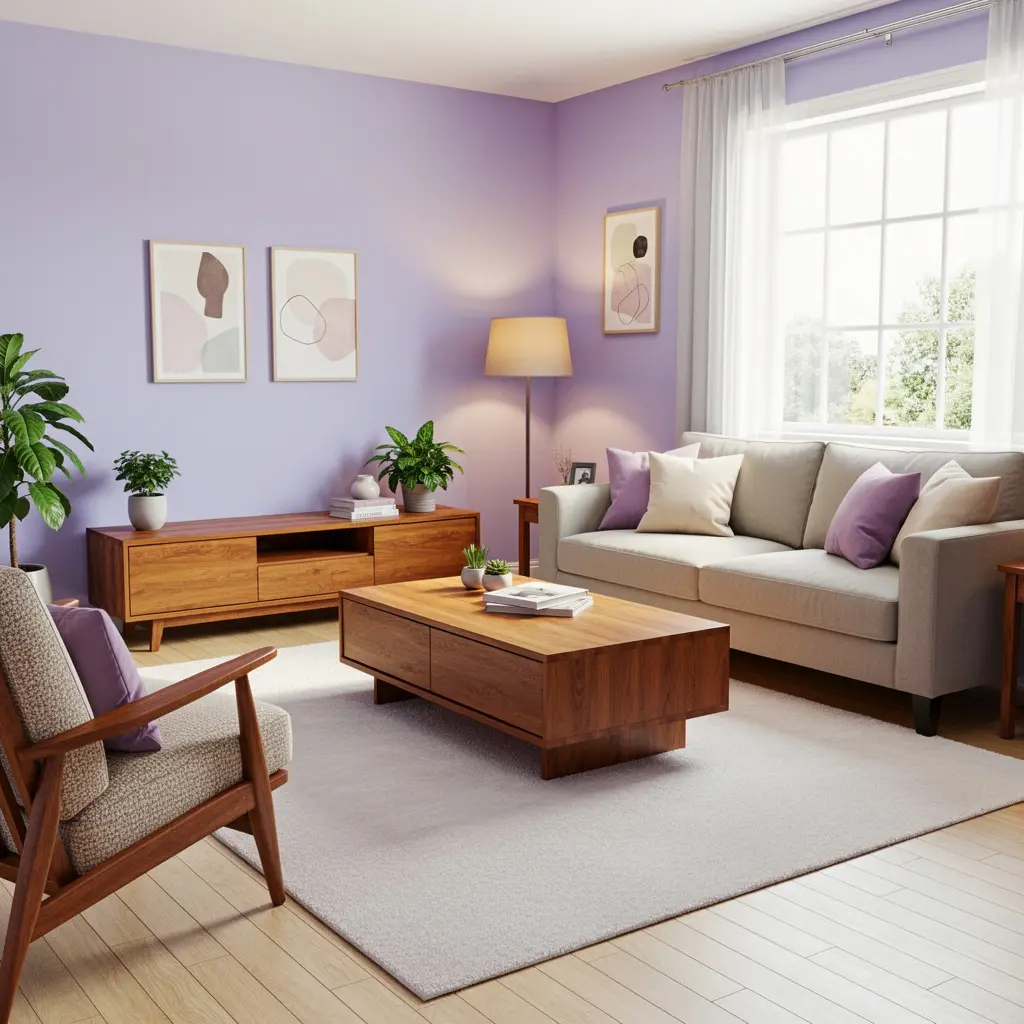
A light oak coffee table or wood side table grounds a lavender sofa the same way it grounds other soft, muted colors trending this year, moss green and clay among them. This pairing recalls a broader move toward nature inspired combinations, since the warm grain of real wood keeps a cooler pastel color from feeling disconnected from the rest of the room’s materials.
8. Layer in Gemstone Tones for a Luxurious Contrast
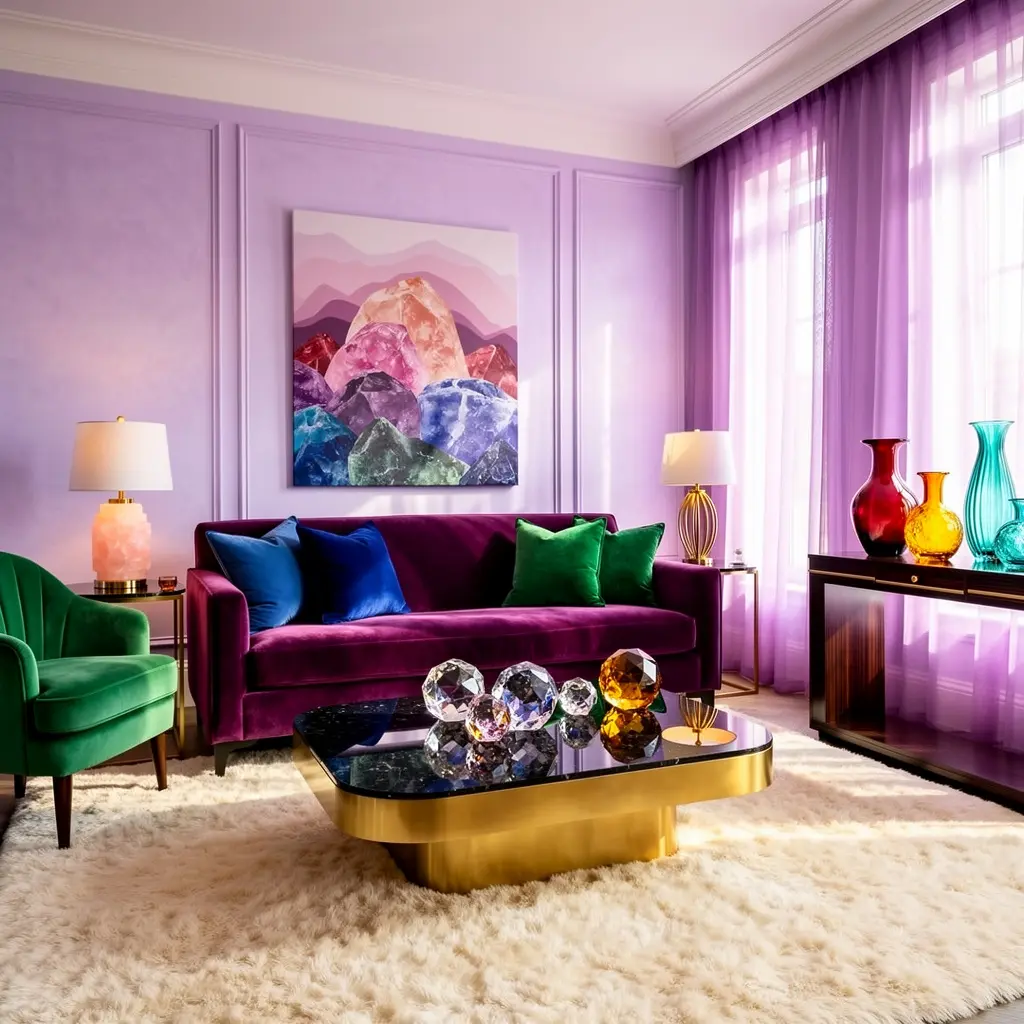
Emerald or sapphire accents, in a throw pillow, a piece of art, or a small decorative object, create a truly luxurious atmosphere when paired with a lavender base. These richer, jewel toned colors add depth and visual interest without requiring the main furniture to change, and they photograph particularly well against a softer, more muted lavender backdrop.
9. Keep the Rest of the Palette Simple and Earthy

Warmer tones like clay, sand, and soft terracotta are replacing cooler grays across current living room design, and this same warm, earthy foundation works well as a supporting cast for a lavender centerpiece. Keeping walls and larger furniture pieces in these simpler, warmer neutrals lets the lavender sofa or rug act as the room’s clear focal point instead of competing with several other bold choices at once.
This restraint also makes the room easier to update later. A neutral wall and floor mean the lavender sofa, rug, or accent pieces can be swapped out down the road without requiring a full repaint or renovation to change direction.
10. Style the Room for Everyday Use, Not Just Photos

Current living room design prioritizes seating arranged for actual conversation and daily use over a purely catalog inspired layout, with multiple seating zones rather than one formal focal point aimed at a television. A lavender living room benefits from this same practical approach, since the goal is a space that feels warm and genuinely lived in, not a showroom display that only looks good from one angle.
Mistakes to Avoid
- Choosing a bright, sweet pastel lavender instead of a dustier, gray or brown undertone version
- Pairing lavender only with other pastels instead of grounding it with stone, wood, or dark metal
- Skipping tactile fabrics like boucle or linen in favor of flat, high shine upholstery
- Arranging furniture purely for photos instead of real conversation and everyday use
- Introducing too many other soft colors at once instead of keeping the supporting palette simple and earthy
- Ignoring how the room’s natural light affects the shade of lavender before committing to furniture or paint
Frequently Asked Questions
Is lavender a good sofa color for a living room that gets heavy daily use? Yes, especially in a boucle, linen, or performance fabric, which holds up well to regular use while keeping the tactile, lived in quality current sofa trends are leaning toward.
What colors pair best with a lavender living room? Deep plum, charcoal, warm wood tones, and brushed gold or matte black hardware are among the most consistently recommended pairings this year, along with gemstone accents like emerald or sapphire for extra depth.
Will a lavender living room feel outdated in a few years? A dustier, more muted lavender is positioned as a longer term color choice rather than a fleeting trend, especially when paired with timeless materials like natural wood and stone instead of an all pastel scheme.
Should the whole sofa be lavender, or just an accent? Either works. A full lavender sofa makes a stronger statement, while a lavender rug or a few accent pillows offer a lower commitment way to test the color before a larger furniture investment.
What fabric works best for a lavender sofa? Boucle, linen, and velvet are the fabrics driving current sofa trends, chosen specifically for their tactile, natural quality over flatter, high shine alternatives.
Conclusion
A lavender living room avoids feeling sweet or juvenile when the shade leans dusty and grown up, and when it’s grounded with raw materials like stone, wood, and warm metal. Layer in a deeper accent color like plum or charcoal, choose tactile fabrics over flat ones, and keep the rest of the palette simple and earthy so lavender can lead without competing for attention. Done this way, the color comes across as elevated, a calm, sophisticated backdrop for a room that still gets used every single day.