10 Pink Flower Bonsai Artificial Plant Ideas | Elegant Tabletop Home Decor Inspiration
You want a bit of color on your bookshelf or side table, something softer than a bold painting but more alive feeling than a plain vase. A real flowering plant sounds nice until you remember the last one you owned didn’t survive the month. That’s the specific gap a pink flower bonsai artificial plant fills. It brings the shape and color of a flowering plant to a tabletop without the watering schedule or the sunlight requirements a real one demands. This article covers 10 ways to bring pink flower bonsai artificial plant ideas into elegant tabletop home decor, along with pot pairing and placement details that keep them looking intentional instead of like an obvious stand in.
1. Why Artificial Bonsai Work for Tabletop Color That Lasts

A bonsai’s compact, sculptural shape makes it especially well suited to tabletop decor, since it doesn’t need the floor space a taller plant would. An artificial version keeps that same shape and structure permanently, without the seasonal blooming cycle or the risk of overwatering that a real flowering bonsai comes with.
Pink specifically tends to work as a softer, more versatile accent color than a bolder shade like red, since it pairs easily with both warm and cool color palettes already in a room. A small pink bonsai can sit comfortably next to neutral decor without needing the rest of the room to match.
An artificial bonsai gives you consistent color and shape on a shelf, without any of the maintenance a living flowering plant requires.
2. Cherry Blossom Style Pink Bonsai for a Soft Look
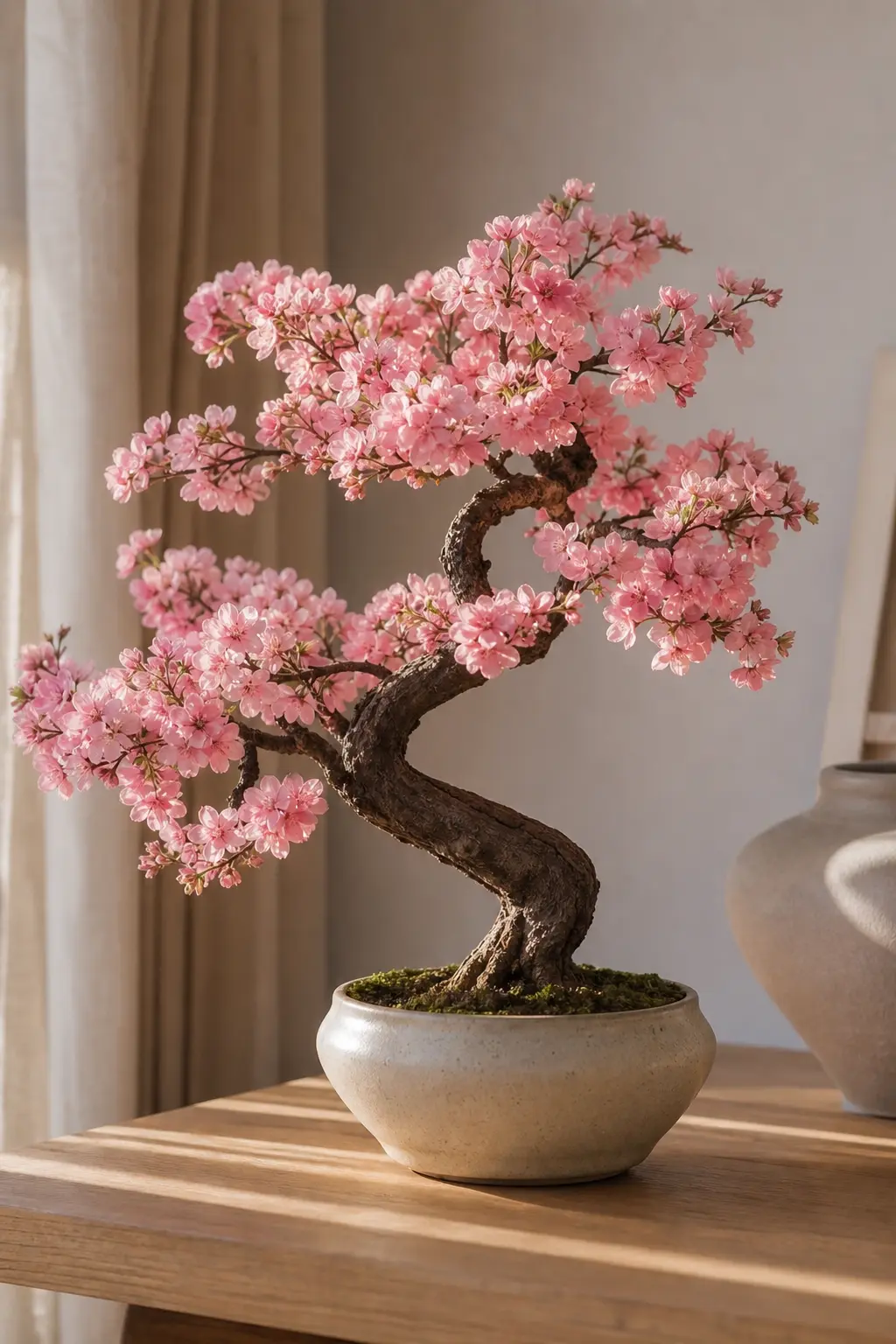
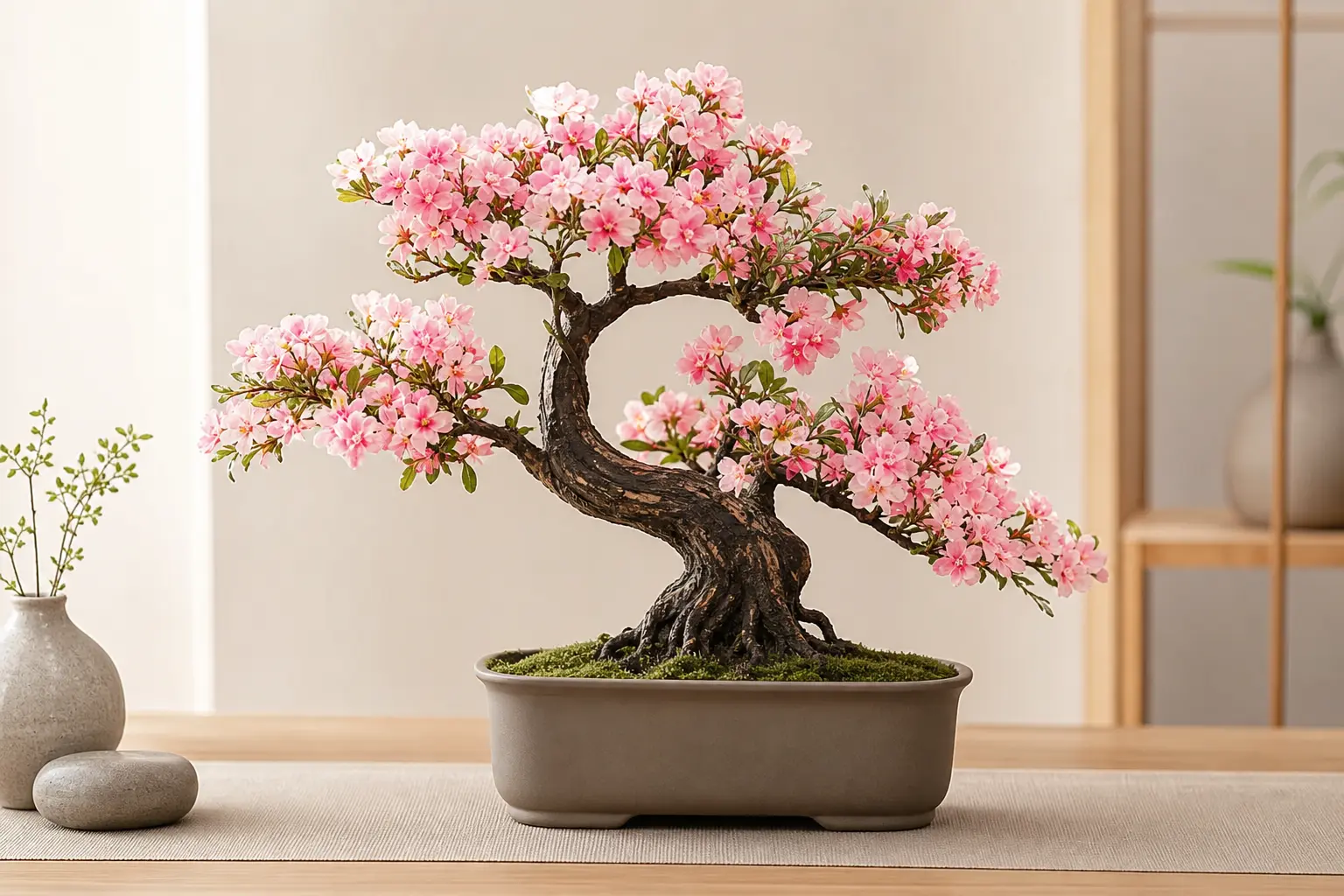
Cherry blossom style artificial bonsai, with small, pale pink blossoms scattered along thin branches, offer a delicate, understated look that suits a calm, neutral room. The pale color reads as soft rather than bold, making it a good fit for a bedroom nightstand or a quiet reading corner.
Where This Style Fits Best
This softer pink tone pairs particularly well with cream, beige, or light wood surroundings, since the blossoms add just a touch of color without overwhelming an otherwise muted palette.
3. Bold Fuchsia Bonsai for a Statement Pop of Color
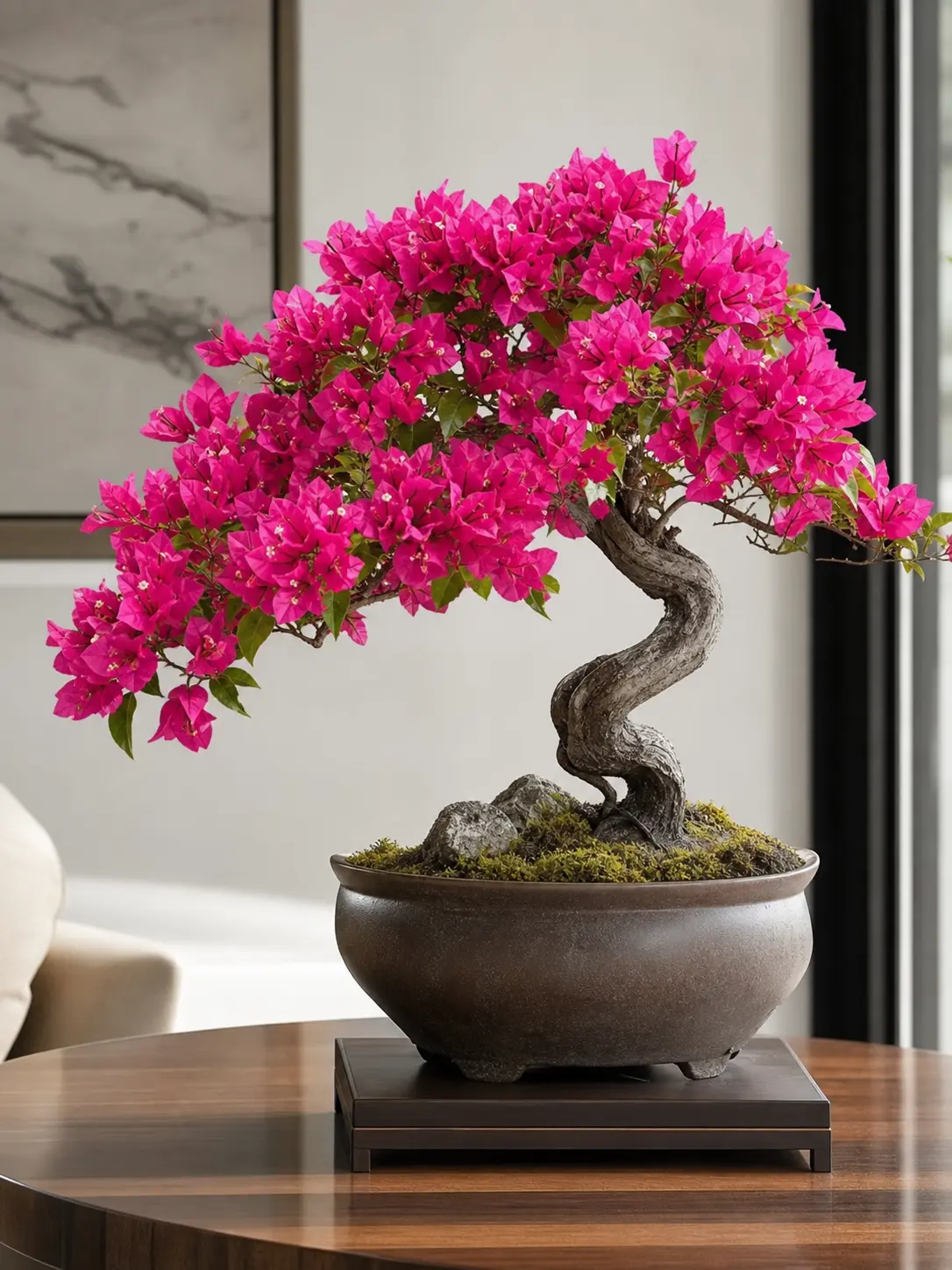
A bonsai with deeper fuchsia or hot pink blossoms works as more of an intentional accent color, standing out clearly against a neutral or monochrome room. This version suits a space that could use one clear pop of color, like an entryway table or a plain white bookshelf.
Because the color is bolder, one bonsai like this is usually enough for a room. Adding several bold fuchsia pieces throughout the same space can start to feel like too much color competing for attention.
4. Miniature Bonsai for Desks and Narrow Shelves
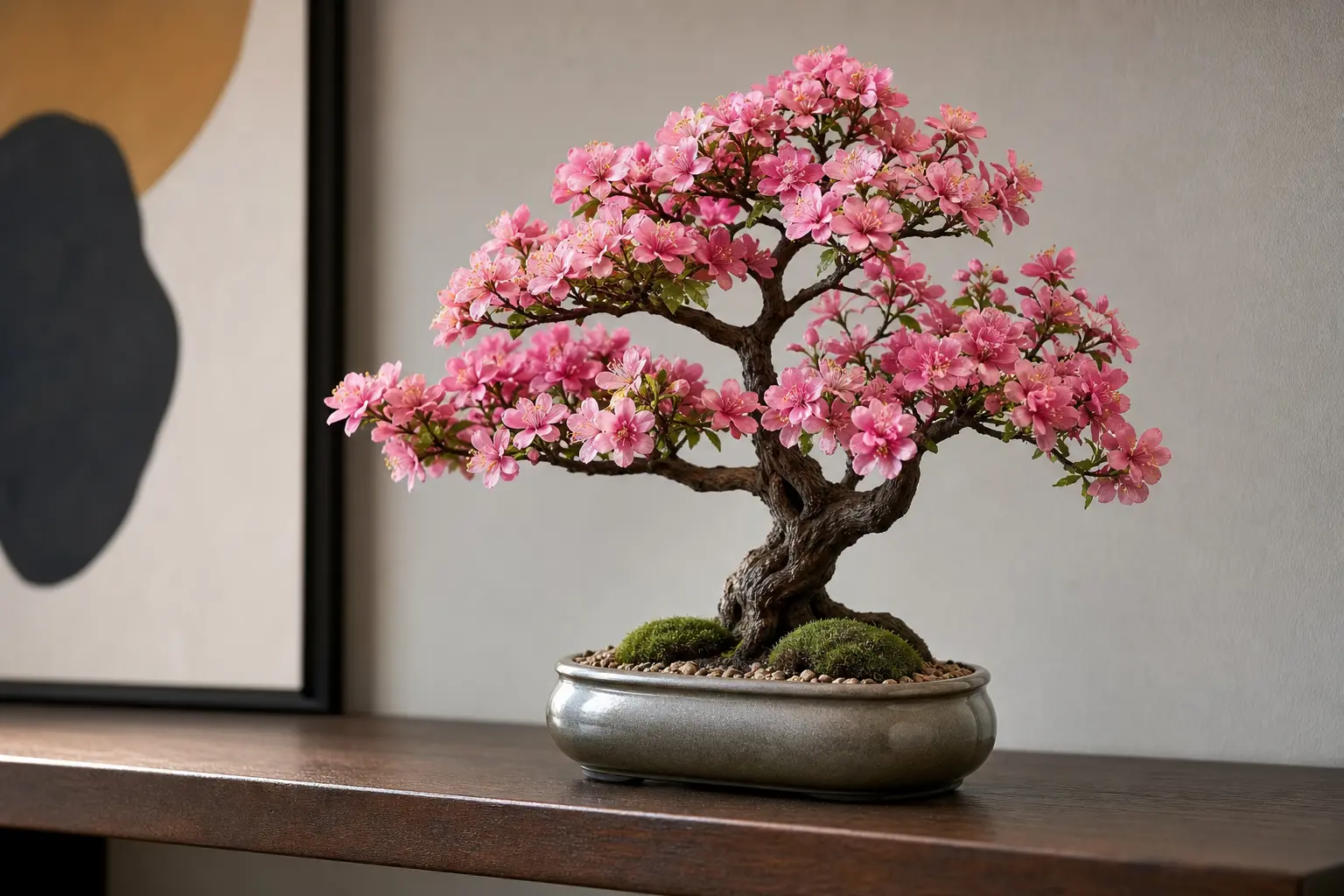
Smaller artificial bonsai, often under 8 inches tall including the pot, fit well on a desk, a narrow floating shelf, or a bathroom counter where a larger plant simply wouldn’t fit. These miniature versions still carry the same sculptural branch shape as a full sized bonsai, just scaled down.
Quick tip: on a desk specifically, keep the bonsai off to one side rather than centered, so it doesn’t interfere with your immediate workspace while still adding color to the setup.
5. Larger Bonsai for a Coffee Table Centerpiece
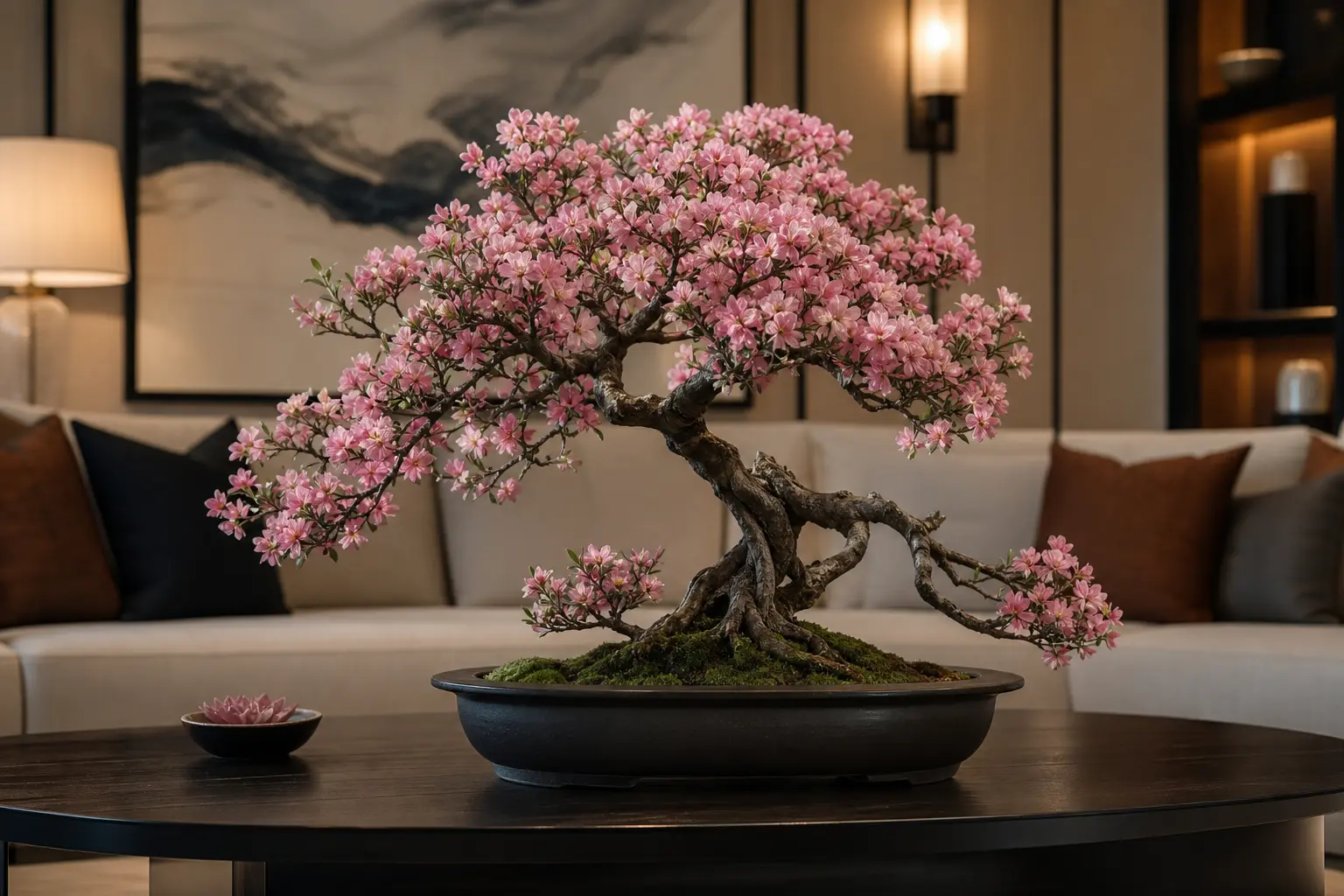
A larger artificial pink bonsai, generally in the 14 to 20 inch height range, can work as a genuine centerpiece on a coffee table, especially in a room without a lot of other tabletop decor competing for attention. At this size, the bonsai carries enough visual weight to anchor the table on its own.
This larger scale works best when the coffee table has enough surrounding open space to give the piece room to breathe, rather than being crowded next to several other decor objects.
6. Pairing Pink Bonsai With Ceramic and Stone Pots
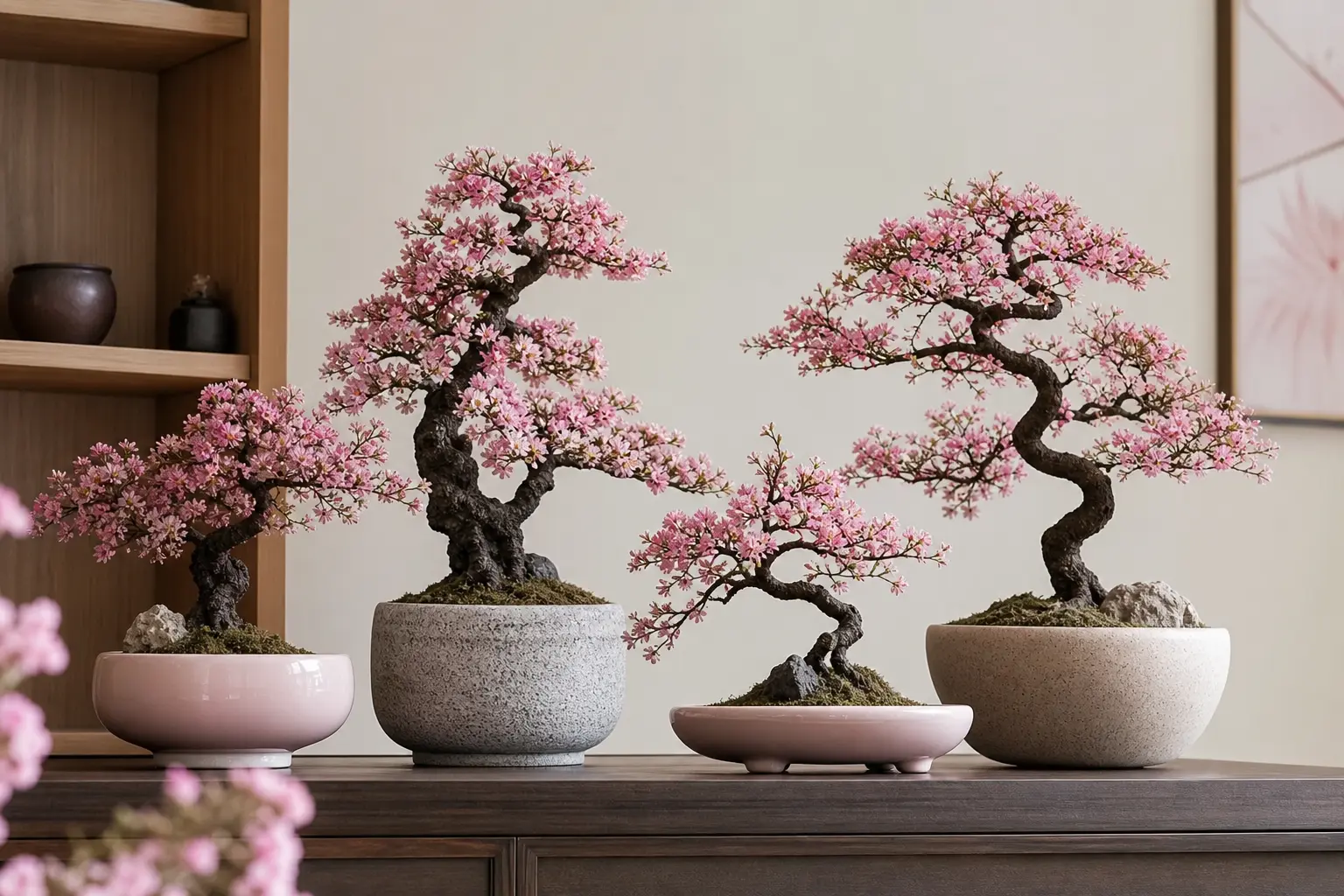
A simple white or cream ceramic pot lets the pink blossoms remain the clear focal point, since the pot itself stays visually quiet. A textured stone or concrete style pot adds a bit more visual interest at the base while still keeping a neutral, modern feel that doesn’t compete with the pink color above it.
Round, low profile pots tend to suit the compact, layered shape of a bonsai better than tall, narrow vases, which are generally better suited to taller stemmed artificial flowers instead.
7. Pairing Pink Bonsai With Woven and Natural Pots
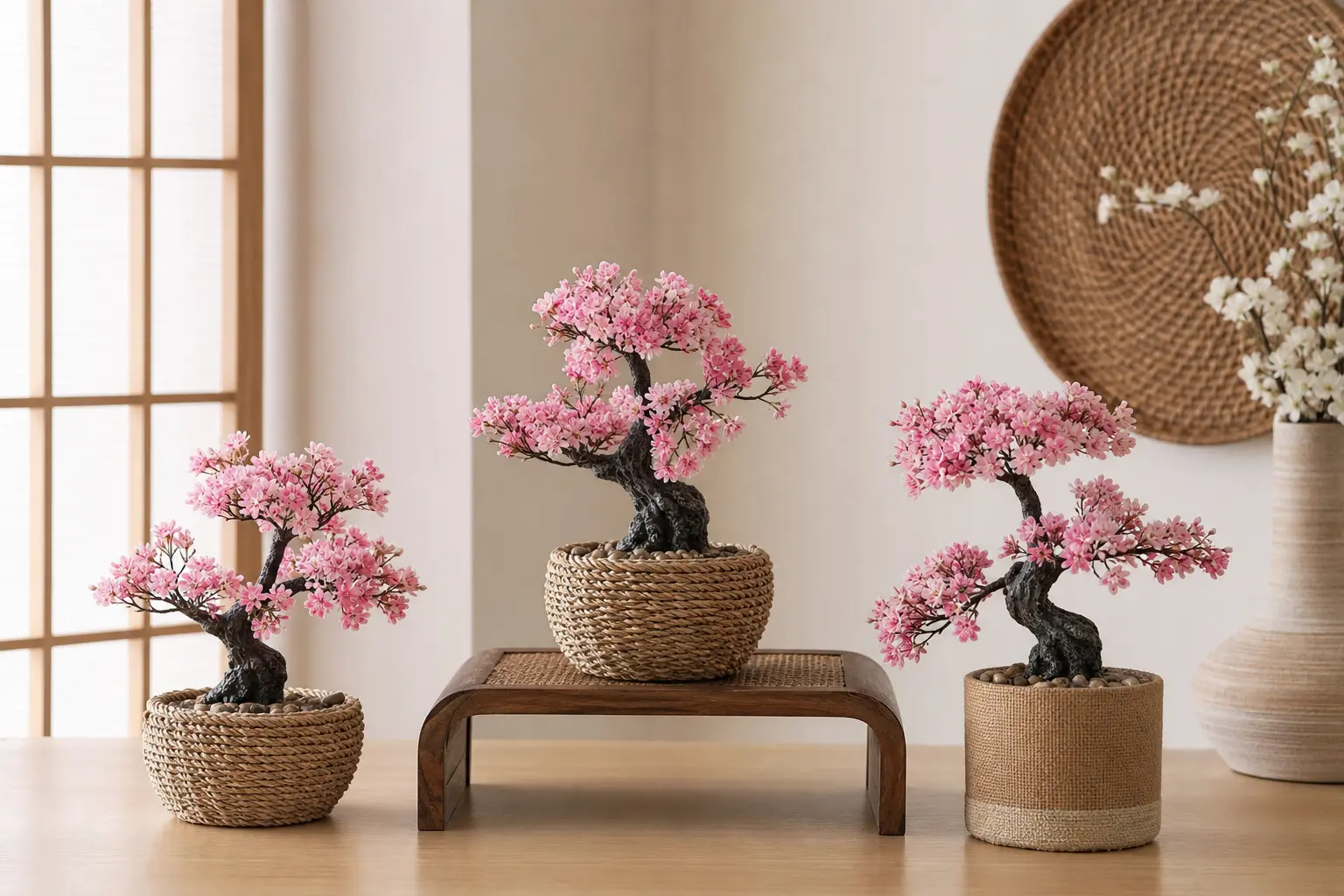
For a softer, more organic look, a woven rattan or wicker pot cover adds warmth and texture underneath the bonsai, particularly in a room that already leans toward natural materials like wood furniture or linen textiles. This pairing tends to feel a bit more casual than a smooth ceramic pot.
A Quick Styling Note
If your room already has a lot of woven texture elsewhere, like a jute rug or a rattan chair, pairing the bonsai with a smooth ceramic pot instead can help balance the room rather than repeating the same texture again.
8. Choosing Realistic Textures Over Shiny, Plastic Looking Ones

Not all artificial bonsai are made equal, and the biggest giveaway of a lower quality piece is usually a shiny, overly uniform plastic texture on the leaves or blossoms. Look for pieces with a matte finish and slight variation in leaf or petal shape, since real plants are never perfectly uniform.
The branch structure matters too. A more convincing bonsai typically has an actual wire or wood core beneath the fabric or plastic bark, which gives the branches a slightly irregular, natural bend rather than a stiff, symmetrical shape.
9. Placement Tips for a Believable, Styled Look

An artificial bonsai tends to look most convincing when it’s not placed in direct, harsh light, since real plants rarely sit in a spot with zero shadow or texture variation. Softer, ambient lighting nearby lets the piece blend in more naturally than placing it directly under a bright spotlight would.
Grouping the bonsai with one or two other tabletop items, like a candle or a small stack of books, also helps it read as part of a considered styling choice rather than an isolated object sitting alone on an empty surface.
10. Caring for and Maintaining an Artificial Bonsai’s Appearance
Even though an artificial bonsai doesn’t need water or sunlight, it still collects dust over time, which can dull the color of both the leaves and the blossoms. A soft, dry cloth or a gentle blast of compressed air every few weeks keeps the piece looking fresh rather than faded and dusty.
Bold takeaway: the low maintenance appeal of an artificial bonsai only holds up if you actually dust it occasionally. Skipping that step is often the real reason an artificial piece starts to look cheap over time, not the material itself.
Mistakes to Avoid
- Choosing a shiny, uniform plastic bonsai that reads as obviously artificial from across the room
- Placing the bonsai in a spot with harsh, direct light that highlights its artificial texture
- Using a tall, narrow vase meant for stemmed flowers instead of a low, round pot suited to a bonsai shape
- Letting dust build up on the leaves and blossoms over time, dulling the overall color
- Adding several bold fuchsia pieces throughout the same room, creating too much competing color
- Leaving the bonsai completely isolated on a bare surface with no supporting styling nearby
Frequently Asked Questions
Do artificial bonsai need any maintenance at all? They don’t need water or sunlight, but dusting the leaves and blossoms every few weeks with a soft cloth keeps the color looking fresh and prevents a faded, dusty appearance.
What pot works best with a pink flower artificial bonsai? A low, round ceramic or stone style pot generally suits the compact, layered shape of a bonsai better than a tall, narrow vase.
Can an artificial bonsai look convincing up close? Higher quality pieces with matte textures and slightly irregular branch shapes tend to hold up well even at close range. Shinier, overly uniform pieces are more likely to look artificial up close.
Is a lighter pink or a bolder fuchsia bonsai better for most rooms? It depends on the room. A softer, pale pink suits a calm, neutral space, while a bolder fuchsia works better as a single, intentional pop of color in an otherwise plain room.
Where should I place an artificial bonsai for the most believable look? Softer, ambient lighting rather than harsh direct light helps it blend in naturally, and grouping it with a couple of other small decor items makes it read as an intentional styling choice.
Conclusion
A pink flower bonsai artificial plant gives you the shape and color of a flowering plant without the upkeep a real one demands, as long as you choose a piece with realistic texture and pair it with the right pot. Match the shade of pink to your room’s overall tone, place it somewhere with soft rather than harsh lighting, and remember to dust it occasionally. Done right, it becomes a genuinely elegant tabletop decor piece rather than an obvious stand in for the real thing.