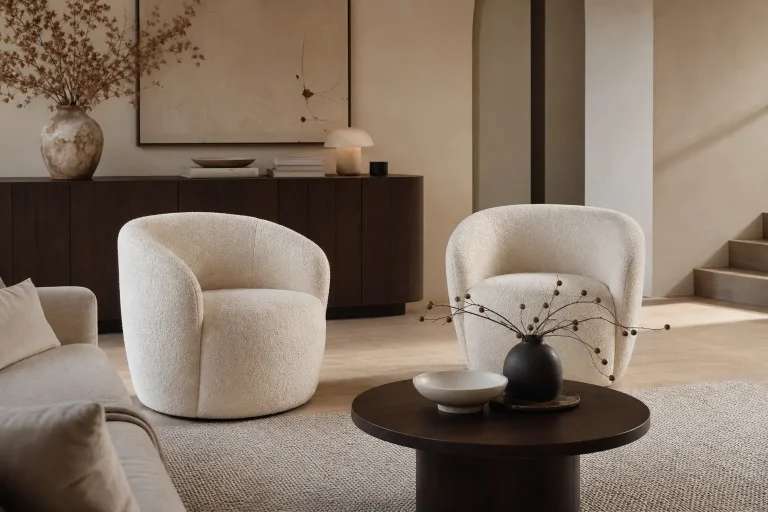
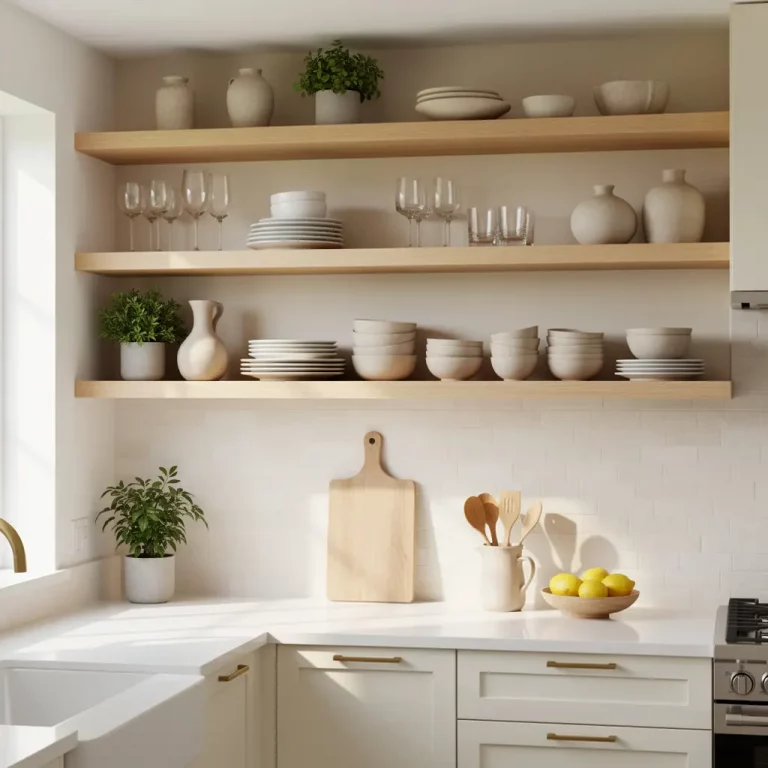
10 Cozy Neutral Living Room Inspiration Ideas | Elegant Aesthetic Home Decor
You painted the walls a soft warm white, bought a cream sofa, and picked out light wood furniture. It should look calm and elegant. Instead it feels a little flat, almost like a hotel lobby instead of a room you want to curl up in. That gap between “neutral” and “cozy” trips up a lot of people, because neutral colors alone don’t create warmth on their own. These 10 cozy neutral living room inspiration ideas focus on the layering, texture, and lighting choices that turn a plain neutral palette into genuinely elegant aesthetic home decor, without needing to add a single loud color.
1. Why Neutral Rooms Feel Cold Without the Right Layering
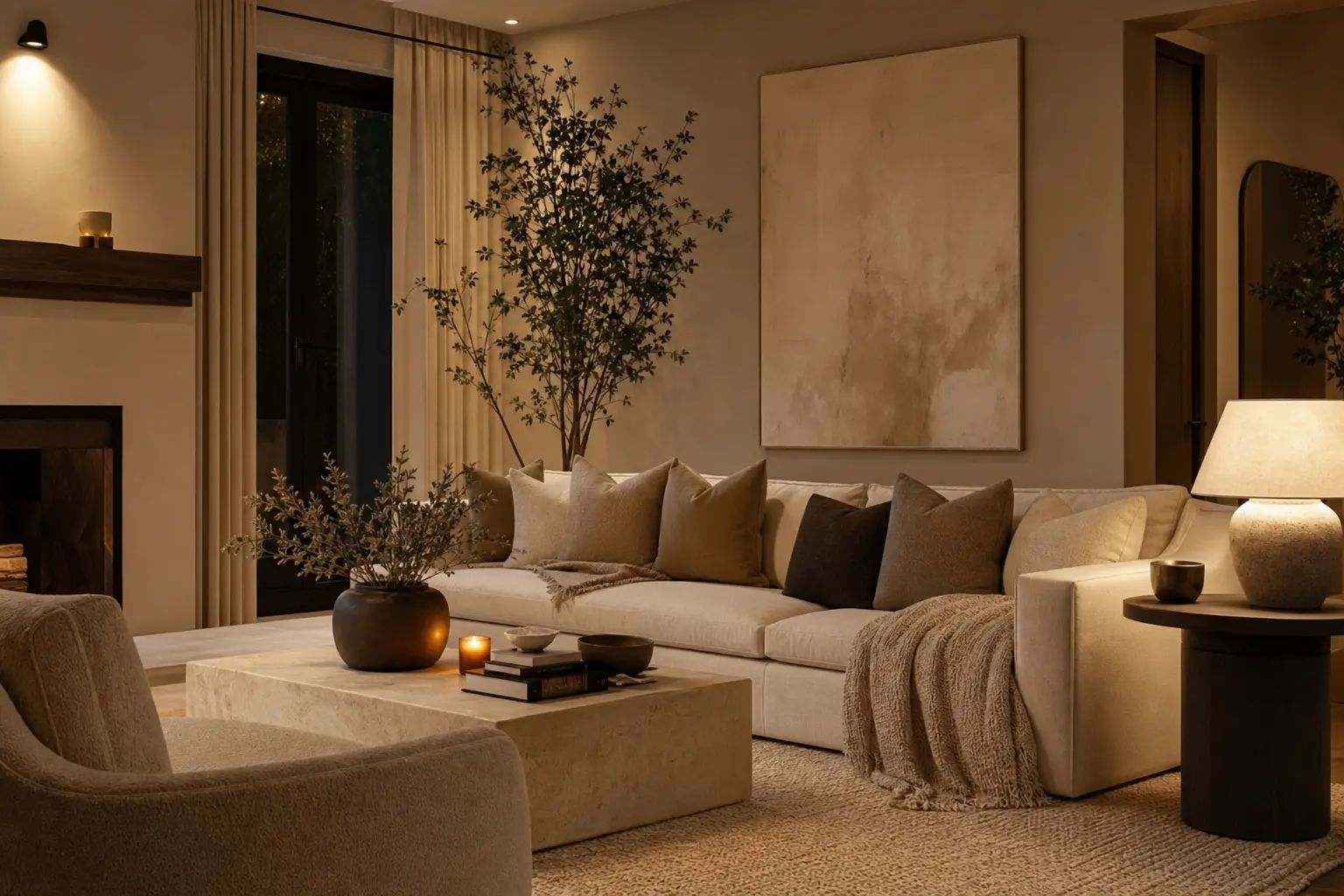
A neutral palette relies almost entirely on texture and light to create visual interest, since it isn’t leaning on bold color contrast to do that work. Skip the texture, and a neutral room can end up looking unfinished rather than calm.
This is the most common mistake in neutral spaces. A flat cream wall, a smooth sofa, and a plain rug with no pattern or texture reads as sparse, not serene. Add in a few layers, like a nubby throw, a woven basket, or a textured lampshade, and the same palette suddenly feels intentional and warm.
A neutral room needs more texture, not more color, to avoid feeling cold.
2. Warm White and Cream as a Soft Base Palette
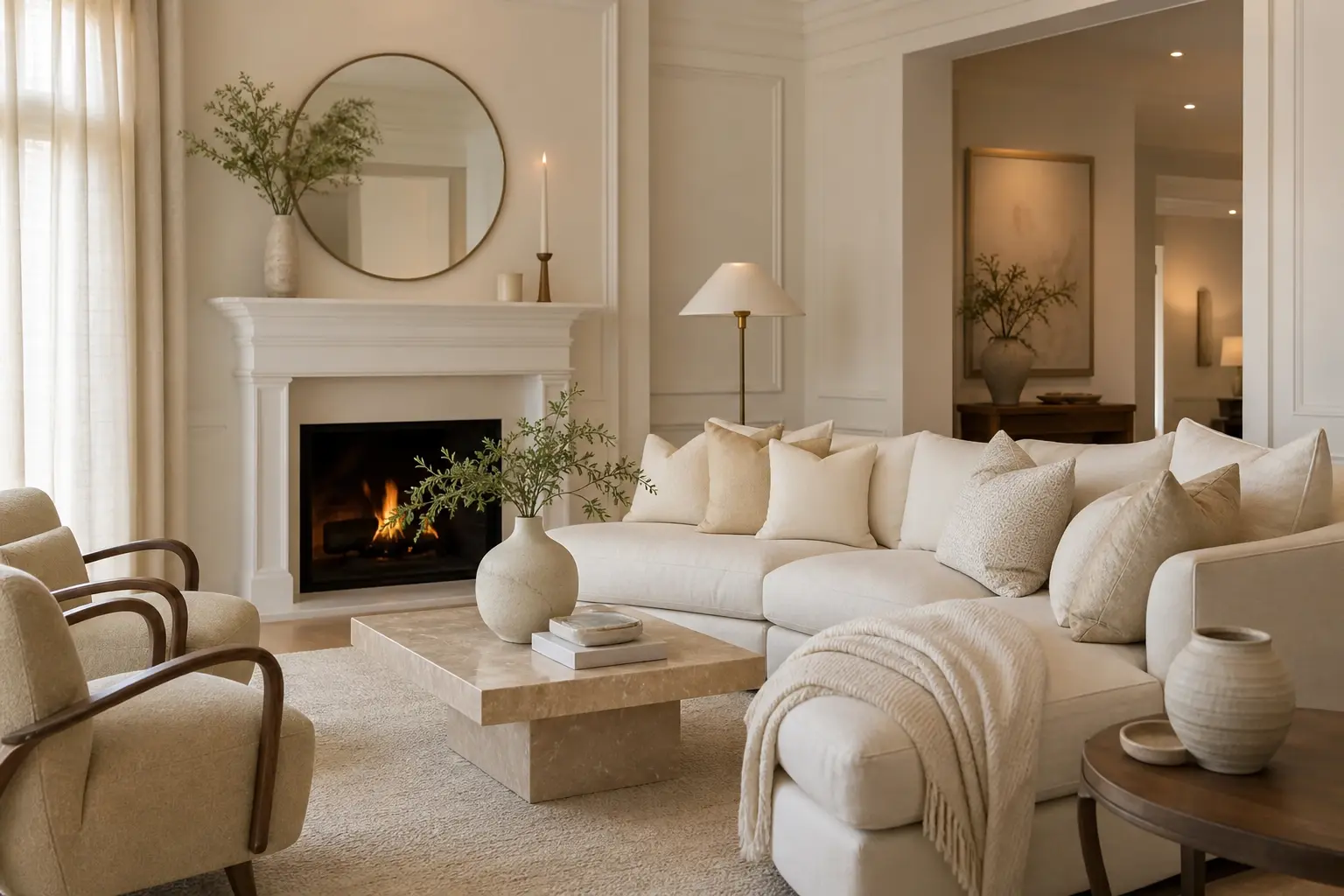
Not all whites read the same. Cool, stark whites can make a room feel clinical, while warm whites and creams, ones with a slight yellow or beige undertone, feel softer and more inviting under regular indoor lighting. This distinction matters more than most people expect when picking wall paint or a large sofa.
Checking Undertones Before You Commit
Hold a paint swatch or fabric sample up under your room’s actual lighting at different times of day, since warm whites can shift depending on natural light. A shade that looks perfect in a showroom can read cooler or flatter once it’s on your own walls.
3. Layered Textures for Depth Without Adding Color
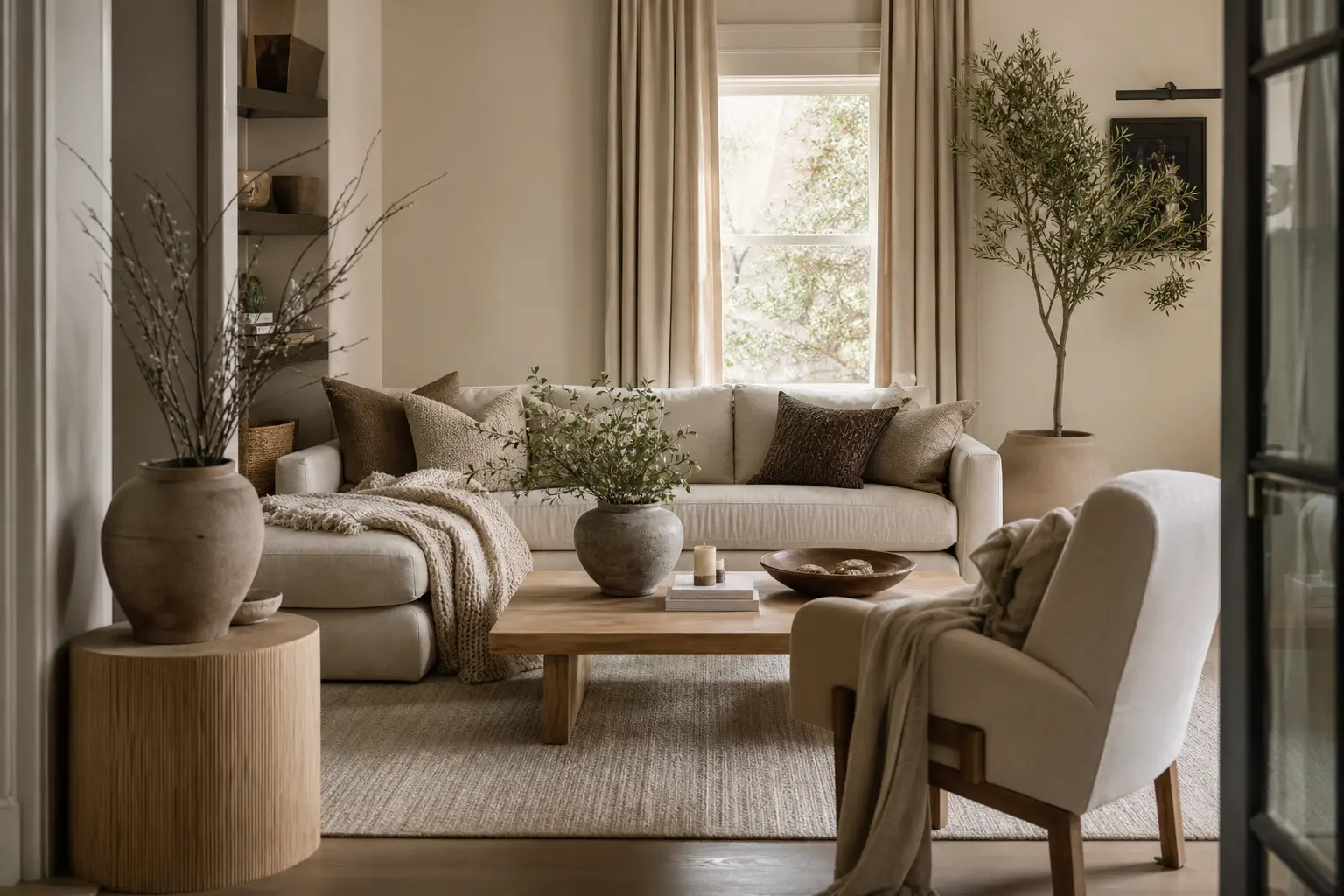
Texture does the job that color usually does in a bolder room. A smooth linen sofa, a nubby wool rug, and a soft knit throw all sit in the same neutral color family, but they read as three distinct layers because of how they feel and catch light.
Mixing at least three different textures in one seating area, like woven wood, soft textile, and a bit of matte ceramic, keeps a neutral room from feeling flat. Each material reflects light slightly differently, which adds subtle contrast even without any actual color change.
4. Natural Wood Tones for Warmth Against Neutral Walls

Light or medium toned wood, whether it’s a coffee table, open shelving, or a wood framed mirror, adds warmth to a neutral room in a way that white or gray furniture alone can’t. Wood grain has natural variation and texture built into it, so it automatically contributes visual interest.
Bold takeaway: if a room feels flat with neutral walls and neutral furniture, adding even one wood piece, like a coffee table or side table, often fixes it faster than adding more decor.
5. Woven and Jute Rugs for Grounding a Neutral Room
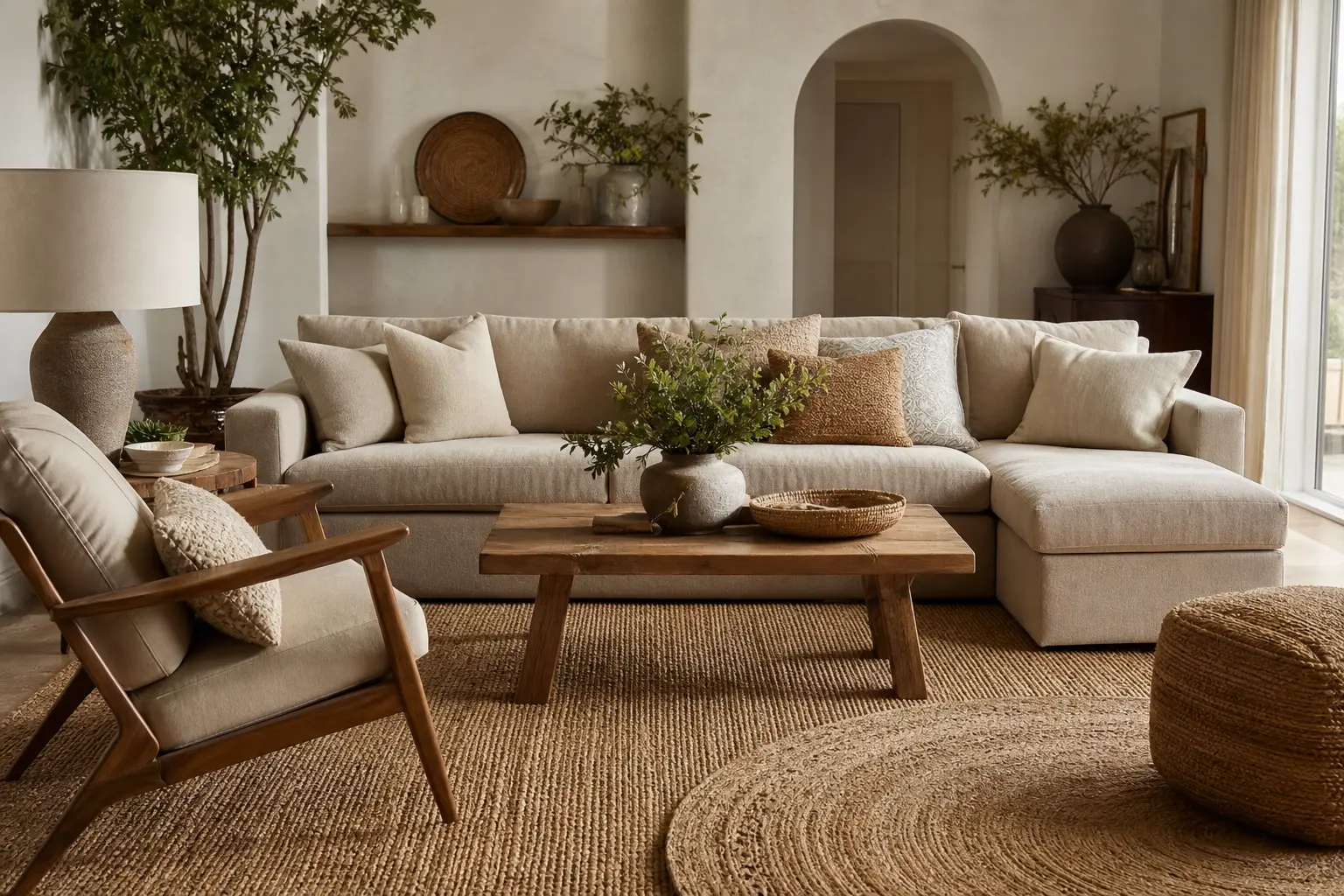
A jute or sisal rug, in a natural tan or oatmeal tone, adds texture underfoot and visually grounds a seating area, especially in a room where the walls, sofa, and curtains are all fairly similar in tone. Without a rug like this, a neutral room can start to feel like everything blends together with no clear boundaries.
Standard sizing guidance still applies here. In a typical living room, aim for a rug large enough that at least the front legs of your sofa and chairs sit on it, which usually means an 8 by 10 foot rug for most living rooms.
6. Chunky Knit and Linen Textiles for a Cozy Feel
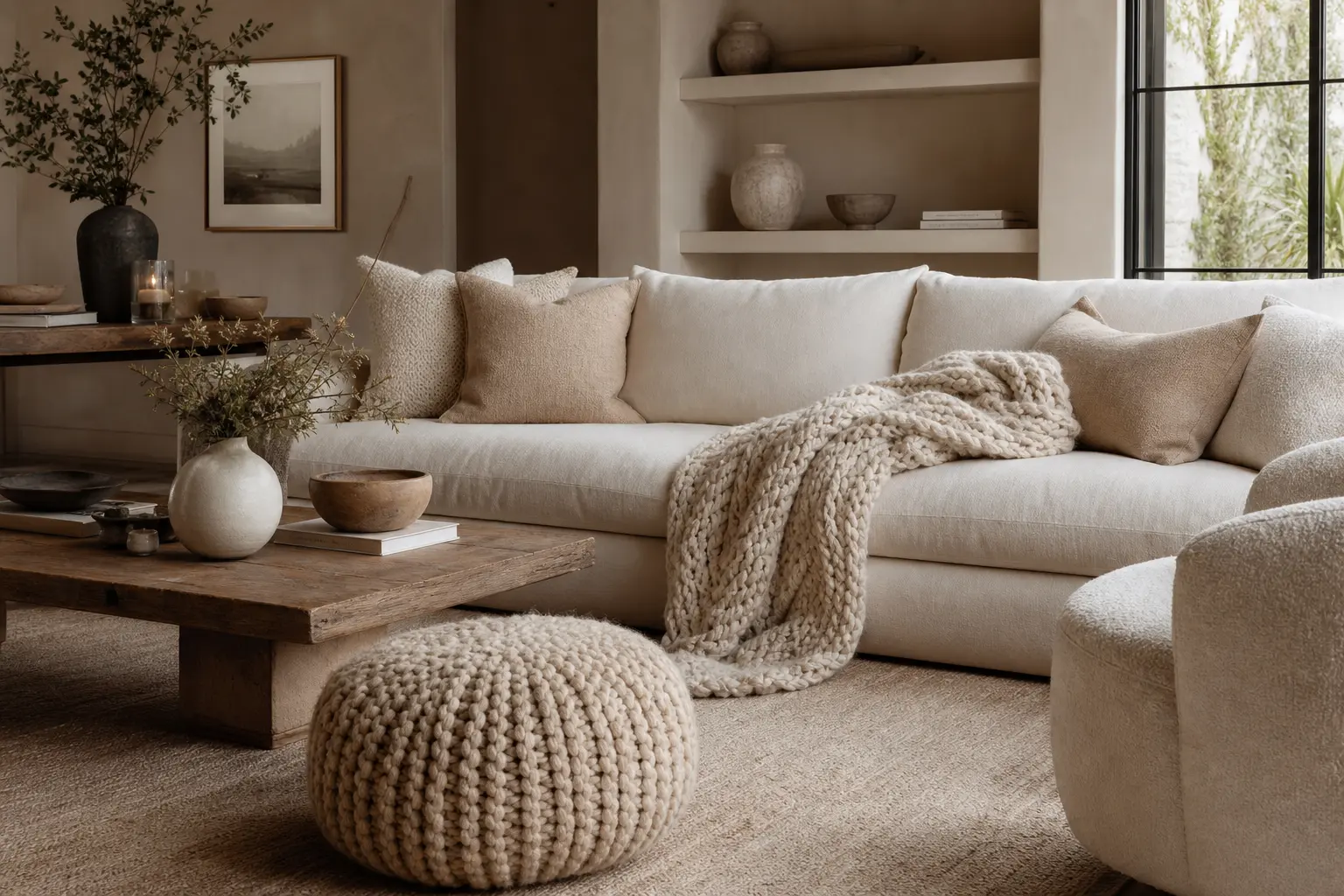
Throw pillows and blankets are one of the easiest, lowest cost ways to add texture to a neutral room. A chunky knit throw draped over the arm of a sofa, paired with a couple of linen or bouclé pillows, adds tactile warmth that a smooth cotton pillow alone doesn’t provide.
Mixing textile weights matters too. Pairing one heavier knit piece with a lighter linen piece keeps the layering from feeling one note, even though both pieces are technically the same neutral color.
7. Sculptural Neutral Decor Pieces as Quiet Focal Points
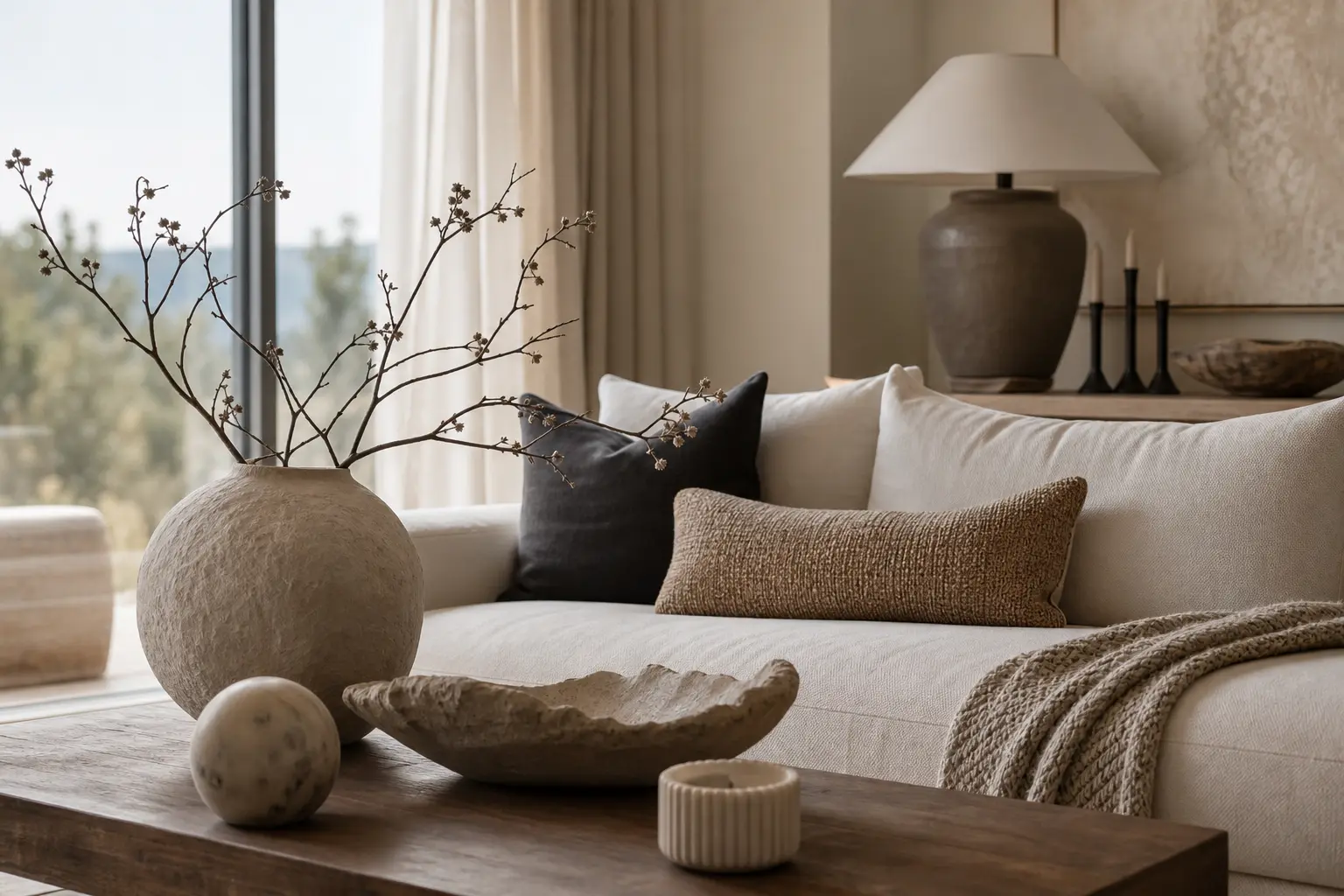
A single sculptural object, like an organic shaped ceramic vase or a simple carved wood bowl, gives the eye a place to land without disrupting the calm feeling of the room. These pieces work because their shape provides visual interest, rather than relying on color or pattern.
Placement Matters
Keep sculptural pieces to one or two per room, placed somewhere with a bit of breathing room around them, like a coffee table or a shelf. Crowding several statement pieces together cancels out the calm, quiet effect that makes them work in the first place.
8. Warm Lighting Choices for a Neutral Living Room
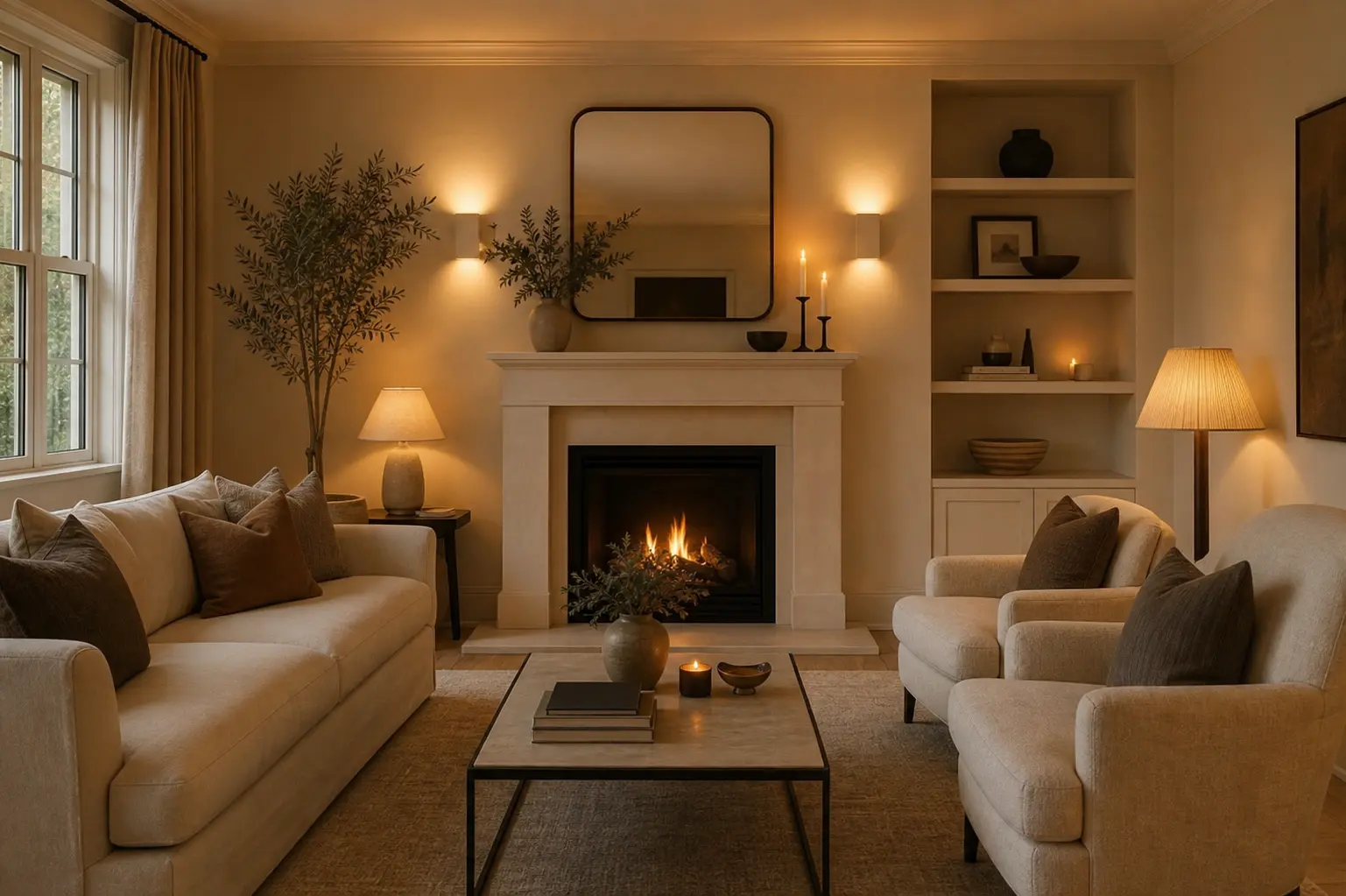
Lighting has an outsized effect on how neutral colors read in a room. A bulb in the 2700K to 3000K warm white range brings out the beige and cream undertones in neutral furniture and walls, while a cooler bulb, above 3500K, can make the same room feel washed out and gray.
Layering a floor lamp, a table lamp, and a dimmable overhead fixture gives you more control over the room’s warmth at different times of day, rather than relying on one bright source that flattens everything evenly.
9. Mixing Textures Without Making the Room Feel Busy
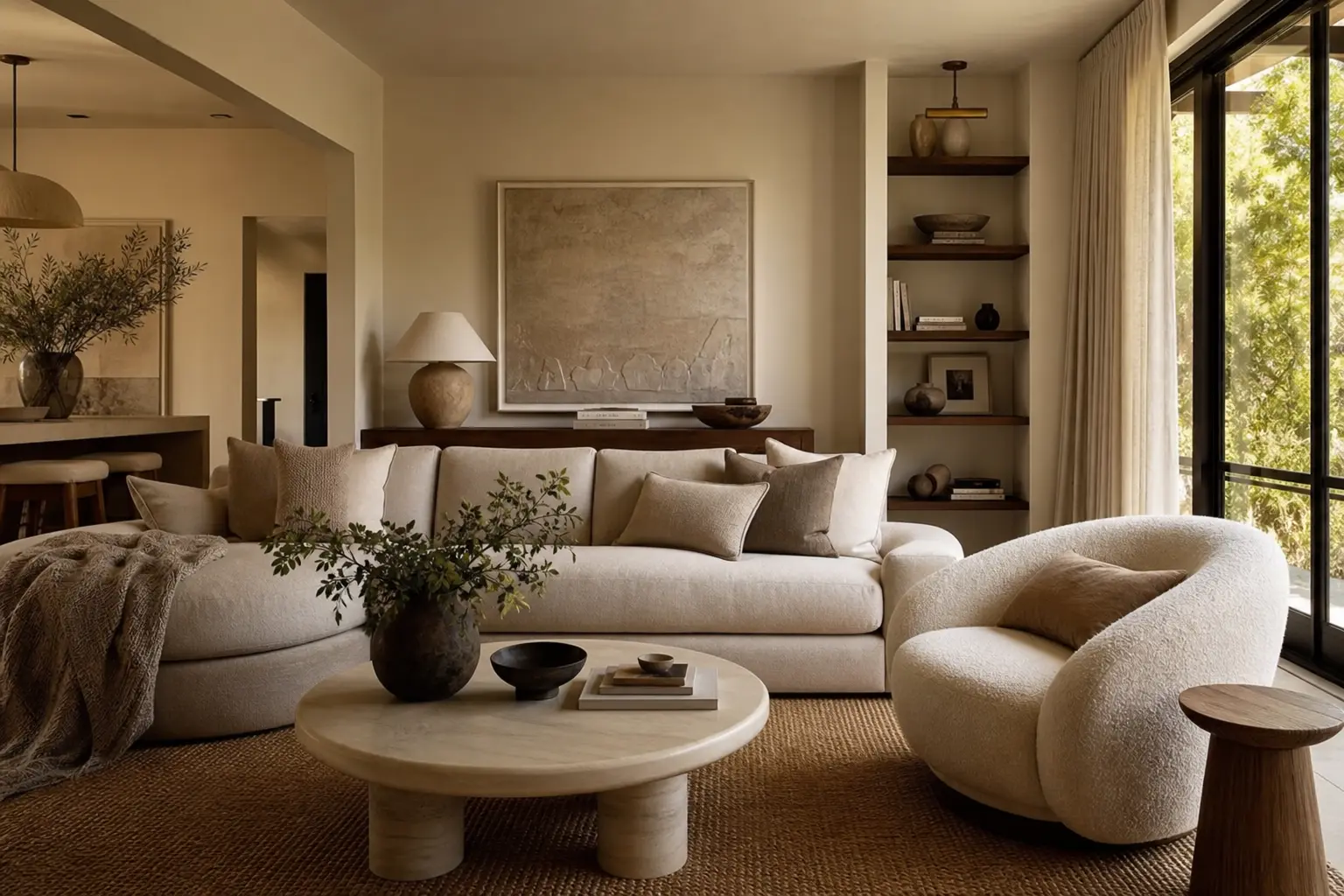
There’s a balance to strike here. Too few textures and the room feels flat. Too many, layered without any restraint, and it can start to feel cluttered even though nothing in the room is technically colorful or loud.
A helpful guideline is to repeat two or three key textures throughout the room, rather than introducing a new one in every single item. If your throw pillows are linen, echo that linen texture somewhere else, like curtains or an accent chair, instead of adding a fourth or fifth unrelated material.
10. Adding One Deeper Tone to Ground the Whole Palette
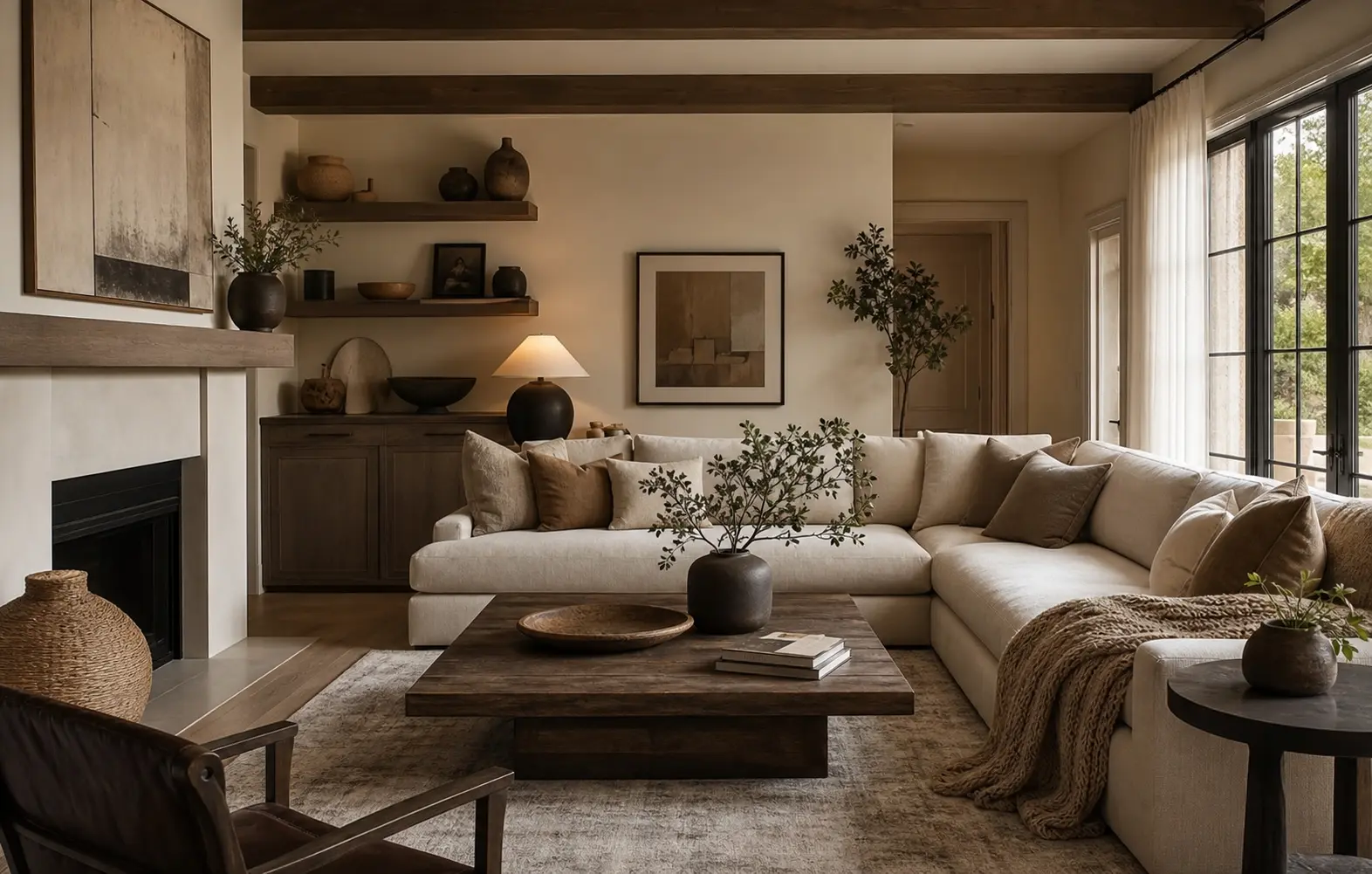
An entirely neutral room, with no contrast at all, can start to feel a little washed out after a while. Adding one slightly deeper tone, like a charcoal throw pillow, a dark wood coffee table, or black picture frames, gives the eye something to anchor on and keeps the whole palette from blending together.
This doesn’t mean abandoning the neutral scheme. One deeper accent, used in just a couple of spots, is usually enough to add definition without disrupting the calm, elegant aesthetic the rest of the room is going for.
Mistakes to Avoid
- Choosing all one texture, like an all smooth, all cotton room, which reads as flat instead of cozy
- Using cool white bulbs in a warm neutral room, which washes out beige and cream undertones
- Skipping a rug entirely, leaving the seating area feeling ungrounded
- Adding too many sculptural or statement pieces at once, which cancels out the calm effect
- Choosing a stark, cool white paint instead of a warm white or cream, which can feel sterile
- Leaving the whole room at one tone with zero deeper contrast anywhere
Frequently Asked Questions
How do I make a neutral living room feel cozy instead of boring? Focus on layering at least three different textures, like wood, woven textile, and knit fabric, and use warm white lighting throughout. Texture and warm light do most of the work that color usually handles in a bolder room.
What rug size works best for a neutral living room? For most living rooms, an 8 by 10 foot rug is a solid standard size, large enough that the front legs of your sofa and chairs sit on it.
Should I use only white and cream, or add other neutral shades too? Mixing a few neutral shades, like beige, warm gray, and tan, generally looks richer than sticking to a single shade of white throughout the whole room.
What bulb temperature works best for a neutral living room? Warm white bulbs, in the 2700K to 3000K range, bring out the warmth in cream and beige tones better than cooler, bluer light.
Is it okay to add a darker accent color to an otherwise neutral room? Yes, and it often helps. A single deeper tone, used sparingly in something like a throw pillow or a coffee table, adds definition and keeps an all neutral room from feeling washed out.
Conclusion
A cozy neutral living room comes down to texture and warmth, not just picking the right shade of white. Layer in wood, woven materials, and soft textiles, get your lighting temperature right, and add one deeper tone somewhere in the room to ground the palette. Once those pieces are in place, a neutral room stops looking plain and starts looking like the calm, elegant space you were actually going for.