10 Modern Beige Dining Room Ideas | Luxury Neutral Dining Room Decor
You picked beige because it felt safe, and now the room just feels empty instead of calm. That’s usually not a color problem, it’s a layering problem. A well done beige dining room actually reads as more elegant and more expensive than a room full of bold colors, but only when the tones and textures are layered on purpose. Here are 10 real ways to make a beige dining room feel genuinely luxury instead of flat.
1. Layer at Least Three Shades of Beige to Avoid a Flat Room
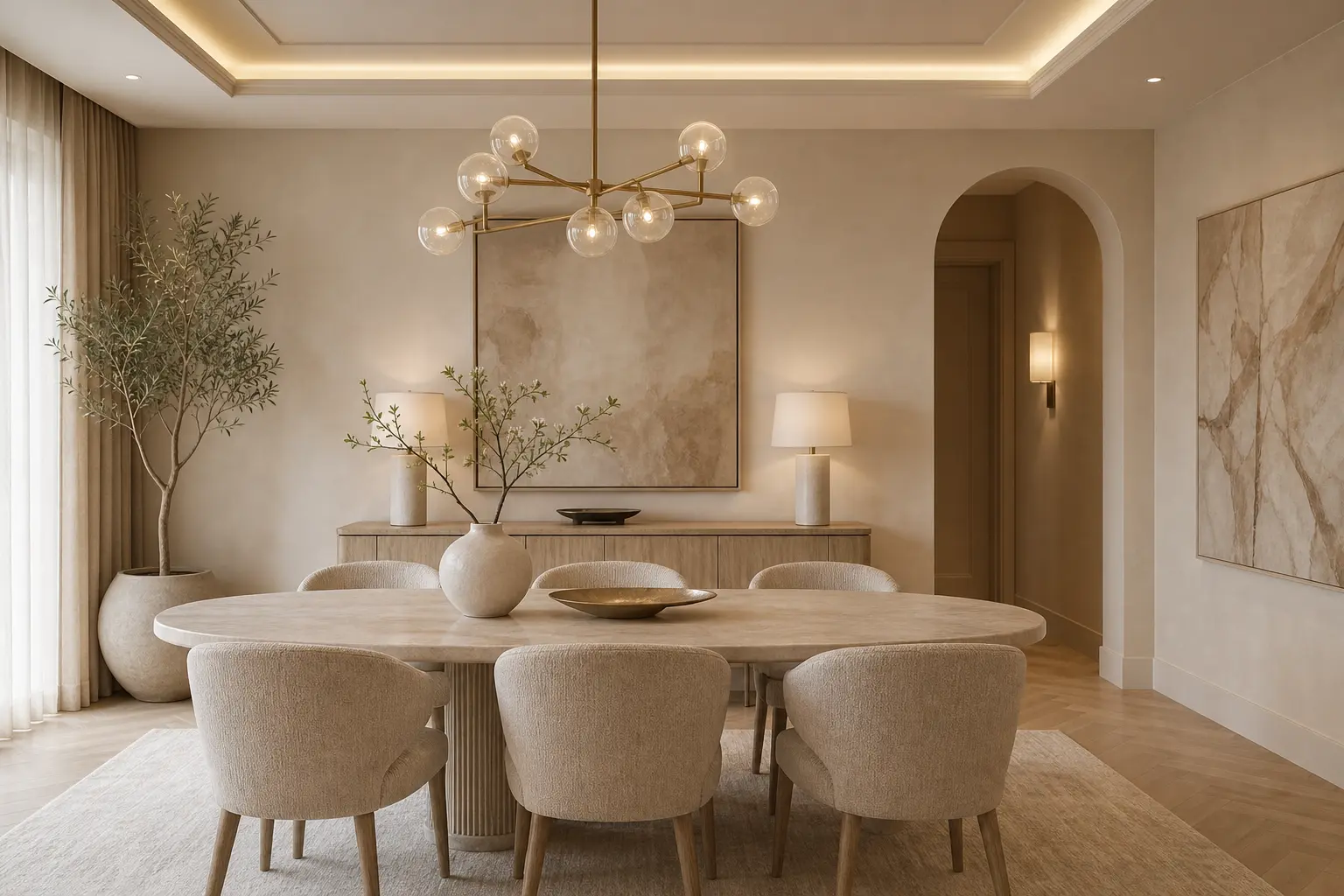
A single flat beige on every surface, walls, curtains, and upholstery all in the same tone, is what makes a beige room look boring. Aim for at least three different shades. A warm sand toned wall, a slightly lighter linen colored curtain, and a deeper taupe upholstered chair gives the eye some actual contrast to read.
Hold fabric swatches and paint chips next to each other in the room’s actual lighting before committing, since beige tones shift more than most people expect under different light sources.
2. Choose a Warm Beige Undertone Over a Cool, Gray Leaning One

Beige paint can lean pink, yellow, or gray depending on the specific formula, and this matters a lot for how luxury the room ends up feeling. A warm, slightly yellow or golden beige tends to feel cozier and more elegant. A gray leaning beige, sometimes called greige, can look a little flat or cold, especially in a room without much natural light.
Test your chosen shade on the actual wall, not just a small paint chip held up under store lighting.
3. Add Texture Through Fabric to Keep a Beige Dining Room from Feeling Flat
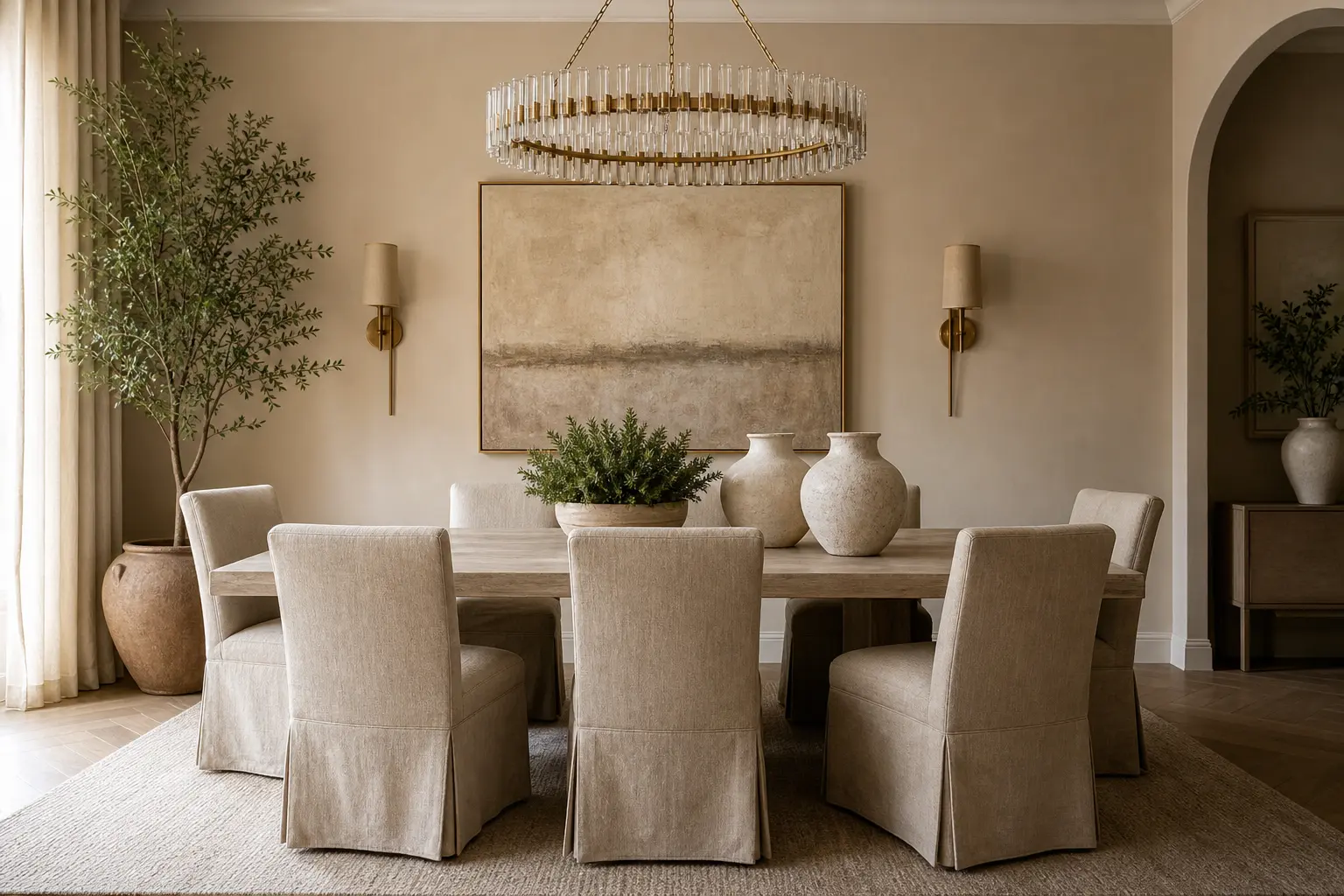
Since color contrast is limited in an all beige room, texture has to do more of the work. Linen curtains, a boucle chair, a woven jute rug, and a raw wood table all bring different textures into the same tonal family. This is what actually reads as luxury, not the color itself.
Why Texture Matters Here
In a monochromatic room, texture creates the visual interest that color usually would. Without it, an all beige room can look unfinished even when every piece is expensive.
4. Use a Statement Light Fixture to Anchor a Neutral Beige Room
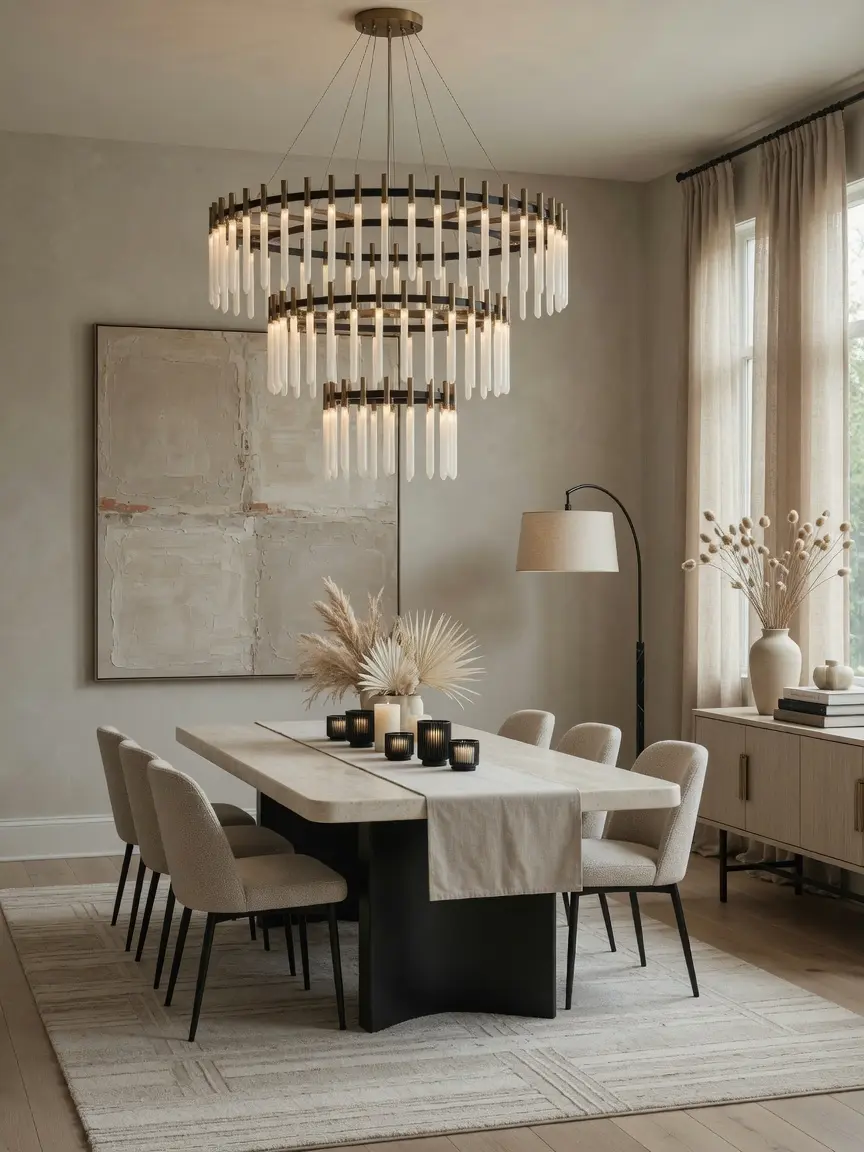
A beige room needs a strong focal point since the walls and furniture aren’t doing much visual heavy lifting on their own. A woven rattan pendant, a sculptural metal chandelier, or a fixture with an interesting silhouette gives the eye somewhere specific to land.
Choose a fixture with some contrast against the beige backdrop, whether that’s a darker metal finish or a more textured material, so it actually reads as a focal point instead of blending in.
5. Bring in Natural Materials for a Grounded, Luxury Feel
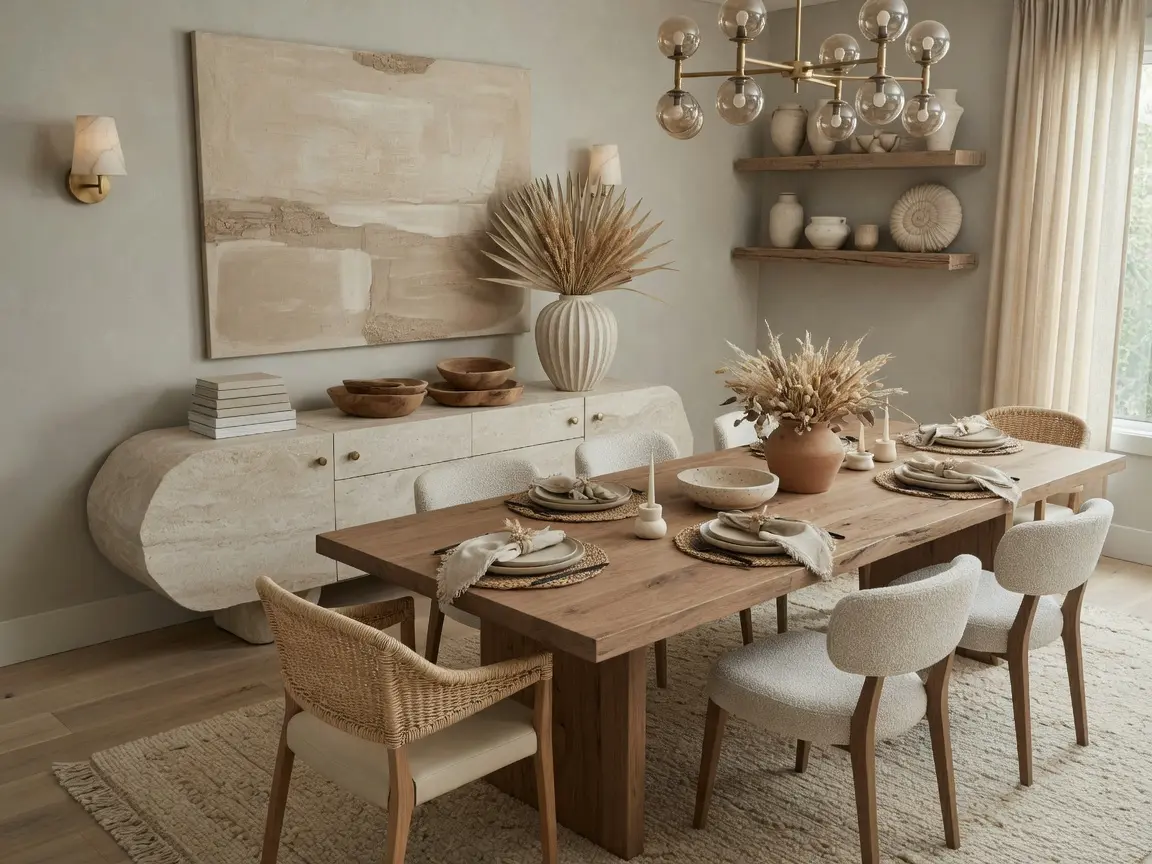
Raw wood, stone, rattan, and woven fibers all pair naturally with beige tones and add the kind of grounded, earthy feel that makes a neutral room feel intentional rather than empty. A stone topped console, a wood dining table with visible grain, or rattan chair backs all work here.
Avoid pairing beige with too much glossy, high shine material across the whole room, since that combination can start to feel cold rather than warm and luxury.
6. Add a Patterned Rug to Break Up an All Beige Palette
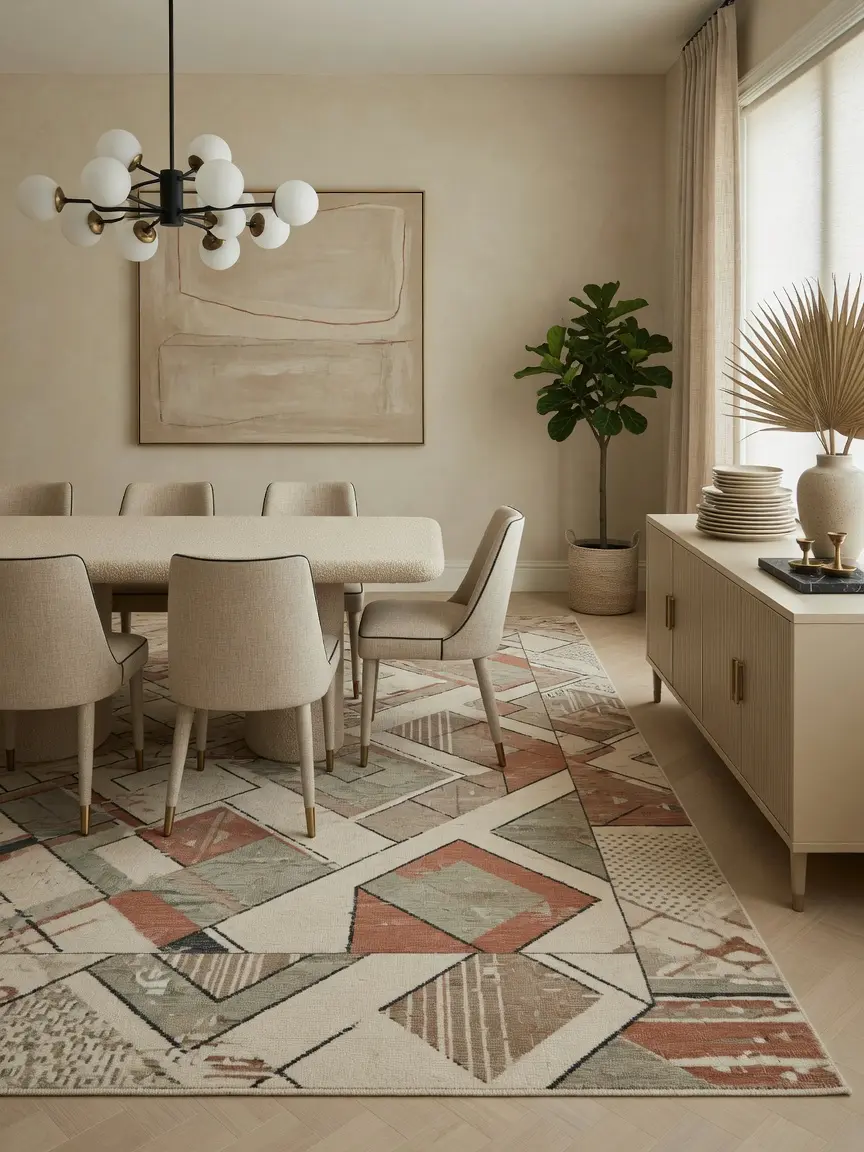
A subtle patterned rug, in tone on tone beige and cream or a soft geometric print, adds visual interest without introducing a jarring new color. This keeps the room from feeling like every surface is the exact same shade while still staying within the neutral palette.
Size the rug so it extends well beyond the dining chairs, ideally by at least two feet on each side, so the whole seating area sits on the rug even with chairs pulled out.
7. Mix Metal Finishes Carefully in a Beige Dining Room
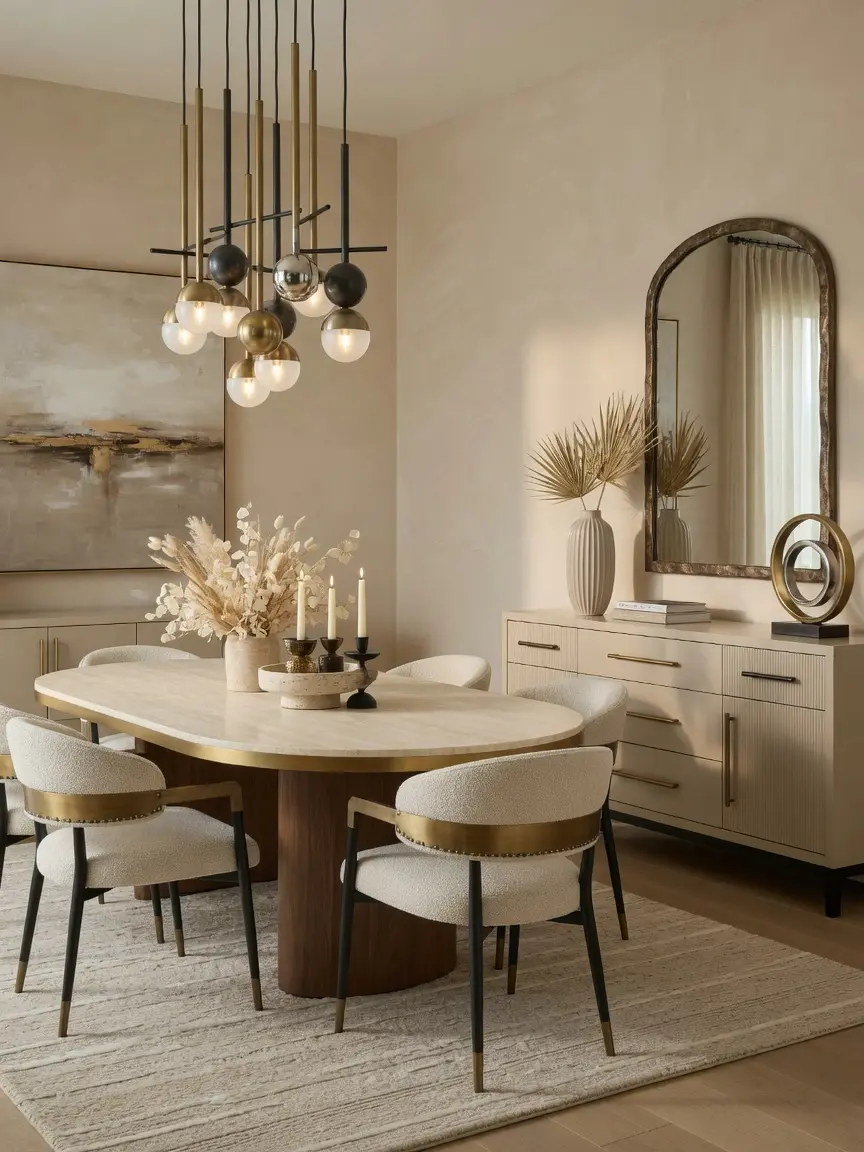
Warm metals like brass, gold, and bronze tend to feel most at home in a beige room, since they echo the warmth already in the walls and furniture. A small amount of a cooler finish, like matte black on a light fixture or chair frame, can add contrast without clashing, as long as it’s used sparingly.
Pick one dominant metal finish for the room and treat any second finish as an accent rather than splitting the room evenly between two.
8. Choose Art That Adds Depth Without Breaking the Neutral Palette
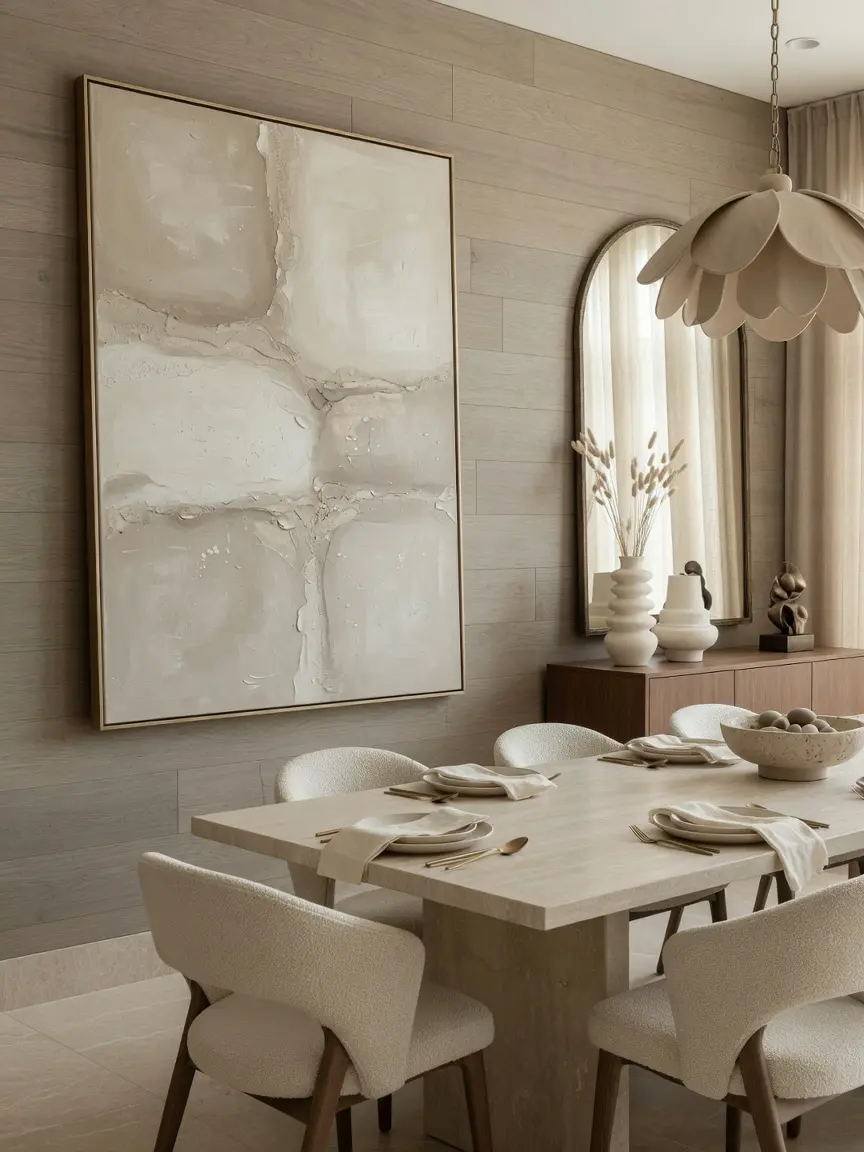
Abstract art in soft creams, browns, and muted tones keeps the room feeling cohesive while still giving the walls something to look at beyond flat paint. A textured piece, like a woven wall hanging or a piece with visible brushwork, adds even more depth than a flat print.
If you want a small pop of color, a single piece of art is a lower commitment way to introduce it than painting an accent wall or buying colored furniture.
9. Use Beige on the Walls and a Slightly Deeper Beige on the Trim
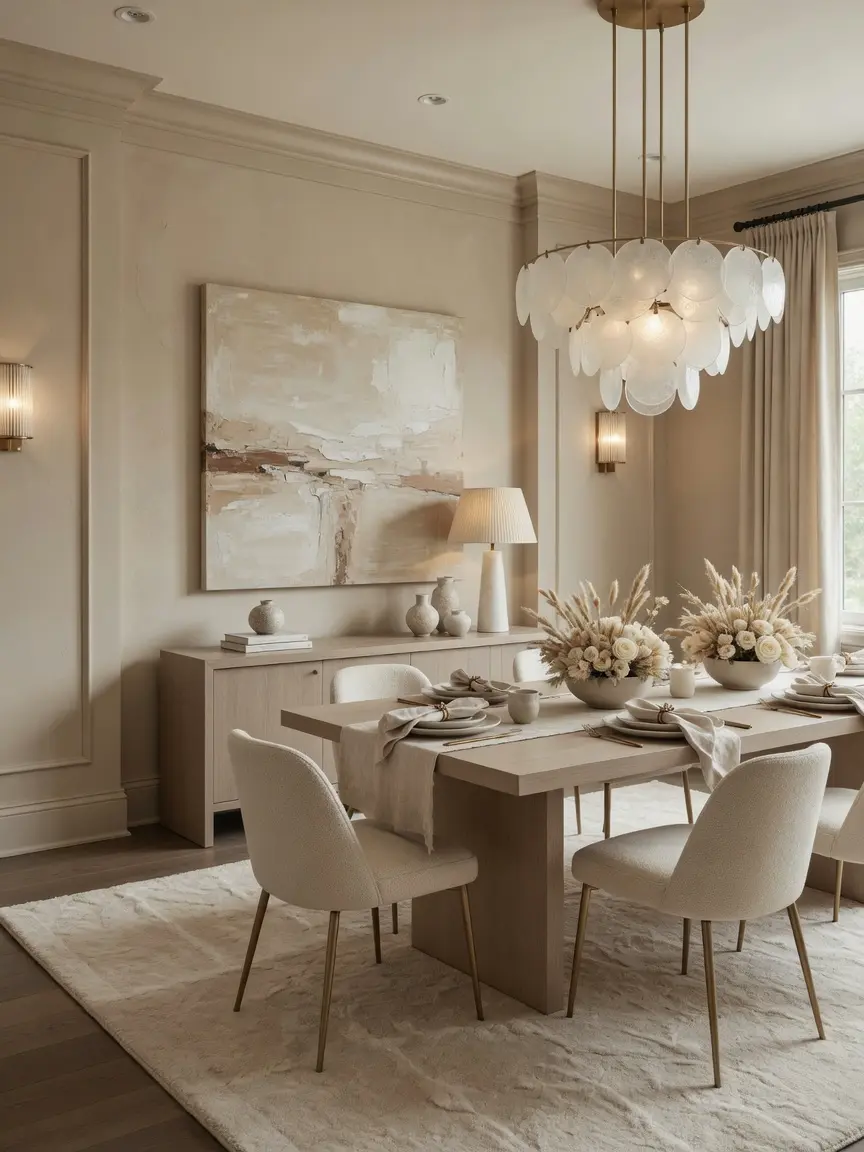
Painting trim, baseboards, and door frames in a slightly deeper beige than the walls, instead of the standard bright white, softens the contrast in the room and makes the whole space feel more intentional and cohesive. This is a small detail that a lot of beige rooms skip, and it makes a noticeable difference.
This works especially well in a dining room without a lot of trim detail to begin with, since it keeps the eye moving smoothly across the walls instead of stopping at a harsh white line.
10. Finish the Room with Greenery to Keep It from Feeling Sterile
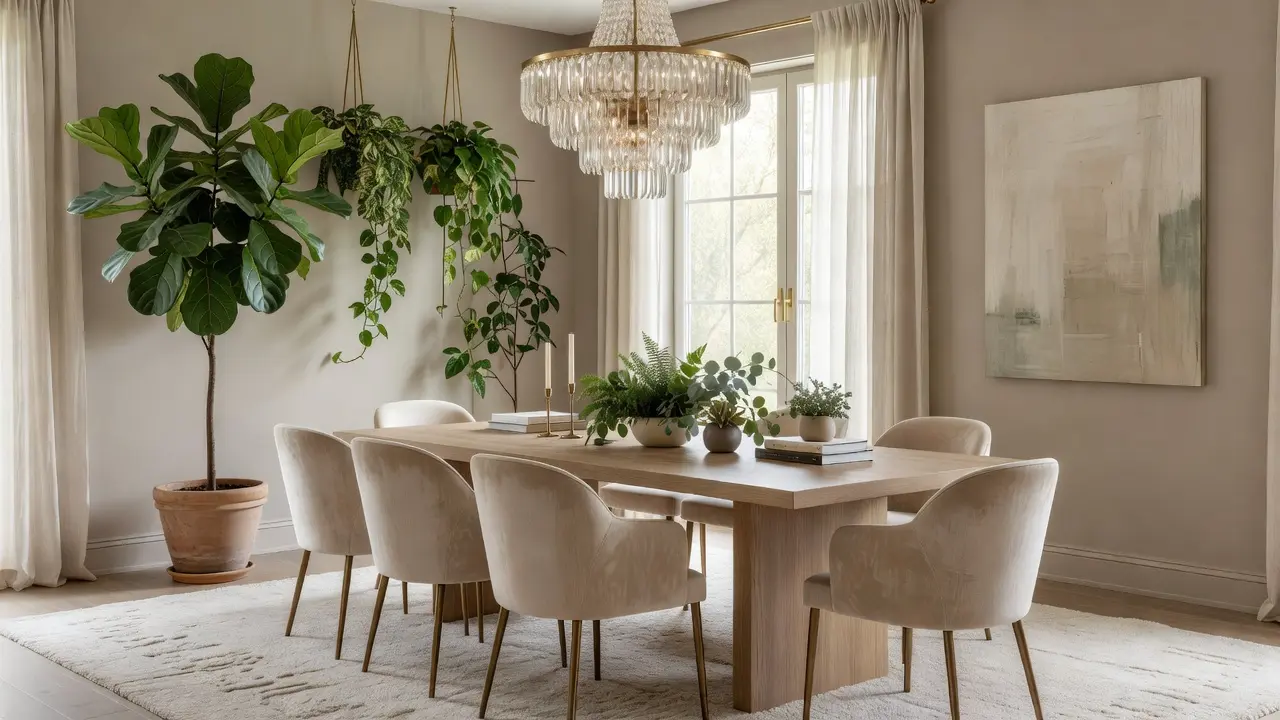
A fully neutral room can start to feel a little sterile without something living in it. A large leafy plant, like a fiddle leaf fig or a rubber plant, adds natural color and movement that beige alone can’t provide. Even a smaller arrangement of dried branches on the table works if floor space is limited.
Greenery is also one of the easiest elements to change seasonally, which keeps an otherwise fixed neutral room from feeling static year round.
Mistakes to Avoid
- Using one single flat beige tone across walls, furniture, and fabric
- Choosing a gray leaning beige without testing it in the room’s actual light
- Skipping texture entirely and relying on color alone to create interest
- Leaving out a statement light fixture, which a neutral room usually needs more than a colorful one does
- Mixing too many metal finishes evenly instead of picking one dominant tone
- Forgetting greenery or any living element, which can leave the room feeling sterile
Frequently Asked Questions
Is a beige dining room outdated? No, but a flat, single tone beige room can look dated or unfinished. A layered beige room with mixed textures and a warm undertone tends to read as timeless rather than trendy or outdated.
How do I keep a beige dining room from looking boring? Layer at least three different beige or cream tones, add texture through fabric and natural materials, and include a strong focal point like a statement light fixture or a piece of art. Color alone isn’t doing the work in a neutral room, so texture and contrast have to.
What colors pair well with a beige dining room? Warm browns, soft terracotta, cream, and deep green all pair naturally with beige. Cooler colors like true gray or icy blue can work but tend to shift the whole room toward a more modern, less cozy feel.
Should I use warm or cool lighting in a beige dining room? Warmer lighting, generally in the 2700K to 3000K range, tends to flatter beige tones and keep the room feeling cozy rather than washed out. Cooler, bluer light can make beige look flat or slightly gray.
Does a beige dining room work with dark furniture? Yes, a dark wood or black table can actually work well as contrast in a beige room, as long as there’s enough warmth elsewhere in the space, like brass accents or warm toned art, to keep the overall room from feeling too stark.
Conclusion
A beige dining room only looks boring when it’s flat. Layer your tones, bring in real texture, and give the room a focal point it can actually anchor around. Do that, and a neutral palette will read as more luxury and more considered than a room full of bold, competing colors ever could.