10 Modern LED Staircase Design Ideas for a Luxury Home Entrance
A staircase is often the first thing people see when they walk into a home, but most staircases only get lit by a single overhead fixture that leaves the actual steps in shadow. Adding LED lighting directly into the staircase itself changes that completely, turning a purely functional element into a genuine architectural feature that sets the tone for the whole entrance.
These ten ideas cover how to plan, place, and style LED lighting on a staircase so it reads as luxury and intentional rather than like an afterthought. From step lighting placement to color temperature, here’s how to build the effect properly.
1. Understand How LED Lighting Transforms a Staircase
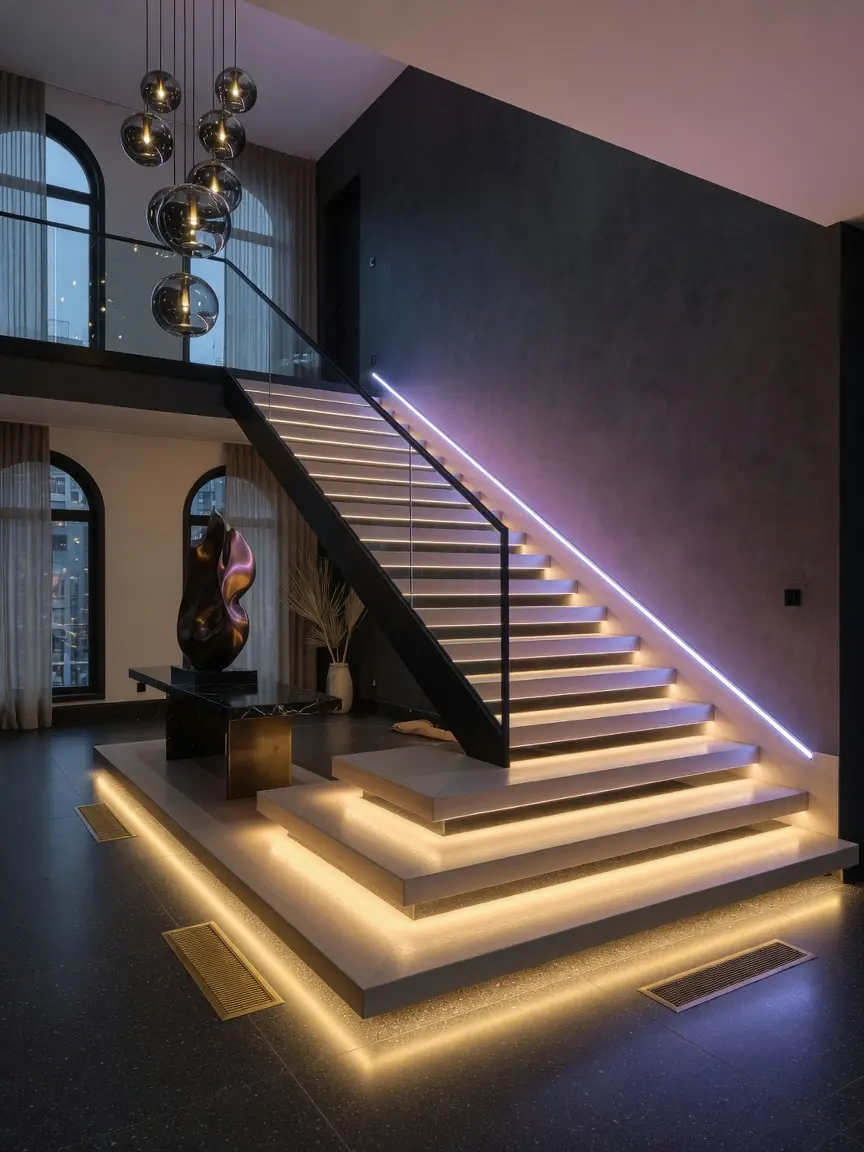
Traditional overhead lighting illuminates a staircase from above, which often leaves the edges of individual steps in shadow, especially in the evening. LED lighting placed directly at or under each step changes this completely, outlining the staircase’s actual shape and adding both safety and visual drama at the same time.
This kind of lighting also draws attention to the staircase as a design feature in its own right, rather than treating it as a purely functional element to move between floors. In an entrance space, this can make a significant difference in how the whole home feels the moment someone walks in.
2. Choose Between Step Lighting and Handrail Lighting
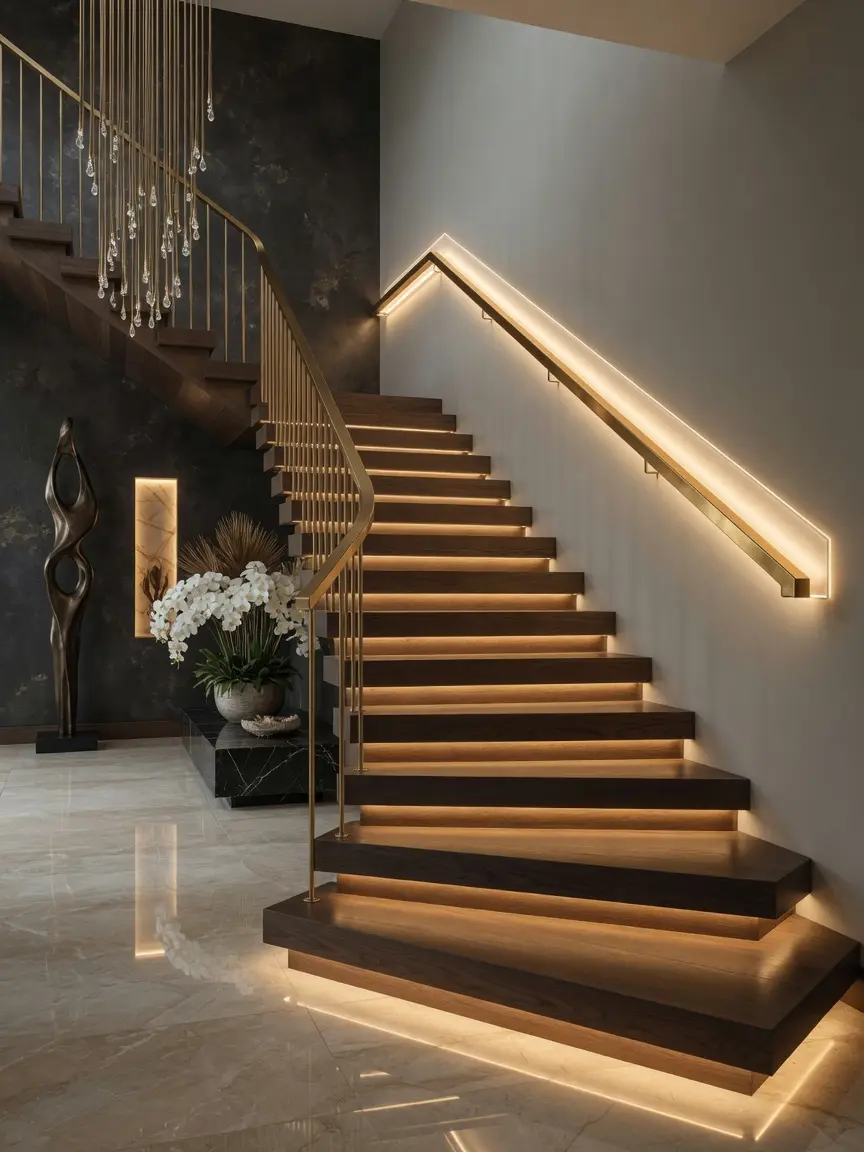
There are two main placement options for staircase LED lighting, and many designs combine both. Step lighting, placed under the front edge or riser of each stair, illuminates the tread directly below it and adds a strong safety benefit alongside the visual effect. Handrail lighting, run along the underside of the rail, creates a softer, ambient glow that follows the full length of the staircase.
Which Option Works Best for Your Staircase
Step lighting tends to have a stronger visual impact and works particularly well on staircases with open risers or a floating design. Handrail lighting is a good option for a more traditional enclosed staircase, where individual step lighting might be harder to install or less visually necessary.
3. Pick the Right LED Color Temperature for Your Entrance
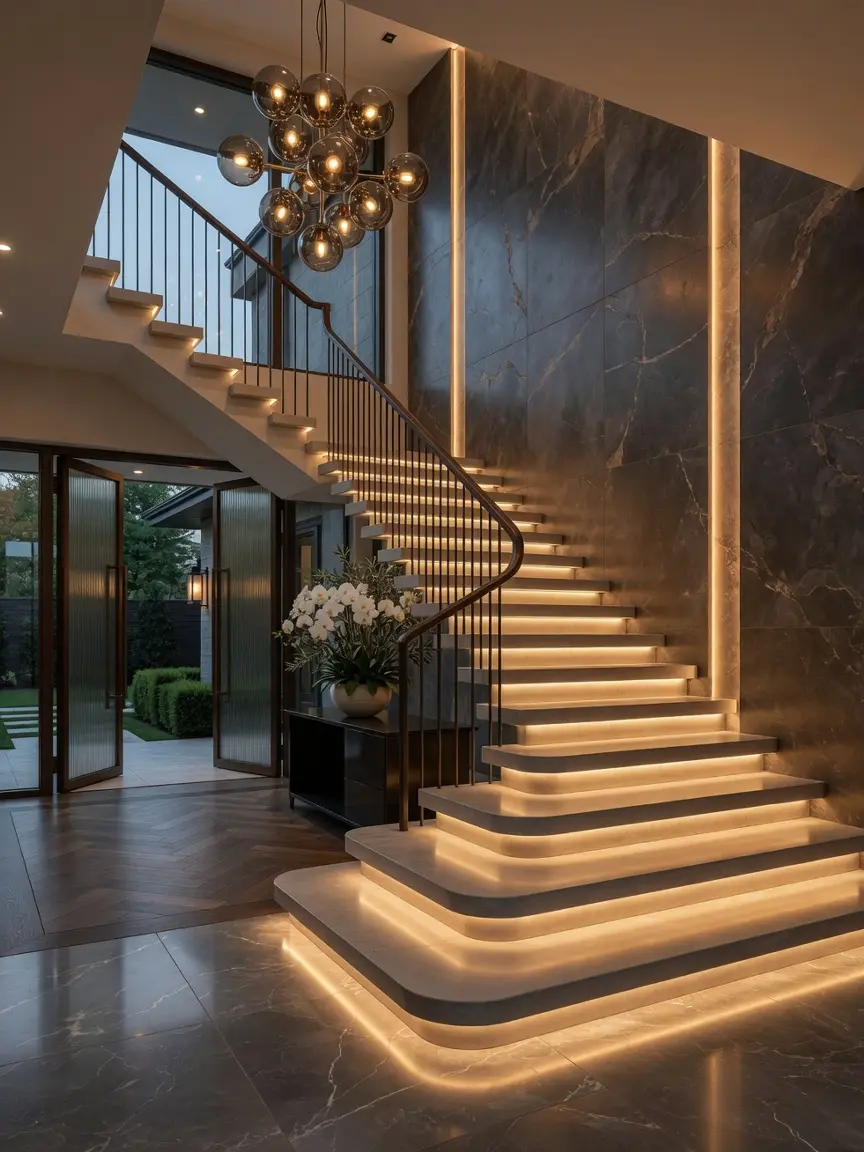
Color temperature has a significant effect on how the finished staircase feels. Warm white, generally in the 2700 to 3000 Kelvin range, creates a cozy, inviting glow that suits most home entrances. Cooler white light, closer to 4000 Kelvin, feels more modern and clinical, which can work in a very minimalist, contemporary space but often feels less welcoming in a typical home entrance.
Some LED systems also offer color changing options, which can be a fun feature for special occasions but generally look less considered as a permanent everyday lighting choice compared to a single, well chosen warm white.
4. Decide Between Motion Activated and Manual Switch Lighting
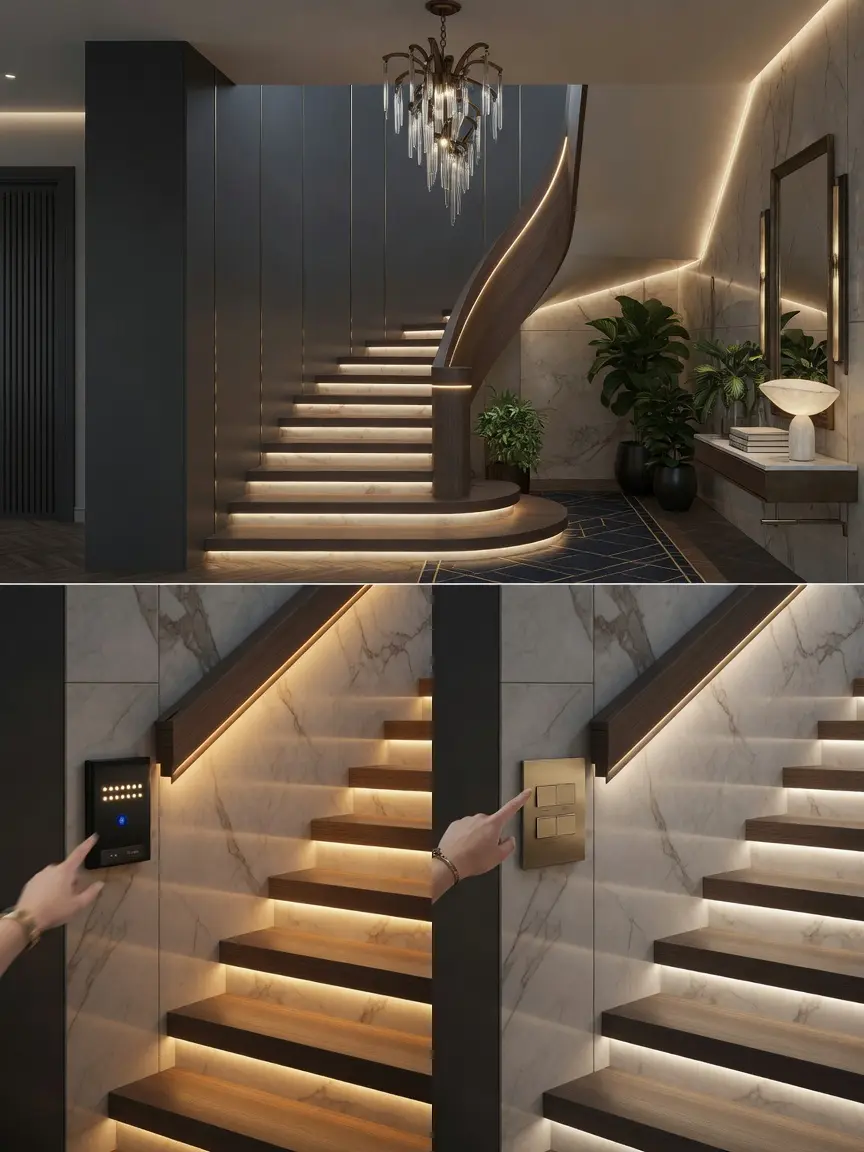
Motion activated LED staircase lighting turns on automatically as someone approaches or begins using the stairs, which adds a genuine safety benefit for nighttime use without needing to fumble for a switch. Manual switch lighting gives more control over exactly when the lights are on, which some homeowners prefer for energy use or simply personal preference.
Many systems now offer both options together, with a manual override switch alongside motion sensor functionality. This combination gives the most flexibility, though it does add some additional cost and installation complexity compared to a single simple system.
5. Use LED Strips to Highlight Architectural Details
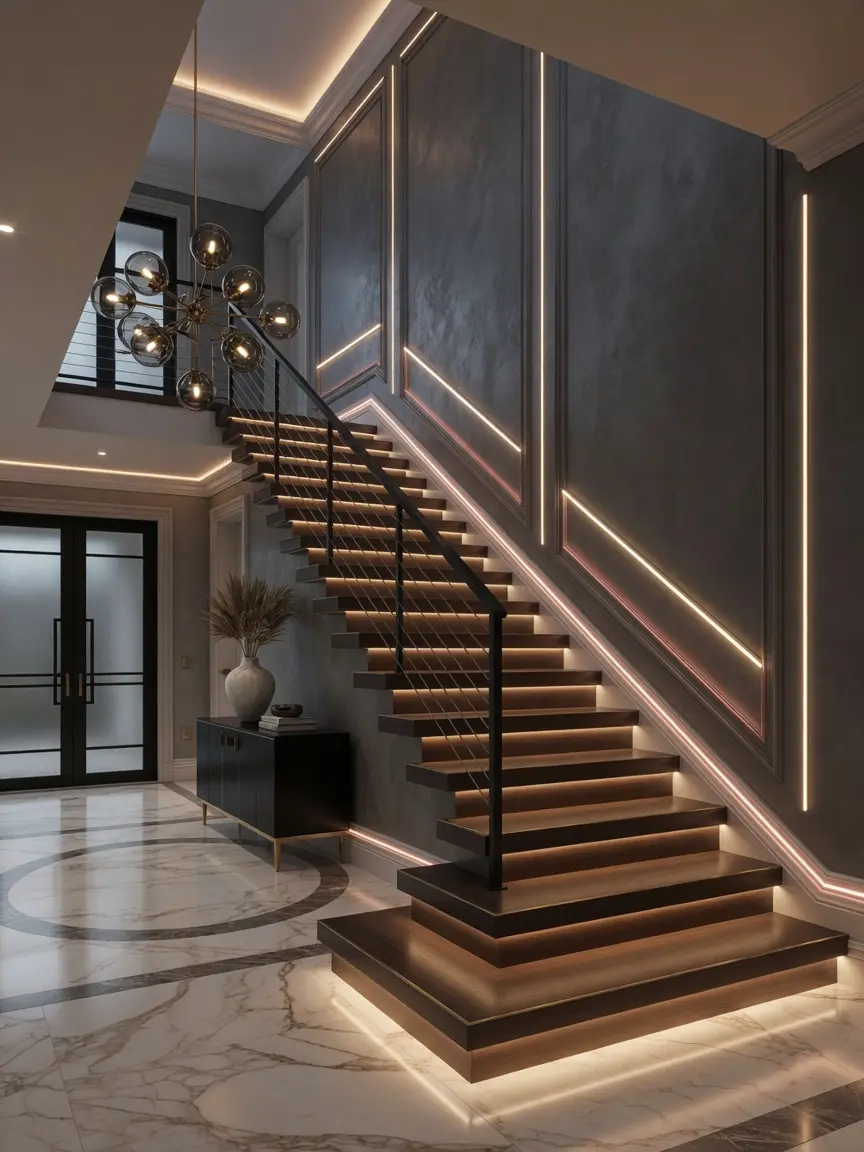
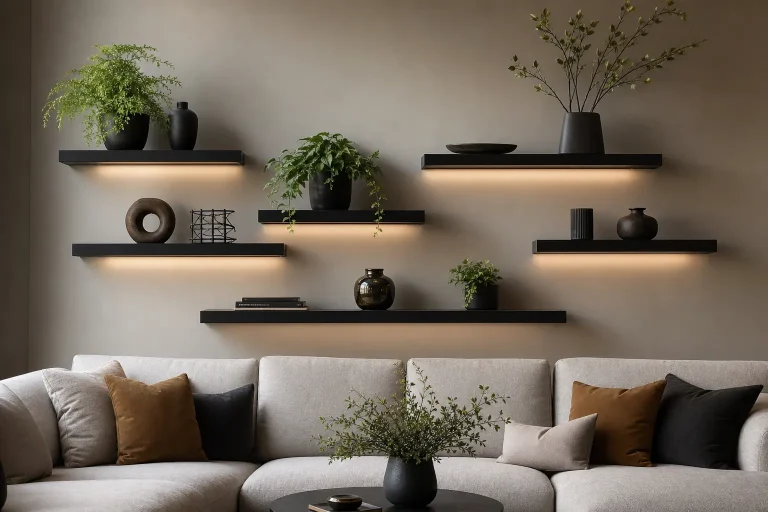
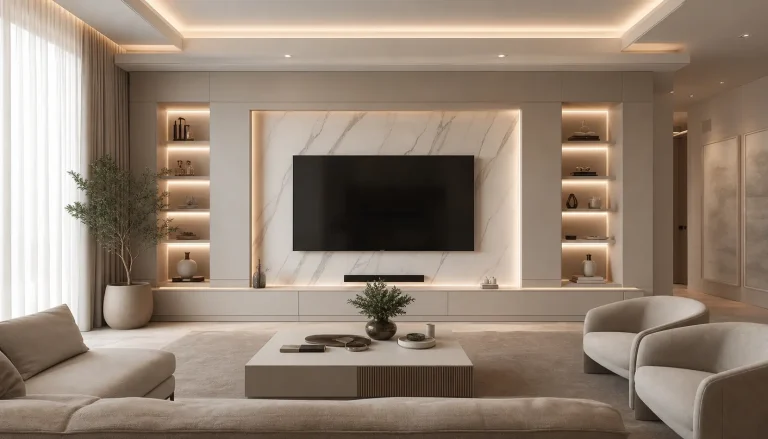
Beyond the steps themselves, LED strips can highlight other architectural details near the staircase, like a floating shelf, an accent wall, or the underside of a landing. This extends the lighting design beyond just the stairs and ties the whole entrance area together as one cohesive, considered space.
Placing a subtle LED strip behind an accent wall panel or along a floating shelf near the staircase creates a layered lighting effect, where several light sources work together rather than relying on the staircase lighting alone to carry the whole design.
6. Balance LED Lighting With a Statement Overhead Fixture
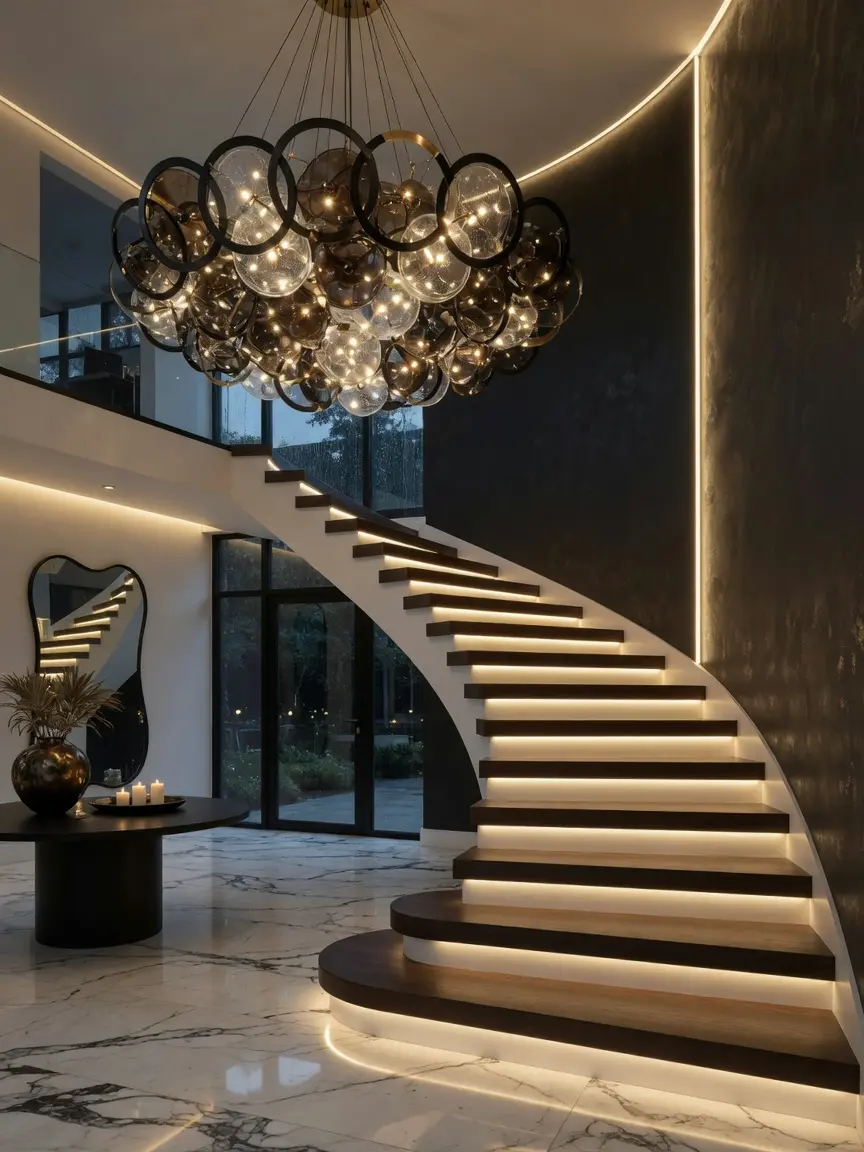
Staircase LED lighting works best as one layer within a broader lighting plan, not a replacement for all other light sources in the space. A statement pendant or chandelier, hung in the stairwell or entry above, adds a second focal point and ensures the space has enough overall light for daytime use, when the more subtle LED glow may be less noticeable.
This combination, a dramatic overhead fixture paired with more subtle integrated step lighting, is a common approach in genuinely high end staircase designs, since it layers light at different levels throughout the space.
7. Choose Materials That Reflect Light Well
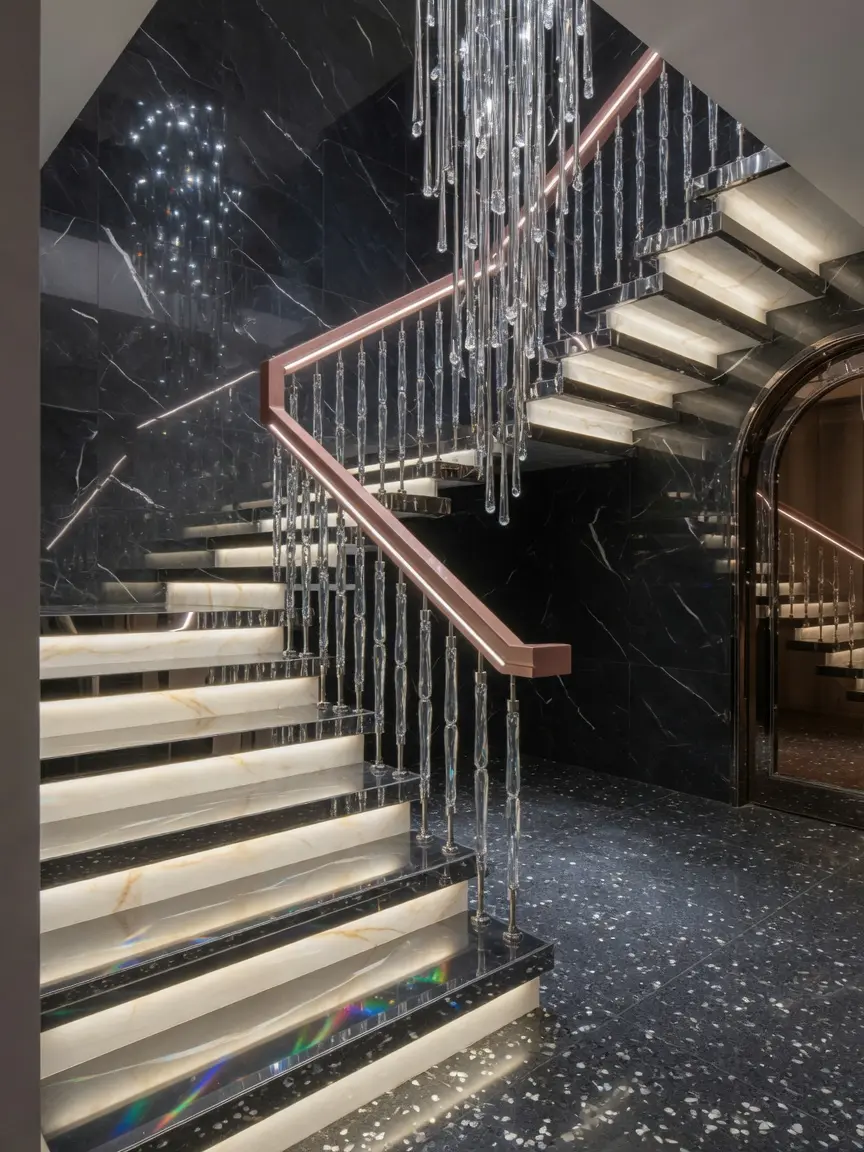
The materials used on and around the staircase affect how much the LED lighting actually stands out. Light colored wood, painted risers, or a light stone material all reflect light more effectively than dark materials, which can absorb much of the glow rather than showing it off.
If your staircase uses darker materials for the overall design, consider concentrating LED lighting at the tread edges specifically, where the contrast between the dark material and the light source will read more clearly than it would against an already light surface.
8. Add LED Accents Under Floating Stair Treads
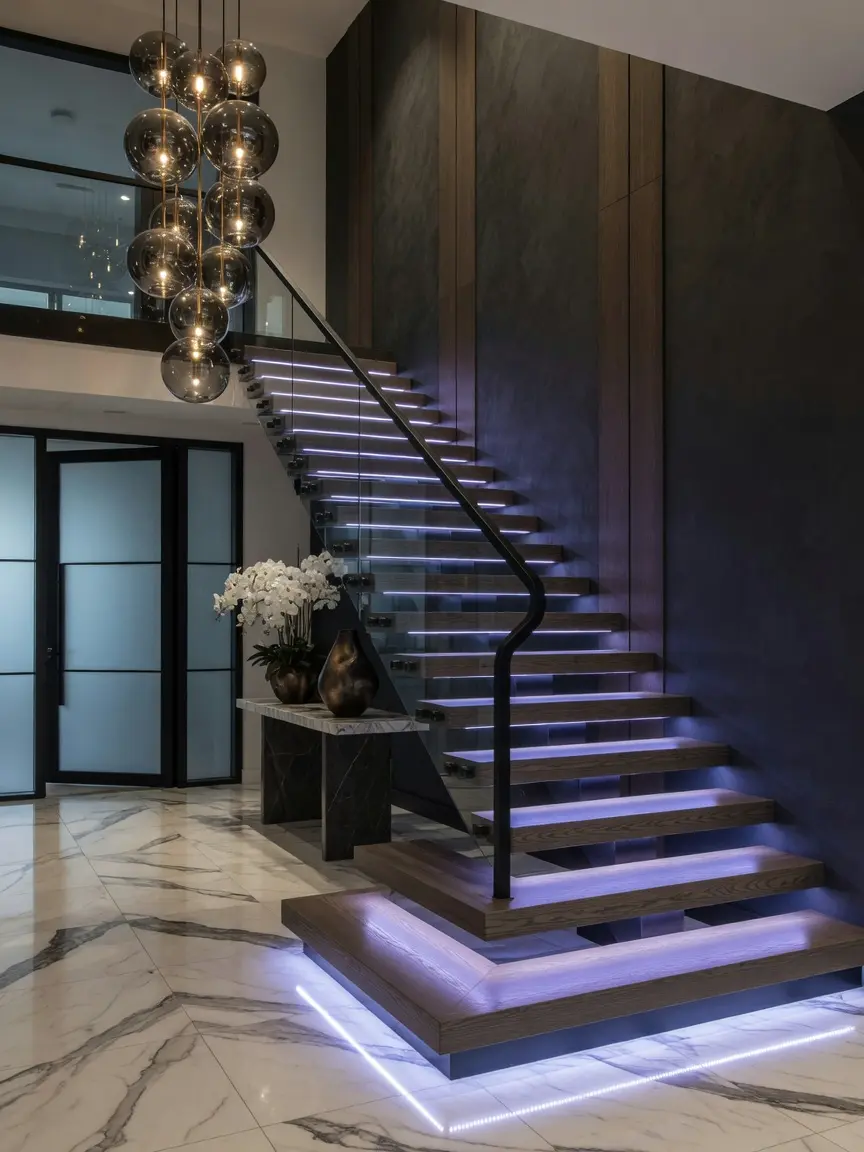
A floating staircase, where the treads appear to hang without visible support, is one of the most dramatic applications for LED lighting. Placing light strips underneath each floating tread creates a glowing effect that makes the stairs appear to hover, which is a distinctive, genuinely luxury looking design choice.
This effect works particularly well when paired with a wall mounted or minimal handrail design, since a bulky traditional railing can partially block the view of the lit undersides and reduce the overall visual impact.
9. Plan Wiring and Installation Before Committing to a Design
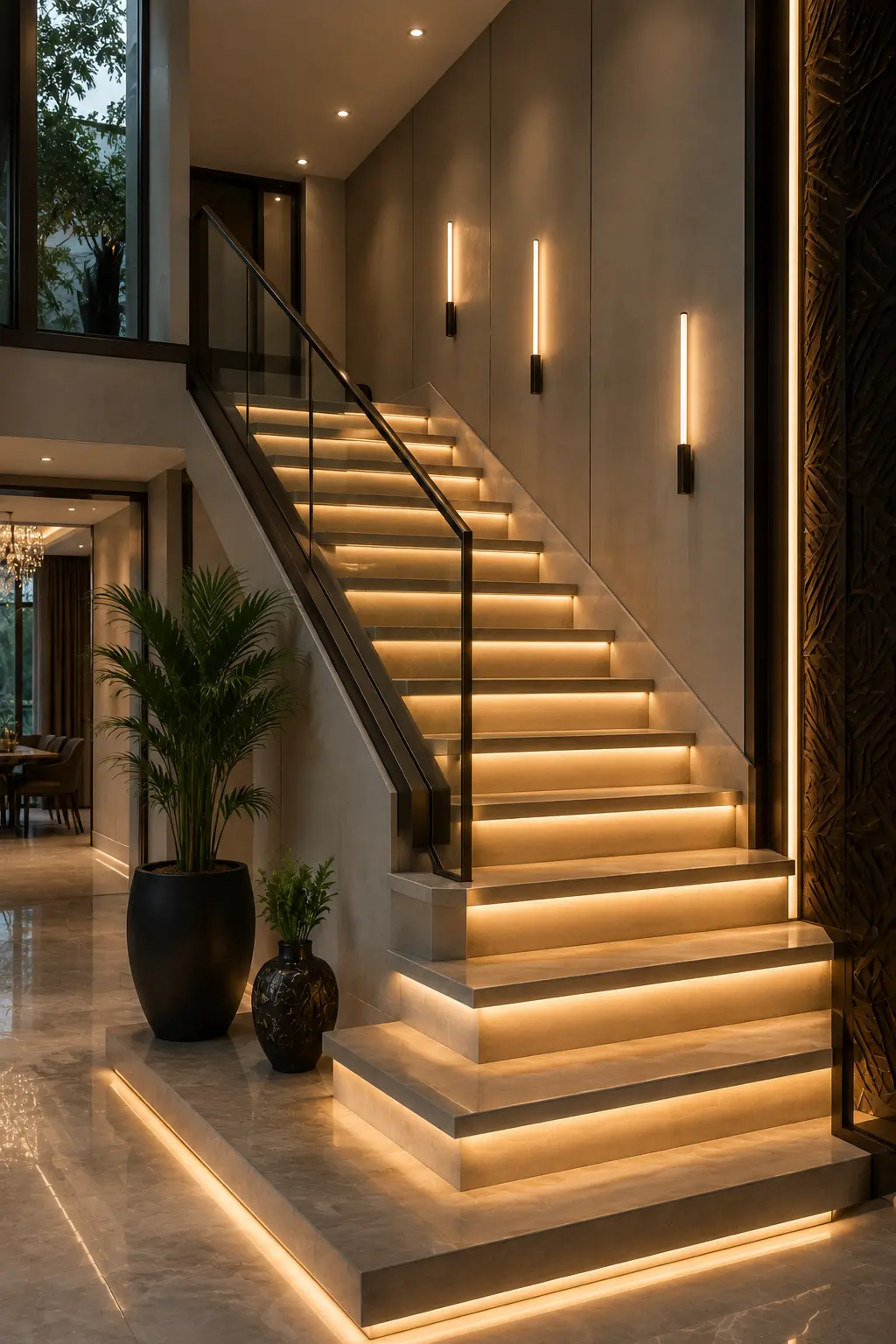
LED staircase lighting requires planning at the construction or renovation stage in most cases, since wiring typically needs to run through the stair structure itself. If you’re renovating an existing staircase, discuss LED lighting options with your contractor early, since retrofitting lighting into finished stairs is considerably more involved than planning for it during initial construction.
Battery powered or plug in LED strip options do exist for a lower commitment approach, though these generally offer a less integrated, less permanent look compared to hardwired lighting installed during construction or a full renovation.
10. Style the Staircase Wall to Complement the Lighting
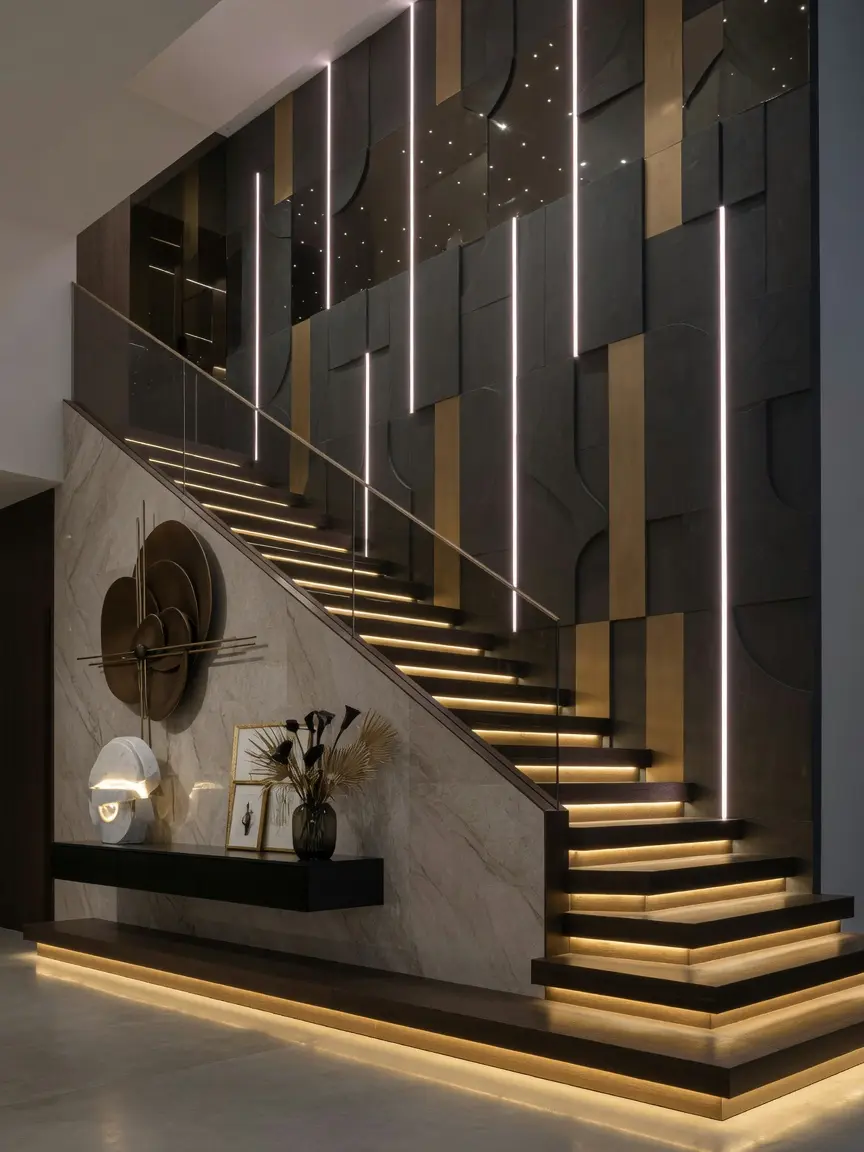
The wall running alongside the staircase is a natural spot to reinforce the lighting design through material and color choices. A textured accent wall, a gallery of art, or a simple wood paneled wall all pair well with staircase LED lighting, especially if the wall material also reflects some of the ambient glow from the steps below.
Keep the wall styling relatively simple if the staircase lighting itself is the main visual feature you want to highlight. A busy, heavily patterned wall can compete with the lighting effect rather than supporting it.
Mistakes to Avoid
- Choosing cool white LED lighting for a home entrance meant to feel warm and welcoming
- Skipping the planning stage and trying to retrofit lighting into a finished staircase without proper wiring access
- Using LED lighting as the only light source, leaving the space underlit during the day
- Placing lighting on dark materials that absorb the glow rather than showing it off
- Choosing a bulky handrail design that blocks the visual effect of floating tread lighting
- Overcomplicating the wall styling next to the staircase, competing with the lighting itself
Frequently Asked Questions
Is LED staircase lighting expensive to install? Cost varies significantly depending on whether it’s planned during new construction or retrofitted into an existing staircase, plus the complexity of the system chosen. Retrofitting is generally more expensive due to the additional work required to run wiring through finished stairs.
What color temperature should I choose for staircase lighting? Warm white, in the 2700 to 3000 Kelvin range, generally suits most home entrances and creates an inviting glow. Cooler temperatures closer to 4000 Kelvin can work in very minimalist, contemporary spaces but often feel less welcoming in a typical home.
Does LED staircase lighting use a lot of electricity? LED lighting is generally quite efficient compared to older lighting technology, and motion activated systems in particular use minimal electricity overall, since the lights are only on when the stairs are actually in use.
Can I add LED lighting to an existing staircase without full renovation? It’s possible, though more limited than planning during construction. Battery powered or plug in LED strip options can add some lighting effect without major renovation, though the result is generally less integrated than hardwired lighting installed during a full renovation.
Is floating stair tread lighting only for very modern homes? While it’s most common in modern and contemporary designs, the effect can work in a range of styles depending on the surrounding materials and staircase design. A traditional staircase with subtle step edge lighting, rather than fully floating treads, can achieve a similar warmth without requiring a strictly modern overall design.
Conclusion
LED staircase lighting turns a purely functional element into a genuine design feature, adding both safety and real visual drama to a home’s entrance. Choose warm color temperature, plan the wiring early if possible, and pair the lighting with an overhead fixture and complementary wall styling. Done this way, the staircase becomes one of the most memorable parts of the whole home.