10 Sage Green Dining Room Ideas for a Cozy & Elegant Home
Most dining rooms fail for one boring reason. The walls are white, the light is flat, and nobody wants to sit there longer than dinner takes. A sage green dining room fixes that fast. It’s soft enough to feel calm, but it has enough depth that a plain box of a room suddenly looks like someone lives there on purpose. You don’t need a contractor for this. Paint, a rug, maybe a new light bulb. That’s most of it.
1. Paint the Walls a Soft Sage Green Base

Start here. The wall color decides everything else, so get it right before you buy a single new chair. Go muted. Something between gray and green, not a color that screams garden hose. Bright greens read more like a kids’ playroom than a dinner table. Grab a sample first and paint a real patch on the wall, not a paint chip taped up next to the window. Sage shifts a lot depending on light. A north facing room can turn almost gray by 2pm.
2. Pair Sage Green with Warm Wood Tones

Green on its own can feel cool, even a little flat. Wood fixes that instantly. A walnut table, an oak sideboard, even pine with some warmth to it, all of it pulls the room back toward cozy. This is honestly one of the easiest wins in the whole list. If your table already leans cool, like a gray washed oak, bring warmth in somewhere else. A rug works. So do chair legs.
3. Add Brass or Gold Hardware for Elegance

People underestimate hardware. A brass drawer pull or a gold framed light fixture against sage green does more than it should for how little it costs. This combo shows up constantly in higher end interiors, and there’s a reason for that. It’s not about covering the room in metal either. Two or three well placed pieces are plenty. Overdo it and the room starts looking like a hotel lobby instead of somewhere you’d actually eat dinner.
4. Layer in a Neutral Rug Underneath the Table

Skip the rug and the room feels unfinished, even if everything else is right. Go neutral here, cream or oatmeal or a soft gray, so the walls stay the star. Size matters more than people think. Leave at least 24 inches of rug showing on every side of the table, so chairs stay on it even when someone pushes back from dinner. Wool holds up well. So does a decent low pile synthetic if wool’s out of budget.
5. Choose Upholstered Chairs in Cream or Linen

Wood chairs alone can make a room feel stiff, like nobody’s supposed to relax there. Upholstery fixes that, and cream or natural linen pairs especially well with sage since neither one fights for attention. Darker chairs work too, just know it shifts the whole mood toward moody rather than light and airy. Tight budget? Slipcovers get you most of the look without buying new furniture.
6. Bring in Greenery That Echoes the Wall Color
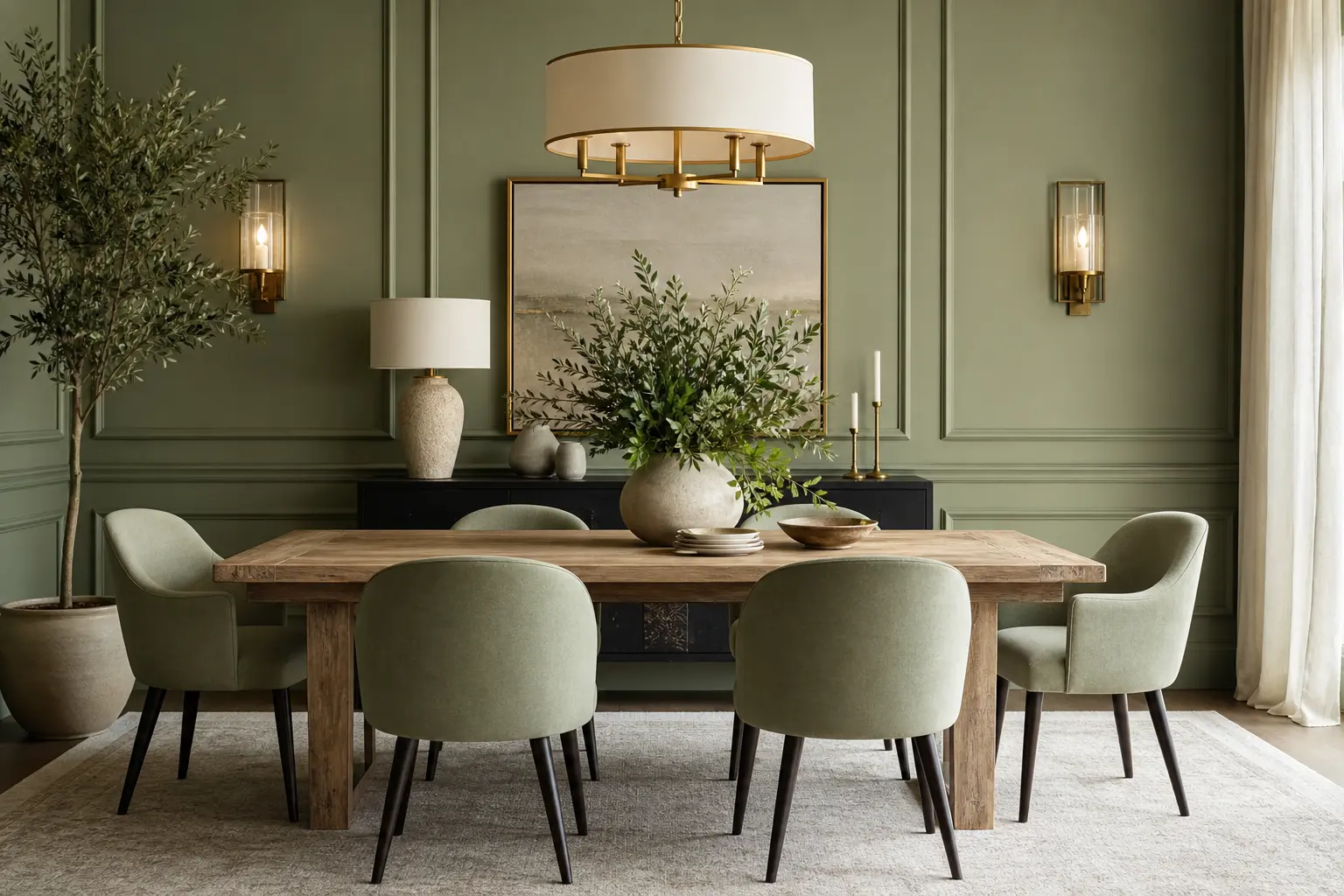
A trailing pothos on the sideboard. A few olive branches in the middle of the table. Neither has to match the wall exactly, that’s not really the point. It’s more about reinforcing the same calm the paint already brought in. Real or good faux, either works fine here.
Plants add texture in a way flat furniture just can’t. Paired with a green wall, it stops feeling like random pieces thrown together and starts feeling like a room someone actually thought through.
7. Use Sage Green on Cabinetry Instead of Walls

Open concept kitchen dining combo? Try the cabinets instead of the walls. Keeps the wall neutral and lets the green show up somewhere more contained. A lot of people go this route in shared spaces where a full green wall would be too much all at once. Just use a real cabinet finish, semi gloss or satin, since cabinets take more abuse than wall paint ever will.
8. Add Warm Lighting to Soften the Green
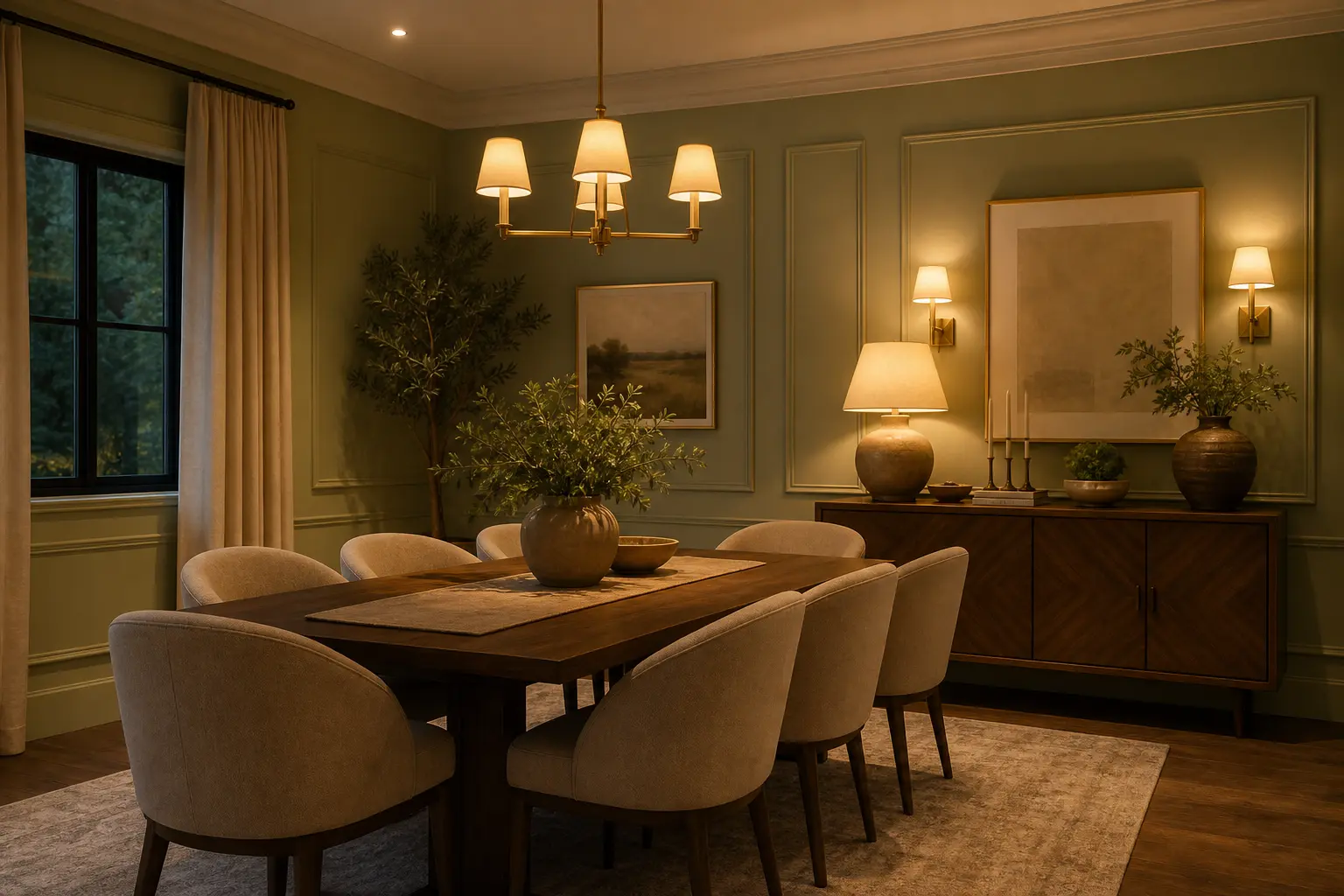
This one gets skipped constantly and it shouldn’t. Cool white bulbs wash sage green out, make it look almost clinical. Warm bulbs, somewhere around 2700K to 3000K, bring the green back to life and make the whole room feel better after sunset. Worth adding a dimmer too. Dinner at noon and dinner at 8pm need different light.
9. Mix in Vintage or Antique Accent Pieces

One old mirror. A secondhand bench. A sideboard someone else already lived with for twenty years. That kind of piece keeps a sage green dining room from looking like it got shipped straight from a catalog photo. Estate sales, thrift stores, online marketplaces, they’re all worth a look before buying new. Even a single vintage find changes how collected the whole room feels.
10. Finish with Textured Table Linens

Cheapest item on this list, and one of the most effective. A woven cotton runner, linen napkins in rust or cream or soft gold, all of it plays nicely against sage walls. Texture is doing the real work here, more than color does. A flat, smooth tablecloth just won’t add the same depth as something with visible weave.
Mistakes to Avoid
- Picking a sage green that leans too yellow, which reads dated fast
- Skipping the rug, which leaves the room looking unfinished
- Using only cool toned bulbs, which flattens the green
- Matching every accent too closely to the wall color, killing contrast
- Committing to paint without testing it at different times of day
Frequently Asked Questions
Does sage green work in a small dining room? Yes. It tends to read soft and airy rather than heavy, which actually helps a small space. Pair it with lighter furniture and it won’t feel boxed in.
What color chairs go best with sage green walls? Cream, natural linen, and warm wood all work well. Skip stark white, it can make the green look colder than you want.
Is sage green going to feel dated in a few years? Probably not. It’s stayed popular for years now because it’s muted and earthy, not a loud trend color. It ages better than brighter greens tend to.
Can I use sage green in a room with barely any natural light? You can, just go a shade lighter. Darker sage can feel dim in low light rooms, especially with cool bulbs working against it.
What’s the fastest way to try sage green without repainting everything? Start small. An accent wall, cabinetry, or one big piece like a sideboard. You get the color without committing to four full walls.
Bringing It All Together
None of this requires a big budget or ripping the room apart. Start with the wall color, then work through lighting, textiles, and a piece or two that has some history to it. Pick one or two changes from this list instead of trying to do everything at once. The room comes together on its own timeline, and it usually looks better for it.