10 Modern S-Shaped Floating Corner Shelf Ideas with Ambient LED Lighting
Every room has that one dead corner. Nothing sits there. Maybe a lamp, maybe just dust. An S-shaped floating corner shelf with ambient LED lighting fixes that. The curve hugs the corner instead of leaving an awkward gap, and the LED strip along the edge gives it a soft glow at night. Below are ten real ways to size, wire, and style one so it actually becomes a feature, not just another thing on the wall.
1. Why an S-Shaped Corner Shelf Works Better Than a Straight One
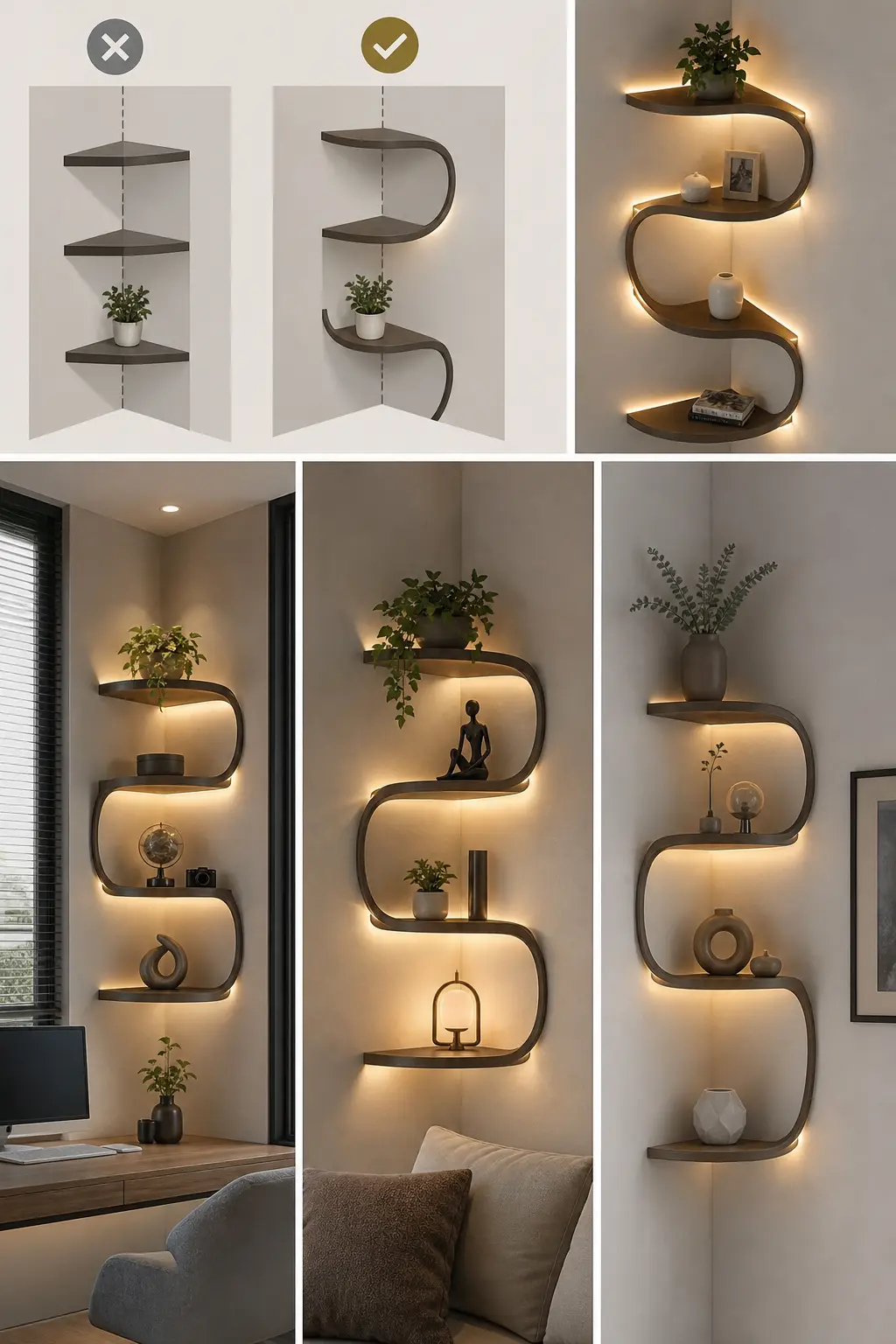
Try mounting a straight shelf in a corner and you’ll hit the same problem every time. It either floats away from the wall junction or gets cut short to fit. Neither looks planned.
An S-shaped shelf doesn’t have that issue. It’s built to follow the angle where two walls meet, so it sits flush instead of hanging off to one side.
There’s also a bonus you don’t get with a flat shelf. The curve breaks the surface into a few smaller sections. So instead of one long display, you get several small ones, each with its own little moment.
Corners stop being dead space once you give them a shape that fits them.
2. Picking the Right Size for Your Corner
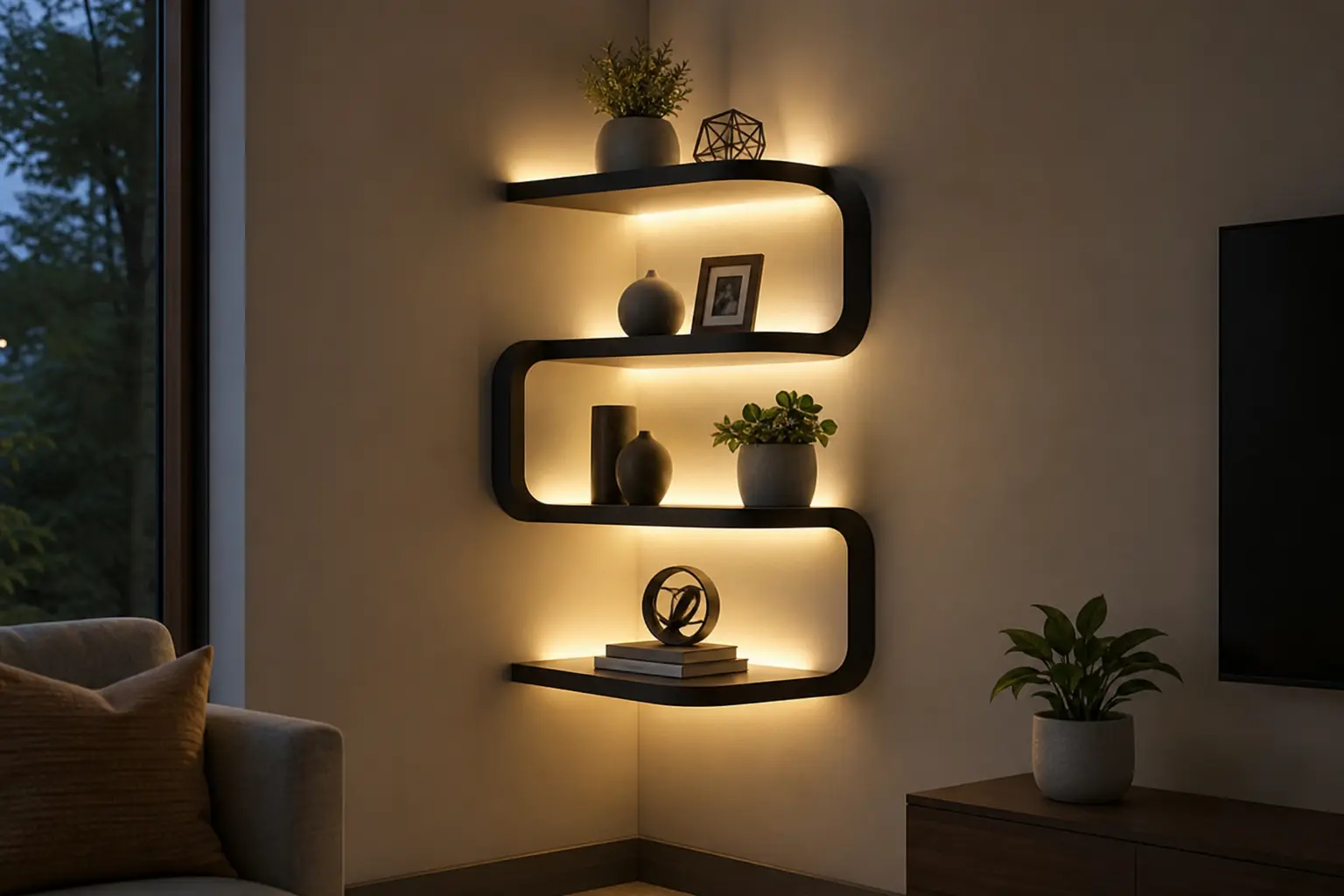
Most corner shelves run 24 to 40 inches tall. Measure your corner first, from about waist height up to just below the ceiling if you’re going for a full vertical display.
Depth matters here too, maybe more than people expect. Most S-shaped shelves stick out 6 to 10 inches from the wall at the widest curve. A deeper shelf fits more, sure, but it also eats into your floor space below.
Measuring for a Tight Corner
Near a doorway or existing furniture? Leave at least 4 inches of clearance on either side. Otherwise the shelf ends up competing with whatever’s nearby instead of standing on its own.
3. Choosing LED Strip Color for the Right Mood
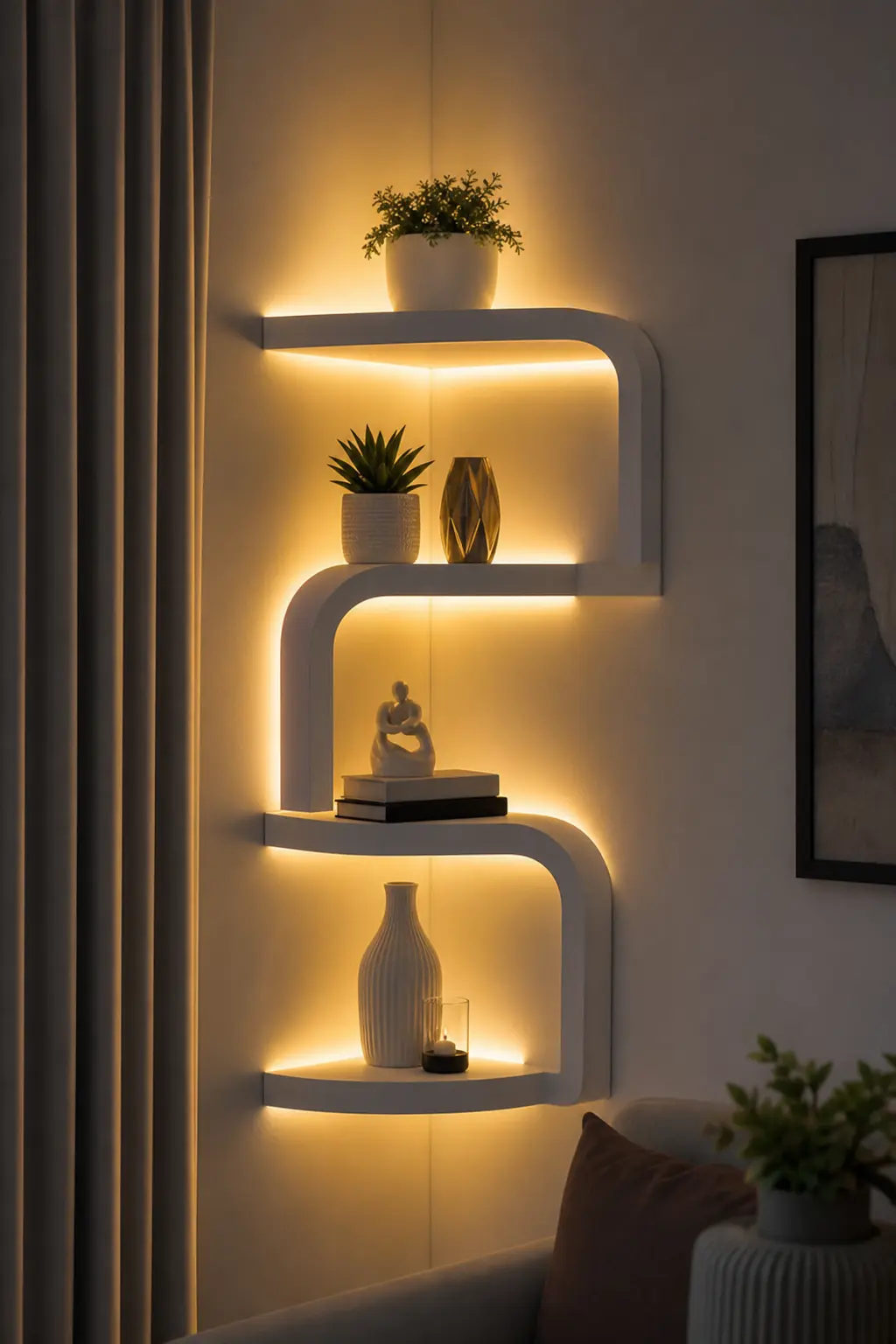
Warm white, somewhere around 2700K to 3000K, gives you that soft, relaxed glow most people picture for a living room or bedroom corner.
Cool white sits closer to 5000K. It looks sharper, more like daylight, and it’s fine for a home office. But it tends to feel a little sterile in a spot meant for winding down.
You can go with RGB strips if you want color changing options. Just use them sparingly. One or two soft tones beat cycling through bright colors. A corner shelf works better as background light, not a light show.
4. Where to Run the Wiring Without It Looking Messy
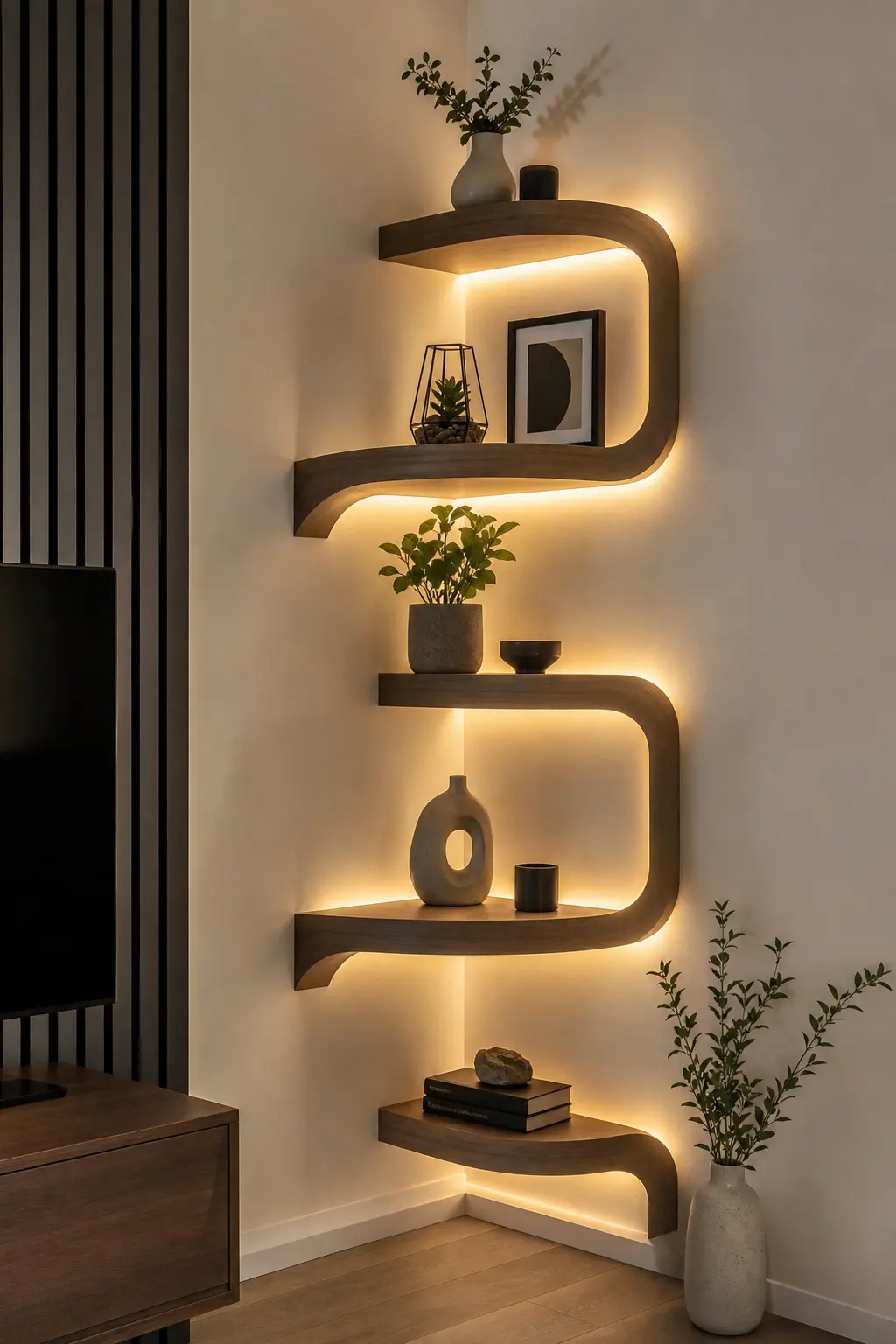
Most shelf LED strips stick to the underside of each curve. That alone hides the strip from view while it throws light down or up, depending on how you mount it.
Run the power cord down the back edge, tucked as tight to the wall as it’ll go. Small cord clips cost almost nothing and keep it from dangling loose.
Plan around your outlet before you mount anything. A cord stretched across open wall never looks clean, no matter how much tape you throw at it.
5. Weight Limits and What You Can Actually Display
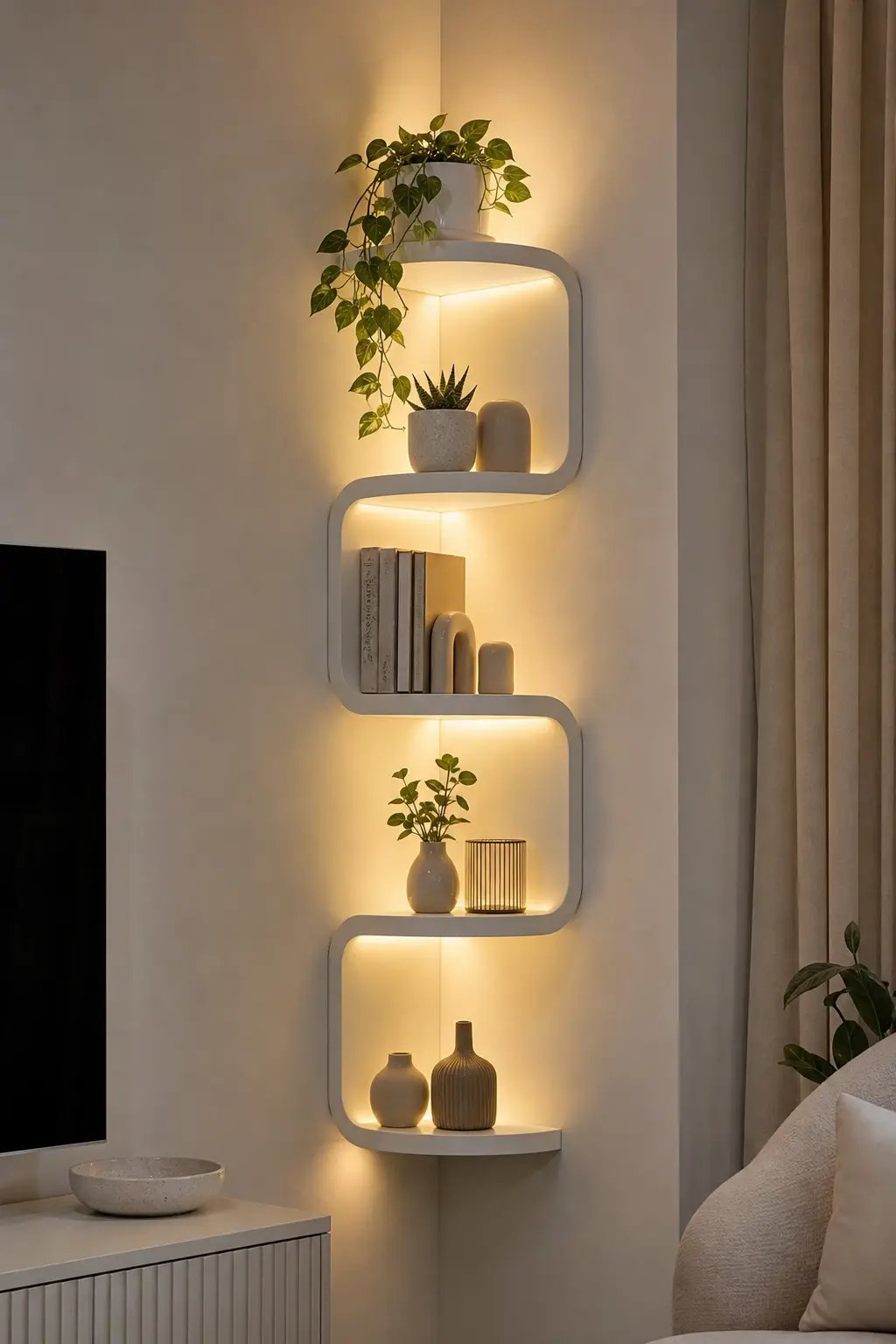
Most S-shaped shelves top out somewhere between 10 and 20 pounds total, spread across the whole curve. Check the rating before you load it up. Push past it and the brackets can work loose over time.
Stick to lightweight pieces. Small plants, framed photos under 5 by 7, small sculptural objects. These spread the weight evenly instead of concentrating it in one spot.
One thing to avoid: stacking heavy books near the outer tip of a curve. Weight out at the edge stresses the bracket way more than the same weight sitting closer to the wall.
6. Styling Each Curve Without Overcrowding It
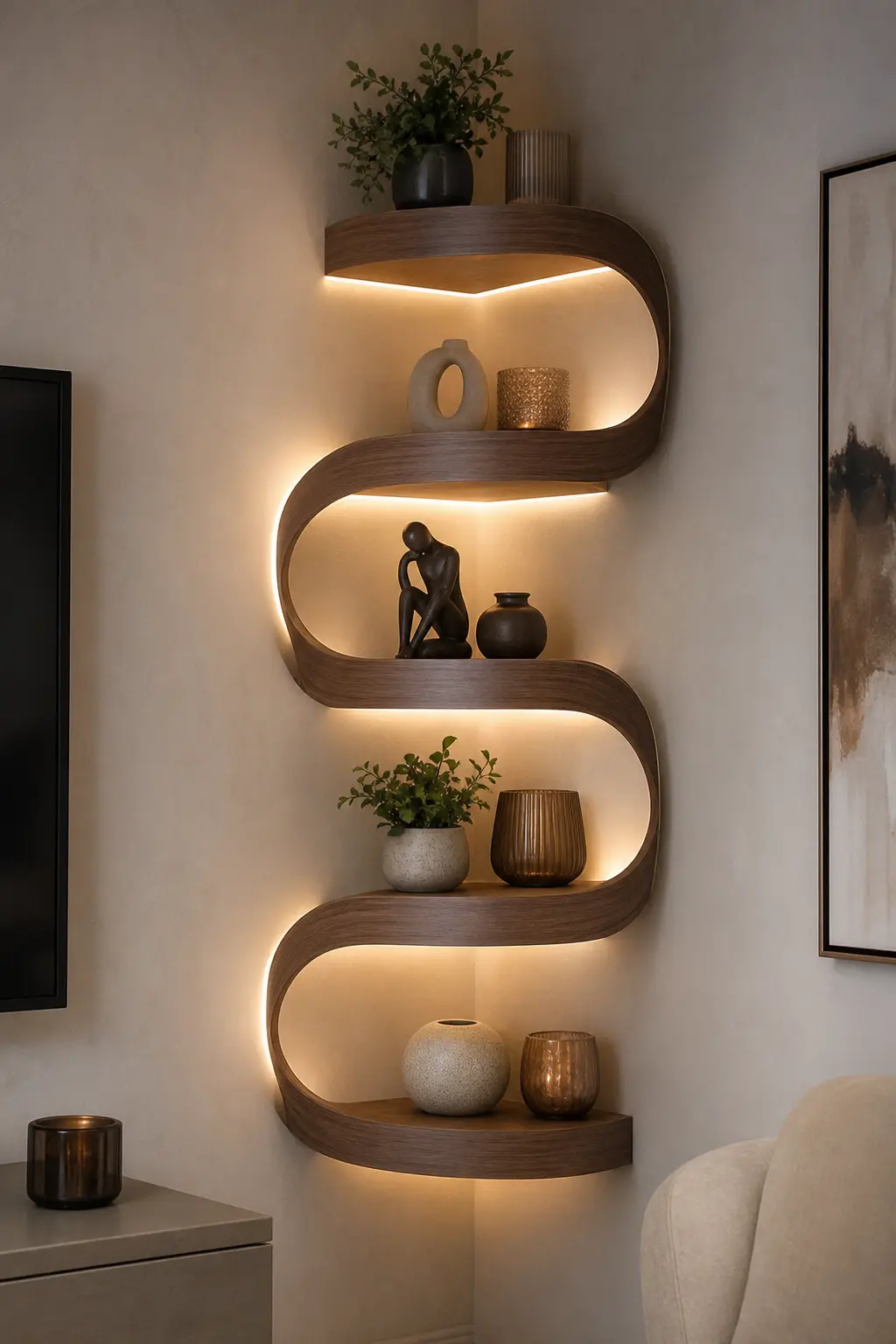
One or two items per curve. That’s really it. Cram more than that onto a single section and the whole shelf starts to look cluttered instead of styled.
Vary the height across sections. A plant here, a framed piece there, and maybe leave one curve empty on purpose. That contrast does more work than filling every inch.
Leaving Negative Space
Don’t feel like every curve needs something on it. A shelf with a gap or two actually looks more deliberate. It gives your eye somewhere to rest before moving to the next section.
7. Materials That Look Modern and Hold Up Well
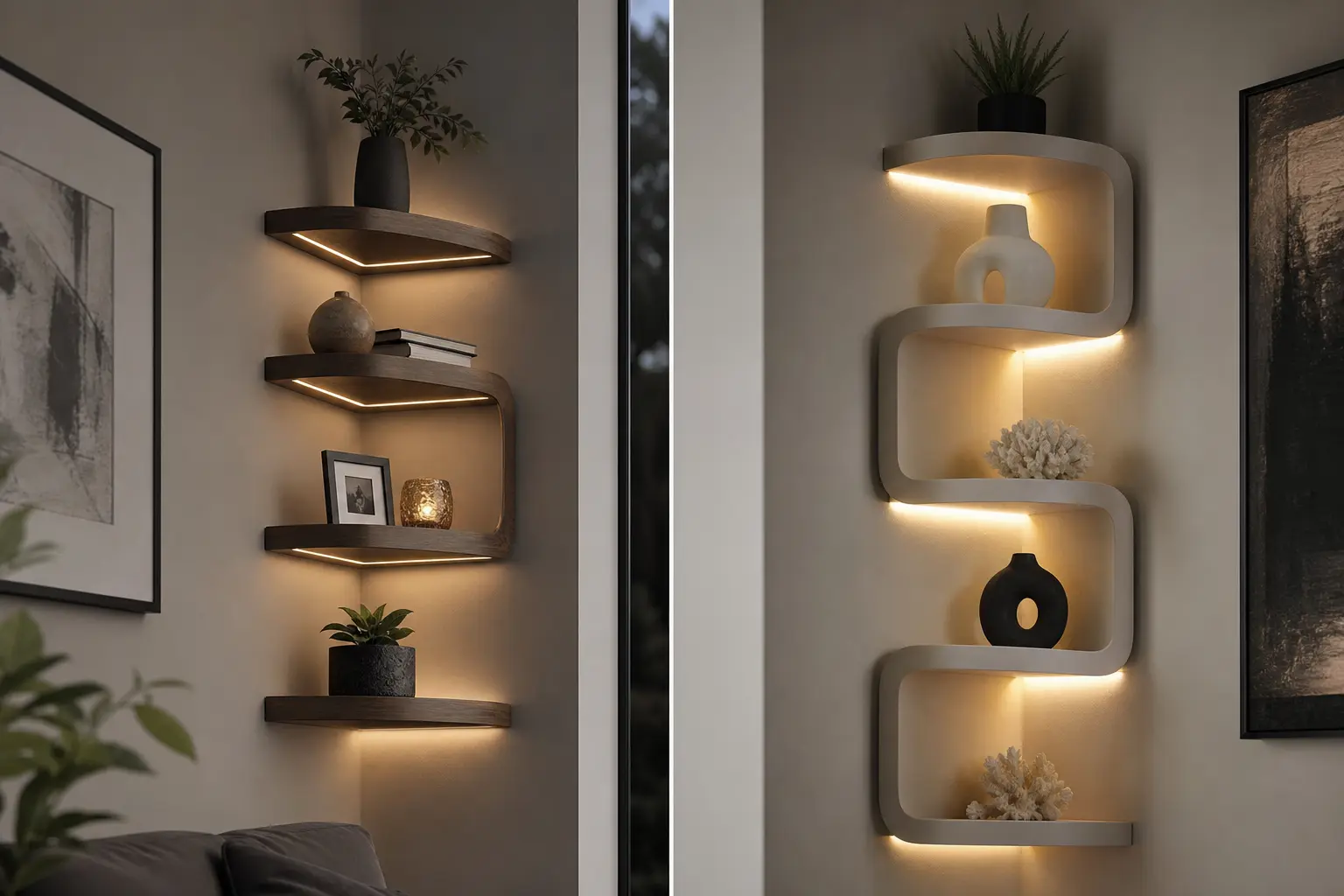
Most modern S-shaped shelves come in MDF with a laminate finish, or solid wood with paint or stain. MDF is lighter and cheaper, usually 25 to 45 dollars.
Solid wood costs more, closer to 50 to 90 dollars. But it holds up better long term, especially in humid rooms near a kitchen or bathroom.
There are metal framed versions too, with a wood surface on top. These lean more industrial or minimalist. Nice in the right room, out of place in a softer, cozier one.
8. Budget Friendly Ways to Get the Look
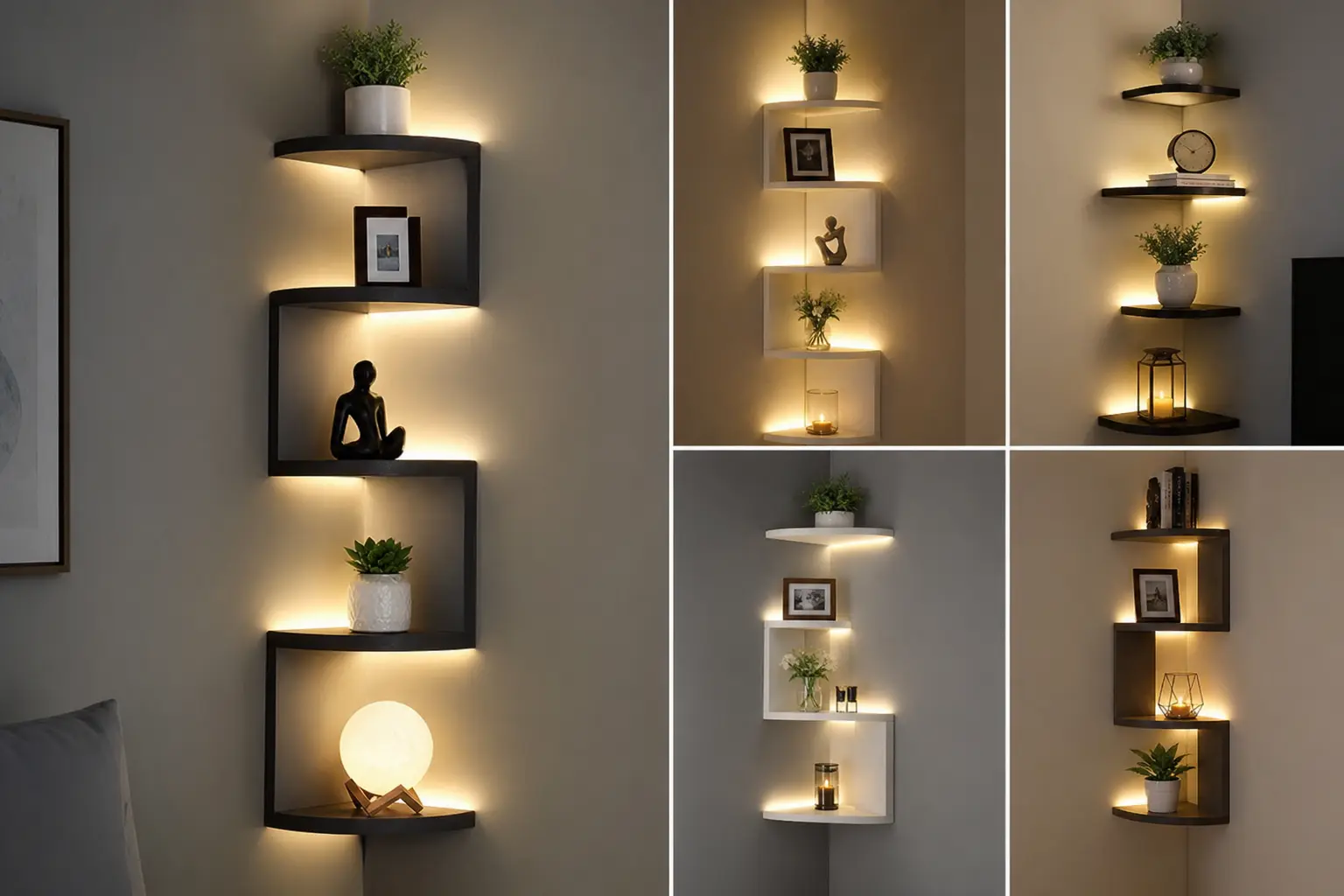
A basic shelf with LED lighting included usually runs 35 to 60 dollars. Buy the shelf and LED strip separately and you might land closer to 25 to 40 dollars total, assuming you’ve got basic tools on hand.
Battery powered strips skip the outlet question entirely and only cost a few dollars more than plug in versions. Handy if your corner isn’t near any wiring.
A 30 dollar shelf with the right warm bulb can honestly look just as good as something twice the price. Placement and light color matter more than the price tag.
9. Installation Basics for a Secure Mount

Most of these shelves mount with two or three brackets, one near each end and sometimes one in the middle. Find your studs first. Mounting into a stud holds a lot more weight than drywall alone ever will.
No studs lining up? Rated drywall anchors are your next best bet. Skip straight screws into bare drywall. It won’t hold much before it gives.
Check your level at every bracket point, not just once at the start. Even a slight tilt becomes obvious the moment you put anything on the shelf.
10. Rooms Where This Shelf Idea Works Best
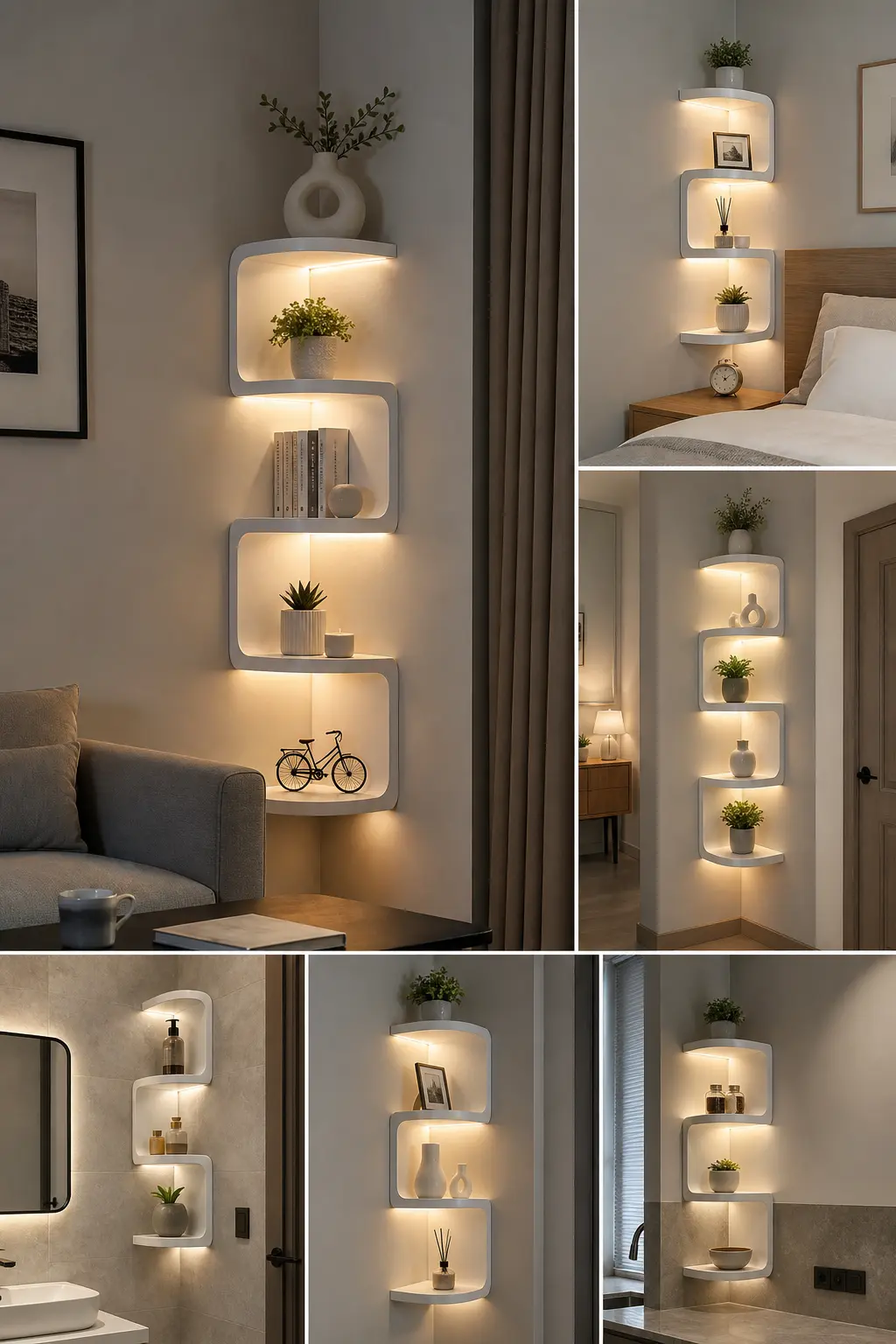
Living rooms, home offices, bedrooms. Basically any room with a corner that’s just sitting there doing nothing. In a living room it can replace a bulky corner cabinet and still give you display space.
Put it near a bed or reading chair and the LED lighting doubles as a soft night light. That’s a nice bit of function on top of the look.
Small apartment or studio? Skip the floor standing furniture in that corner entirely. A shelf like this frees up floor space, and in a tight layout that actually matters.
Mistakes to Avoid
- Overloading one curve while leaving the rest bare
- Choosing a cool, bright LED tone in a room meant to feel relaxed
- Skipping stud placement and relying only on drywall anchors for heavier loads
- Leaving cords visible instead of tucking them along the back edge
- Filling every curve instead of leaving some sections empty
Frequently Asked Questions
Can I install this shelf without finding a wall stud? Yes, with rated drywall anchors. But your weight capacity drops a good bit compared to a stud mount. Keep the display lighter if that’s your situation.
Do LED strips need to be hardwired into the wall? No. Most run on a low voltage adapter or batteries. No electrical work needed for a typical setup.
How long do LED strips last? Usually several years of daily use before you notice any real dimming. It varies by brand and quality though.
Can this shelf hold a small TV or speaker? Not really. These are built for lightweight decor, not electronics that push past the weight rating.
What if my corner isn’t a perfect 90 degrees? Most S-shaped shelves have a bit of flexibility built in. If your corner is off by more than a few degrees, though, expect a visible gap somewhere.
Can I change the LED color later? With a remote controlled RGB strip, sure, instantly. With a fixed warm white strip, you’d need to swap the whole strip.
Conclusion
An S-shaped floating corner shelf with LED lighting takes a corner nobody looks at and makes it something people actually notice. Get the size right, lean warm on the lighting if cozy is the goal, and don’t try to fill every curve. That mix of styled and empty is what sells the whole thing. Small project, bigger payoff than most corner ideas out there.