10 Entryway Glow Up Ideas for a Stunning Before and After
You walk through the front door every single day. But the entryway still looks like the day you moved in. Bare walls. A pile of shoes. No real spot to put your keys down. This is exactly what an entryway glow up fixes, and it’s one of the fastest before and after transformations in the whole house, since most entryways are small enough to finish in a weekend. Below are ten changes that add up to a real transformation, plus the mistakes that keep an entryway looking half finished.
1. Start With a Fresh Coat of Paint
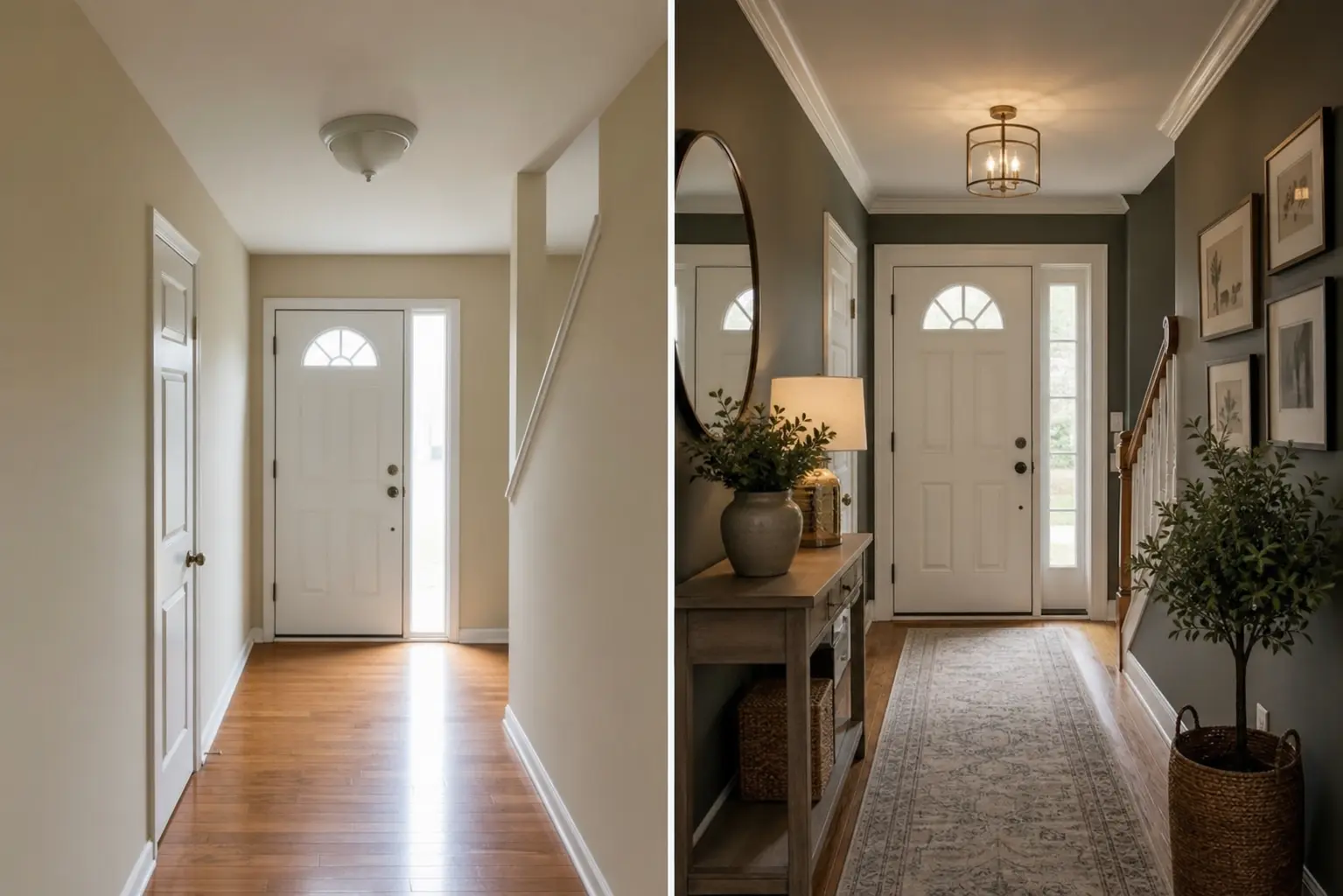
Paint is the cheapest, highest impact change you can make. A warm neutral or a bold accent color, depending on your style, resets the whole space before you add a single piece of furniture. Most entryways only need a gallon or two, so this step often costs less than one new furniture piece.
Choosing Between Neutral and Bold
A warm neutral works if your entryway connects visually to other rooms. A bolder color, like a deep green or a warm terracotta, works well in an entryway that’s somewhat closed off from the rest of the house, since it won’t clash with adjoining spaces.
Test a sample patch on the wall for a few days before committing. Entryway lighting often comes from a single overhead fixture, so a color that looks great under a store’s bright lights can read differently once it’s home.
2. Add a Light Fixture That Actually Makes a Statement
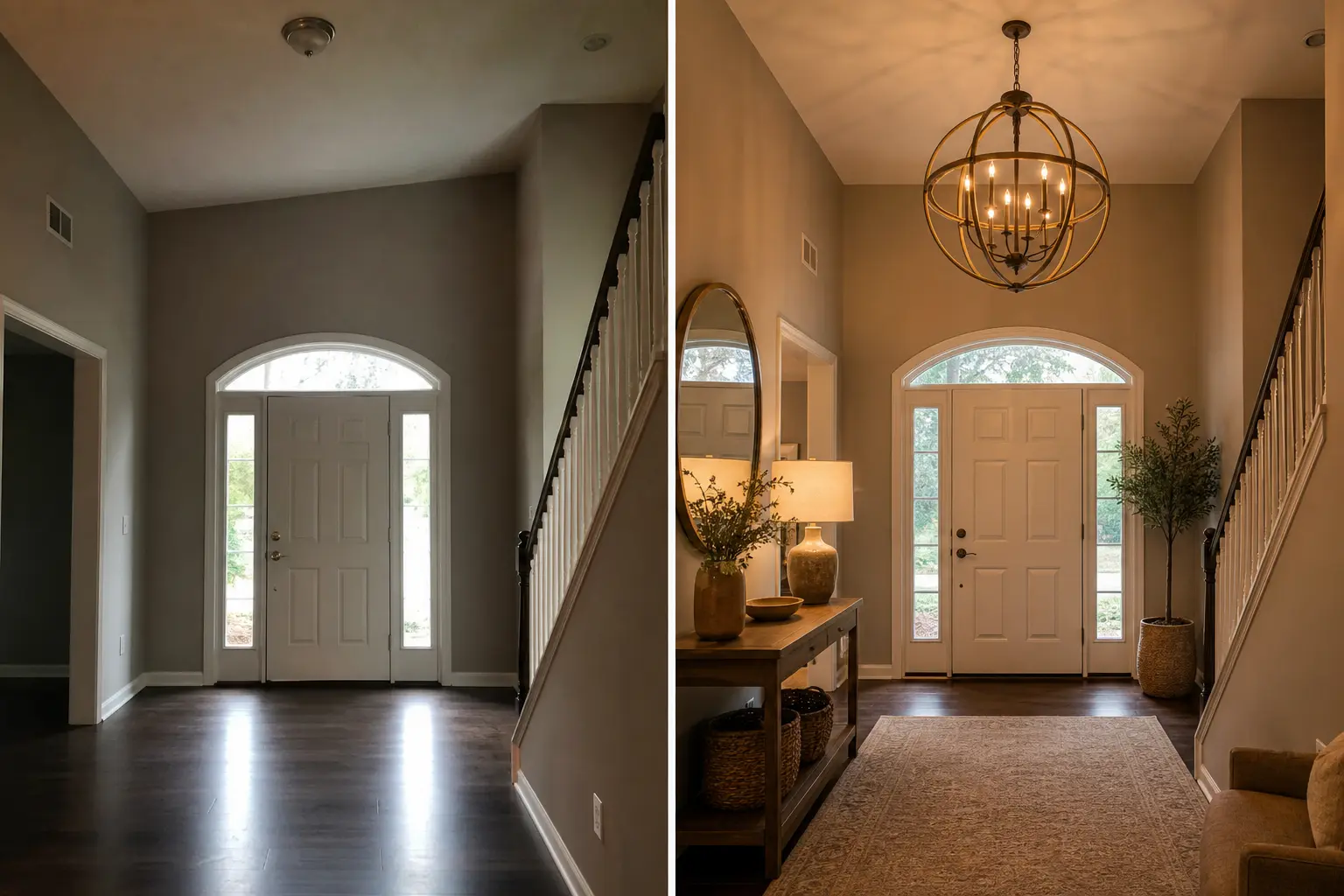
Most entryways come with a plain builder grade fixture that does nothing for the space. Swapping it for a pendant, a small chandelier, or a pair of sconces is one of the most dramatic before and after changes you can make. Look for a fixture that fits the ceiling height, since a fixture hung too low in a narrow entry can feel like it’s in the way.
A flush mount fixture works better than a hanging pendant in a very low ceiling entry, since it keeps the space feeling open rather than boxed in. Save the dramatic hanging pendant for an entryway with at least 9 or 10 feet of ceiling height.
Sizing the Fixture to the Space
For a standard 8 foot ceiling, hang the bottom of a pendant at least 7 feet off the floor so it clears most people walking through. In a two story entry with taller ceilings, you have more room to go bigger and more dramatic with the fixture size.
3. Bring In a Mirror to Open Up the Space
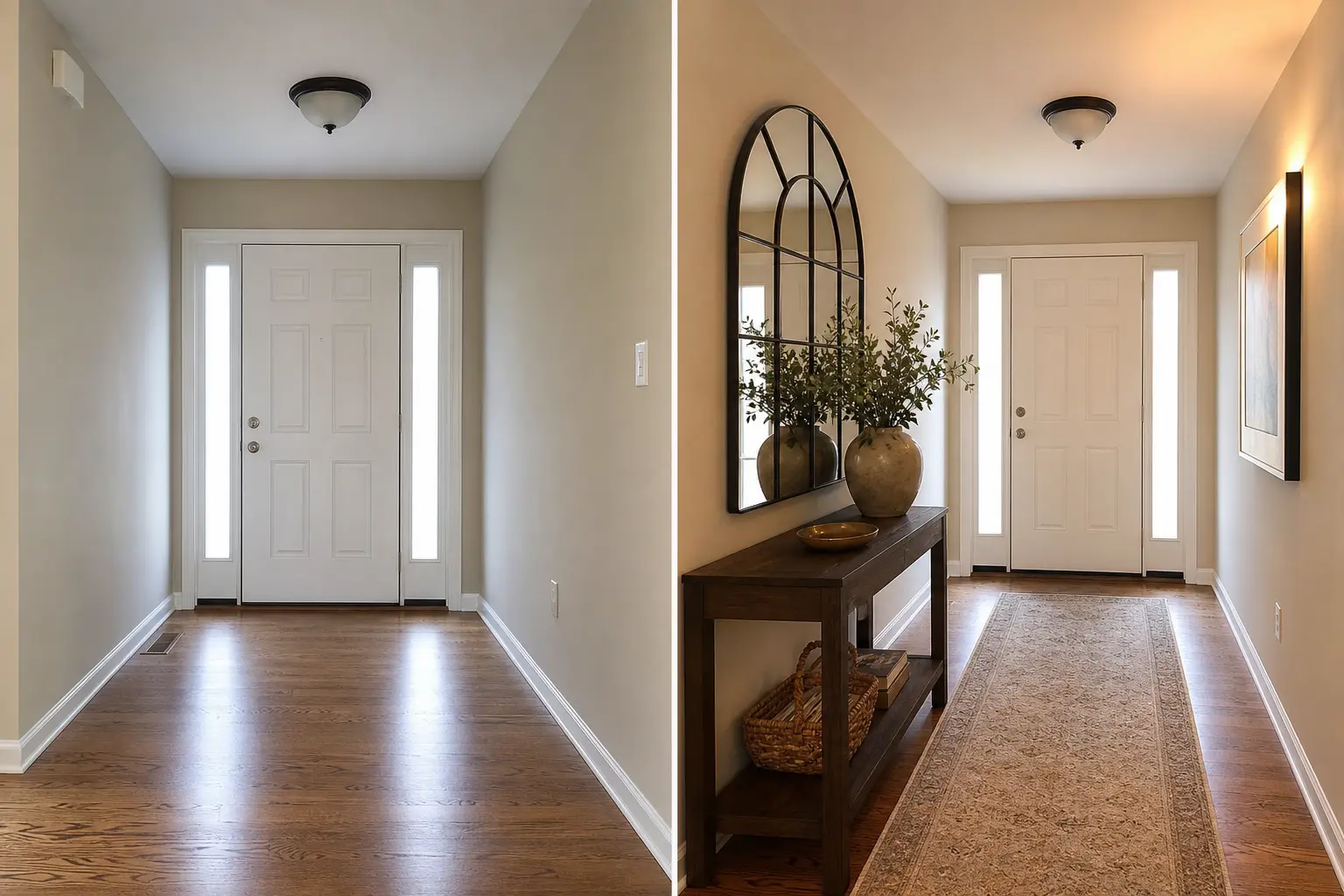
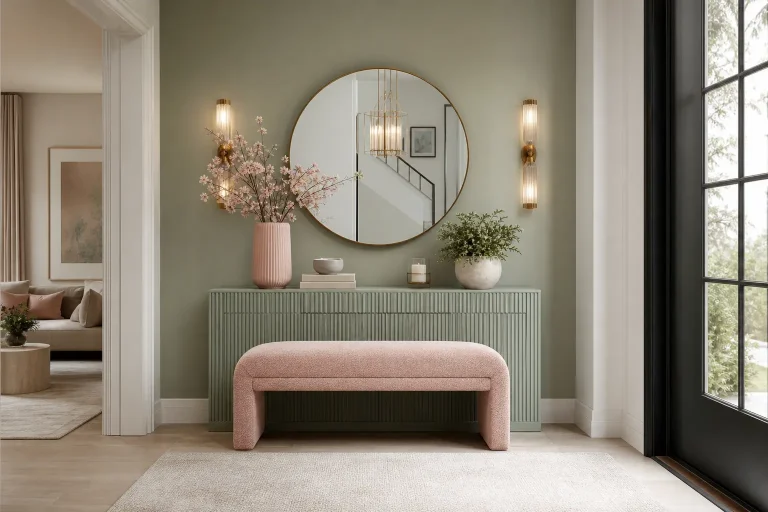
A mirror does double duty in an entryway. It reflects light back into what’s often a dim space, and it gives people a quick spot to check themselves before heading out the door. A round or arched mirror around 24 to 36 inches wide works well above a console or bench without overwhelming a small wall.
Position the mirror to catch light from a nearby window or the entry light fixture, rather than facing a blank wall. The reflection is what makes the space feel brighter, so placement matters as much as the mirror itself.
4. Add Real Storage With a Bench or Console
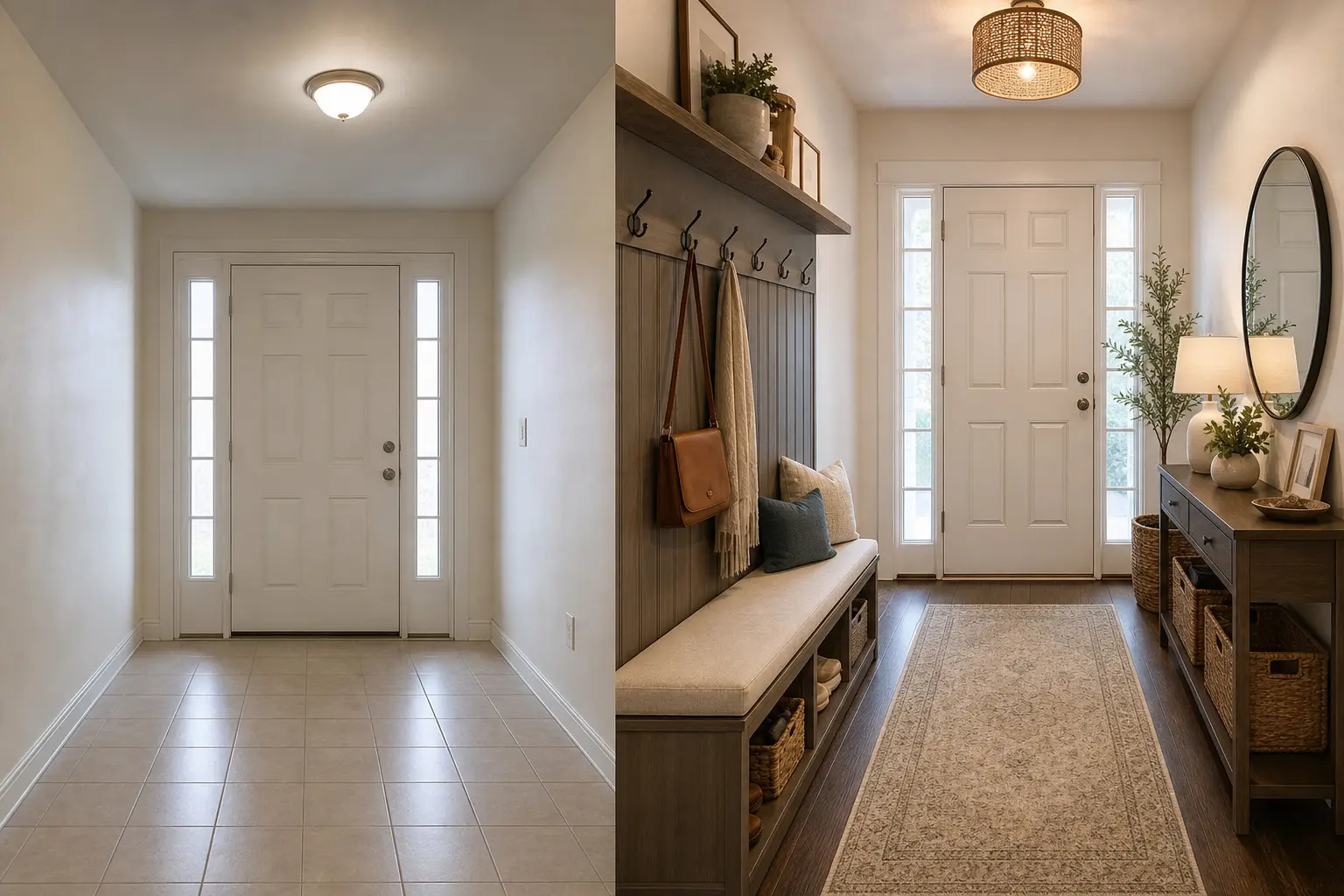
A narrow bench or console table gives the entryway a place to actually be used, not just walked through. Aim for a piece around 12 to 16 inches deep if your entryway is tight, so it doesn’t block the walking path. A bench with a shoe rack underneath solves two problems in one piece of furniture.
If floor space is too tight for a bench, a wall mounted floating shelf with hooks below it can do a similar job. It holds a small tray and a plant on top while keeping the floor completely clear, which matters most in a narrow hallway style entry.
5. Layer In a Rug for Warmth and Definition
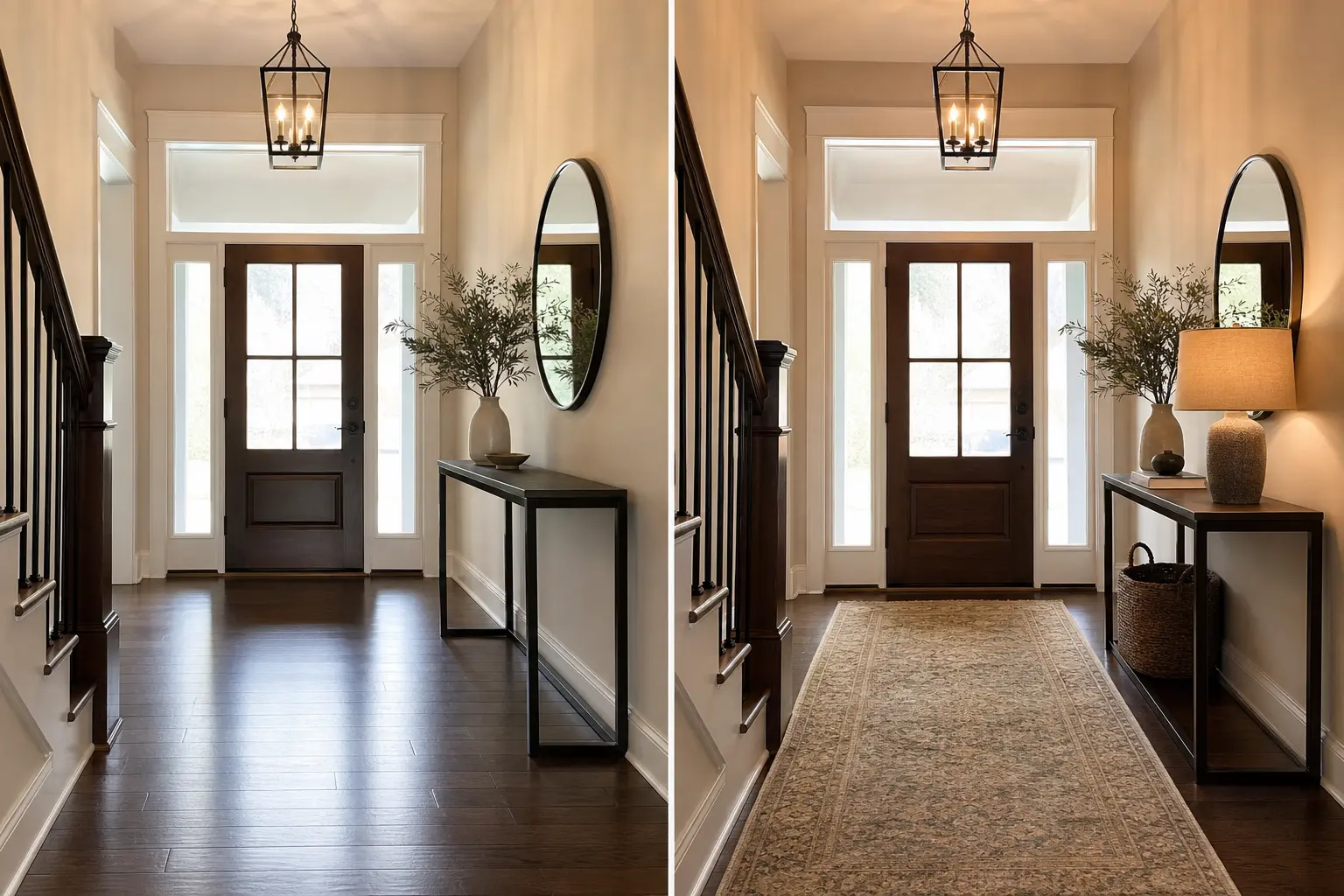
A runner rug defines the entry space and adds warmth underfoot, especially over hardwood or tile. Choose a low pile, easy to clean material like a flatweave, since entryway rugs take the most foot traffic and moisture of any rug in the house. Leave a few inches of floor visible on each side of the rug rather than covering the entire width of the space.
A washable cotton or jute blend runner holds up well and is easy to shake out or spot clean. Save the thicker plush rugs for a bedroom or living room instead, since they trap dirt more easily near a front door.
6. Fix the Lighting Temperature Before Anything Else
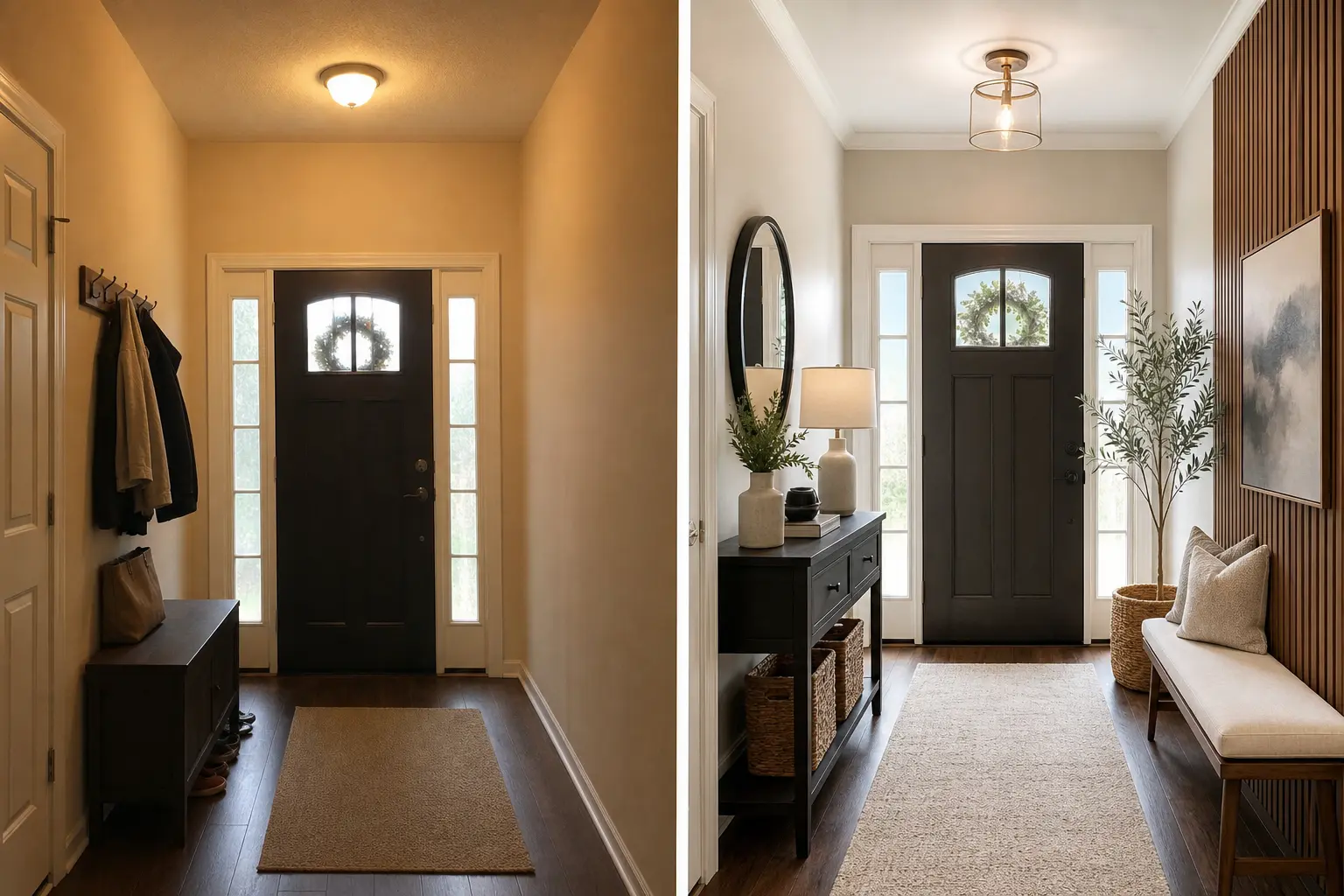
If you only change one thing, change the light bulb temperature. Warm white bulbs in the 2700K to 3000K range make an entryway feel welcoming the moment you walk in. Cool white bulbs above 4000K can make the same space feel more like a hallway in an office building.
7. Add Hooks and Small Storage for Daily Items
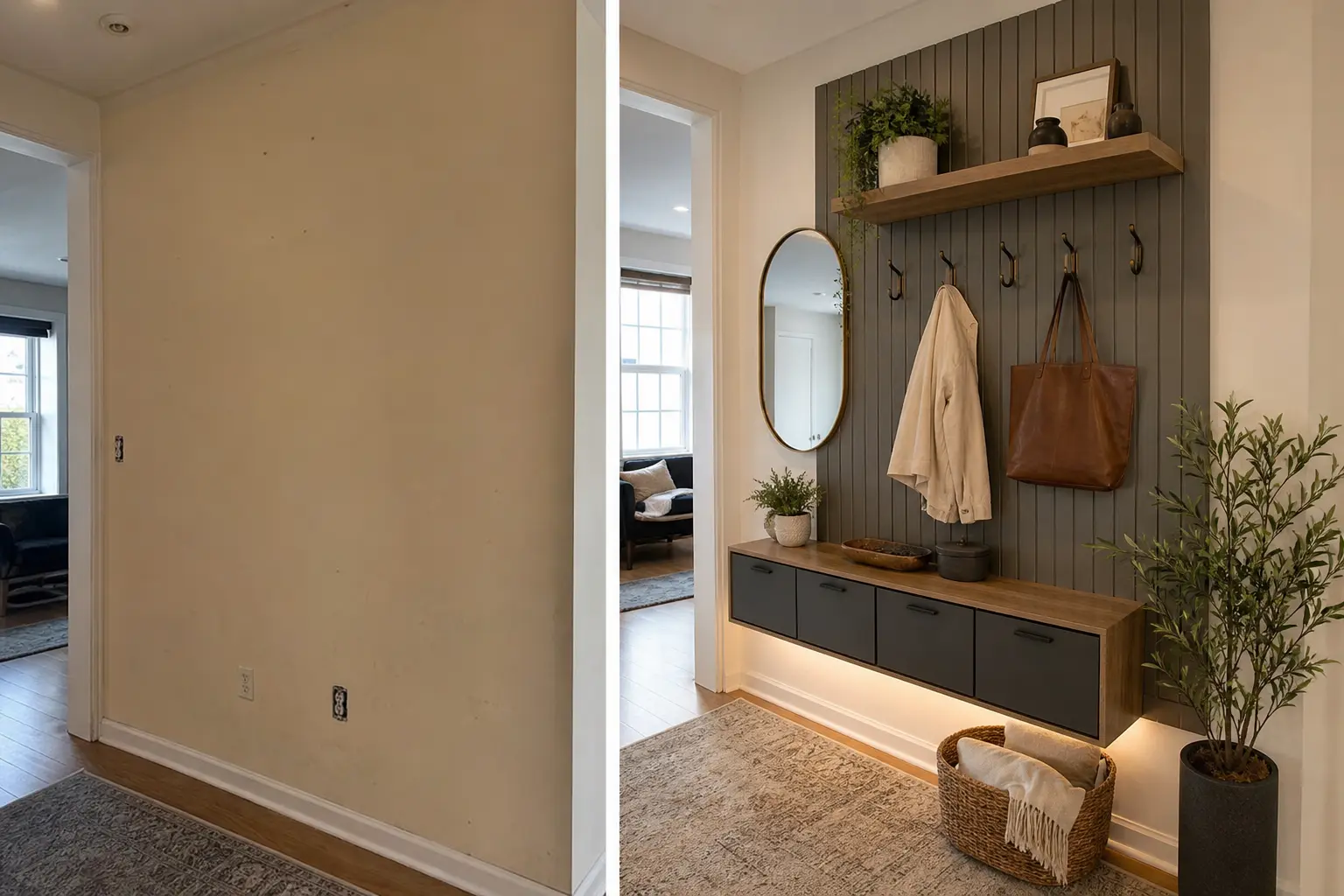
A row of hooks near the door solves the daily coat and bag pile up before it starts. Mount hooks at a height that works for your household, generally around 60 inches for adults and lower for kids in a family entryway. A small tray or bowl on the console gives keys and mail one consistent spot instead of scattering across the house.
Space hooks about 6 to 8 inches apart so coats don’t bunch up against each other. Three to five hooks is usually enough for a small household, while a busier family entryway might need a full row along one wall.
8. Bring In Greenery for Life and Texture
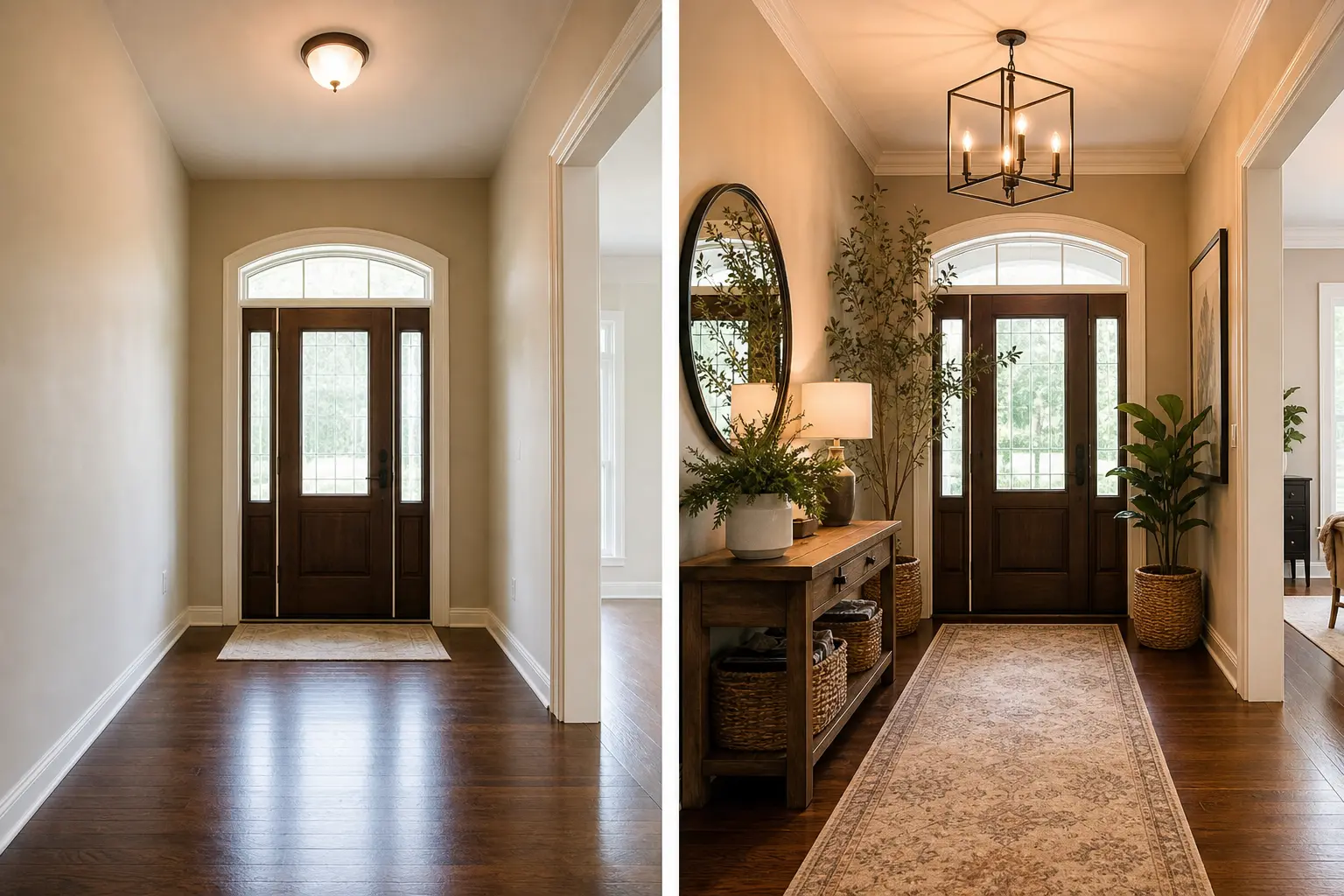
A single tall plant in a corner, or a smaller plant on the console, adds life to a space that’s often just walls and hard surfaces. Low light tolerant plants work best here, since most entryways don’t get much direct sun. A faux plant is a reasonable substitute if your entryway is particularly dark.
A snake plant or a ZZ plant both handle low light and irregular watering well, which makes them a practical choice for a spot people tend to walk past quickly rather than linger in and tend to daily.
9. Style the Console With Restraint
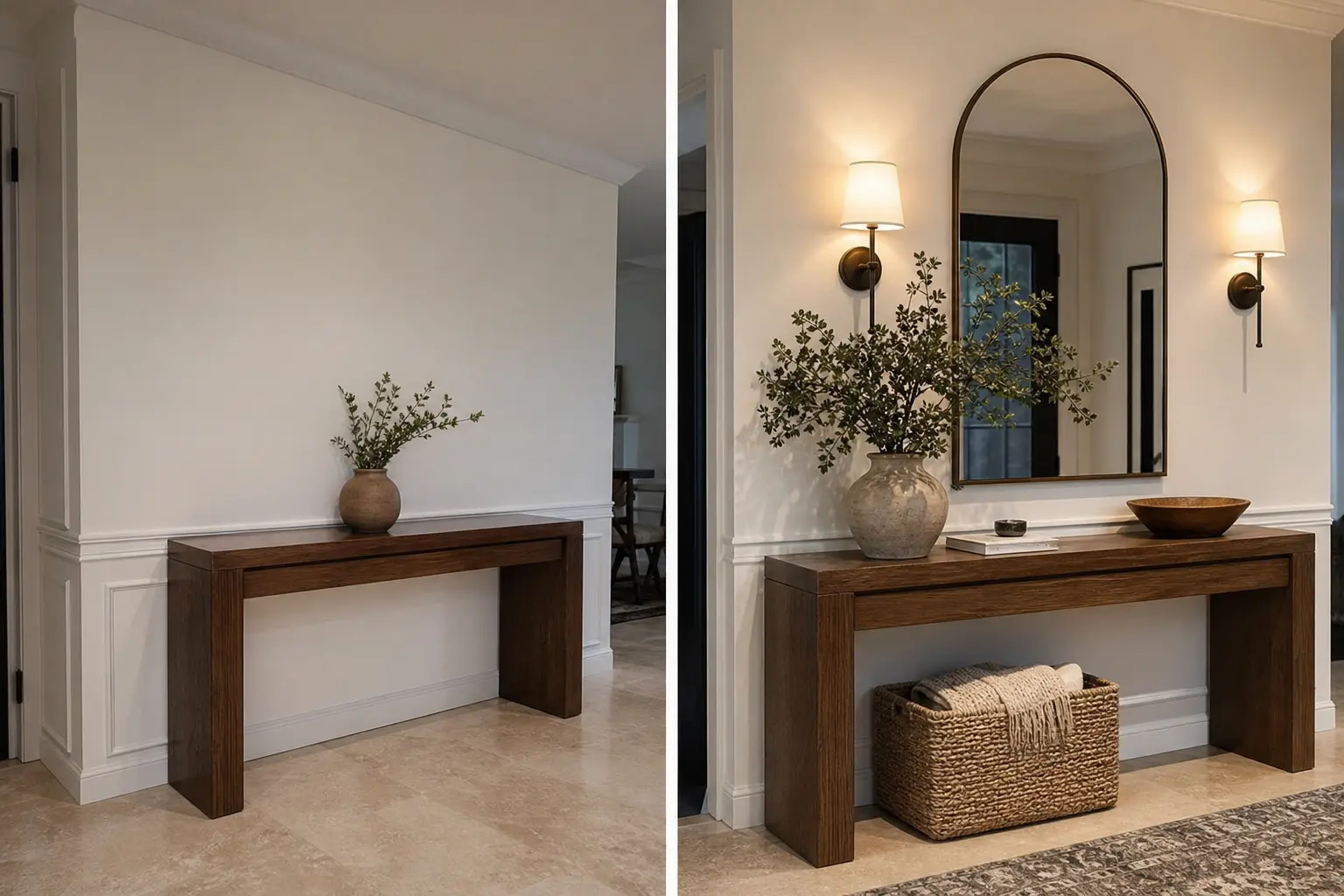
Once the bench or console is in place, resist the urge to fill every inch of it. One tray for keys, one small stack of books or a candle, and maybe one small plant is enough. An overstyled console starts to look cluttered the moment real daily items get added on top.
Leave the far end of the console clear for whatever the day brings, a bag, a package, or a stack of mail. A console styled for photos only, with no room for actual use, tends to get pushed aside within the first week anyway.
10. Finish With Small Details That Photograph Well
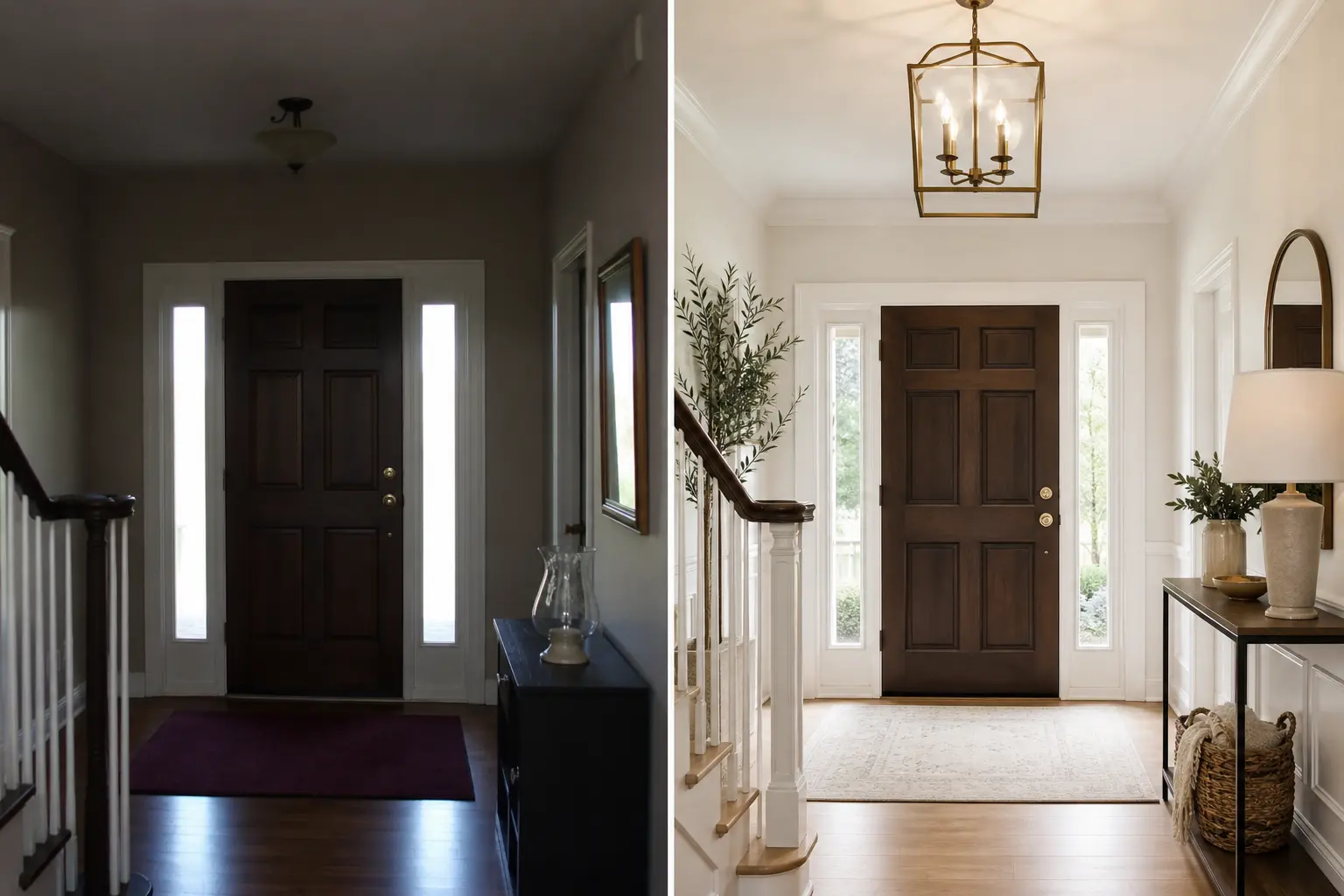
New hardware on an existing door, a fresh doormat, or a small piece of art on the wall are the details that make a before and after photo actually look finished. These are inexpensive changes, but they’re often the ones people notice first, since they’re at eye level right when someone walks in.
Mistakes to Avoid
- Choosing a light fixture that’s too small for the space, which leaves the entry feeling under lit and unfinished
- Covering the entire floor width with a rug, leaving no visible flooring on either side
- Overstyling the console table so daily items like keys and mail have nowhere to actually go
- Using cool white bulbs in an entryway that’s meant to feel warm and welcoming
- Skipping storage entirely and hoping shoes and bags will find their own spot
Frequently Asked Questions
What’s the cheapest way to do an entryway glow up? Paint and a light bulb swap to warm white are the two lowest cost changes with the biggest visual impact, often costing far less than new furniture.
How big should an entryway mirror be? A mirror around 24 to 36 inches wide works well above a standard console or bench without overwhelming a smaller wall.
What height should entryway hooks be mounted at? Around 60 inches works for most adults. In a family entryway, add a second lower row around 36 to 40 inches for kids.
What kind of rug holds up best in an entryway? A low pile flatweave rug is easiest to clean and holds up best against the dirt, moisture, and foot traffic that entryways get daily.
Do I need an electrician to change an entryway light fixture? If you’re swapping a fixture into an existing ceiling box, many people handle this themselves. If you’re moving the fixture location or the wiring looks outdated, hire a licensed electrician for that part.
Conclusion
An entryway glow up doesn’t need a full renovation to feel like a real before and after. Paint, a better light fixture, a mirror, and some real storage cover most of the transformation on their own. Start with the light bulb temperature and the paint color, since those two changes alone shift the whole feel of the space. Add the furniture and small details once the foundation is right, and the rest comes together fast.