10 Dopamine-Decor Inspired Home Office Ideas for a Colorful & Creative Space
You sit down at your desk and the beige walls, gray chair, and empty corkboard make it harder to actually want to start working. That flat, forgettable setup is exactly what dopamine decor inspired home office ideas are built to fix. The concept borrows from dopamine dressing, using color and pattern on purpose to lift your mood, and applies it to the room where you spend most of your working hours.
This doesn’t mean throwing every bright color at the wall at once. It means choosing a handful of bold, deliberate moves, a color, a pattern, a playful object, and letting them do real work in an otherwise functional space. The ten ideas below build that kind of office one layer at a time.
1. Start with One Bold Anchor Color
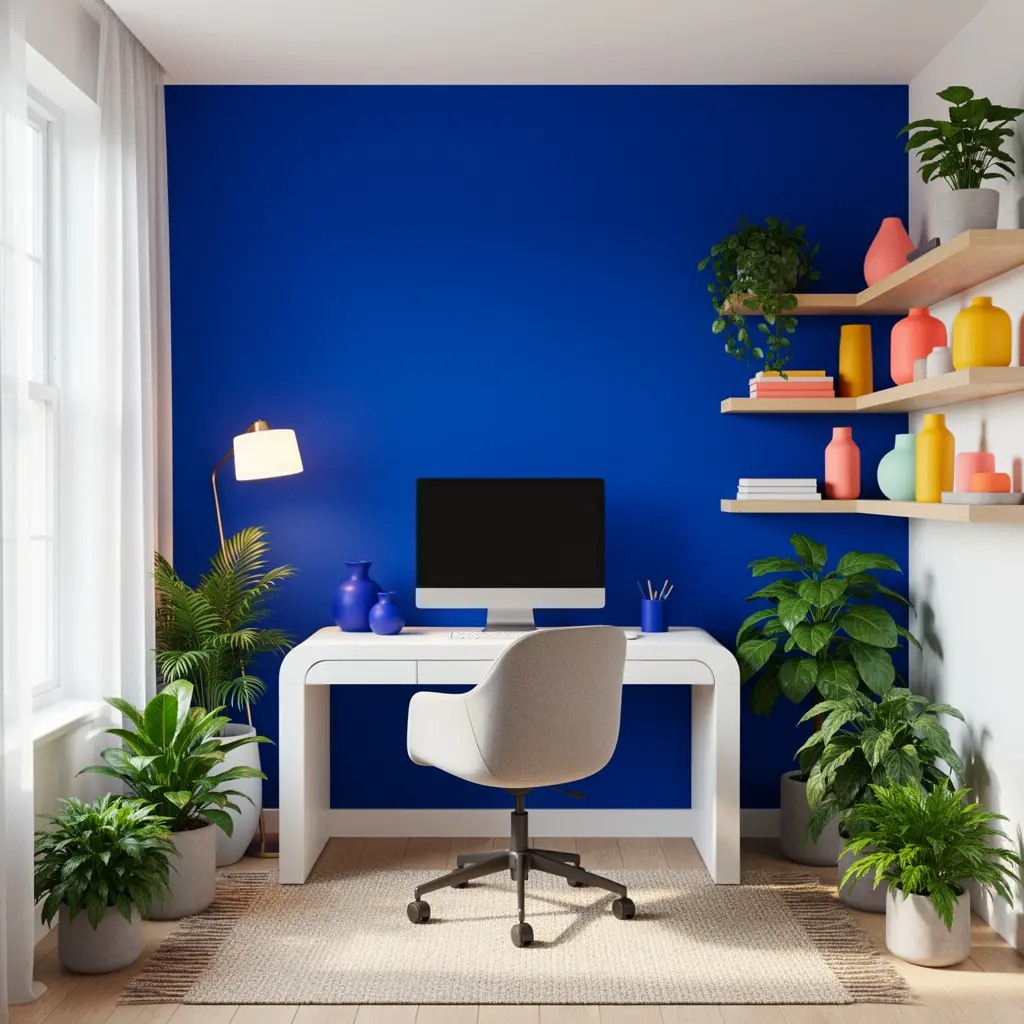
Pick a single saturated color, a cobalt blue, a hot coral, or a bright marigold, and let it anchor the room. This might show up as a full accent wall, a painted desk, or even just a large piece of furniture like a bookshelf. Starting with one strong color gives every other decision in the room something to react against.
Avoid picking three or four bold colors before you’ve settled on the anchor. One confident color choice reads as intentional, while several competing ones can start to feel chaotic fast.
How to Test a Bold Color Before Committing
Paint a large sample swatch, at least two feet wide, directly on the wall and live with it for a few days. Office lighting, especially if it includes a lot of overhead fluorescent or LED light, can shift how saturated a color reads compared to natural daylight.
2. Choose a Desk That Doubles as a Statement Piece
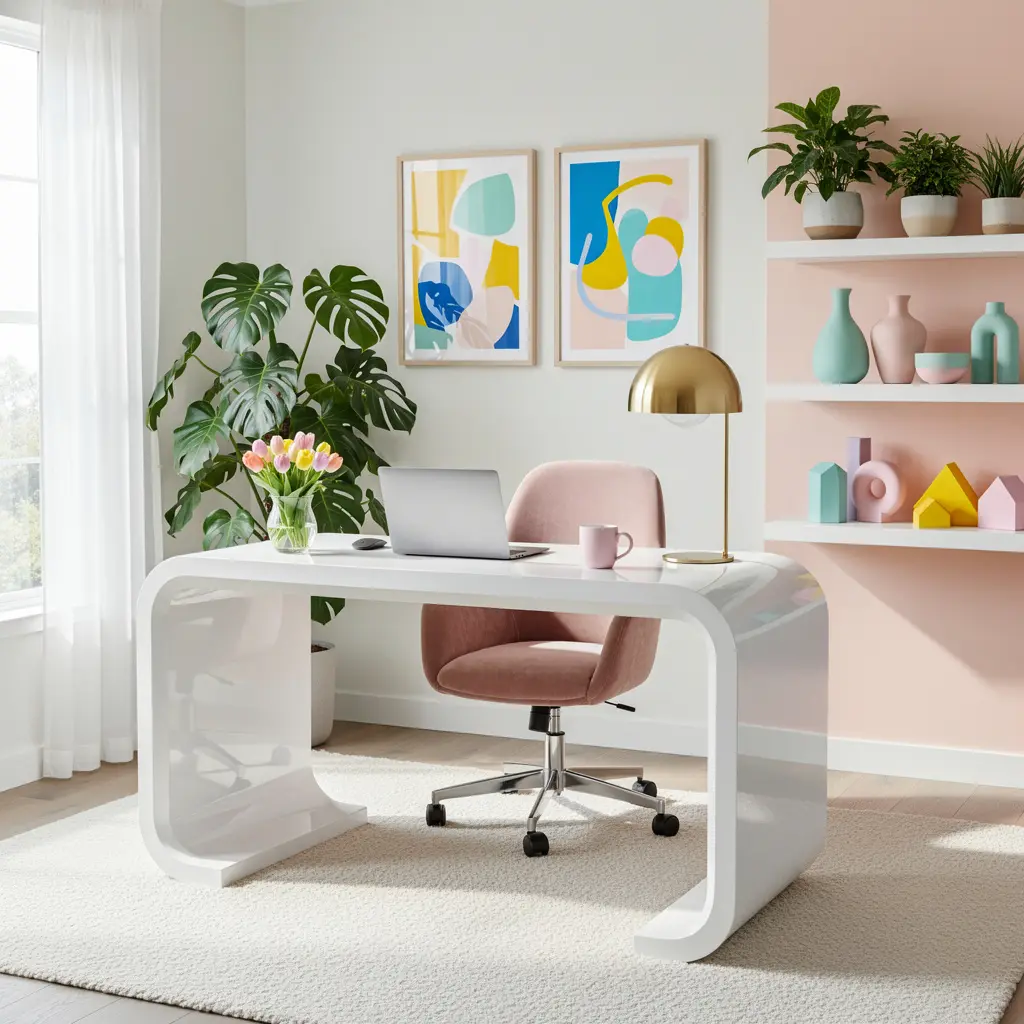
A colorful or uniquely shaped desk becomes a focal point instead of just a work surface. Look for a desk in a bold lacquer finish, a curved silhouette, or an unexpected material like colored acrylic, in the $200 to $700 range depending on size and finish.
If a full desk replacement isn’t in the budget, a coat of paint on an existing wood desk, in a durable furniture safe enamel, can achieve a similar effect for under $50.
3. Mix Patterns Instead of Matching Them
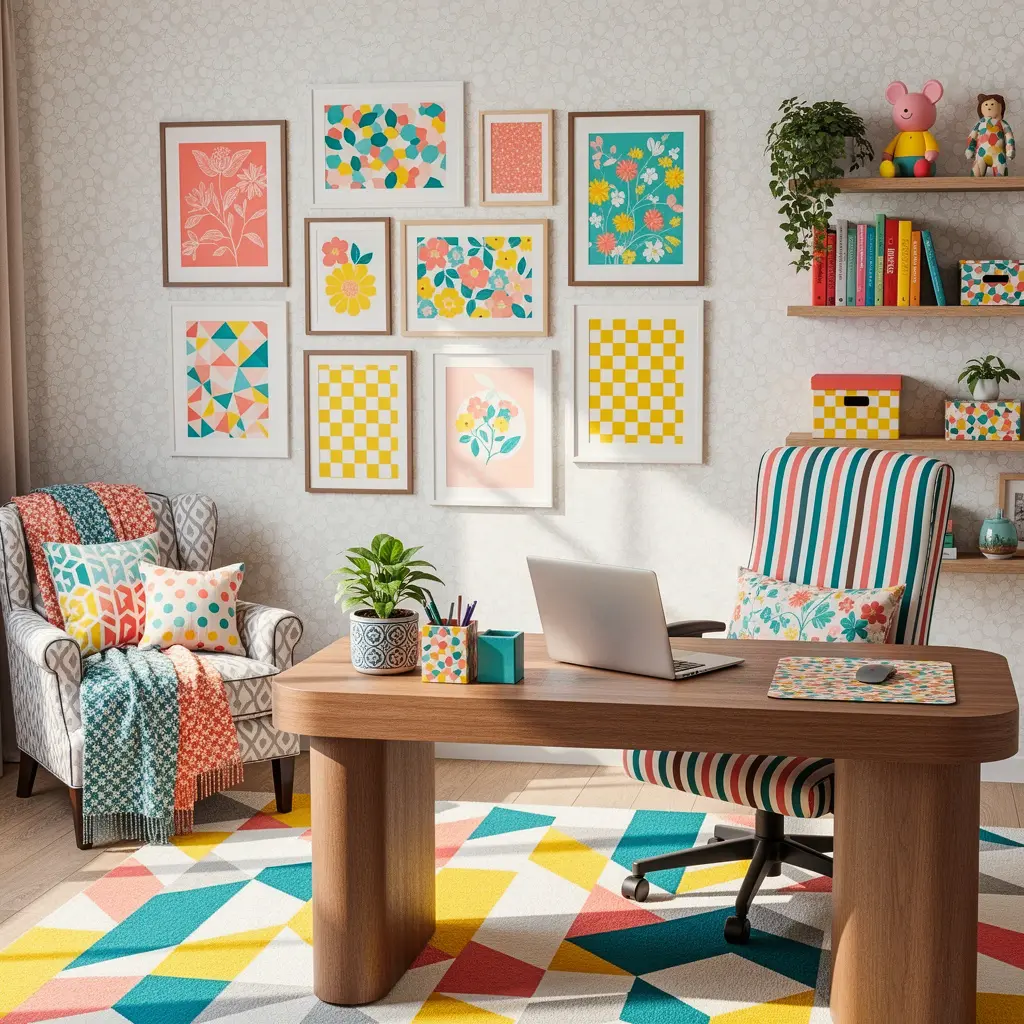
Dopamine decor leans into pattern mixing rather than a single coordinated print. A striped rug, a polka dot pillow, and a checkerboard wall calendar can all coexist if they share a common color thread running through them. The shared color is what keeps mixed patterns from feeling random.
Start with two patterns rather than four or five if you’re new to this. It’s easier to add a third pattern later than to remove one that’s already installed on a wall.
4. Add a Gallery Wall of Mismatched Art
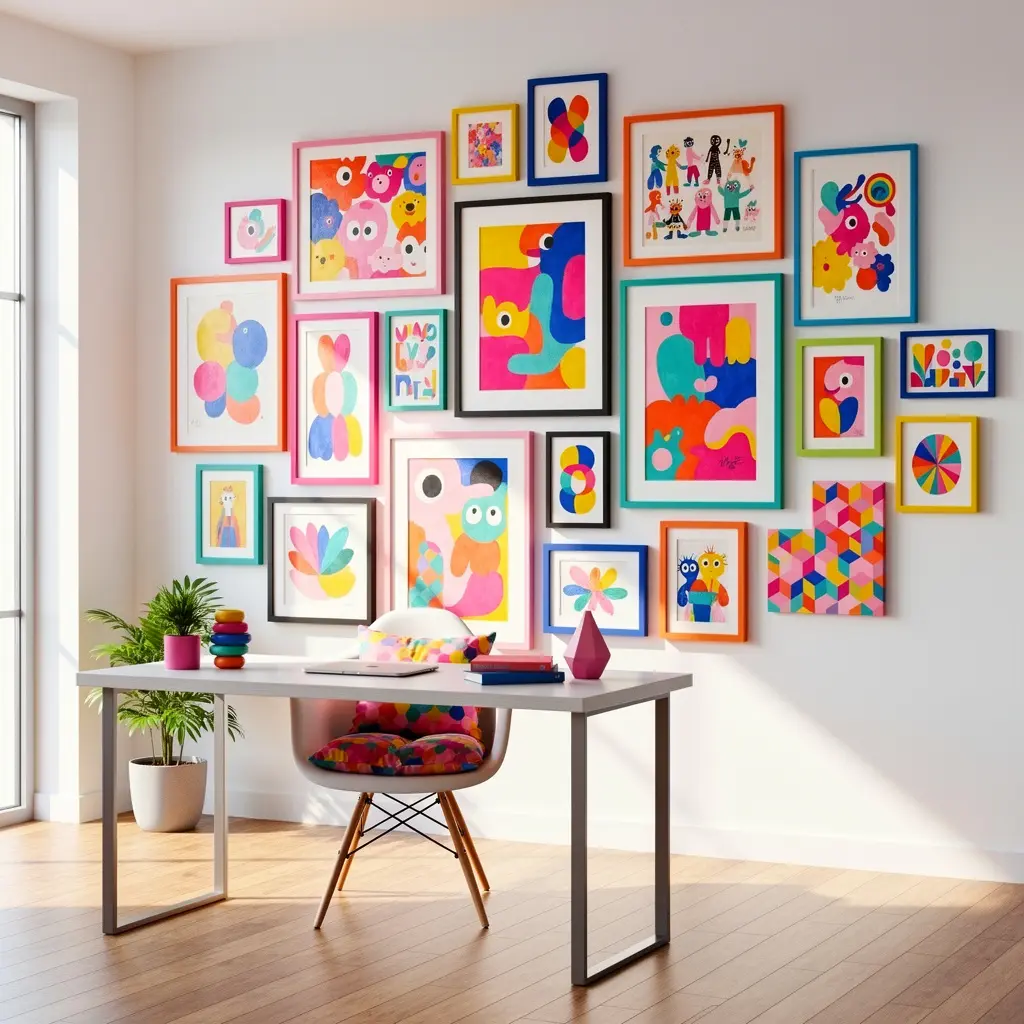
Skip the matching frame set. A gallery wall built from different frame colors, different sizes, and a mix of prints, photos, and small objects feels more personal and more energizing than a uniform grid. Include at least one piece with genuine sentimental value, not just decorative filler.
Framing Choices That Support the Look
Mix wood, painted, and metal frames rather than choosing one finish for every piece. The variation is part of what makes a dopamine decor gallery wall feel collected over time instead of bought in a single set.
5. Bring in Playful Lighting Beyond the Desk Lamp
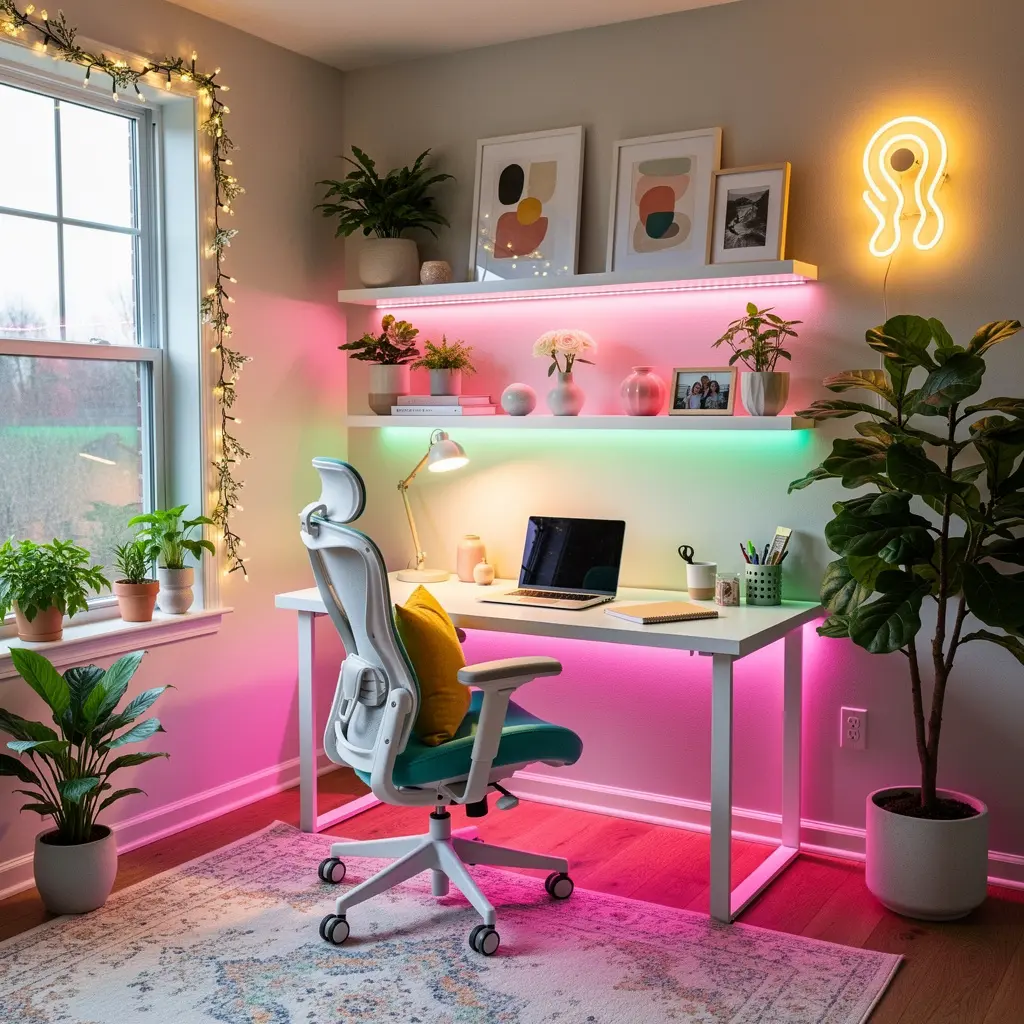
A single overhead fixture or a plain desk lamp does the job, but it doesn’t add any personality. A colored glass pendant, a sculptural table lamp, or even a strand of warm string lights along a shelf adds visual interest without sacrificing the light you actually need to work.
Keep task lighting, the light you use to actually read and write, in a warm white range around 3000K to 4000K. Save the boldest colored fixtures for ambient or accent lighting instead of your primary work light.
6. Use Color Blocking on Storage Pieces
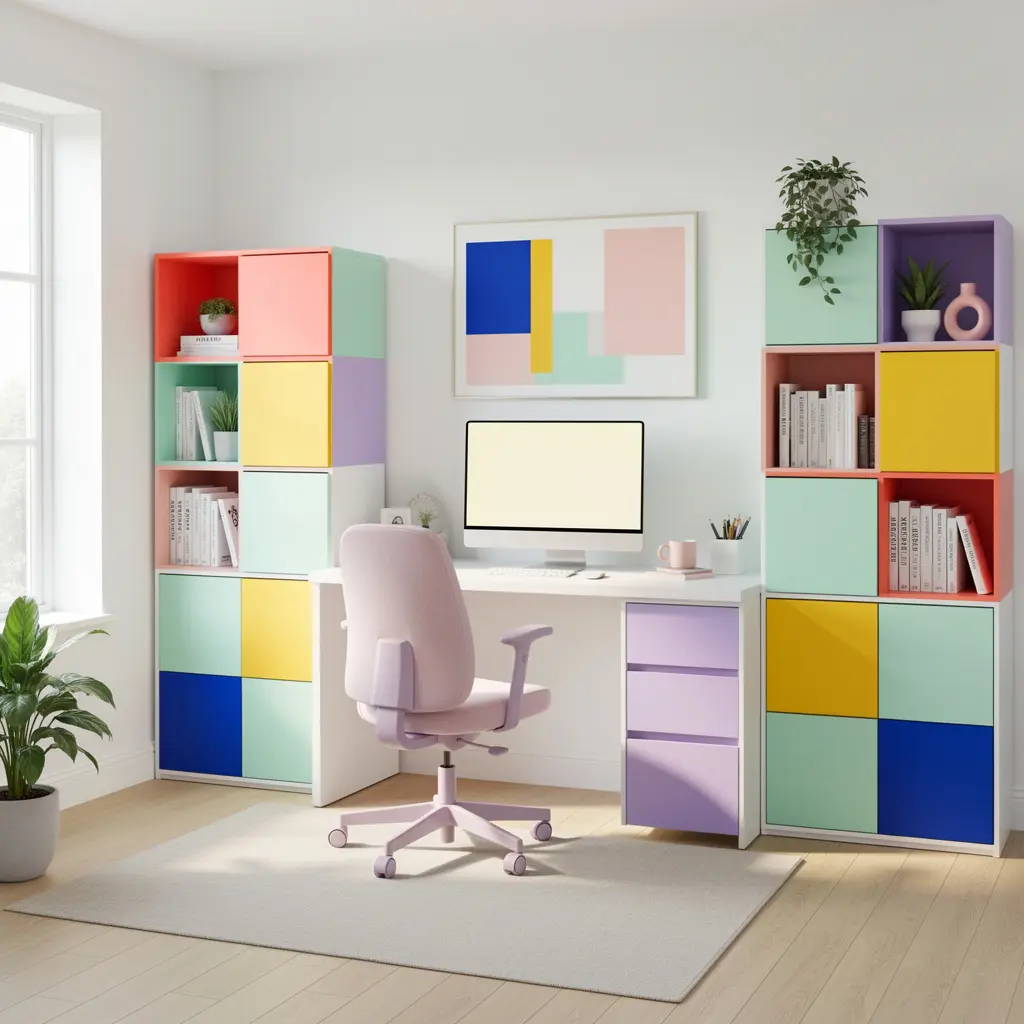
Filing cabinets, bookshelves, and storage bins are often the most overlooked pieces in a home office, and they’re an easy place to bring in color without redoing the whole room. Paint a plain metal filing cabinet in a bold color, or swap plain storage bins for ones in bright, coordinated shades.
This is one of the lowest cost changes on this list, often under $30 for a can of spray paint rated for metal, but it adds a surprising amount of personality to a functional piece of furniture.
7. Add Texture Through an Unexpected Rug
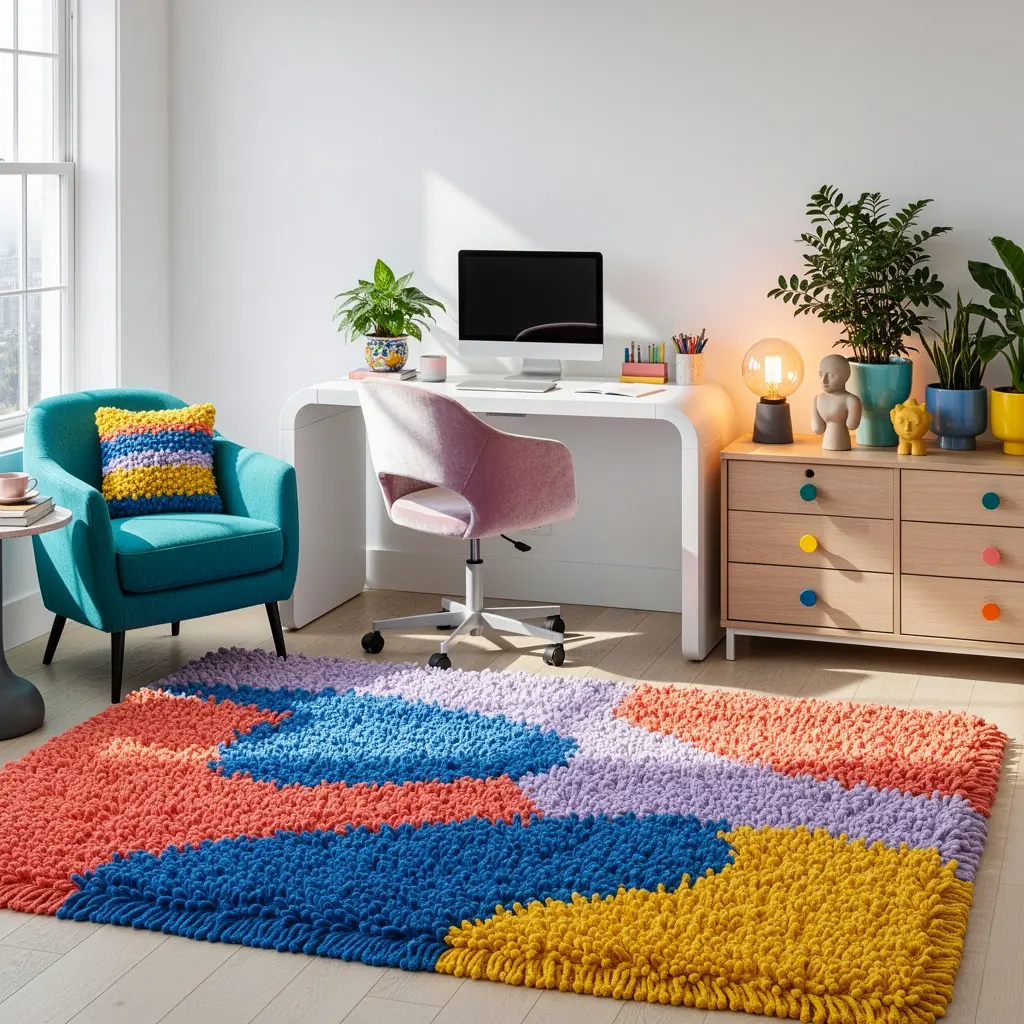
A patterned or brightly colored rug grounds the room and adds a layer of texture underfoot. Look for a rug in a bold geometric or abstract print, in the $80 to $300 range depending on size, that pulls together the colors already present in the desk, art, or storage pieces.
A rug is also one of the easiest elements to swap out later if your color preferences shift, since it doesn’t require repainting or replacing furniture.
8. Keep One Wall or Zone Visually Calm
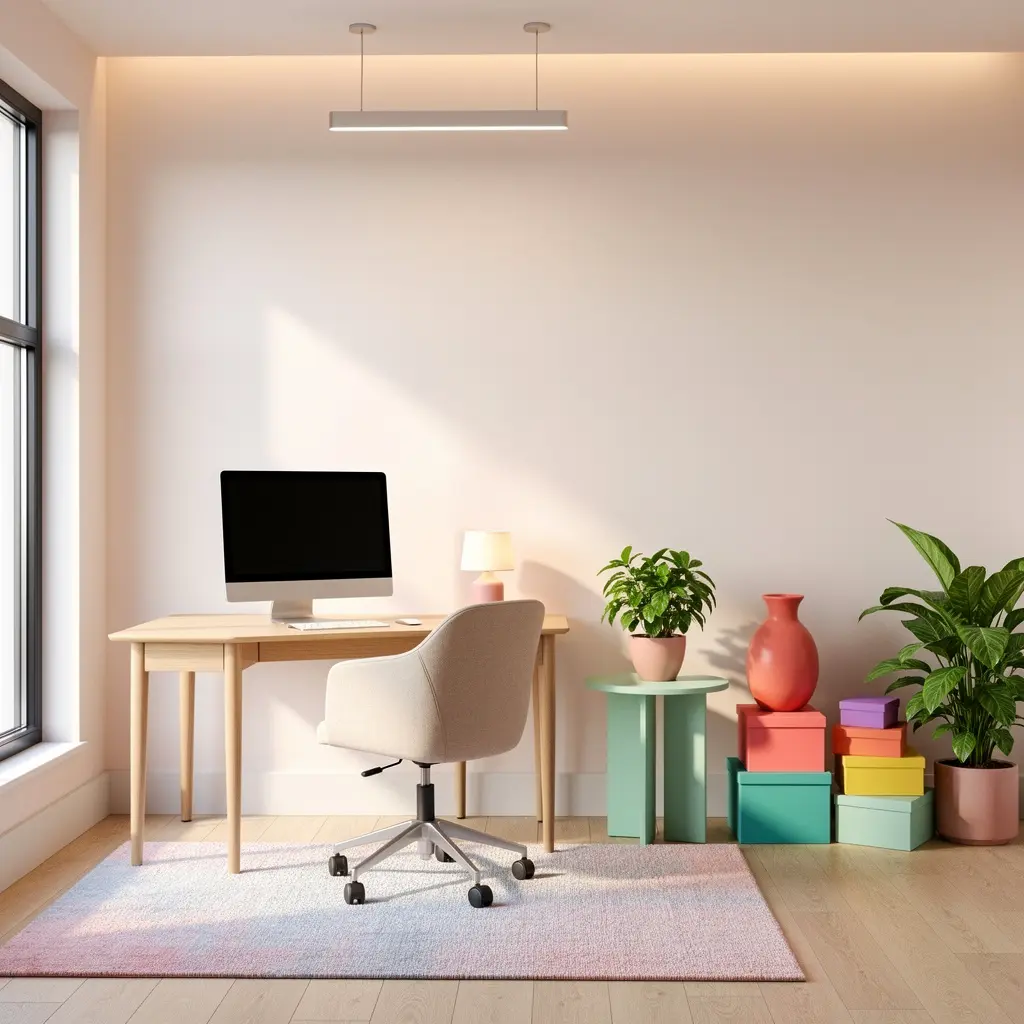
Even in a dopamine decor space, the eye needs somewhere to rest. Choose one wall, often the one behind your monitor or video call background, to stay relatively simple and uncluttered. This keeps the room feeling energizing rather than overwhelming, especially during long work sessions.
A calm zone also matters for video calls, where a busy, high pattern background can be distracting on screen in a way it isn’t in person.
9. Personalize with Objects That Actually Mean Something
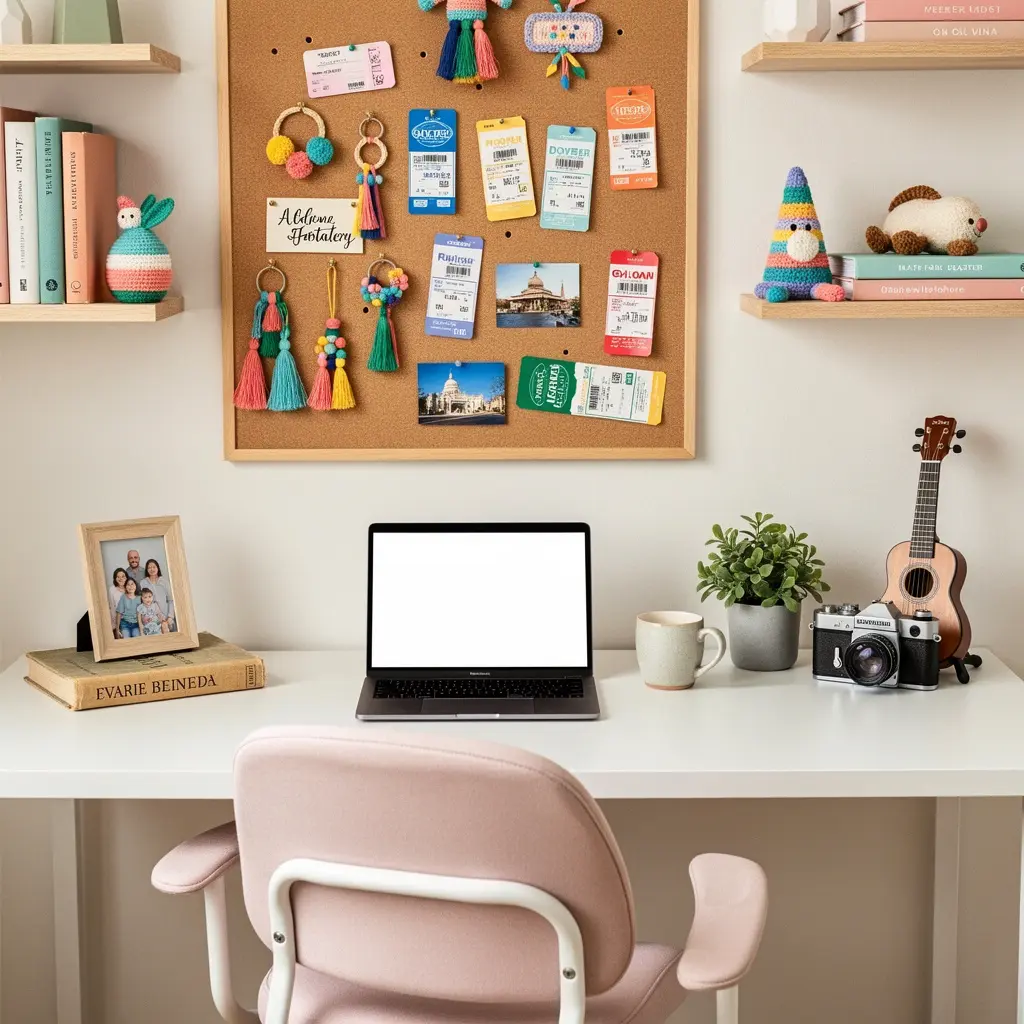
Dopamine decor works best when the color and pattern connect to things you genuinely like, not just trending combinations. A shelf of book spines in your favorite colors, a collection of small ceramic objects, or framed concert tickets all add personality that a generic bright object can’t replicate.
A space filled with objects that hold real meaning tends to feel more energizing over time than one filled purely with trend driven decor. The connection is what sustains the mood boost, not the color alone.
10. Add a Plant That Matches the Color Story
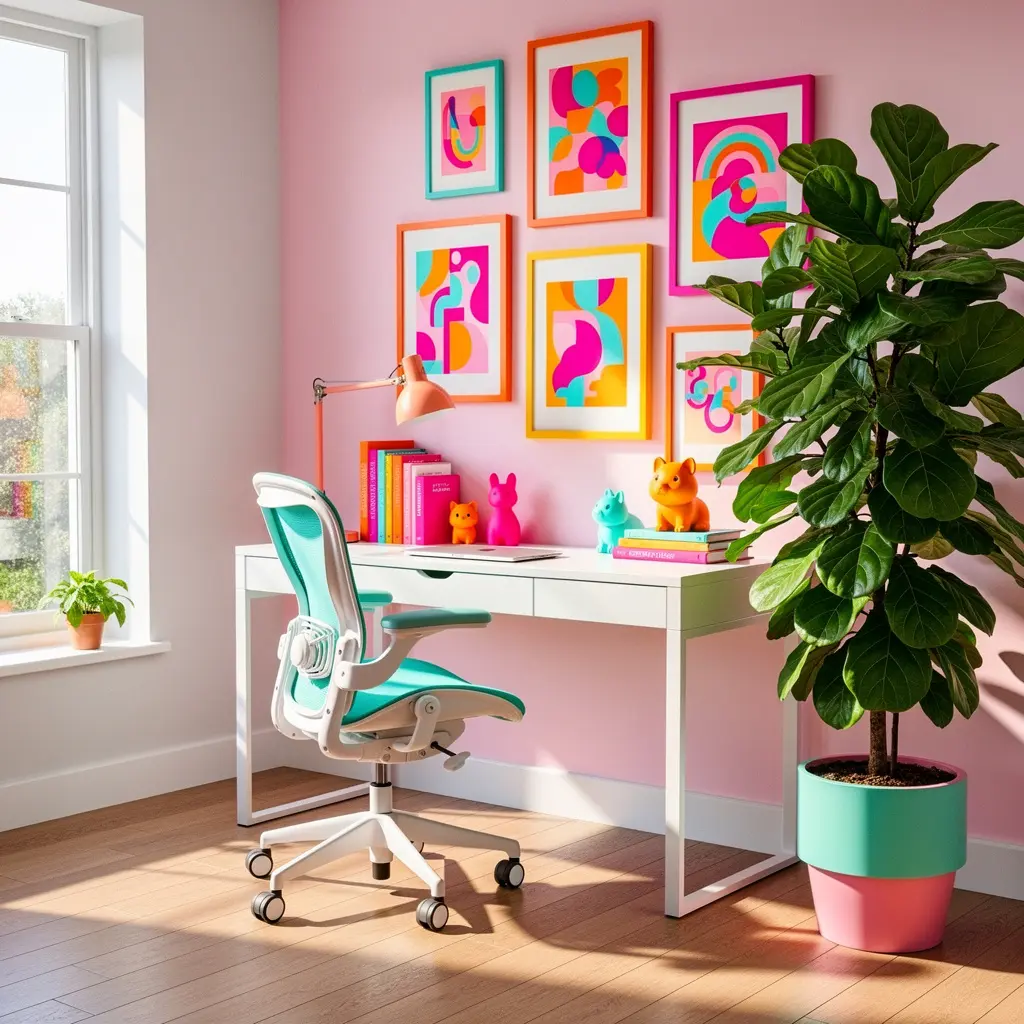
A plant in a bright, colored planter, rather than a plain terracotta or white pot, ties into the room’s palette while still bringing in the calming benefit of greenery. Look for a planter in a shade that echoes your anchor color or one of your accent tones.
Low maintenance plants like a pothos, a snake plant, or a ZZ plant work well in an office setting, since they tolerate inconsistent light and don’t need constant attention during a busy workweek.
Mistakes to Avoid
- Choosing four or five bold colors at once without settling on a single anchor first
- Skipping a calm zone entirely and creating a space that’s overwhelming during video calls
- Matching every pattern too closely instead of letting a shared color tie them together
- Using cool, harsh lighting that flattens bold colors instead of letting them read warm
- Filling the room with trend driven objects that don’t actually connect to your taste
- Forgetting to test paint colors under your office’s actual lighting before committing
Frequently Asked Questions
Is dopamine decor too distracting for a work from home space? Not if you keep one visually calm zone, usually the wall behind your desk or camera view, and concentrate the boldest choices on the rest of the room. Full sensory overload isn’t the goal, intentional color is.
Do I need to repaint the walls to get this look? No. Color blocked storage, a bold rug, and a colorful gallery wall can bring in the same energy without a full repaint, which also makes the look easier to change later.
What’s the most affordable way to start? Painting a filing cabinet or a plain desk in a bold color, combined with a few mismatched frames for a gallery wall, usually costs under $75 total and makes a noticeable difference.
How do I keep a small home office from feeling cluttered with this style? Limit yourself to one anchor color and two supporting patterns, and keep one wall simple. Editing down the palette matters more than the total number of colorful objects in the room.
Does dopamine decor work in a shared or rented space? Yes. Removable elements like a colorful rug, painted storage bins, string lights, and a gallery wall built with removable hooks let you get the full effect without any permanent changes to walls or fixtures.
Conclusion
A dopamine decor home office isn’t about filling every surface with color. It’s about choosing one confident anchor, layering in pattern and personal objects around it, and leaving one zone calm enough for the eye to rest. Start with the anchor color and one storage piece, then build outward as you figure out what genuinely lifts your mood in the space.