10 Modern Sage Green Living Room & Dining Room Decor Ideas
An open living and dining area sounds simple until you’re standing in it, staring at a sofa that doesn’t match a dining table ten feet away. That disconnect is exactly what these modern sage green living room and dining room decor ideas are built to fix. When one color story runs through both zones, an open floor plan stops feeling like two rooms awkwardly sharing a wall and starts feeling like a single, considered space.
Sage green works especially well here because it’s muted enough to use across large furniture pieces without overwhelming the room, and flexible enough to show up in small doses, like a dining chair cushion or a piece of art, without needing an exact repaint. The ten ideas below walk through how to carry that thread from the sofa to the dining table.
1. Pick One Sage Shade for Both Spaces
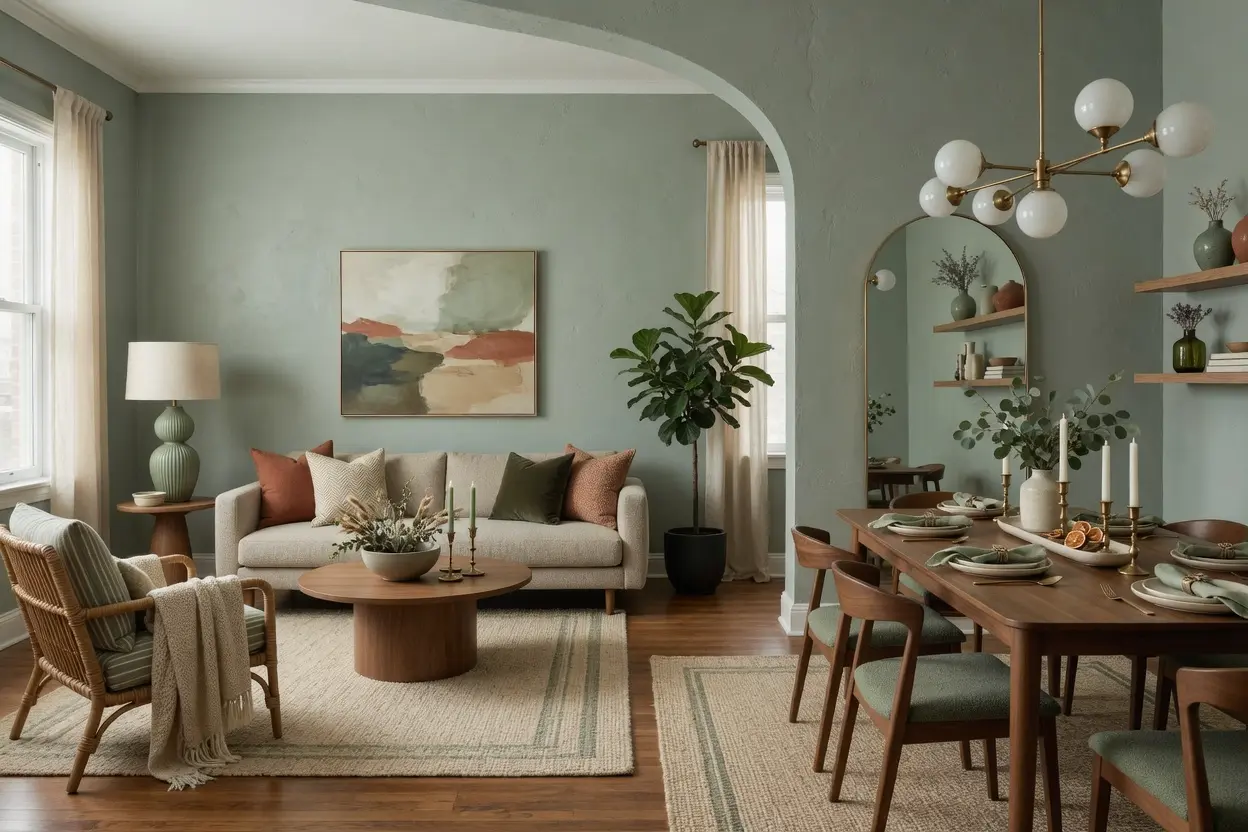
Before buying anything, settle on one specific sage tone and use it as the reference point for every decision that follows. A muted, grayed down sage, closer to eucalyptus or dusty olive, tends to work better across a large open space than a brighter, more saturated green.
Write the exact paint or fabric name down and keep it on hand while shopping. Sage green varies a lot between brands and materials, and it’s easy to end up with two shades that don’t quite match once they’re side by side in the same room.
Where the Color Should Actually Appear
The wall color doesn’t need to be sage at all. Many open plan spaces work better with a warm neutral wall and sage carried through furniture and textiles instead, since a full sage wall across a large open area can start to feel heavy.
2. Anchor the Living Room with a Sage or Neutral Sofa
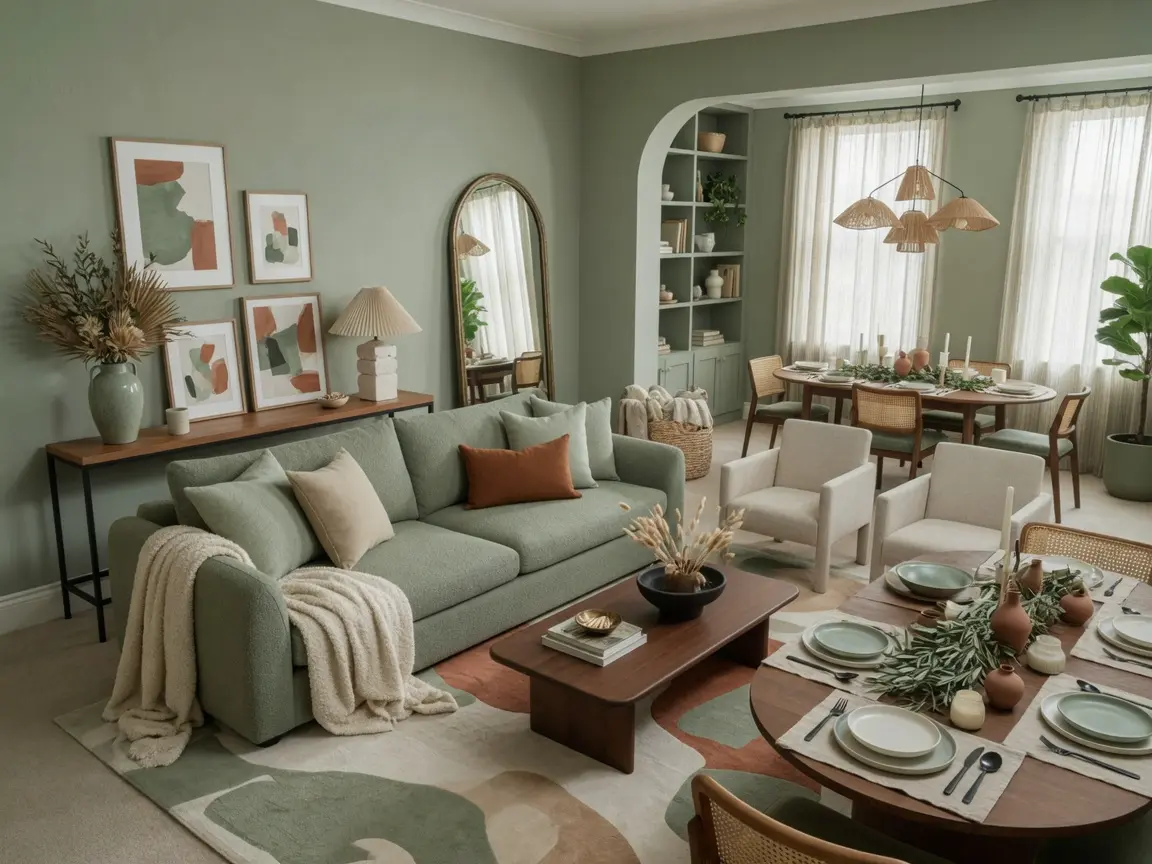
If you’re ready to commit to color on a large piece, a sage green sofa becomes the visual anchor of the whole space. If that feels like too much commitment, a neutral sofa in cream or warm taupe still works, with sage carried in through pillows and a throw blanket instead.
A sofa in the $700 to $2,000 range, depending on size and fabric, is a reasonable expectation for a quality piece that will anchor the room for years. Boucle or textured linen upholstery adds depth without adding more color to track.
3. Use a Rug to Define Each Zone Separately
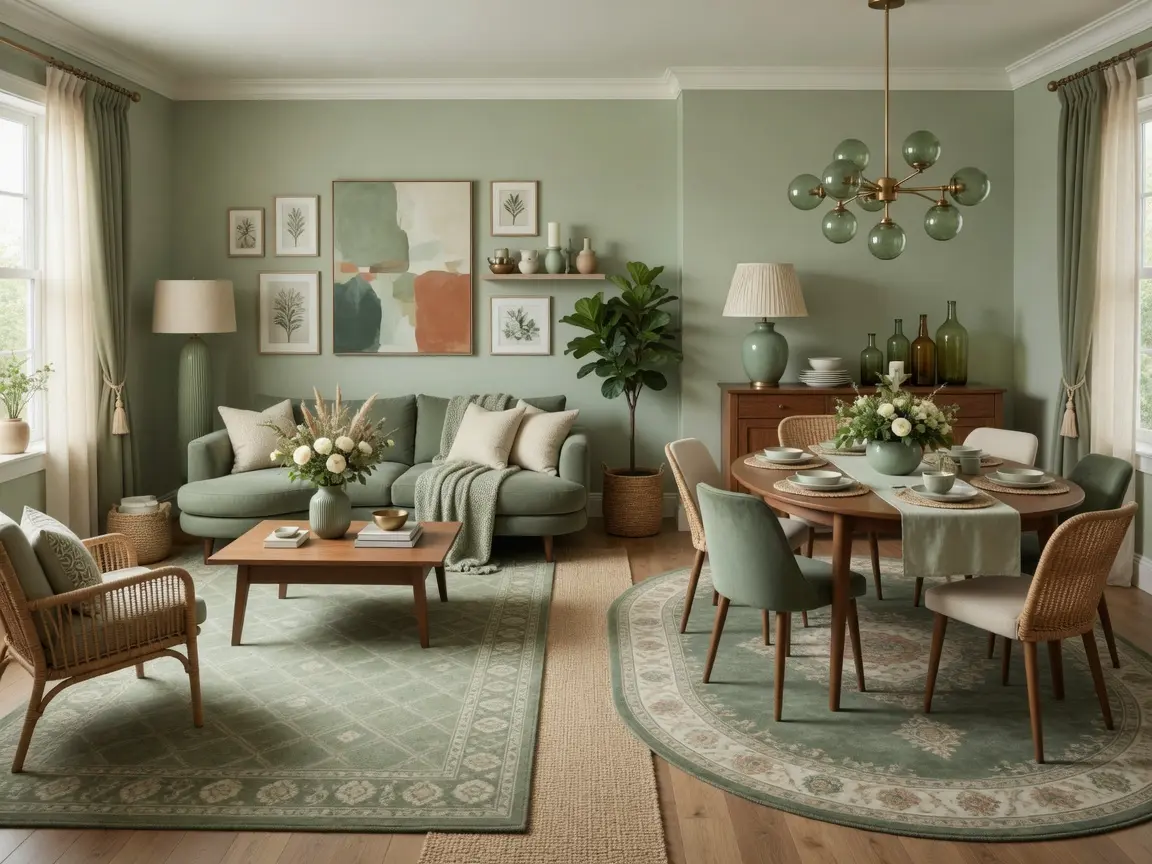
In an open floor plan, rugs do the job that walls used to do. A rug under the sofa and coffee table defines the living area, while a separate rug under the dining table defines that zone. Choose rugs in a coordinated but not identical palette, both leaning warm and neutral, so the two zones feel related rather than matched exactly.
Two well chosen rugs can make an open floor plan feel like two distinct, intentional rooms instead of one confusing blur. This is one of the highest impact, lowest effort changes on this whole list.
4. Choose a Dining Table That Complements the Sofa
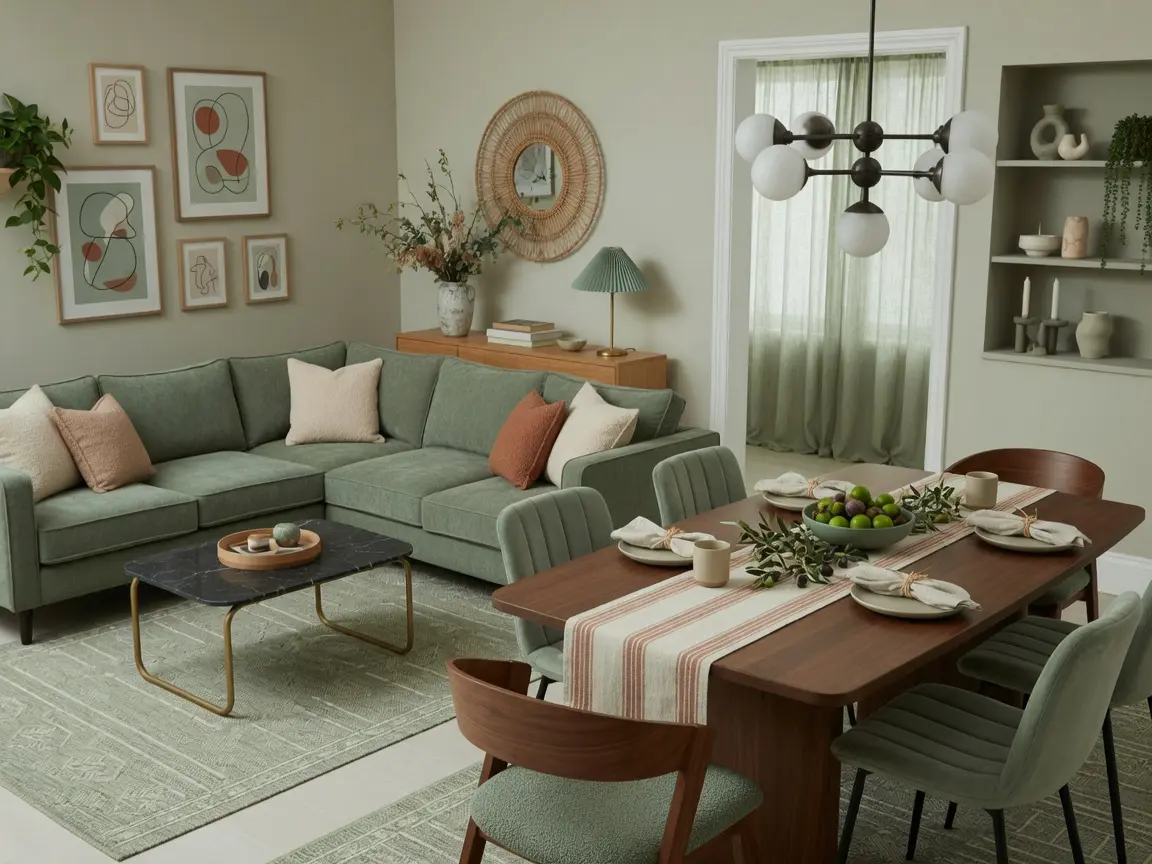
The dining table doesn’t need to match the sofa’s material, but it should share a similar level of formality and warmth. A warm wood table pairs naturally with a boucle or linen sofa, while a sleek glass or marble table might feel more at home with a more structured, tailored sofa style.
Round tables tend to work well in open plan spaces since they don’t create hard corners that block movement between the living and dining zones.
5. Repeat Wood Tones Across Both Areas
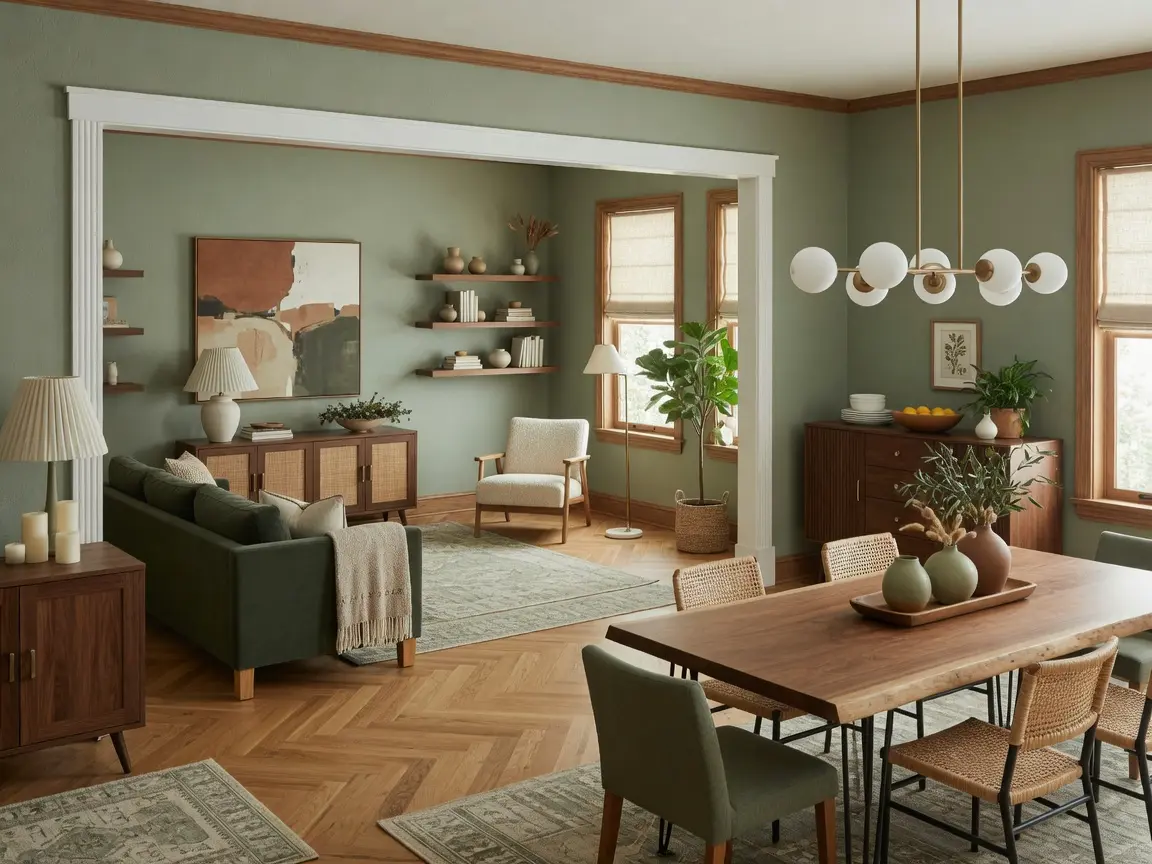
Using the same or a closely matched wood tone on the coffee table, dining table, and any shelving keeps the eye moving smoothly across the open space. Mixing very different wood tones, a light oak coffee table next to a dark walnut dining table, can make the space feel disjointed even if every individual piece looks good on its own.
You don’t need every wood piece to be an exact match. Staying within the same warm or cool wood family is usually enough to keep things feeling cohesive.
6. Bring in Brass or Warm Metal Accents Throughout
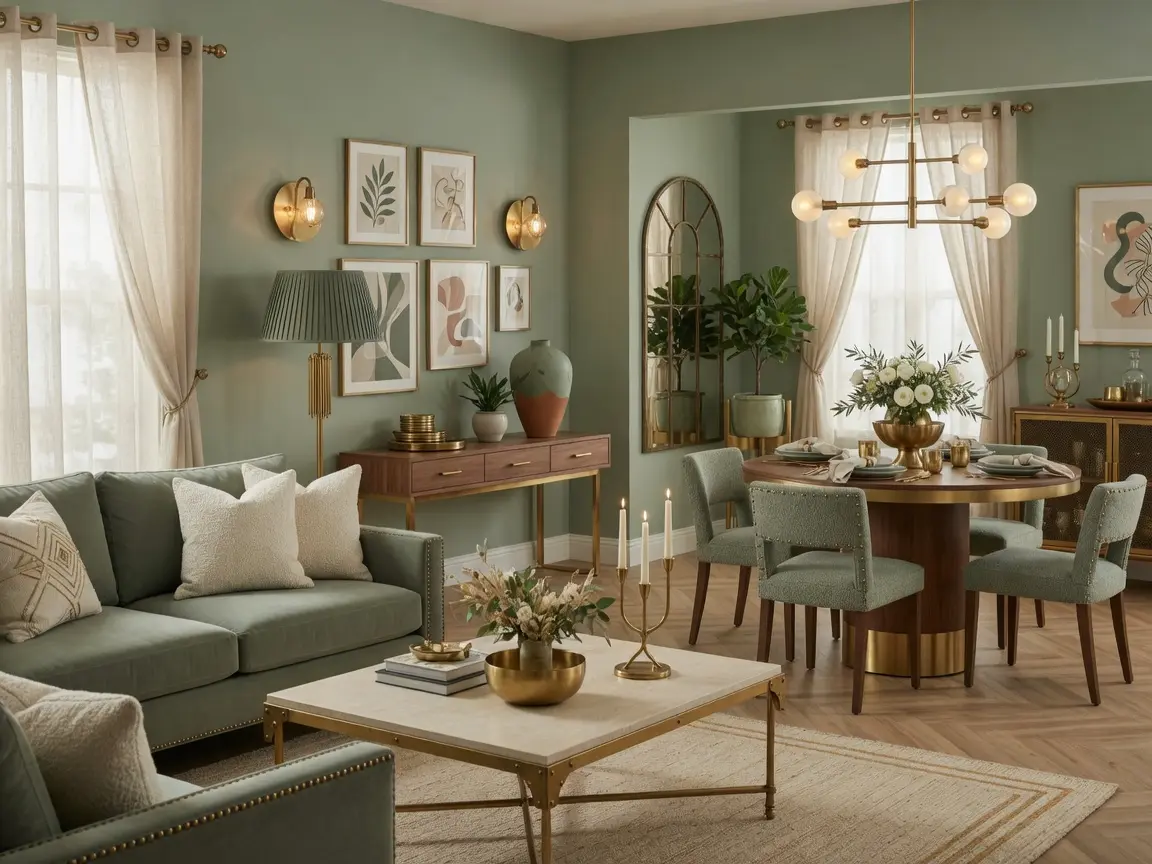
Sage pairs especially well with warm metals rather than cool ones. Brass lamp bases in the living room, a gold framed mirror near the dining table, and matching drawer pulls on a sideboard all repeat the same warm metal note across the space. This repetition is subtle, but it’s part of what makes a large open area feel intentionally designed rather than furnished room by room.
Avoiding a Mismatched Metal Look
Pick one primary metal finish, brass, brushed gold, or matte black, and use it as the dominant choice in both zones. A small amount of a second metal is fine, but three or more competing finishes across an open space starts to look unplanned.
7. Layer Lighting for Two Different Functions
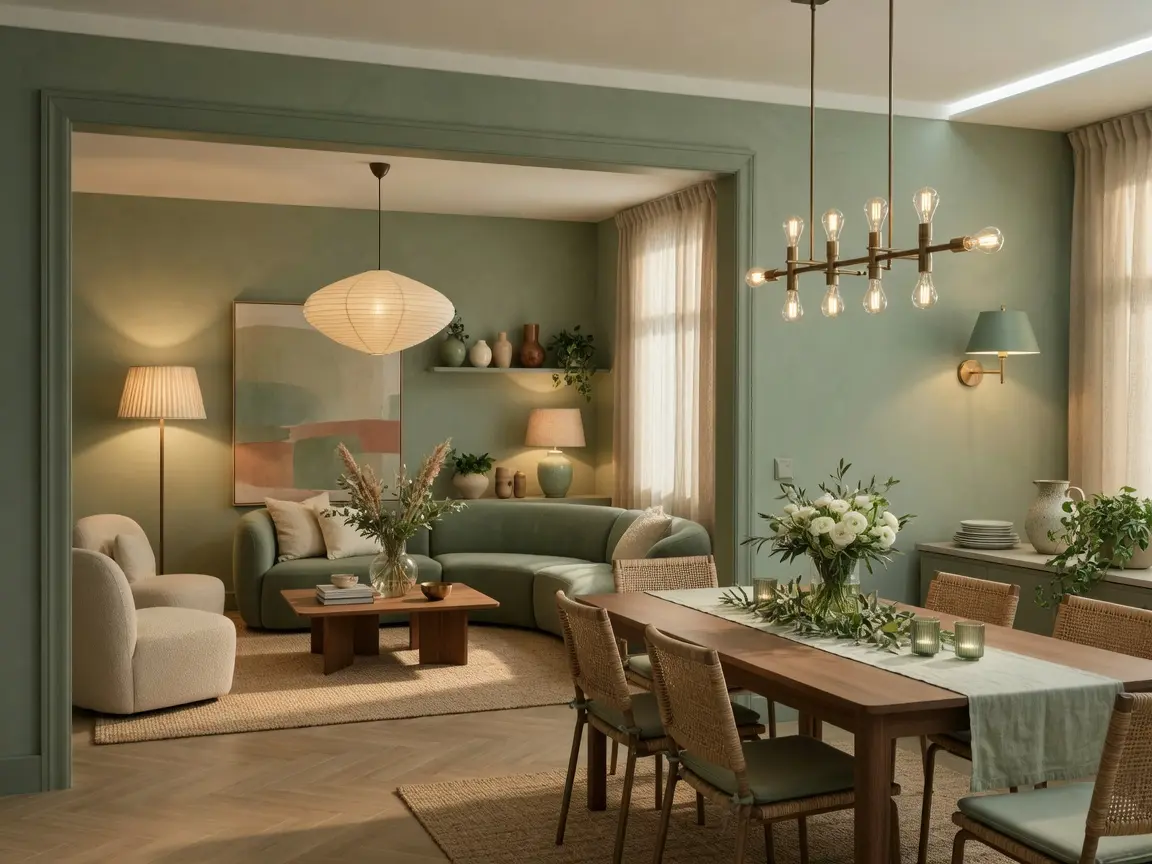
The living room needs softer, ambient lighting for relaxing, while the dining area benefits from a more focused light source directly over the table. A pair of table lamps in the living room and a statement pendant over the dining table serve those two different needs without relying on a single overhead fixture for the whole space.
Keep the light temperature consistent between both zones, ideally in the warm white 2700K to 3000K range, so the transition between areas feels seamless rather than abrupt.
8. Use Art to Visually Connect the Spaces
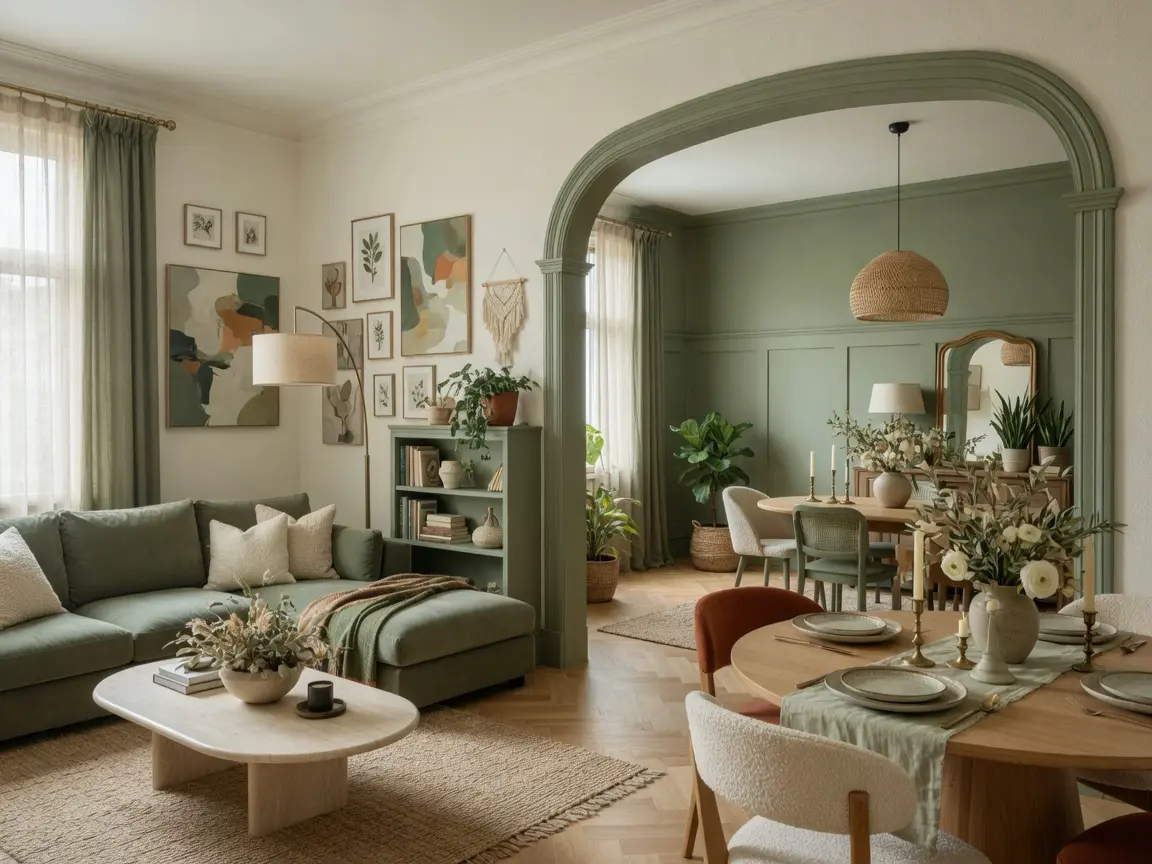
A piece of art in the living room and another near the dining area, sharing a similar color palette or a common frame finish, gives the eye a visual thread to follow across the open space. They don’t need to be part of a matching set, just related enough to feel like they belong to the same home.
Muted greens, warm neutrals, and soft botanical prints all tend to support a sage palette without introducing a competing color story.
9. Keep a Consistent Textile Palette
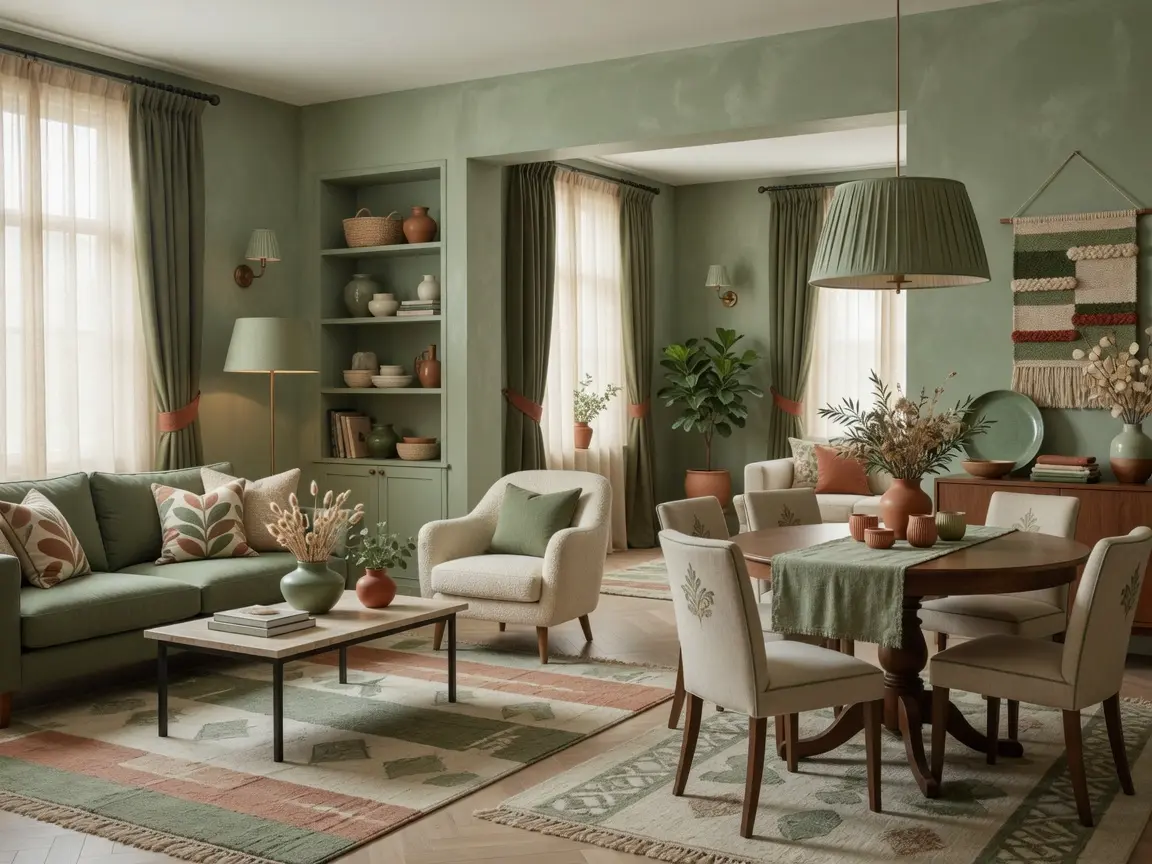
Throw pillows in the living room and dining chair cushions or a table runner in the dining area should draw from the same small palette of two or three colors, sage, cream, and one accent like warm terracotta or soft rust. This keeps the textiles feeling coordinated even though they’re serving different pieces of furniture in different parts of the room.
Avoid introducing an entirely new pattern or color family in just one zone. It tends to read as an afterthought rather than part of the original plan.
10. Add Plants as a Repeating Visual Thread
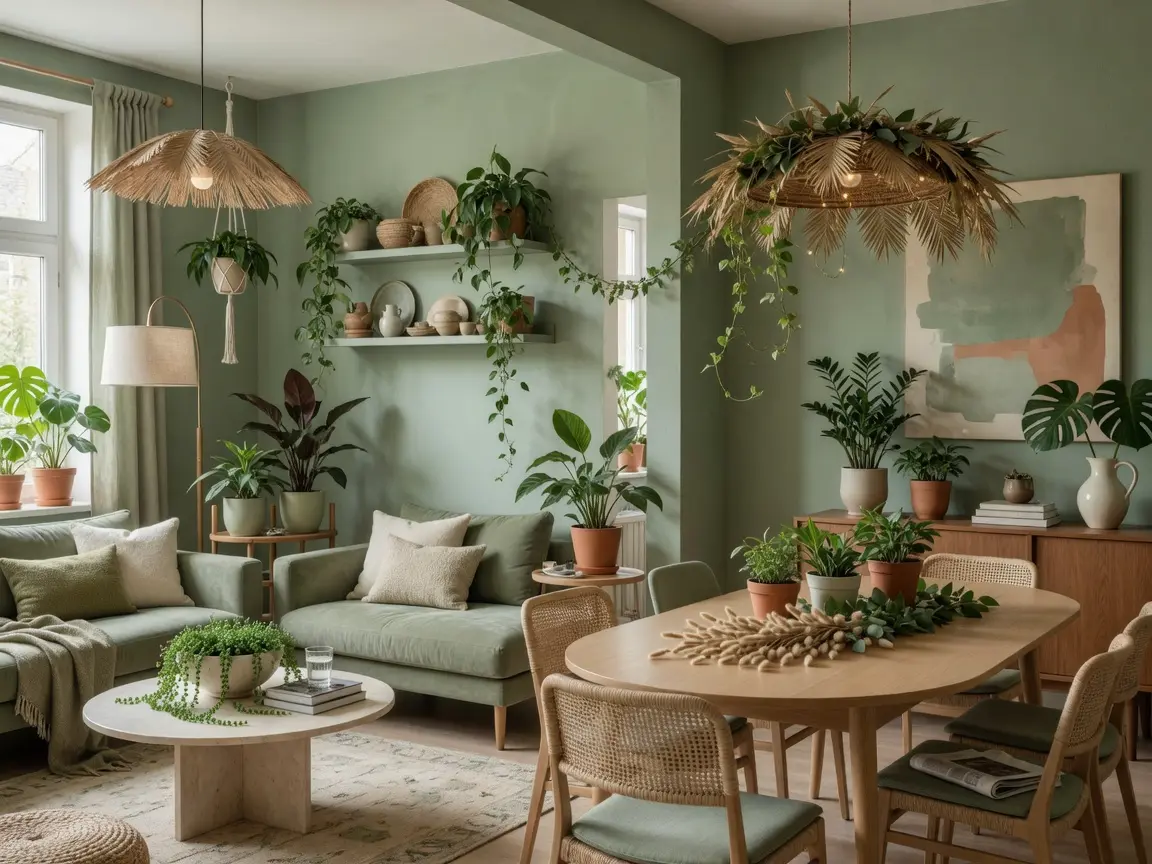
A larger floor plant near the sofa and a smaller potted plant on or near the dining table use the same trick as the artwork and metal finishes, repetition across the space. Choose planters in a similar material or color, terracotta or woven rattan, so the greenery feels connected rather than randomly placed.
This is a low cost, high impact way to visually stitch the two zones together, especially in a space where the furniture itself sits far apart.
Mistakes to Avoid
- Choosing two unrelated sage shades for the living room and dining area
- Mixing very different wood tones across the coffee table, dining table, and shelving
- Relying on a single overhead fixture instead of zone specific lighting
- Skipping a defining rug under the dining table, which leaves that zone feeling incomplete
- Using three or more competing metal finishes across the open space
- Introducing a completely different textile pattern in just one of the two zones
Frequently Asked Questions
Do the sofa and dining chairs need to be the same color? No, and matching them exactly can actually feel too coordinated. Sharing a similar tone family, like sage and warm neutrals, is usually more effective than an exact match.
How do I keep an open plan space from feeling like one blurred room? Use separate rugs to define each zone, and vary the lighting type between the two areas, softer ambient light in the living room and a focused fixture over the dining table.
Can I use this palette if my walls are already painted a neutral color? Yes, and in many open plan spaces that’s actually the better approach. Sage carried through furniture and textiles over a neutral wall often reads as more elevated than a full sage wall.
What if my living room and dining area have very different natural light levels? Lean toward a slightly warmer, less saturated version of sage in the darker zone, and let the brighter zone carry a touch more color intensity if you want some variation between the two.
Is this look achievable on a smaller budget? Yes. Start with two coordinated rugs and a shared textile palette, both relatively low cost changes, before committing to new furniture in either zone.
Conclusion
A living room and dining room don’t need matching furniture to feel connected. They need one shared color story, sage green plus warm wood and brass, repeated in different amounts across both zones. Start with the rugs and the color palette, since those decisions shape everything else, then build the furniture and lighting around that shared thread.