10 Aesthetic Small Bedroom Ideas to Maximize Every Inch
Small bedroom advice tends to focus purely on function, fold this, stack that, tuck everything away. That’s useful, but it often leaves style as an afterthought, like a small room has to choose between being organized and being beautiful. These aesthetic small bedroom ideas show that maximizing space and having a genuinely styled room aren’t actually in conflict.
1. Why Aesthetic and Functional Aren’t Opposites in a Small Bedroom

The instinct in a small room is often to prioritize storage above everything else, cramming in every organizational solution available. That approach usually backfires, since a room stuffed with storage solutions can end up feeling more cluttered than one with fewer, better chosen pieces.
A more aesthetic approach starts with editing rather than adding. Deciding what actually needs to live in the room, and choosing furniture and storage scaled correctly for that, tends to produce a more functional space than trying to fit everything a much larger bedroom might hold.
2. Furniture Scale as the Starting Point
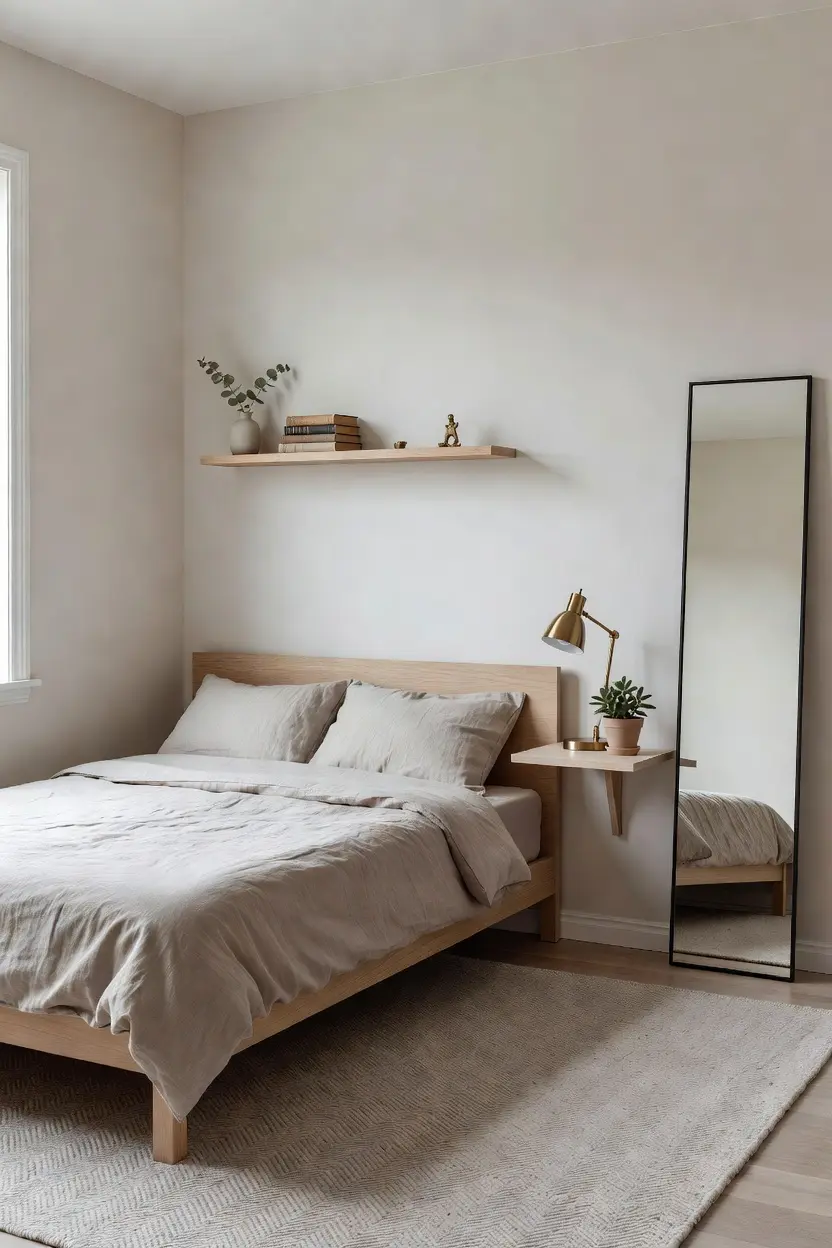
Furniture sized for a larger room is the single biggest culprit behind a small bedroom feeling cramped instead of cozy. A full sized dresser meant for a spare bedroom eats up floor space a small room simply doesn’t have to spare.
Measuring the room’s actual walking paths, not just where furniture might technically fit, before buying anything helps avoid this common mistake. A bed that fits against the wall doesn’t always mean there’s enough clearance left to walk around it or open a closet door comfortably.
A quick tip that helps: measure twice, once for the furniture’s footprint and once for the clearance needed around it, since the second measurement is the one people forget most often.
3. Vertical Storage That Doesn’t Sacrifice Style
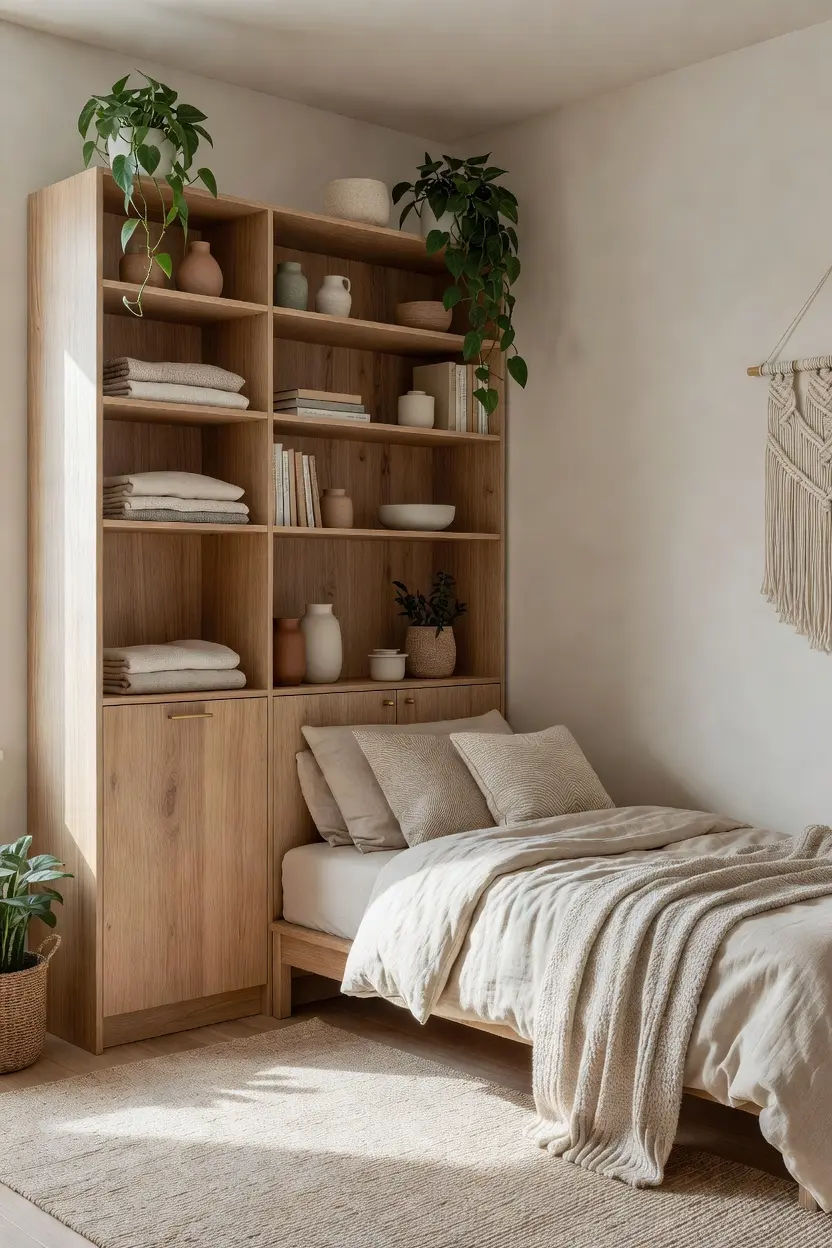
Floor space reads as openness in a small bedroom, so moving storage onto the wall instead of across the floor makes a real visual difference. Floating shelves, styled with a few curated items rather than packed full, add function without eating into walking room.
Tall, narrow furniture does more for a small room than short, wide pieces, since the eye travels upward instead of across, which makes ceilings feel higher than they actually are. A slim bookshelf reaching toward the ceiling, rather than a low, wide one, holds a similar amount while taking up a fraction of the floor footprint.
Choosing Shelving That Feels Curated
Style shelving the same way you’d style a coffee table, a few chosen pieces with breathing room between them, rather than filling every inch. A vertical shelf packed edge to edge looks just as cluttered as a horizontal one, just in a different direction.
4. Multi Purpose Furniture Worth Considering
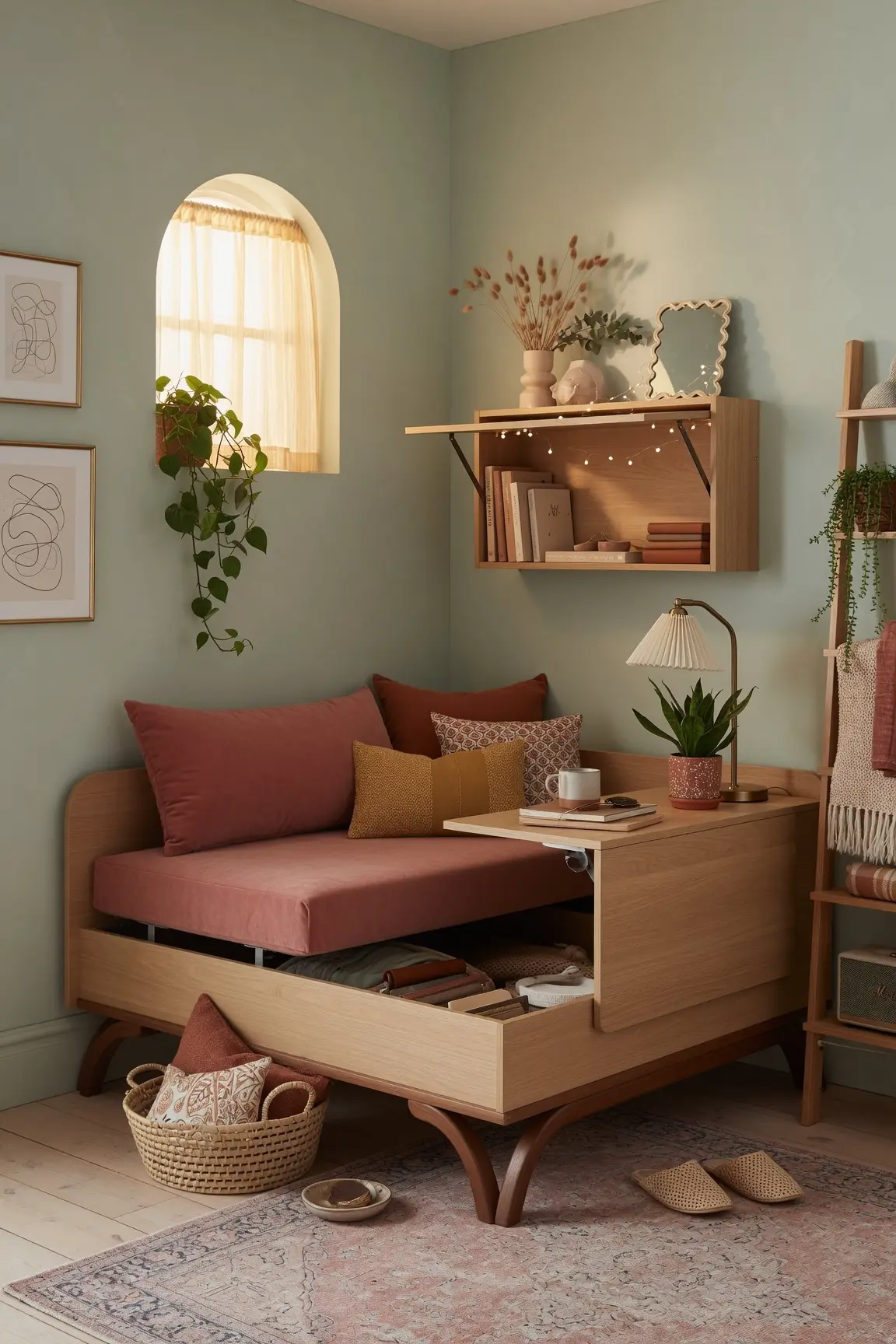
A storage ottoman at the foot of the bed adds seating, a surface for folding laundry, and hidden storage all in one piece, doing the job of three separate furniture items in the space of one. A bed frame with built in drawers underneath makes use of space that would otherwise sit empty beneath the mattress.
A daybed, rather than a standard bed frame, can function as both a sleeping surface and a seating area during the day, particularly useful in a small bedroom that also needs to serve as an occasional reading or work space. A folding or wall mounted desk, tucked away when not in use, adds function without permanently claiming floor space the rest of the day.
5. Color Choices That Maximize Perceived Space
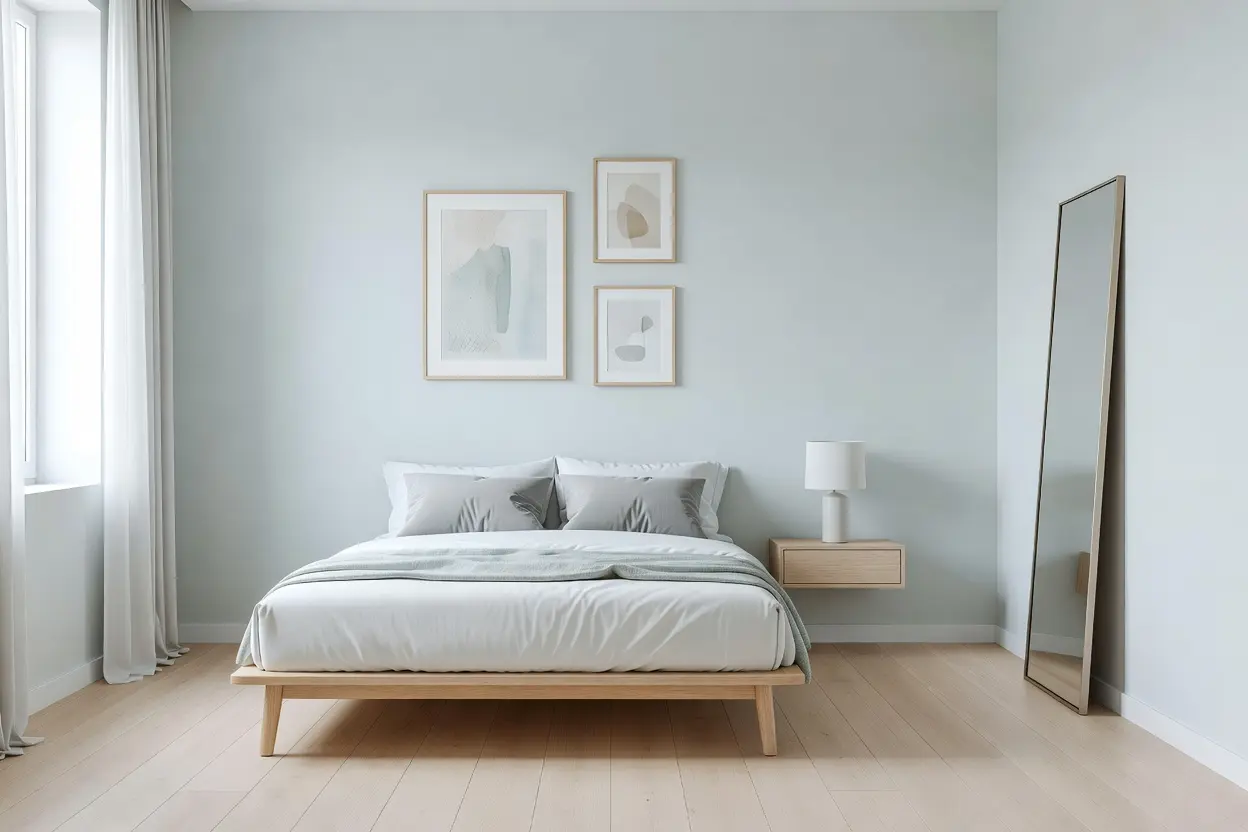
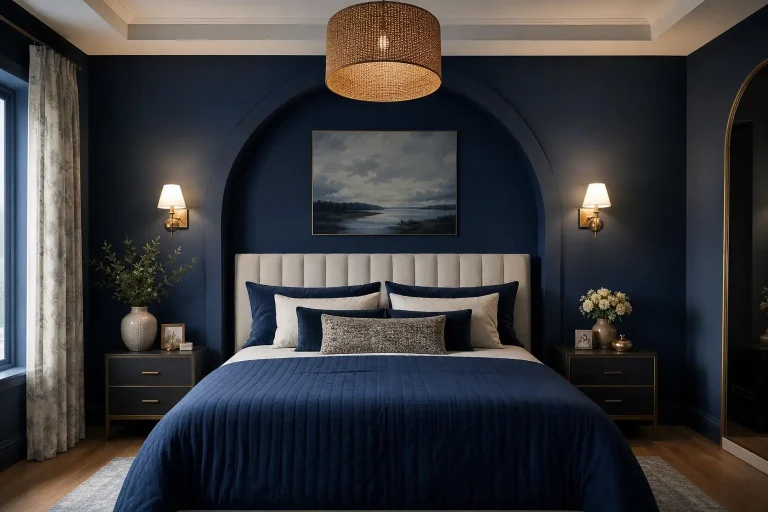
Light, warm neutrals reflect available light and tend to make a small room feel more open than a dark, saturated color would, especially in a room with limited natural light. Color drenching, where walls, trim, and ceiling all share one tone, removes the visual breaks that make a small room feel chopped up into smaller pieces than it actually is.
Key takeaway: it’s not just about choosing light colors, it’s about choosing color consistently across the whole room, since visual breaks between different colored surfaces are what actually make a small space feel smaller.
Testing Color in a Small Room
Small rooms shift in light more noticeably than larger ones, since there’s less space for that light to bounce around and even out. Test a paint sample at different times of day before committing to a full room.
6. Mirror Placement for Depth and Light
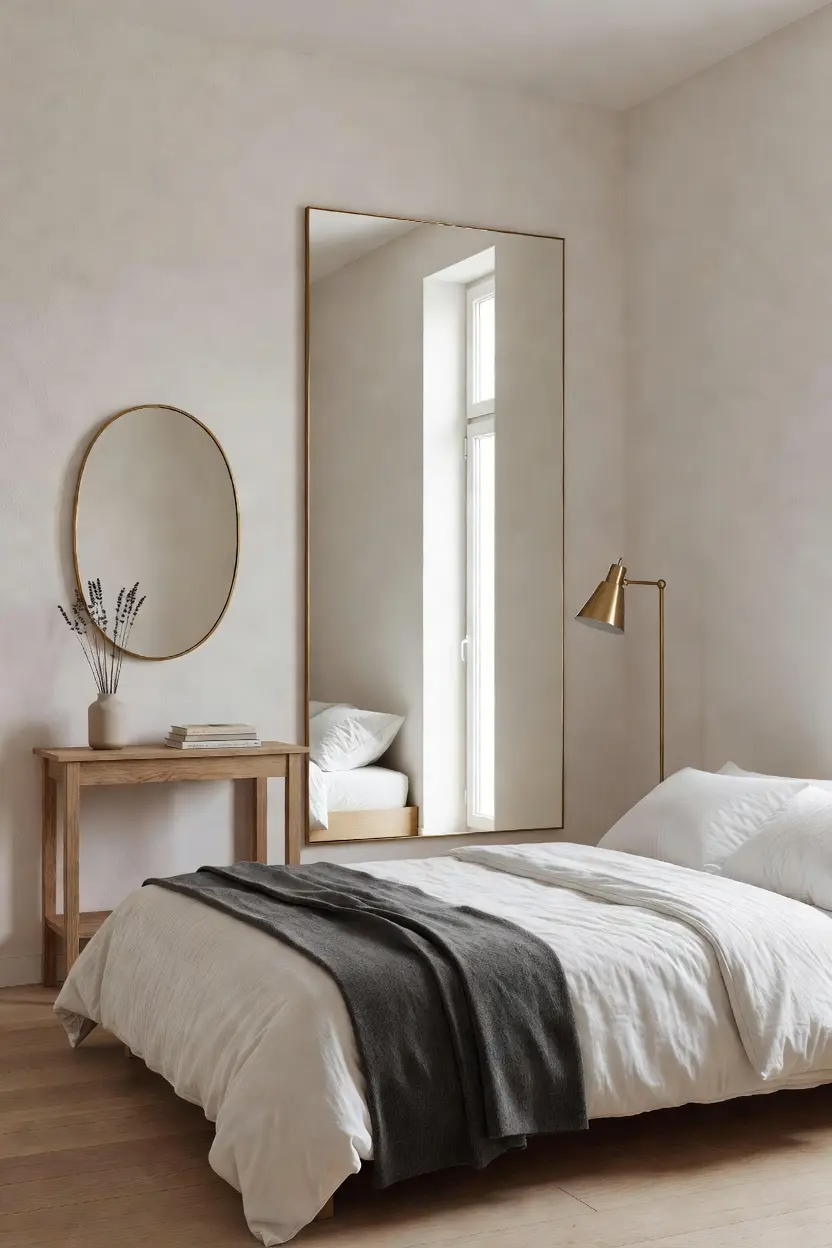
A well placed mirror is one of the most effective, lowest cost tools available in a small bedroom. Positioned across from a window, it bounces natural light deeper into the room and creates the illusion of another window entirely.
Size matters here. A mirror too small for the wall gets lost, while one sized to roughly two thirds the width of the furniture below it tends to look proportional rather than randomly placed. A mirrored closet door, if the room allows for one, doubles as both function and a space enhancing design choice without taking up any additional room.
7. Bed Frame Choices for Small Rooms
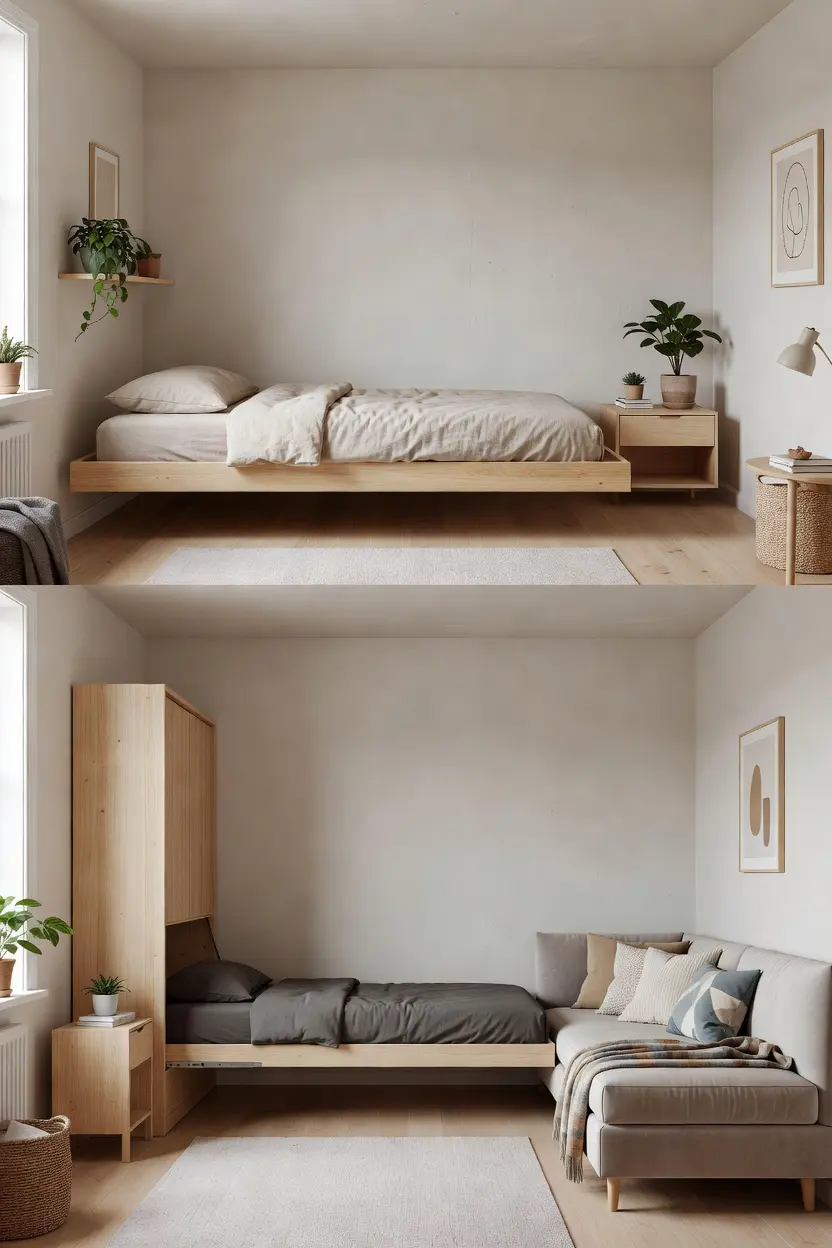
A bed frame with a low profile headboard, or no headboard at all, leaves more of the wall visible, which reads as more open than a tall, bulky headboard reaching toward the ceiling. Exposed, thinner bed frame legs let light and floor space show through underneath, visually lightening the piece compared to a solid base sitting flush on the ground.
A platform bed without a box spring reduces the overall height and bulk of the largest piece of furniture in the room, which matters more in a small bedroom than a larger one where the bed takes up a smaller percentage of the total visual space. For rooms tight enough that even a full sized bed feels like a stretch, a well chosen daybed or a bed positioned in a corner rather than centered can free up additional floor space.
8. Styling Surfaces Without Overcrowding Them
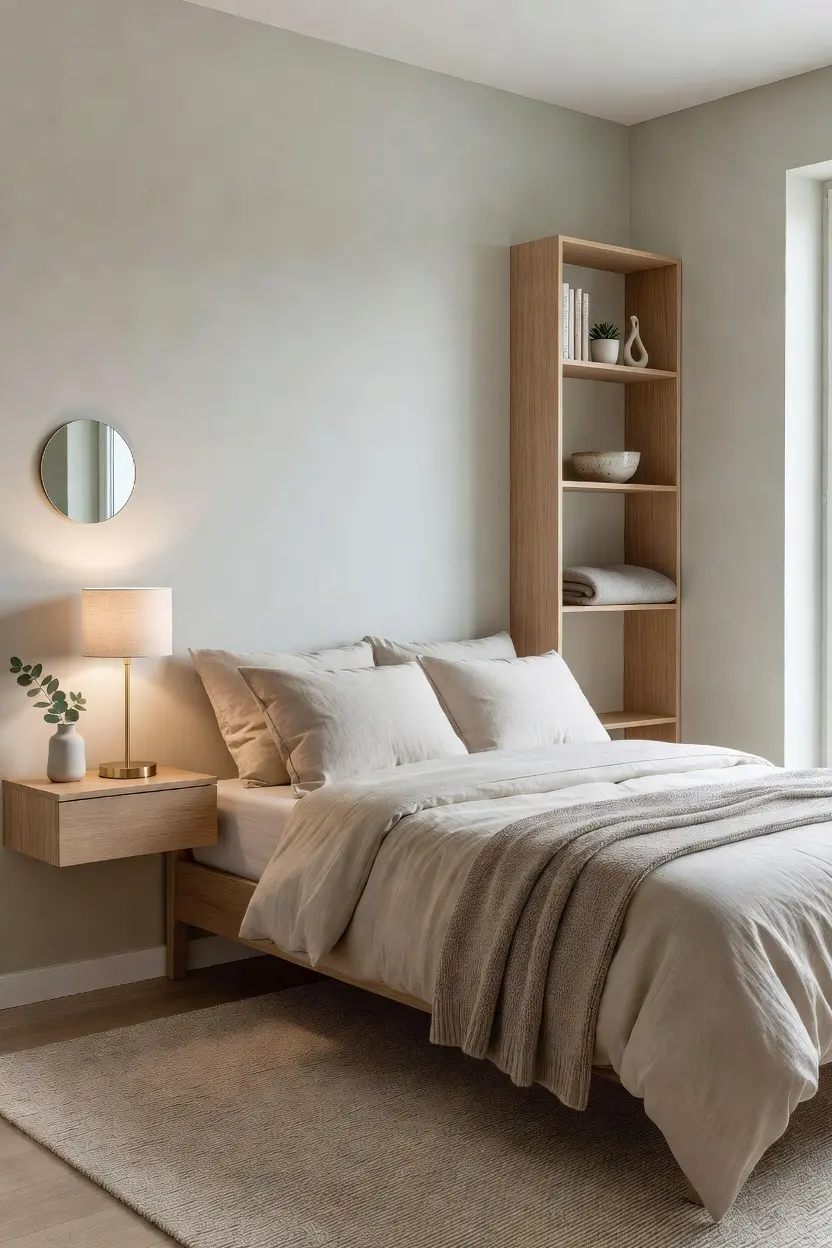
A small bedroom has fewer surfaces to work with, which actually makes styling easier in some ways, there’s simply less room for clutter to accumulate. Choosing two or three meaningful items per surface, rather than filling every available inch, keeps the room feeling calm and intentional.
Grouping objects in odd numbers, generally three, tends to look more considered on a nightstand or dresser than pairs or scattered single items. Leaving some negative space matters just as much in a small room as what actually gets displayed, since a fully covered surface reads as cluttered no matter how nice the individual pieces are.
9. Budget Ranges for a Small Bedroom Refresh
A full room repaint, walls and trim included, done as a DIY project, typically costs 60 to 120 dollars in paint and supplies for a small bedroom. Floating shelves, a few installed around the room, generally run 15 to 40 dollars each at most hardware stores.
A leaned or wall mounted mirror, sourced secondhand or from a budget retailer, typically costs 40 to 100 dollars depending on size. A storage ottoman or a bed frame with built in drawers, if replacing an existing bed, generally runs 150 to 400 dollars depending on material and size. A full small bedroom refresh, paint, shelving, a mirror, and a multi purpose furniture swap, often lands somewhere between 300 and 600 dollars total.
10. Layout Tricks That Free Up Usable Floor Space
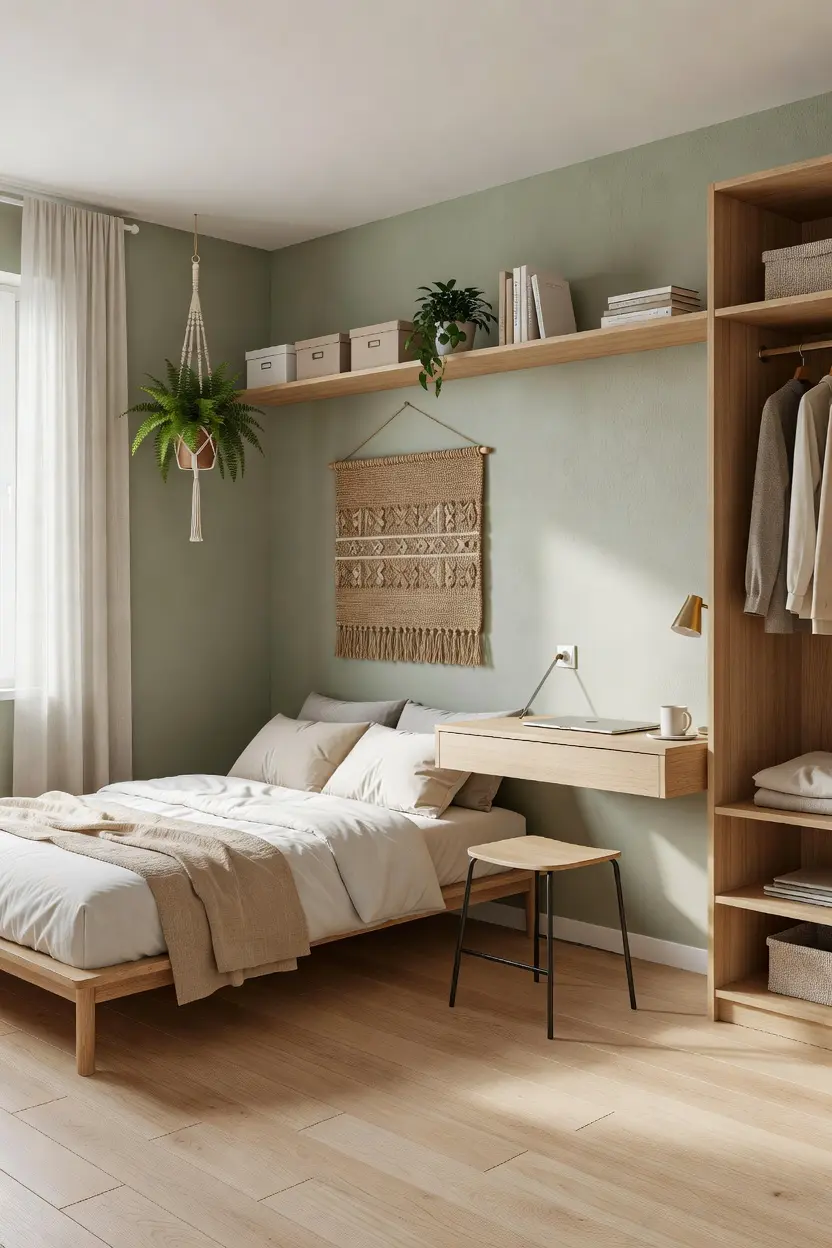
Positioning the bed against the longest wall, rather than centering it in the room, often frees up a walking path that makes the whole space feel more functional. Angling furniture diagonally in a corner can sometimes create more usable floor space than a straight, boxy arrangement, particularly in a room with an awkward layout or an oddly placed door.
Pulling furniture slightly away from a bulky radiator, vent, or other fixed obstruction, rather than trying to squeeze pieces around it, generally results in a more comfortable, functional layout even if it means sacrificing a few inches elsewhere. Reassessing furniture placement every so often, rather than assuming the original layout is permanent, often reveals a more efficient arrangement once the room’s actual use patterns become clear.
Mistakes to Avoid
- Choosing furniture scaled for a larger room, which eats up walking space
- Filling every shelf and surface instead of leaving intentional empty space
- Skipping a mirror, missing an easy way to add depth and light
- Choosing a bulky bed frame or headboard that dominates the room visually
- Painting the room in inconsistent colors that create visual breaks and make it feel choppy
- Ignoring vertical storage options in favor of floor level furniture alone
Frequently Asked Questions
What’s the single most effective change for maximizing a small bedroom? Correcting furniture scale tends to matter more than any other single change. Furniture sized for the actual room, rather than pieces meant for a bigger space, frees up more usable floor area than any storage solution alone.
Does a small bedroom need a lot of storage furniture to feel functional? Not necessarily. Fewer, better chosen multi purpose pieces, like a storage ottoman or a bed with built in drawers, often function better than several separate storage items competing for the same limited floor space.
What color works best for making a small bedroom feel bigger? Light, warm neutrals applied consistently across walls, trim, and ceiling tend to work best, since removing visual breaks between differently colored surfaces does more than the specific color choice alone.
Is a mirror really worth it in a small bedroom? Yes. A well placed mirror, sized proportionally to the furniture beneath it, bounces light and adds visual depth for relatively little cost, making it one of the most effective small bedroom tools available.
Should I prioritize floor space or vertical storage in a small bedroom? Vertical storage generally wins in a small room, since floor space directly affects how open and walkable the room feels, while vertical space, floating shelves and tall furniture, is often underused.
Conclusion
An aesthetic small bedroom comes down to editing and scale more than any single storage trick. Choose furniture sized for the actual room, move storage vertical wherever possible, and style surfaces with intention rather than trying to fit everything on display at once. Done well, a small bedroom can look just as considered and styled as a much larger one, without needing any more square footage to get there.