10 Curated Kitchen Open Shelving in Warm Oak and White
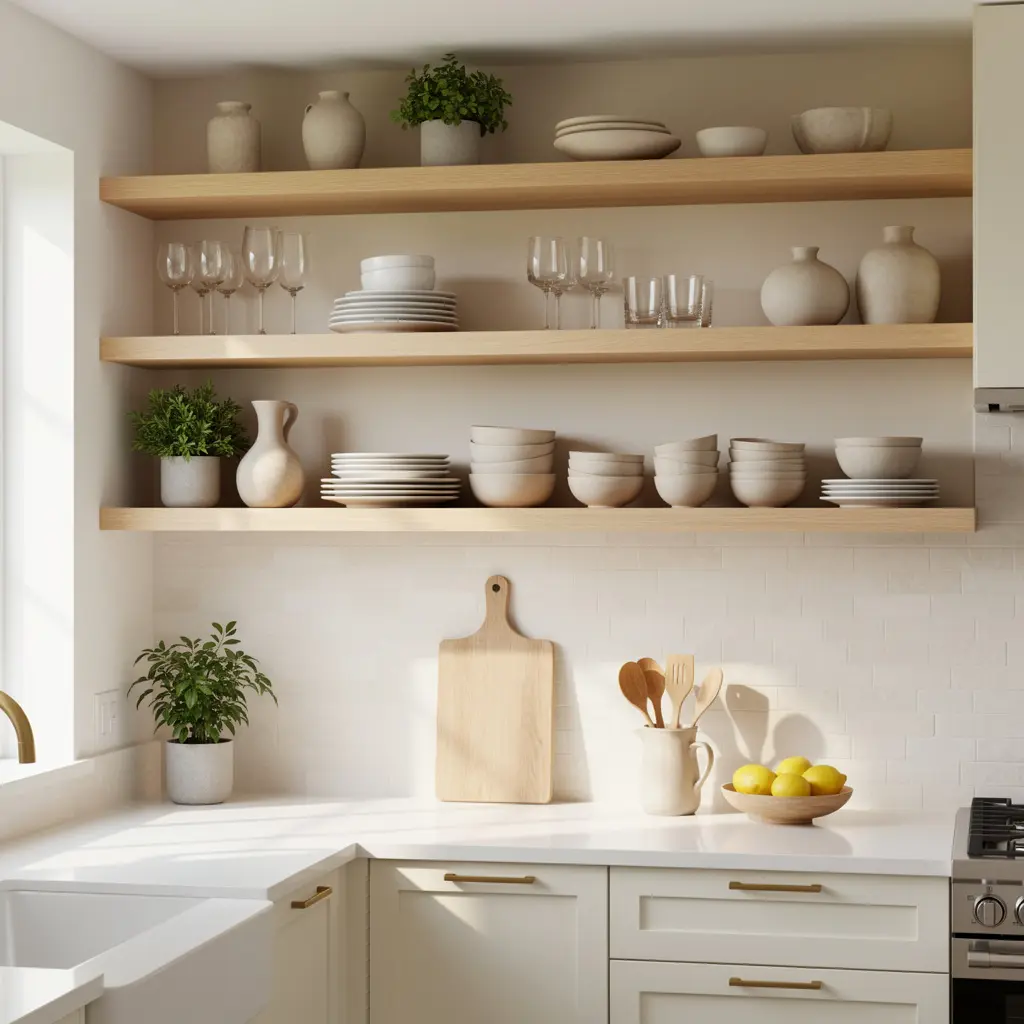
Walk into a kitchen with a full wall of upper cabinets and it can still feel closed in, even if the cabinet doors are nice. Curated kitchen open shelving in warm oak and white fixes that. Trade a few cabinet doors for open shelves, and you get warmth, texture, and a display for the dishware you actually like looking at. Done right, it never feels like clutter left out in the open.
1. What Makes Kitchen Shelving Read as Curated Instead of Cluttered
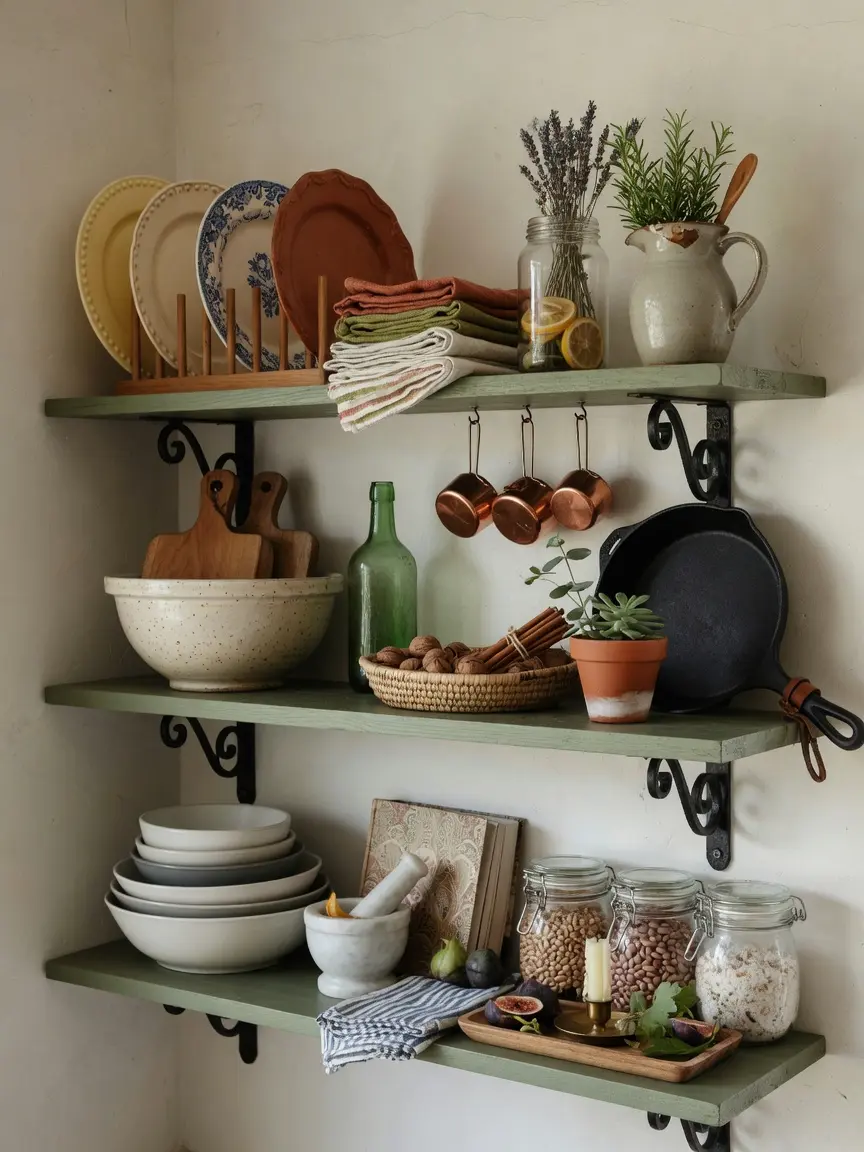
People throw the word curated around a lot, but in a kitchen it really just means restraint. A curated shelf holds fewer items, chosen on purpose, with enough room around each piece that your eye can actually land on it.
Cluttered shelving happens a different way. Someone tries to store everything in view, odd shaped gadgets and mismatched mugs included, stuff that would normally hide behind a cabinet door. Curated shelving splits that apart. What’s meant to be seen goes on the shelf. What’s meant to be stored stays out of sight.
The Rule of Visual Rest
Calm design has breathing room built in. Every shelf needs some empty space. Pack a shelf edge to edge, even with gorgeous dishware, and it starts to feel busy, the same way an overstuffed bookshelf does.
2. Why Warm Oak and White Work So Well Together in a Kitchen
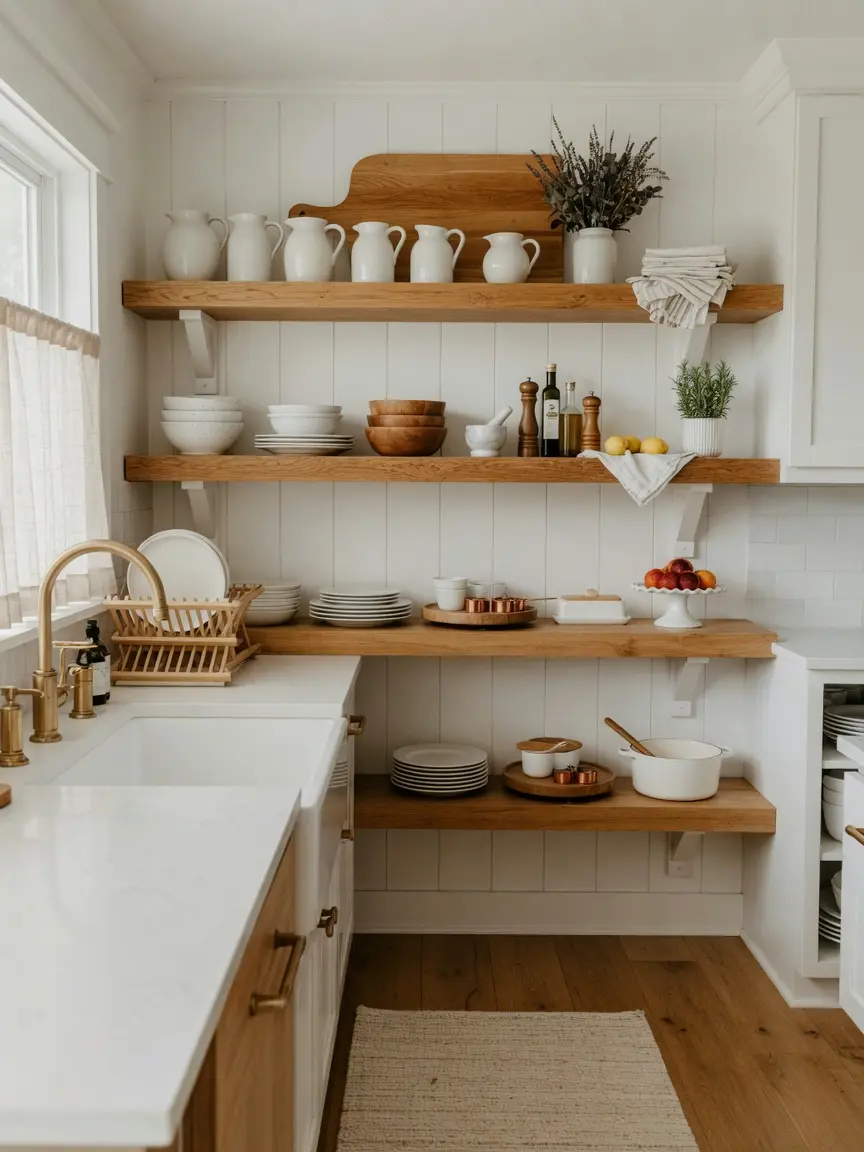
White walls and white cabinetry bounce light around a room, which matters a lot if your kitchen doesn’t see much sun. Warm oak against that white background adds contrast but not weight. Compare that to a dark wood or black metal shelf, and the difference is obvious.
The pairing also holds up over time instead of feeling trend driven. White kitchens have stuck around for years because they’re flexible, and oak brings back the natural texture that an all white kitchen can start to miss.
There’s a practical angle too. Oak takes a light finish beautifully. And a light oak shelf hides wear better than a dark stained one, which tends to show every scratch and water ring.
3. Choosing the Right Shelf Depth and Spacing

Standard kitchen shelf depth runs 10 to 12 inches. That fits most plates, bowls, and glassware without anything hanging off the edge. Want to store bigger serving pieces or a stand mixer? Go deeper, closer to 12 to 14 inches.
Spacing between shelves matters just as much. Aim for 12 to 15 inches of clearance so stacked plates and taller glasses actually fit. Drop below 10 inches and the shelf starts feeling cramped fast, limiting what you can put there at all.
A quick tip that helps: measure your tallest everyday items first, whether that’s a stack of dinner plates or your go to glasses, and build the spacing around those numbers instead of a generic standard.
Number of Shelves to Install
Three shelves stacked in a single run is the sweet spot for most curated looks. It gives enough vertical storage without swallowing the wall. Push past four shelves in one stack, though, and it starts to look more like a cabinet with the doors removed than an intentional display.
4. Bracket Styles That Complement Warm Oak Shelves
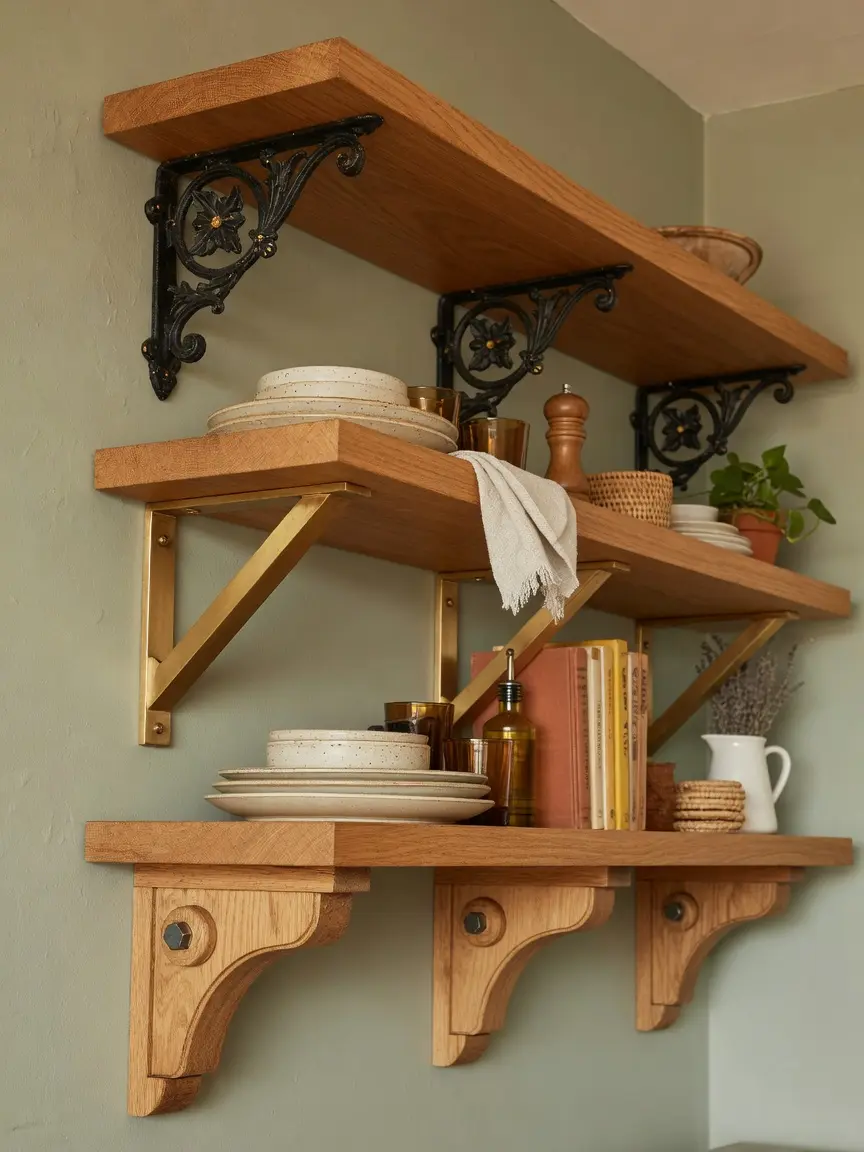
Bracket choice shapes the overall look almost as much as the shelf material itself. Black metal L brackets create clean, slightly industrial contrast against warm oak and white, a combo that suits modern or transitional kitchens.
Brass or matte gold brackets lean warmer. They work especially well if your cabinet pulls or faucet already use a similar warm metal tone. Want something more minimal? Hidden floating brackets keep all the attention on the shelf and the dishware, with no visible hardware at all.
Match the bracket finish to your existing kitchen hardware, and the shelving reads like it was planned alongside the rest of the kitchen instead of bolted on later.
5. What to Actually Put on Display

Everyday dishware in a tight color palette is your best bet here. Mismatched patterns and colors compete with each other visually, so stick to two or three tones across everything on display, usually whites, creams, and one accent.
Stacked plates. A few nested bowls. Glassware grouped by type. All of it reads as curated because it’s grouped with intention, not scattered. A small collection of ceramic pieces, a pitcher or a matching set of mugs, adds warmth without needing to serve a purpose.
Adding a Few Non Dish Items
One or two non kitchen items break up the repetition of stacked dishware nicely. A small plant. A wooden cutting board leaned upright. Keep it to one or two per shelf run, though. Too many and the shelf starts looking more like a display case than a working kitchen shelf.
6. What Belongs Behind Closed Doors Instead
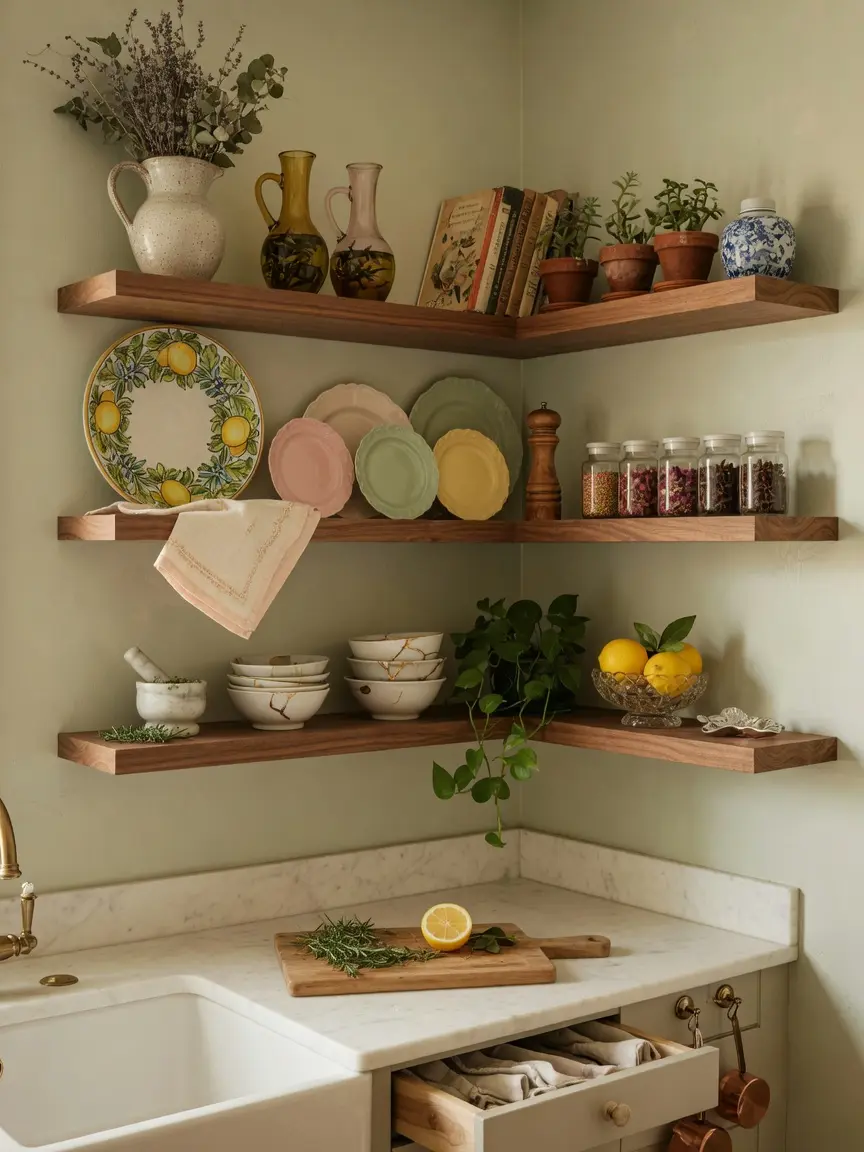
Not everything in a kitchen deserves open shelving, no matter how carefully you style it. Mismatched everyday mugs, food storage containers, small appliances, all of it tends to undercut the curated look fast.
Items you only use occasionally, specialty bakeware, holiday dishware, belong in a closed cabinet. Sitting in view for months at a time, they stop reading as styling and start reading as clutter. Anything with a busy pattern outside your two or three tone palette should stay hidden too, even if you use it often.
Key takeaway: open shelving works as a display for a curated slice of your dishware, not as a replacement for all your kitchen storage.
7. Layering Height and Texture Across the Shelves
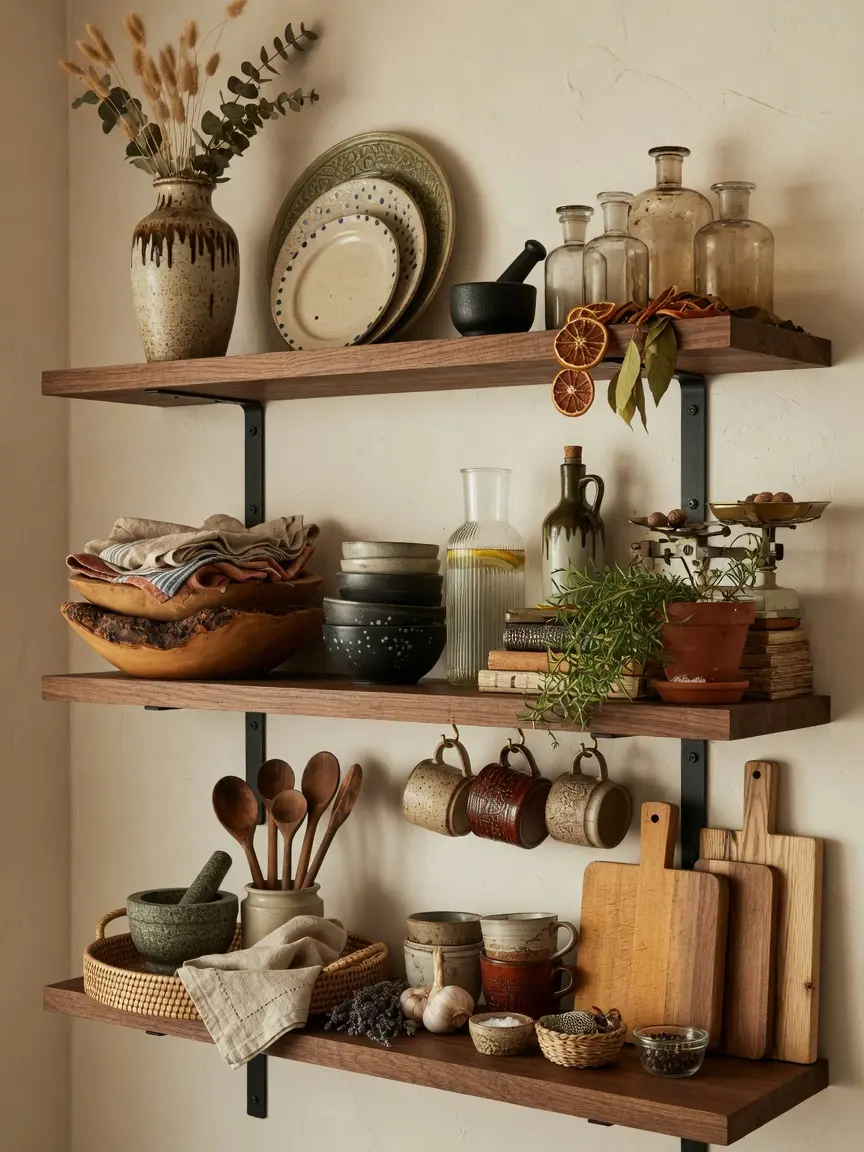
Flat, single height arrangements tend to look less intentional than shelves with some variation. Stack a few plates on one side of a shelf and leave a taller pitcher or vase on the other, and you get natural balance without trying too hard.
Mix matte and glossy finishes. A matte ceramic bowl next to a glossy stack of white plates adds texture without needing more items. Woven elements help too, a small round basket or a rolled placemat set upright, contrasting nicely against both the ceramic dishware and the oak shelf itself.
8. Lighting That Makes Open Shelves Look Intentional
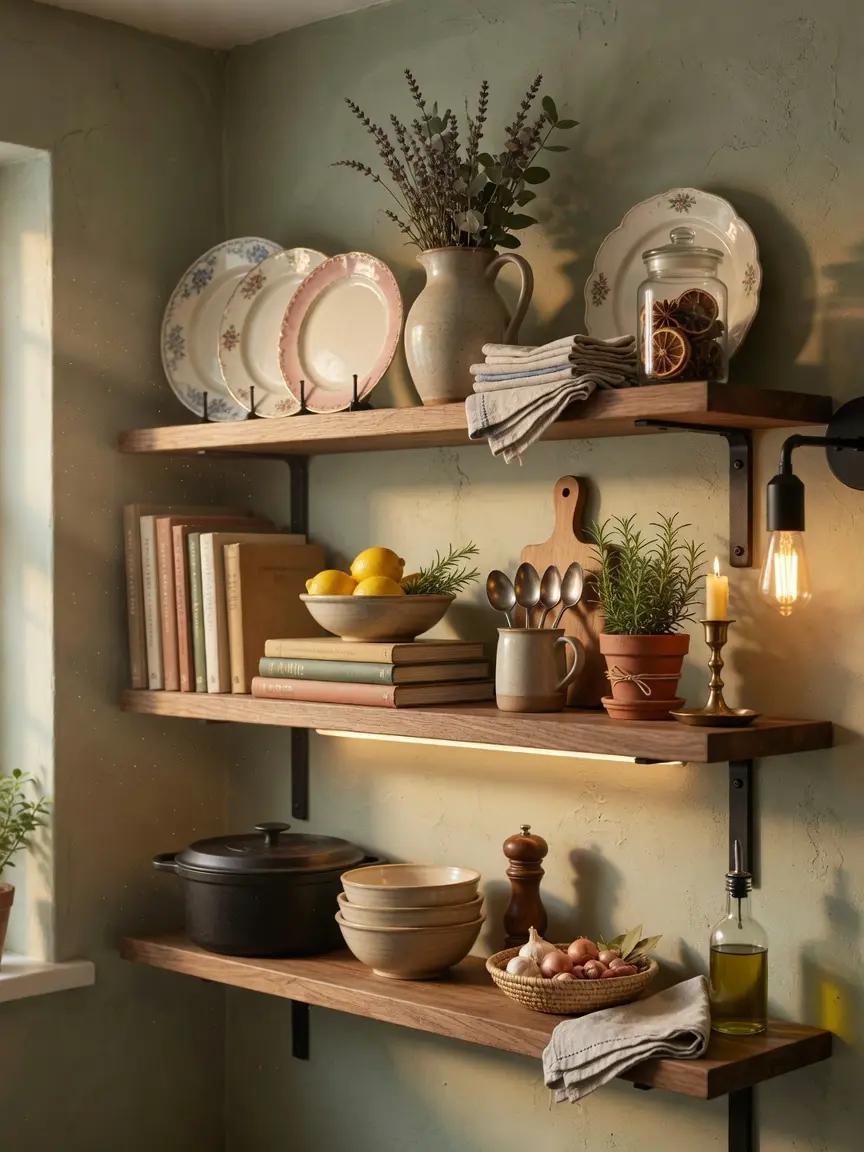
Under shelf lighting, whether it’s a plug in LED strip or a hardwired puck light, adds a soft glow that makes everything below look deliberately displayed rather than just stored where you can see it. That matters most on the bottom shelf, which often sits in shadow from the shelf above or the cabinets nearby.
Go warm with the light temperature, somewhere in the 2700K to 3000K range. It complements oak’s natural warmth far better than a cooler white, which can leave the wood looking gray or washed out.
Got a window nearby? Daylight usually handles most of the work during the day. Under shelf lighting mainly earns its keep in the evening or on darker days.
9. Budget Ranges for Materials and Installation

Basic pre cut oak shelf boards, no brackets included, typically run 25 to 60 dollars per shelf depending on length and thickness. Solid oak costs more than an oak veneer option, though veneer works fine as a middle ground if the budget’s tight.
Bracket sets add another 15 to 40 dollars per shelf. Hidden floating brackets cost more than simple L brackets since they need internal mounting hardware. All in, a three shelf run with brackets and basic hardware often lands somewhere between 150 and 350 dollars for a DIY install.
Professional installation adds labor on top of that, and cost varies a lot by region. Still worth it if your wall has studs in an odd layout, or if you’re mounting into tile or another tricky surface.
10. Keeping Open Shelves Looking Curated Over Time
Open shelving takes more upkeep than closed cabinets. Everything’s visible, dust and daily wear included. A quick wipe with a slightly damp cloth every week or two keeps the shelf and the dishware looking fresh.
Because it’s all in plain sight, you’ll notice faster when the arrangement drifts from curated toward cluttered, whether that’s an extra mug that snuck on or a mismatched item that doesn’t belong. A small edit once a month, pulling anything that breaks the color palette or grouping, keeps things from sliding.
Shelves near the stove also pick up grease residue faster than shelves elsewhere. A slightly more frequent wipe down near cooking areas keeps both the wood finish and the dishware from developing that sticky film.
Mistakes to Avoid
- Filling every inch of shelf space instead of leaving intentional gaps
- Mixing too many dishware colors and patterns, which competes visually instead of coordinating
- Storing everyday clutter items like food storage containers on open shelves
- Choosing shelf spacing too tight for your tallest daily use items
- Skipping bracket finish coordination with existing kitchen hardware
- Placing shelves too close to the stove without planning for more frequent cleaning
Frequently Asked Questions
How many shelves should I install for a curated look? Three shelves in a single stacked run is common and tends to look intentional without overwhelming the wall. Go past four and it starts resembling open cabinet storage rather than a styled display.
What’s the ideal spacing between kitchen open shelves? Around 12 to 15 inches of clearance usually fits stacked plates and taller glassware comfortably. Anything under 10 inches limits what can realistically sit on the shelf.
Do open shelves in a kitchen get dusty faster than cabinets? Yes. Everything’s exposed instead of sealed behind a door. A quick wipe every week or two keeps dust and grease from building up.
Should I match my shelf brackets to my cabinet hardware? Not required, but it helps. Coordinating the bracket finish with existing cabinet pulls or faucet fixtures makes the shelving look like part of the original kitchen design rather than an add on.
Is warm oak shelving durable enough for daily kitchen use? With a proper sealed finish, yes. Just wipe up spills quickly and avoid setting very hot cookware directly on an unprotected shelf.
Conclusion
Curated kitchen open shelving in warm oak and white works because it treats the shelf as a display, not a catchall for everything that doesn’t fit in a cabinet. Pick a small, cohesive group of dishware. Leave real breathing room between items. Keep the everyday clutter behind closed doors where it belongs. A kitchen with a few well styled open shelves will always beat one where every shelf is packed edge to edge.