10 Modern Curved Wall Shelves with Ambient LED Lighting
A plain rectangular shelf does its job, sure, but it can start to look like floating storage rather than an actual design choice. That’s the gap modern curved wall shelves with ambient LED are built to close. The curve softens a wall that’s otherwise all hard angles and straight lines, and the built in glow gives you mood lighting without a lamp eating up table space. Here’s how to pick the right curve, the right light, and the right spot, so the shelf actually earns its place on the wall instead of just holding a few candles.
1. Why Curved Shelves Read as More Modern Than Boxy Ones
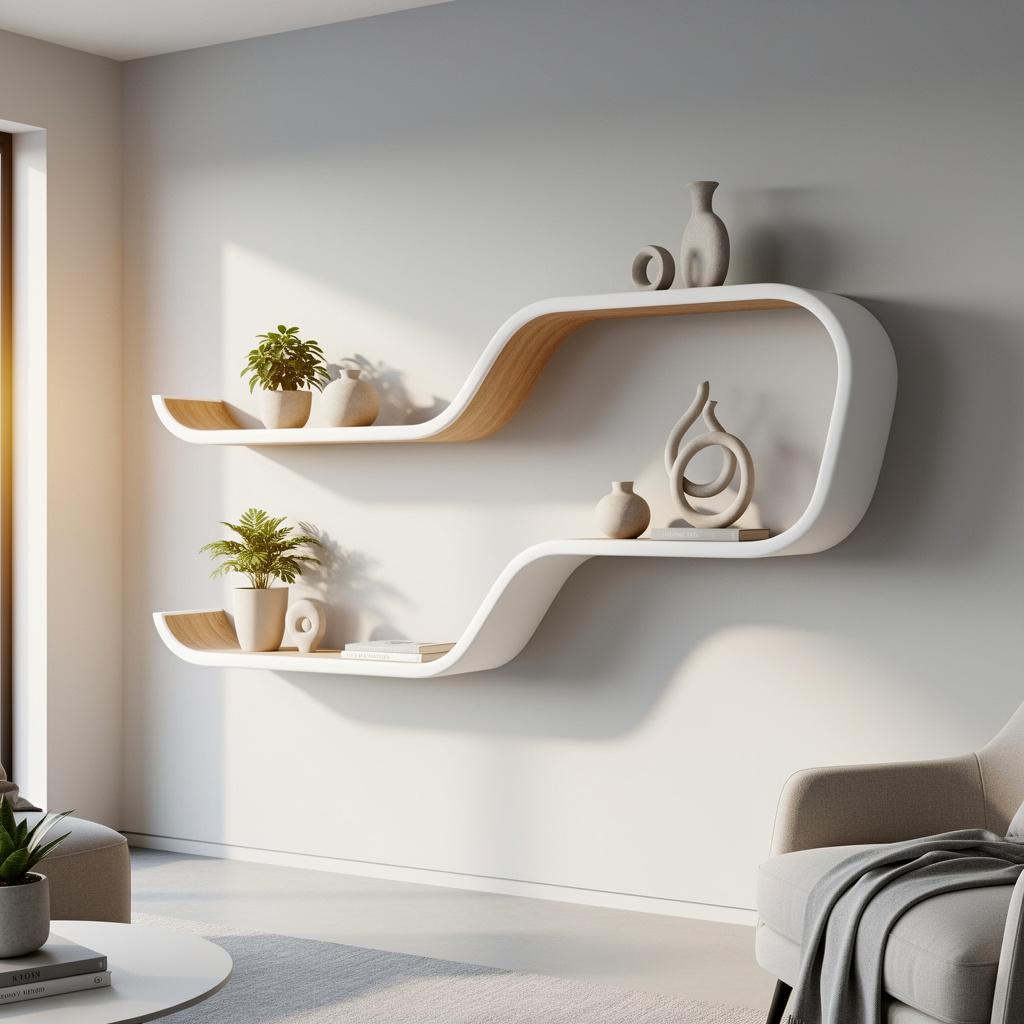
Walls, doorframes, windows, most furniture. Almost everything in a typical room is a straight line. A curved shelf breaks that pattern, and that’s really the whole reason it reads as more current and more sculptural than a flat rectangular one. Organic, rounded shapes have been showing up in furniture and lighting for a while now, and a curved shelf brings that same softness up onto the wall.
You don’t need a dramatic curve to notice a difference either. Even a gentle arc changes how your eye moves across the wall compared to a hard edge. Sometimes that subtle shift is all a room needs.
2. Understand How Ambient LED Actually Works on a Shelf
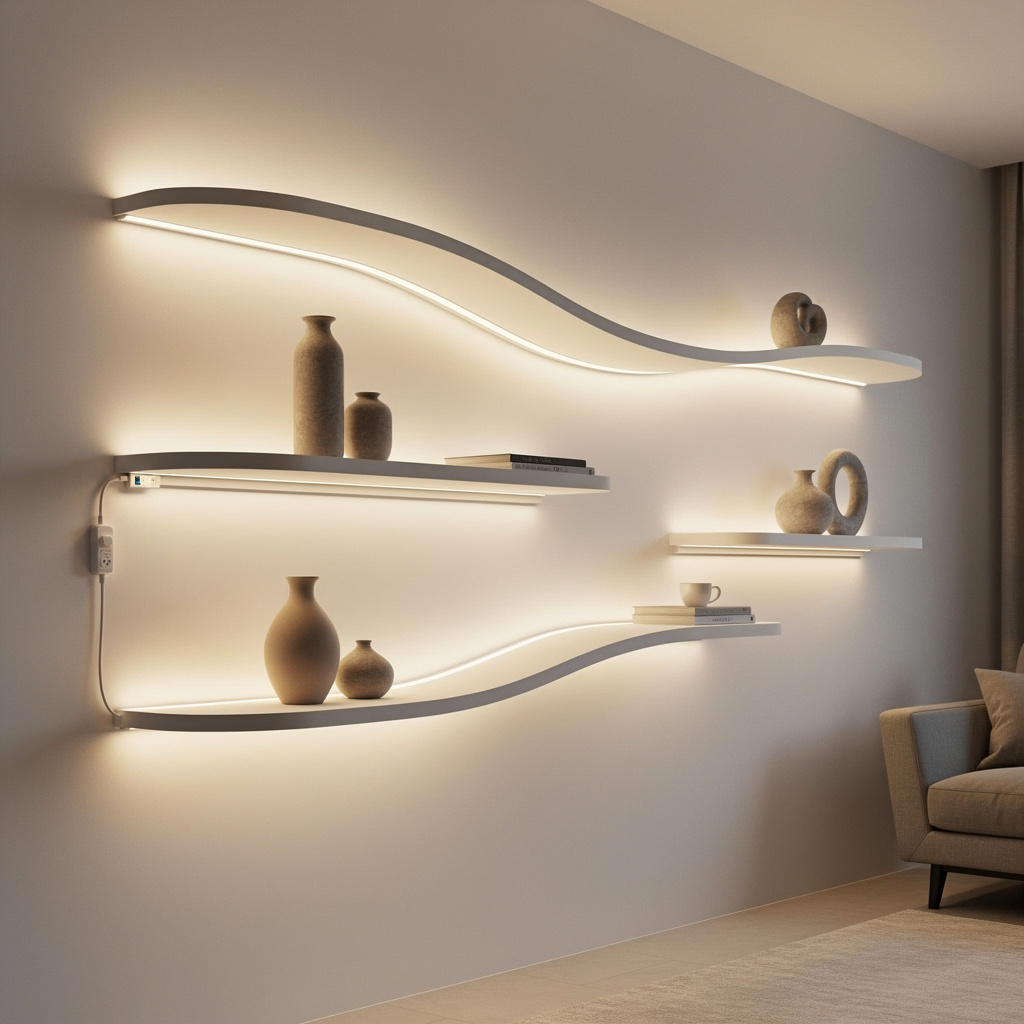
Most shelf mounted LED comes from a thin strip tucked along the underside or back edge, casting light down or against the wall instead of straight out at you. That’s the difference between ambient and task lighting. It’s there to set a mood and show off the shelf’s shape, not to help you read a book.
These strips usually run on low voltage, plugged into a small transformer, and some newer ones run on a rechargeable battery pack instead. That makes installation a lot less intimidating than a hardwired fixture. Plenty come with a dimmer or app control too, so you can turn things down for evenings and back up when you actually need to see the shelf clearly.
3. Choose the Right Curve Depth and Length for Your Wall
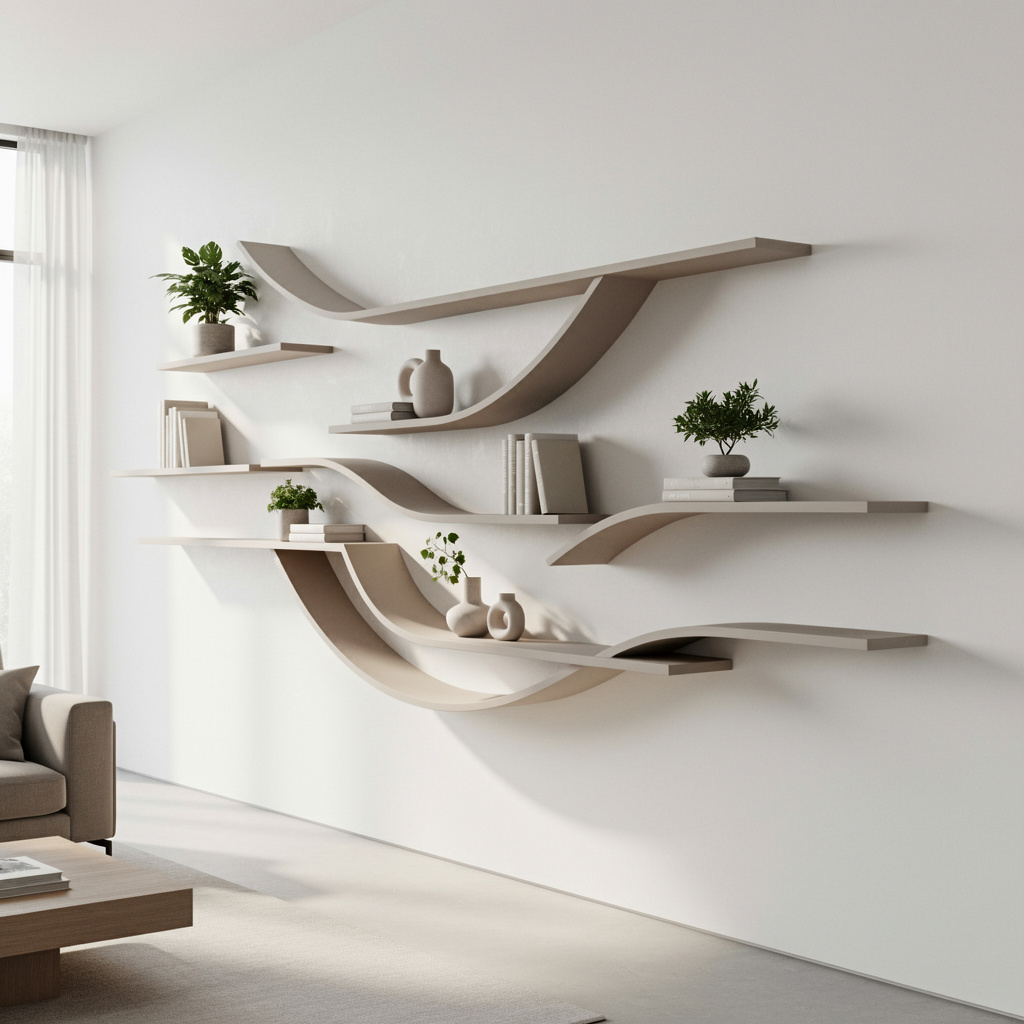
Curve depth and shelf length both come down to what you’re actually planning to put on it, and how much wall you’ve got to work with. A shallow curve, around 6 to 8 inches deep, suits small stuff like candles or a little succulent. Go deeper, closer to 10 or 12 inches, if you want to hold books or bigger vases without everything looking like it’s about to slide off.
Measure the wall first. Think about the room’s scale too before locking in a length. One 24 to 30 inch shelf can work as a clean, standalone statement. Or you could stagger two or three shorter ones at different heights for a more layered, gallery feel, if the wall’s big enough to handle it.
Single Shelf vs a Staggered Set
A single curved shelf keeps things minimal, which is the better call for a smaller wall or a room that’s already busy. A staggered set adds more movement to the wall, but it needs a fairly open, larger space so it doesn’t tip over into looking cluttered.
4. Pick a Warm LED Color Temperature for a True Ambient Feel
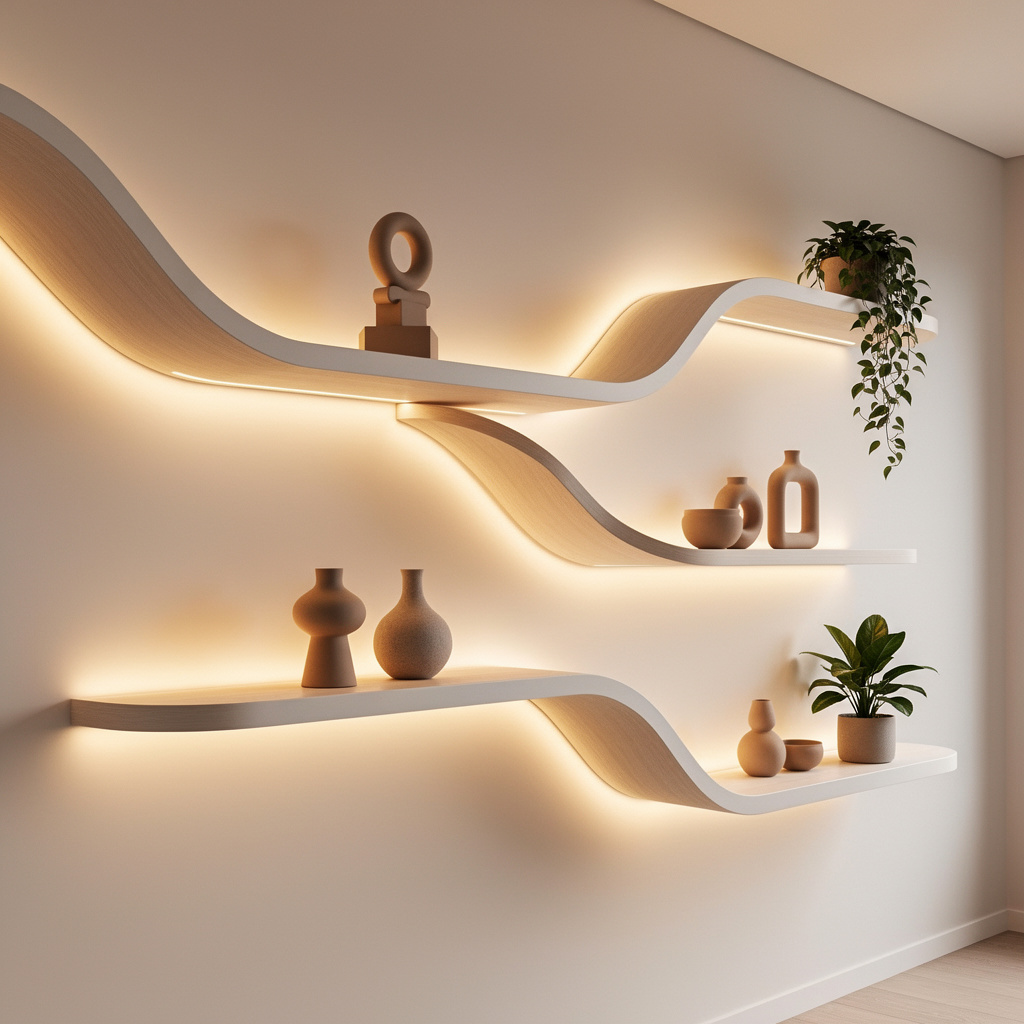
Color temperature, measured in Kelvin, changes a shelf’s whole mood. Warm white, somewhere around 2700K to 3000K, is what most people reach for with ambient shelf lighting, since it mimics an old incandescent bulb rather than the bluer light you’d get from a daylight bulb. Cool light on a shelf just doesn’t feel cozy, no matter how nice the shelf itself looks.
Some strips let you adjust the temperature, or even shift through colors entirely, through an app. That’s a nice option if you want the shelf to feel different for a certain season or mood. But for most modern rooms, a fixed warm white strip is simpler, and honestly, it’s hard to get wrong.
5. Decide Between Built In LED and Add On Strip Lighting
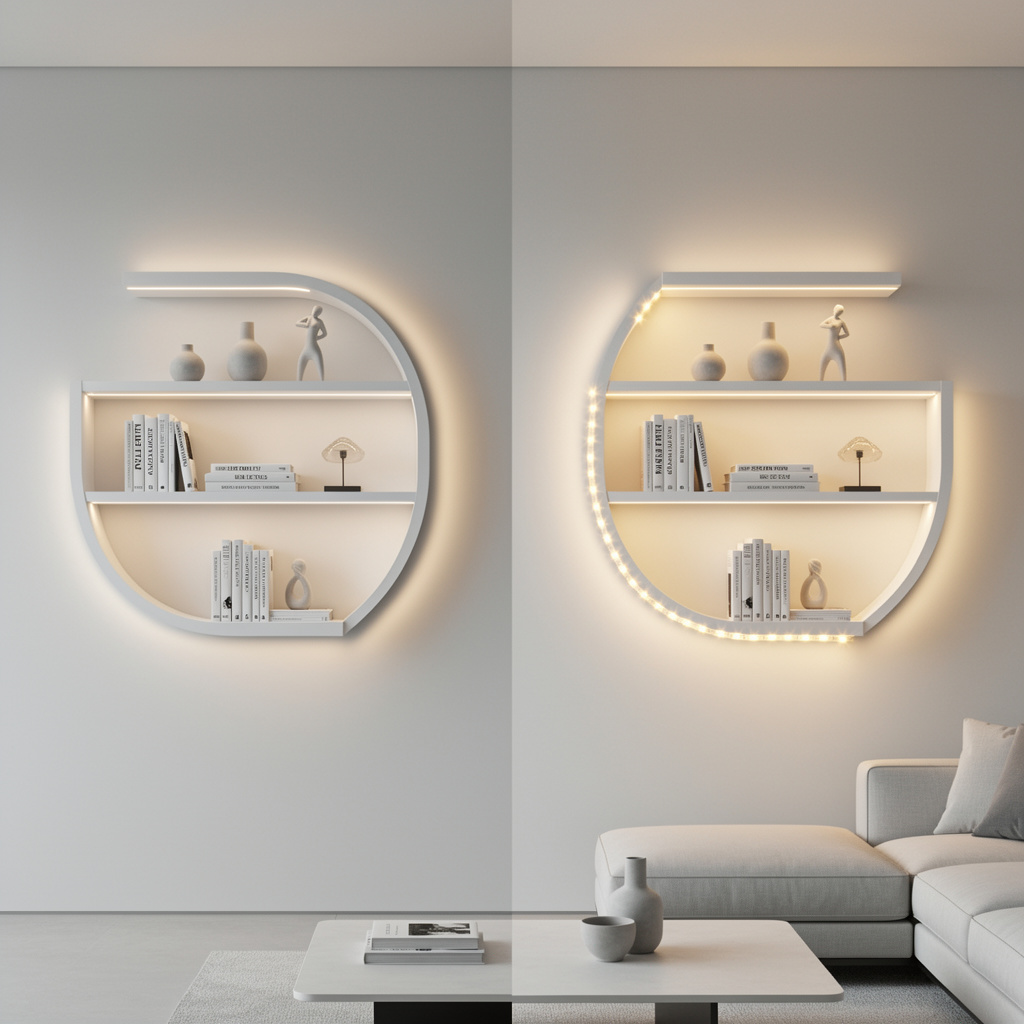
Some curved shelves ship with the LED already built into a hidden channel, diffusing the light evenly without you seeing the actual strip. Others are sold completely plain, and you add your own adhesive LED strip underneath after the fact.
Built in tends to look cleaner. The light source disappears into the design. But it costs more, and you’re kind of locked into whatever setup came with it. A DIY strip costs less and you can swap it out easily down the road, though you’ll need to be a little more careful hiding it evenly when you install it.
6. Plan Placement Around Sightlines, Not Just Empty Wall Space

It’s tempting to slap a curved LED shelf onto whatever blank wall you’ve got, but think about where you’ll actually see the glow first. A shelf across from your sofa or somewhere along a hallway you walk through every day gets a lot more use as ambient lighting than one tucked behind a door where nobody looks twice.
Mounting height matters too. Around or just above eye level lets the glow read clearly instead of getting lost or washed out by other lights in the room. Mount it too high and most of that light just falls onto the ceiling, which kind of defeats the point.
7. Style the Shelf With Objects That Play Well With Light
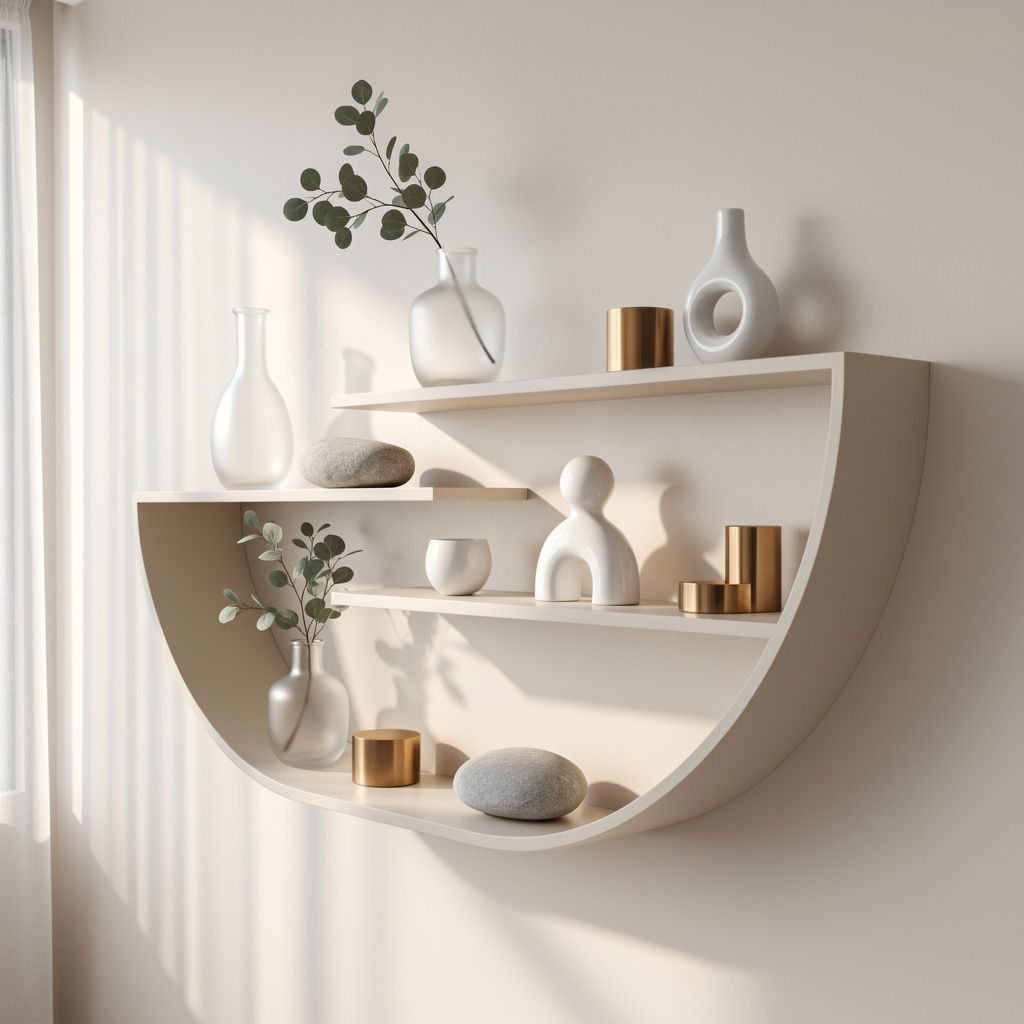
What you put on the shelf changes how the light actually reads in the room. A glass vase, something with a matte ceramic finish, a small trailing plant. These catch and diffuse light in a way that flat, solid objects just don’t.
And don’t crowd the shelf. The glow works best with some breathing room around each piece rather than a tight row of items shoulder to shoulder. Two to four objects, at different heights, is usually the sweet spot between styled and cluttered.
8. Consider Material and Finish for a Cohesive Modern Look

Curved shelves show up in molded wood veneer, solid oak, painted MDF, even metal or acrylic for a more minimal look. The material you pick actually changes how the LED light bounces around, not just how the shelf looks during the day.
A warm wood tone softens the glow a bit and works with a wide range of interior styles. Matte black or white gives you a cleaner, more minimal look where the light itself becomes the main event. Try to match the finish to whatever furniture or trim is already in the room, so the shelf feels like it belongs there instead of looking bolted on as an afterthought.
9. Think Through Installation and Wiring Before You Buy

Check for a nearby outlet before you buy anything. Not every wall has one conveniently placed where you actually want the shelf. Battery powered strips sidestep this problem entirely, but you’ll be recharging or swapping batteries every so often. Plug in versions need a cord, whether that’s visible or routed and hidden along the wall.
If you want a totally invisible, hardwired setup, that usually means calling an electrician to run wiring inside the wall, and that’s not realistic for every home, especially if you’re renting. For most people, a plug in strip with the cord tucked along the wall edge, maybe under a cord cover, is the more realistic route.
10. Use Curved Shelves to Solve a Real Layout Problem, Not Just for Looks
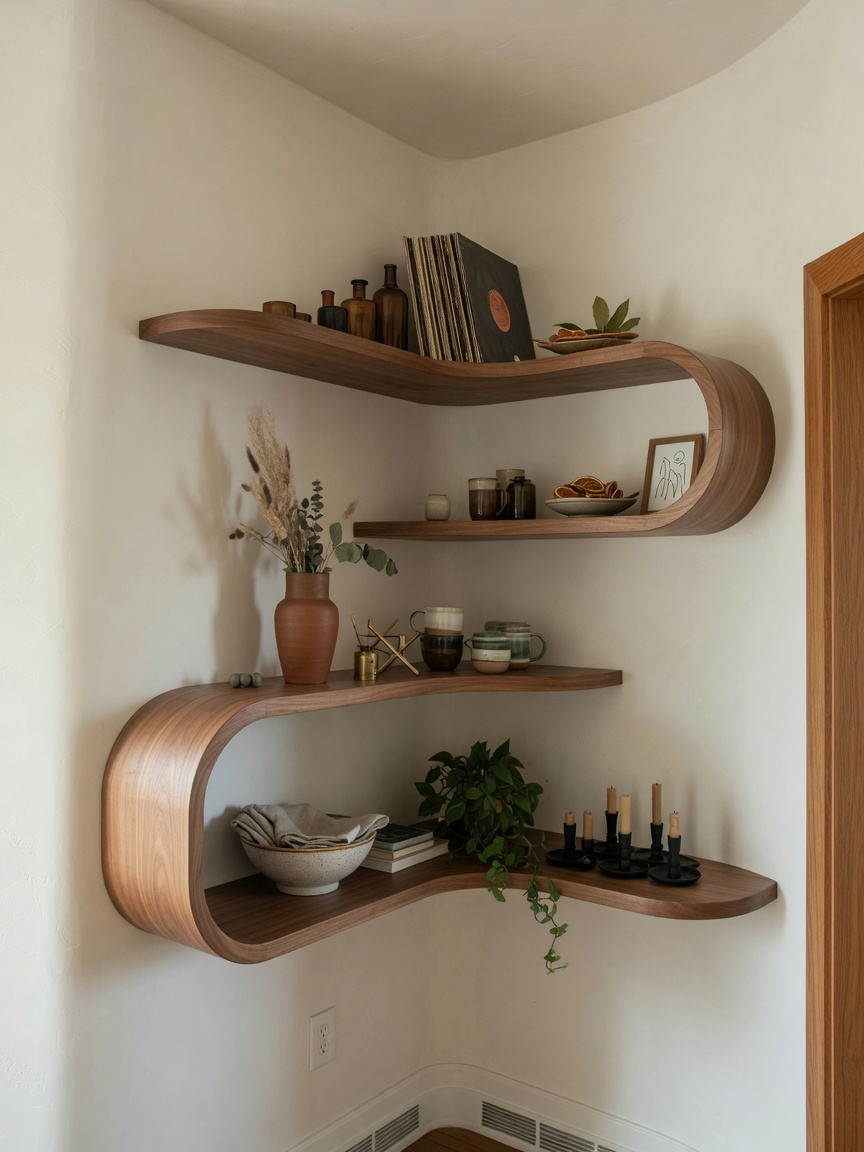
Curved shelves genuinely shine in awkward spots, a rounded alcove, next to a curved staircase, above a rounded piece of furniture, where a rectangular shelf would look forced no matter how you angle it. In those spots, the curve isn’t a style choice so much as the shape that actually fits.
Before buying one just because the look is trending, think about whether there’s a real gap it’s filling. Extra display space in an awkward corner. Ambient light in a room that doesn’t have much of it. A shelf that solves an actual problem tends to feel a lot more intentional once it’s up on the wall.
Mistakes to Avoid
- Choosing a curve depth too shallow for the items you actually want to display
- Picking a cool white LED strip instead of warm white for an ambient feel
- Mounting the shelf somewhere it’s rarely seen, wasting the ambient lighting effect
- Overcrowding the shelf with too many objects, blocking the light’s glow
- Ignoring outlet access and ending up with a visible, awkward cord
- Buying a curved shelf purely for trend value without a real spot for it
Frequently Asked Questions
Do curved LED shelves need to be hardwired? Not usually. Most run on a low voltage strip powered by a plug in transformer or a rechargeable battery, so hardwiring isn’t necessary for most setups. It’s possible to hardwire for a fully hidden look, but that typically means bringing in an electrician.
How much weight can a curved wall shelf hold? It depends on the material and the mounting hardware, but a lot of curved shelves are built for lighter decorative use, often somewhere in the 5 to 15 pound range, not heavy books or big objects. Always check the specific product’s weight rating before loading it up.
What color LED works best for ambient shelf lighting? Warm white, around 2700K to 3000K, is generally the move if you want that cozy feel, since it mimics traditional incandescent light instead of the cooler tone of a daylight bulb. Some strips give you adjustable temperature if you want more flexibility.
Can I add LED lighting to a shelf I already own? Yes. Adhesive LED strips can go on most existing shelves as long as there’s a hidden edge or underside to mount them along. It’s usually cheaper than buying a shelf with LED already built in, though the light might not diffuse quite as evenly.
Are curved shelves harder to install than straight ones? Not really. Most use the same wall anchors or bracket systems as a straight shelf. The main thing to plan for is finding studs in the right spot for the curved shape, which can take a bit more thought than a straight shelf would.
Conclusion
Modern curved wall shelves with ambient LED work because they’re doing two jobs at once, giving you display space and softening the room with both shape and light. Pick a curve size that actually fits your wall and what you’re planning to put on it, go warm with the LED for a genuinely cozy glow, and mount it somewhere you’ll actually see that light doing its thing. Get those three right, and the shelf stops being just another place to put stuff and becomes an actual feature in the room.