10 Modern Warm Japandi Living Room Ideas | Minimalist Home Inspiration
You like the look of a minimalist living room, but every version you’ve tried ends up feeling a little bare and unfinished rather than calm. That’s a common problem with minimalism done without enough warmth. Japandi style, a blend of Japanese minimalism and Scandinavian coziness, solves that by pairing simple, clean lines with natural texture and warm materials. These modern warm Japandi living room ideas cover color, material, and layout choices that keep a room feeling calm without feeling empty. It’s a style built on restraint, but not on austerity.
1. Understand the Core Idea Behind Japandi Style
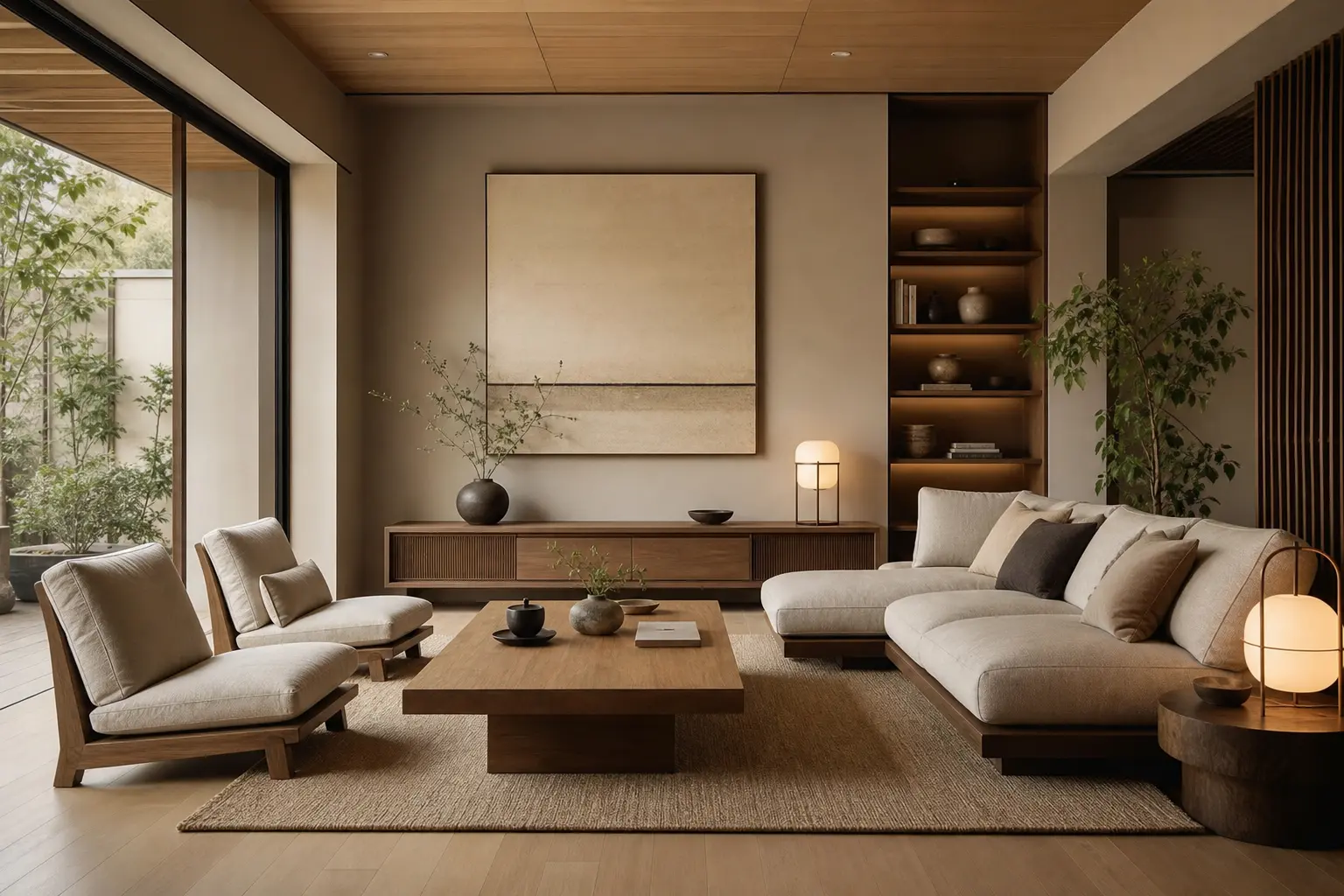
Japanese design tends to favor clean lines, natural materials, and a sense of quiet simplicity. Scandinavian design shares that appreciation for simplicity, but leans further into coziness, texture, and warmth. Japandi style sits at the intersection of the two, keeping the restraint of Japanese minimalism while adding the warmth that keeps a Scandinavian room from ever feeling cold. Understanding this balance helps explain why a Japandi room can look sparse at first glance but still feel genuinely inviting.
2. Start With a Muted, Earthy Color Palette
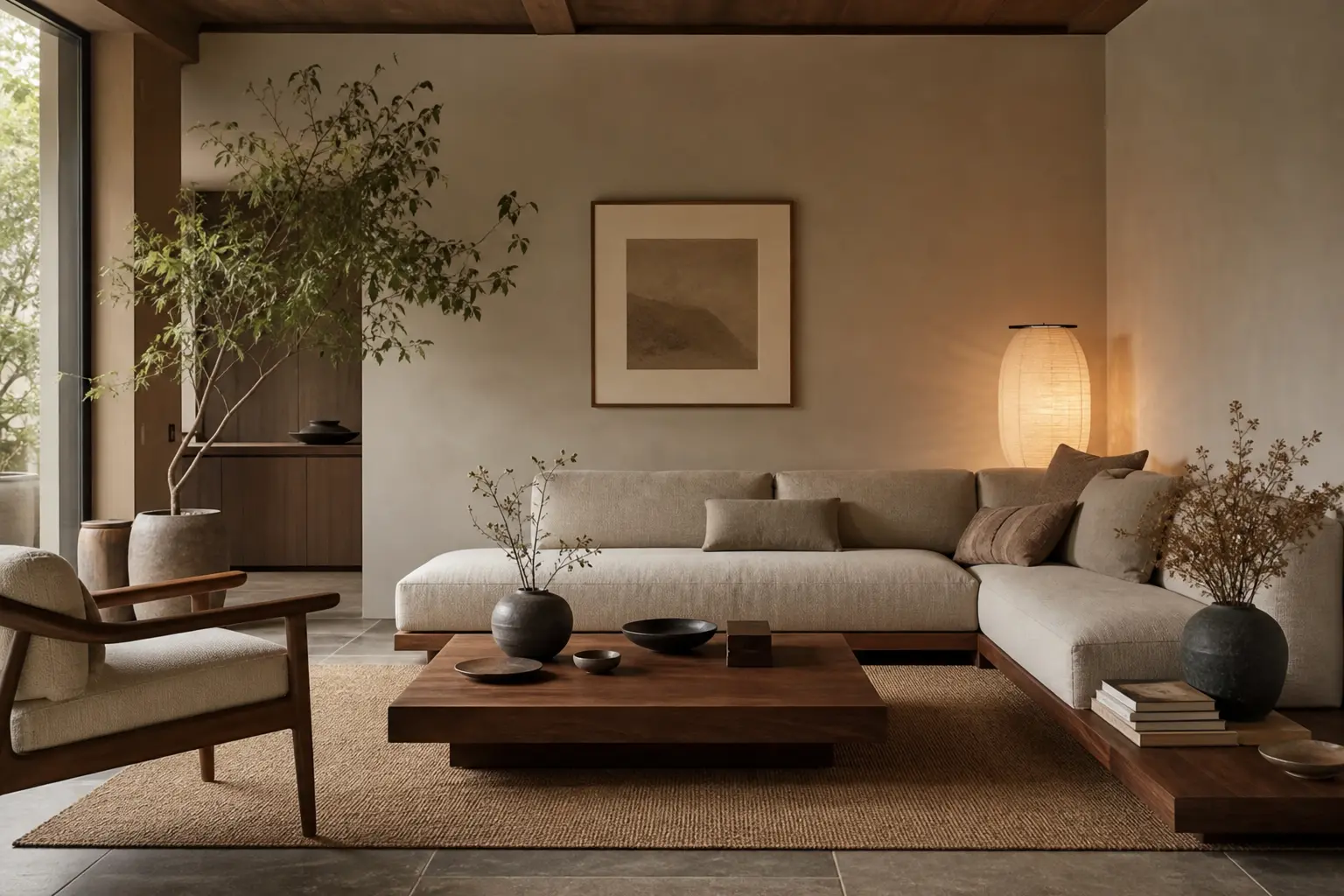
Japandi color palettes lean toward warm neutrals, like soft beige, warm gray, and muted terracotta, rather than stark white or bold, saturated color. These tones read as calm without feeling flat, and they provide a quiet backdrop for the natural materials that define the style. A single deeper accent, like a muted olive or a soft charcoal, can be layered in through one piece of furniture or a set of textiles.
3. Choose Furniture With Simple, Low Profile Lines
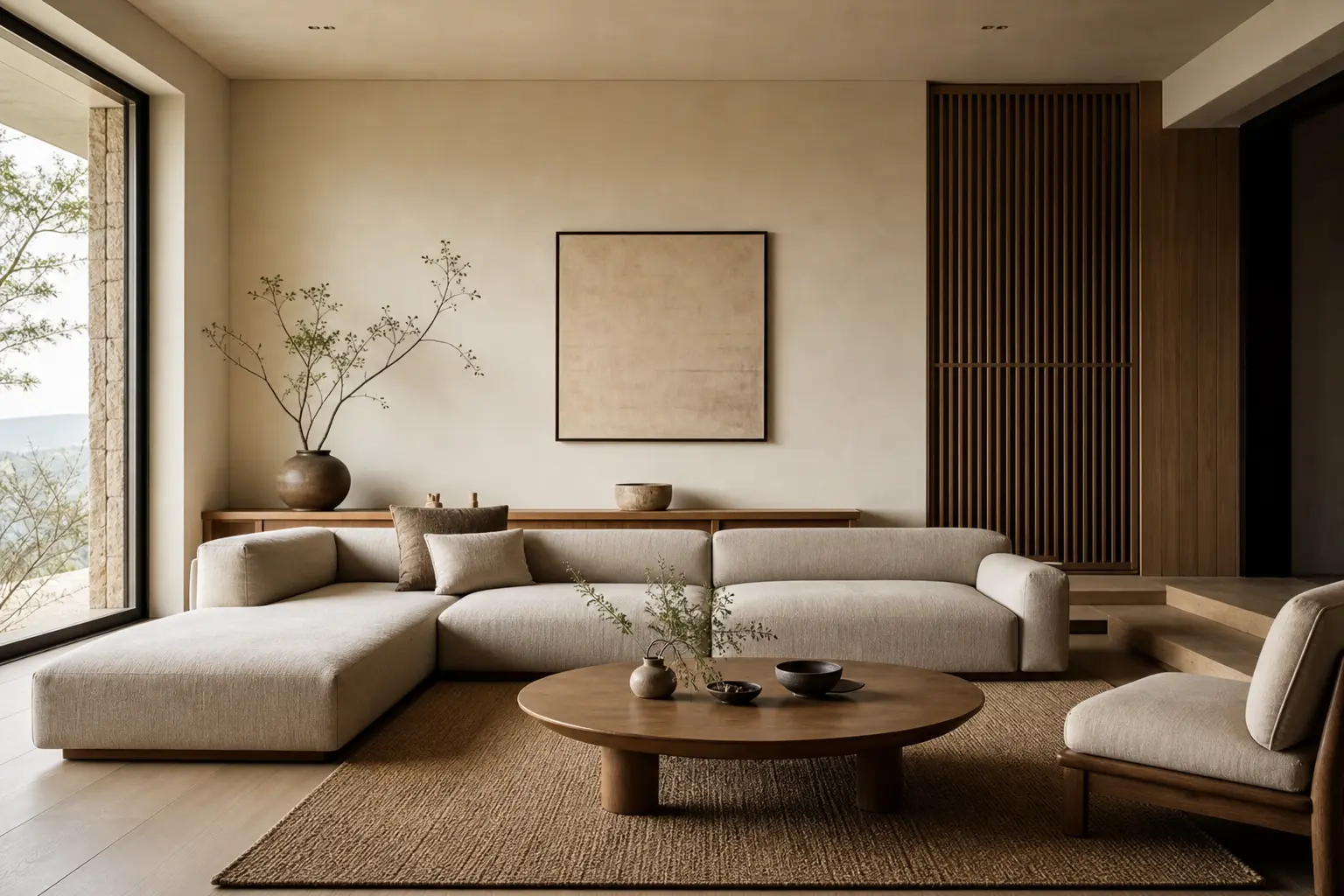
Furniture with ornate detailing or heavy carved elements works against the Japandi aesthetic, which favors clean, low profile silhouettes. A low sofa with simple, straight lines, or a coffee table with slim, tapered legs, fits the style far better than anything heavily upholstered or elaborately shaped. The goal is furniture that feels intentional and quiet rather than decorative for its own sake.
4. Use Natural Materials Instead of High Gloss Finishes
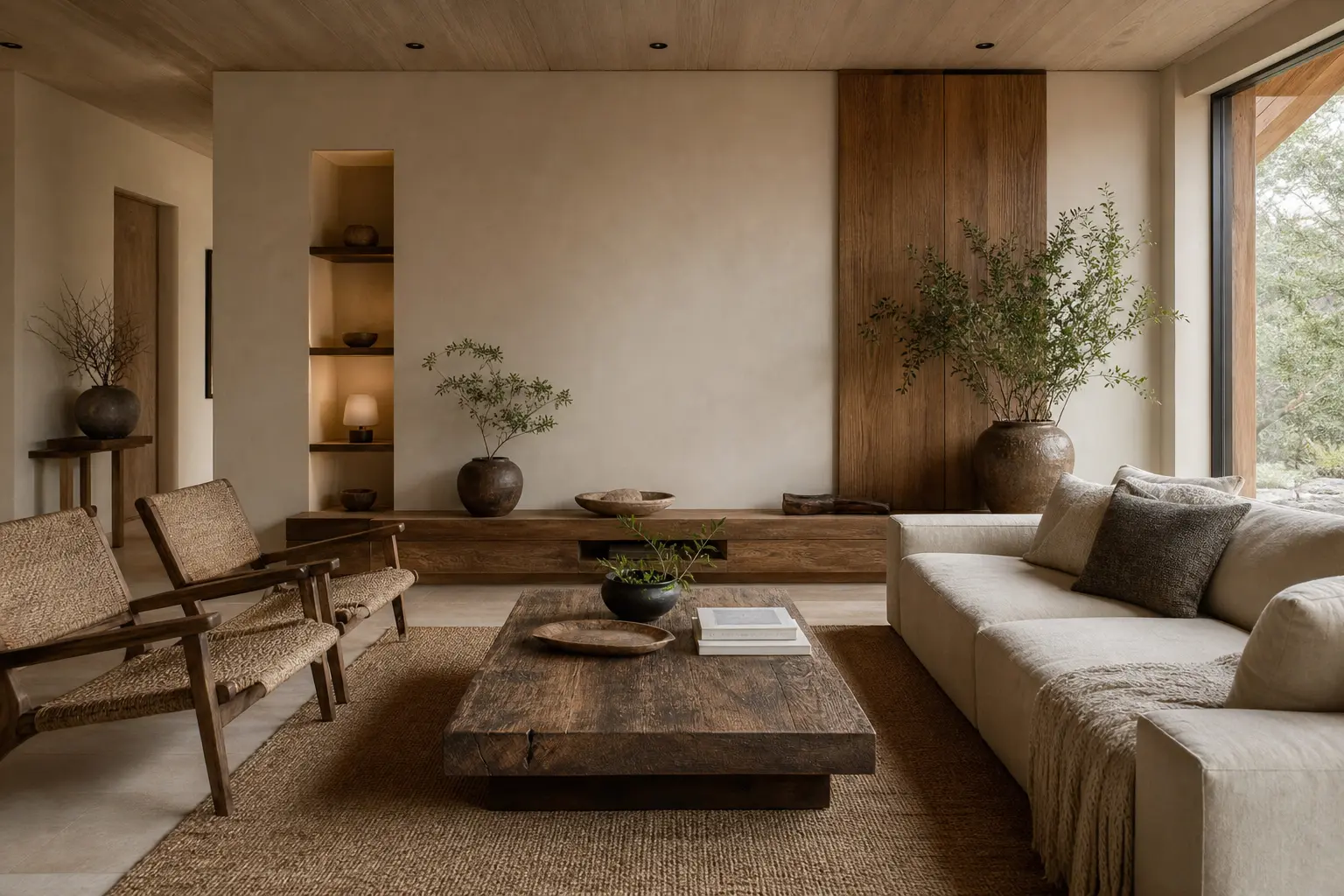
Japandi style leans heavily on materials like unfinished or lightly finished wood, linen, wool, rattan, and stone. High gloss lacquer, polished chrome, and heavily patterned fabric tend to clash with the understated, natural feel the style is built around. Choosing matte or raw finishes over glossy ones keeps the room feeling grounded and calm rather than showroom polished.
5. Keep Decorative Objects to a Meaningful Few
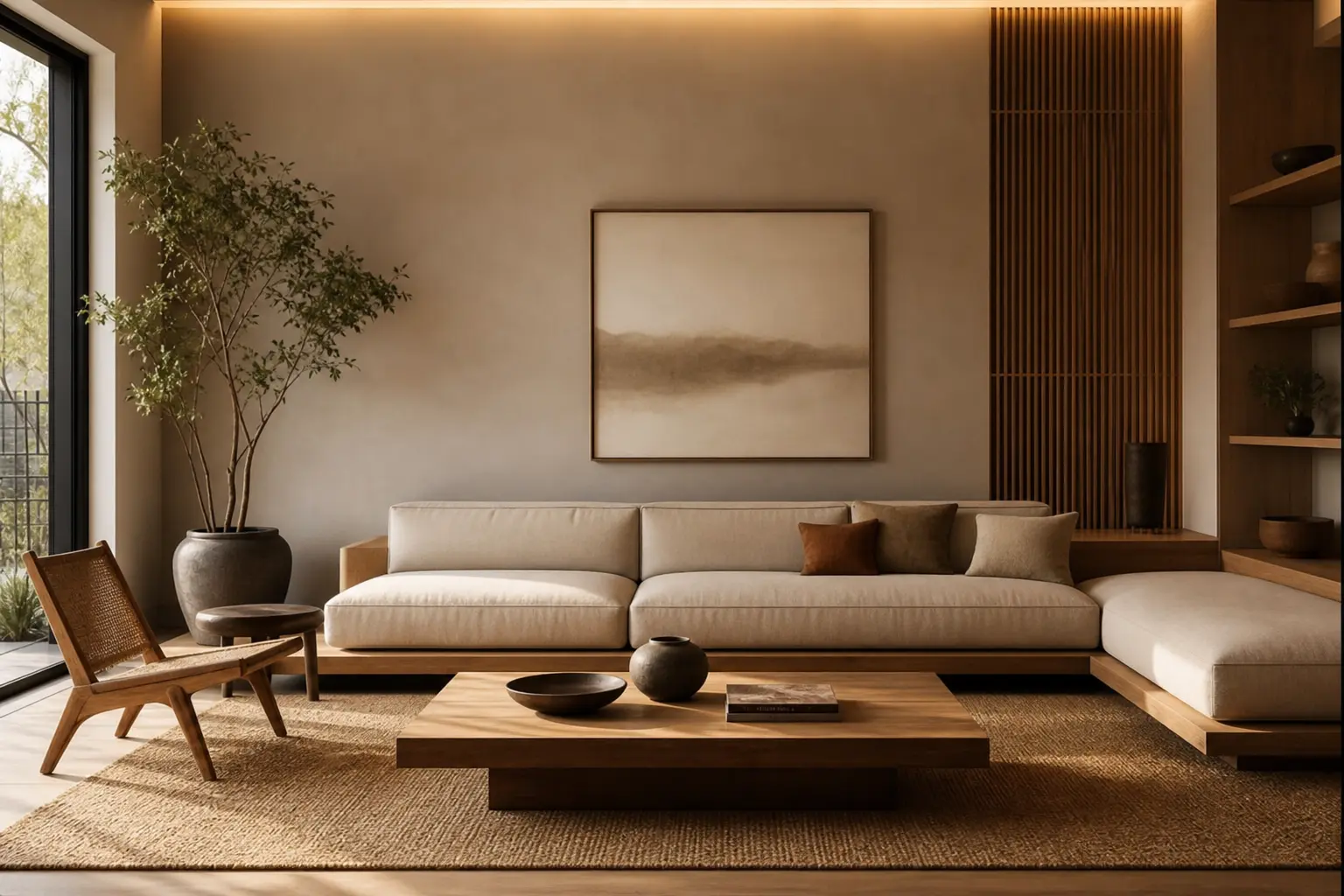
A cluttered shelf undermines the calm that Japandi style is built around, even if every individual object is beautiful. Choose a handful of pieces that genuinely matter to you, whether that’s a specific ceramic vase or a piece of handmade pottery, rather than filling every surface. Fewer, more considered objects read as more intentional than a shelf packed with smaller trinkets.
6. Layer in Linen and Wool Textiles for Warmth
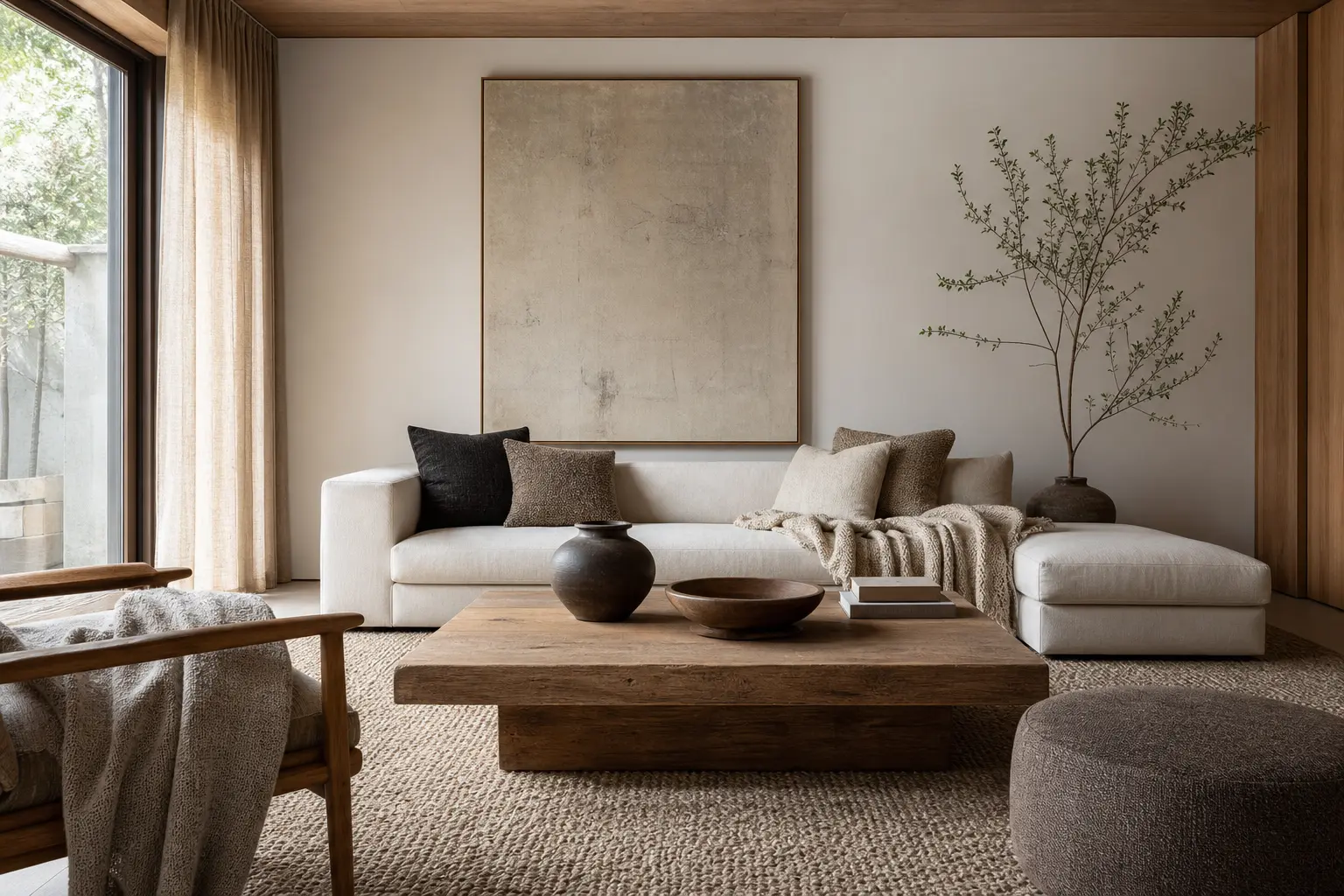
Textiles are where a lot of the warmth in Japandi style actually comes from. A linen sofa cover, a wool throw, or a woven cotton rug all add softness and texture without introducing pattern or bold color. Layering two or three of these natural textiles together is often what separates a genuinely cozy Japandi room from one that just looks empty.
7. Add One Statement Ceramic or Handmade Piece
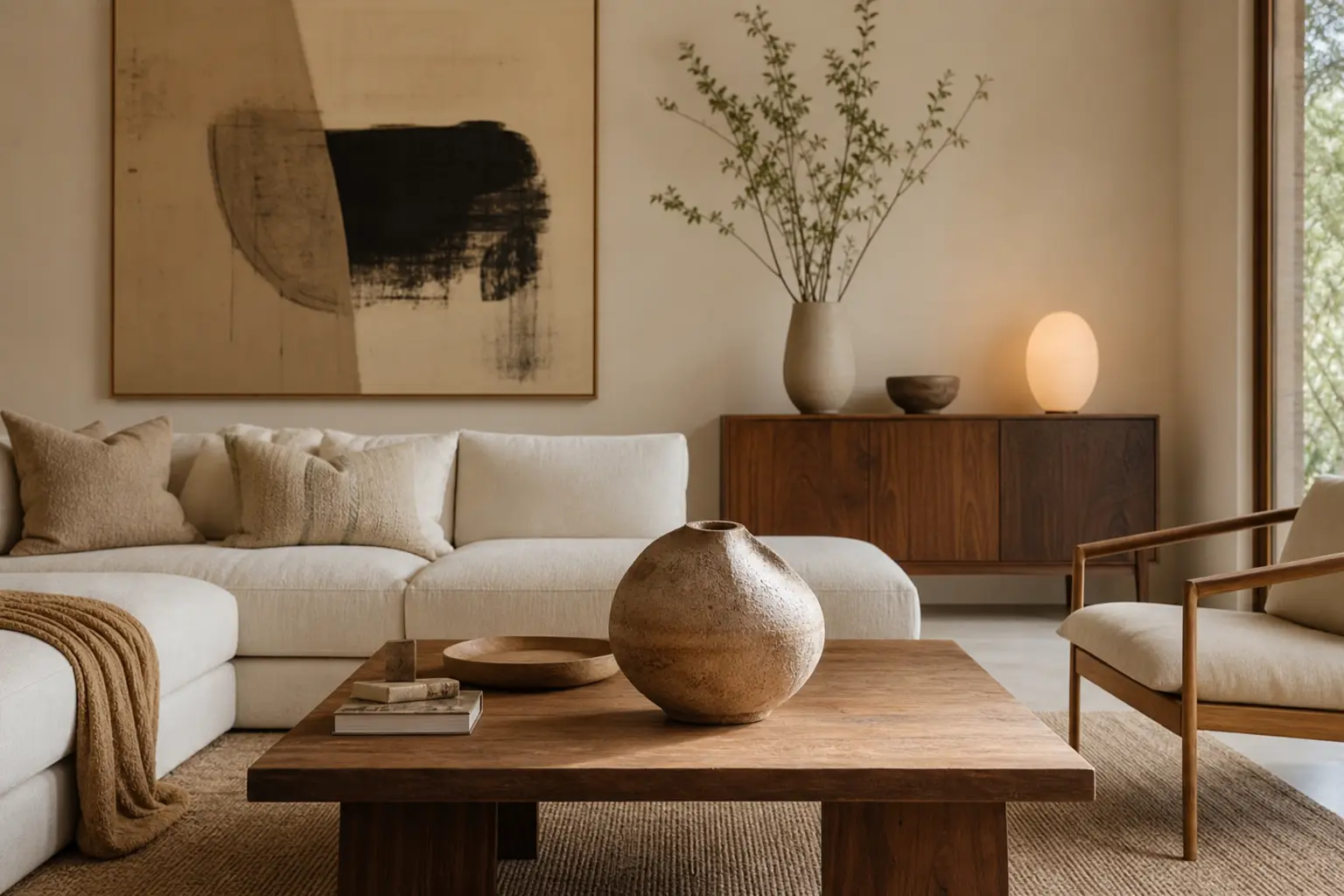
A single handmade ceramic vase, bowl, or vessel, ideally with a slightly imperfect, organic shape, adds character in a way that mass produced decor usually can’t. This kind of piece works particularly well as the one true decorative statement in an otherwise restrained room. Look for pieces with visible texture or an irregular glaze, since that imperfection is part of what makes them feel authentic rather than staged.
8. Use Warm Wood Tones to Avoid a Cold, Empty Feel

Very light, blonde wood tones can occasionally read as sparse or cold in a minimalist room, especially without much else to balance them. Slightly warmer wood tones, like light oak with a warm undertone or walnut used sparingly, help keep the room feeling grounded. This is one of the small material choices that makes the difference between a Japandi room that feels warm and one that feels bare.
9. Keep Storage Hidden to Maintain Visual Calm
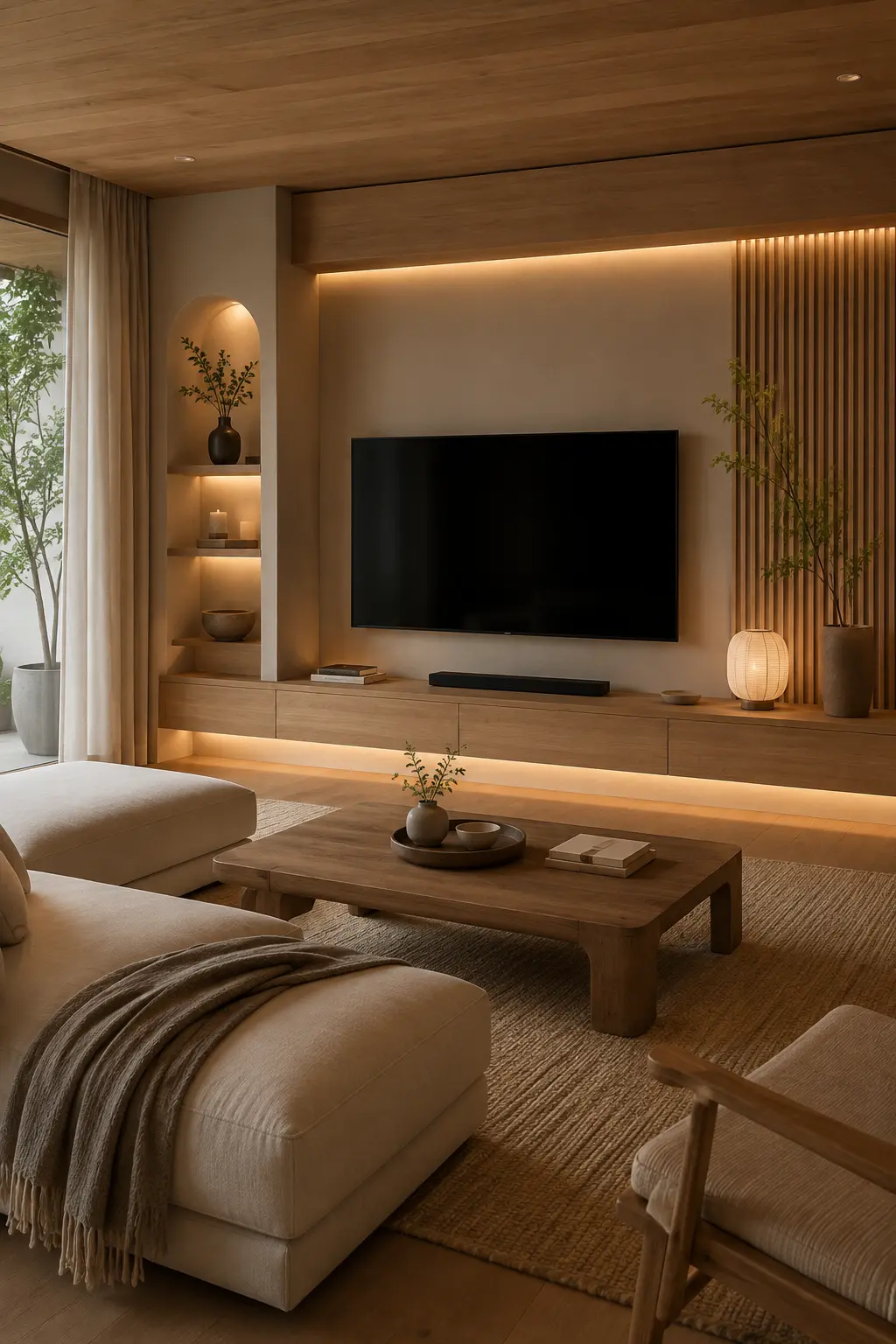
Visible clutter is one of the fastest ways to undo a Japandi room’s calm feeling. Closed cabinetry, woven storage baskets, and furniture with built in storage keep daily items out of sight without adding visual noise. This matters more in Japandi style than in many other design approaches, since the whole aesthetic depends on a clean, uncluttered visual field.
10. Bring in Natural Light and Simple Window Treatments
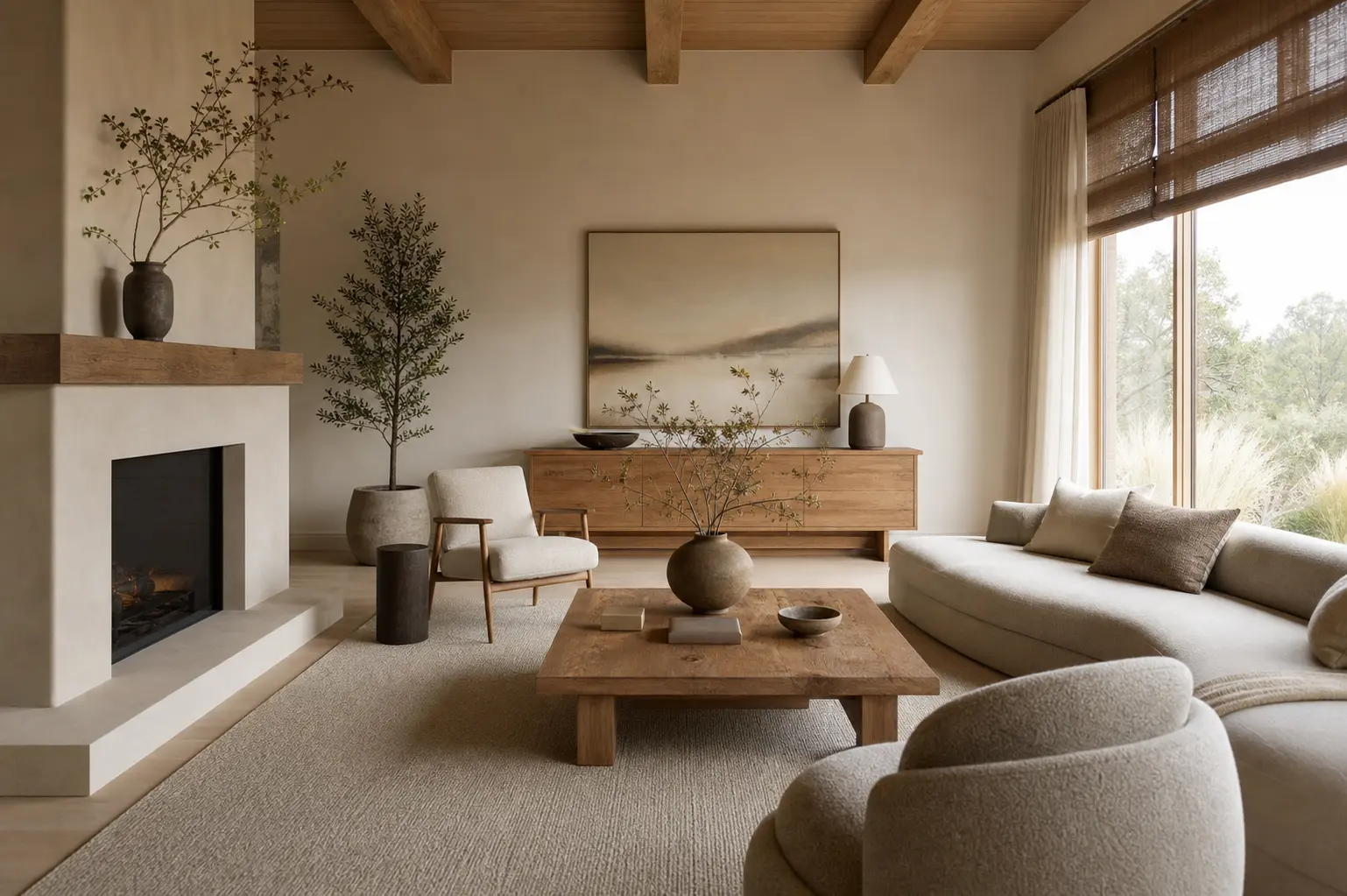
Japandi rooms tend to favor natural light and simple, unobtrusive window treatments over heavy drapery. A light linen curtain, or in some cases no curtain at all if privacy allows, keeps the focus on natural light moving through the space. If privacy is a concern, a simple woven shade or a light, sheer linen panel maintains the style’s clean lines while still providing coverage.
Mistakes to Avoid
- Using stark white or cool gray instead of the warmer, earthier tones Japandi style favors
- Choosing furniture with heavy ornamentation or carved detailing
- Filling shelves with too many small decorative objects
- Skipping textiles entirely, leaving the room feeling bare rather than calm
- Choosing very light, cold toned wood without any warmer material to balance it
- Leaving storage and daily items visible instead of keeping them tucked away
Frequently Asked Questions
What’s the main difference between Japandi and standard minimalism? Standard minimalism can sometimes prioritize simplicity over warmth, leaving a room feeling a little bare. Japandi style blends that same restraint with natural texture and warm materials, so the room stays calm without feeling cold or empty.
What colors work best in a Japandi living room? Warm neutrals like soft beige, warm gray, and muted terracotta form the base, often with one deeper accent color, like muted olive or charcoal, layered in through a single piece or textile.
Can I use Japandi style in a small living room? Yes. The style’s emphasis on simple furniture and limited decorative objects tends to work especially well in smaller spaces, since it avoids the visual clutter that can make a small room feel cramped.
What materials are essential to a Japandi look? Natural wood, linen, wool, and stone are common materials in Japandi style. High gloss finishes and heavily patterned fabric tend to work against the aesthetic.
Is Japandi style expensive to achieve? Not necessarily. Many of the style’s key elements, like a muted color palette and simple furniture silhouettes, can be achieved without an expensive full furniture overhaul, especially if you start with color and textiles before replacing bigger pieces.
Conclusion
A modern, warm Japandi living room comes down to balancing restraint with texture rather than choosing one over the other. Start with a muted, earthy color palette and simple furniture lines, then layer in natural textiles and one meaningful handmade piece. Keep storage hidden and decorative objects limited, and the room will read as calm and intentional rather than bare or unfinished.