10 Modern Entryway Foyer Ideas With LED Lighting and Console Styling That Work
The entryway is the first thing anyone sees walking into your home, and it’s also the space most people neglect the longest, mail piling on a random surface, shoes in a heap, a single dim overhead bulb doing all the work. A modern entryway foyer doesn’t need a big budget or a lot of square footage to fix this. It needs a properly sized console, layered LED lighting, and a bit of intentional styling that turns a pass through space into a real first impression.
Most of what makes an entryway feel unfinished has nothing to do with the size of the room. A tiny apartment foyer can feel more welcoming than a large one, simply because the lighting is warm and the surface isn’t buried under mail and shoes.
1. Why the Entryway Sets the Tone for the Whole House
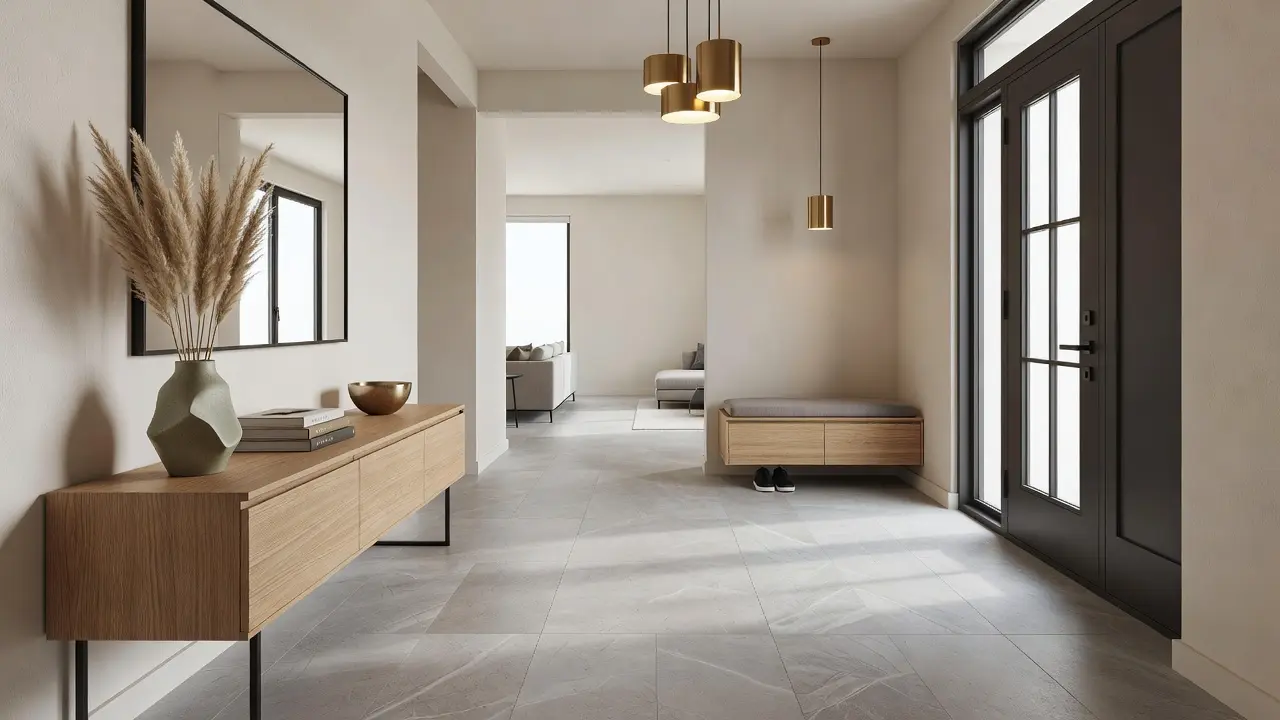
Guests form an impression of a home within seconds of walking in, and the entryway is what they see before anything else. A cluttered, poorly lit foyer signals disorganization even if the rest of the house is perfectly put together.
This isn’t about impressing visitors for its own sake. A well organized, well lit entryway also makes daily life easier, finding your keys, dropping mail somewhere sensible, seeing clearly enough to check your reflection before heading out the door.
Think about how many times a day you actually pass through this space, more than almost any other room in the house. Fixing it pays off constantly, not just on the rare occasion someone visits.
2. Choose a Console Table Sized for Real Traffic Flow

A console table that’s too deep for the space forces people to squeeze past it every time they enter or exit, which defeats the purpose of having one at all. Measure the actual walkway width first, and leave at least 30 to 36 inches of clear passage even with the console in place.
Slim Profile Options for Narrow Entryways
A console between 10 and 14 inches deep fits most narrow foyers without blocking traffic, and plenty of well designed options exist in this range for $80 to $250 depending on material and finish.
3. Add LED Strip Lighting Under or Behind the Console
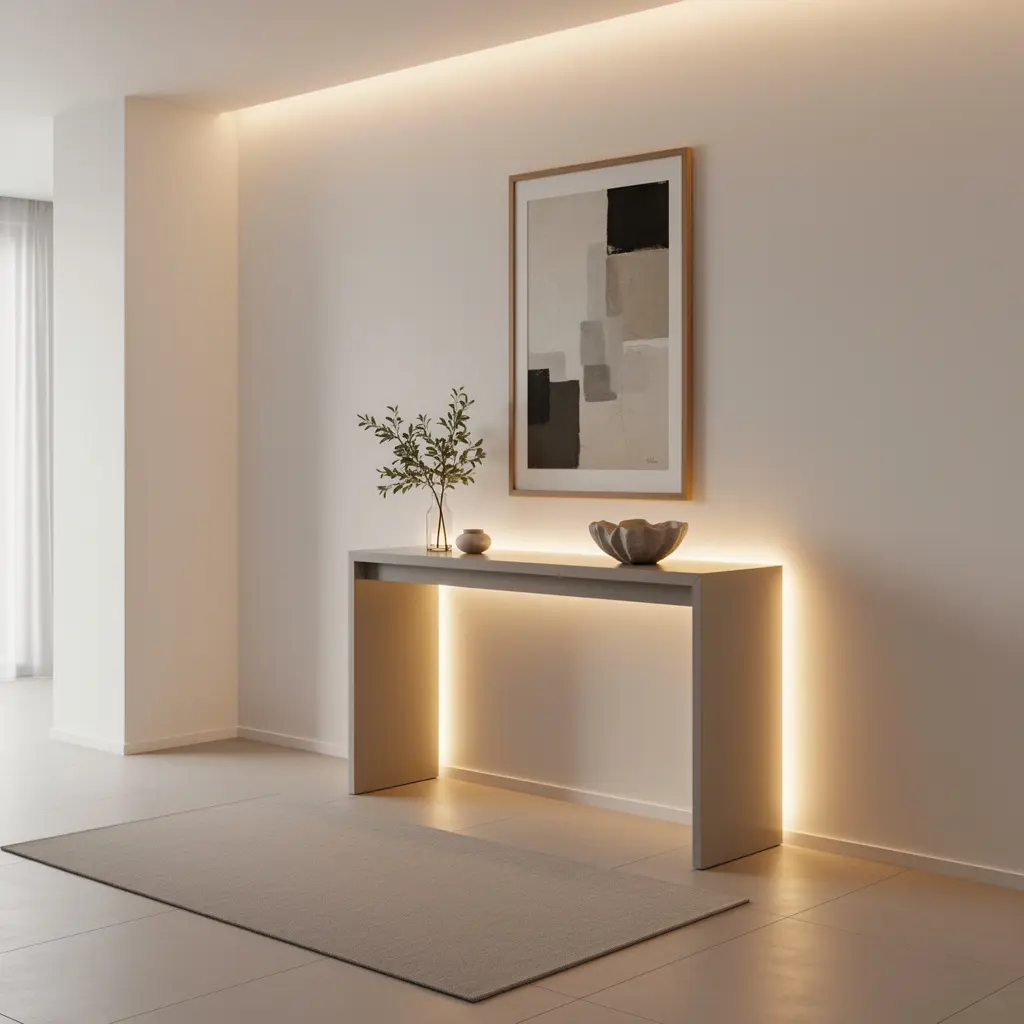
A warm white LED strip mounted along the underside or behind edge of a console table casts a soft glow across the floor and wall, adding a layer of light that a single overhead fixture can’t provide on its own. This is one of the easiest upgrades to add to an existing console without any major installation.
Battery powered or plug in LED strips in this application typically cost $15 to $30, and many models include a small remote or app control for adjusting brightness and turning them on automatically at dusk. A motion sensor version is worth considering too, since it means the light comes on the moment you walk in without needing to find a switch.
4. Layer in a Statement Overhead or Wall Fixture
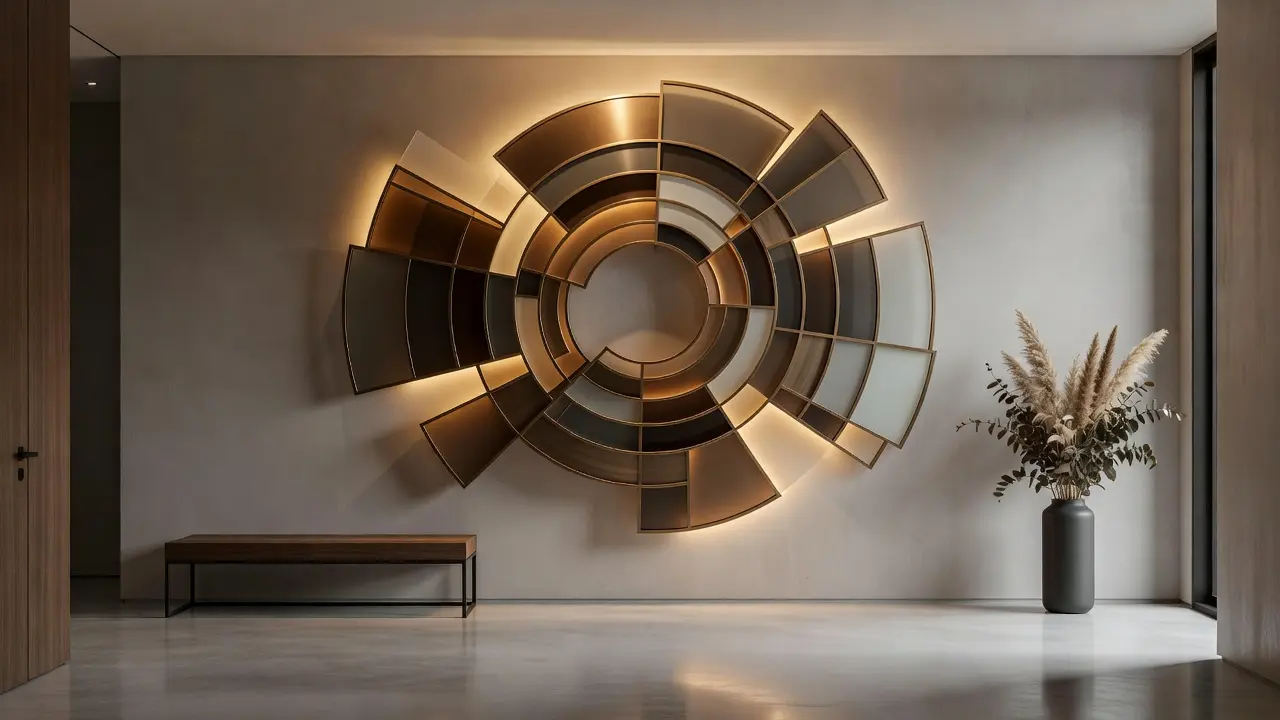
A pendant light, a flush mount fixture with real presence, or a pair of wall sconces flanking a mirror all add both function and personality to a foyer that otherwise tends to get whatever leftover fixture came with the house. This is a smaller space than most rooms, which means even a modest budget can afford a genuinely nice fixture here.
Choosing Scale for a Foyer Fixture
A foyer with a taller ceiling can handle a slightly larger or more dramatic pendant than a standard eight foot ceiling room would, so measure ceiling height before choosing a fixture size to avoid something too small to register or too large for the space.
5. Use Warm Bulbs to Avoid a Cold First Impression
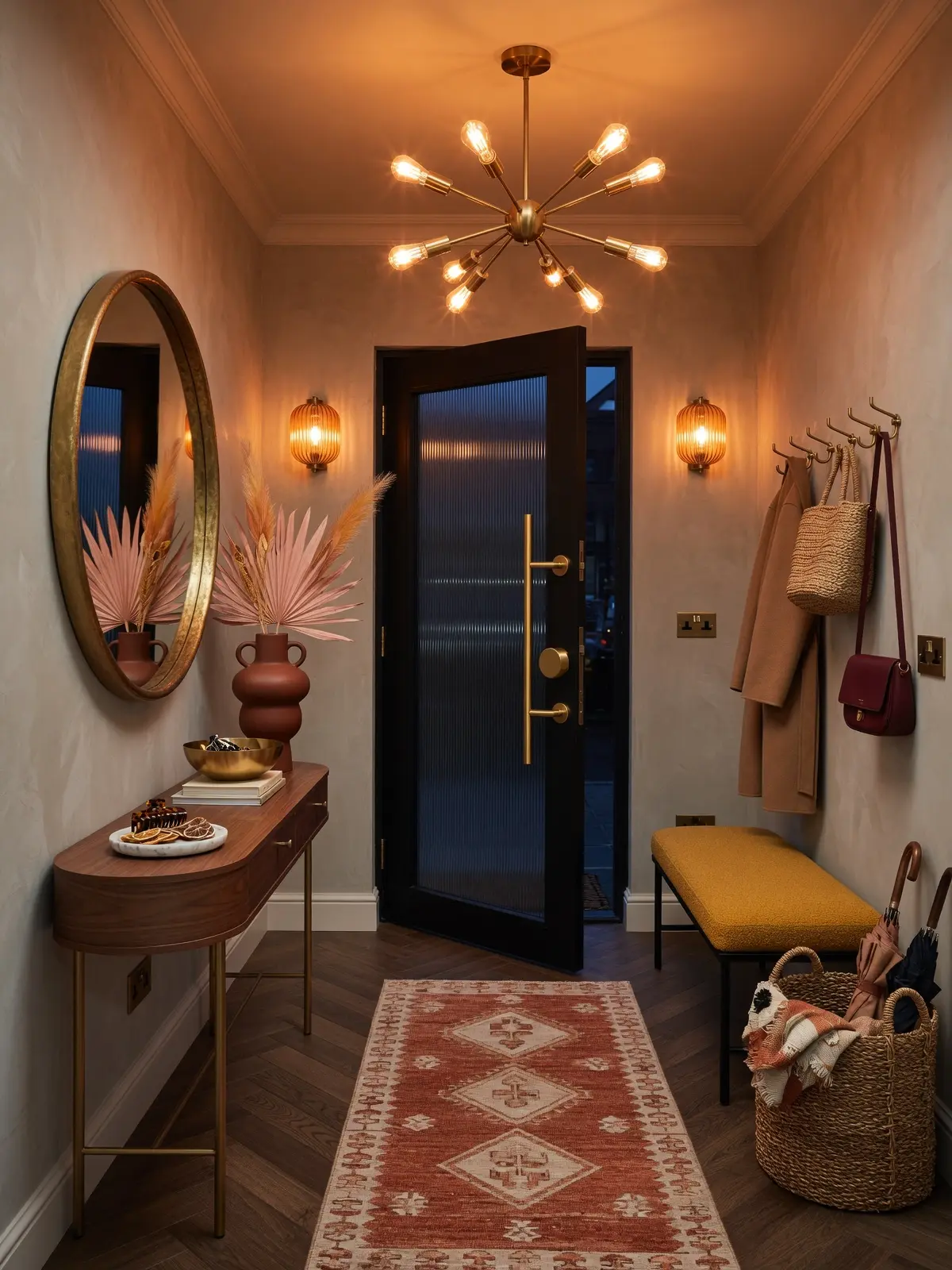
Cool white or bright daylight bulbs in an entryway can feel more like a hospital hallway than a welcoming entry point into a home. Warm white bulbs in the 2700K to 3000K range, used consistently across the overhead fixture and any LED strip lighting, keep the space feeling inviting rather than clinical.
Matching bulb temperature across every light source in the foyer matters here just as much as it does in any other room, since a mismatch is often more noticeable in a small, frequently passed through space than in a larger room.
6. Style the Console With Height Variation, Not a Flat Row
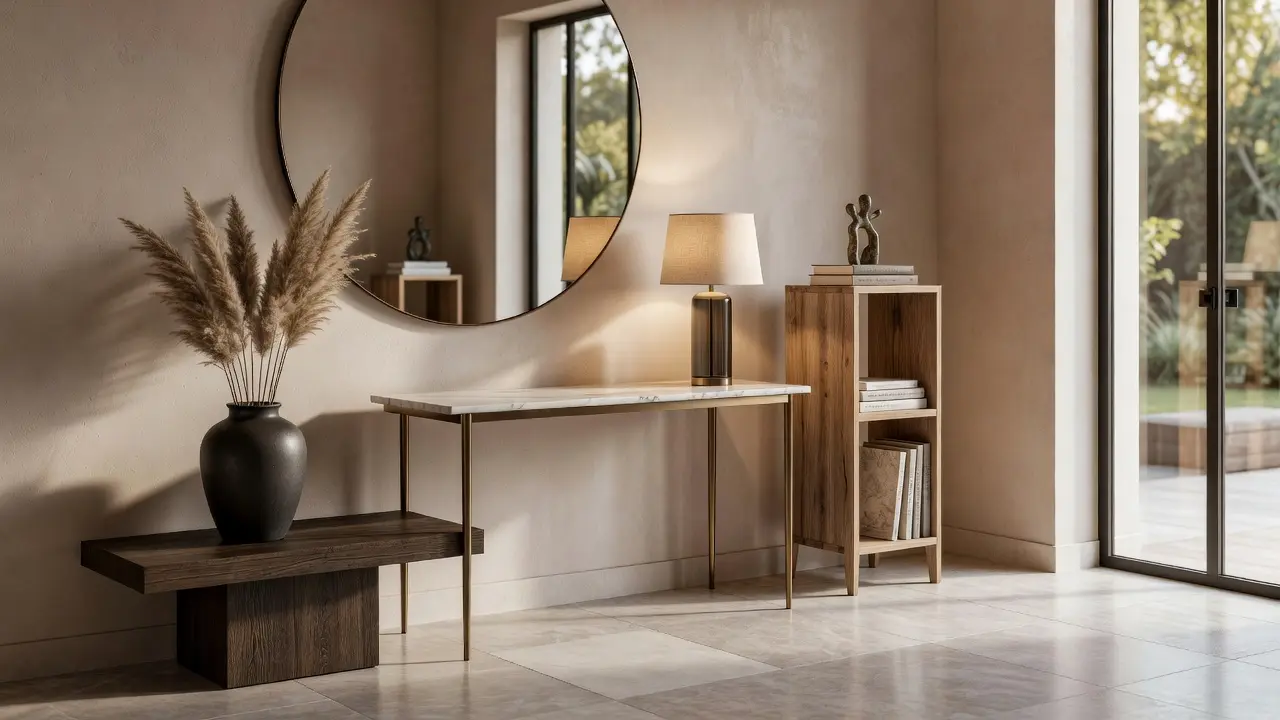
A console styled with everything at the same height, a row of identical picture frames, for example, tends to look flat and uninteresting. Varying heights, a taller vase or lamp on one side, a shorter stack of books or a small dish on the other, creates visual interest that a flat arrangement can’t achieve.
Grouping items in odd numbers, three or five pieces rather than two or four, also tends to read as more intentional and less like a random collection of leftover decor.
7. Add a Mirror to Bounce Light and Add Depth

A mirror positioned above the console reflects both natural and artificial light back into the space, which makes even a small, dim entryway feel noticeably brighter. It also serves the practical purpose of letting people check their appearance before leaving the house.
A round or arched mirror softens the straight lines of a typical console and rectangular entryway, while a mirror with a metal or wood frame in the room’s existing finish keeps the whole space feeling cohesive rather than assembled from mismatched pieces.
8. Include Functional Storage Without Looking Cluttered
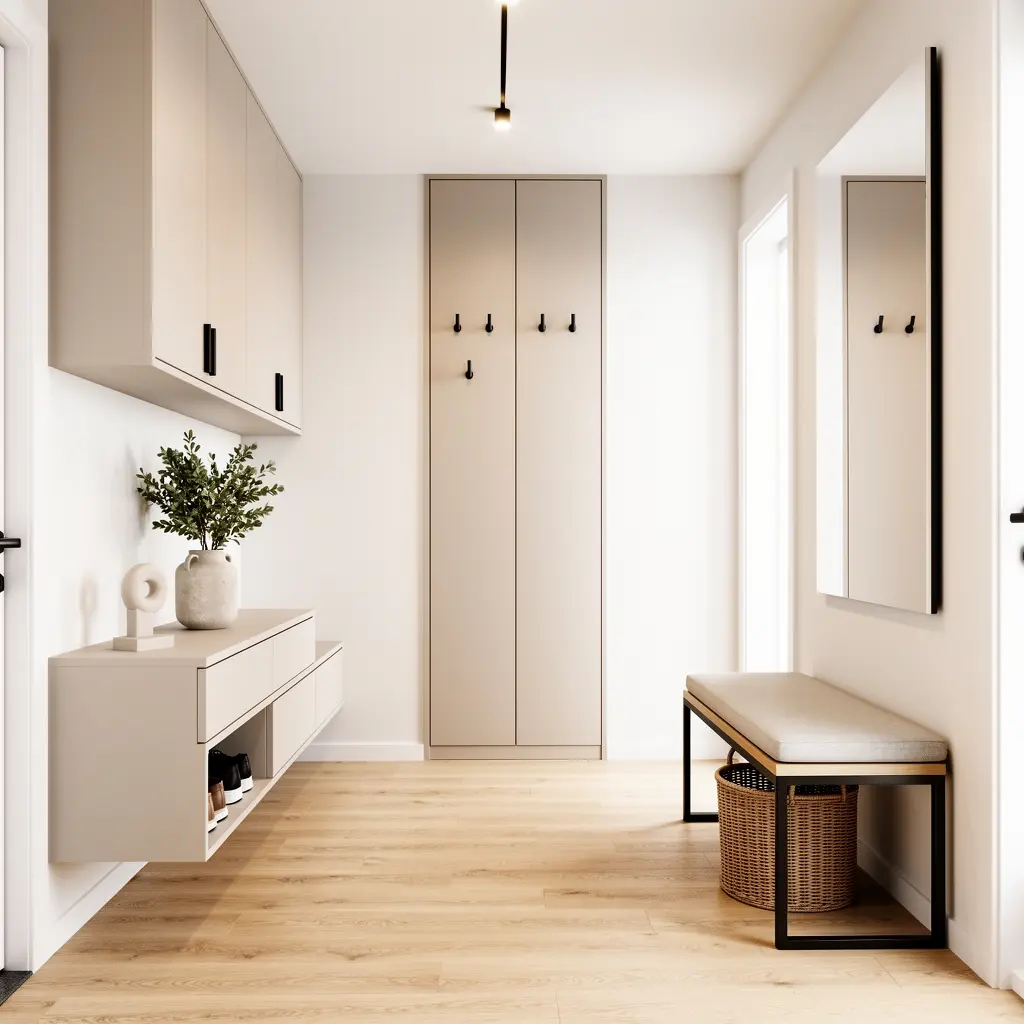
A small tray for keys, a shallow dish for loose change, or a drawer in the console itself gives daily items a designated spot instead of letting them accumulate loosely across the surface. This single habit does more to keep an entryway looking put together than almost any decor purchase.
A console with at least one drawer or a shelf underneath for baskets tends to handle real daily use better than a purely decorative surface with nowhere to actually put things away. Even a single woven basket tucked on a lower shelf can absorb the daily clutter that would otherwise pile up on top.
9. Add a Rug to Anchor the Space and Handle Wear

A durable, low pile rug in the entryway protects flooring from dirt and moisture while visually defining the space as its own distinct area rather than just a stretch of hallway. Flat weave or indoor outdoor rated rugs handle this high traffic spot better than a plush pile rug would.
Rugs sized for this purpose, generally 2 by 3 feet up to 3 by 5 feet for a standard entryway, typically run $30 to $100 depending on material and pattern.
10. Small Foyers Need Fewer, Not Smaller, Pieces
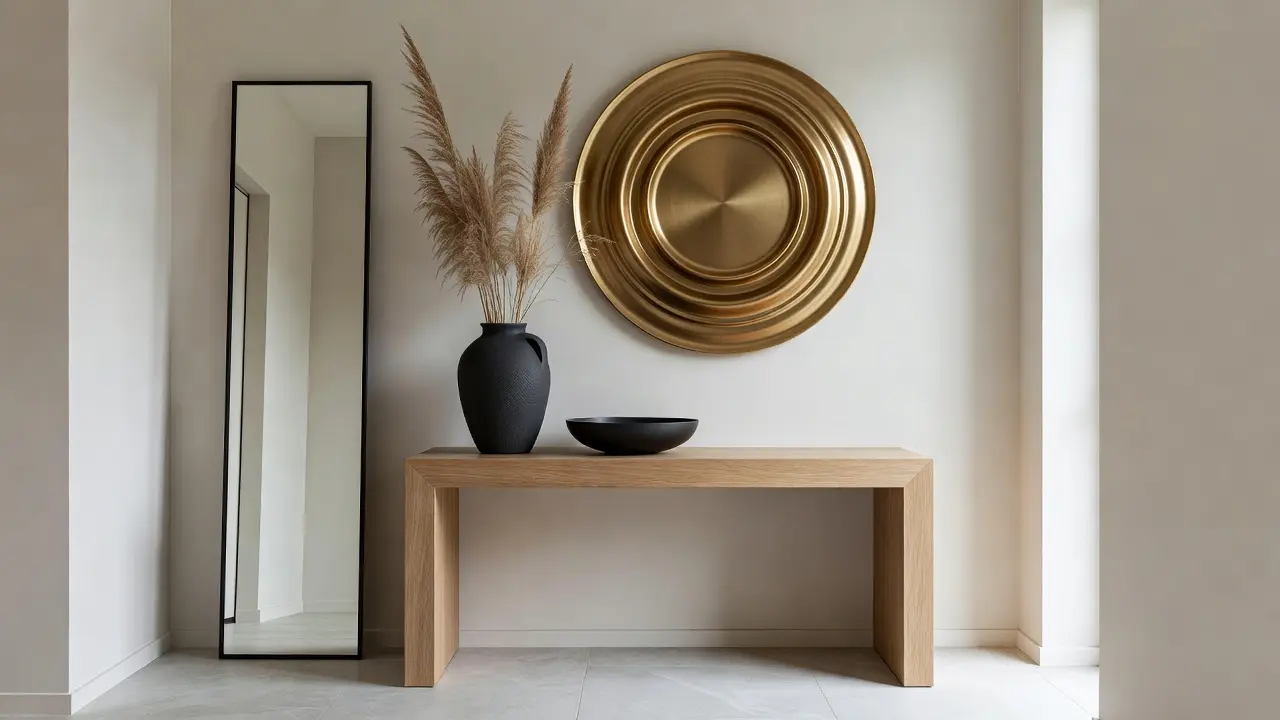
A common mistake in a tight entryway is buying miniature versions of everything, a tiny console, a tiny mirror, a tiny lamp, trying to scale the whole room down proportionally. This often backfires, making the space feel more cramped rather than efficiently used.
Instead, choose fewer pieces at a more normal scale. One properly sized console and mirror, styled simply, reads as more intentional than five undersized items crowded into the same footprint.
Mistakes to Avoid
- Choosing a console too deep for the actual walkway width
- Relying on a single dim overhead bulb as the only light source
- Mixing cool and warm bulb temperatures across fixtures in the same space
- Styling the console with everything at the exact same height
- Skipping functional storage like a tray or drawer for daily items
- Scaling down every piece of furniture instead of choosing fewer, normal sized ones
Frequently Asked Questions
How deep should a console table be for a narrow entryway? Consoles between 10 and 14 inches deep fit most narrow foyers while still leaving enough walkway clearance for comfortable daily use.
Is LED strip lighting difficult to install under a console? Most adhesive backed LED strips are designed for simple, tool free installation, making this one of the more accessible lighting upgrades available for an entryway.
What’s the best bulb temperature for an entryway? Warm white bulbs in the 2700K to 3000K range tend to feel more welcoming than cooler bulbs, which can read as clinical in a small, frequently used space.
Do I need a mirror in my entryway? It’s not required, but a mirror adds both practical function and helps bounce light around a space that’s often small and can otherwise feel dim.
How do I keep a small entryway from feeling cluttered? Choose fewer, properly sized pieces rather than several miniature ones, and include a designated spot for daily items like keys and mail to prevent surface clutter.
Conclusion
A modern entryway foyer comes together through a properly sized console, layered LED lighting, and styling that leaves room for both function and a bit of personality. Start with the console’s size and the lighting layers, since those two decisions affect how the whole space feels the moment someone walks in. Get those right, and even a narrow, awkward entryway can become the kind of first impression that sets the tone for the rest of the home. Once the basics are covered, add small personal touches slowly rather than all at once, so the space keeps feeling considered instead of quickly cluttered again.