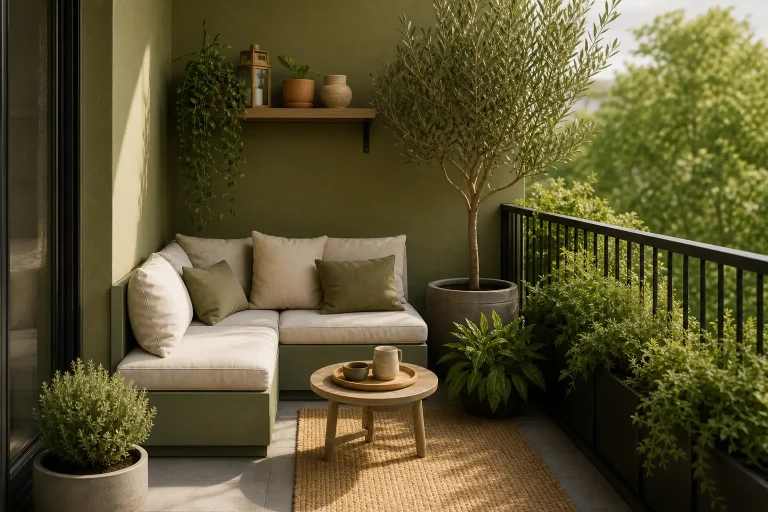
10 Modern 2-Tier Plant Stand Ideas for a Stylish Indoor Plant Display
Plant collections tend to grow faster than the floor space available for them, which usually means pots end up crowded together or scattered around a room with no real plan. A 2-tier plant stand solves that efficiently, letting two plants share a single, compact footprint while still looking deliberate rather than crammed in. It’s a particularly good option for smaller apartments, tight corners, or anyone who wants more greenery without rearranging the whole room to fit it.
1. Pair a Trailing Plant on Top with an Upright One Below

Using the top tier for a trailing plant, like a pothos or string of pearls, lets its growth spill downward past the lower shelf, creating a fuller, more layered look overall. An upright plant on the bottom tier, something like a snake plant or a small palm, balances that cascading effect with a bit of structure. This combination makes efficient use of the stand’s full vertical space rather than just stacking two similar shaped plants.
2. Choose a Wood and Metal Combo for Balanced Style

A stand combining wood shelves with thin metal legs offers a bit of both warmth and modern structure. This mixed material approach tends to fit into a wider range of decor styles than an all metal or all wood stand would on its own. It also holds up well visually next to other mixed material furniture that’s already common in most living rooms.
3. Use the Top Tier for Your Most Light Loving Plant
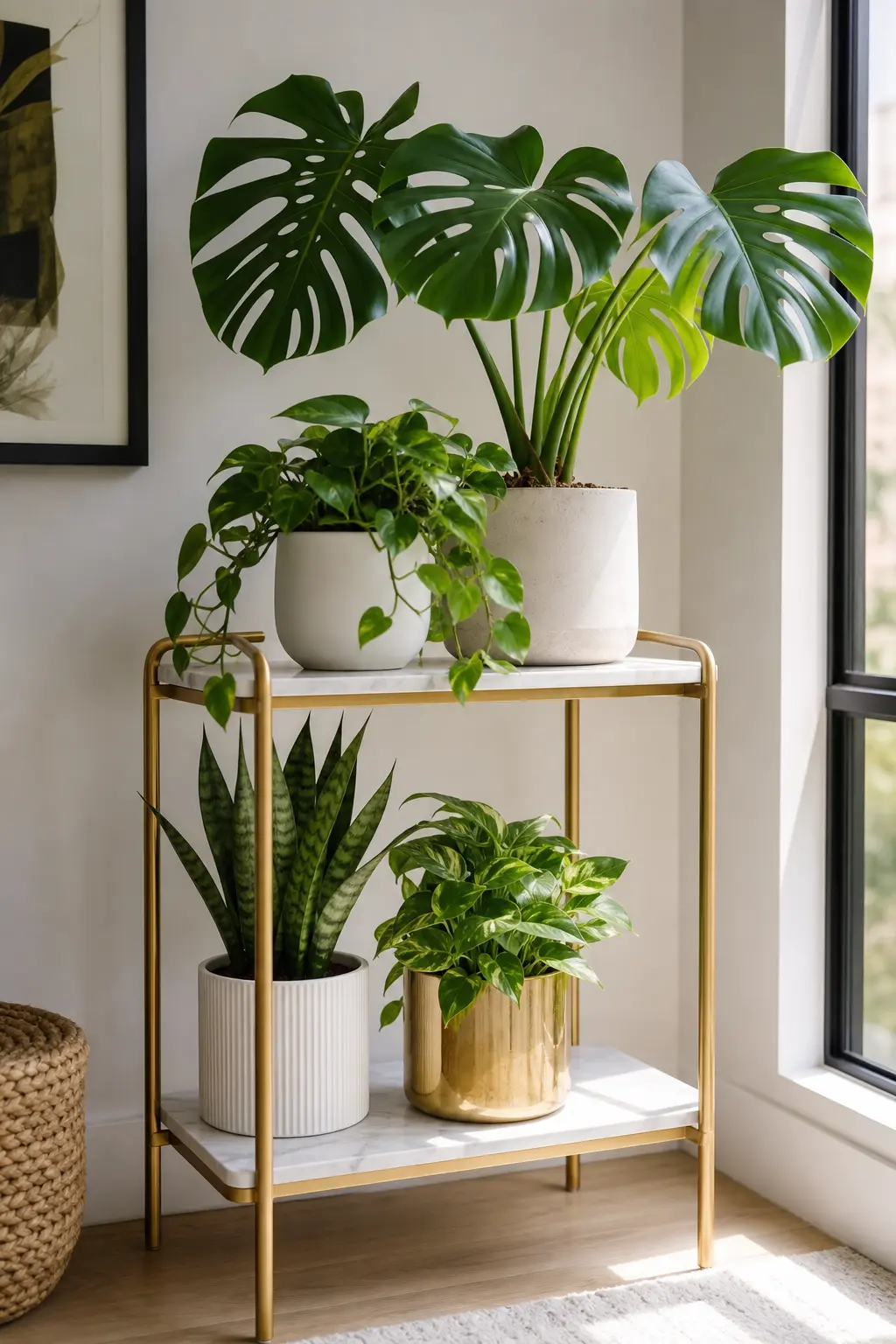
The top shelf of a 2-tier stand usually sits closer to a window or gets more ambient light than the lower shelf, especially if the stand is placed near natural light. Reserving that spot for a plant that needs brighter conditions, while placing a more shade tolerant plant on the lower tier, keeps both plants healthier without needing to think too hard about placement elsewhere in the room.
4. Keep Both Tiers in Similar Pot Colors for Cohesion
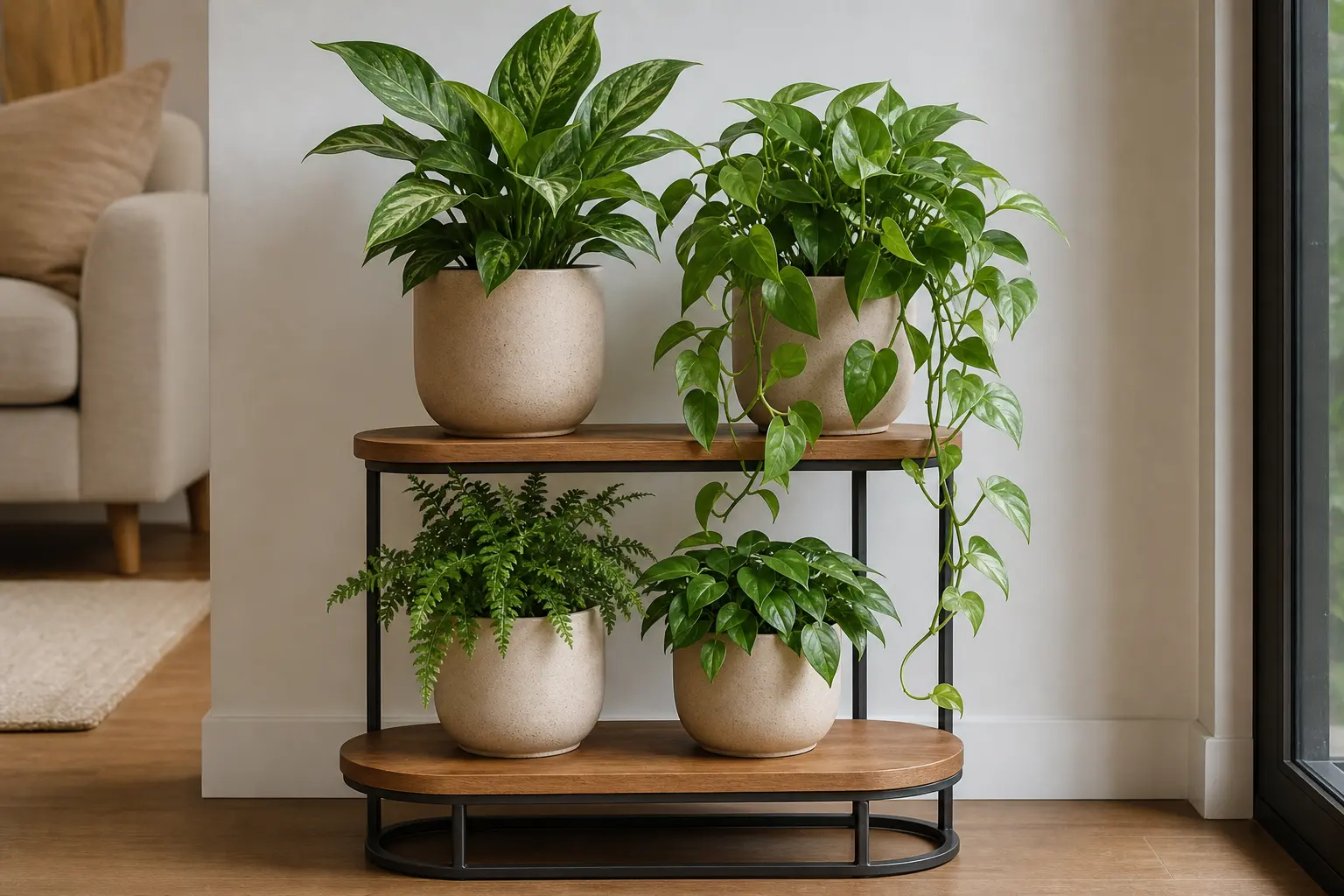
Two mismatched pot colors on the same stand can look more accidental than intentional. Choosing pots in the same color family, two cream pots, or two terracotta ones, ties the whole display together visually. This is a simple, low cost adjustment if you already own two plants in clashing pots, since swapping just the outer planter is usually cheaper than replacing the plants themselves.
Cohesive pots do a lot of quiet work here, making a 2-tier stand look like one styled piece rather than two separate plants that happen to share a shelf.
5. Choose a Slim Profile Stand for Narrow Spaces

A narrow, vertically oriented 2-tier stand fits into tight spots, like beside a doorway or in a slim gap between furniture, where a wider stand simply wouldn’t fit. This is one of the more practical reasons to choose a 2-tier design over a single wide plant table, since the vertical footprint takes up much less floor space for the same number of plants.
6. Add a 2-Tier Stand Beside a Reading Chair

A stand placed next to a reading chair or a small side table adds greenery to a spot that often only has a lamp and maybe a stack of books. Two smaller plants here reinforce a calm, cozy atmosphere without taking up as much room as a single larger plant might. This placement works especially well if the chair sits near a window with decent natural light.
7. Use One for a Kitchen Herb and Small Plant Combo

A 2-tier stand isn’t limited to decorative plants. A small stand near a kitchen window can hold two pots of herbs, or one herb and one small decorative plant, making efficient use of counter or floor space in a room that often doesn’t have much to spare. Look for a stand with a water resistant finish if it’s going in a kitchen, since spills and humidity are more common there than in a living room.
8. Match the Stand’s Finish to Nearby Light Fixtures
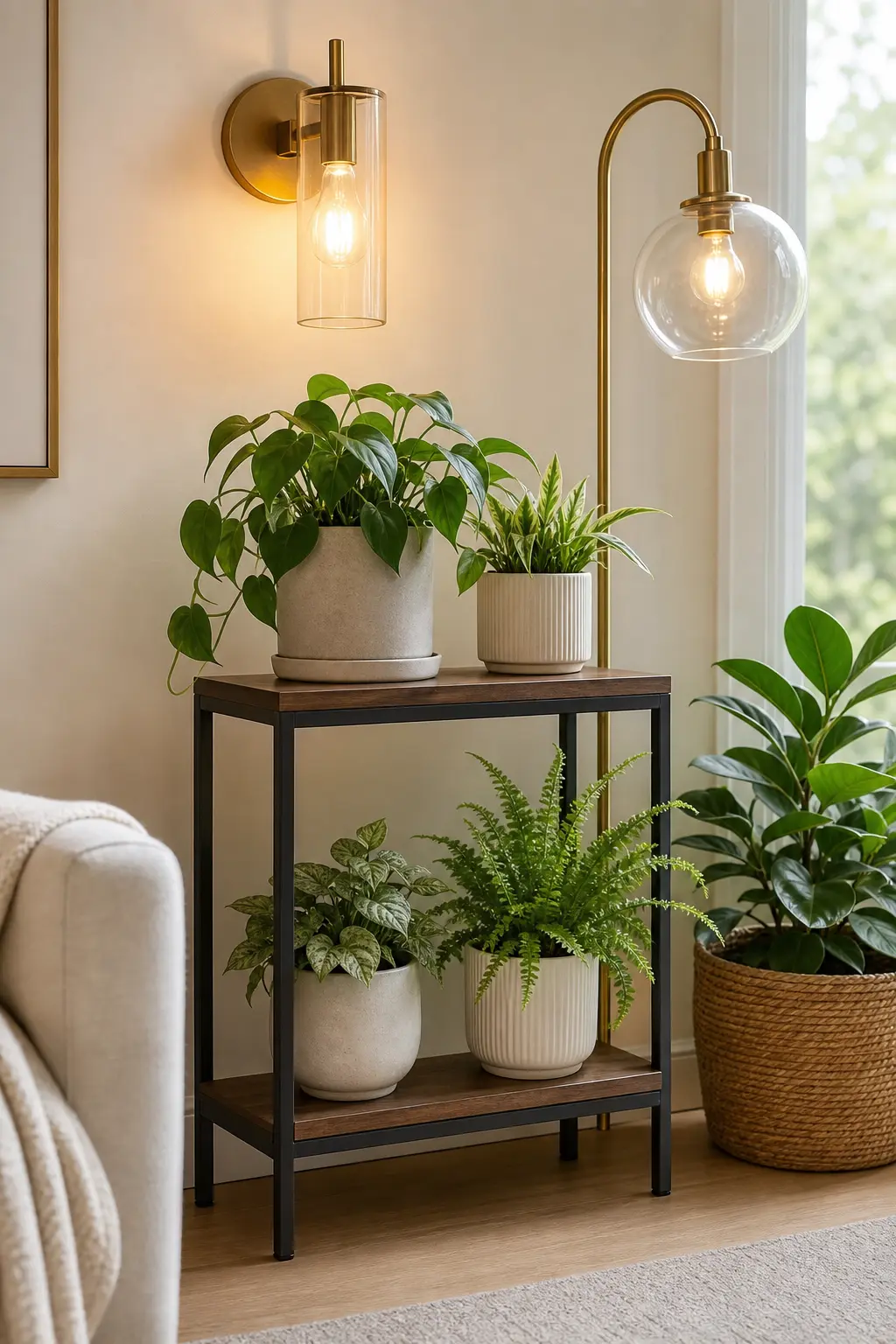
If a room already has brass sconces or black pendant lighting, choosing a 2-tier stand in a matching or complementary metal finish helps the piece feel like part of the room’s overall design rather than a separate addition. This kind of small consistency across metal finishes tends to make a room feel more considered as a whole.
9. Choose a Stand with Adjustable Tier Heights
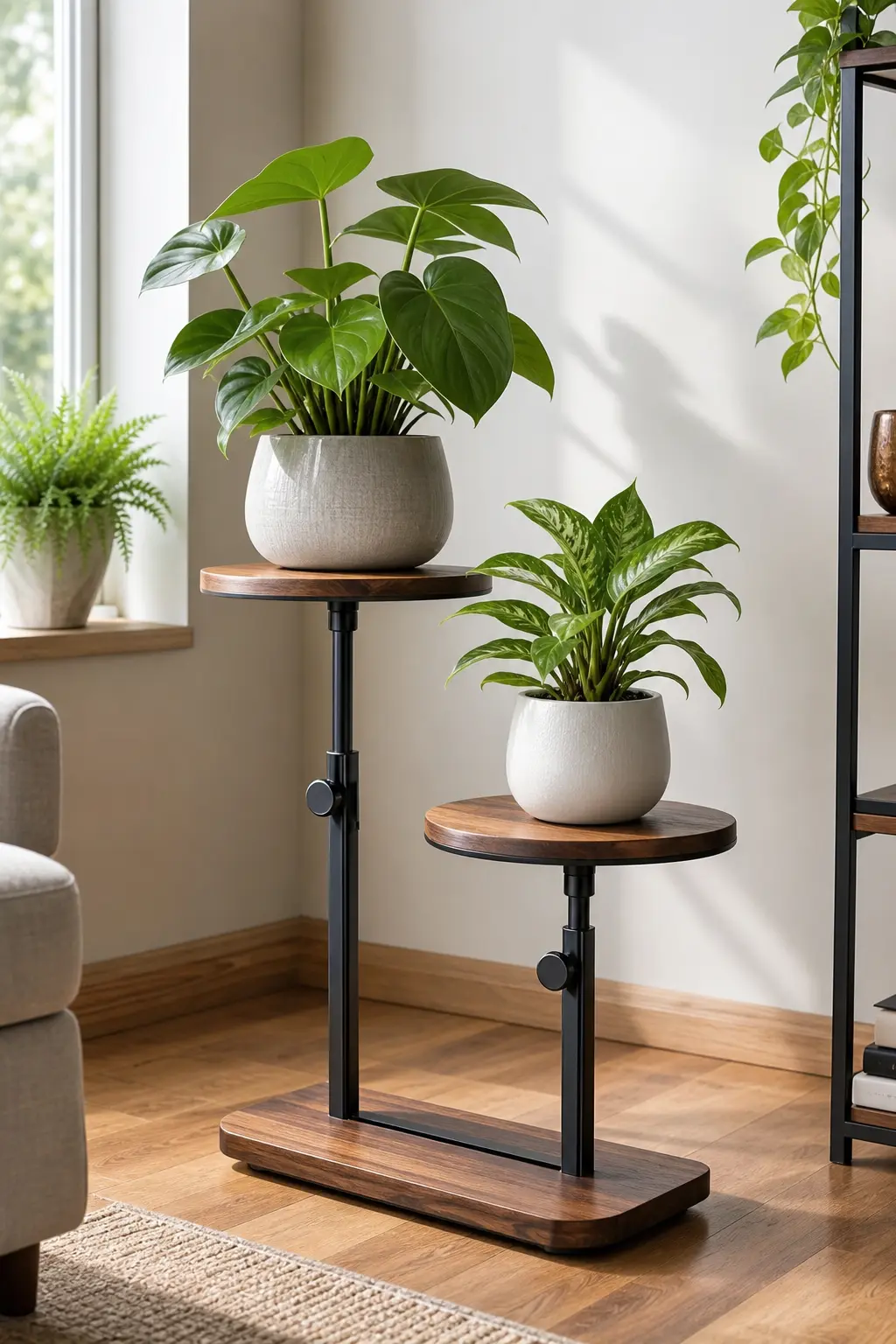
Some 2-tier stands allow for adjustable spacing between shelves, which is useful if plants grow at different rates or if a taller plant eventually needs more headroom on the lower tier. This flexibility extends how long a stand stays useful, since it can adapt as a plant collection changes over time rather than needing to be replaced once a plant outgrows a fixed shelf height.
10. Place Two Stands Together for a Fuller Display

Grouping two separate 2-tier stands side by side, rather than relying on just one, creates a fuller plant display capable of holding four plants in a relatively compact footprint. This works well for a larger, sunnier window or an empty corner that could support more greenery than a single stand would provide. Vary the plant types and pot colors slightly between the two stands to avoid the display looking too repetitive.
Mistakes to Avoid
- Placing a shade tolerant plant on the brighter top tier and a light loving plant on the shaded bottom
- Mixing clashing pot colors that make the display look unintentional
- Choosing a stand too wide for the intended narrow space
- Skipping a water resistant finish for a stand placed in a kitchen
- Overloading a fixed height stand with a plant that quickly outgrows the available space
Frequently Asked Questions
What plants work best together on a 2-tier stand? A trailing plant on top paired with an upright, more structured plant on the bottom tier creates a balanced, layered look while making good use of the stand’s full height.
Is a 2-tier stand better than two separate plant stands? It depends on the space. A 2-tier stand saves floor space and creates a more compact, cohesive display, while two separate stands offer more flexibility in placement around a room.
Can a 2-tier stand hold heavier plants? Check the stand’s weight rating before adding a large, heavy pot, especially on the top tier, since some slimmer stands are designed more for lightweight plants than large, dense ones.
Do 2-tier stands work well in a kitchen? Yes, especially for herbs or small plants near a window. Look for a stand with a water resistant finish, since kitchens deal with more spills and humidity than other rooms.
How do I keep a 2-tier stand from looking cluttered? Stick to two plants that complement each other in size and shape, and keep pot colors within the same general tone so the display reads as one cohesive piece rather than two competing ones.
Bringing It All Together
A 2-tier plant stand is one of the most efficient ways to fit more greenery into a small space without the display looking crowded or thrown together. Pair plants thoughtfully, keep pot colors cohesive, and choose a material that fits the rest of the room’s style. Even a single well chosen stand can hold two plants that look like they were always meant to share the same spot.