10 Luxury Modern Neutral Bedroom Ideas for an Elegant & Sophisticated Space
A neutral bedroom sounds like a safe, elegant choice, but it can just as easily end up feeling flat, cold, or unfinished if every surface is the same shade of white or beige. Luxury modern neutral bedroom ideas solve that by treating neutral as a foundation built from several tones and textures, not a single flat color repeated across every surface in the room.
The difference between a plain neutral bedroom and a genuinely luxurious one comes down to layering, warm versus cool tones, matte versus glossy finishes, smooth versus textured fabric. Get that layering right, and a room built entirely from whites, creams, and taupes can feel richer than one filled with bold color. Here are ten ways to build that kind of sophistication into a neutral palette.
1. Layer at Least Three Different Neutral Tones
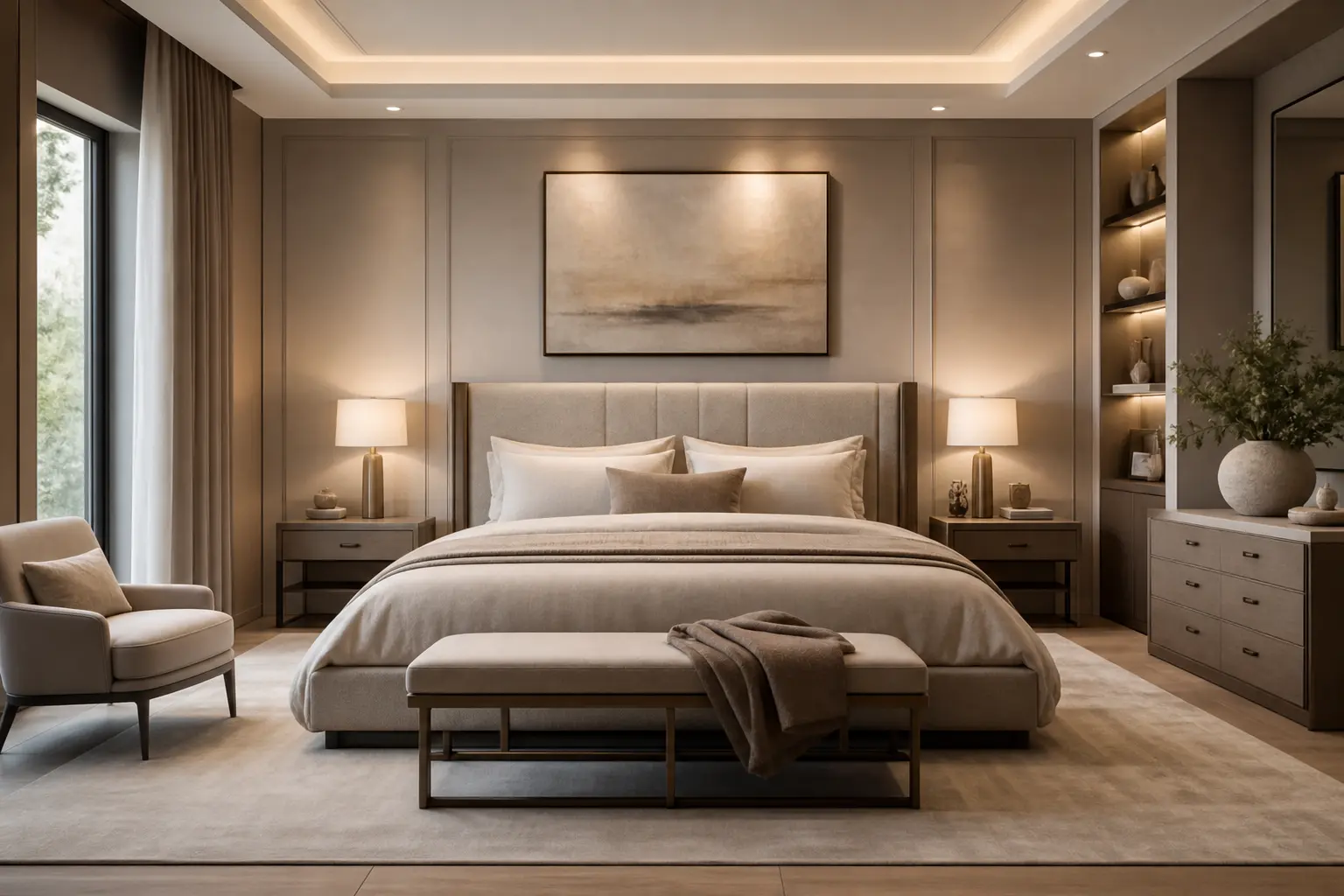
A single neutral shade repeated on the walls, bedding, and furniture reads as flat rather than elegant. Combine at least three tones, a warm white wall, a taupe headboard, and a deeper oatmeal or greige bedding, so the room has visual depth even without any strong color.
Vary the tones by a shade or two rather than choosing colors that are nearly identical. A room with subtle tonal variation feels intentionally layered, while one with matched flat neutrals can feel like an unfinished canvas.
Warm Versus Cool Neutrals
Decide early whether the room leans warm, cream, taupe, greige, or cool, white, gray, silver, and stay consistent. Mixing warm and cool neutrals without a clear intention is one of the most common reasons a neutral room feels off rather than sophisticated.
2. Build the Bed with Rich, Varied Texture
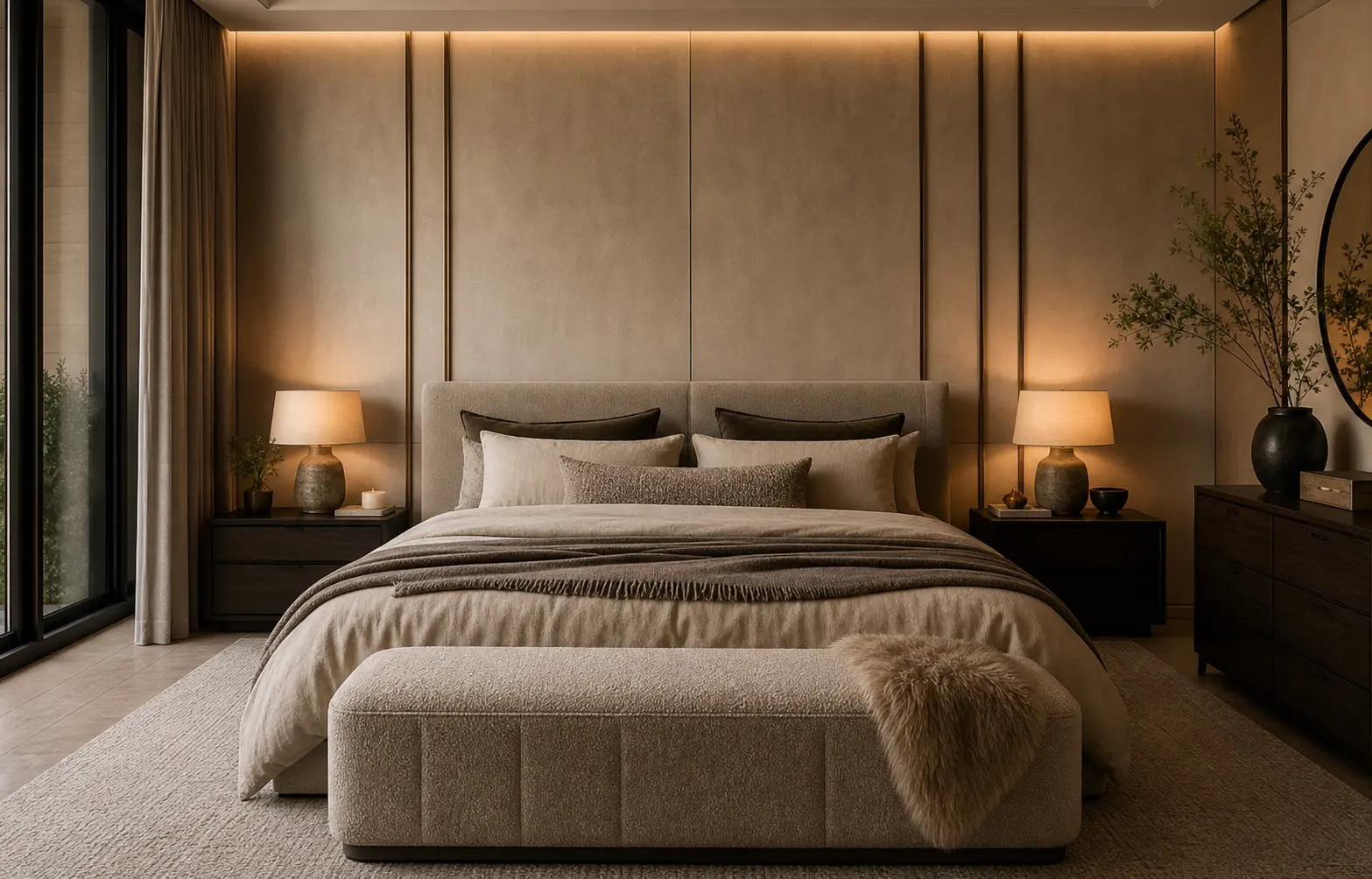
Since a neutral bedroom relies on tone rather than color for its impact, texture becomes the primary tool for adding richness. A bouclé headboard, a linen duvet, a velvet lumbar pillow, and a chunky knit throw all sit within the same neutral family but read as completely different materials.
This textural layering is what separates a luxury neutral bedroom from a plain one. Without it, even a well chosen tonal palette can feel sparse rather than elevated.
3. Choose Furniture with Substantial, Simple Lines
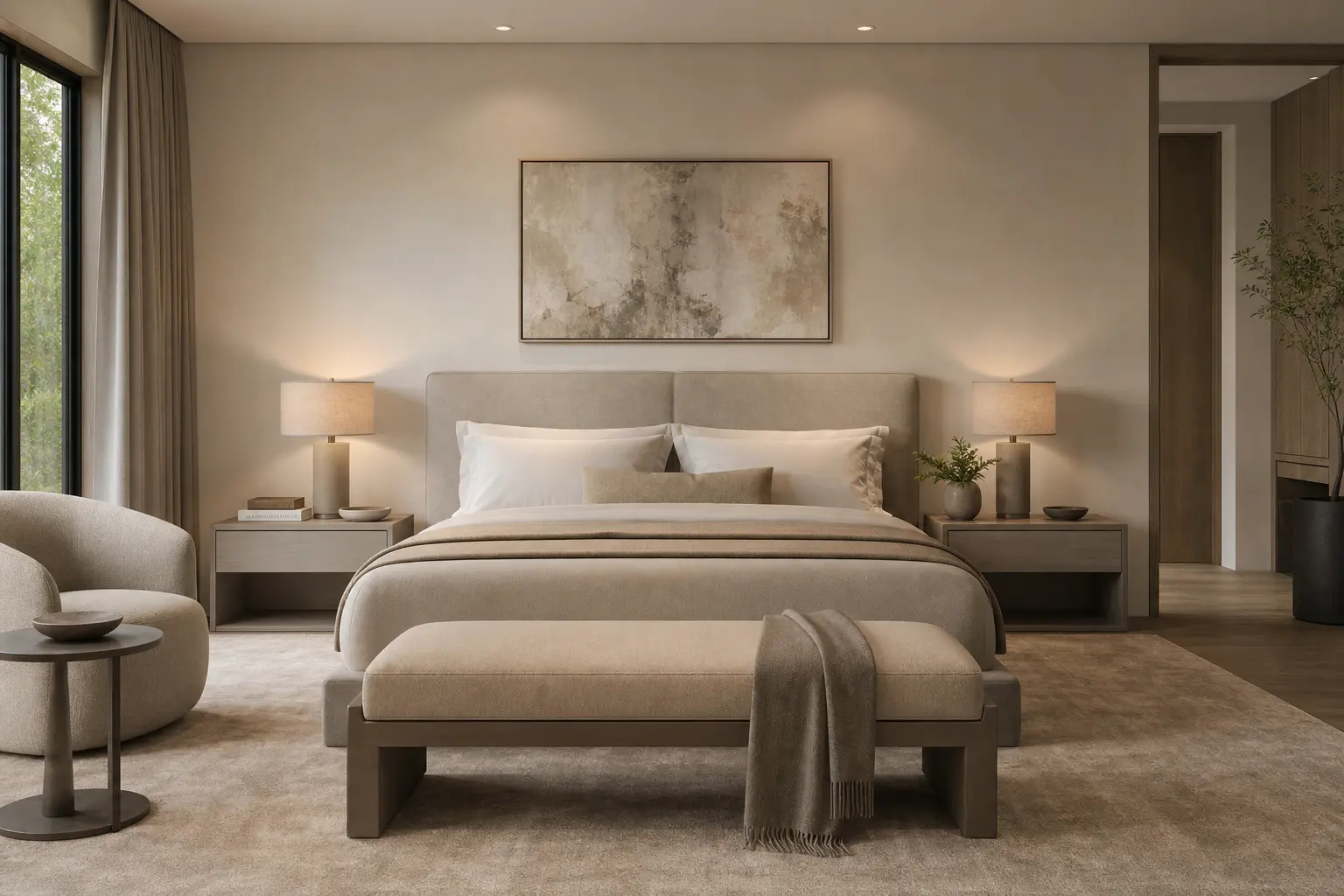
Ornate or overly delicate furniture can undercut a neutral room’s sense of quiet luxury. Instead, look for pieces with clean, substantial lines, a solid wood dresser, a simple upholstered bed frame, that feel grounded rather than fussy.
Furniture that feels well made and intentional does more for a room’s luxury quotient than furniture that’s simply expensive but visually busy. Quality of line matters as much as quality of material.
4. Bring in Warm Wood to Avoid a Flat Look
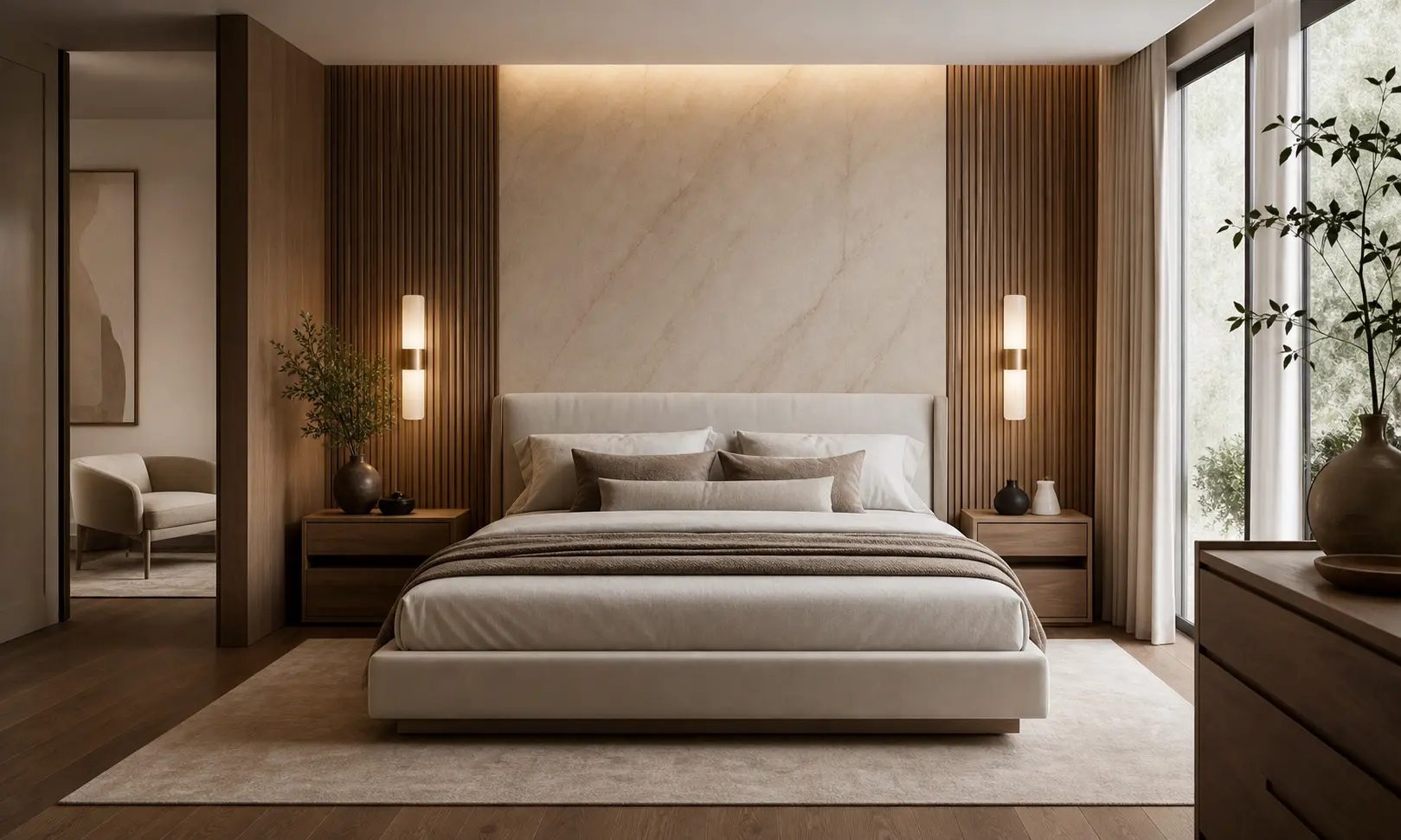
A neutral room built entirely from painted or upholstered surfaces can start to feel one dimensional. Warm wood, in a nightstand, a bench, or open shelving, adds both color variation within the neutral family and a natural material that contrasts with fabric and paint.
Medium to deep wood tones, oak, walnut, or a rich mahogany, tend to add more visual weight and sophistication than a very light, blonde wood in this particular kind of room.
5. Add Brass or Warm Metal Accents
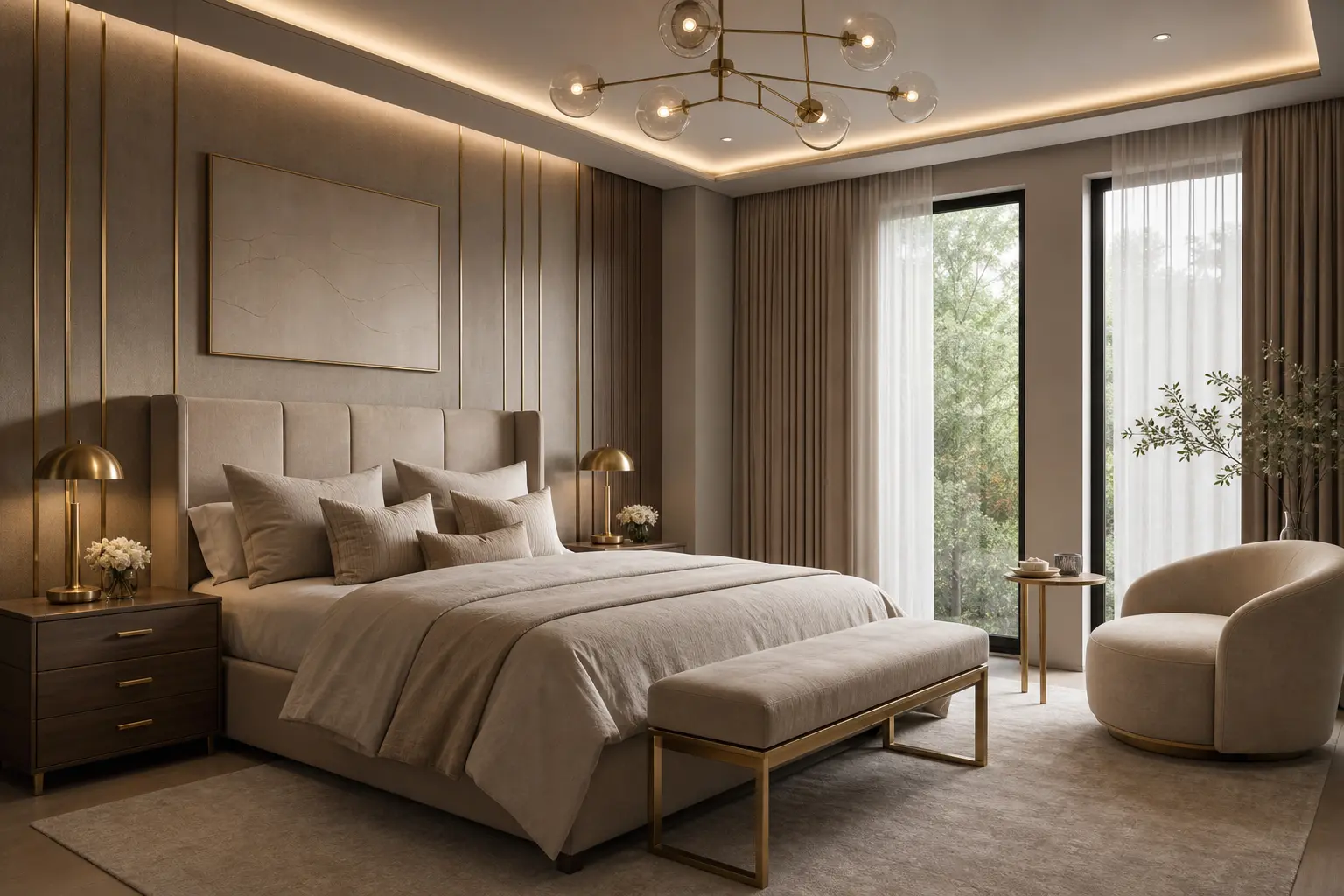
Neutral rooms benefit enormously from a single consistent warm metal, brass, aged brass, or warm gold, used across lighting, hardware, and small accessories. This repetition ties the room together and adds a polished, elevated feel that neutral fabric and paint alone can’t provide.
Avoiding a Mismatched Metal Look
Choose one primary metal finish and stick with it throughout the room. A neutral palette has less inherent visual noise to hide an inconsistency, so mismatched metals stand out more here than in a bolder, more colorful space.
6. Use Layered, Dimmable Lighting
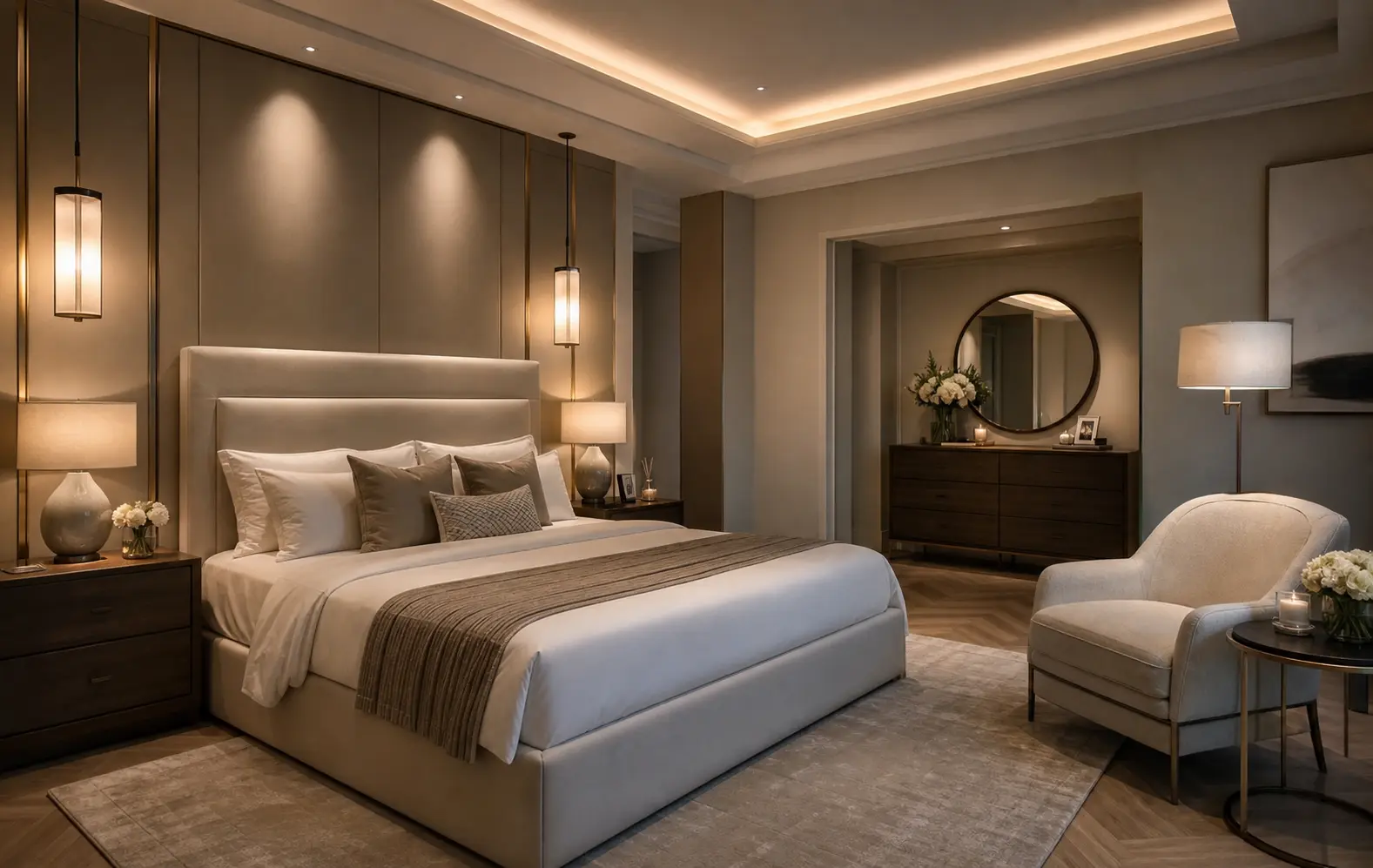
A single overhead fixture flattens a neutral room more than almost any other design mistake. Add table lamps on each nightstand, a floor lamp in a reading corner, and a dimmer switch on the overhead light, so the room can shift from bright and functional to soft and moody depending on the time of day.
Warm white bulbs, in the 2700K to 3000K range, bring out the warmth in a neutral palette and prevent the room from reading as sterile or clinical after dark.
7. Choose a Rug That Adds Depth Underfoot
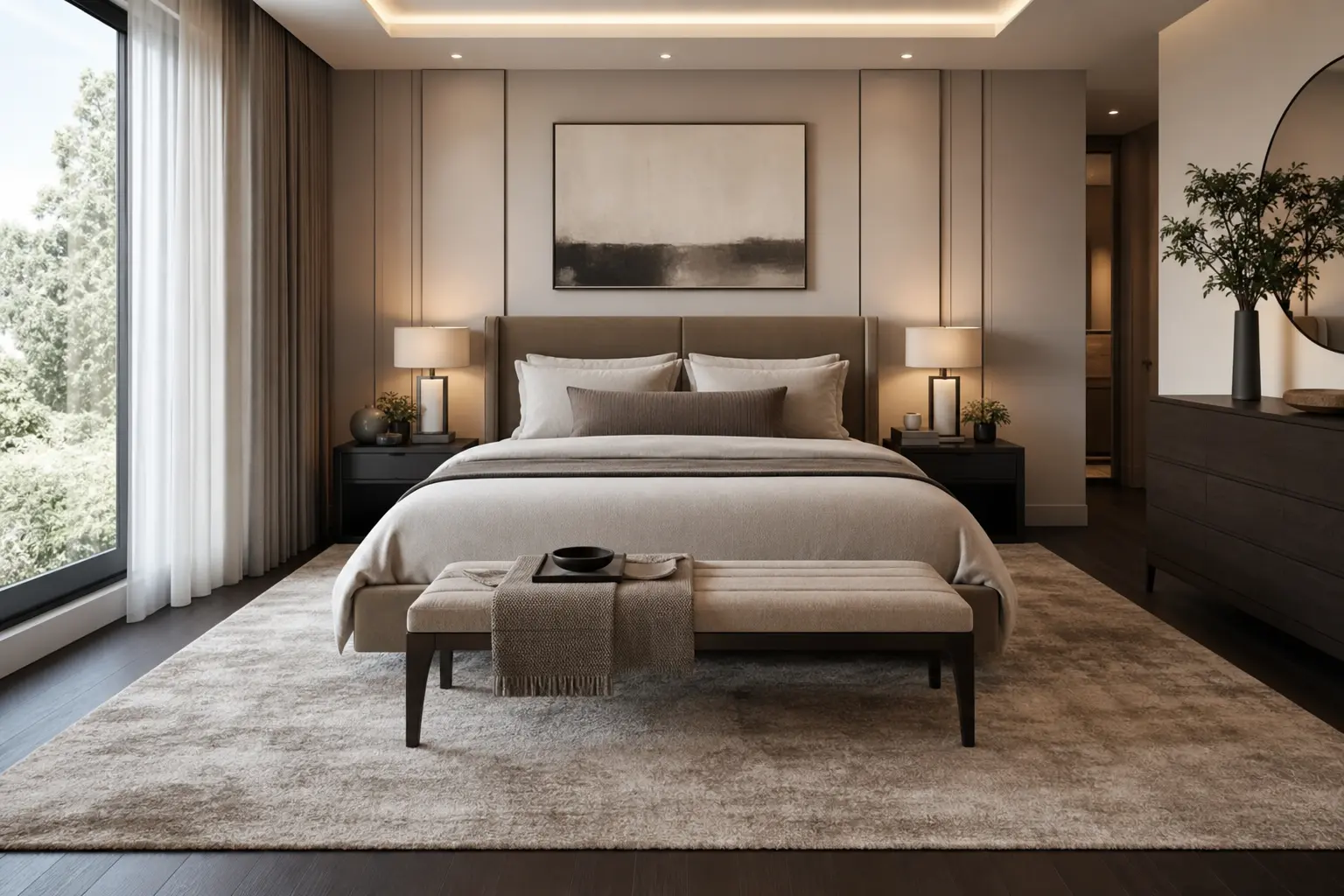
A plush rug in a slightly different tone from the flooring and walls adds another layer to the room’s neutral palette while providing genuine comfort underfoot. A rug in the $200 to $600 range, depending on size and material, should feel noticeably substantial, since texture carries a lot of the room’s luxury signal.
A subtle pattern, like a tone on tone geometric or a soft abstract design, can add visual interest without introducing any real color into the space.
8. Add Drapery That Feels Tailored
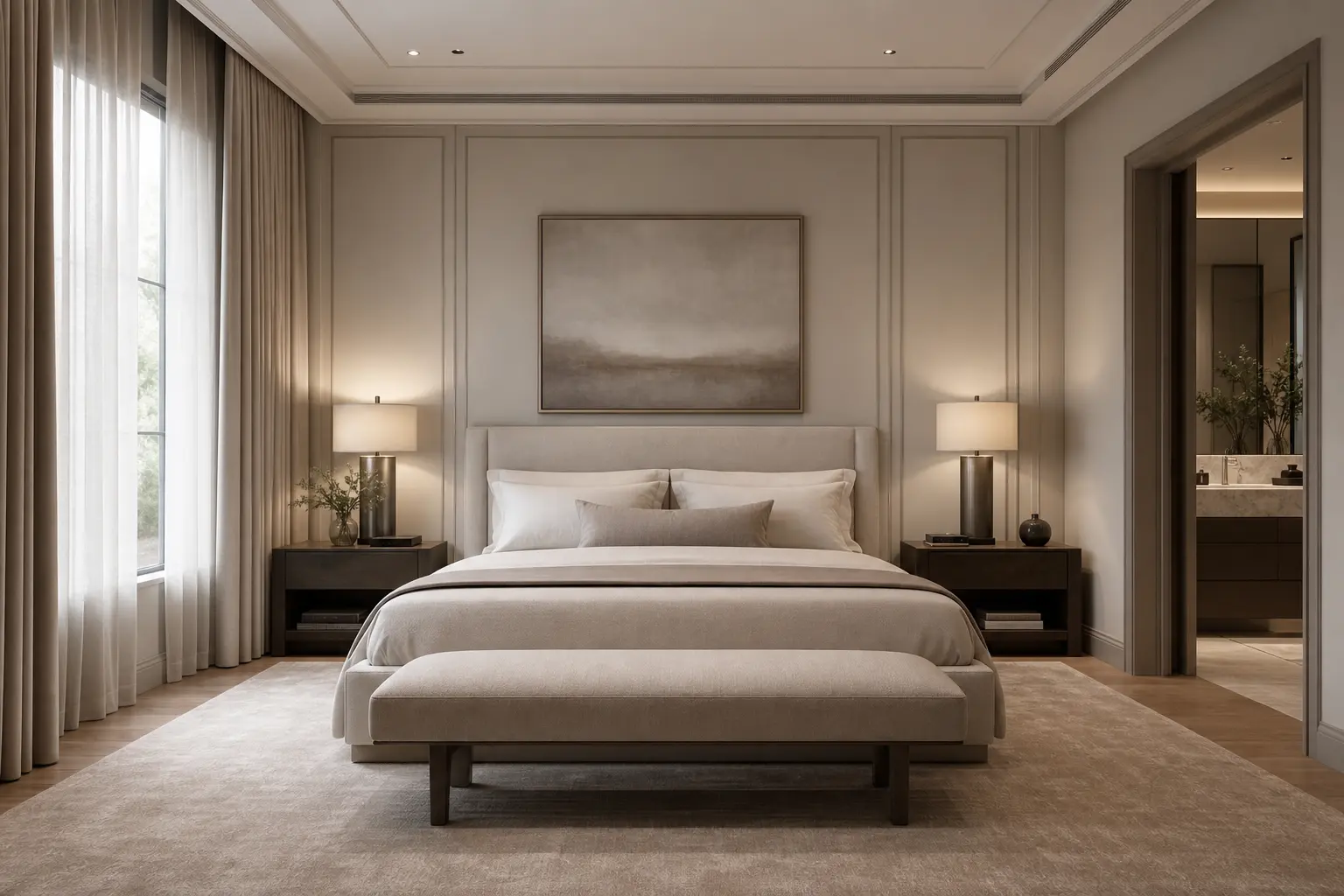
Floor length curtains in a heavier linen or a soft velvet, hung so they pool slightly at the floor, read as far more custom and elevated than basic sheer curtains that stop exactly at the sill. This small detail matters more in a neutral room, where fewer bold elements are competing for attention.
Hang the rod higher and wider than the window frame itself, which makes the ceiling feel taller and gives the drapery room to fall in a fuller, more tailored way.
9. Keep Decor Curated Rather Than Sparse
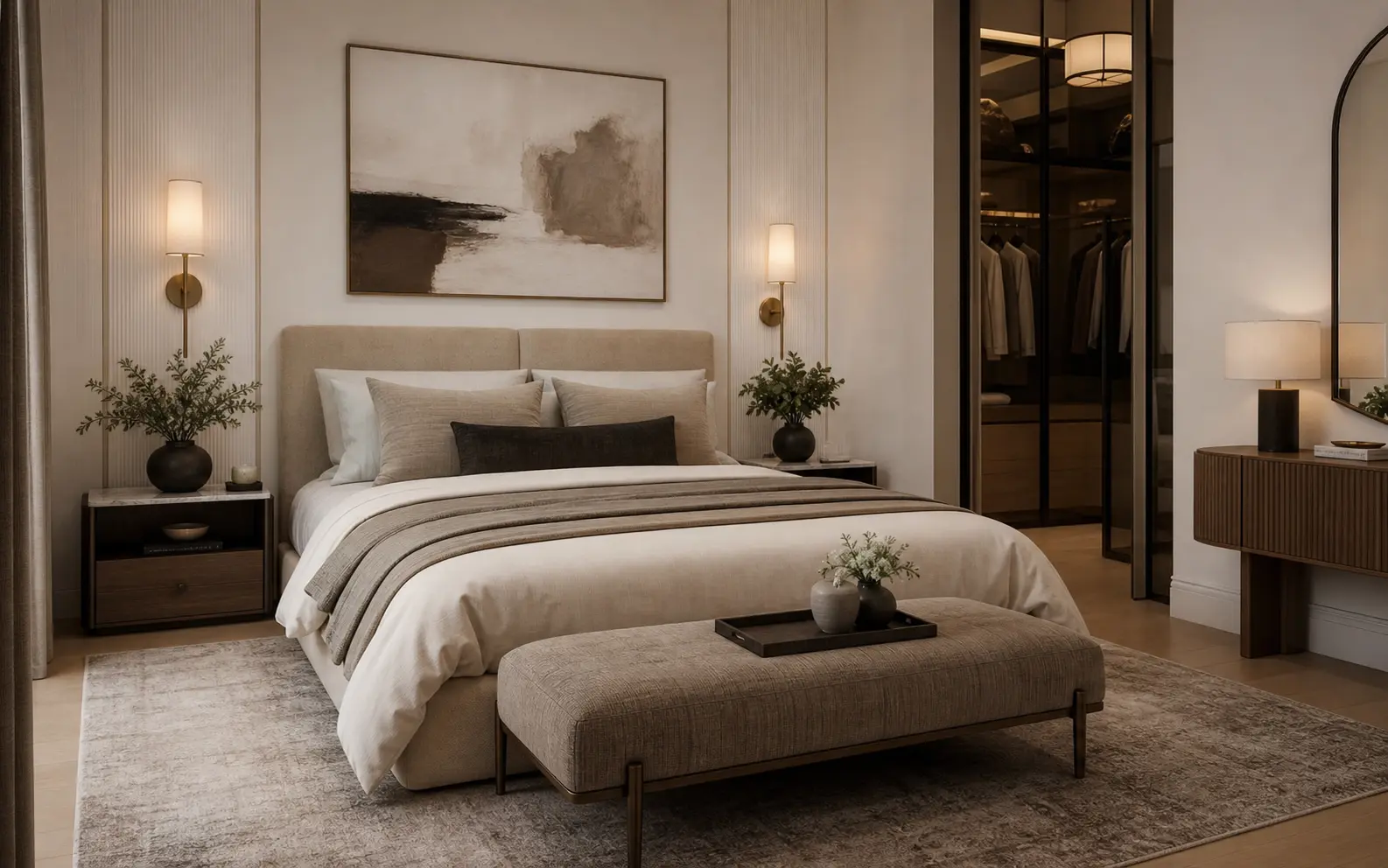
A neutral luxury bedroom needs some decor to avoid feeling empty, but it shouldn’t be crowded either. One or two substantial pieces, a large piece of art, an elegant table lamp, a single sculptural object, read as more sophisticated than either a bare room or one filled with small trinkets.
A neutral room with too little decor reads as unfinished, while one with too much reads as cluttered. The sweet spot is a small number of larger, more considered pieces.
10. Introduce One Deeper Tone for Contrast
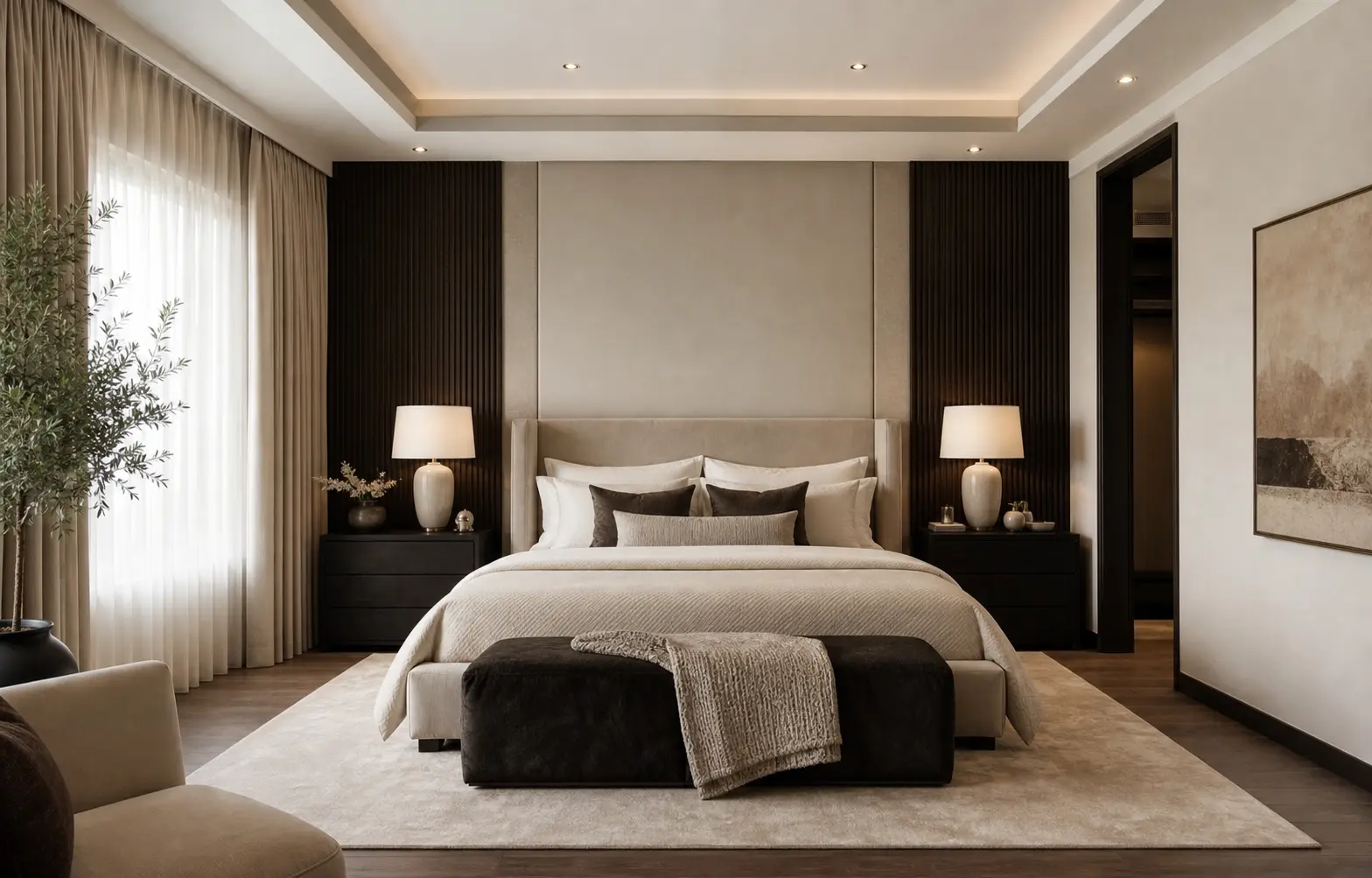
Even the most neutral room benefits from one deeper anchor tone, a charcoal headboard, a dark wood dresser, or deep espresso curtains, to keep the palette from floating without any grounding point. This single darker element gives the eye a place to land and adds a sense of weight to the room.
Keep this deeper tone to one or two pieces at most. The goal is a subtle anchor, not a second competing color scheme within the same room.
Mistakes to Avoid
- Using a single flat neutral shade across every surface instead of layering several tones
- Mixing warm and cool neutrals without a clear, consistent intention
- Choosing furniture that’s overly ornate or fussy instead of simple, substantial lines
- Relying only on overhead lighting instead of layered, dimmable lamp light
- Skipping texture entirely and ending up with a flat, one dimensional feeling room
- Leaving the room without any deeper tone, which can make the palette feel like it’s floating
Frequently Asked Questions
How do I keep a neutral bedroom from feeling boring? Layer at least three different neutral tones, mix in varied textures like bouclé and linen, and add one deeper anchor tone. Texture and tonal variation do more work than color in a room like this.
Should I choose warm or cool neutrals for a luxury feel? Warm neutrals, cream, taupe, greige, tend to feel cozier and more traditionally luxurious, while cool neutrals, white, gray, silver, feel more modern and minimal. Either can work as long as you stay consistent throughout the room.
What’s the most important element for making a neutral room feel luxurious? Texture. A neutral palette with rich, varied textures, bouclé, velvet, linen, warm wood, reads as far more elevated than the same color palette in flat, uniform fabric.
Do I need to add any color to a neutral luxury bedroom? Not necessarily. Many of the most sophisticated neutral bedrooms rely entirely on tone and texture rather than introducing an accent color, though a small amount of muted color is fine if it fits the palette.
What’s the most affordable way to elevate an existing neutral bedroom? Adding a textured throw, a set of brass drawer pulls, and a dimmer switch on the overhead light usually costs under $100 combined and noticeably shifts the room’s overall feel.
Conclusion
A luxury modern neutral bedroom comes down to layering tone and texture rather than relying on a single flat color to do all the work. Choose warm wood, one consistent metal finish, and rich fabric variety, then anchor the whole room with a single deeper tone. Start with the bedding and lighting, since those two elements shape the room’s mood the most, then build out furniture and decor from there.