10 Pink Fluted Wall Panel Bedroom Ideas for a Soft, Architectural Look
Pink bedrooms used to mean a flat coat of paint and not much else, the kind of look that read as a childhood theme rather than something an adult would actually choose. This year’s version looks nothing like that. Fluted panels are moving well beyond small accent walls into full headboards, wardrobes, and architectural feature walls, and paired with a soft, dusty pink, the combination gives a bedroom real depth and structure instead of a single flat block of color.
1. Use the Fluted Panel as an Oversized Headboard
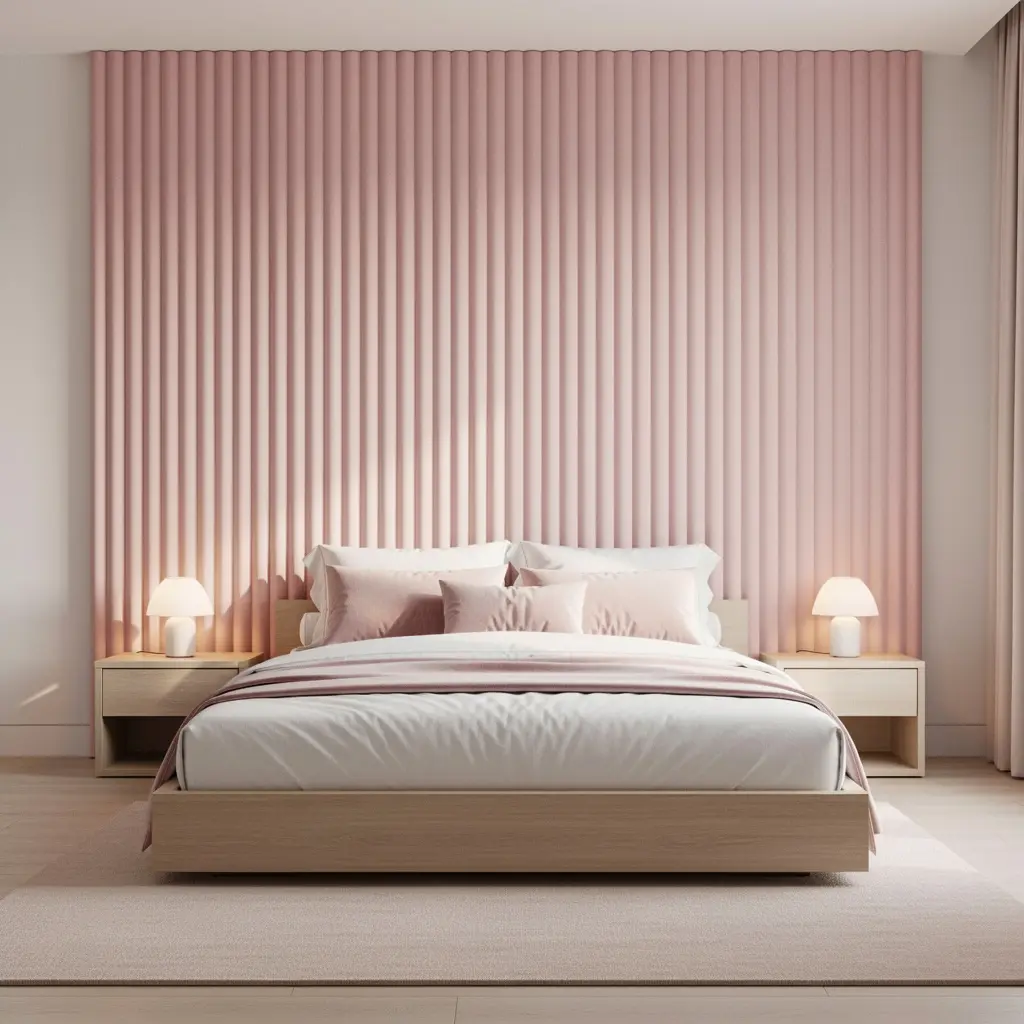
A fluted wall panel positioned as an oversized headboard, stretching horizontally behind and beyond the bed, turns the one wall every bedroom needs to address into the room’s clear architectural focal point. The thin vertical grooves catch and shift light throughout the day, adding movement and texture that a flat painted wall simply can’t replicate, no matter how good the paint color itself is.
Sizing the Panel to the Room
Extending the fluted treatment a foot or two beyond each side of the bed frame gives the headboard real visual weight, rather than leaving it looking like a narrow strip stopping abruptly at the mattress edge.
Running the panel from floor to ceiling, rather than stopping at headboard height, pushes the effect even further, turning the whole wall into a single architectural gesture instead of one furniture adjacent detail.
2. Choose a Muted, Dusty Pink Over Bright Bubblegum
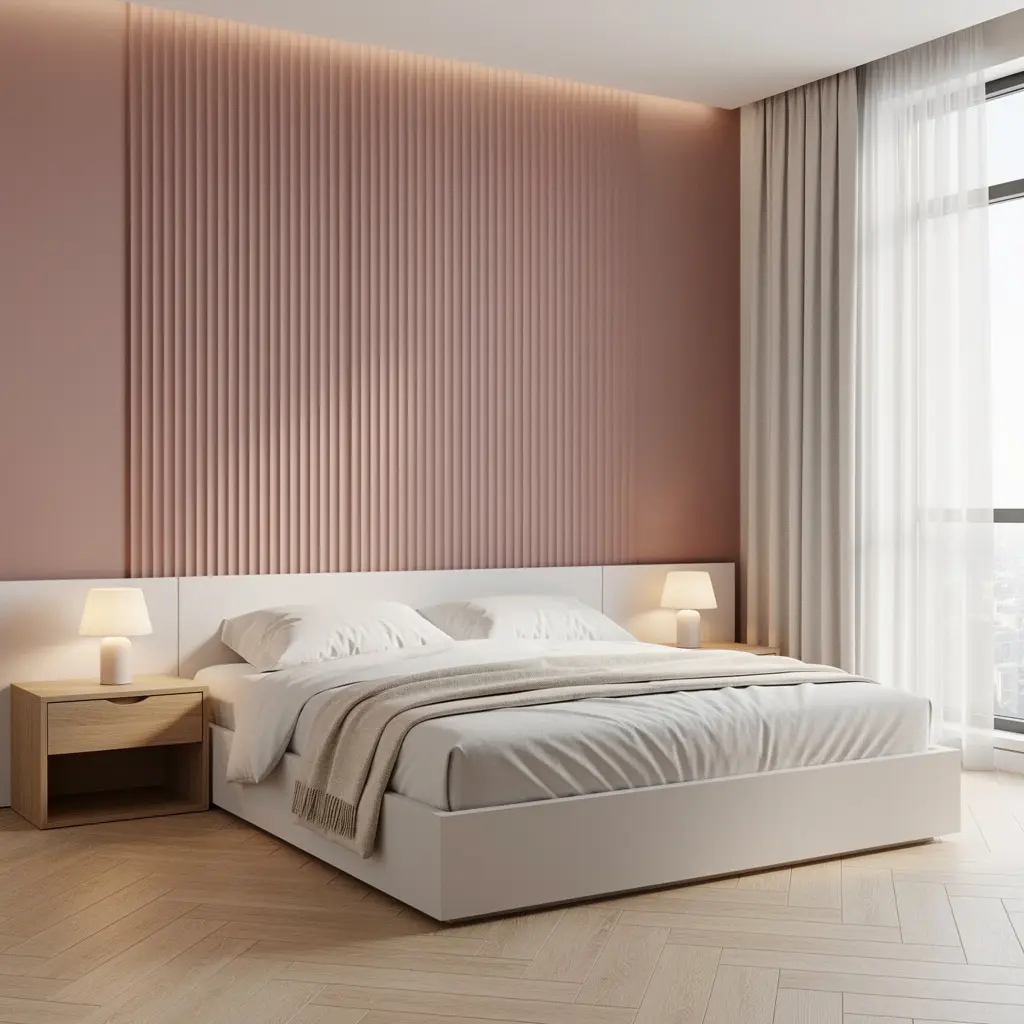
Soft pink bedrooms have moved away from childish themes this year, leaning instead into warmer salmon and dusty rose tones that feel closer to boutique hotel design than pastel decor. A muted, grayer pink behaves more like a neutral than a true pastel, which is part of why it pairs so easily with the natural wood and brass tones a fluted panel setup often includes.
3. Pair Fluted Panels With White or Cream Bedding
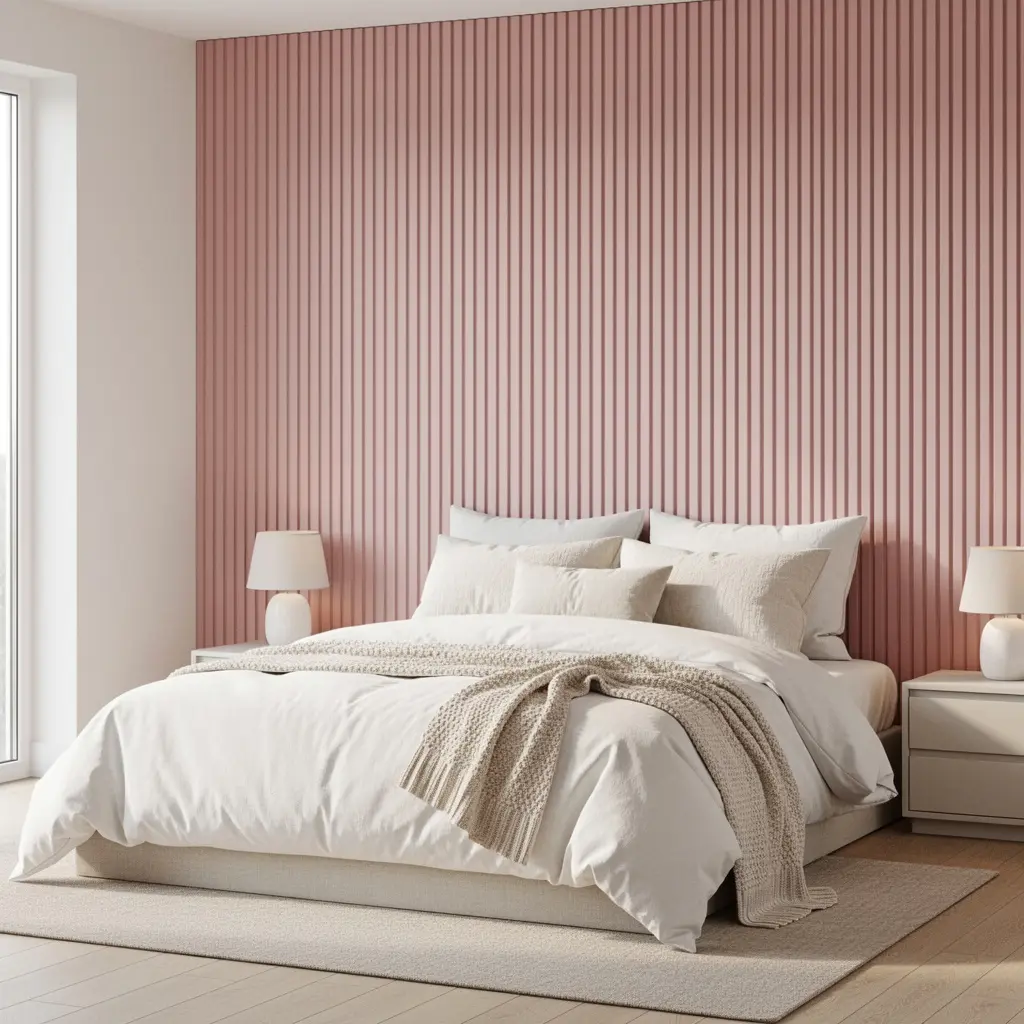
White bedding and lighter furniture balance a pink fluted wall so the room still feels open and bright rather than closed in by color. This pairing lets the panel’s texture do most of the visual work, since the bedding stays quiet and simple, giving the grooved wall room to stand out as the room’s clear statement.
A single patterned throw or a few textured pillows can still add interest on top of this simple base, as long as they stay within the same soft, muted color family rather than introducing a competing bold pattern.
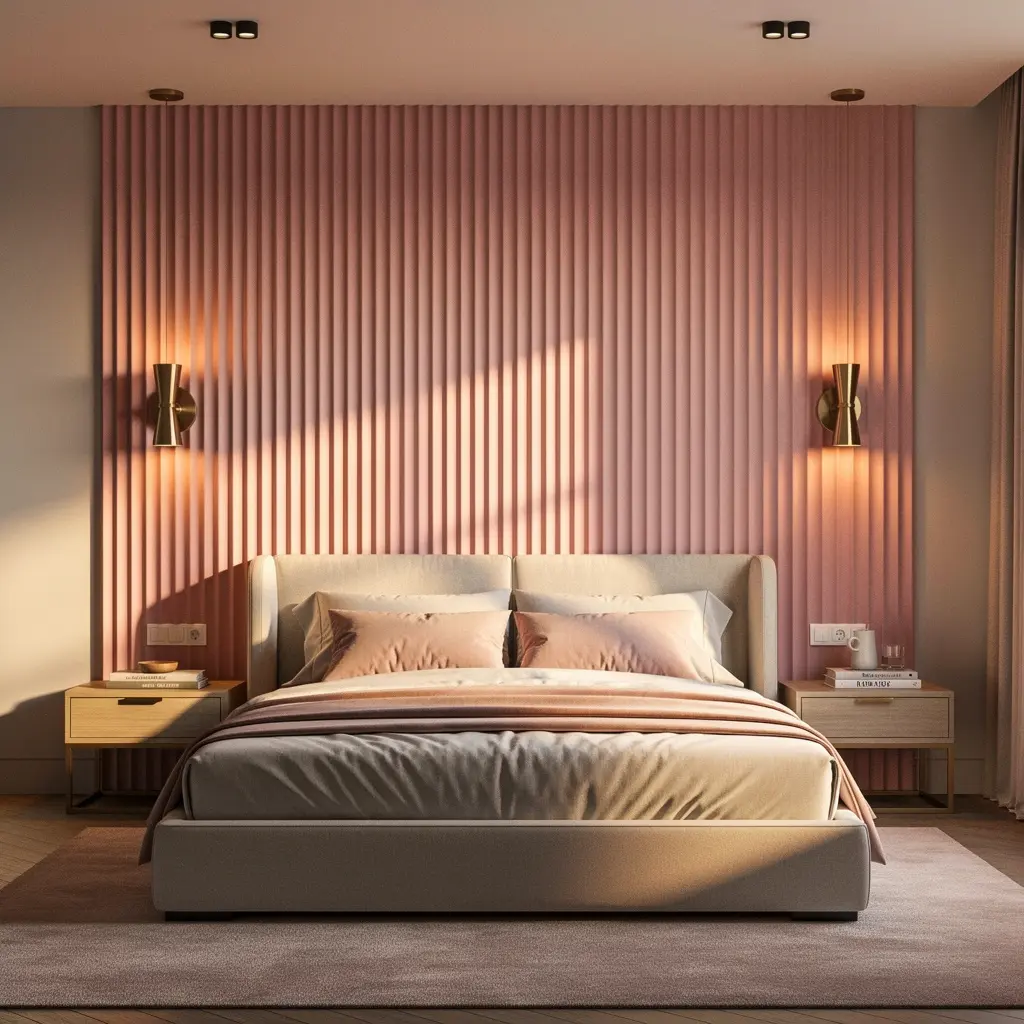
4. Add Brass Lighting to Catch the Grooved Shadows
Brass sconces flanking a fluted headboard wall catch and reflect the shadow lines the grooves create, adding warmth and a bit of shine against the panel’s softer, matte finish. This detail matters more with fluted panels than with a flat painted wall, since the texture itself interacts with light in a way that rewards a warm, slightly directional light source positioned close to the surface.
5. Separate the Room With Panel Molding
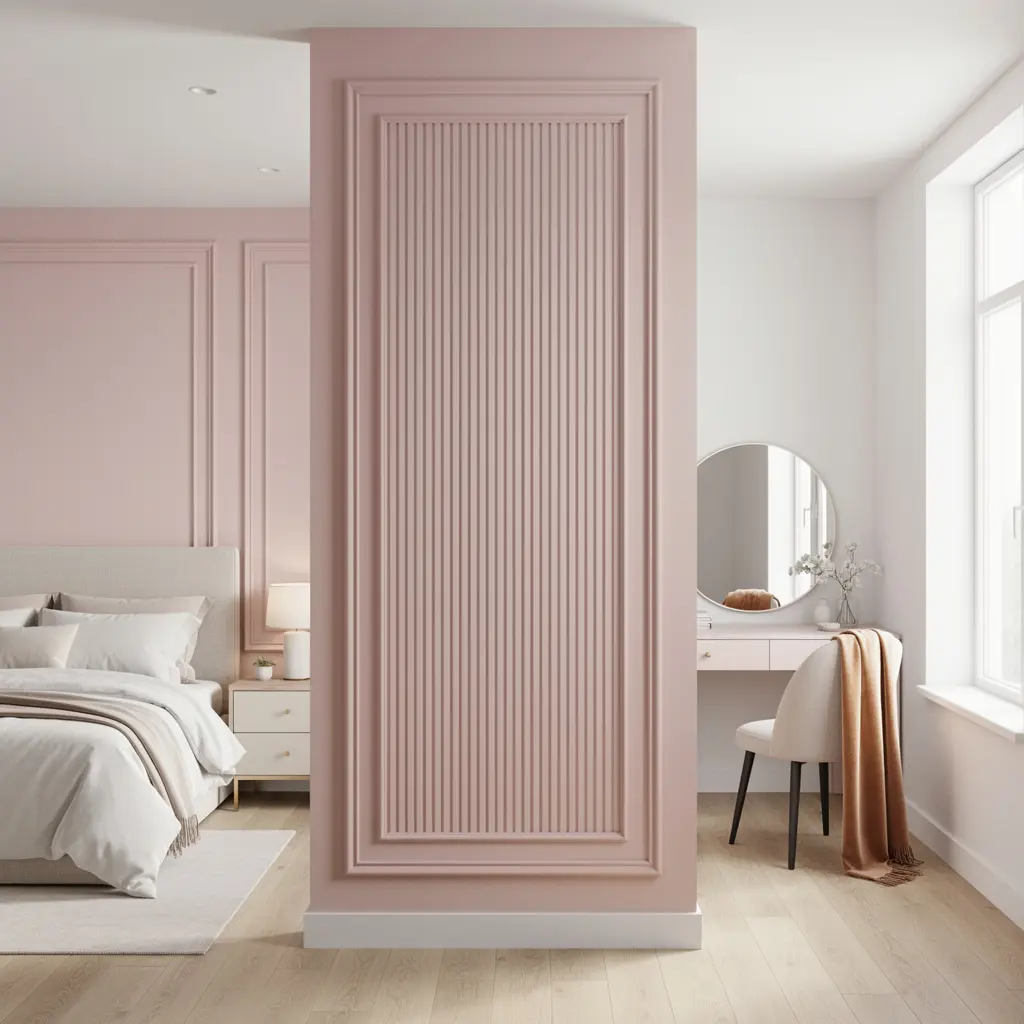
Wall panel molding separating the lower half of a room from a warmer beige or cream upper wall keeps a pink palette from feeling like a single overwhelming block of color. This layered approach, pink below, a lighter neutral above, adds architectural interest even in a room without a full fluted headboard, and it works especially well when paired with floral wallpaper or a patterned textile on the lower section.
6. Mix In Natural Wood to Prevent Overpolish
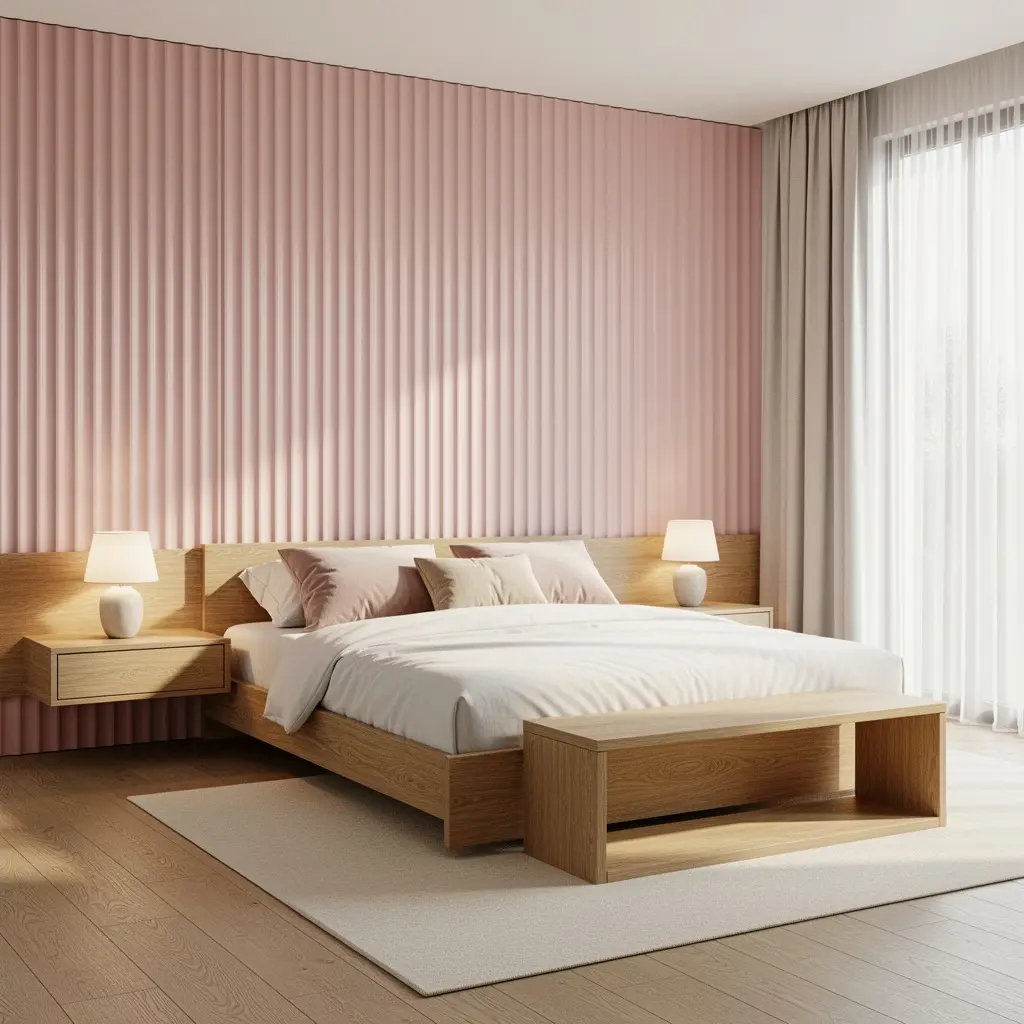
Natural wood furniture and woven textures prevent a fluted pink bedroom from feeling overly polished or purely decorative, grounding the room’s softer color and smoother panel surface with real material texture. A wood nightstand or a woven chandelier both do this work well, adding the kind of organic irregularity that keeps a room from reading as too perfect or showroom like.
Even a single wood element, a bench at the foot of the bed or a simple frame around a mirror, can be enough to introduce this balance without requiring a full furniture overhaul.
7. Add Curved Furniture to Echo the Panel’s Softness
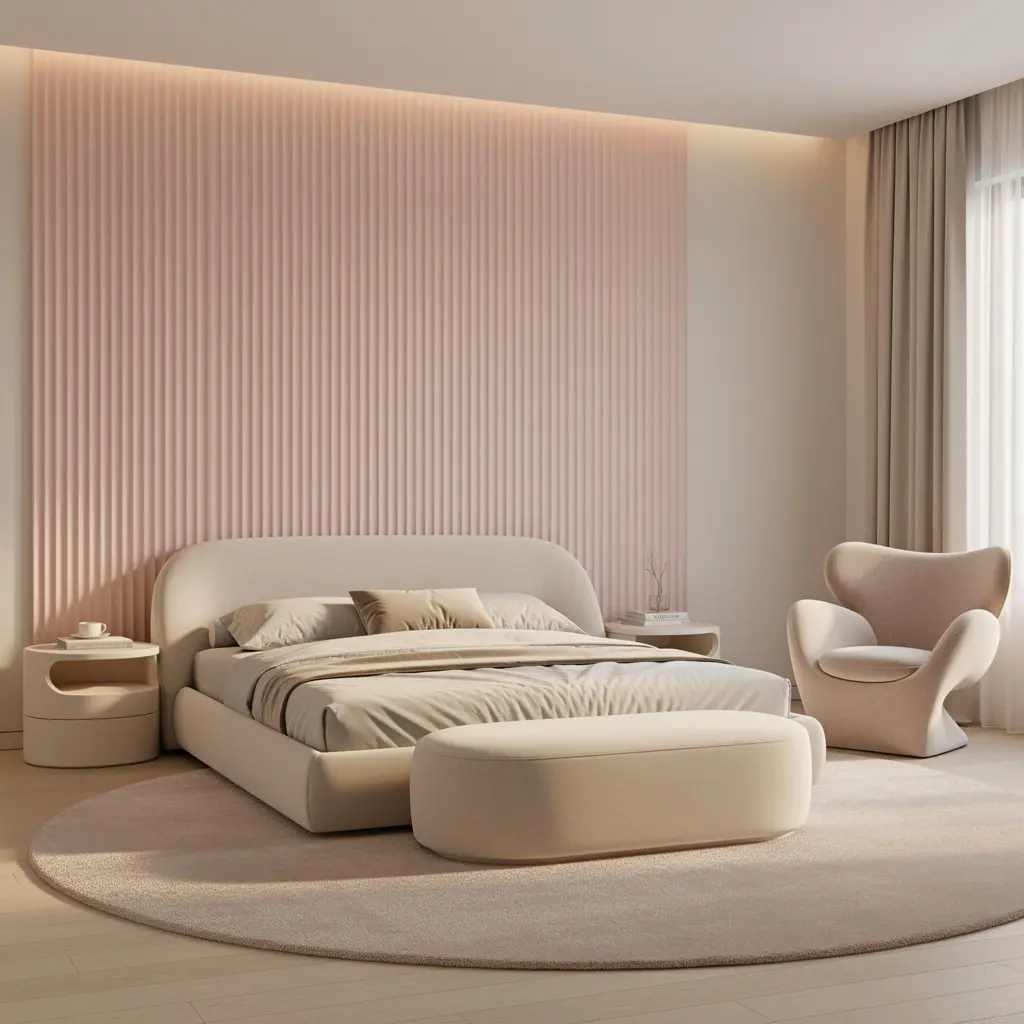
A curved upholstered headboard, if the fluted treatment is used elsewhere in the room rather than directly behind the bed, or a rounded nightstand and mirror, echo the same soft, rounded quality the fluted grooves themselves carry. This repetition of curved shapes throughout the room reinforces the pink fluted panel’s overall mood rather than competing against it with sharp, angular furniture.
8. Use Fluted Panels on a Wardrobe for a Seamless Look
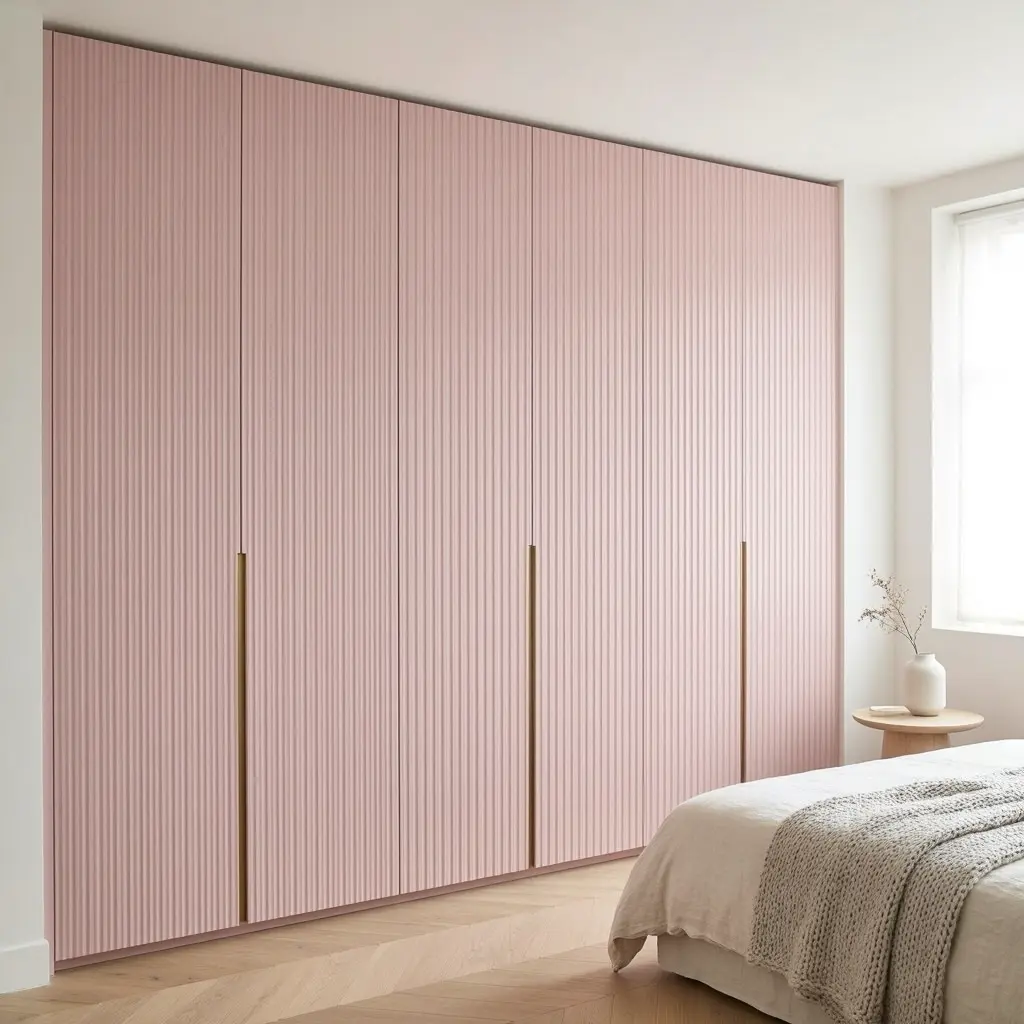
A fluted surface running continuously across every wardrobe door hides the seams between panels, creating one uninterrupted textured surface rather than a wall broken up by visible handles and gaps. This approach works especially well in a minimalist pink bedroom, where a large storage wall might otherwise feel bulky or visually heavy without the grooved detail to break it up.
9. Keep the Palette to Two or Three Supporting Tones
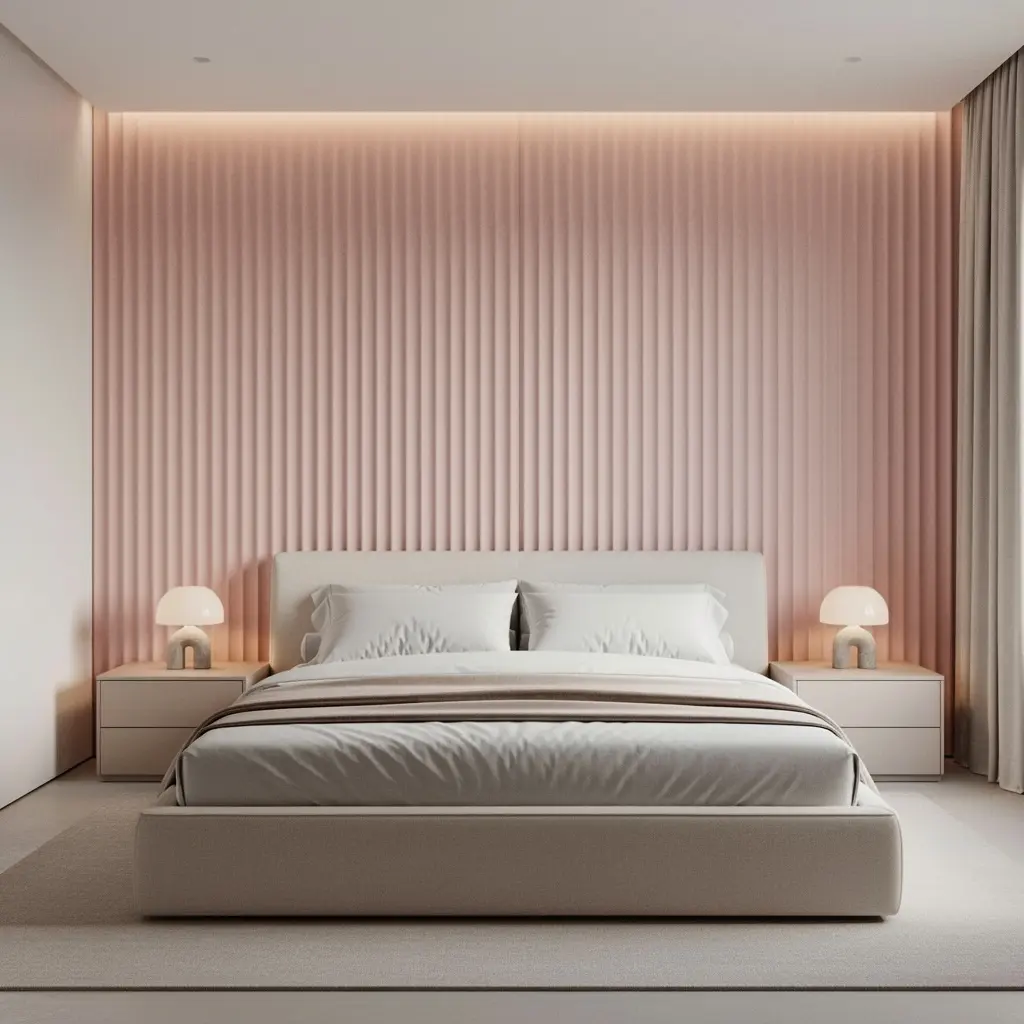
Dusty rose or salmon as the lead color, paired with just white or cream and a single accent like brass or warm wood, keeps a fluted pink bedroom feeling cohesive rather than scattered. These bedrooms work best when pink functions as an architectural color running through the walls, ceiling, and furniture details, rather than as one accent competing with several other bold choices in the same room.
Deciding on this shortlist before shopping for smaller details, like a lampshade or a picture frame, keeps every later purchase easy to evaluate against a clear standard instead of choosing pieces in isolation.
10. Let Texture Do the Work Instead of Bold Color
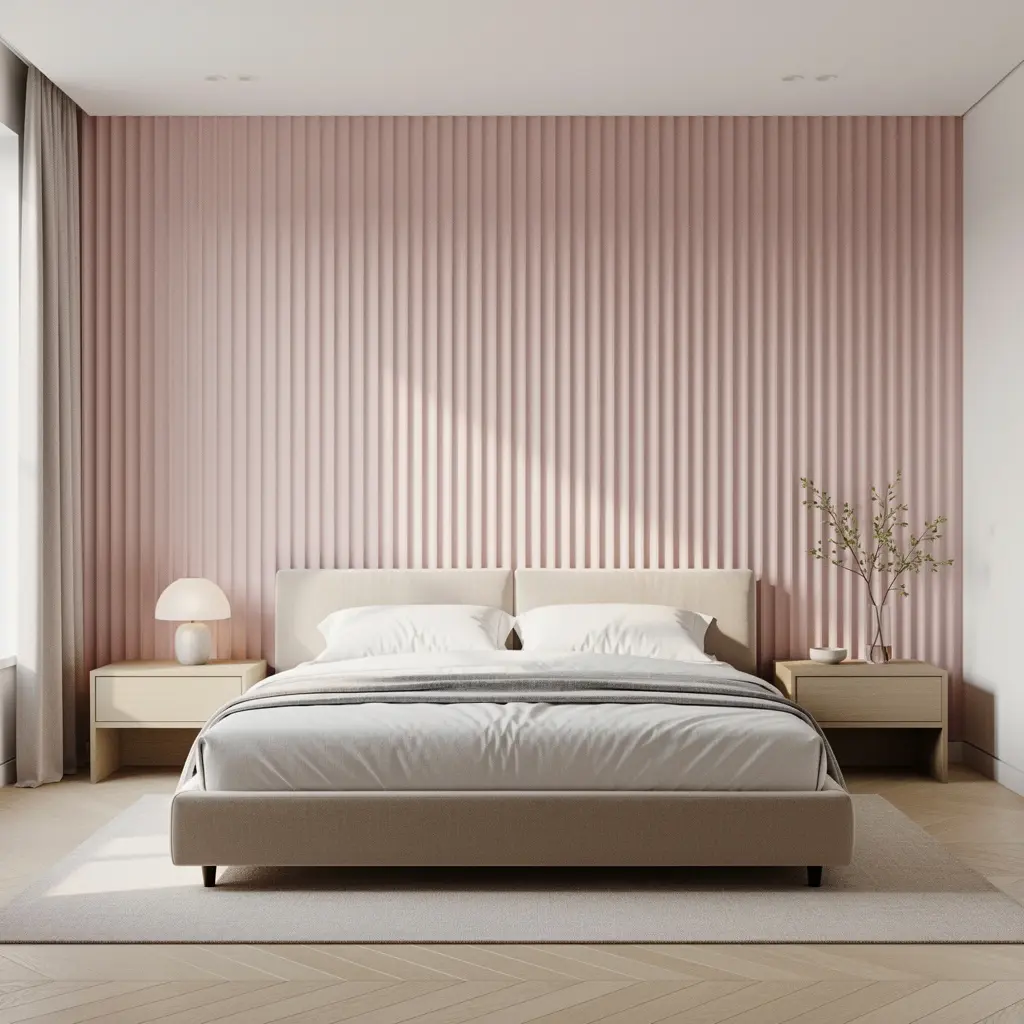
Fluted panels solve the problem of a flat, cold feeling room by adding depth through repetition and shadow rather than through bold color or heavy decoration. A pink fluted bedroom leans on exactly this principle, letting the grooved texture and soft, muted color do the visual work together, which tends to read as more considered and current than a brightly saturated pink room relying on color alone.
Mistakes to Avoid
- Choosing a bright, saturated pink instead of a muted, dusty tone that reads as sophisticated rather than childish
- Sizing a fluted headboard panel too narrow for the bed, leaving it looking incomplete rather than architectural
- Skipping natural wood or woven texture, which can leave the room feeling overly polished and one dimensional
- Pairing fluted panels only with sharp, angular furniture instead of a few curved pieces that echo the grooves
- Introducing too many colors at once instead of keeping the palette to two or three supporting tones
- Choosing cool metal finishes like chrome instead of warm brass, which balances pink’s cooler undertones better
Frequently Asked Questions
What is a fluted wall panel, exactly? It’s a wall surface featuring thin, repeated vertical grooves, used on headboards, wardrobes, or full accent walls to add texture and shadow without introducing additional color or decoration.
Does a pink fluted panel work as a full headboard? Yes. Extending the fluted treatment horizontally behind and slightly beyond the bed creates an oversized headboard effect that acts as the room’s clear architectural focal point.
What colors pair best with a pink fluted panel? White or cream bedding keeps the room feeling open, while brass accents and natural wood furniture add warmth and texture that balance pink’s softer, cooler undertone.
Is a bright pink or a muted pink better for this look? A muted, dusty pink tends to work better with fluted paneling, since it behaves closer to a neutral and pairs more naturally with the warm wood and brass tones commonly used alongside it.
Can fluted panels be used somewhere other than the headboard wall? Yes. Wardrobes, vanities, and full accent walls are all common places for fluted paneling, and it can be used to hide storage seams as easily as it can create a focal headboard.
Conclusion
A pink fluted wall panel bedroom works because it treats pink as an architectural color and fluting as real texture, rather than relying on either alone to carry the whole room. Choose a muted, dusty shade, size the panel generously as a headboard or full accent wall, and ground it with brass lighting, natural wood, and simple white bedding. The result is a bedroom that feels soft, current, and genuinely elevated, not childish or flat.
If a full panel installation feels like a bigger project than you’re ready for, starting with just the color palette and a few natural material accents still moves the room in the right direction, with the fluted texture becoming a later addition once the rest of the space is settled.