10 Dream Bedroom Inspiration Ideas | Cozy & Aesthetic Bedroom Decor
You spend a third of your life in your bedroom, yet it’s often the last room to get any real styling attention. Maybe the bedding doesn’t quite match, the lighting is one harsh overhead bulb, and the corner by the window has turned into a dumping ground for laundry. These dream bedroom inspiration ideas focus on the details that actually change how a room feels to be in, not just how it photographs. A cozy, aesthetic bedroom comes down to layering, lighting and knowing what to leave out, more than it comes down to spending a lot of money.
1. Start With Layered Bedding for Instant Coziness
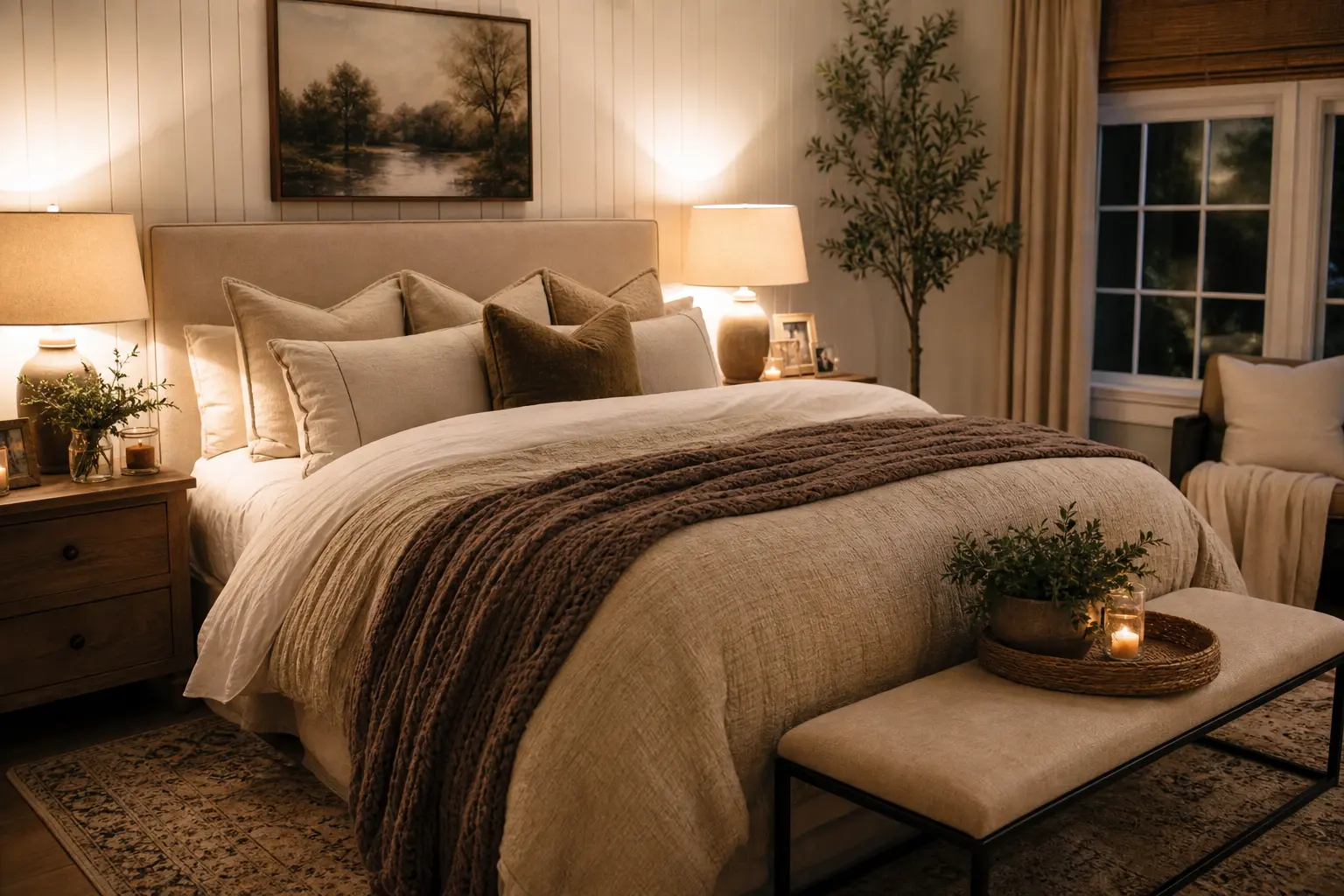
A flat sheet, one thin blanket and a single pillow rarely look or feel inviting. Layer a fitted sheet, a duvet or quilt, and at least two to three pillows in slightly varied textures, like a linen pillowcase next to a knit cushion. This layering is what makes a bed look intentionally styled rather than just made. A lightweight throw folded at the foot of the bed adds one more layer without needing to be used every night.
Choosing Fabric Weight by Season
Cotton and linen bedding breathe better in warmer climates, while a heavier quilt or knit throw adds warmth for cooler months. Many people keep both on hand and swap the top layer seasonally rather than buying an entirely new set.
2. Choose Warm, Dimmable Lighting Over One Bright Overhead Bulb
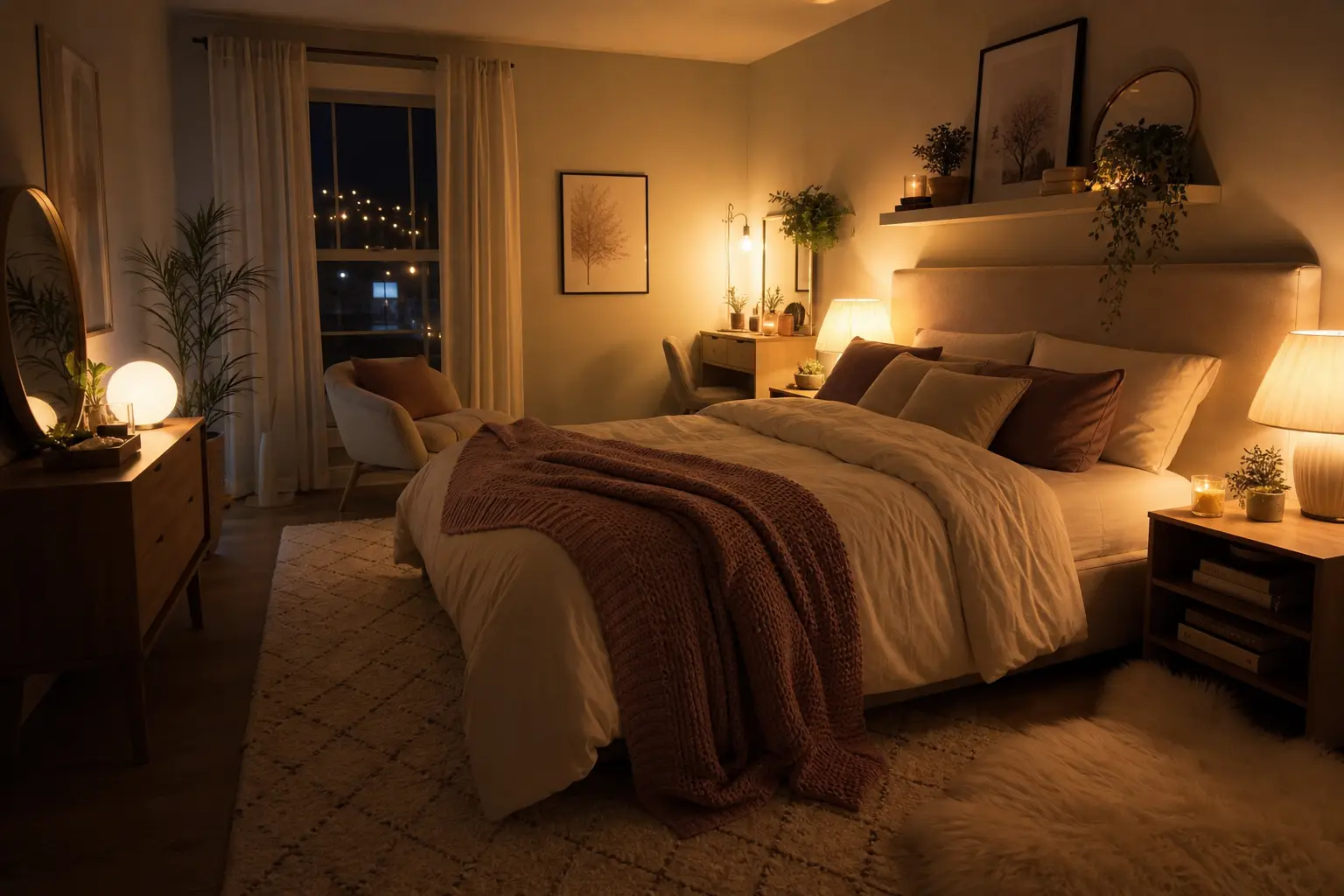
A single ceiling light on full brightness rarely feels relaxing at the end of the day. Add a bedside lamp with a warm bulb, around 2700K, and consider a dimmer switch for the main overhead fixture if your wiring allows for it. This gives you bright light for getting ready in the morning and softer light for winding down at night, without needing to change the bulb itself.
3. Add a Reading Corner With a Comfortable Chair
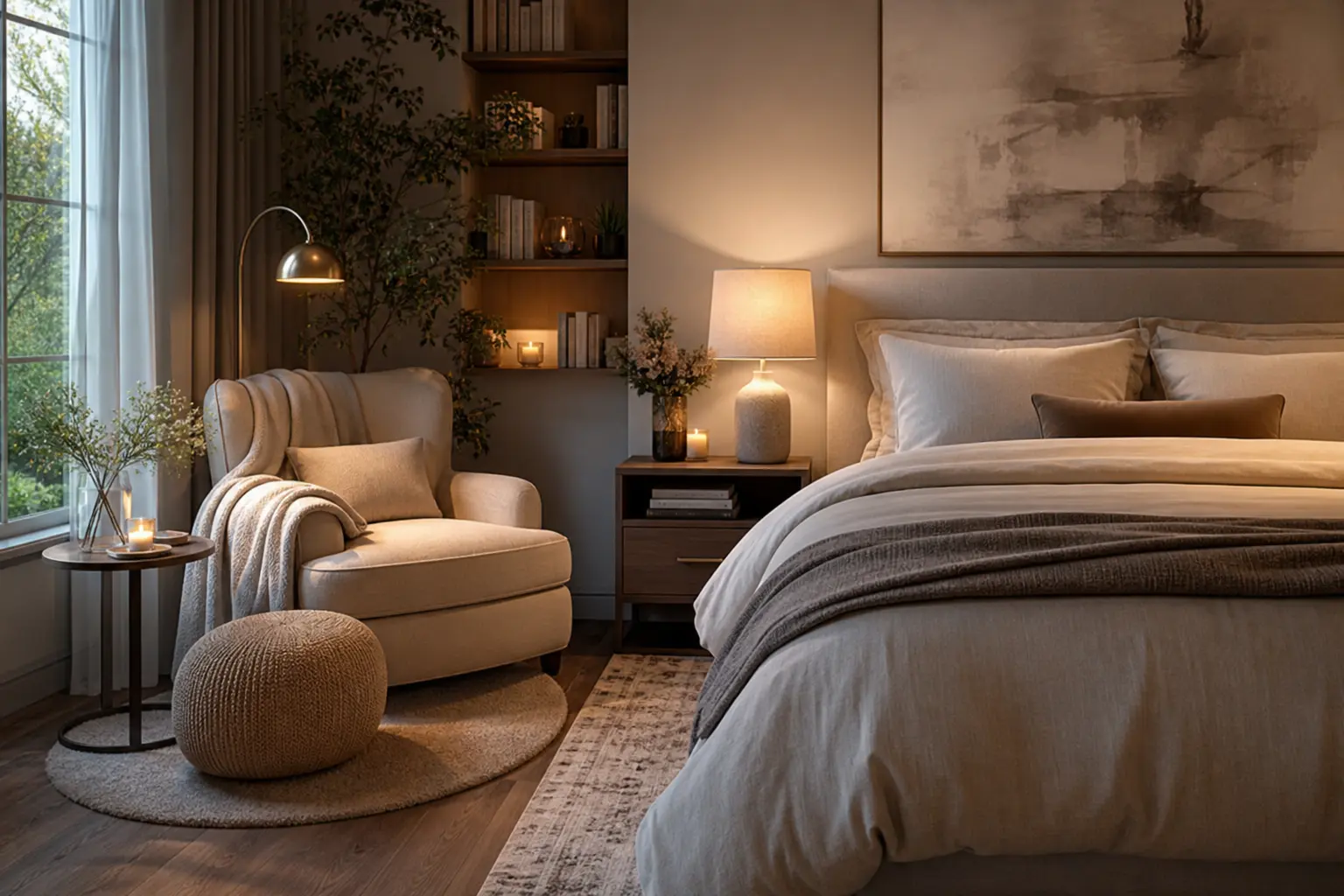
If your bedroom has even a small amount of unused space, a single comfortable chair with a floor lamp and a small side table creates a spot to read or unwind outside of the bed itself. This doesn’t need to be large. A slim accent chair in a corner, paired with a folded throw and one plant, is enough to make the space feel used rather than just passed through.
4. Use a Rug to Anchor the Bed and Soften the Floor
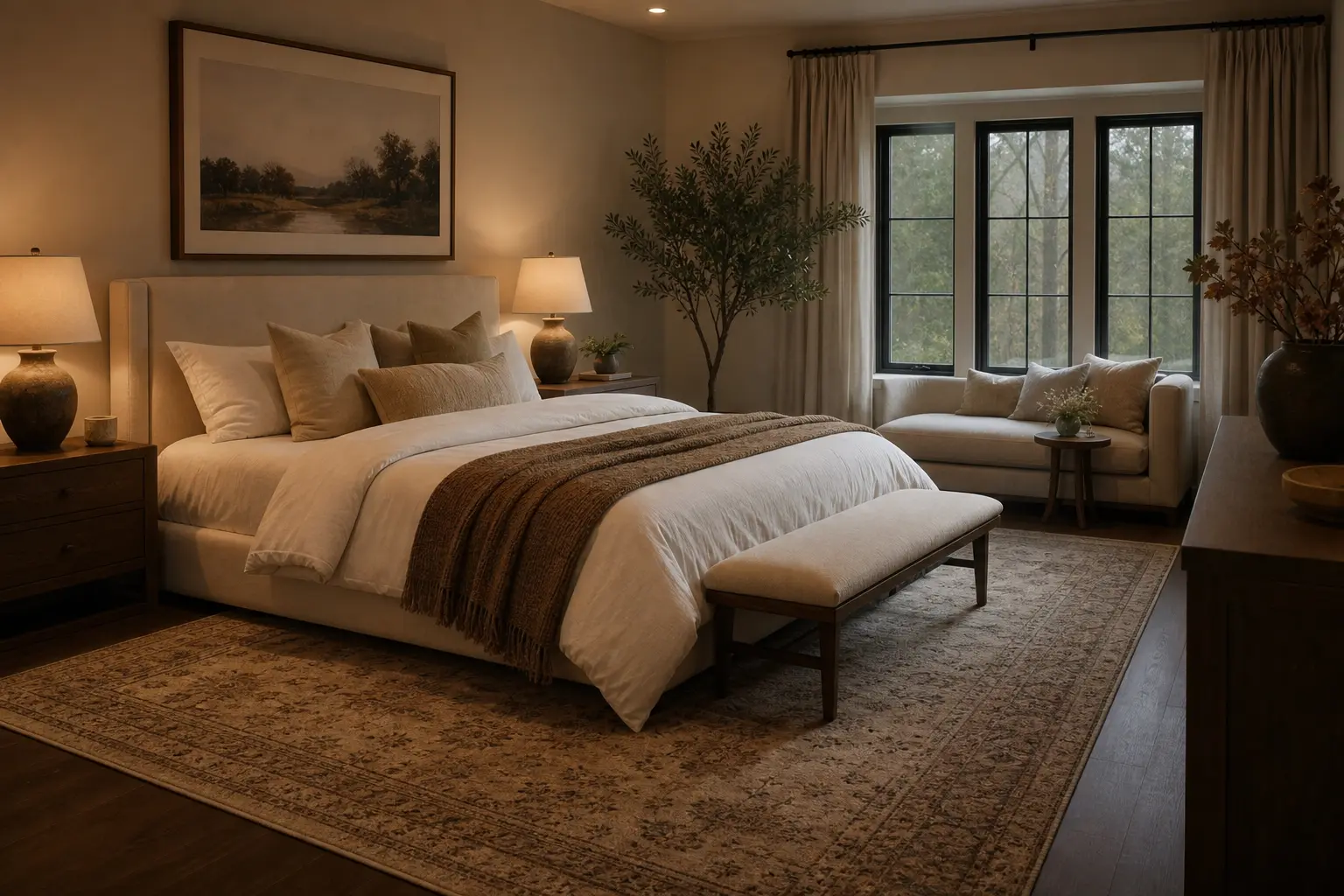
Stepping onto cold flooring first thing in the morning isn’t exactly restful. A rug placed so it extends at least 18 to 24 inches beyond each side of the bed anchors the furniture visually and gives you a soft landing spot. In smaller rooms, two smaller runners on either side of the bed can work just as well as one large rug.
5. Bring in Curtains That Filter Light Without Blocking It Completely
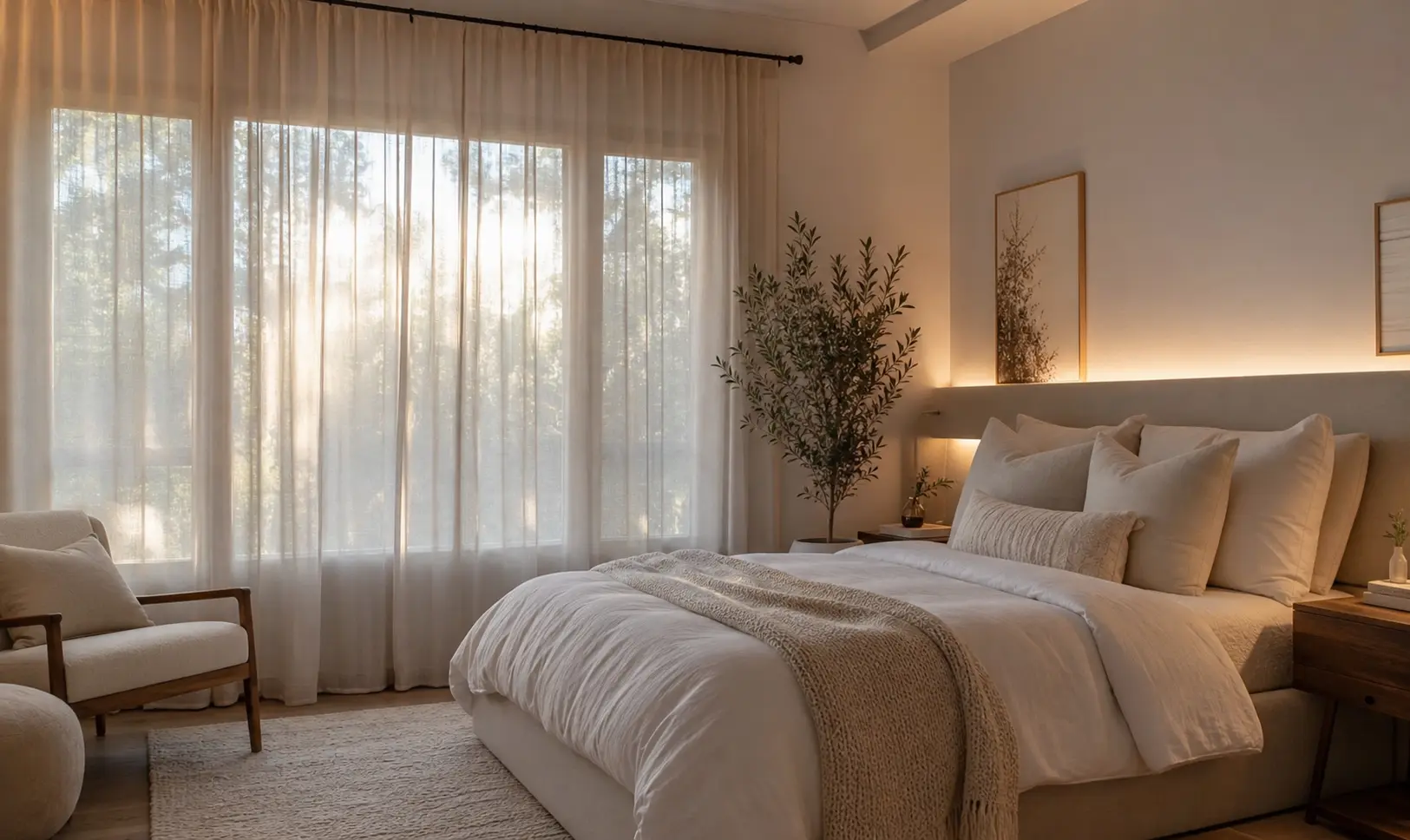
Heavy blackout curtains have their place, especially for better sleep, but sheer or lightly textured curtains layered underneath let in soft daylight during the day while still adding softness to the window. If sleep quality is a priority, pair a blackout curtain behind a lighter sheer panel so you get both function and a softer daytime look.
6. Add Textural Layers Through Throws and Cushions
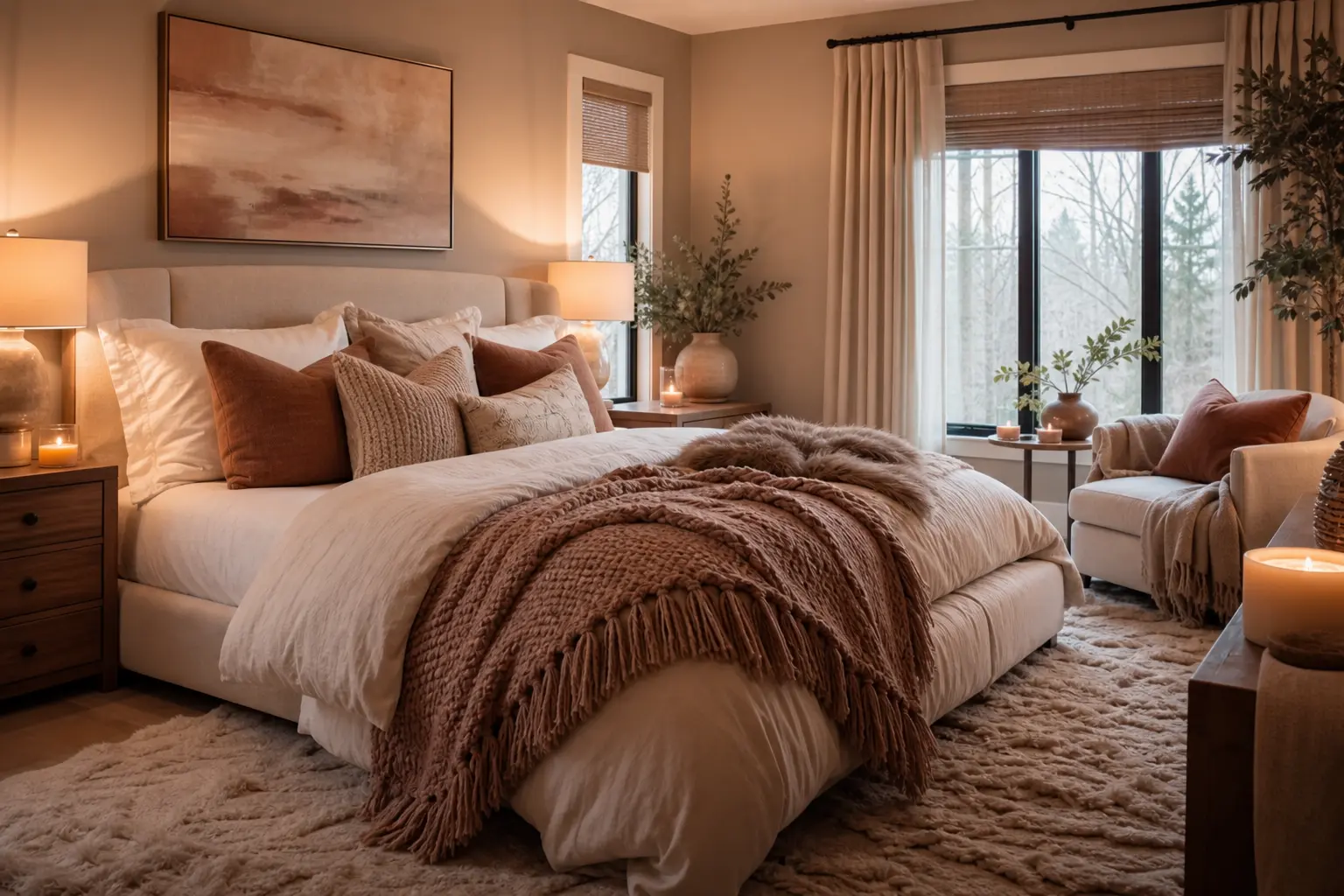
A room with only smooth, flat surfaces, like a plain comforter and bare walls, can feel a little sterile even if the color palette is nice. A knit throw, a woven cushion cover or a textured headboard all add tactile variety. Stick to two or three different textures rather than five or six, so the room still feels cohesive rather than busy.
7. Keep the Nightstand Styling Minimal and Functional
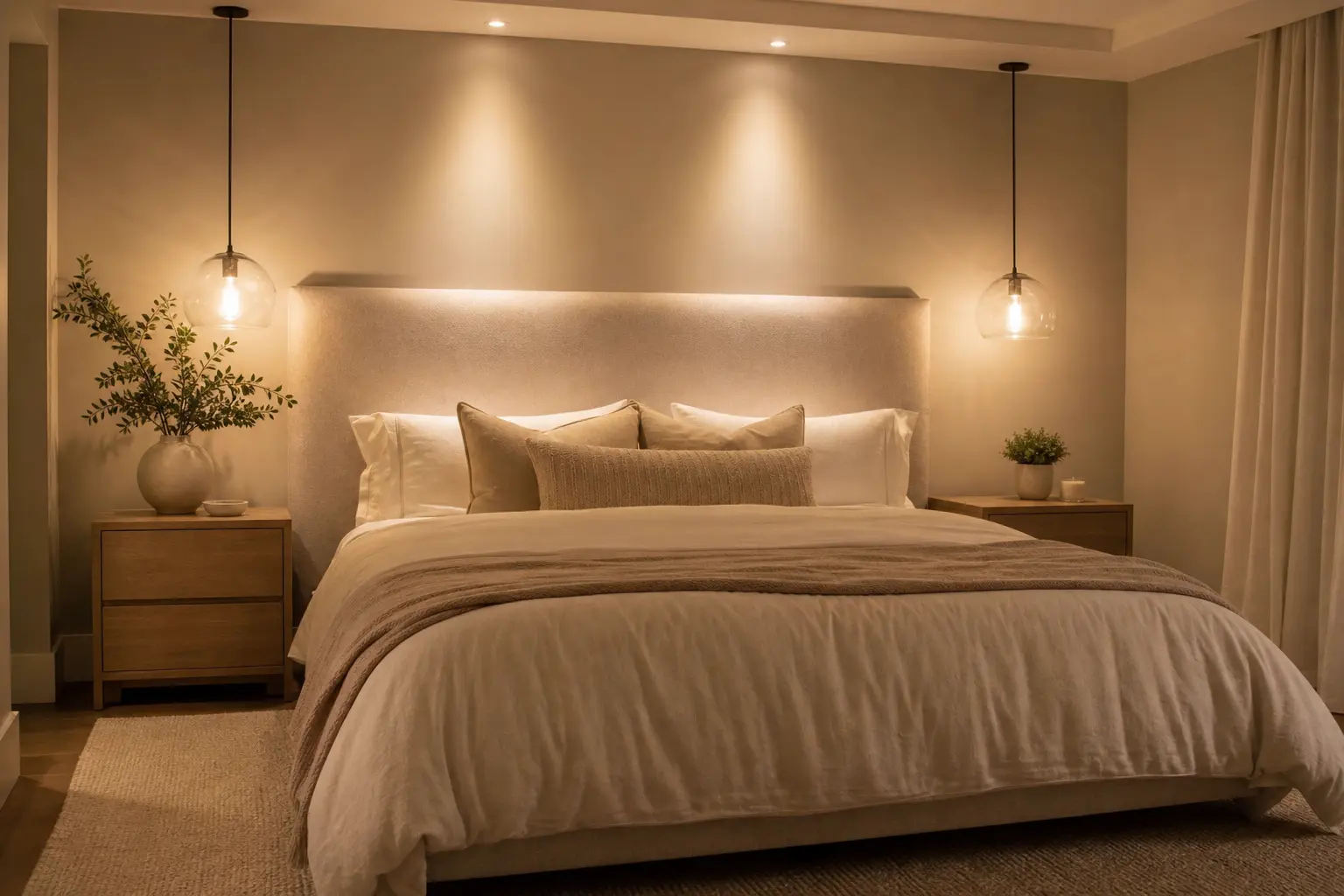
A nightstand piled with chargers, old water glasses and random items undoes a lot of the calm a well styled bed creates. Keep it to a lamp, a small dish for jewelry or glasses, and maybe one book or a small plant. This isn’t about hiding that you actually use your nightstand, it’s about giving each item on it a clear reason to be there.
8. Add One Statement Piece Instead of Many Small Ones
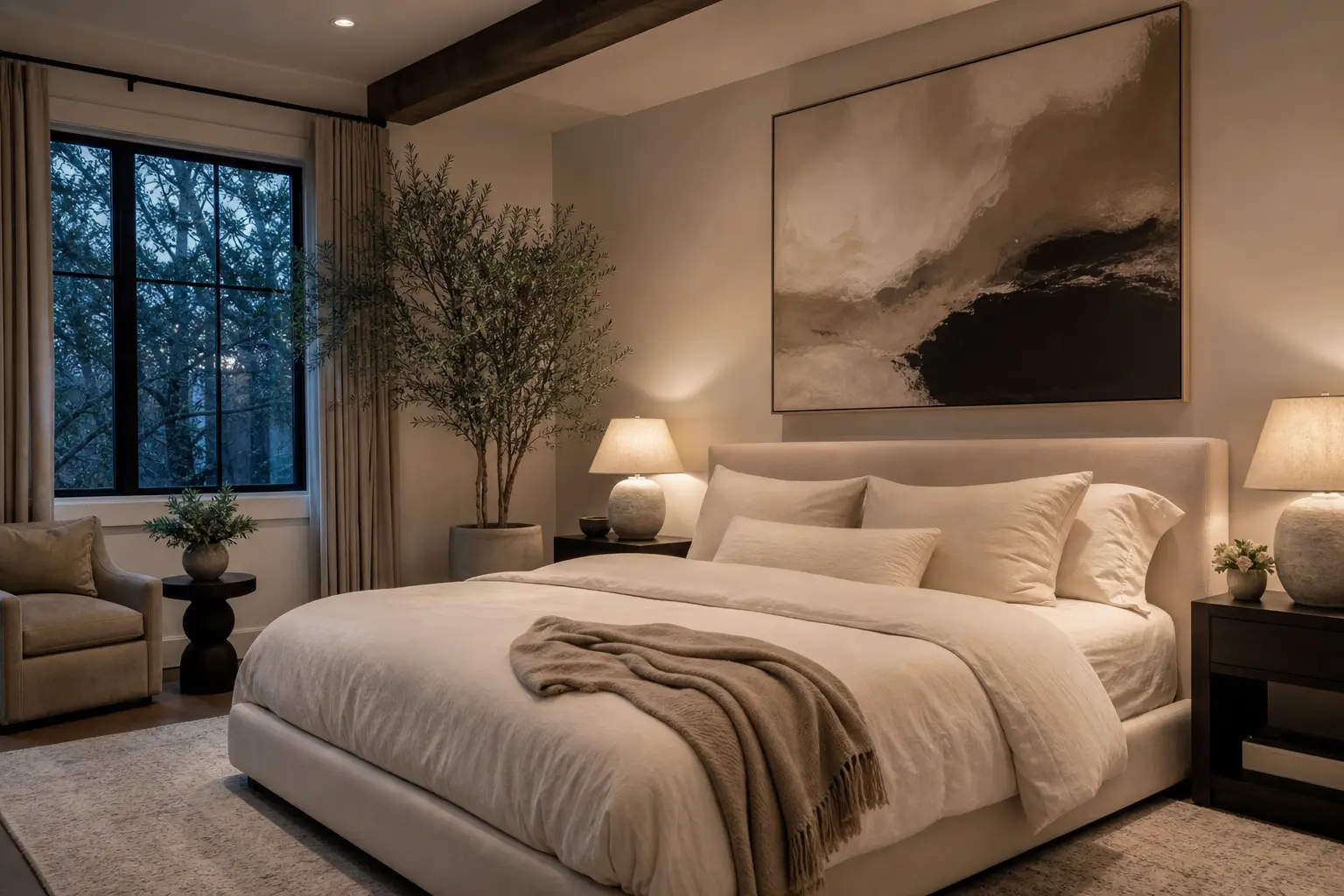
Rather than filling walls with many small frames or trinkets, one larger piece of art, a woven wall hanging or an oversized mirror leaning against the wall creates more visual impact with less clutter. This single piece becomes a focal point the eye can rest on, rather than needing to scan a wall full of smaller items.
9. Bring in Greenery That Suits a Bedroom’s Lower Light
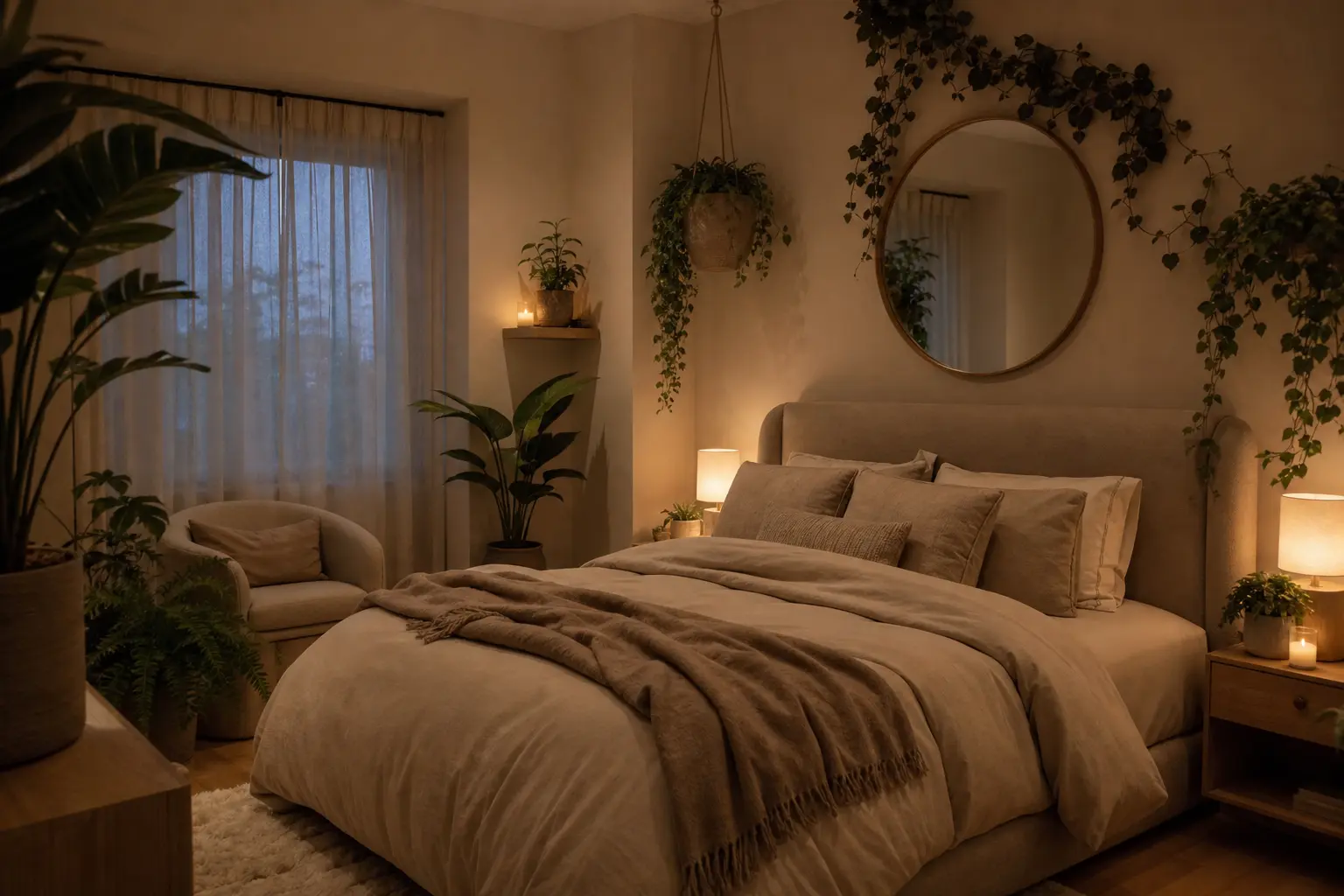
Bedrooms often get less consistent light than living rooms, especially if curtains stay partly closed for privacy or better sleep. A snake plant or ZZ plant tolerates low, indirect light and needs watering only every one to two weeks, which suits a room that doesn’t get checked on constantly throughout the day. Place it in a corner or beside the reading chair rather than directly on the nightstand, where space is already limited.
10. Declutter Surfaces So the Room Can Actually Feel Calm
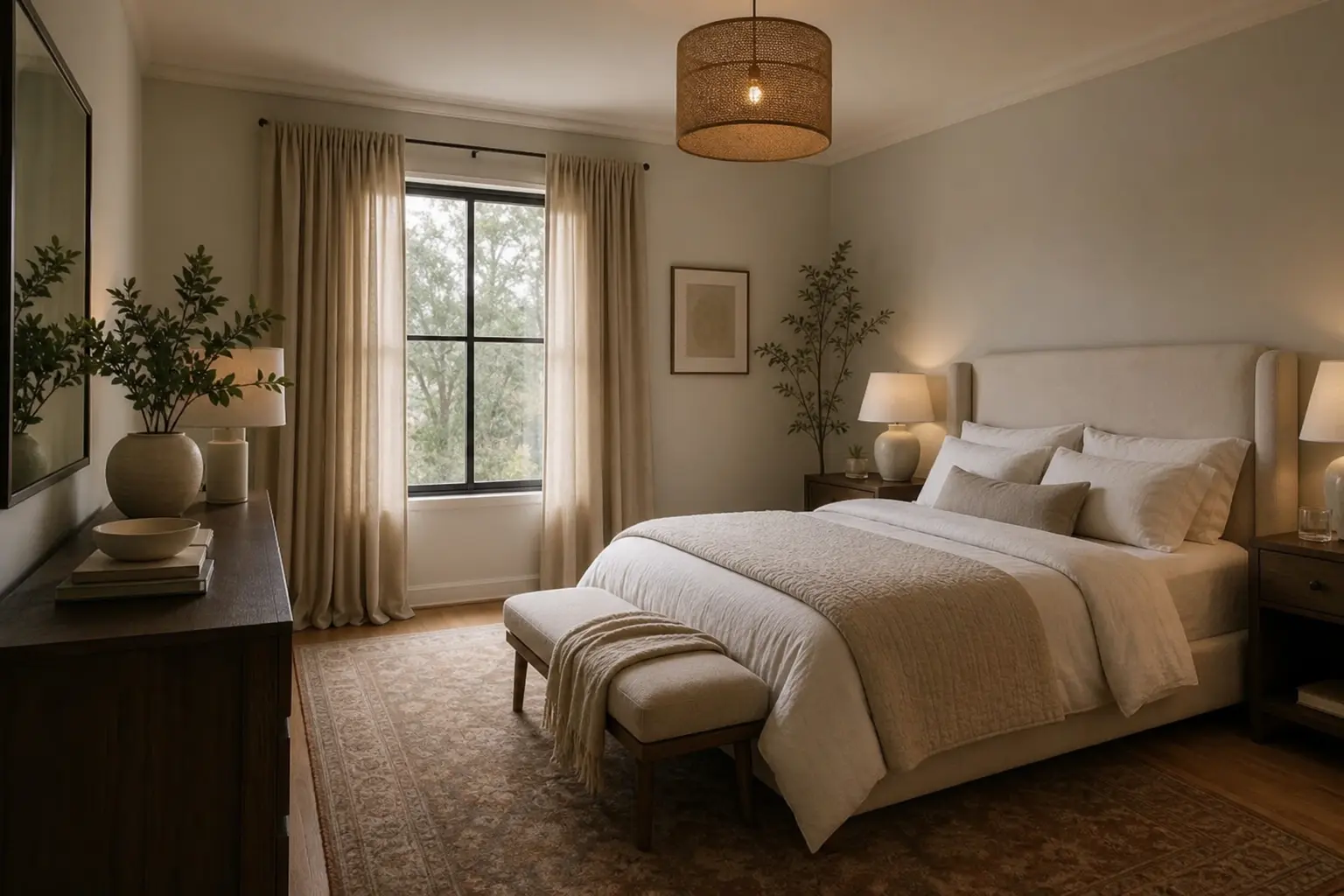
No amount of styling fixes a room where every surface is covered in clothes, papers or miscellaneous items. Before adding anything new, clear nightstands, the top of a dresser and any chair that’s become a clothes pile. A calm, restful bedroom needs visual breathing room as much as it needs good bedding and lighting.
Mistakes to Avoid
- Relying on one bright overhead bulb as the only light source in the room
- Skipping a rug and leaving the floor bare and cold around the bed
- Overloading the nightstand with items that don’t need to be there
- Filling walls with too many small frames instead of one clear focal piece
- Ignoring clutter on surfaces while focusing only on new decor purchases
Frequently Asked Questions
How many pillows should I use for a layered but not overdone bed? Two sleeping pillows plus one or two decorative pillows or a lumbar pillow is generally enough. More than four or five starts to become impractical to move every night.
What’s the easiest way to make a rented bedroom feel cozier without painting? Layered bedding, warm lighting through lamps rather than overhead lights, a rug and curtains cover most of the visual change without touching the walls at all.
Should I use a warm or cool light bulb in a bedroom? Warm white, generally 2700K to 3000K, is better suited to a bedroom’s relaxing purpose. Cool white bulbs tend to feel more clinical and are better suited to task oriented spaces like a home office or kitchen.
Is a reading chair worth it in a small bedroom? If there’s genuinely no extra space, it’s not essential, but even a small slim chair in an underused corner can make the room feel more multipurpose and lived in rather than just a place to sleep.
How do I choose art for above the bed? A piece roughly two thirds the width of the headboard generally looks proportional. One larger piece or a pair of matching smaller pieces both work, depending on the width of the wall space available.
Conclusion
A dream bedroom isn’t built from one big purchase, it’s built from layers. Good bedding, warm and adjustable lighting, a rug underfoot and a clear, decluttered surface do more for how a room feels than any single statement item could on its own. Start with lighting and bedding first, since those affect comfort daily, then build out the styling from there.