10 White Corner Wall Shelf Ideas with 3-Tier Floating Shelves for Stylish Home Decor
Every home has one. That awkward corner that’s too small for a chair, too big to ignore, and too easy to fill with junk you meant to put away weeks ago. A white corner shelf fixes that problem without eating up floor space you don’t have.
This works because corners are vertical real estate. Most people never use them. A single shelf or a full 3 tier setup turns dead space into storage, display room, or even a tiny reading spot. White finishes help too. They read as part of the wall instead of a bulky add on, so even a loaded shelf feels light.
Below are 10 ways to use a white corner shelf, including several built around 3 tier floating shelves. Pick the one that matches your room, or borrow pieces from a few and combine them into something that’s actually your own.
1. Start With a Single Floating Corner Shelf
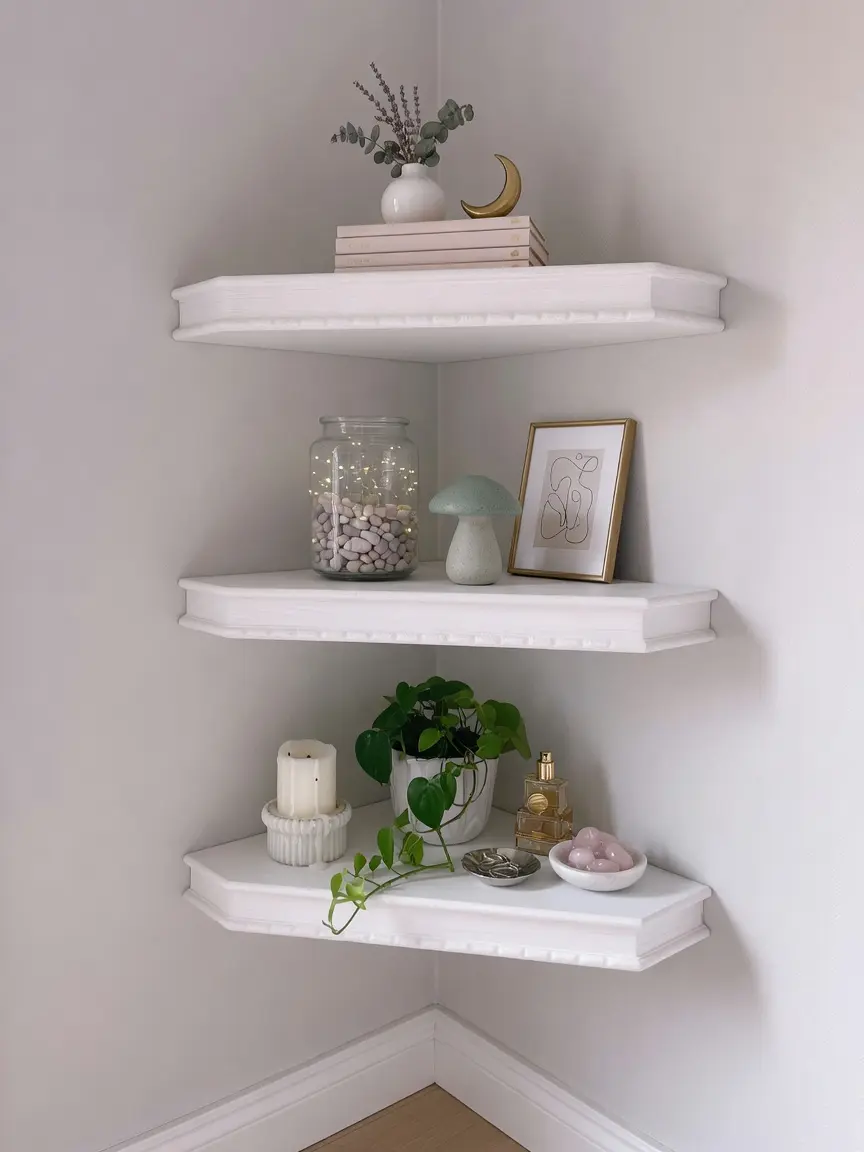
Not ready to commit to a full unit? Start with one shelf. A single floating corner shelf is the easiest way to test whether the spot even works before you add more.
Mount it around eye level, roughly 60 inches from the floor for most rooms. Style it light. One plant, maybe a small frame, and you’re done. Overloading a single shelf right away is the fastest way to make it look like clutter instead of decor.
Where This Works Best
Renters like this option because it’s low commitment. Small anchors go in easily and come out just as easily when you move. It also works in tight bedrooms where a full shelving unit would feel like too much.
2. Go Full Height With a 3 Tier Corner Shelf

A 3 tier corner shelf changes the math. Rather than one small display spot, you get three, stacked and angled to actually use the depth of the corner as well as the width.
Space the tiers around 10 to 12 inches apart. Any tighter and taller items like vases or table lamps won’t fit. Any wider and the whole thing starts to look sparse, like you ran out of decor halfway through.
Use each shelf differently. Books on top. A plant or small lamp in the middle. A basket or larger object on the bottom shelf, since that’s the one people notice first when they walk into the room. White paint or laminate keeps the whole unit from competing with the wall, so it reads as built in rather than bolted on.
3. Use a Corner Shelf as a Mini Reading Nook

Got a chair near a window that never gets used? Add a 3 tier shelf next to it and suddenly that corner has a job. One shelf holds the book you’re currently reading. Another holds a small lamp for evening light. The third can hold a mug, a candle, or whatever makes the spot feel like yours.
This setup works surprisingly well in hallway nooks too, not just bedrooms and living rooms. Any leftover corner with decent light is a candidate.
Keep It Simple
Resist the urge to fill every shelf. A reading nook works because it feels calm, not because it’s fully styled. Two or three items per shelf is plenty.
4. Add a Corner Plant Shelf Near a Window
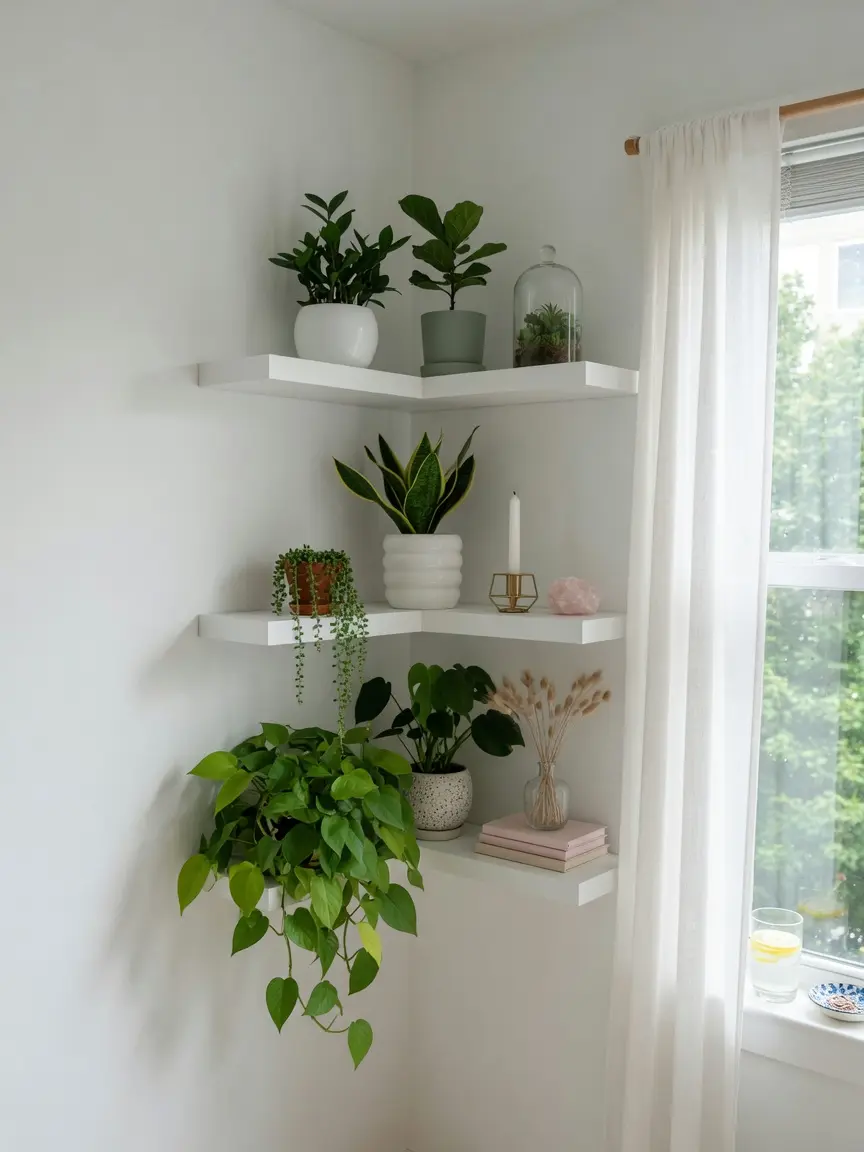
Corners near windows already get natural light, so they’re a natural fit for plants. A white corner shelf lets you stack several pots vertically, rather than lining them across a windowsill or crowding the floor.
Put light hungry plants like succulents or herbs on the top shelf, closest to the window. Save lower shelves for shade tolerant options like pothos or snake plants, since they’ll get less direct light the farther down you go.
Water drips. It happens even when you’re careful. Use small saucers under every pot, especially on painted wood, since standing water will eventually dull or warp a white finish.
5. Turn a Corner Into a Photo Display Wall
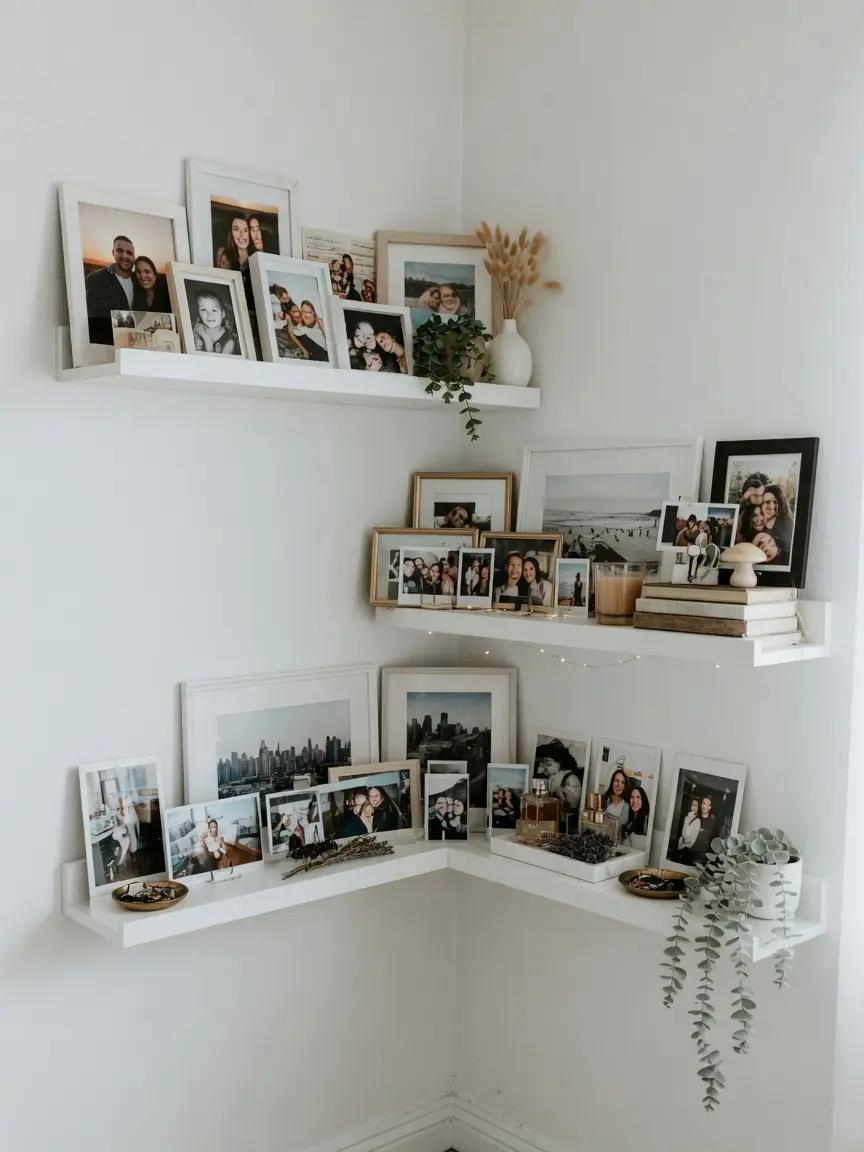
Shelves don’t have to hold objects. They work just as well for photos, and a corner setup gives you a layered display without a single new nail hole beyond the shelf itself.
Lean small framed photos against the wall on each tier rather than hanging them flat. Mix frame sizes and a couple of finishes, like a matte black frame next to a thin gold one, so the display has some visual texture and doesn’t look uniform.
The real advantage here is flexibility. Swap photos whenever you want. Add a new one after a trip, pull an old one out, rearrange the whole thing on a whim. None of that requires a hammer.
6. Try a Ladder Style Corner Shelf
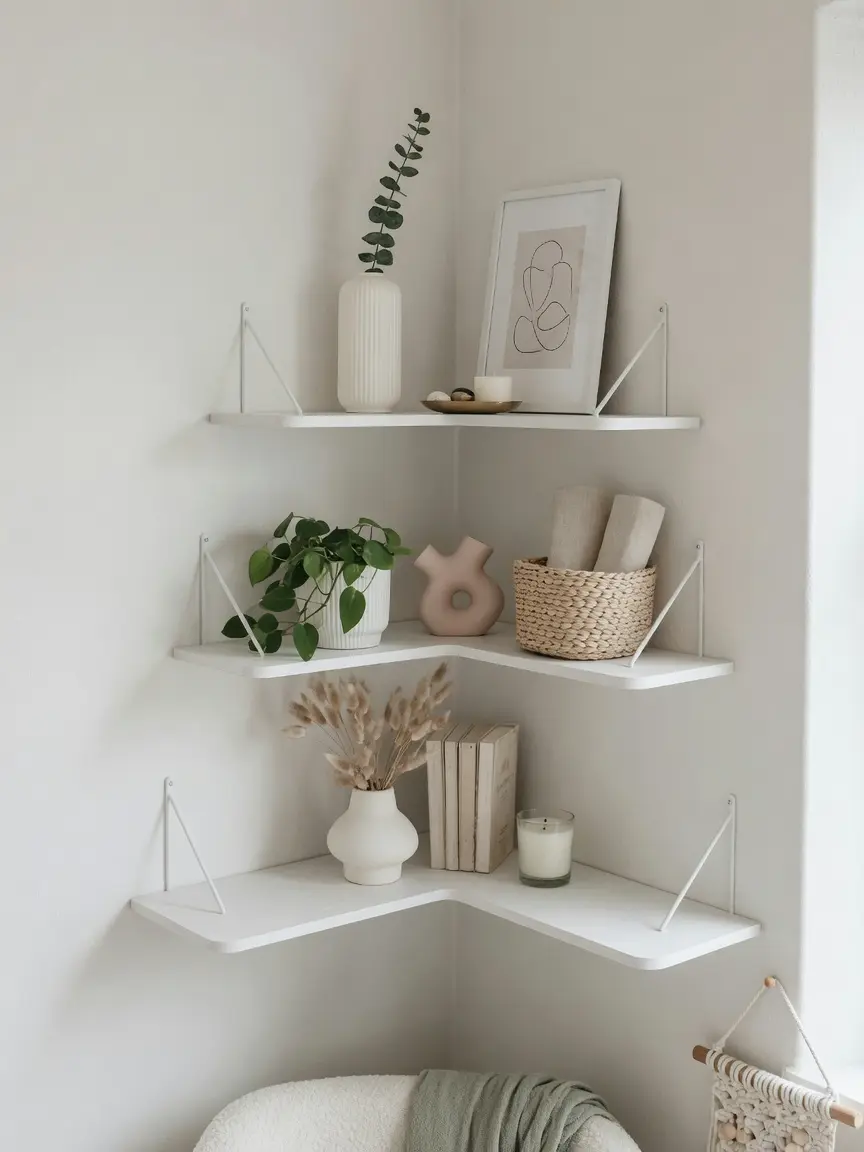
A ladder shelf leans against the wall instead of mounting flush to it. In a corner, that slight angle reads differently than a standard floating shelf, and it’s a solid option if drilling isn’t possible or you just don’t want more holes in the wall.
These are also easier to move. If you rearrange furniture often, a ladder shelf can shift with you instead of staying locked to one wall. Just check the base is stable before loading it up, particularly in a home with kids or pets who might bump into it.
7. Use Corner Shelves in a Small Bathroom
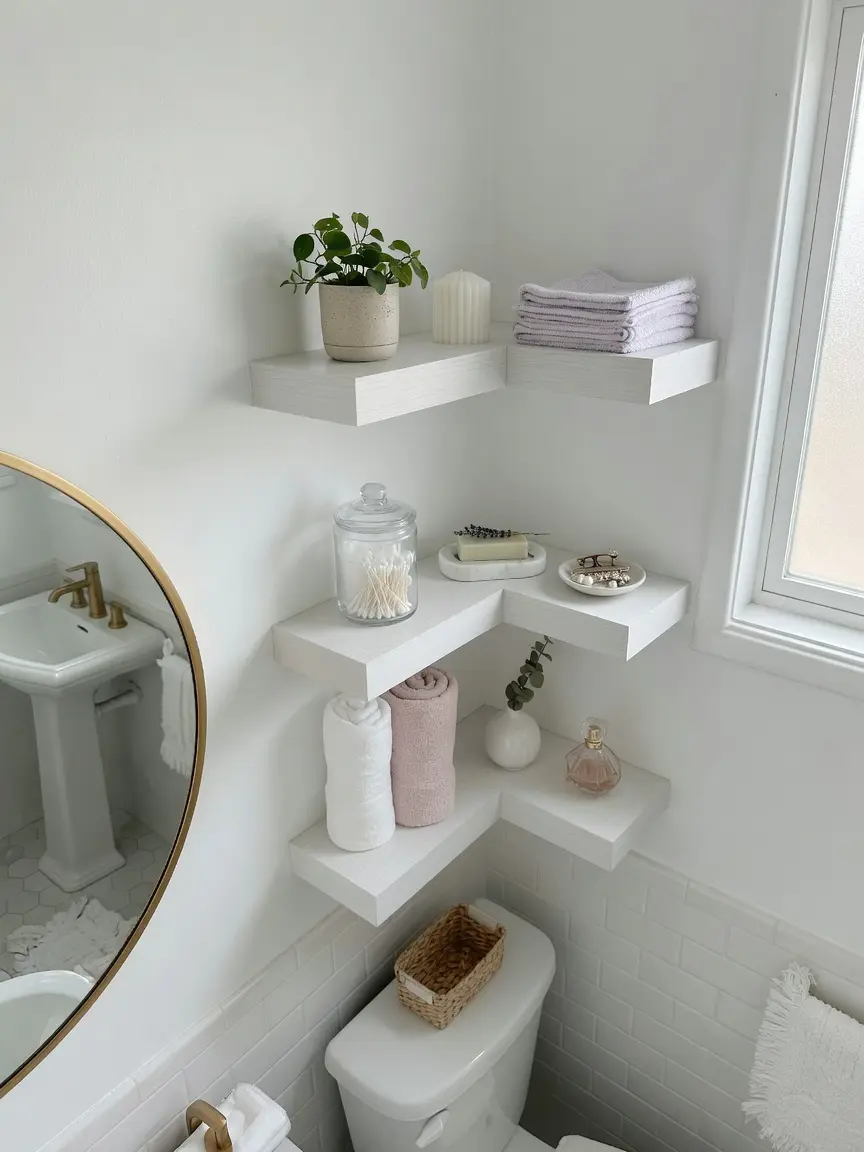
Bathrooms get overlooked when people think about corner shelves, but the corner above a toilet or beside a sink is almost always empty. Even a single small shelf there adds real storage for towels, extra toilet paper, or a humidity loving plant.
Skip standard painted MDF here. Bathroom humidity will warp it over time, sometimes within a year. Look for sealed wood or laminate instead. The higher upfront cost saves you from replacing a swollen shelf later.
8. Style a Corner Shelf Behind a Couch
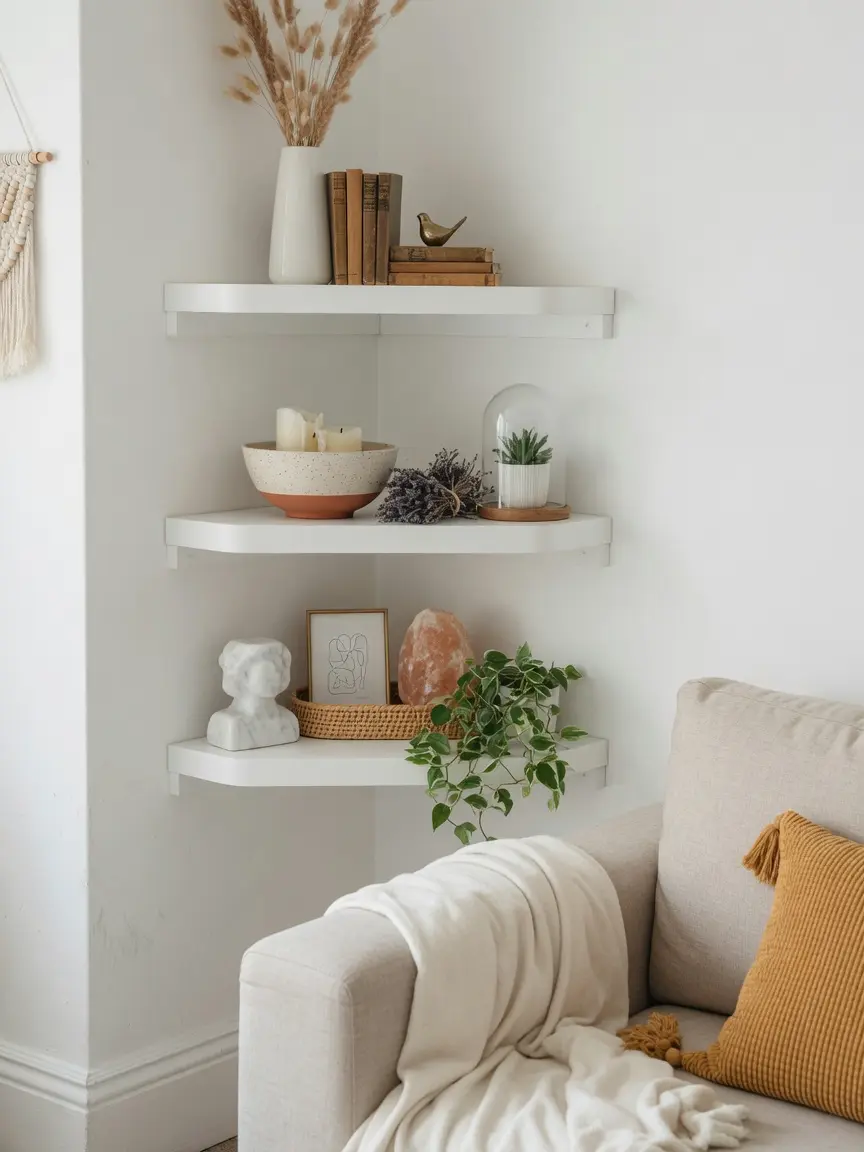
The corner behind or beside a couch is one of the most commonly wasted spots in a living room. A 3 tier corner shelf here adds height and gives you a spot for lighting, which matters if a floor lamp never quite fits in that same corner.
Put a small table lamp on the middle shelf for soft evening light. Keep the top shelf lighter, with smaller or fewer items, so the whole unit doesn’t feel heavy at the top and awkward at the bottom.
9. Add Corner Shelves in a Kitchen Nook
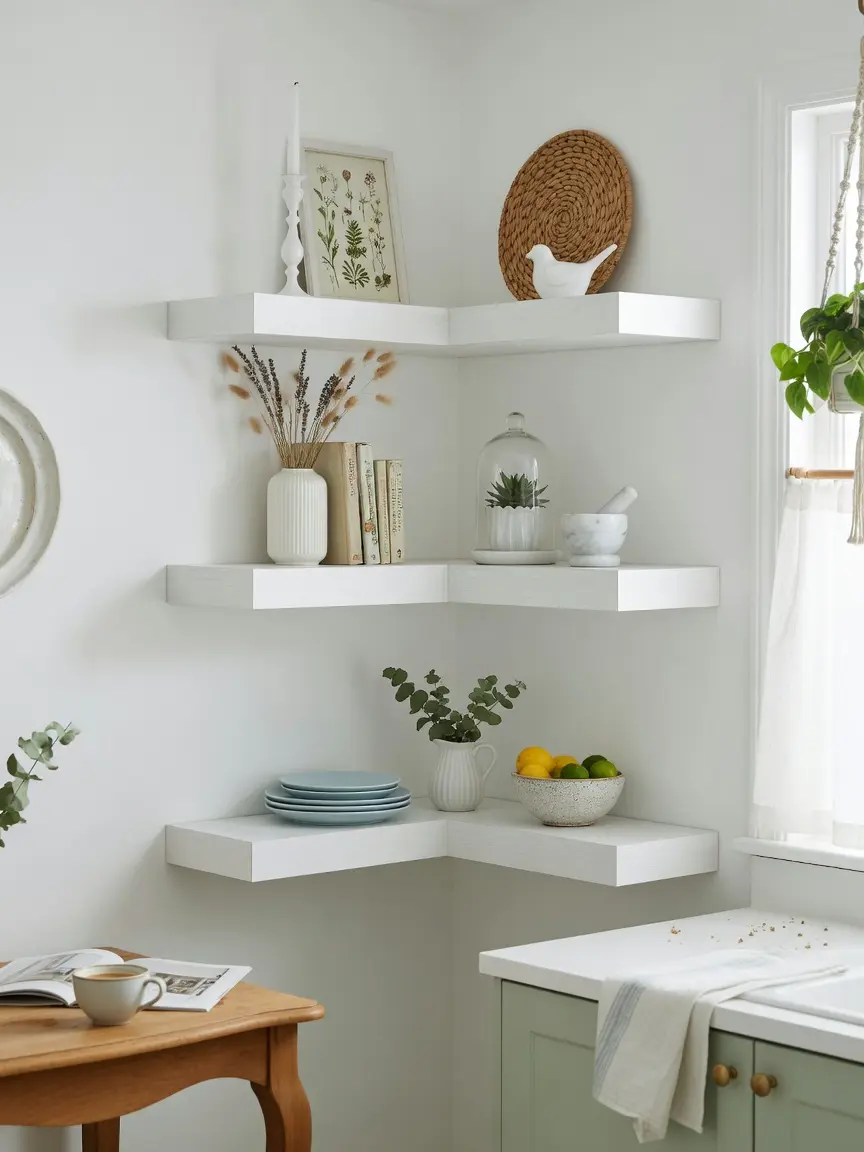
Kitchens rarely get corner shelf treatment, which is a missed opportunity. A white corner shelf near a coffee station or breakfast nook adds storage for mugs, small plants, or a short stack of cookbooks. None of it takes up counter space you need for actual cooking.
Keep frequently used items, like mugs or coffee filters, on the lowest shelf you can comfortably reach. Save the top shelf for things you grab less often, or for decor that doesn’t need to be touched daily.
10. Mix Materials on a White Corner Shelf
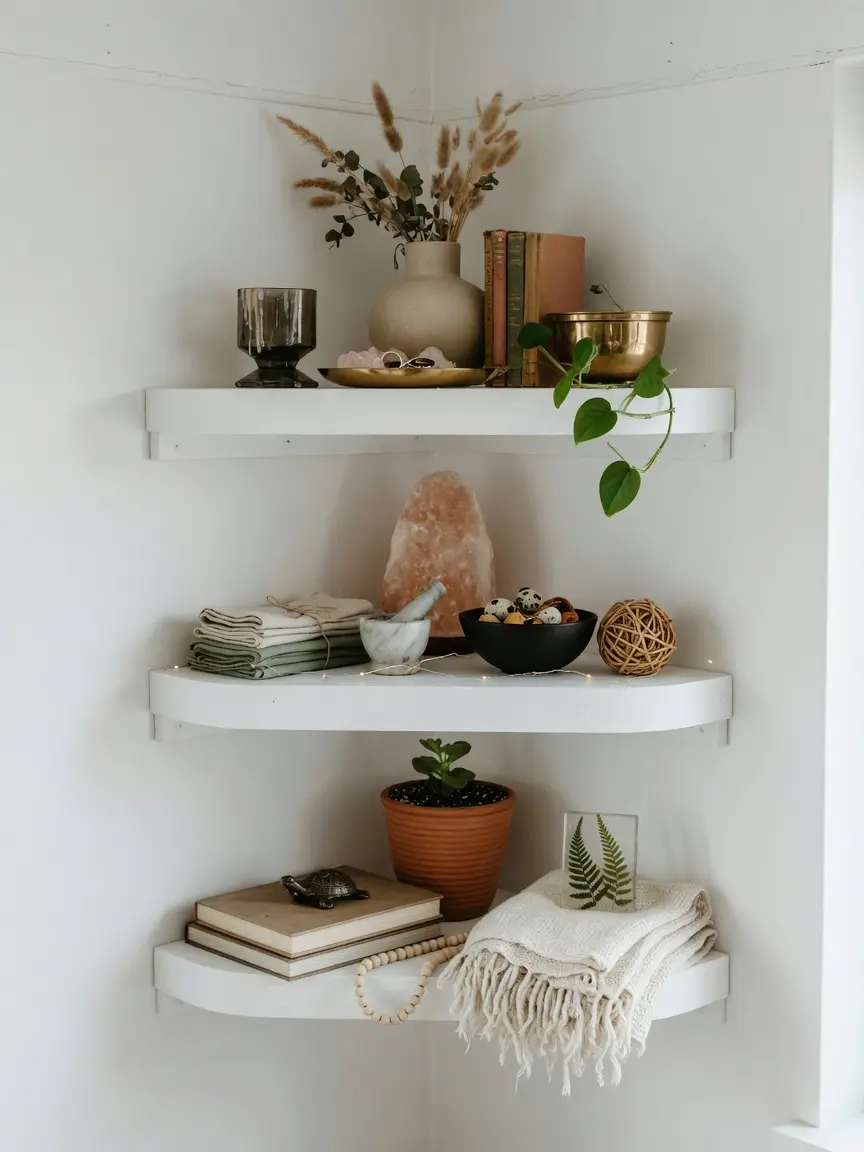
A white shelf doesn’t mean the whole corner has to stay white. Add a woven basket, a wood cutting board leaned against the back, or a ceramic planter in a warm tone. The shelf becomes a neutral base, and everything on it brings the color and texture.
This matters more than it sounds like it should. An all white corner can start to feel flat, almost sterile, especially in a room with warmer tones elsewhere. Mixing materials keeps the shelf from becoming the most boring, most forgettable thing in the room.
Mistakes to Avoid
- Overloading the top shelf, which makes the unit feel unstable even when it’s technically secure
- Skipping wall anchors on drywall, especially once you’re adding anything heavier than a few paperbacks
- Spacing tiers too close together, which leaves no room for taller decor like vases or lamps
- Using identical item sizes on every shelf, which flattens the display and removes any visual layering
- Ignoring the weight limit listed by the manufacturer, since floating shelves fail at the wall, not the shelf itself
FAQ
How high should I mount a corner shelf? Most corner shelves work best between 60 and 66 inches from the floor for eye level viewing, though ceiling height and room use can shift that number.
Can I install a 3 tier corner shelf on drywall? Yes, but only with wall anchors rated for the full weight you plan to add, not just the weight of the empty shelf.
What’s the best spacing between shelf tiers? Somewhere between 10 and 14 inches usually works well, giving enough clearance for taller items without wasting vertical space.
Do white corner shelves work in small rooms? Yes, and often better than darker wood tones, since white tends to blend into wall color instead of visually shrinking the room.
How much weight can a floating corner shelf hold? This depends entirely on the brand and the mounting hardware used, so always check the manufacturer’s rating before loading books or heavier decor onto it.
Conclusion
An empty corner is wasted space, but it doesn’t have to stay that way. A single floating shelf handles it if you want something simple. A full 3 tier setup handles it if you want real storage and a bit of drama. Either way, start with one corner. See how it actually functions in daily use, then expand from there once you know what works.