10 Kitchen Clutter Before & After Transformation Ideas for a Beautifully Organized Space
You clean the kitchen counter on Sunday, and by Wednesday it’s covered again. Mail, a stray charger, three mugs that never made it to the sink. Kitchen clutter builds back fast because most fixes only address the mess, not why it happened in the first place. This article covers ten real transformations, the kind you can actually maintain, that fix the underlying storage and habit problems instead of just tidying the surface for a day or two.
1. Why Kitchen Clutter Builds Up Faster Than Any Other Room
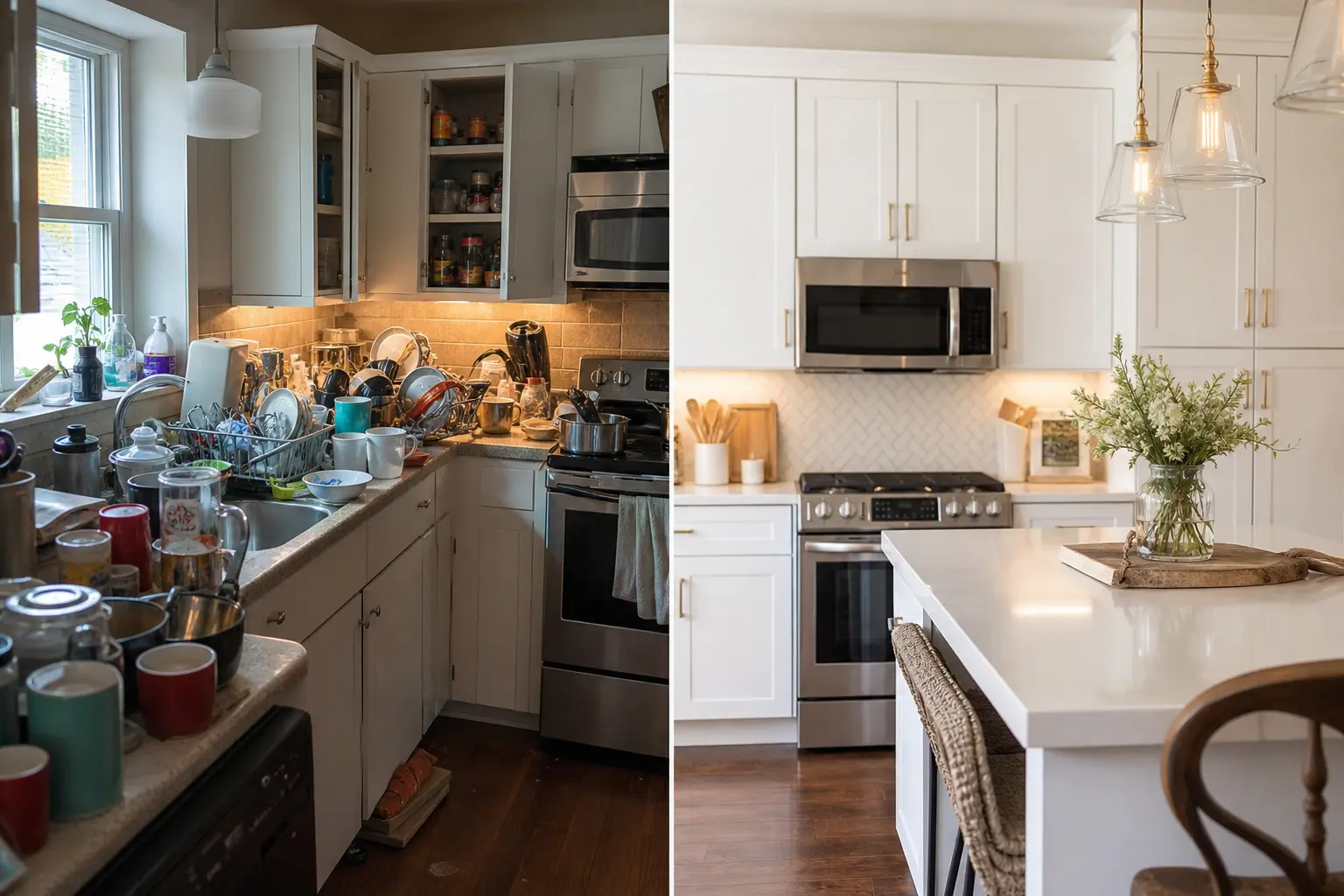
The kitchen sees more daily traffic than almost any other room in the house. Mail gets dropped there. Keys land on the counter. It becomes the default spot for anything with nowhere else to go.
That’s the real problem. Clutter isn’t really about too much stuff. It’s about items that don’t have an assigned home, so they end up wherever’s closest, which in most homes is the kitchen counter.
Fixing the clutter for good means giving every category of item, mail, keys, chargers, an actual spot. Once that’s in place, the daily mess has somewhere to go besides the counter.
A kitchen only stays organized long term when every item has a home. Otherwise the clutter just comes back on a loop.
2. Starting with a Full Counter Reset
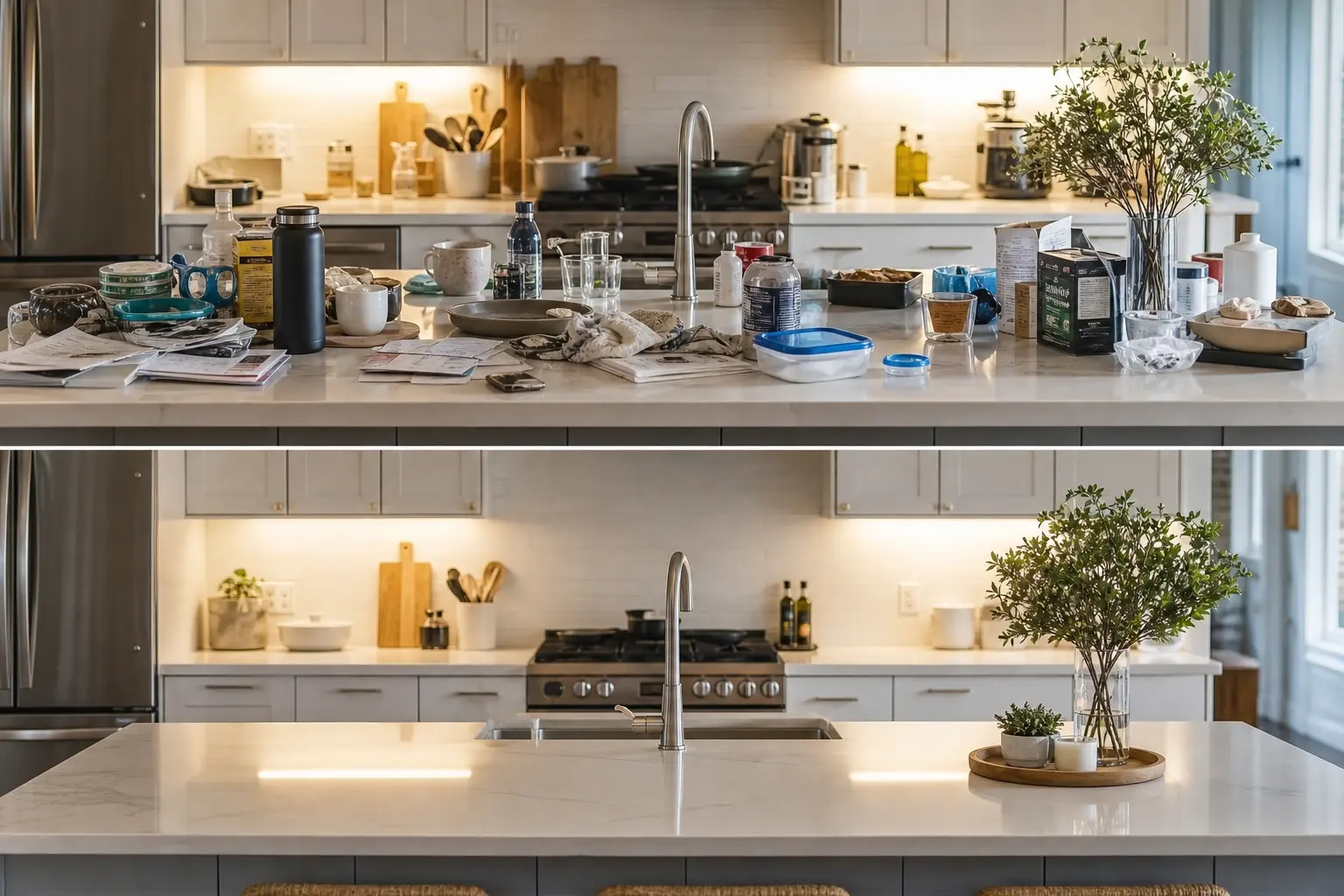
Before organizing anything else, clear the counters completely. Put everything in a box, even things you’re sure belong there, and only return items after deciding they’ve earned a permanent spot.
This forces an honest look at what’s actually needed daily versus what’s just been sitting there out of habit. A blender used twice a year doesn’t need permanent counter space just because that’s where it’s always lived.
What Actually Belongs on the Counter
Keep only what you use daily. A coffee maker, a knife block, maybe a fruit bowl. Everything else goes into a cabinet, a drawer, or gets donated if it’s not being used at all.
3. Sorting Cabinets Before Buying Any Storage Products
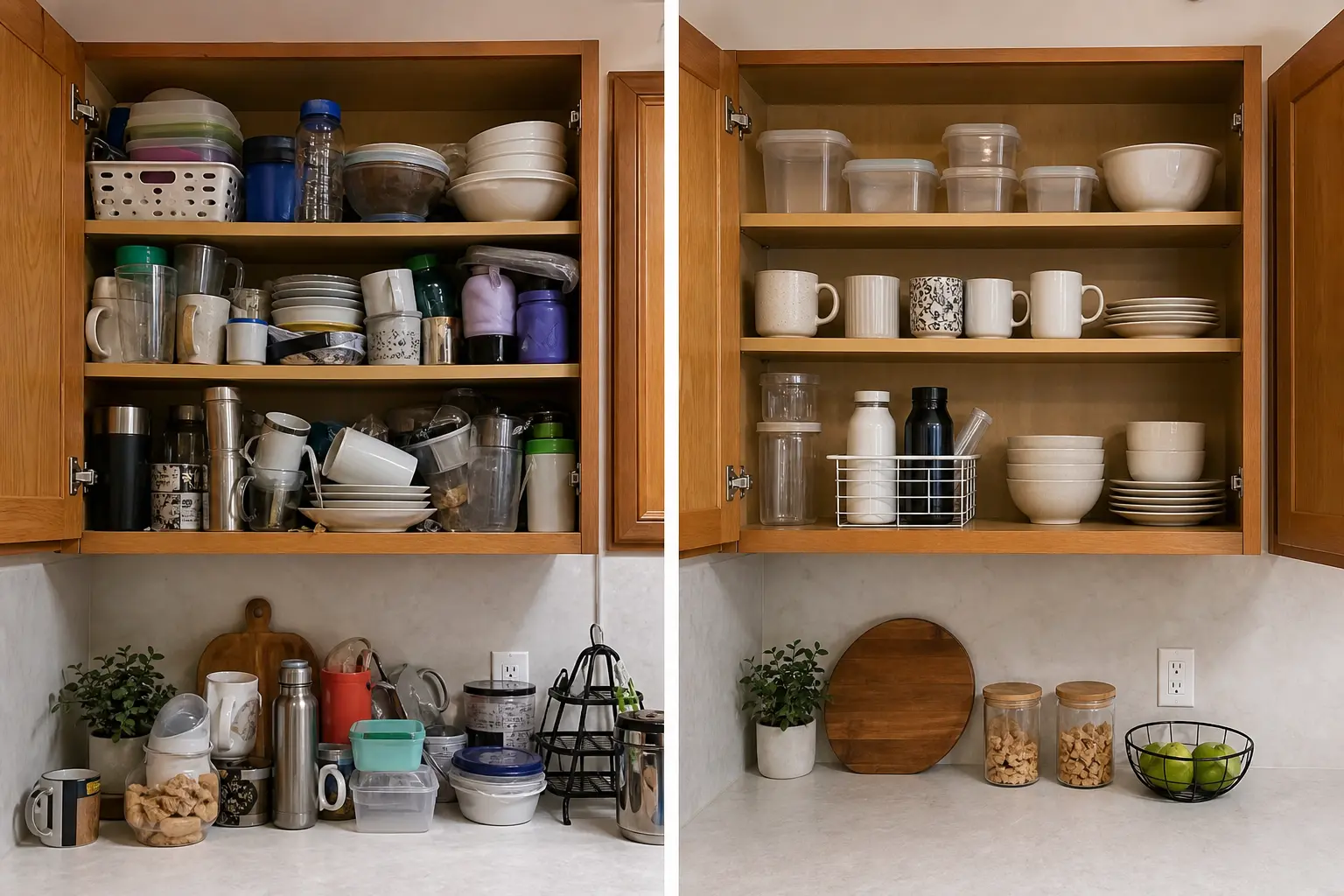
Buying bins and organizers before sorting through what’s actually in the cabinets often means buying the wrong size or the wrong number of containers entirely.
Pull everything out of one cabinet at a time. Group similar items together, baking supplies, spices, mugs, and get rid of duplicates or things you genuinely never use before putting anything back.
Once you know what’s staying, measure the cabinet space and shop for organizers that fit those specific dimensions, rather than guessing and ending up with bins that don’t quite work.
4. Creating a Landing Zone for Mail and Everyday Items
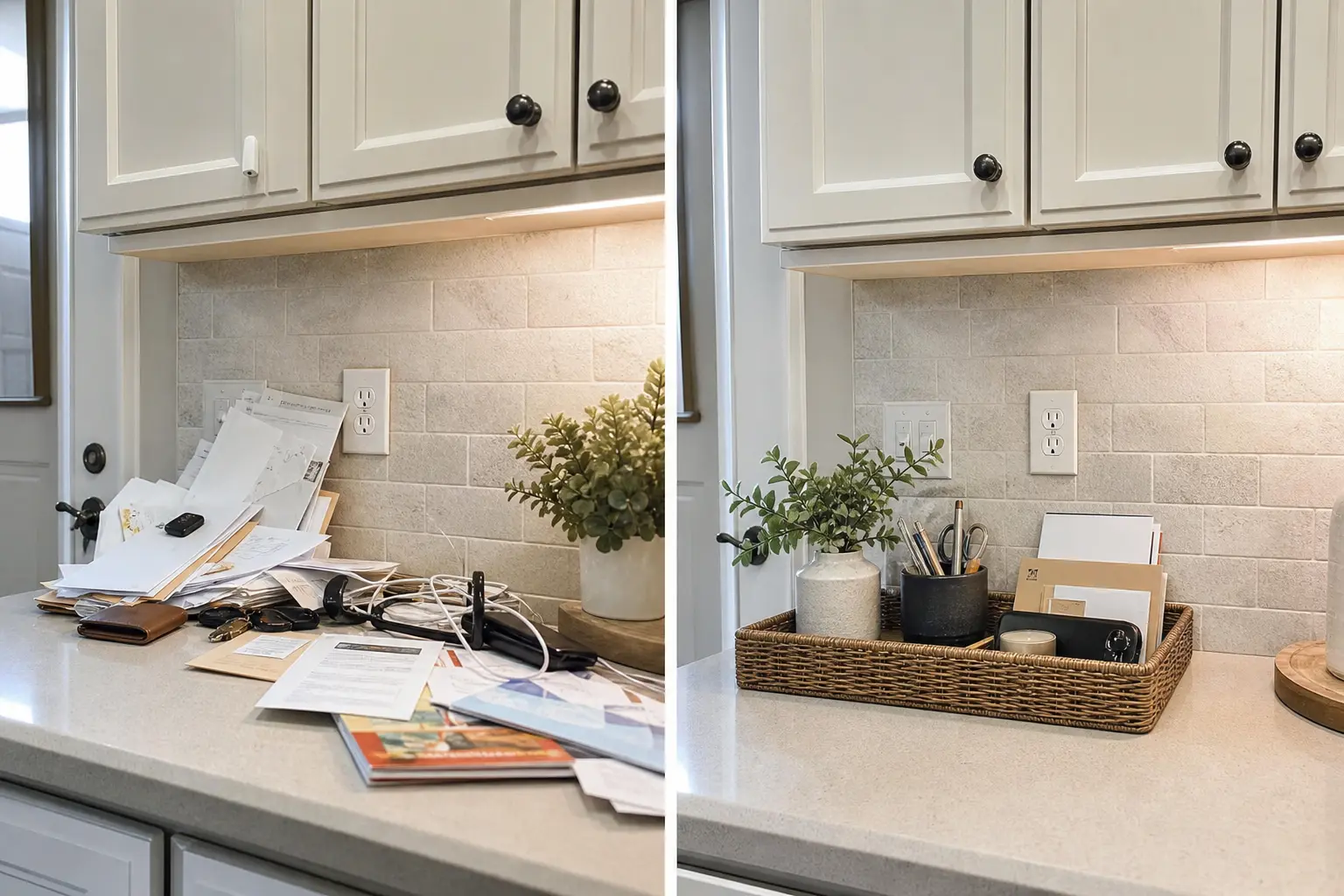
A small tray or wall mounted organizer near the entry point to the kitchen gives mail, keys, and small daily items a designated spot instead of the counter.
Sort mail immediately when it comes in rather than letting it pile up. A small recycling bin nearby makes tossing junk mail immediately far easier than letting it accumulate into a stack that needs sorting later.
If space allows, a small drawer near the entry can hold chargers, sunglasses, and other small items that otherwise drift toward the counter with no clear home.
5. Organizing Drawers So Things Actually Stay in Place
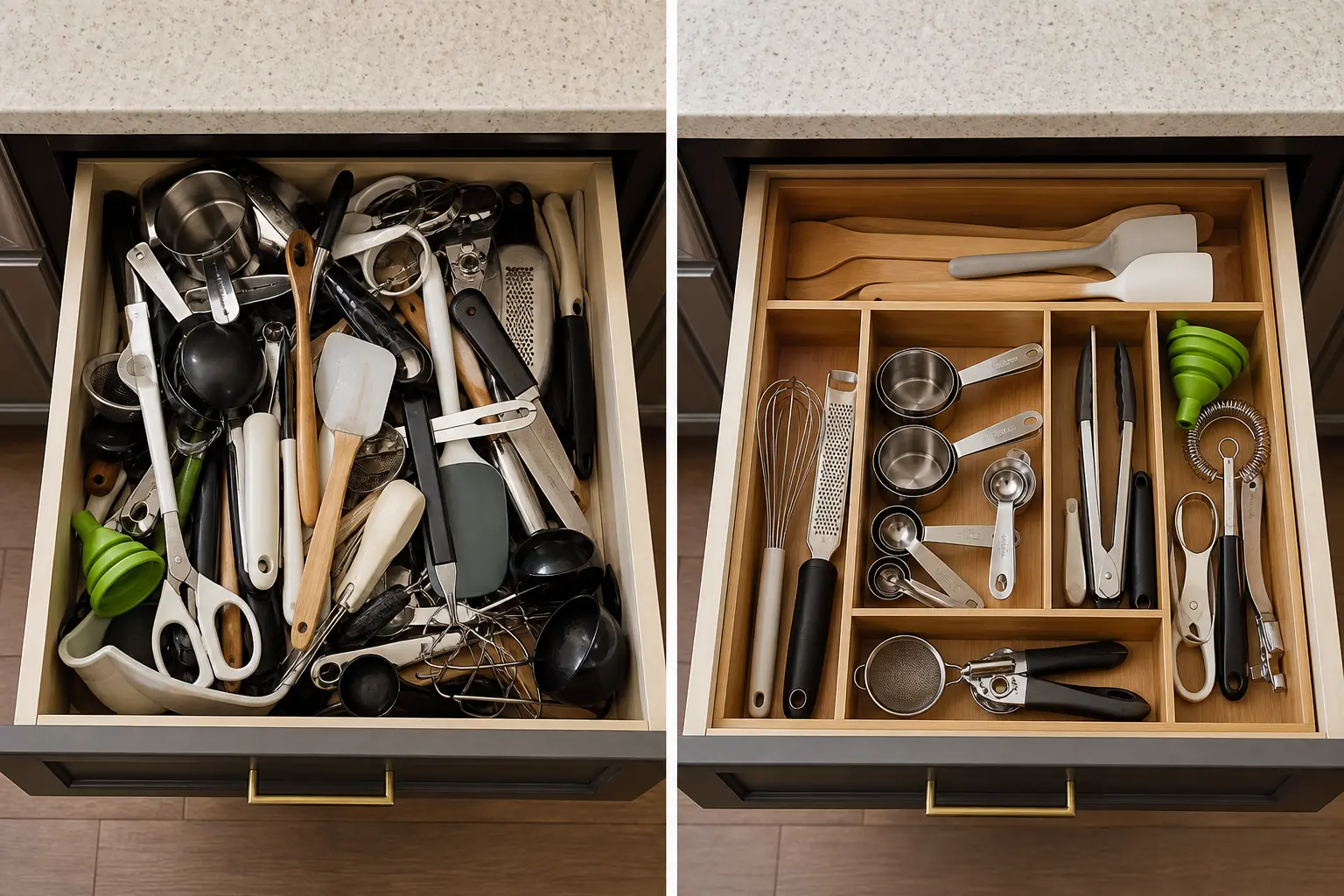
Drawer dividers, whether adjustable plastic ones or a simple DIY cardboard version, keep utensils and small tools from sliding into a jumbled pile every time the drawer opens and closes.
Group items by function within the drawer, cooking utensils together, cutting tools together, rather than tossing everything into one shared space. This makes it faster to find what you need and easier to put things back correctly.
For a junk drawer, which most kitchens have at least one of, small bins within the drawer still help, even if the category of items inside is more miscellaneous than the rest of the kitchen.
6. Rethinking the Pantry for Visibility, Not Just Storage
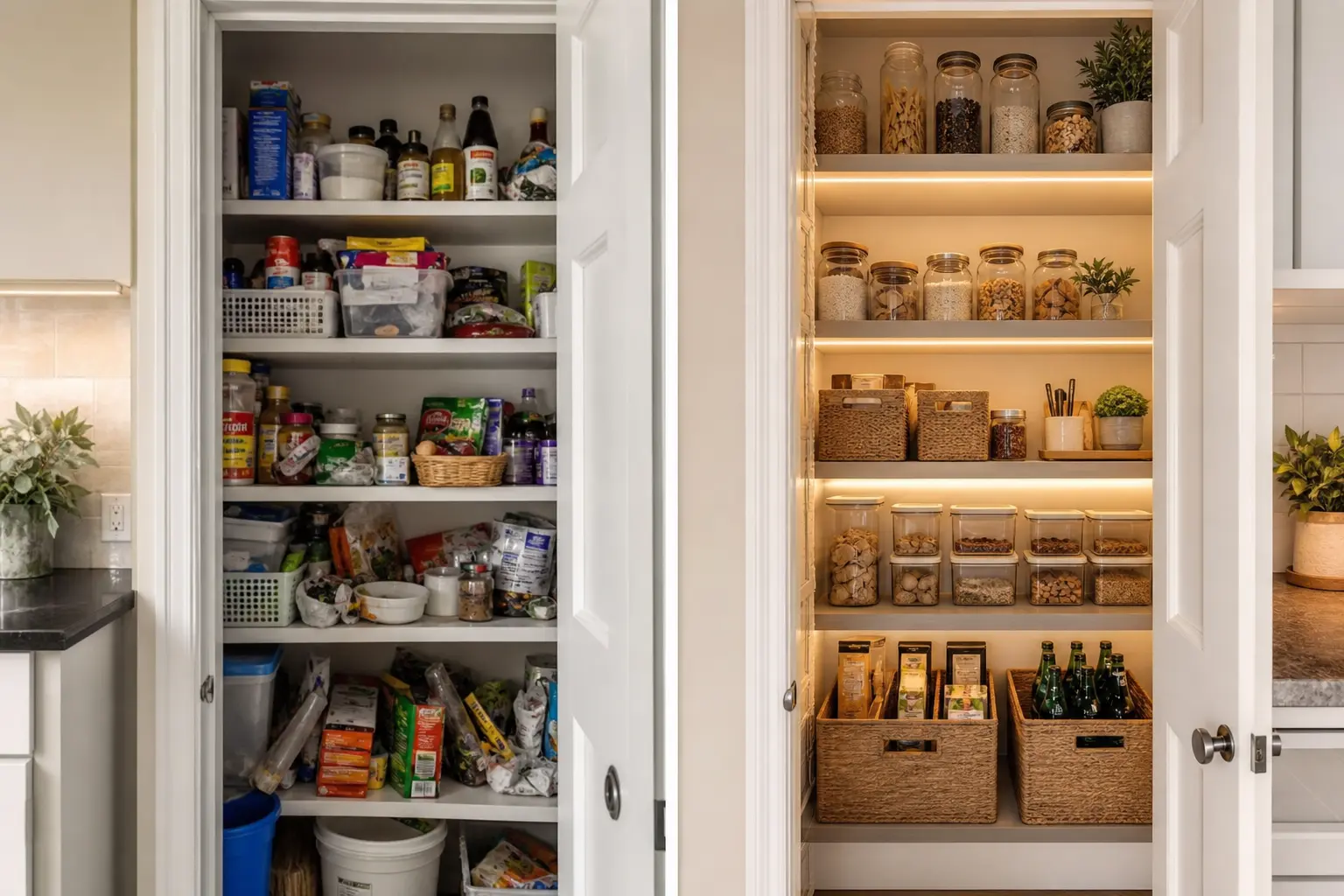
A pantry organized for visibility, clear bins, labeled shelves, front facing labels, gets used correctly far more often than one where items are just stacked without any system.
Decant dry goods, rice, pasta, flour, into clear, airtight containers. This does double duty, keeping food fresher longer while also making it immediately obvious what you have and how much is left.
Labeling for the Whole Household
Labels matter more in a shared household, since everyone needs to know where things go back to, not just where they found them. A simple label maker or even handwritten tags on bins solves most of this.
7. Dealing with Small Appliances You Rarely Use
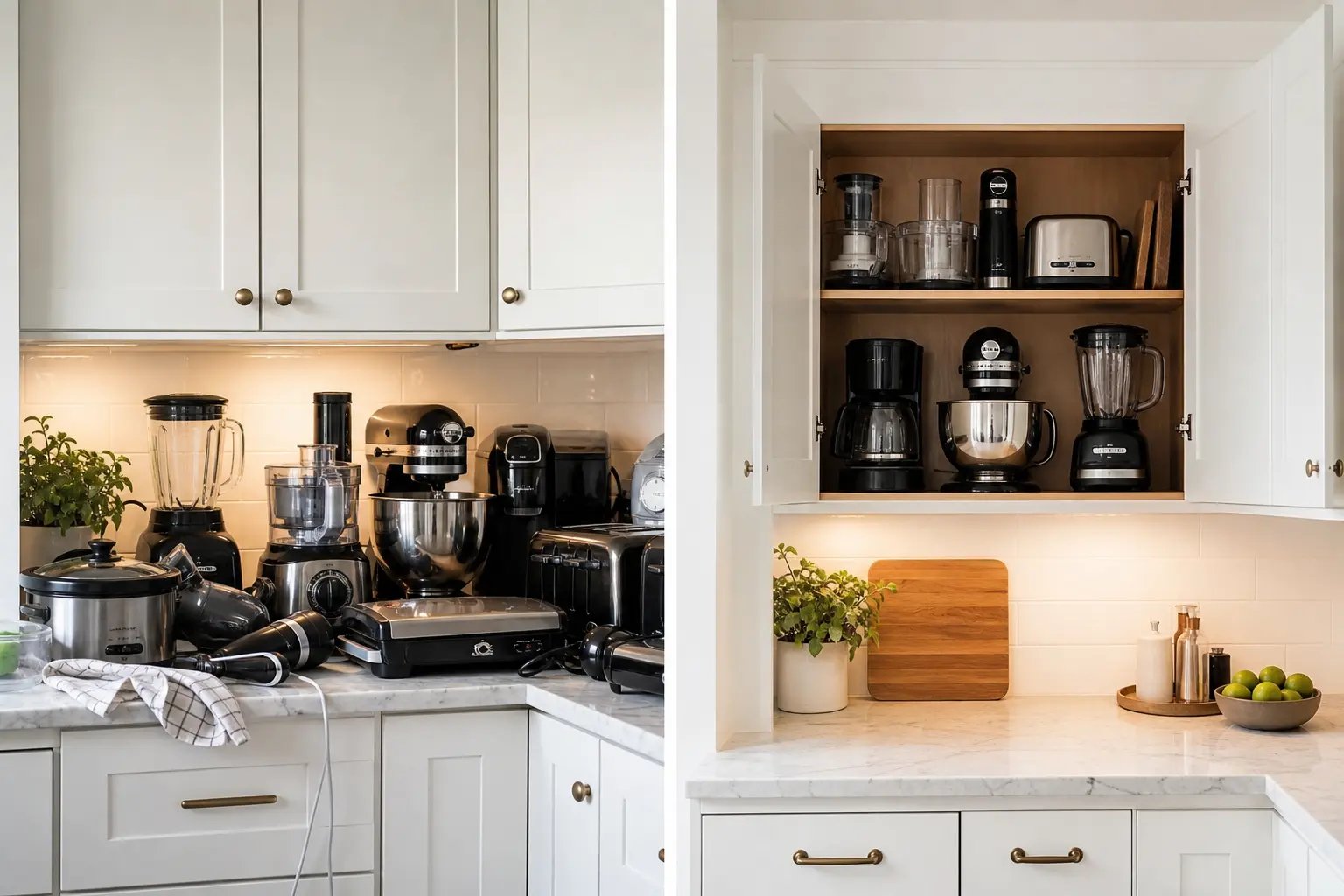
Small appliances used less than once a month, a waffle iron, a specific gadget from a cooking trend that’s faded, don’t need prime counter or cabinet real estate.
Store rarely used appliances on a higher shelf, in a garage, or in a less accessible cabinet, reserving easy to reach spots for what actually gets used weekly.
If an appliance hasn’t been used in over a year, it’s worth being honest about whether it’s staying or going. Kitchen storage space is limited, and rarely used items take up room that daily use items could benefit from instead.
8. Budget Friendly Storage Solutions That Actually Work
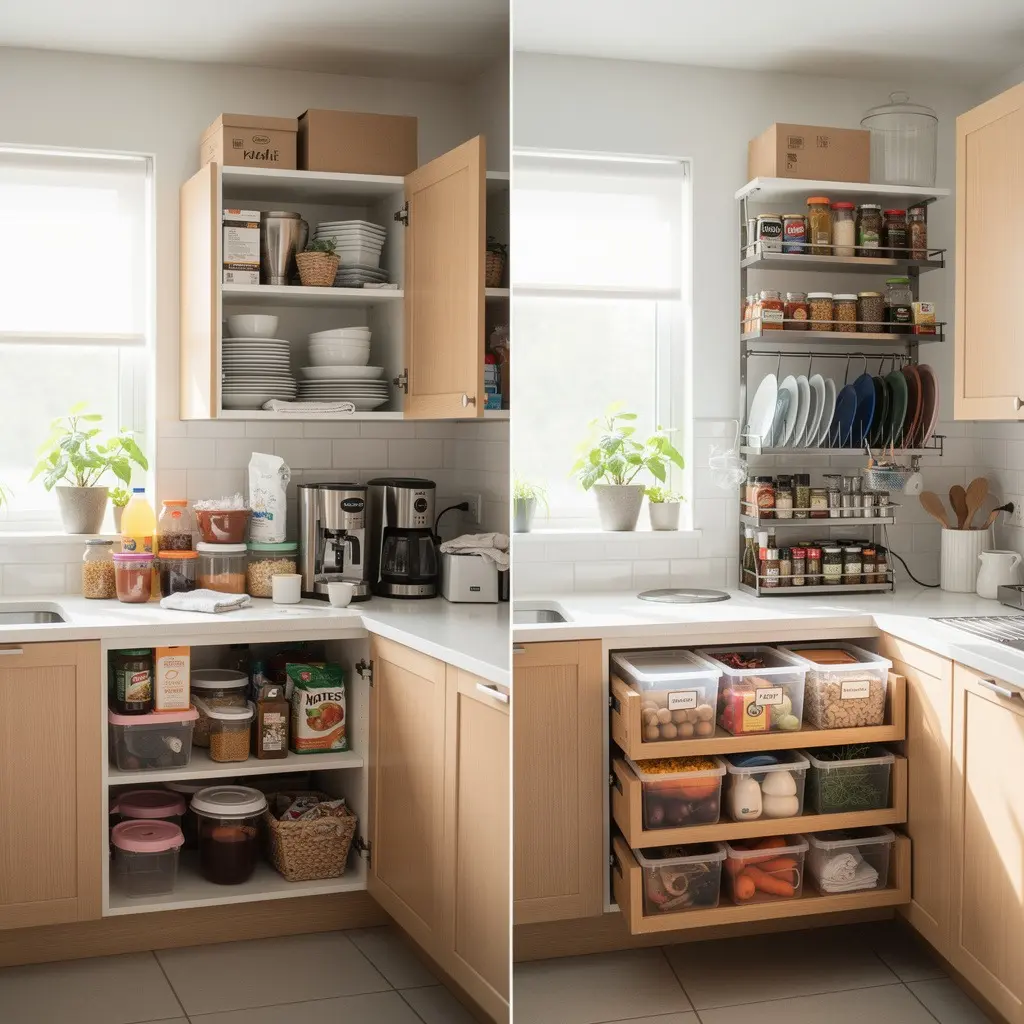
Clear stackable bins, often sold in multipacks for 15 to 25 dollars, work for both pantry and cabinet organization without needing a custom, expensive system.
Tension rods, meant for closets, work surprisingly well inside a cabinet to create vertical dividers for baking sheets or cutting boards, and typically cost under 10 dollars each.
A pantry fully reorganized with clear bins and basic labels can often be done for under 50 dollars total, and it makes a bigger visual difference than almost any other kitchen project at that price point.
9. Building Habits That Keep the Kitchen from Reverting
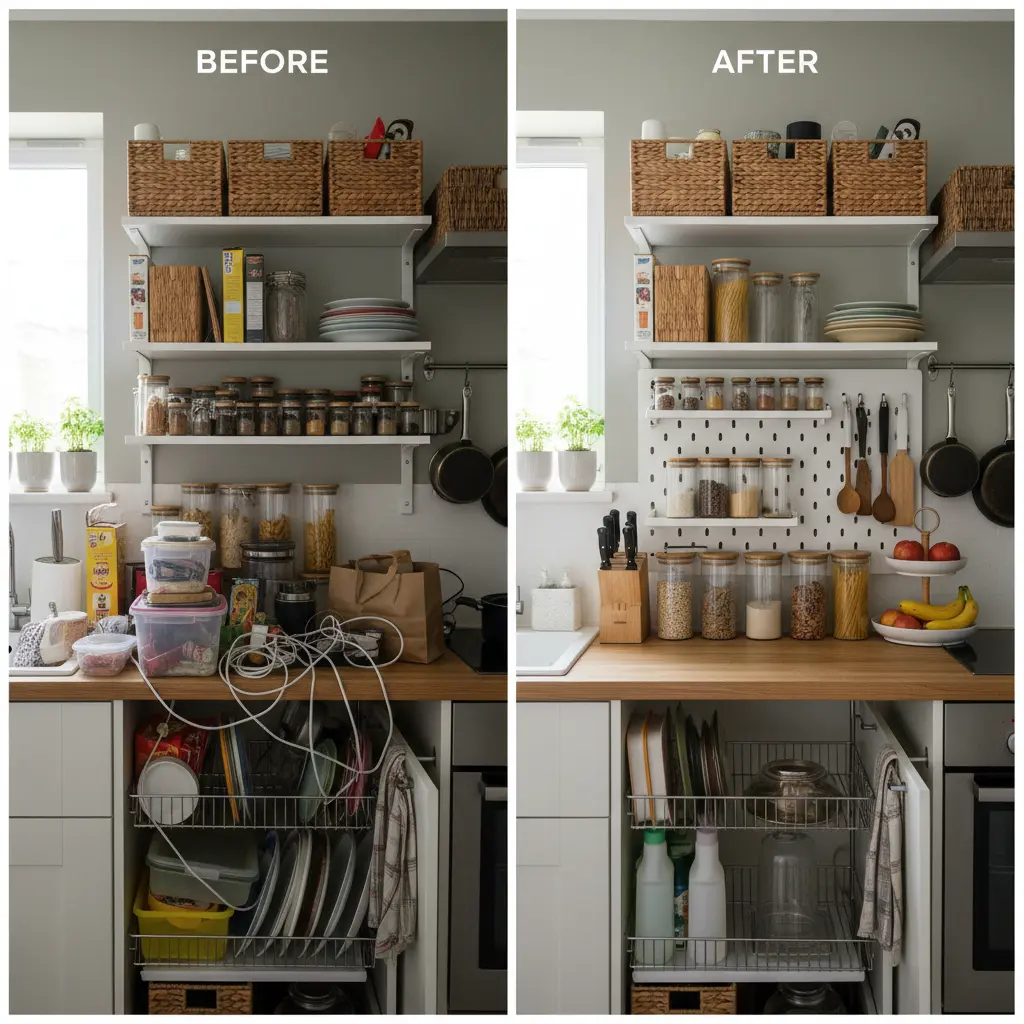
A quick nightly reset, five minutes clearing the counter and loading any stray dishes, prevents the daily buildup that turns into a full weekend cleanup project.
Assign a specific day, even just once every two weeks, to quickly check the mail landing zone and junk drawer before they overflow again.
The system only holds if it stays realistic. An organization method that requires too many extra steps daily tends to get abandoned within a few weeks, no matter how good it looks on the day it’s set up.
10. Before and After Layouts for Common Kitchen Problem Spots
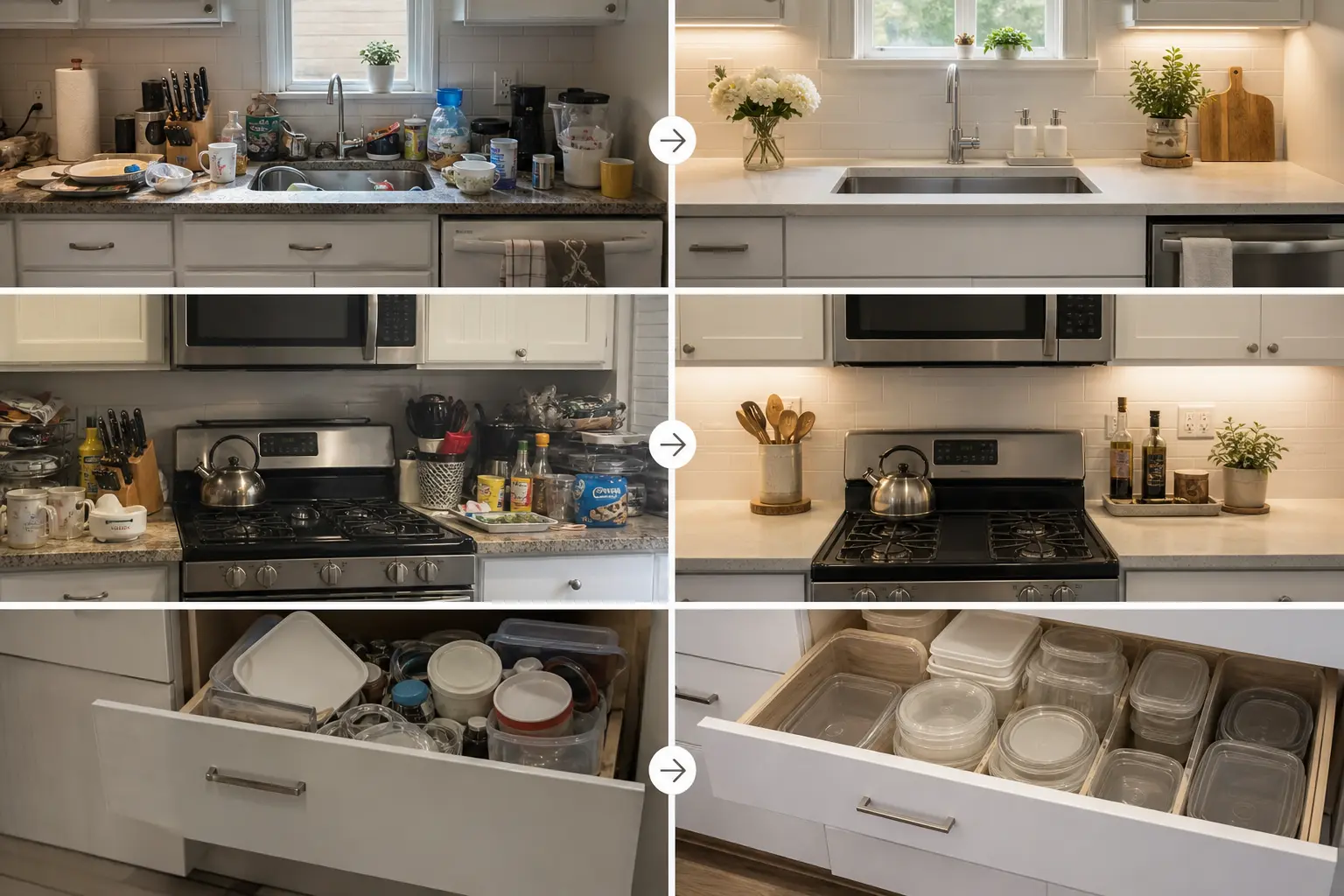
The counter beside the sink, often a dumping ground for dish soap, sponges, and stray items, works better with a small caddy that corrals those items into one contained spot instead of scattered across the surface.
The area under the sink, frequently a jumble of cleaning supplies, benefits from a small tiered organizer or a lazy susan, making items in the back as accessible as the ones up front.
The top of the refrigerator, a common catch all for boxes and rarely used items, looks and functions better with either a designated storage bin system or, in some cases, being left intentionally empty for a cleaner overall look.
Mistakes to Avoid
- Buying storage bins before sorting through what actually needs to be stored
- Skipping a designated landing zone and letting mail pile up on the counter
- Organizing once without building a habit to maintain it afterward
- Keeping rarely used appliances in prime, easy access cabinet space
- Choosing a system that’s too complicated to realistically maintain day to day
Frequently Asked Questions
How often should I redo a full pantry organization? A full reset once or twice a year usually works, with small touch ups in between as items run out or get replaced.
What’s the single most effective first step for kitchen clutter? Creating a landing zone for mail and daily items. Most kitchen counter clutter starts there rather than with actual kitchen tools.
Do I need to buy matching containers for everything? No. Function matters more than a matched look. Clear, appropriately sized containers work fine even if they’re not all the same brand or style.
How do I keep kids or other household members from undoing the organization? Clear labels help a lot, along with a quick conversation about where things go back. Systems that are simple enough for everyone to follow tend to hold up better.
What should I do with sentimental kitchen items I never use? If it’s genuinely sentimental, consider displaying it somewhere visible rather than storing it in a cabinet where it just takes up space and never gets appreciated.
Is it worth hiring a professional organizer for a kitchen? It can help if you’re overwhelmed or short on time, but most of the fixes in this article are doable without professional help, especially the cabinet sorting and habit building steps.
Conclusion
A genuinely organized kitchen comes from giving every item a real home, not from a single deep clean that resets the counter for a week. Sort before you buy storage products, create a landing zone for daily clutter, and build in a quick nightly reset habit. Those three things matter more than any specific bin or organizer, and together they’re what actually keeps the transformation from reverting a month later.