10 Cozy Backlit Bookshelf & Plant Corner Ideas for a Dreamy Space
Every home has a corner nobody uses. A stack of forgotten boxes, maybe an empty chair nobody sits in. A backlit bookshelf paired with a few trailing plants turns that same corner into the spot you actually want to spend time in. The soft glow behind the books does most of the work, and the greenery softens the whole setup so it feels less like storage and more like a little retreat. Here are ten real ways to light, plant, and style a corner like this without it turning into a jungle of clutter.
1. Why Backlighting Changes the Whole Mood of a Bookshelf
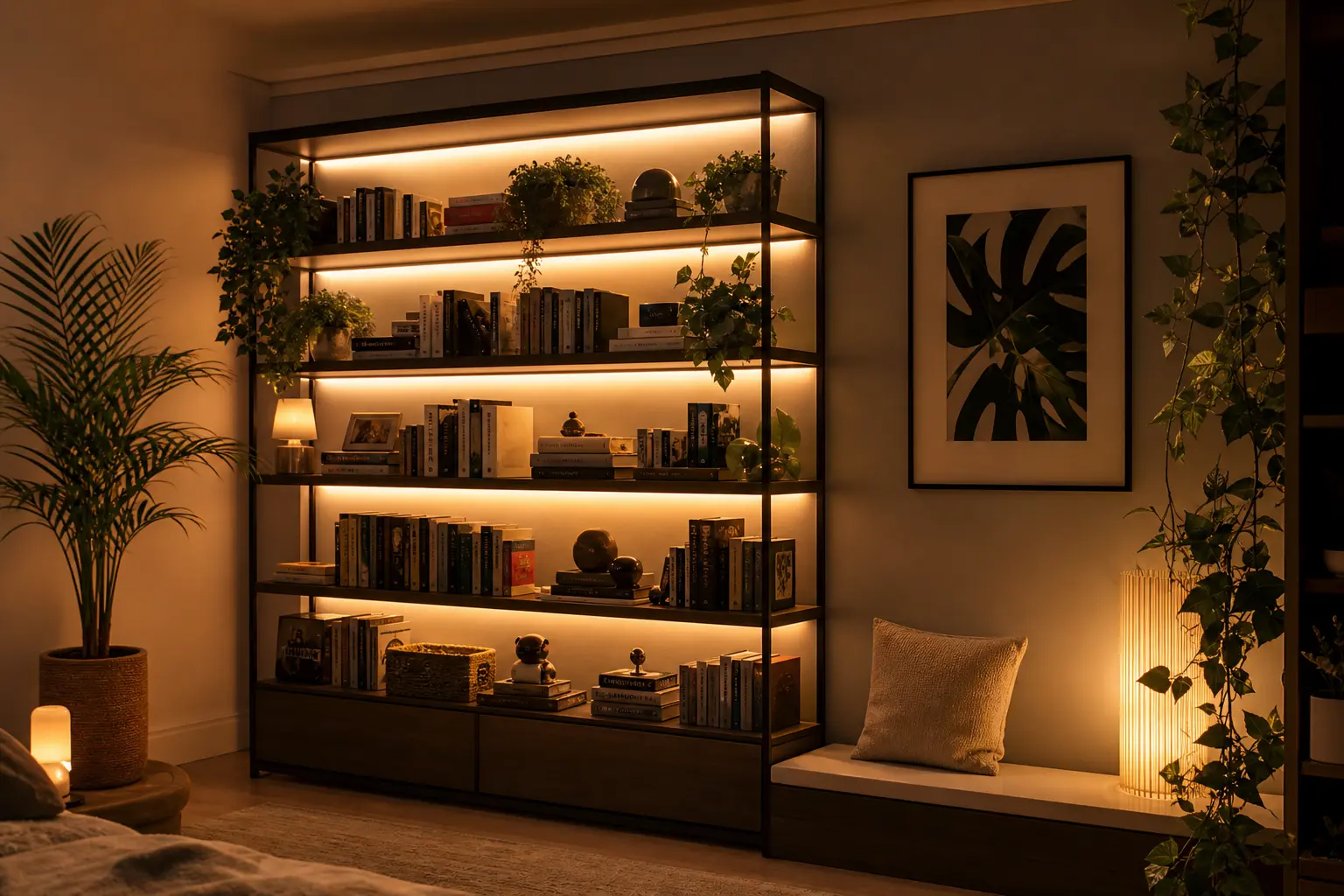
A bookshelf lit from the front with a regular room light looks fine during the day. At night, it usually just goes dark and disappears into the room.
Backlighting flips that. A soft LED strip behind the shelf, or along the back panel, throws light forward through the gaps between books and around the edges of each shelf.
That glow does something a front facing light can’t. It makes the whole shelf look like it’s floating a little, especially once the room around it dims.
And it’s a small change. One strip of lights, tucked where you won’t even see the wire.
2. Choosing the Right LED Setup for Backlighting
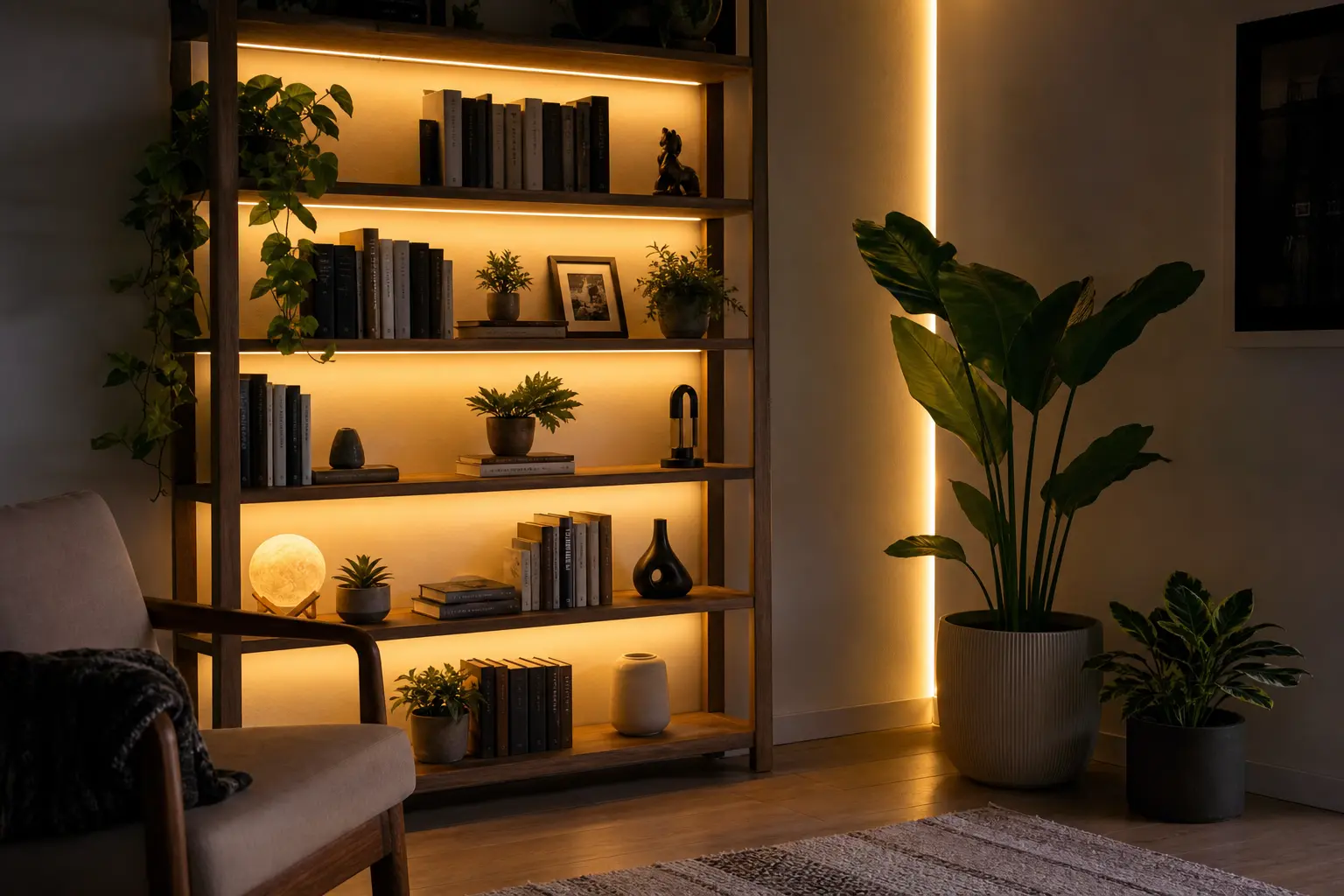
Warm white LED strips, around 2700K to 3000K, give the shelf a soft, amber glow that reads as cozy rather than clinical.
Mount the strip along the back edge of each shelf, or run one continuous strip up the back panel if your bookshelf has one. Adhesive backed strips make this simple, no tools required beyond a clean surface to stick to.
Battery powered strips work fine if there’s no outlet nearby, though they’ll need occasional battery swaps. Plug in versions with a small dimmer inline give you more control over brightness without the upkeep.
Avoiding Visible Wires
Run the cord down the back of the shelf, close to the wall, and use a small cord clip every foot or so. A cord left loose tends to draw the eye straight to it, which undoes a lot of the soft, floating effect you’re going for.
3. Picking Plants That Thrive Near a Bookshelf
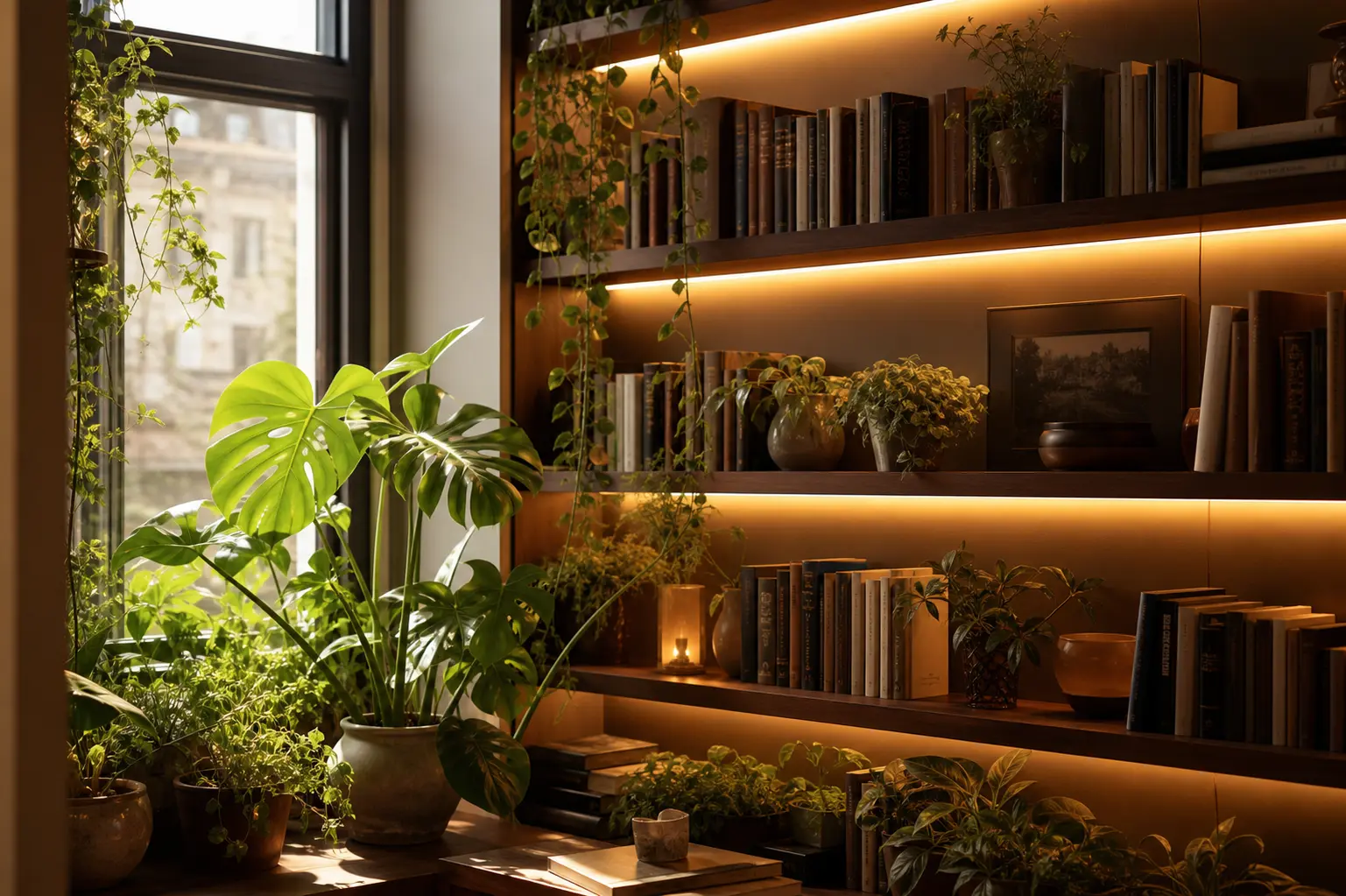
Most bookshelf corners don’t get much direct sunlight, so pick plants that tolerate low to medium light. Pothos, snake plants, and ZZ plants all handle these conditions without much fuss.
Trailing plants, especially pothos or string of hearts, work particularly well on a bookshelf since they spill over the edge of a shelf and soften the straight lines of the books and frame.
Skip anything that needs bright, direct light, like most succulents. They’ll stretch and thin out over time in a dim corner, which looks worse than no plant at all.
4. Arranging Books and Plants Together Without Clutter
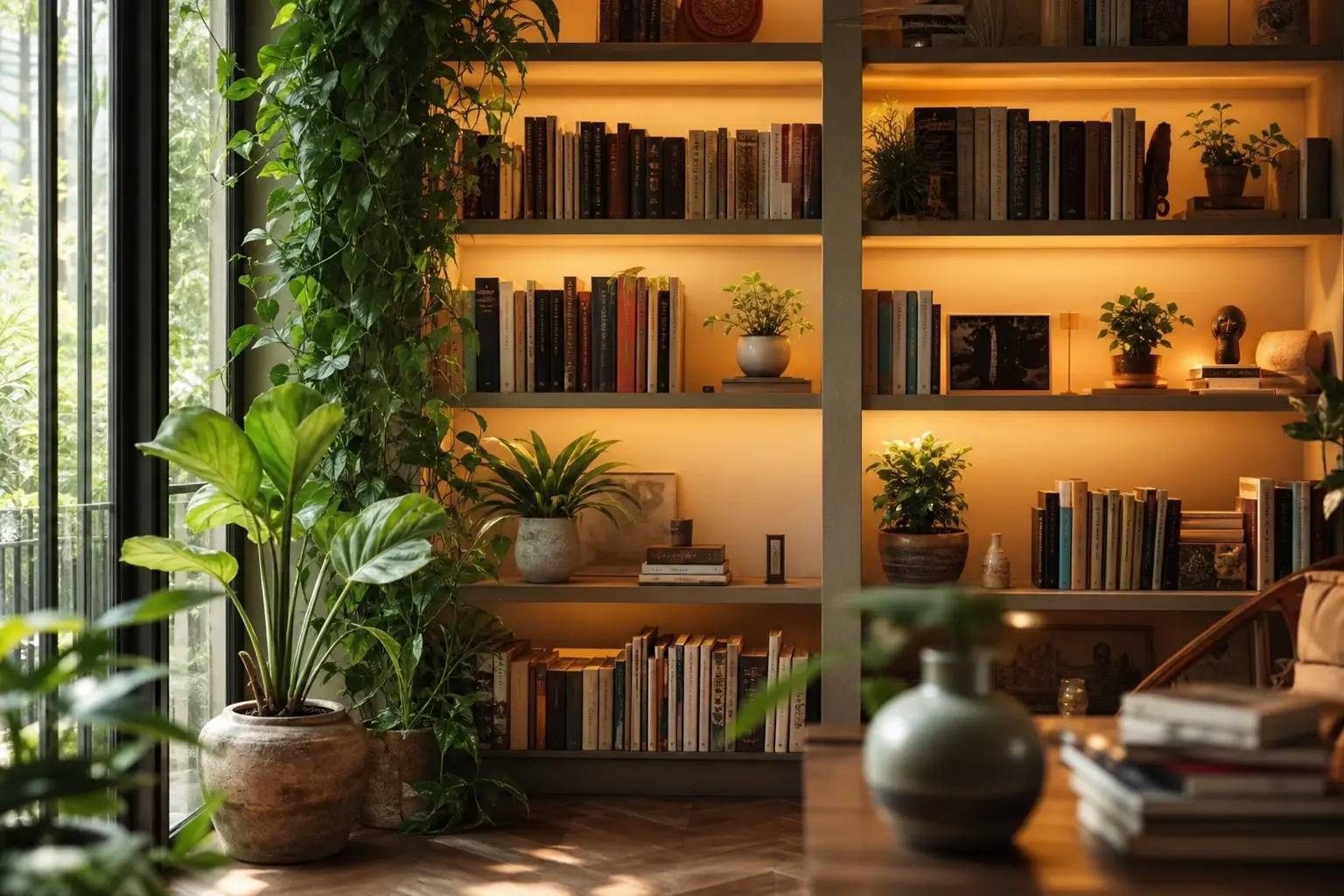
Group books by color or height on one section of the shelf, then let a plant anchor the opposite end. This split keeps each shelf from looking like a jumbled mix of everything at once.
Leave at least one shelf mostly open, maybe just a single small object or nothing at all. A shelf that’s fully packed edge to edge starts to feel busy no matter how nice the individual pieces are.
Vary how the books sit. Some stacked flat, some standing upright, mixed in with the plants rather than kept in a separate, rigid zone. That mix looks more like a shelf someone actually uses.
5. Adding a Reading Spot to Finish the Corner
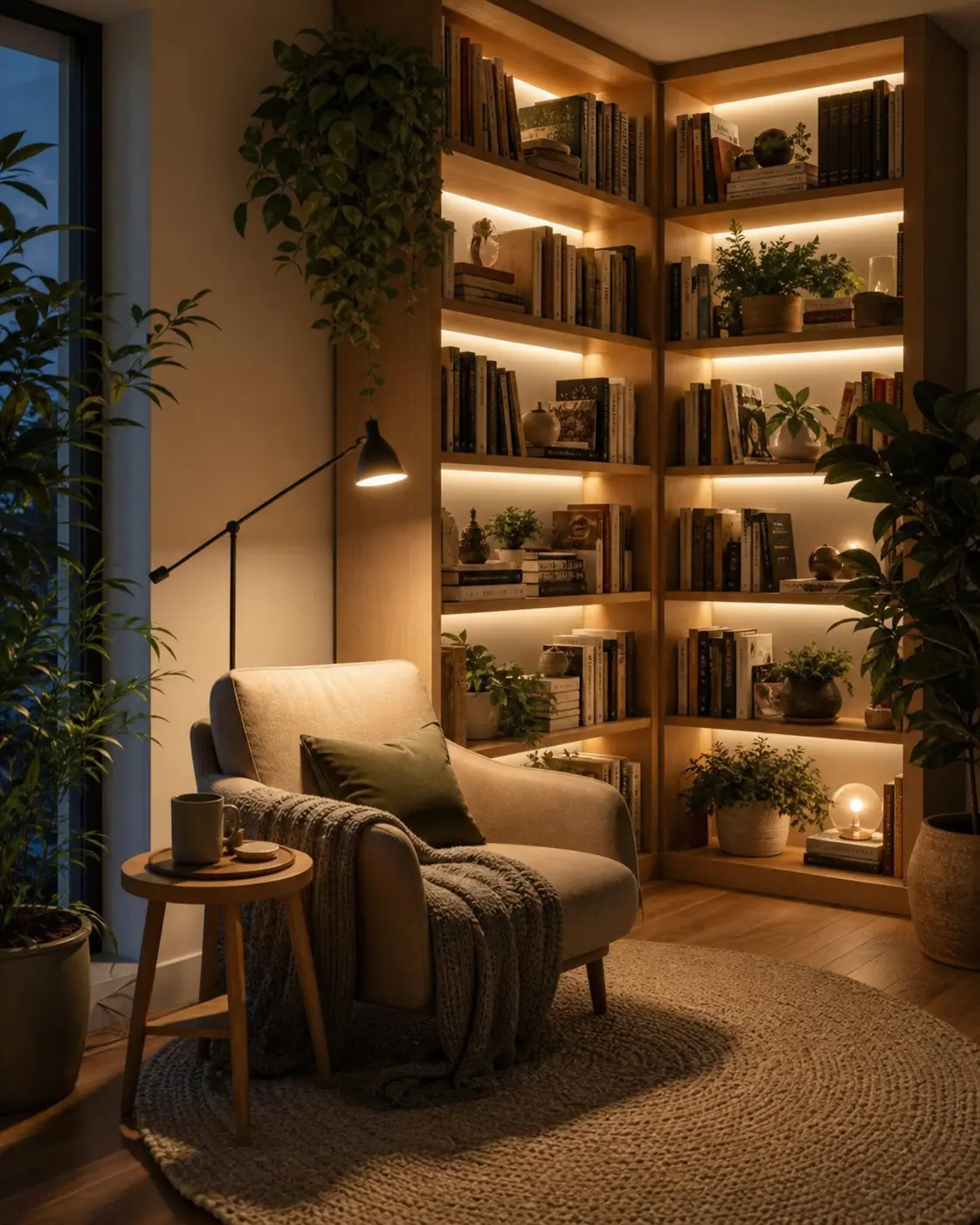
A small chair or floor cushion near the shelf turns the corner from a display into an actual spot people sit in. It doesn’t need to be large. Even a single accent chair, 24 to 28 inches wide, is enough to signal that this corner is meant for lingering.
A small side table next to the chair gives you somewhere to set a cup of tea or the book you just pulled off the shelf. Keep it modest, nothing bigger than what fits comfortably next to the chair without crowding the walkway.
If floor space is tight, a floor cushion works just as well and takes up a fraction of the footprint a chair would.
6. Color Choices That Make the Space Feel Dreamy
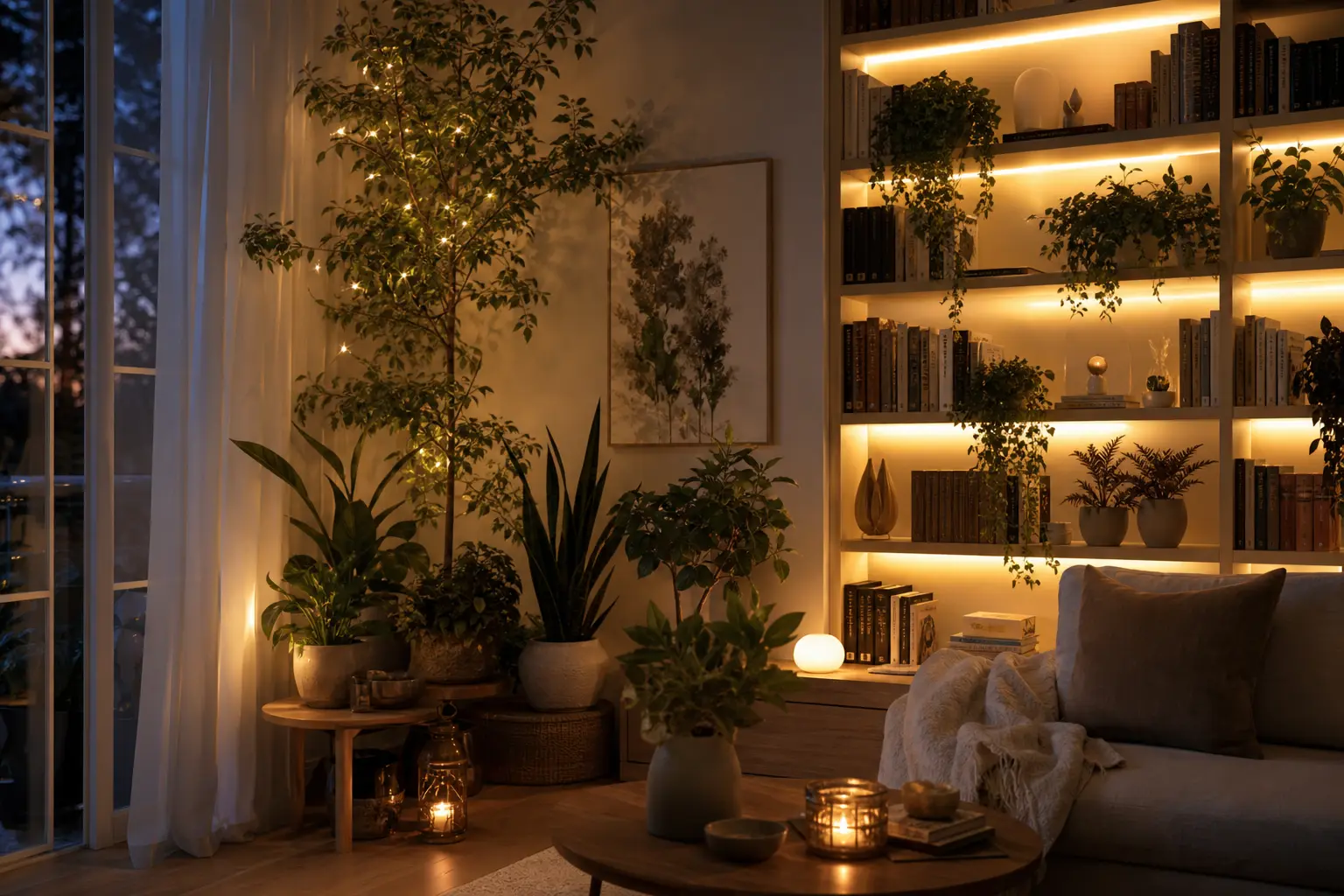
Muted, warm wall colors behind the shelf, soft terracotta, sage green, warm beige, all pair well with the amber glow of backlighting. Stark white walls can wash out the warmth of the light a bit by comparison.
For the shelf itself, a natural wood tone or a soft painted finish in a warm neutral tends to blend with the backlighting better than a glossy dark finish, which can reflect the light in a harsher way than intended.
Textiles nearby, a small throw blanket on the chair or a woven basket tucked at the base of the shelf, add a bit more warmth and texture to round out the color story.
7. Small Corner Layouts for Apartments and Tight Spaces
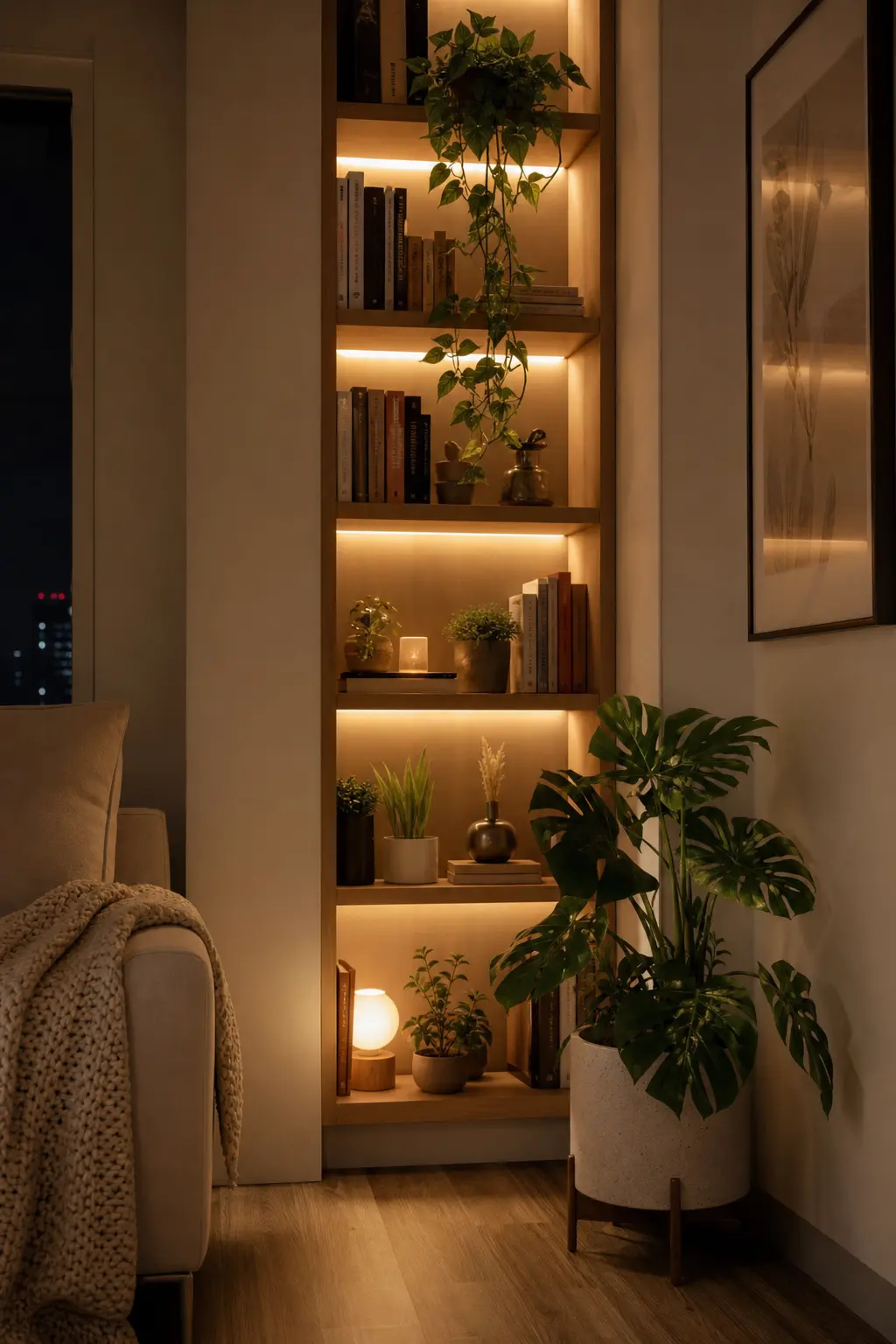
In a small apartment, a narrow bookshelf, even one as slim as 12 inches deep, still works for this idea. Skip the reading chair entirely if space is tight and let a floor cushion or a small stool do the job instead.
A corner near a window, even a small one, gives your plants a bit more natural light during the day while the backlighting takes over once it gets dark.
If you’re renting and can’t mount a strip directly to a built in shelf, a freestanding bookshelf with a strip run along the back panel gives you the same effect without touching the walls at all.
8. Budget Friendly Ways to Get the Look
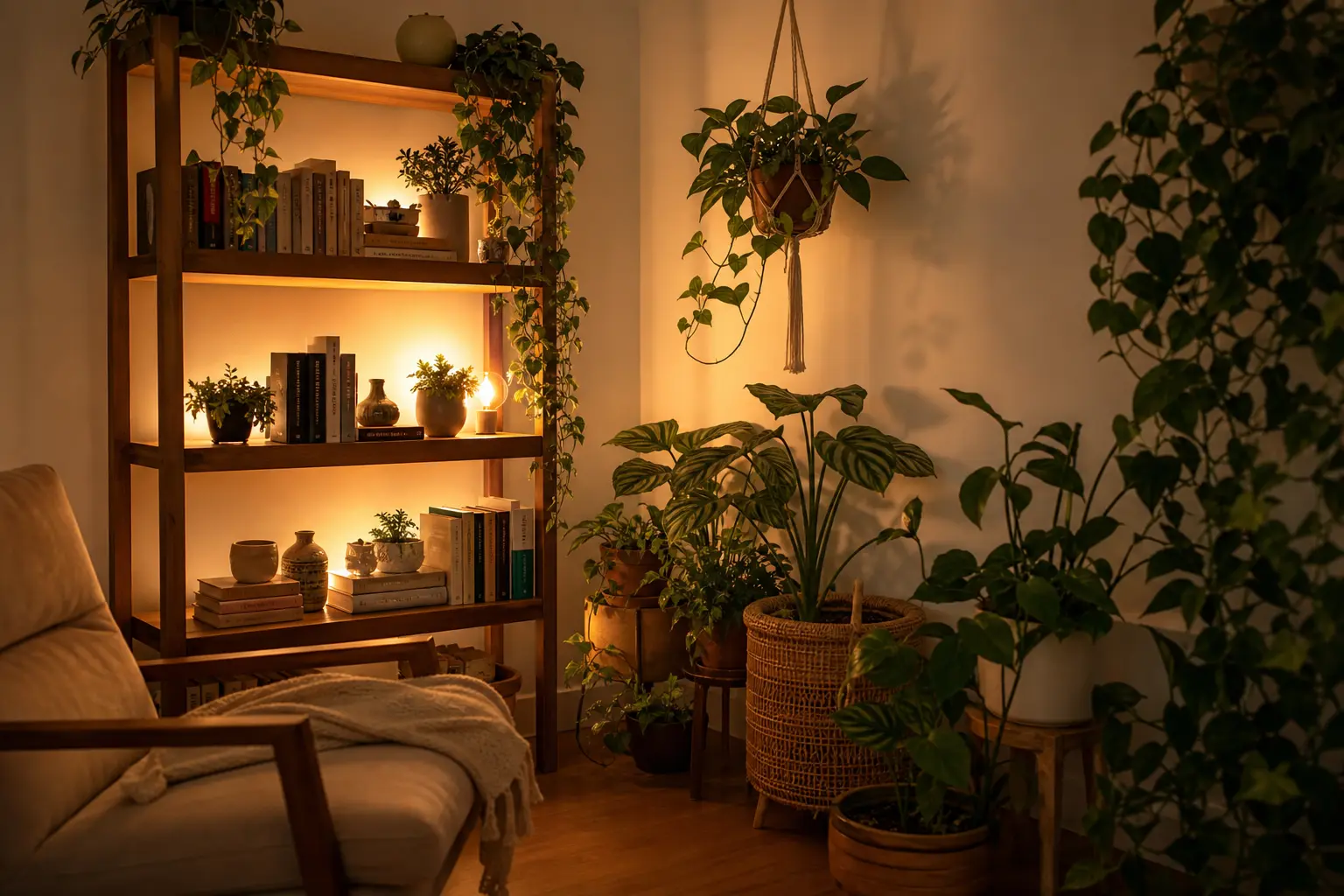
A basic LED strip kit with adhesive backing typically costs 10 to 20 dollars for enough length to cover a standard sized bookshelf. Battery packs, if you go that route, add only a few dollars more.
Plants themselves are one of the cheaper parts of this setup. A small pothos cutting or a starter plant from a local nursery often costs under 10 dollars, and pothos in particular grows quickly once it’s settled in.
A secondhand bookshelf, a 15 dollar LED strip, and a couple of inexpensive plants can pull off this whole look for well under 50 dollars.
9. Keeping Plants Healthy in a Dimmer Corner
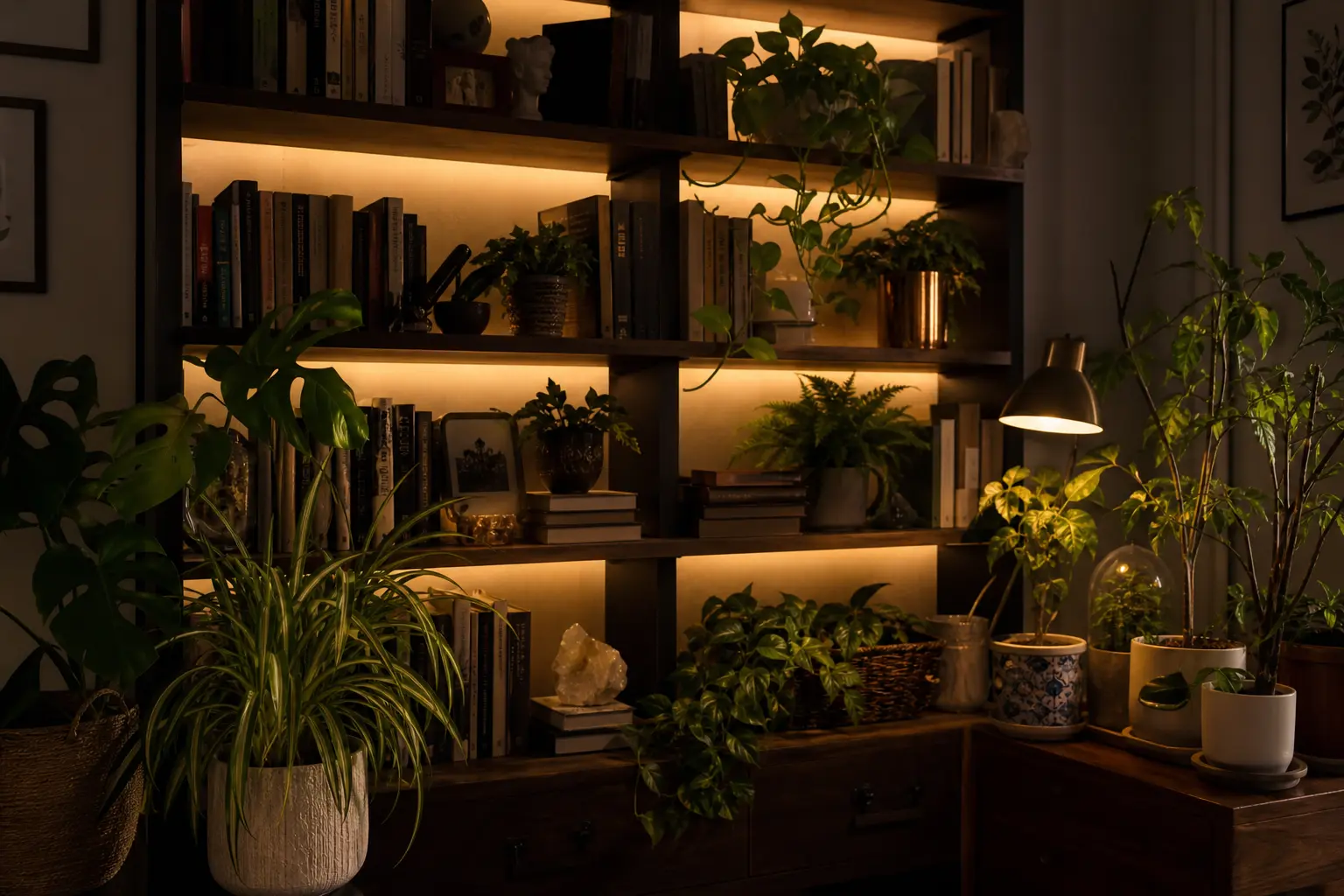
Even low light tolerant plants need some indirect light to stay healthy long term. If the corner gets almost no natural light at all, consider a small clip on grow light disguised among the books, set on a timer for a few hours a day.
Rotate plants occasionally so all sides get some light exposure, rather than always facing the same direction toward whatever light does reach the corner.
Water less frequently than you might in a brighter spot, since low light slows a plant’s growth and water usage. Overwatering in a dim corner is a more common problem than underwatering.
10. Finishing Touches That Tie the Whole Corner Together
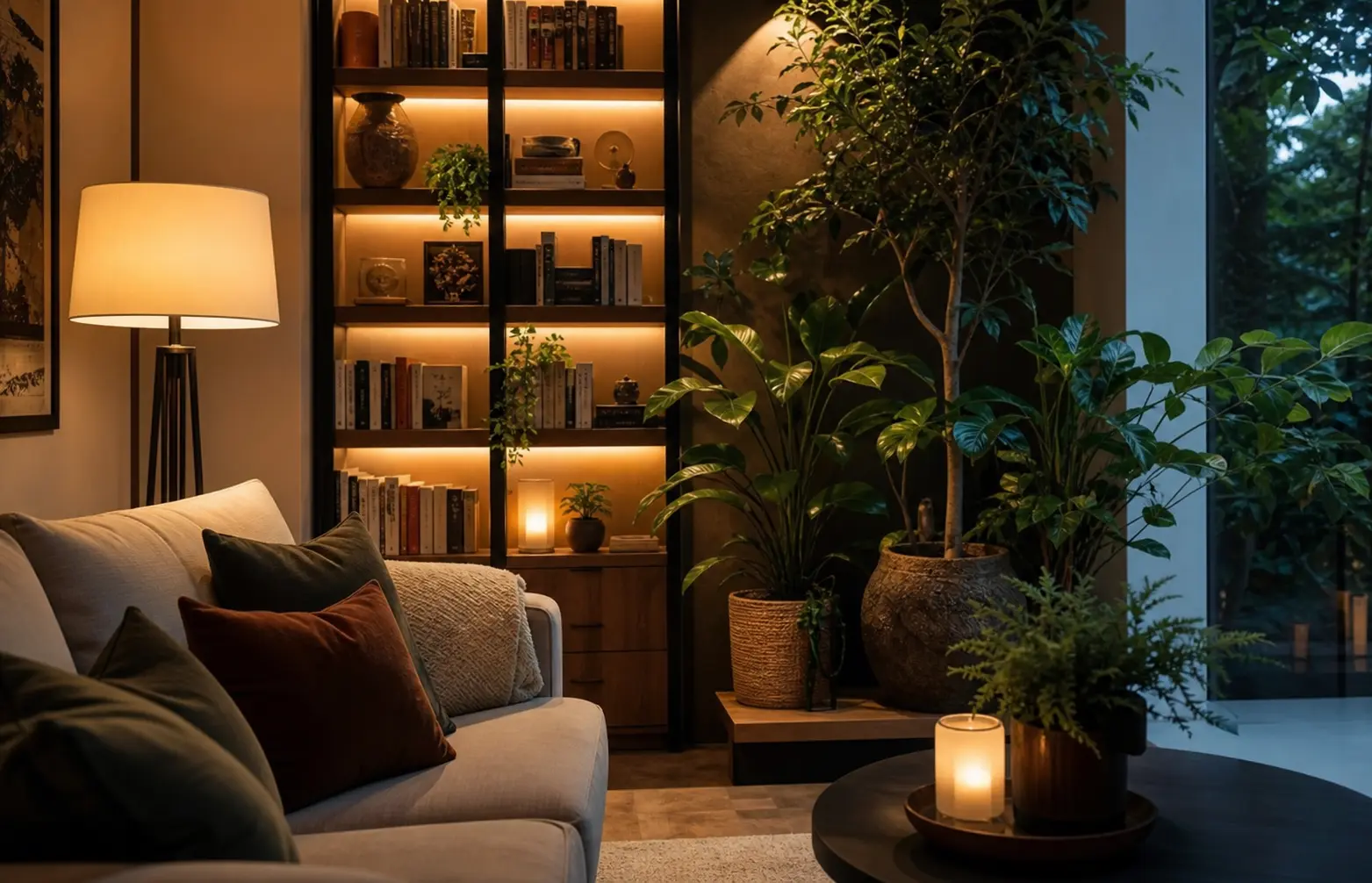
A small rug beneath the reading chair, even a modest 3 by 5 foot size, helps define the corner as its own little zone rather than an extension of the rest of the room.
A candle or small diffuser on a side table adds a sensory layer beyond just the visual, which matters if this corner is meant to feel like a place to slow down and read.
Keep the total number of decor objects low outside of the books and plants themselves. A shelf and corner that’s already doing a lot visually doesn’t need much else competing for attention.
Mistakes to Avoid
- Choosing a cool toned LED strip when the goal is a warm, dreamy glow
- Overcrowding every shelf instead of leaving at least one section open
- Picking plants that need bright direct light for a corner that barely gets any
- Leaving the LED cord visible instead of tucking and clipping it along the back
- Adding too many extra decor pieces that compete with the books and plants for attention
Frequently Asked Questions
Do I need an electrician to add backlighting to a bookshelf? No. Most backlighting uses low voltage adhesive LED strips that plug into a standard outlet or run on batteries. No wiring work is involved.
What if my bookshelf corner gets zero natural light? Stick to the most tolerant plants, like a ZZ plant or pothos, and consider a small grow light on a timer if you notice the plant thinning out over time.
Can I use color changing LED strips instead of warm white? You can, but warm white tends to fit the cozy, dreamy look better than shifting colors. Save color changing strips for a more playful or modern styled space.
How often should I water plants in a dim corner? Less often than a plant in bright light. Check the soil before watering rather than sticking to a fixed schedule, since low light slows how quickly it dries out.
Will the LED strip damage my bookshelf’s finish? Adhesive backed strips are generally safe on sealed or painted wood, but test a small hidden section first if you’re unsure about the finish, since some raw or unsealed woods react differently to adhesive.
Do I need a real reading chair, or can I skip that part? A chair isn’t required. A floor cushion or even a folded blanket in the corner accomplishes the same goal of giving the space a spot to sit and linger.
Conclusion
A backlit bookshelf paired with a few easy care plants turns an ignored corner into a spot worth spending time in, and it doesn’t take a big renovation or a large budget to get there. Light it warm, keep the plants low maintenance, and leave a little room on the shelves instead of packing every inch. That balance is what makes the corner feel dreamy rather than just decorated.