10 Small Bedroom with Workspace Ideas for a Stylish & Functional Space
A small bedroom already feels tight before you try to squeeze in a desk. Most people end up working from bed, hunched over a laptop with no back support and no real separation between sleeping and working. Small bedroom with workspace ideas solve that by treating the desk corner as its own small zone, planned with the same care as the rest of the room instead of squeezed in as an afterthought.
The trick isn’t finding tiny furniture. It’s choosing pieces that work hard in a small footprint, a slim desk, vertical storage, and smart lighting, so the workspace feels functional without taking over the room’s calm, restful purpose. Here are ten ways to build that balance into even a genuinely small bedroom.
1. Measure the Corner Before Choosing a Desk
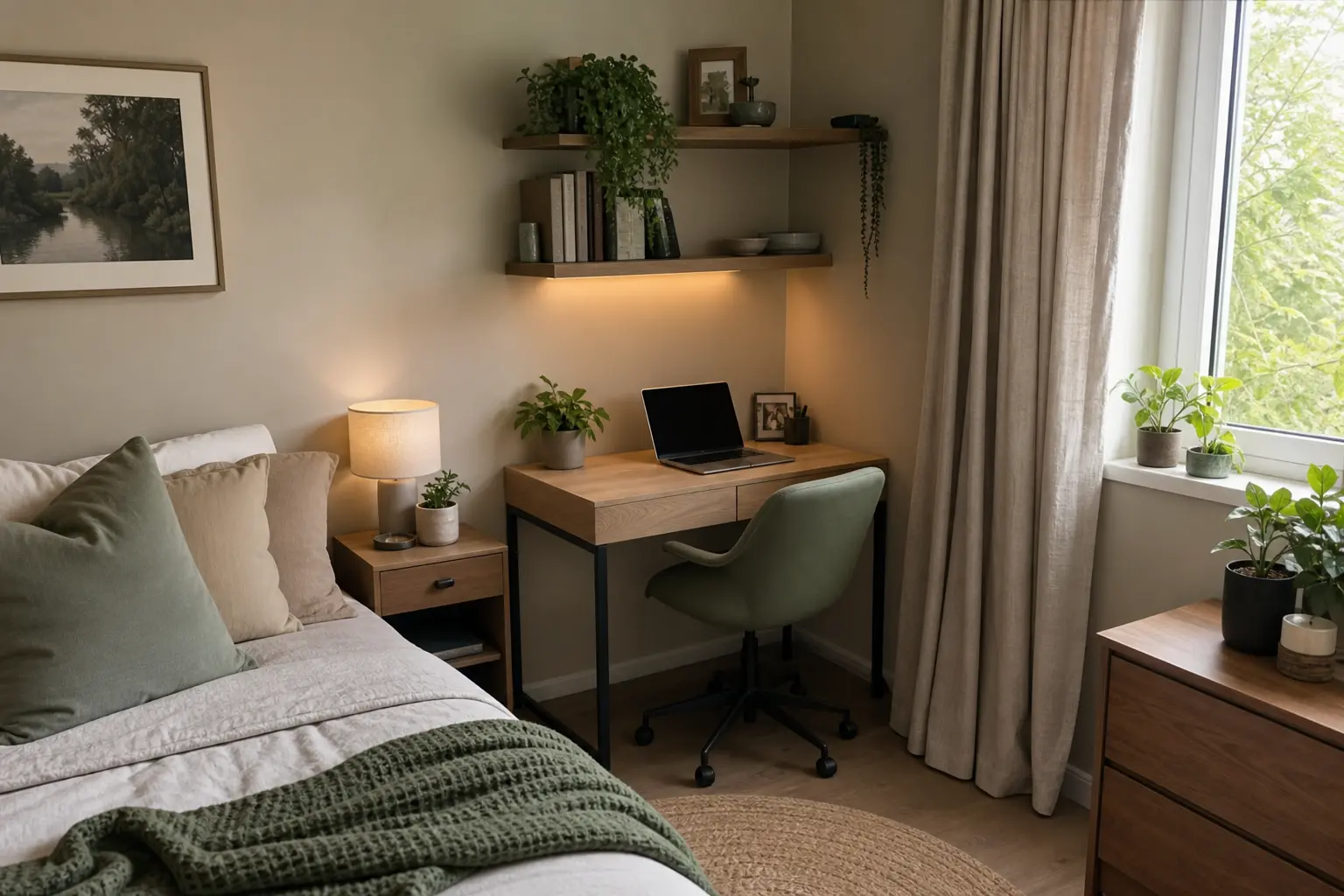
Grab a tape measure before you buy anything. Note the width, the depth, and how much clearance you need to actually pull out a chair and sit down comfortably. A corner as small as 24 inches wide can fit a slim desk, while anything narrower usually needs a wall mounted, foldable option instead.
This step gets skipped constantly, and it’s the reason so many bedroom desks end up crammed in at an angle that blocks a closet door or a walking path.
2. Choose a Slim or Wall Mounted Desk
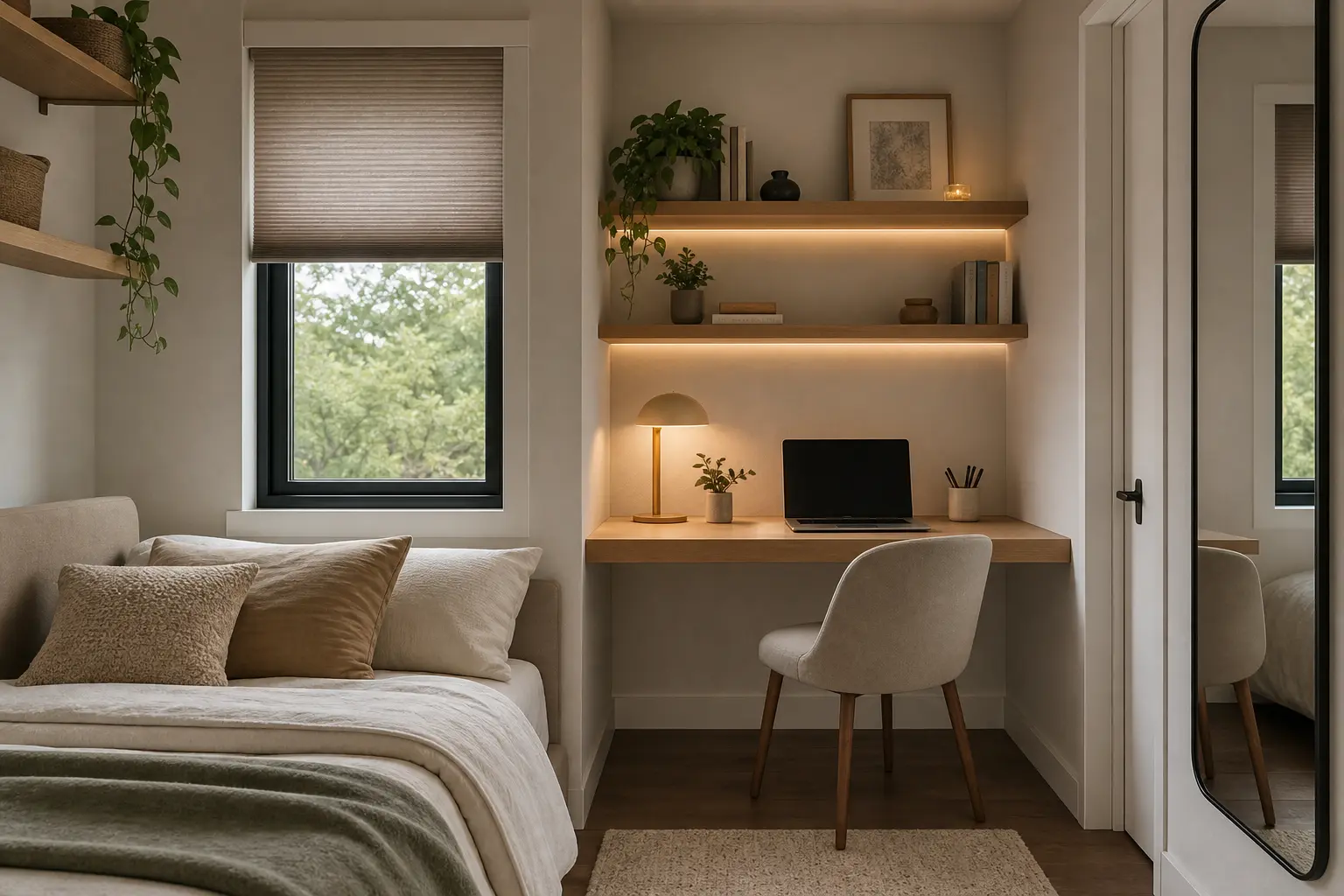
A desk between 24 and 32 inches wide fits into most small bedroom corners without dominating the room. A floating wall mounted desk, in the $60 to $200 range, takes this even further by eliminating legs entirely, which keeps the floor visually open.
When a Floating Desk Makes the Most Sense
A floating desk works especially well in a room where floor space is more valuable than desk depth, since it frees up the area underneath for a small storage bin, a floor cushion, or simply open floor. It also makes the room easier to clean, since nothing sits on the floor beneath it.
3. Use Vertical Storage Instead of Floor Space
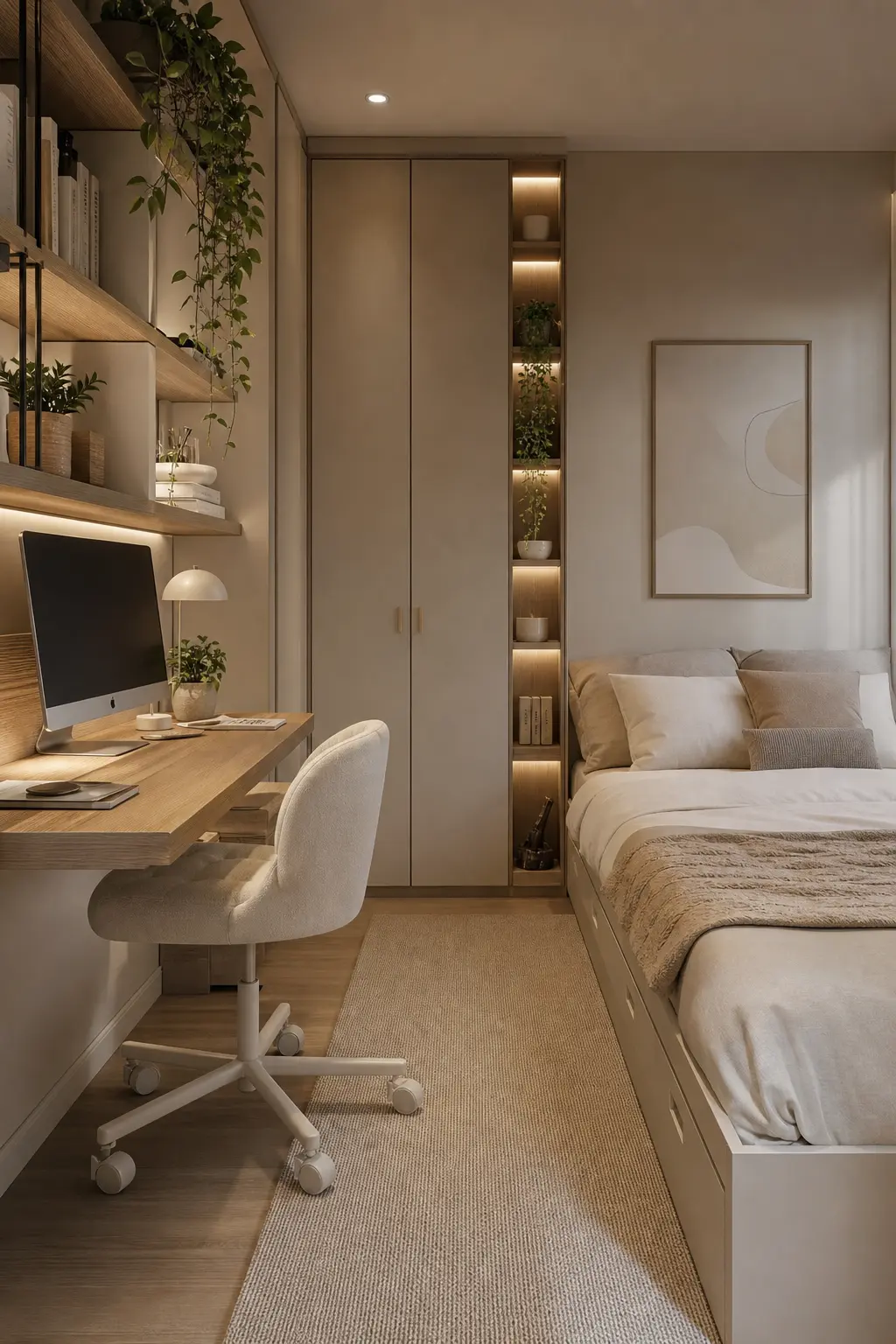
Floor space is the scarcest resource in a small bedroom, so push office supplies and storage upward instead. Floating shelves above the desk, a wall mounted file organizer, or a pegboard system keep supplies accessible without eating into the room’s limited square footage.
This single shift, moving storage off the floor and onto the wall, often does more to make a small bedroom workspace feel functional than any desk swap on its own.
4. Separate the Zones with a Rug
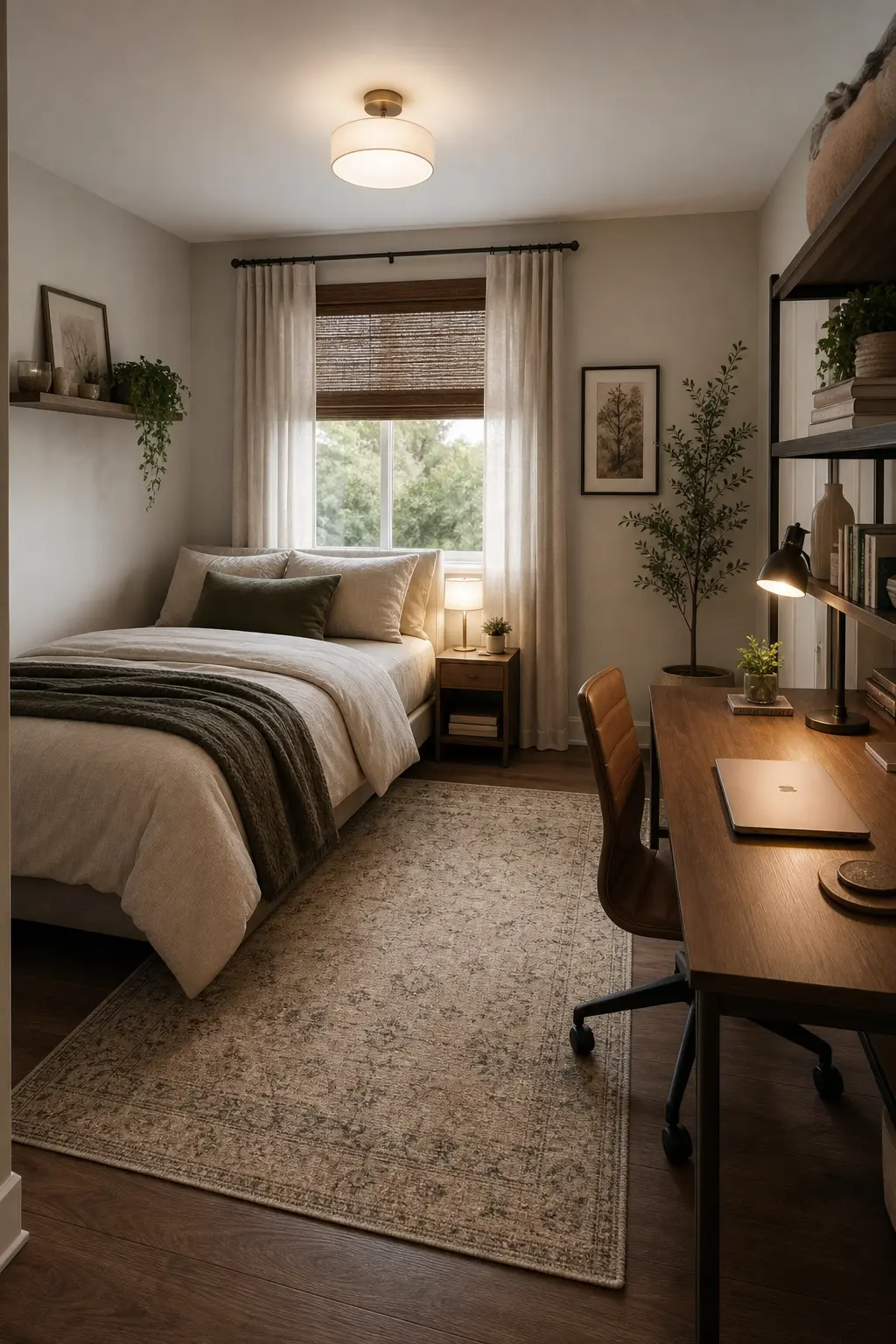
A small rug under the desk visually defines the workspace as its own zone, even in a bedroom with no walls to separate sleeping and working areas. Choose a rug in a color that complements the room’s existing palette, in the $30 to $100 range depending on size.
A defined workspace zone, even a small one marked only by a rug, helps signal to your brain that it’s time to focus, which matters more in a bedroom than almost any other room in the home. That mental separation supports both better work and better rest.
5. Choose a Chair That Works for Both Function and Style
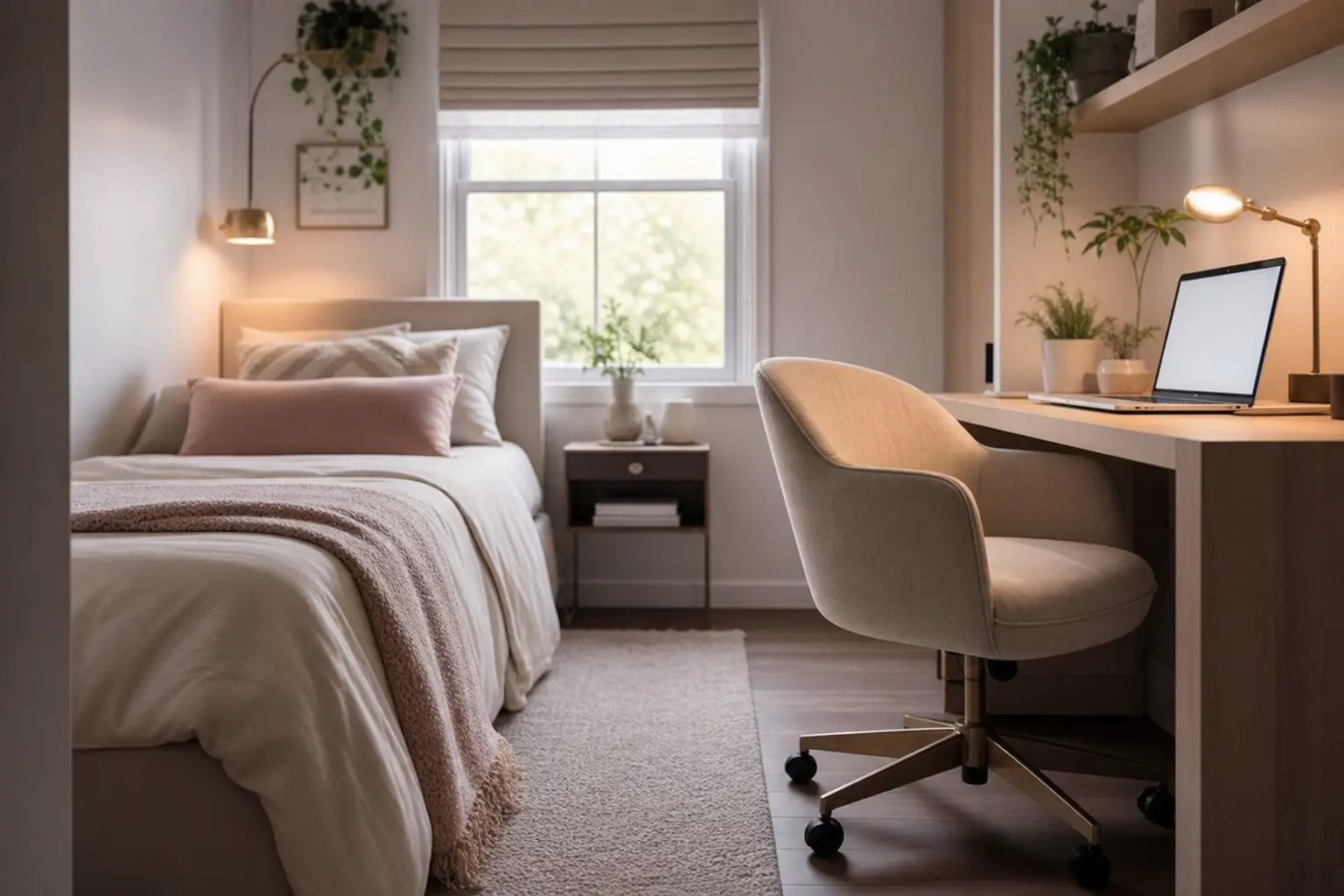
An ergonomic desk chair doesn’t have to look purely utilitarian. Look for a chair with real back support and adjustable height, available in a fabric or finish that fits the bedroom’s overall style, rather than defaulting to a plain black office chair that clashes with the rest of the room.
If a fully upholstered ergonomic chair isn’t available in your preferred style, a supportive chair with a soft cushion or a decorative throw can bridge the gap between comfort and aesthetics.
6. Add Task Lighting Beyond the Overhead Fixture
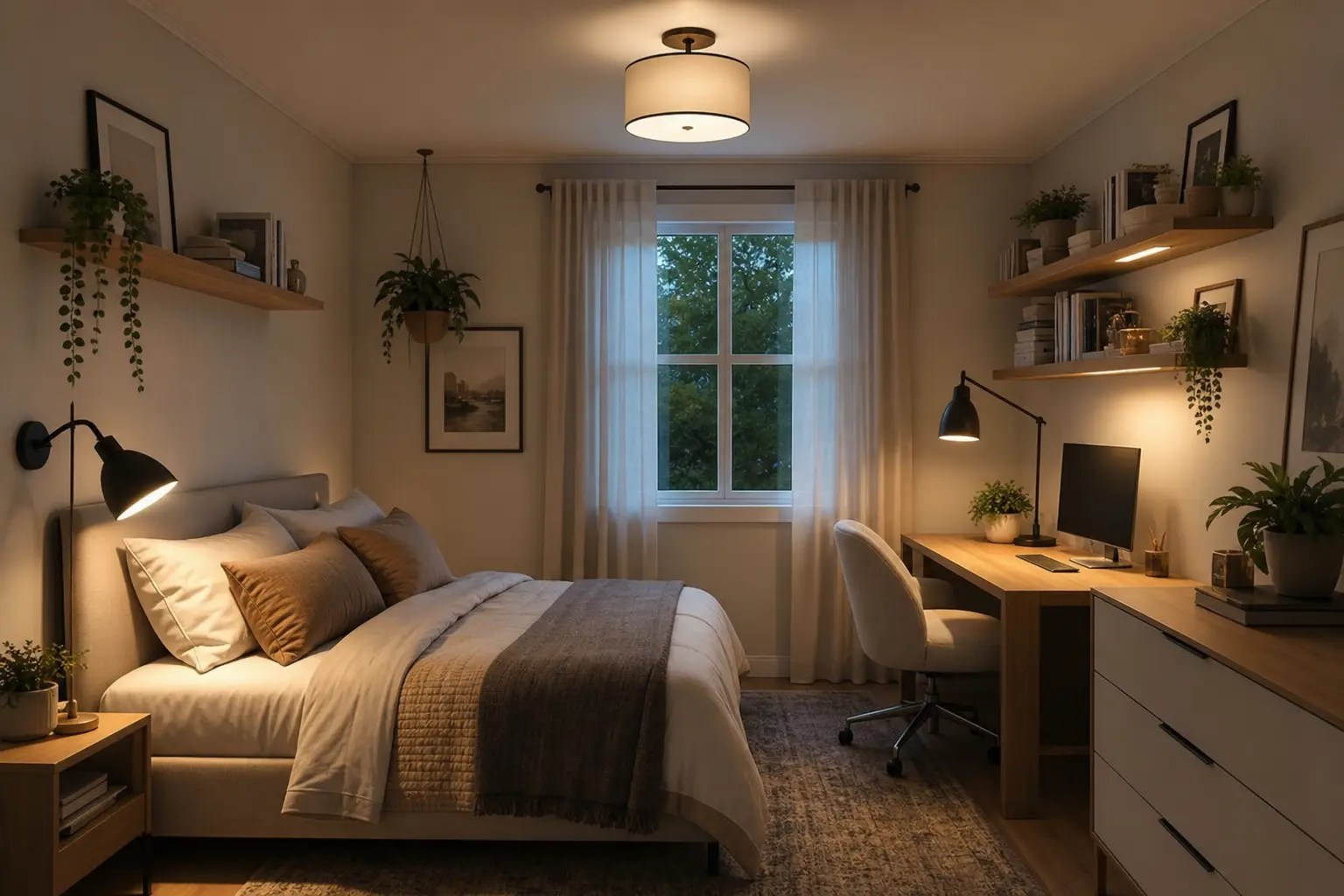
A single bedroom overhead light rarely provides the focused brightness a workspace actually needs. Add a dedicated desk lamp, ideally with an adjustable arm, in the 3000K to 4000K range for the clearest, most focus friendly light during work hours.
Choose a lamp with some personality, a sculptural base or an interesting shade, so it doubles as a decorative piece when you’re not actively working at the desk.
7. Keep the Desk Surface Visually Calm
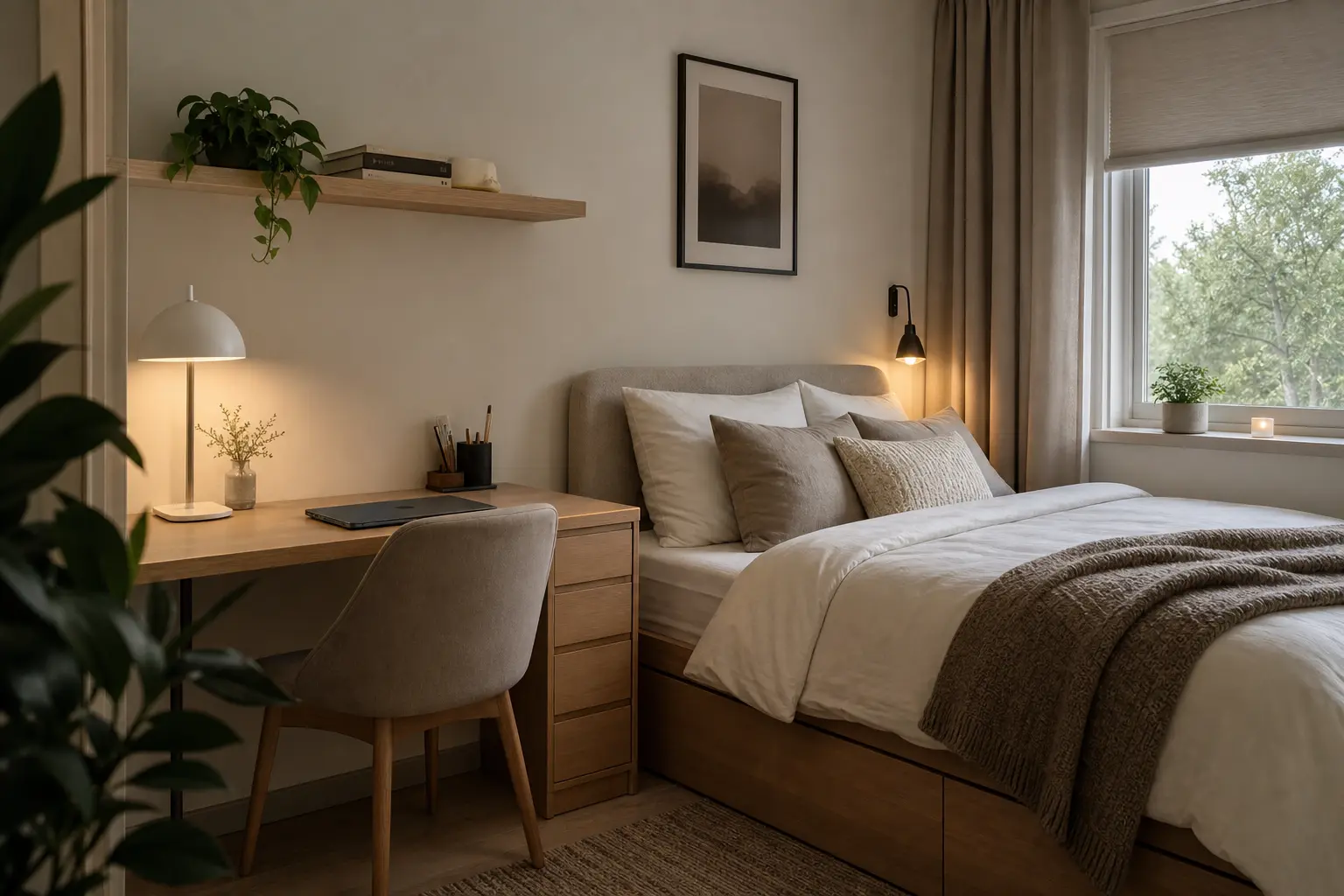
A cluttered desk in a bedroom is more disruptive than a cluttered desk in a dedicated office, since it sits within view of the bed and can make the whole room feel unfinished. Keep only the items you use daily on the surface, and store everything else in drawers, bins, or the vertical storage discussed earlier.
A calm desk surface also matters for sleep. A visible pile of work materials right before bed can make it harder to mentally switch off for the night.
8. Use a Room Divider or Curtain If You Need Privacy
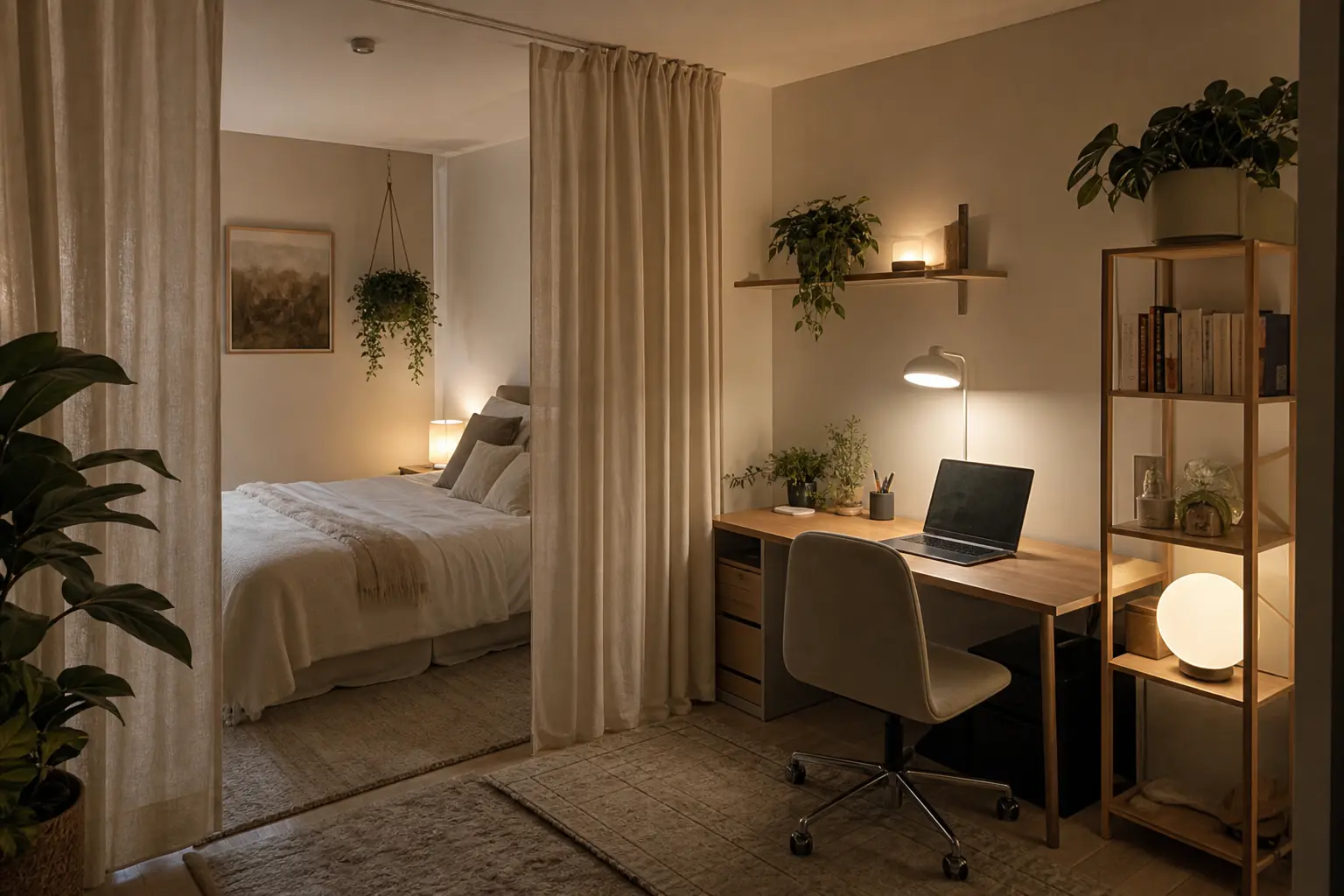
For video calls or focused work, a folding screen, a curtain on a tension rod, or even a tall bookshelf can create a visual break between the workspace and the sleeping area. This doesn’t require any permanent changes, which makes it a good option for renters as well as homeowners.
Choosing a Divider That Fits a Small Room
A slim folding screen, around 1 to 2 feet wide when closed, takes up minimal storage space when not in use and can be tucked behind a door or in a closet corner between work sessions.
9. Match the Workspace Finishes to the Bedroom’s Style
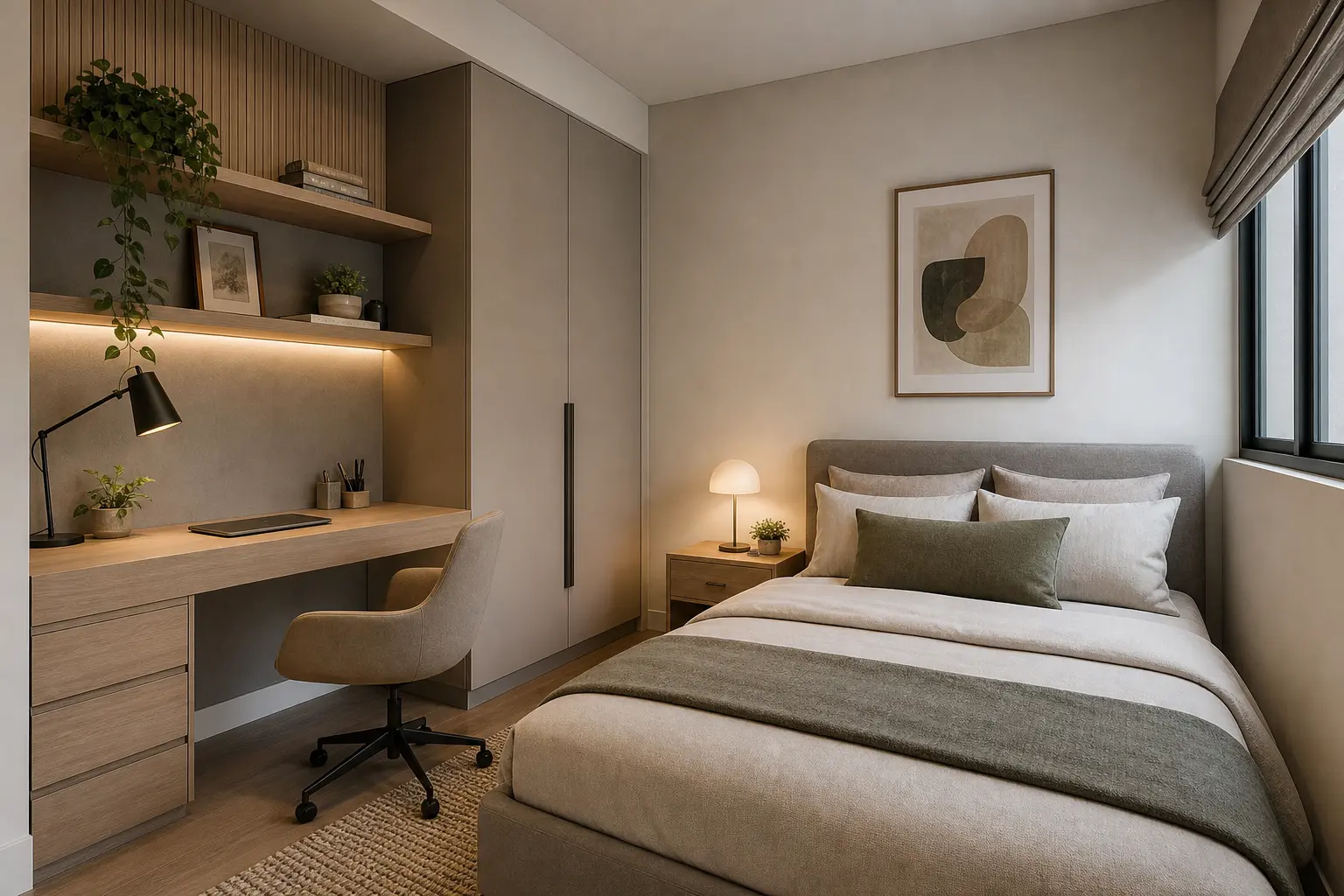
A desk, chair, and storage pieces that share the same wood tone or color family as the rest of the bedroom furniture keep the workspace from feeling like a separate room awkwardly inserted into a small space. This cohesion matters more in a bedroom than in a dedicated office, since the two zones share every square foot.
You don’t need to buy matching furniture. Staying within the same warm or cool tone family across pieces is usually enough to keep the whole room feeling intentional.
10. Add a Plant to Soften the Functional Corner
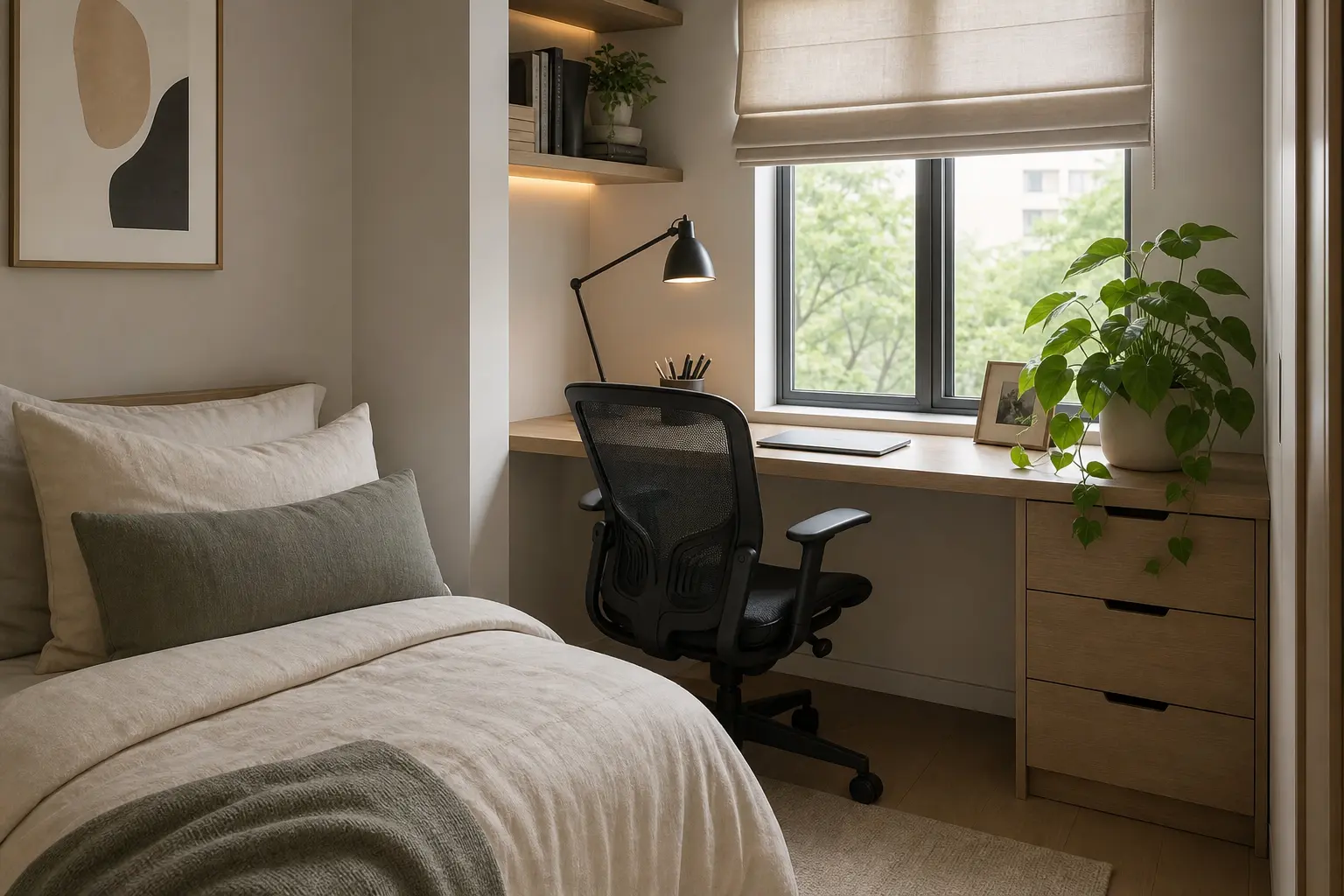
A small plant on the desk or a floating shelf softens the practical, work focused nature of the corner and ties it back into the room’s overall decor. A low maintenance option like a pothos or a small succulent works well, since it tolerates inconsistent light and minimal attention during busy weeks.
Choose a planter that matches the room’s existing color palette so the workspace corner blends into the bedroom rather than standing apart from it.
Mistakes to Avoid
- Choosing a desk too large for the corner, which blocks movement or a closet door
- Storing office supplies on the floor instead of using vertical wall space
- Prioritizing a stylish chair over one that actually supports good posture
- Relying only on the bedroom’s overhead light instead of a dedicated desk lamp
- Leaving the desk cluttered with work materials visible right before bed
- Choosing workspace furniture in a completely different style or tone from the rest of the room
Frequently Asked Questions
How much space do I need for a workspace in a small bedroom? A corner as small as 2 feet wide can fit a slim or floating desk with enough room to sit and work comfortably, especially if storage is kept vertical rather than on the floor.
Will a desk in my bedroom disrupt my sleep? It can if the workspace stays cluttered or visible right up until bedtime. Keeping the desk surface clear and adding a curtain or screen for visual separation helps minimize that disruption.
What’s the most affordable way to add a workspace to a small bedroom? A floating shelf used as a desk, paired with a folding chair, can create a functional setup for under $100, and both pieces fold away or tuck out of sight when not in use.
Can I create a workspace in a bedroom I rent? Yes. A floating desk that’s actually a freestanding console table, a rolling cart for storage, and a tension rod curtain for privacy all work without requiring any permanent changes to the walls.
How do I keep the workspace from making the bedroom feel smaller? Choose furniture in a similar color and material to the rest of the room, keep the desk surface clear, and rely on vertical storage rather than floor based storage pieces.
Conclusion
A functional workspace and a restful bedroom aren’t mutually exclusive, even in a small room. The key is defining the workspace as its own small zone, through a rug, a slim desk, and vertical storage, so it stays functional without taking over the room’s primary purpose. Start with the desk and lighting, then build out storage and styling as your workflow and space allow.