10 Cozy Beige Living Room Ideas with Wood Furniture That Look Expensive
Plenty of beige living rooms end up feeling more unfinished than calm, like the walls got painted and then everyone forgot the next step. Add the right wood furniture, and beige suddenly has somewhere to go. These cozy beige living room ideas with wood furniture focus on the pairing that actually makes the color work, not just the paint alone.
1. Why Beige and Wood Are a Natural Living Room Pairing
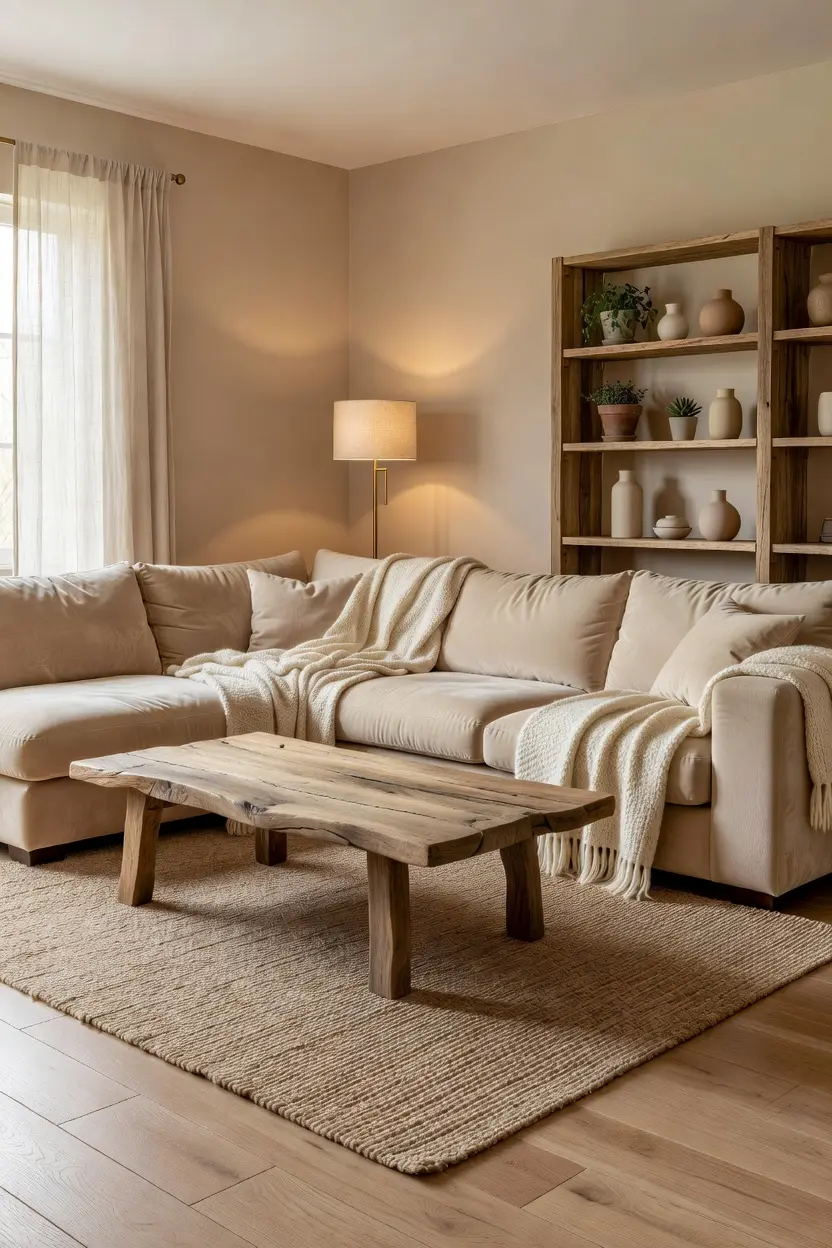
Beige and wood share a similar warm undertone, so they don’t need much effort to look intentional together. Compare that to beige paired with cool gray furniture or stark white pieces, and wood adds a richness the room would otherwise be missing.
There’s a texture argument here too. A living room spends a lot of time being looked at up close, coffee table surfaces, armrests, shelving, and wood grain gives all of that visual interest a smooth painted or laminate piece just can’t offer.
2. Choosing a Wood Tone That Suits Your Beige Shade
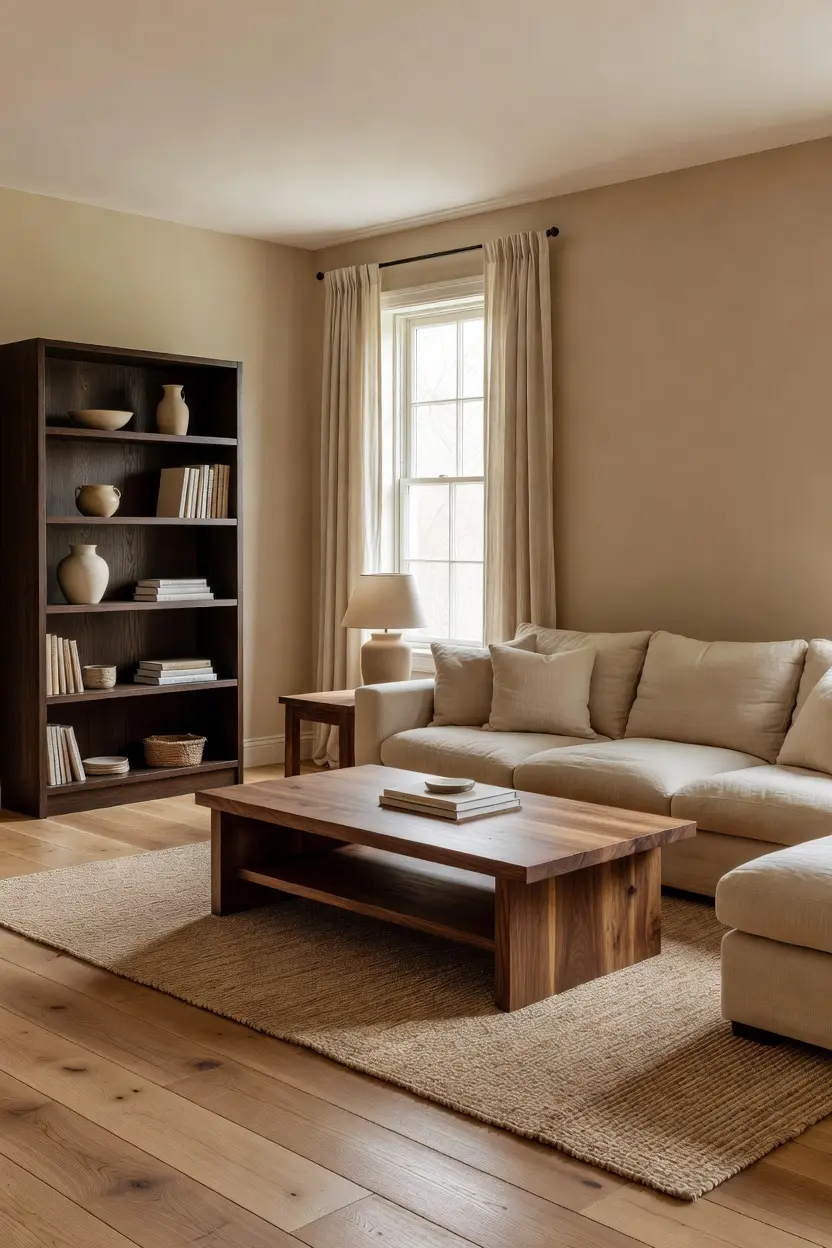
Not every wood tone works with every beige. A beige leaning warm and sandy pairs easily with lighter woods like oak or ash, since both sit on the same side of the color wheel. A beige with a cooler, slightly gray undertone does better with a mid tone walnut, which adds enough warmth to balance things out without fighting the wall color.
A quick tip that helps: hold an actual wood sample, a furniture leg or a small board, against your beige paint swatch before buying anything for the room. Undertones that seem fine on their own can clash the second they’re side by side.
Testing in Real Light
Living rooms often get more varied light than any other room in the house, morning sun, afternoon shade, evening lamps. Check the beige and wood pairing under all three before committing to a full furniture order.
3. Mixing Wood Tones Across Different Furniture Pieces
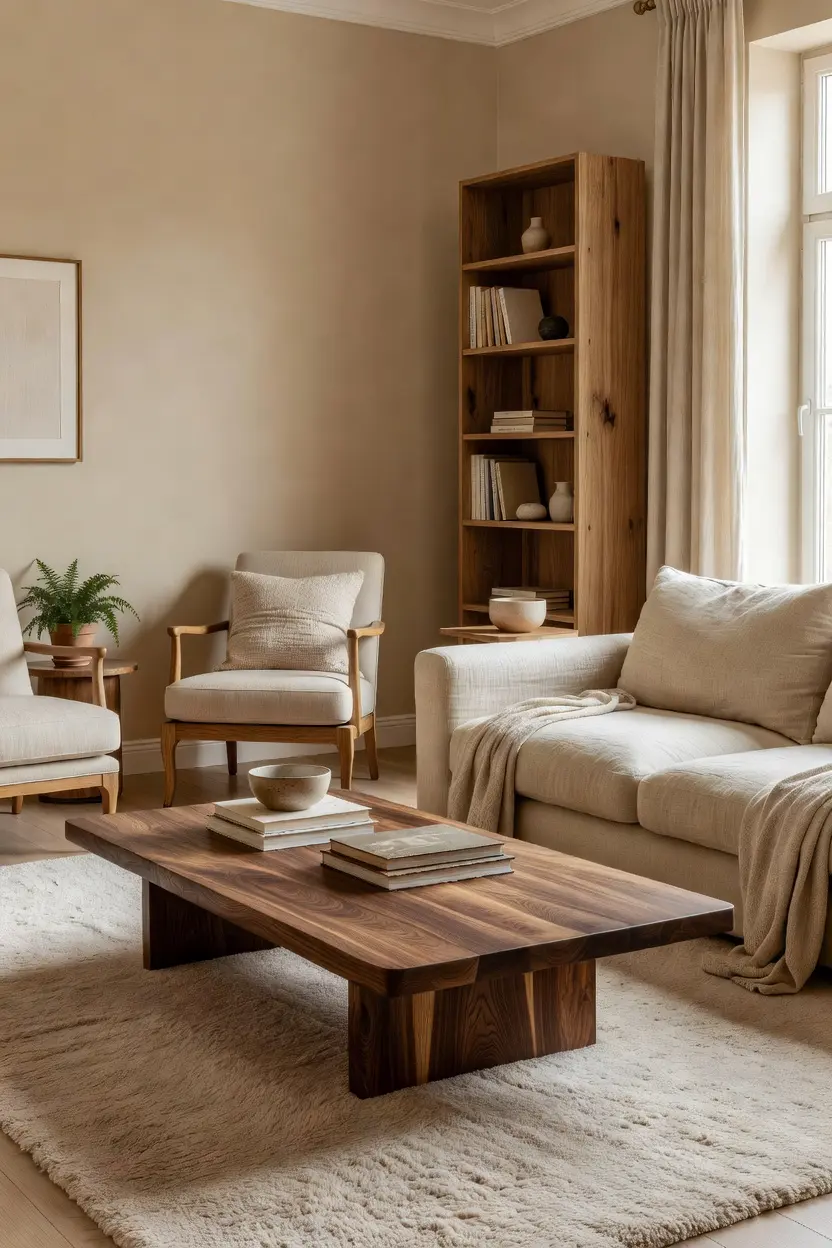
A living room rarely has just one wood piece, so mixing tones without a plan can look accidental fast. Keep it to two distinct wood tones at most, and let one dominate while the other plays more of a supporting role.
If the coffee table is a warm oak, a media console in a similar tone keeps things simple. A side table in a slightly darker walnut can add contrast without clashing, as long as both pieces share the same warm undertone rather than mixing warm and cool. Skip a third or fourth wood tone. It starts to read as furniture accumulated over the years rather than chosen on purpose.
4. The Sofa and Seating Layer
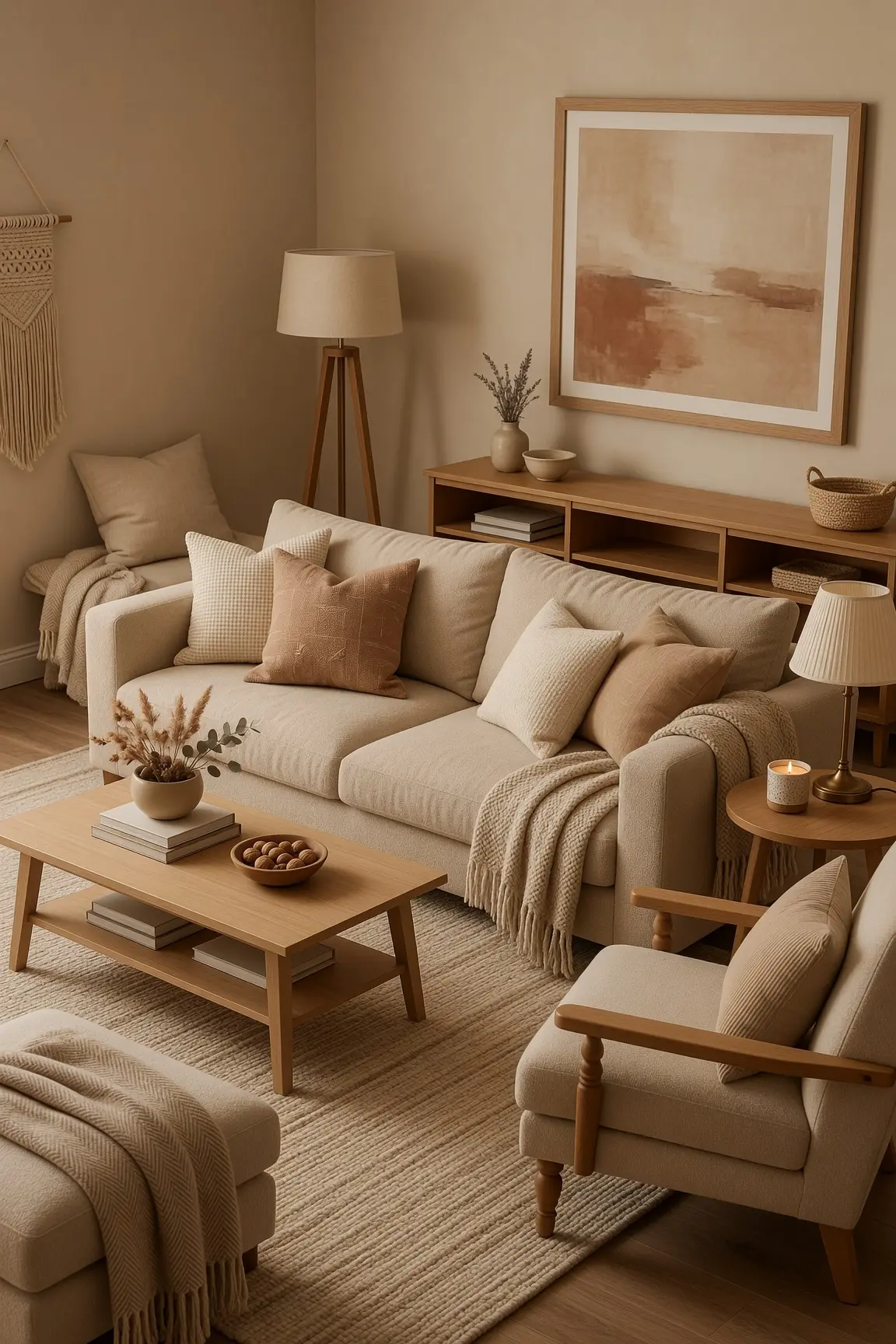
The sofa carries more visual weight than almost anything else in the room, so its color and fabric matter a lot in a beige and wood pairing. A cream or warm oatmeal sofa lets the beige walls and wood furniture blend together, while a slightly deeper tan or camel sofa adds a bit more contrast and grounds the space.
Boucle or linen upholstery adds texture that complements wood grain instead of competing with it. Leather, particularly a warm cognac or tan tone, pairs especially well with wood and adds a bit more structure to an otherwise soft, textile heavy room.
5. Coffee and Console Tables That Anchor the Room

A solid wood coffee table does more to ground a beige living room than almost any other single piece, since it sits at the center of the room and gets seen from every angle. Round or organically shaped tables soften the room’s overall lines, while a rectangular table with visible joinery adds a bit more structure.
A console table behind the sofa, in a matching or complementary wood tone, extends the material through the room without needing to duplicate every piece exactly. Keeping the surface styled with just a few items, rather than fully covered, lets the wood itself stay the visual focus.
Key takeaway: the coffee table is usually worth spending more on than almost any other piece, since it’s the item guests interact with and notice most directly.
6. Textiles That Reinforce the Warm Palette
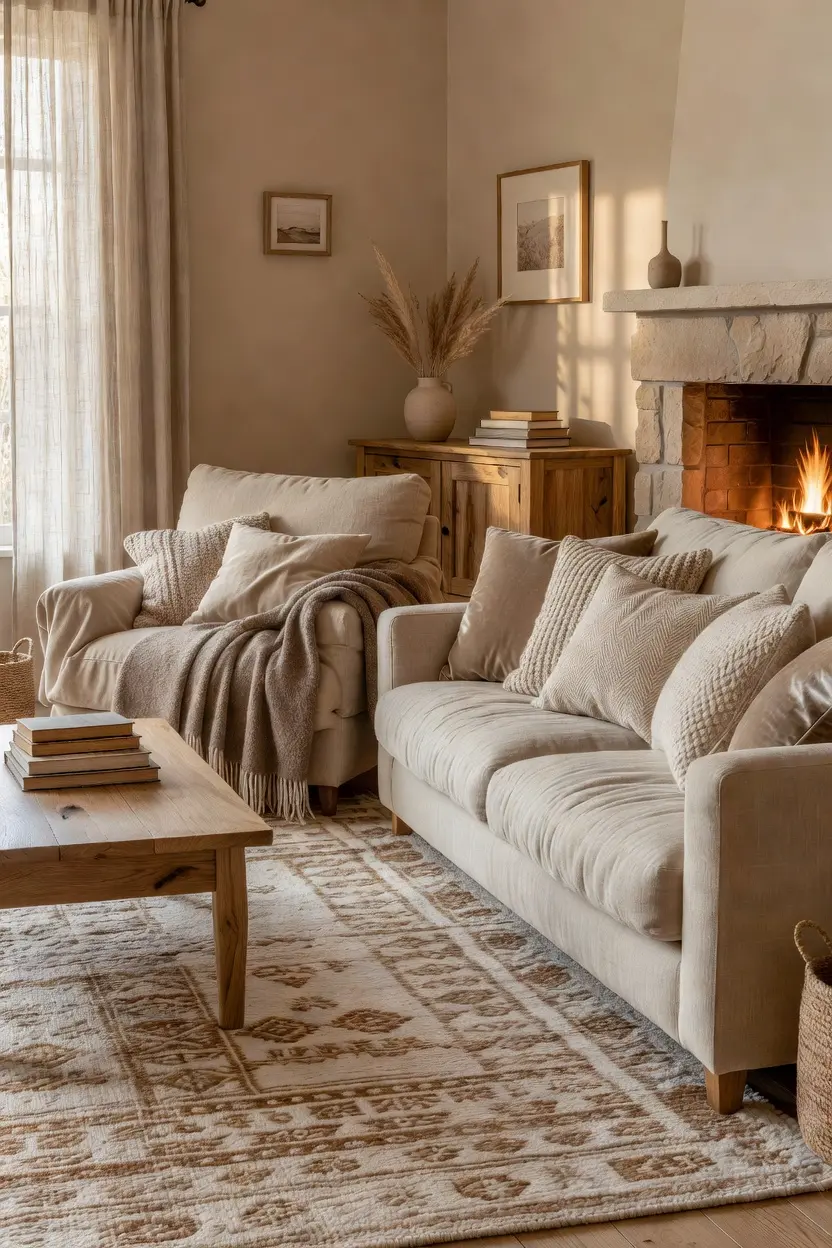
Throw pillows in varied but coordinated neutral tones, cream, oatmeal, a soft camel, add depth to a beige sofa without introducing a whole new color scheme. A chunky knit or boucle throw blanket draped over the arm of the sofa adds texture that photographs well and feels good in person too.
A jute or wool rug in a warm neutral tone grounds the seating area and adds another textural layer beneath the wood furniture. Linen curtains, slightly rumpled rather than perfectly pressed, keep the room feeling relaxed instead of overly formal.
7. Lighting That Brings Out Wood Grain
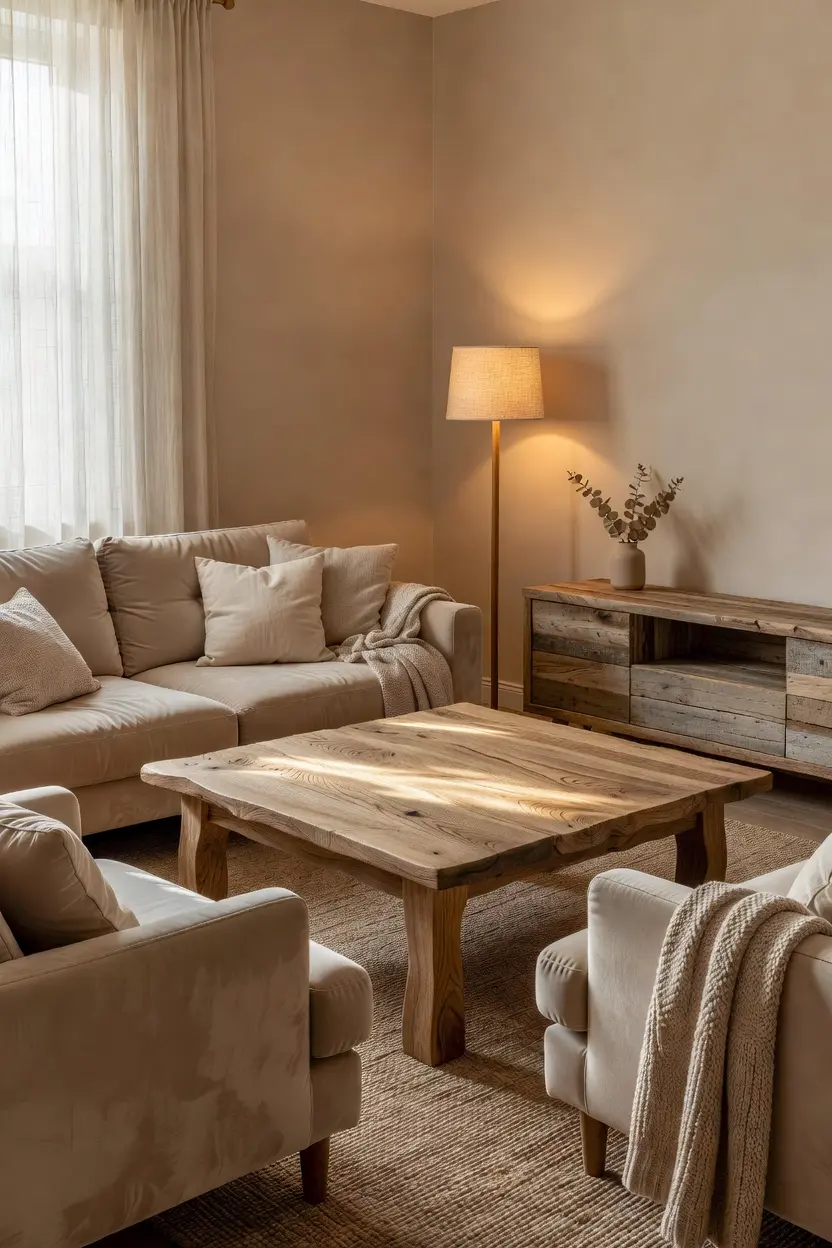
Cool toned lighting flattens wood grain and can make beige look gray rather than warm, undercutting the whole point of the pairing. Warm bulbs, generally 2700K to 3000K, bring out both the wood’s natural grain and beige’s warm undertone in a way cooler bulbs never quite manage.
A floor lamp positioned near a wood console or bookshelf highlights the grain in the evening, while natural light does similar work during the day. Positioning key wood pieces where they catch some daylight, rather than tucked into a dark corner, lets the material show off at its best.
8. Metal Accents That Round Things Out

Warm metals, brass or aged gold, pair well with both beige and wood without introducing a competing finish. A brass floor lamp, picture frames, or drawer pulls on a media console add a bit of shine that keeps an all warm toned room from feeling flat.
Black metal offers a different route, adding contrast rather than continuing the warmth. It works well for anyone wanting the beige and wood pairing to feel a bit more modern instead of entirely soft and traditional. Whatever finish gets picked, keep it consistent across visible hardware and lighting so nothing feels randomly assembled.
9. Budget Ranges for Wood Furniture and Refinishing

New solid wood furniture, a coffee table or console from a mid range retailer, typically runs 300 to 900 dollars per piece depending on size and wood type. Secondhand solid wood furniture, sourced from thrift stores, estate sales, or online marketplaces, often costs a fraction of that, sometimes 40 to 150 dollars for a piece that just needs a bit of refinishing.
Refinishing supplies, sandpaper, stain, and a brush, typically cost 30 to 60 dollars per piece, well under buying new furniture in a similar style. A full beige and wood living room refresh, combining a couple of refinished secondhand pieces with new textiles and lighting, often lands somewhere between 400 and 800 dollars total.
10. Layout Tricks That Let the Wood Stand Out
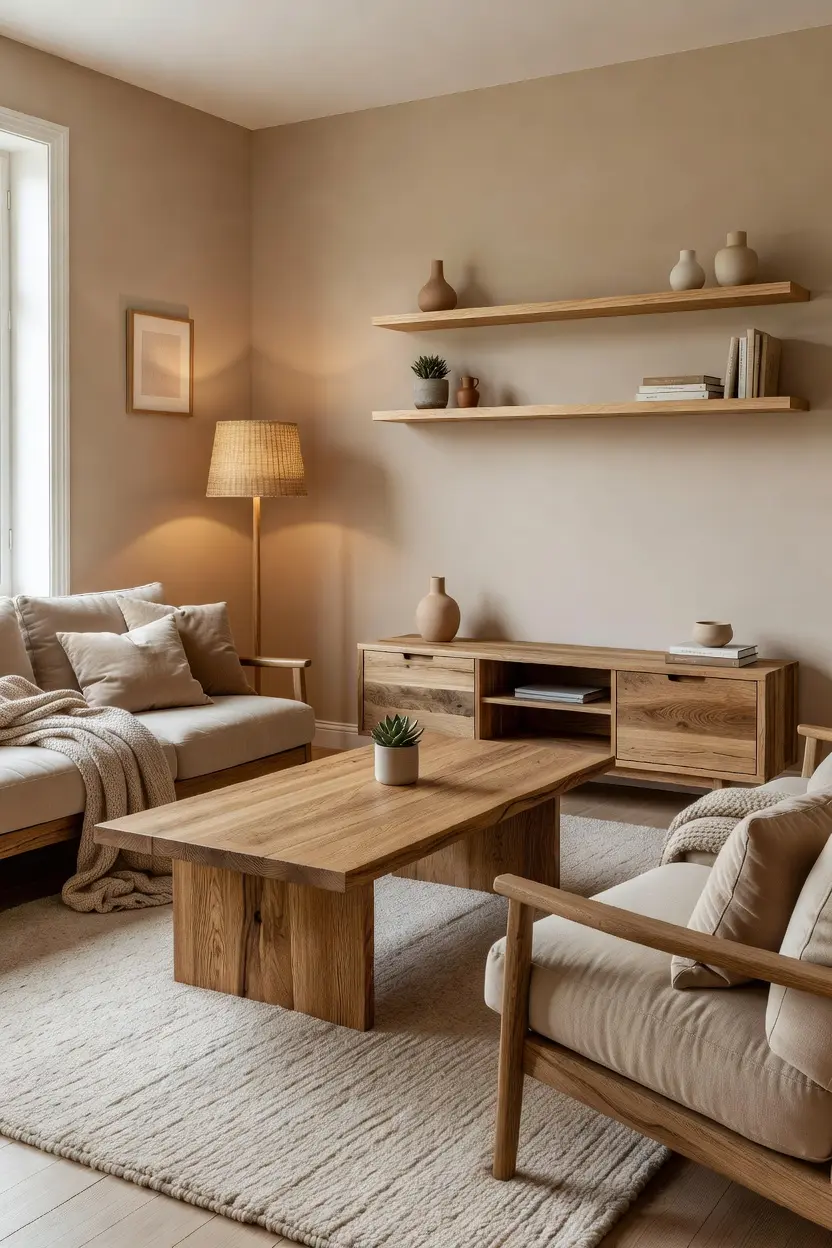
Overcrowding a living room, even with beautiful wood pieces, buries the individual character of each item. Leave some breathing room between furniture pieces, and the eye actually gets to appreciate the grain and craftsmanship instead of reading everything as one dense block.
Position the sofa as the visual anchor, with wood pieces arranged to support it rather than compete with it. A single, well chosen wood accent piece, a bench or an accent chair, often does more for the room than several smaller wood items scattered around without a clear plan.
Mistakes to Avoid
- Mixing more than two distinct wood tones without a clear plan
- Pairing warm beige with cool toned wood furniture that clashes rather than complements
- Overcrowding the room with furniture, burying each piece’s individual character
- Using only cool toned lighting, which flattens wood grain and beige’s warmth
- Choosing a stark white or very cool sofa color that fights the warm palette
- Skipping regular wood care, leading to a dull or faded finish over time
Frequently Asked Questions
Can I mix different wood tones in a beige living room? Yes, as long as it’s kept to two tones at most, with one dominant and one playing an accent role. Keeping undertones consistent, warm with warm, prevents the mix from looking accidental.
What wood tone works best with a warm beige? Lighter woods like oak or ash tend to suit a warm, sandy beige best, since both share the same warm undertone and avoid clashing with each other.
Do I need all new wood furniture to get this look? Not necessarily. Refinishing existing furniture or sourcing solid wood pieces secondhand often achieves the same warm, elevated look for a fraction of the cost of buying everything new.
What sofa color works best with a beige and wood living room? A cream or warm oatmeal sofa blends with the wall color, while a slightly deeper tan or camel tone adds contrast and helps ground the room a bit more.
How do I keep a beige and wood living room from feeling flat? Layer in texture through throw pillows, a rug, and curtains, and use warm lighting rather than relying on overhead light alone. Texture and lighting do most of the work color alone can’t.
Conclusion
A cozy beige living room with wood furniture works because the two materials share the same warm foundation, letting texture and grain do the work color alone can’t. Choose a wood tone that suits your beige shade, keep the palette to no more than two wood tones, and let warm lighting bring out the natural grain. Done well, a beige and wood living room can look far more expensive than what it actually cost to put together.