10 Pink Laundry Room Glow-Up Ideas That Look Cute & Expensive
Most laundry rooms get decorated last, if they get decorated at all. You paint the bedroom, style the living room, agonize over kitchen hardware, and then the laundry room ends up with whatever leftover paint was in the garage and a wire shelf that’s been there since move in day. A pink laundry room glow up fixes that without requiring a full renovation. The goal isn’t to make the space precious or impractical. It’s to take a room you already use every week and make it one you don’t dread walking into, using color, storage, and lighting choices that actually hold up to detergent spills and dryer lint.
Pink gets dismissed in laundry rooms because people assume it means bubblegum walls and frilly curtains. It doesn’t have to. Dusty rose, clay pink, and warm blush read as sophisticated and calm, not childish, especially when paired with wood tones, brass, and matte black fixtures. Below are ten ways to actually pull off a pink laundry room glow up, from the wall color decision down to the small details that make the room feel finished.
1. Choose the Right Shade of Pink for a Small Room
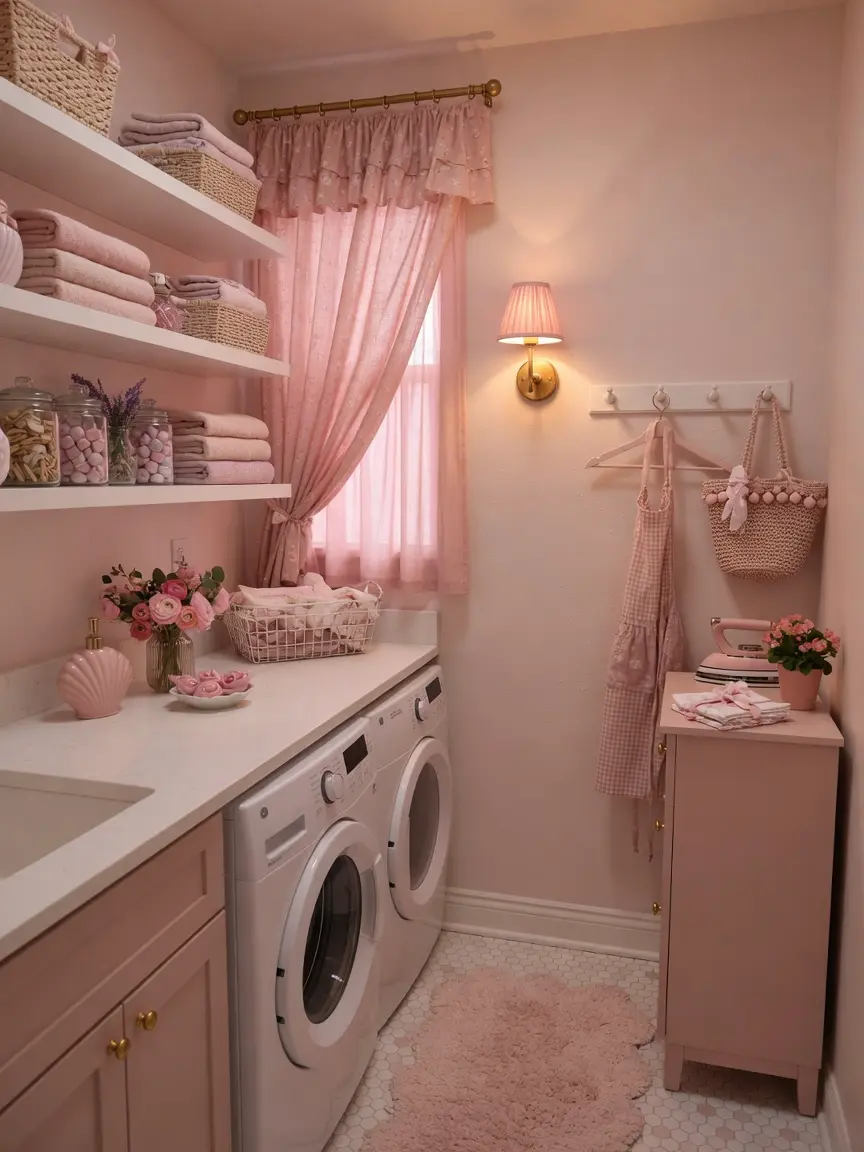
Laundry rooms are usually small, often windowless, and lit by a single overhead fixture. That combination changes how paint color reads on the wall compared to a bright, sunlit bedroom. A pink laundry room works best with a shade that leans warm and slightly muted, like clay, terracotta pink, or dusty rose, rather than a cool, saturated bubblegum pink that can feel harsh under fluorescent or LED lighting.
Why Undertone Matters More Than the Color Name
Two paints labeled “blush” can look completely different depending on whether they have a peach undertone or a mauve undertone. In a small room with limited natural light, a peachy undertone tends to feel warmer and more forgiving, while a mauve or purple leaning pink can read cooler and slightly gray under artificial light. Test a sample on the actual wall, not just a swatch card, and look at it in the morning and at night before committing.
Budget wise, a quart of quality interior paint runs somewhere between 20 and 35 dollars, which is enough to cover most laundry room walls with a coat to spare. That’s a low cost way to test whether pink works for the space before committing to anything more expensive.
2. Decide Between a Full Wall and an Accent Wall
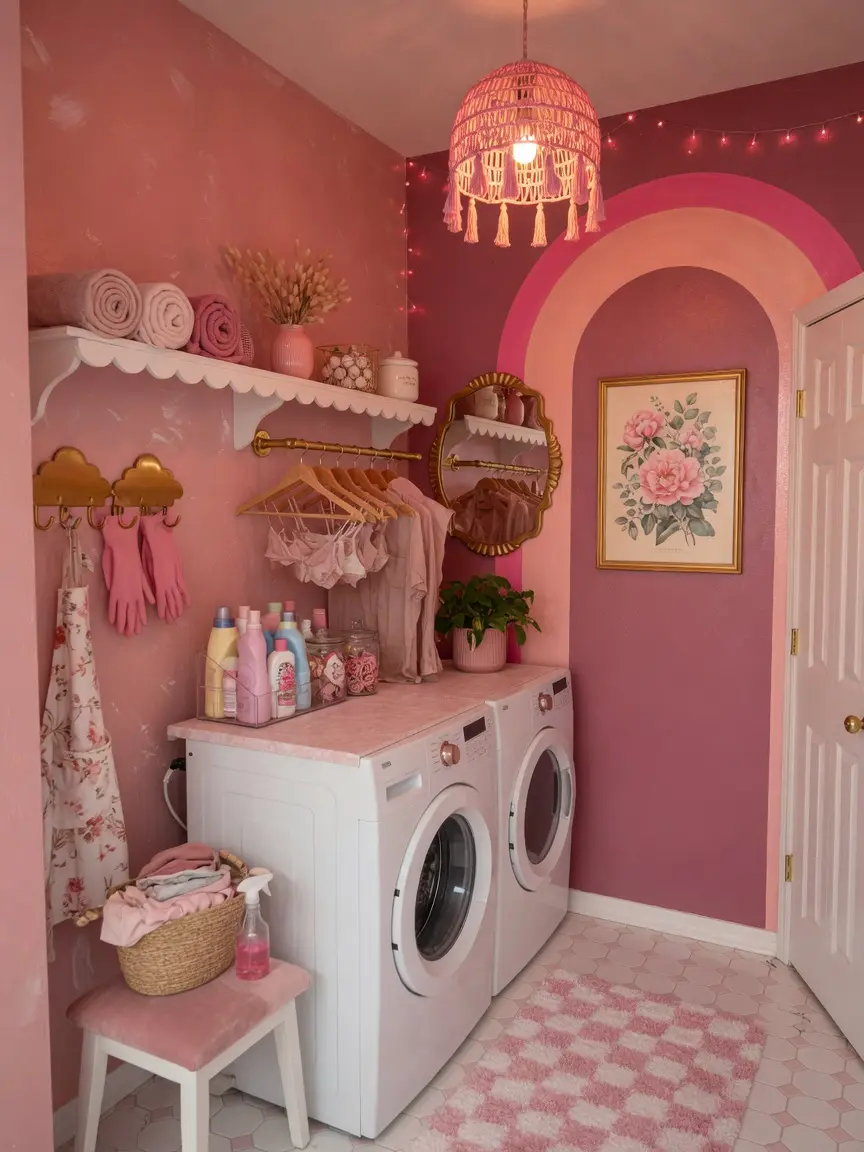
Not every pink laundry room needs pink on all four walls. If the room is very small, a full pink wall on all sides can actually make the space feel like it’s closing in, especially with darker or more saturated shades. An accent wall behind the washer and dryer, paired with a lighter neutral like warm white or soft greige on the remaining walls, gives you the color payoff without the closed in feeling.
If the laundry room is part of a larger mudroom or hallway, a full wall treatment can work because there’s more visual breathing room around it. The general rule is that the smaller and more enclosed the space, the more restraint you want with how much wall surface is fully saturated in color.
3. Swap the Flooring Without a Full Renovation
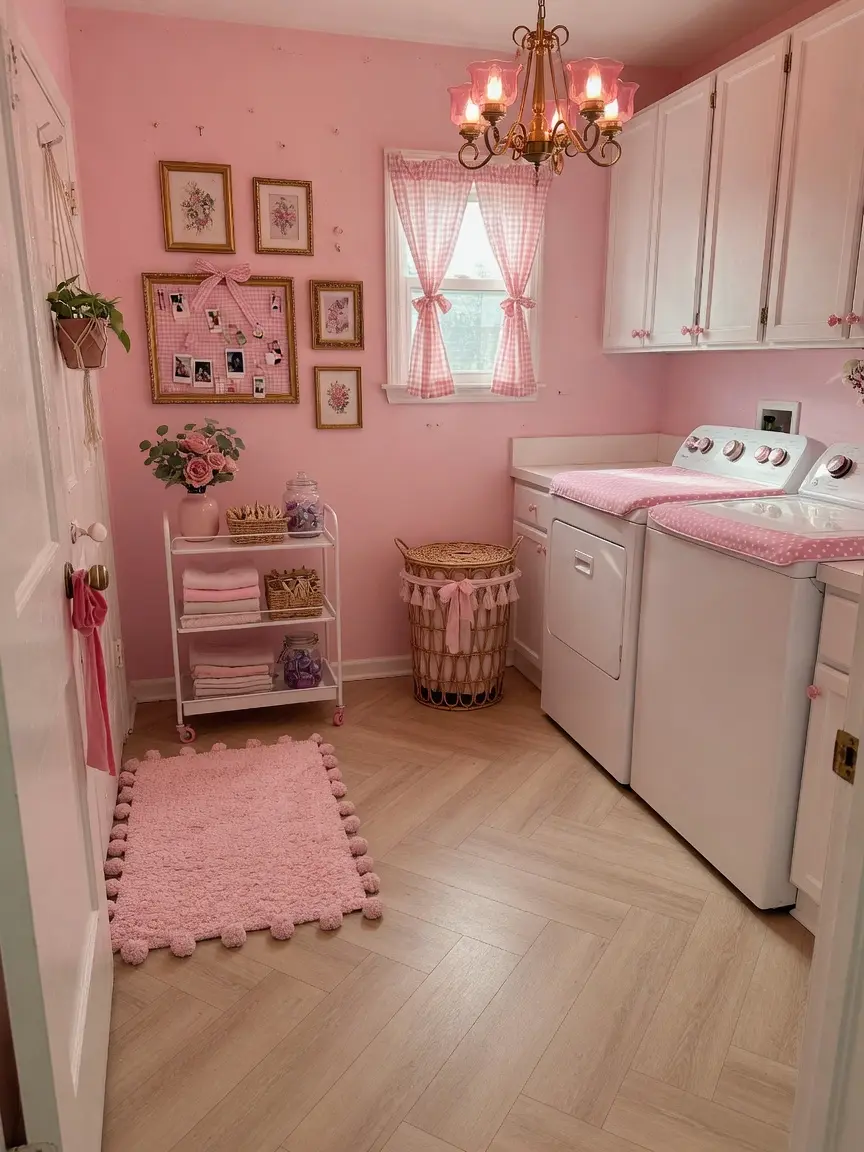
Flooring is where a lot of laundry rooms show their age, whether that’s cracked vinyl, dated linoleum, or plain unfinished concrete. Full flooring replacement is expensive and disruptive, but peel and stick vinyl tile has gotten good enough in recent years to be a genuinely solid option for a laundry room glow up on a budget.
What to Look for in Peel and Stick Tile
Look for a tile rated for wet or high moisture areas, since laundry rooms deal with occasional water from hoses, drips, and condensation. Thicker tiles, generally in the 2 to 3 millimeter range, feel more substantial underfoot and hide subfloor imperfections better than the thinnest budget options. Price wise, expect somewhere between 2 and 5 dollars per square foot for a decent quality product, which for an average laundry room footprint of 30 to 60 square feet keeps the whole flooring update well under 300 dollars in most cases.
A checkerboard pattern in soft pink and white, or a warm terracotta tone, pairs naturally with a blush wall and adds visual interest to a room that’s often just a rectangle with two appliances in it.
4. Add Open Shelving for Function and Style
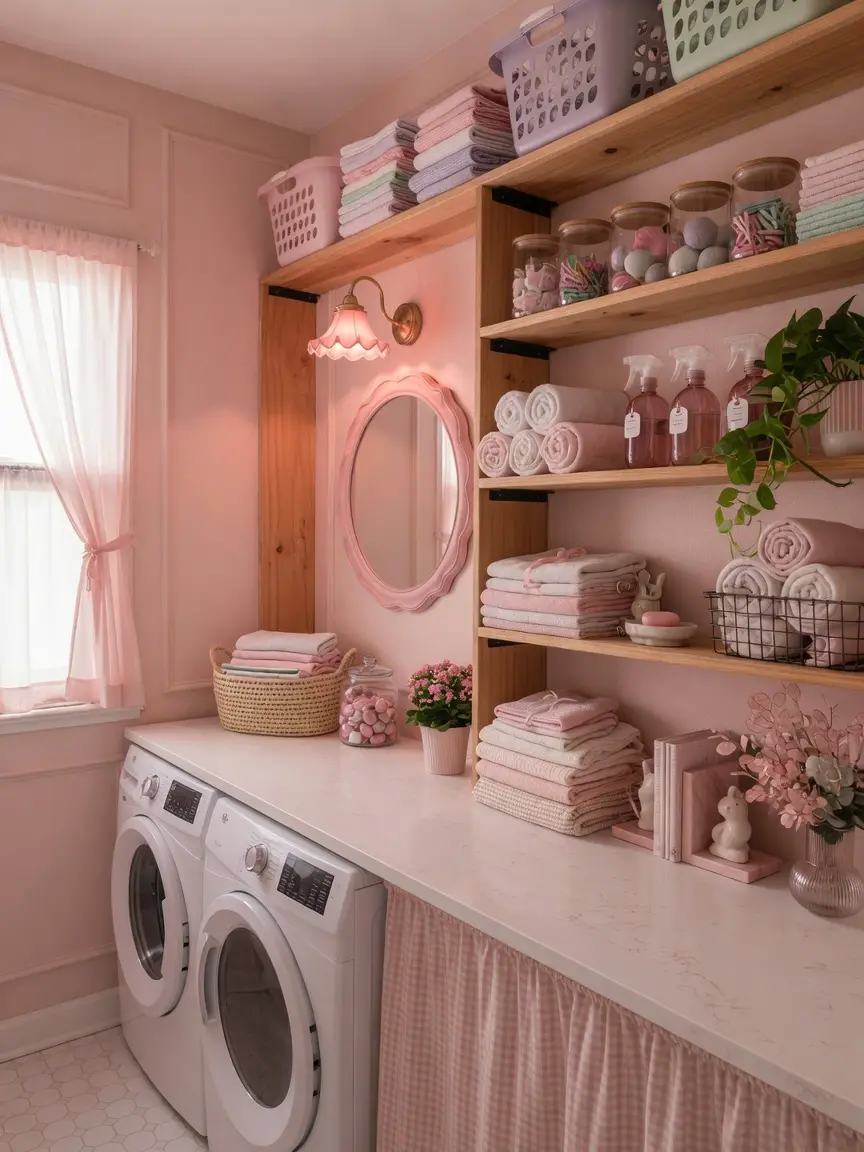
Closed cabinetry looks polished but it’s also expensive and, in a laundry room, not always necessary. Open wood shelving does double duty. It gives you a place to store detergent, dryer sheets, and folded towels, and it adds warmth and texture that balances out a painted pink wall so the room doesn’t feel like a single flat block of color.
Stick to sturdy shelving brackets rated for at least 20 to 25 pounds per shelf if you’re planning to store heavy items like large detergent jugs. A single 6 foot shelf with brackets typically costs between 40 and 80 dollars depending on the wood finish, which is a modest investment for a feature that changes how the whole wall reads.
5. Choose Hardware That Complements Pink Instead of Fighting It
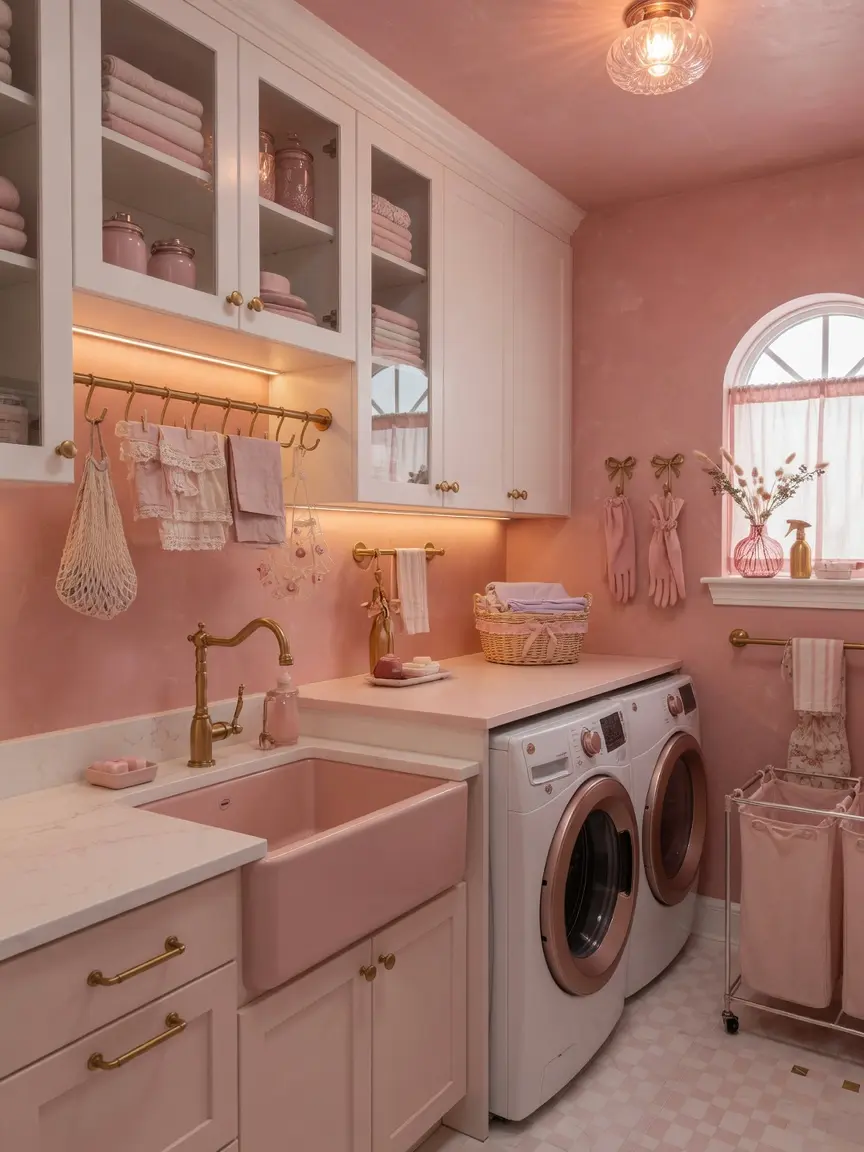
Cabinet pulls, light fixtures, and faucet finishes all interact with a pink wall whether you plan for it or not. Warm metals like brass, gold, and warm bronze tend to complement blush and dusty rose tones because they share the same warm undertone. Cool metals like chrome or stainless steel can work too, but they create more contrast and read as more modern and less cozy against pink.
Matte black is a middle ground that works with almost any pink shade and has become one of the more popular hardware finishes for laundry and mudroom spaces because it reads clean without competing with the wall color. If you’re updating hardware on a budget, swapping just the cabinet pulls and light fixture, without touching plumbing fixtures, is usually the lowest cost way to shift the whole room’s finish palette.
6. Fix the Lighting Before You Touch Anything Else
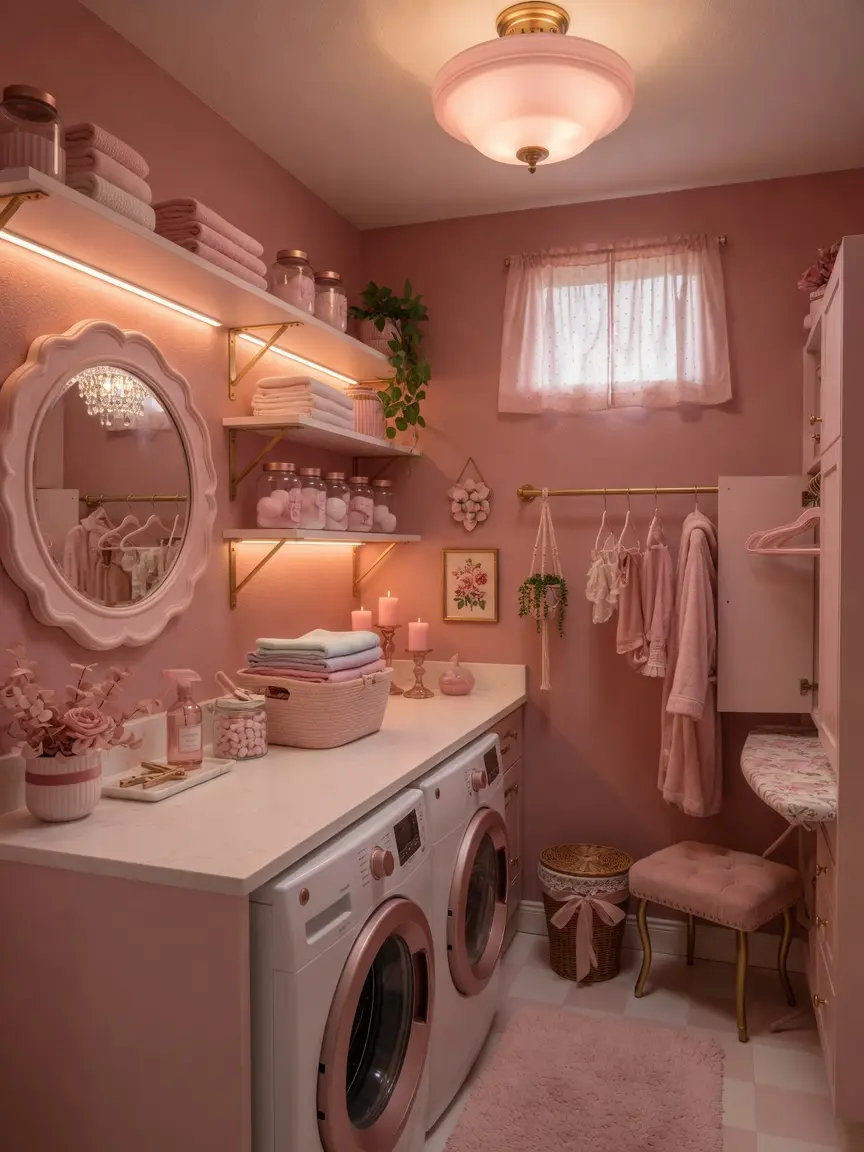
A lot of laundry rooms run on a single builder grade flush mount fixture that casts flat, slightly cool light. That kind of lighting can make even a well chosen pink paint look washed out or oddly cool toned. Before assuming a paint color “didn’t work,” it’s worth checking whether the lighting is the actual problem.
Warm Versus Cool Light Temperature
Light bulbs are rated in Kelvin, and for a cozy pink laundry room, something in the 2700 to 3000 Kelvin range reads as warm and flattering, closer to candlelight or early evening sun. Bulbs rated 4000 Kelvin and above shift toward a cooler, more clinical white light that can make pink walls look pale or slightly gray. Swapping bulbs is one of the cheapest changes in this entire list, often under 10 dollars per bulb, and it can make an existing paint color look noticeably better without repainting anything.
7. Hide the Ugly Necessities With Smart Storage
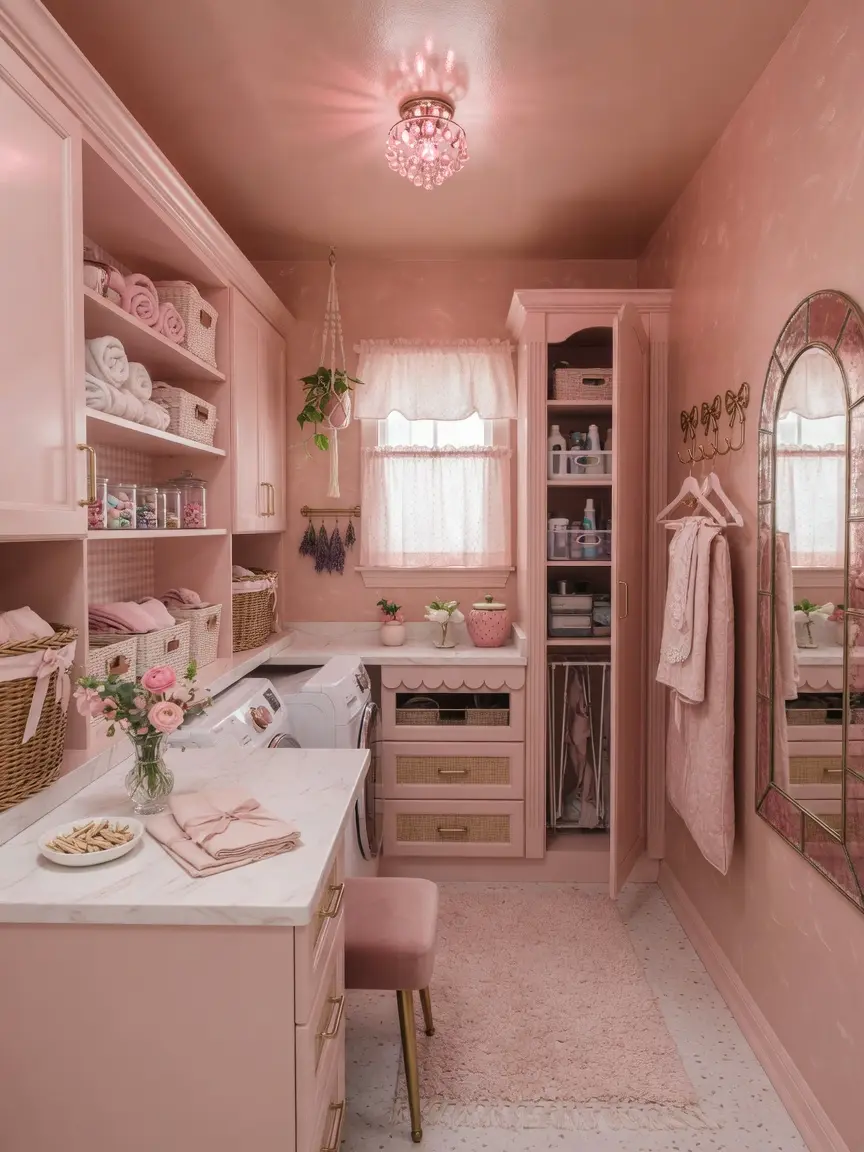
Detergent bottles, dryer vent hoses, extension cords, and stray socks all tend to pile up in laundry rooms because there’s rarely a dedicated spot for them. A glow up isn’t just about what you add, it’s also about what you contain. Woven baskets, labeled bins, and a simple wall mounted rack for the iron and ironing board keep the functional clutter from undercutting all the styling work you just did.
Clear or matching containers for detergent pods and pins create a more cohesive look than a shelf full of mismatched plastic bottles in their original packaging. This is a low cost fix, usually under 50 dollars total for a full set of bins and baskets, but it has an outsized visual impact because it removes visual noise rather than adding more decor.
8. Bring in Texture So the Room Doesn’t Feel Flat
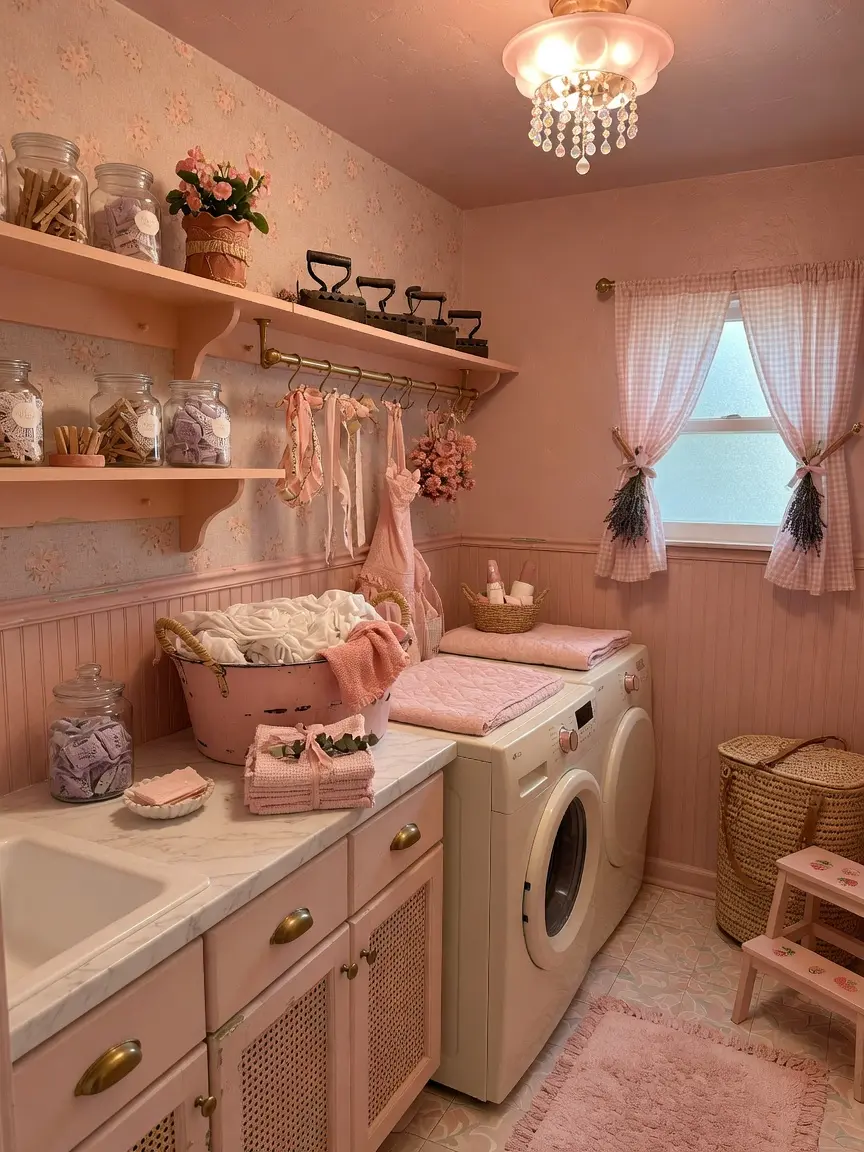
A painted wall, a tiled floor, and appliances can start to feel one note without something soft or organic breaking it up. A woven rug in a natural fiber like jute or a soft cotton runner adds texture underfoot and helps define the space, especially if the laundry room is part of an open hallway rather than a separate enclosed room.
A small plant, even a low maintenance one like a pothos or a faux olive branch in a ceramic vase, softens the hard surfaces of appliances and cabinetry. Texture is often what separates a room that looks “decorated” from one that just looks “painted.”
9. Add a Few Personal Touches Without Cluttering the Space
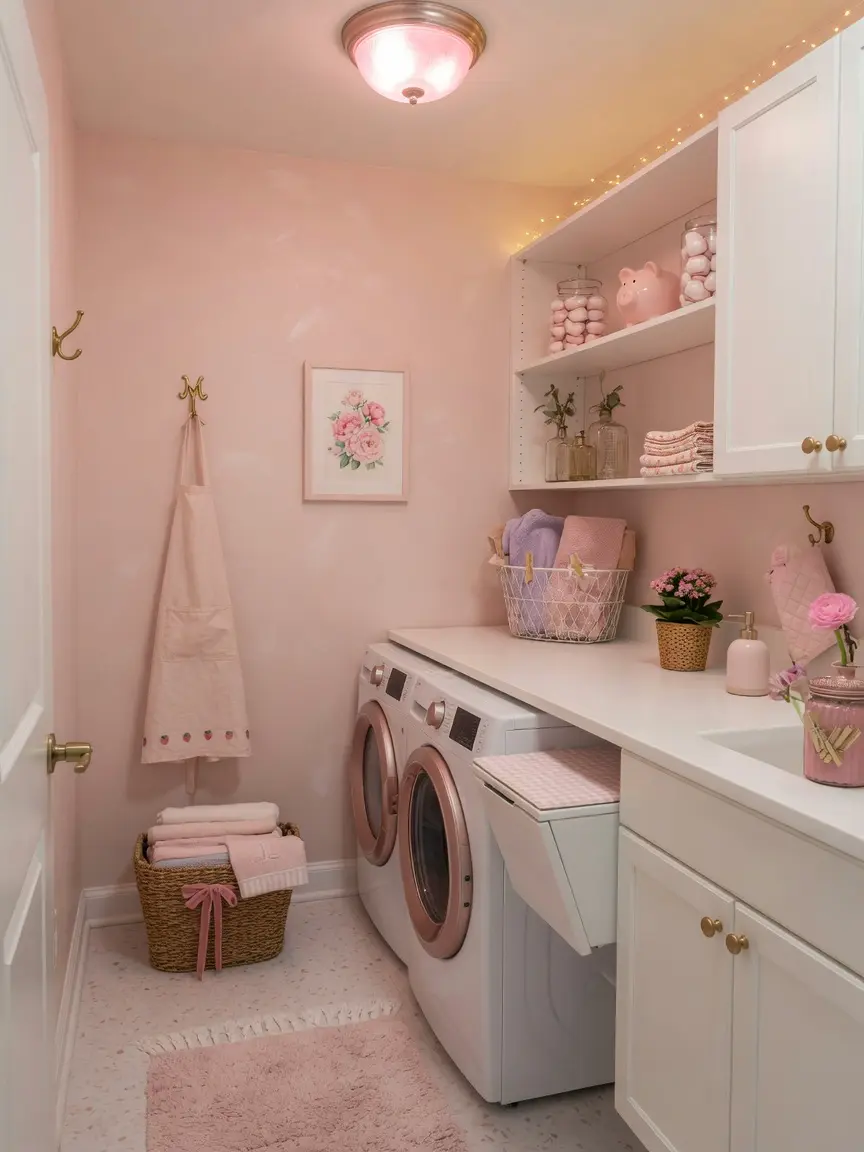
A framed print, a small piece of art, or a simple word sign can finish off a pink laundry room without turning it into a cluttered gallery wall. Because laundry rooms are usually narrow, one or two intentional pieces tend to work better than a full gallery arrangement, which can feel busy in a tight space.
If wall space above the machines is limited, consider a small shelf just for a plant or a candle rather than more wall art. The goal is a finished feeling, not a maximized one, and in a small utility space, less genuinely does more.
10. Keep the Room Functional First, Pretty Second
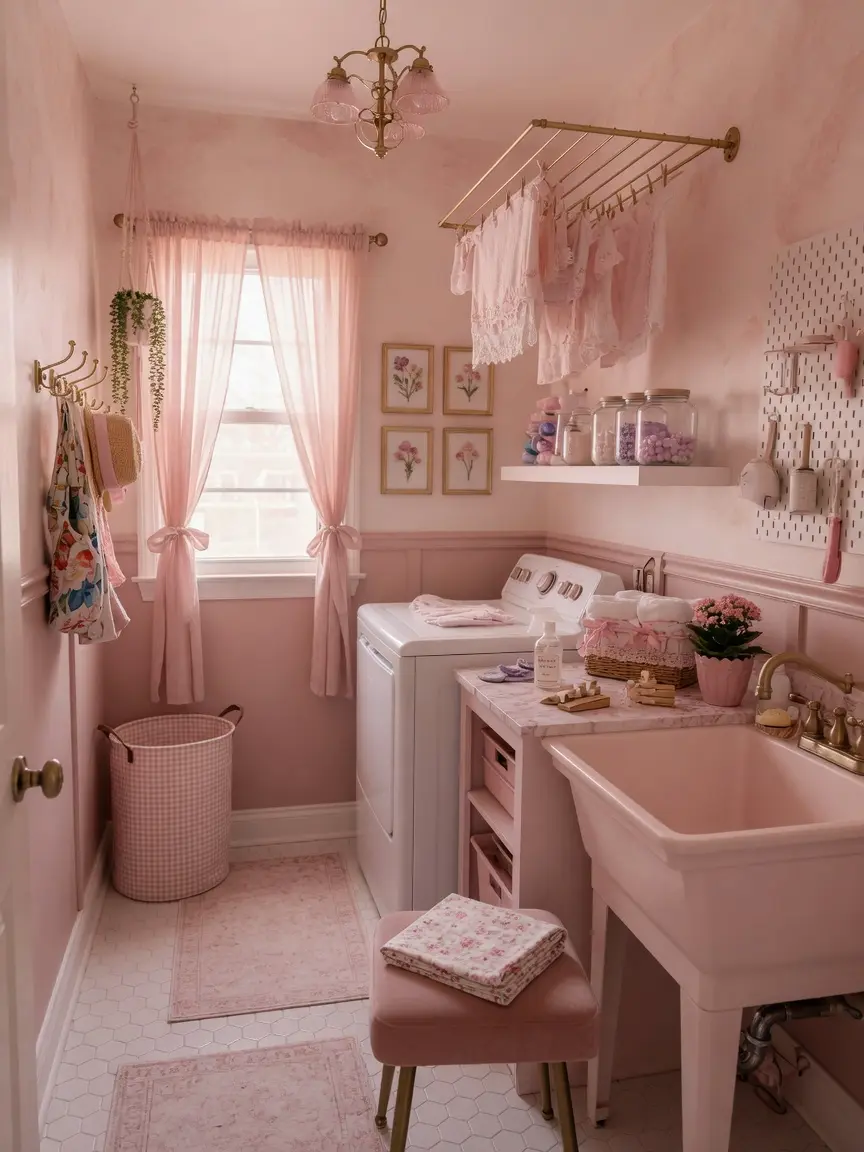
It’s easy to get caught up in paint chips and shelf brackets and lose sight of the fact that a laundry room still has a job to do. Before finalizing any layout change, make sure the dryer vent isn’t obstructed, that there’s still enough clearance to open appliance doors fully, and that any shelving doesn’t interfere with the dryer’s heat exhaust. A laundry room that looks beautiful but doesn’t function well ends up feeling worse than one that was never updated at all.
If you’re short on space, prioritize function first: a folding surface, a spot for a hamper, and a place to hang clothes to dry. Once those basics are covered, the pink paint and brass hardware become the finishing layer rather than a distraction from a room that doesn’t actually work.
Mistakes to Avoid
- Choosing a cool toned, saturated pink for a windowless room, which can look harsh under artificial light
- Painting all four walls a bold pink in a very small space, which can make the room feel smaller
- Skipping a moisture rated flooring product in a room that deals with water and humidity
- Overloading open shelves with mismatched bottles and boxes instead of containing them in bins or baskets
- Ignoring dryer vent clearance when adding shelving or storage near the appliances
- Adding too much wall art or decor in a narrow space, which can feel cluttered rather than finished
Frequently Asked Questions
Does a pink laundry room feel dated quickly? Bright, cool toned pinks can feel trendy and may age faster, but warm, muted shades like clay, terracotta pink, and dusty rose tend to read as timeless neutrals with warmth, closer to how a warm beige or greige is used, which helps the room hold up visually over time.
What is the most budget friendly way to start a pink laundry room glow up? Paint is almost always the lowest cost, highest impact change, generally between 20 and 35 dollars per quart, followed by swapping light bulbs to a warmer color temperature, which often costs less than 10 dollars per bulb.
Can I do a pink laundry room glow up if I’m renting? Yes, in most cases. Peel and stick wallpaper or tile, removable adhesive shelving, and swapping out hardware while saving the original pieces to reinstall later are all renter friendly ways to get the look without permanent changes.
Does pink work in a laundry room with no natural light? It can, as long as the shade leans warm rather than cool, and the lighting fixture uses warm toned bulbs. A windowless room is more sensitive to how paint color reads under artificial light than a sunlit room.
What flooring pairs best with a pink laundry room? Warm wood tones, checkerboard patterns in soft pink and white, and natural stone look tile all tend to complement blush and dusty rose walls without competing with the color.
How much does a full pink laundry room glow up typically cost? A budget conscious version, covering paint, new hardware, a shelf, and storage bins, can often be done for a few hundred dollars, while adding flooring and larger fixture changes can push the total higher depending on the size of the room and the materials chosen.
Conclusion
A pink laundry room glow up doesn’t require gutting the space or spending a renovation sized budget. The changes that matter most are the ones that are easy to overlook: the undertone of the paint, the color temperature of the light bulbs, and whether the storage actually contains the clutter instead of just relocating it. Start with paint and lighting, since those two changes alone shift how the entire room feels, then layer in shelving, hardware, and texture as your budget allows. The result is a laundry room that still does its job well, but no longer feels like the space you forgot to finish.