10 Luxury 3D Wall Mural Design Ideas for a Modern Entryway
You walk through your own front door every single day, and yet the entryway is usually the last place anyone bothers to decorate. It’s small, it’s often narrow, and it feels pointless to invest in a space you’re only in for a few seconds at a time. But that few seconds is also the first impression every guest gets of your entire home.
A 3D wall mural changes that math. Instead of flat paint or basic wallpaper, a 3D mural panel has actual texture and depth, so it catches light and casts small shadows that shift throughout the day. It reads as custom and expensive, but most panels install without any structural work, and prices typically range from around forty dollars for a small textured tile set up to several hundred dollars for a full wall of premium material.
Here are ten specific ways to bring that luxury mural look into an entryway, based on different wall sizes, lighting situations, and existing home styles.
1. A Textured Stone Mural for a Grand Foyer Entrance
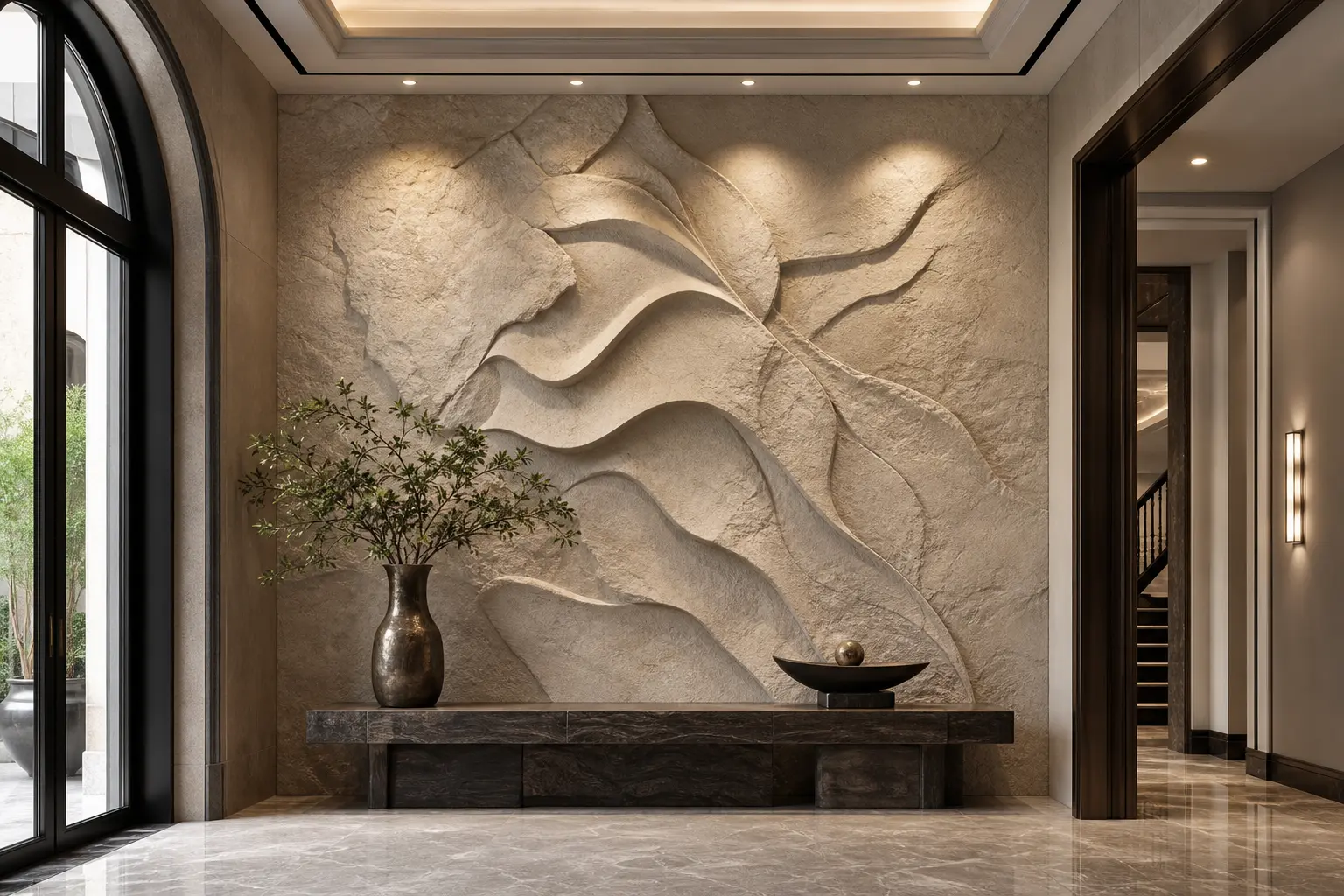
Faux stone 3D panels, made from lightweight materials like polyurethane or gypsum, mimic the look of real stacked stone without the weight or cost of an actual masonry wall. In a larger foyer with high ceilings, a full stone accent wall gives the entrance a grand, almost architectural feel.
Why weight matters here
Real stone veneer can weigh several pounds per square foot and often needs additional wall support. Lightweight 3D panels avoid that problem entirely, which is part of why they’ve become the more practical choice for a feature wall that isn’t load bearing.
2. A Geometric 3D Panel Mural for a Minimalist Entryway
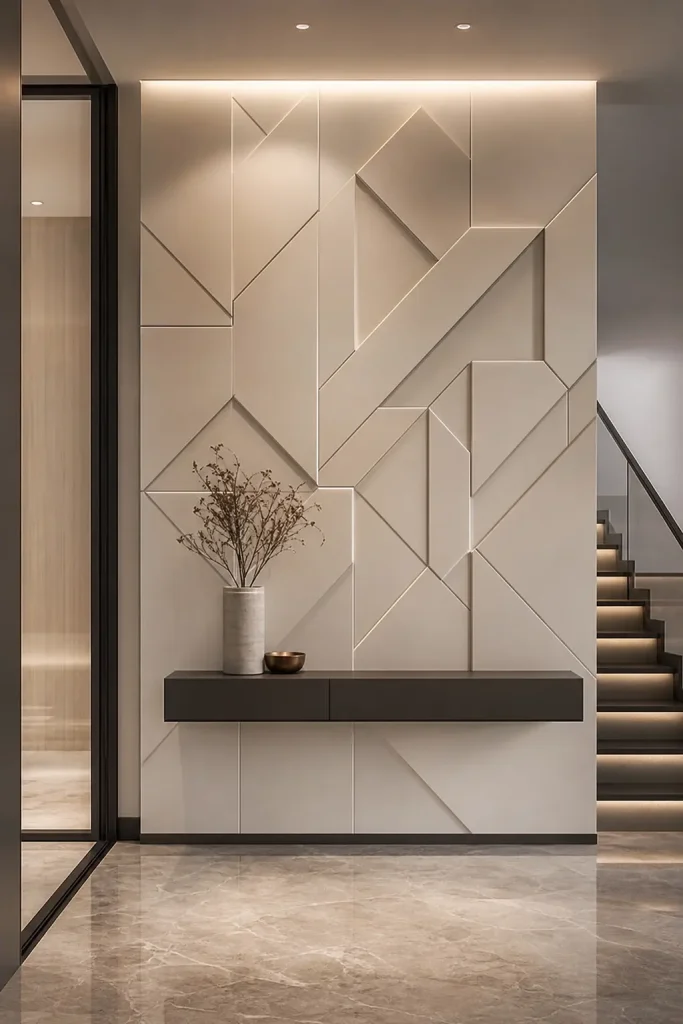
Geometric panels, hexagons, triangles, or repeating angular shapes, create depth through repetition rather than a painted image. This suits entryways in homes that already lean modern or minimalist, where a busy mural pattern would feel out of place.
Keep the surrounding decor simple with this style. One console table, one mirror, maybe a single plant. The geometric texture is already providing visual interest, so it doesn’t need competing decor around it.
3. A Botanical Leaf Relief Mural for a Soft Natural Look
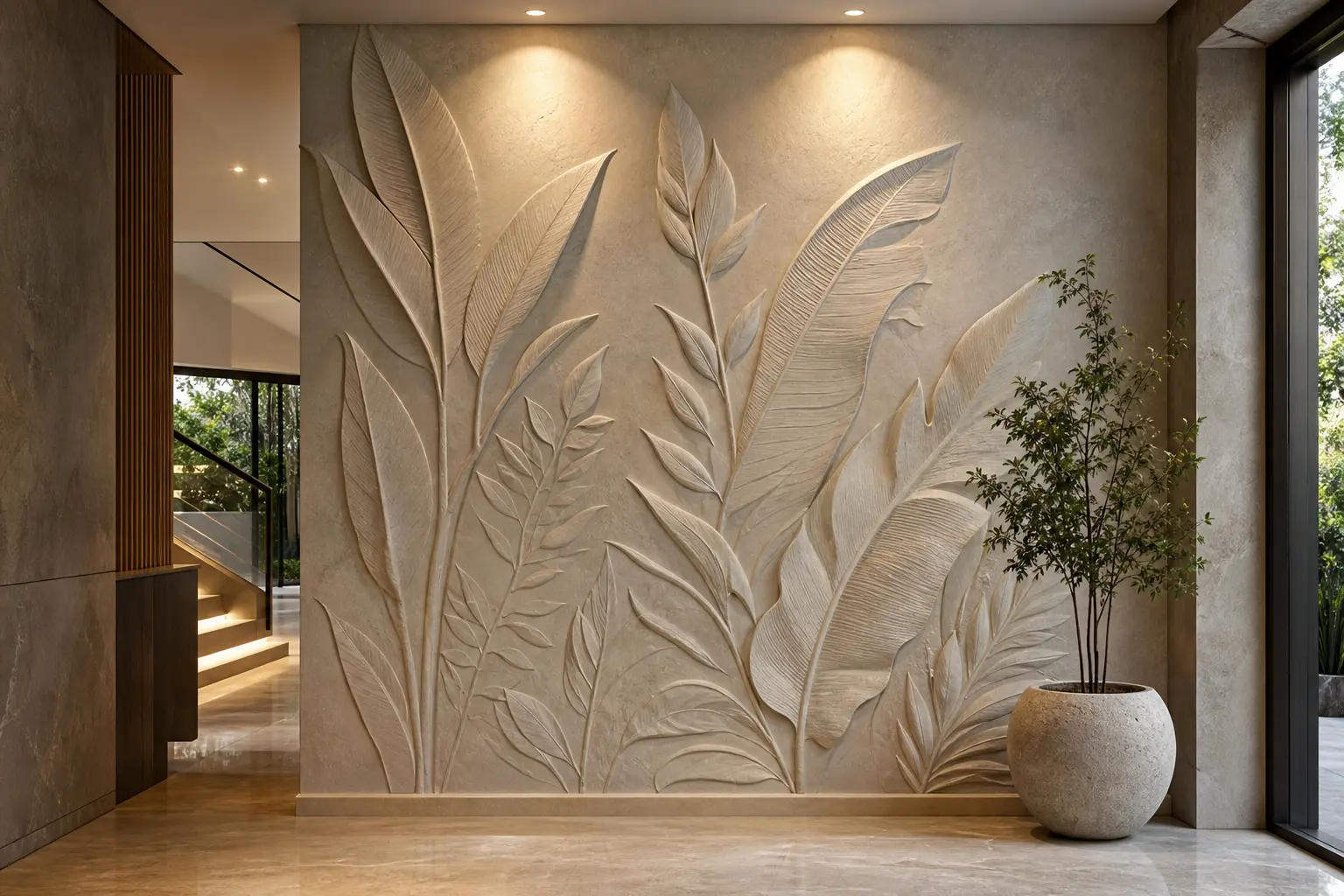
Instead of a flat botanical print, a relief style mural sculpts the leaf shapes into the panel itself, so light hits the raised edges and creates natural shading. This gives a much softer, more organic feel than a printed leaf wallpaper.
Pairing with real plants
A single real plant near the base of a leaf relief mural blurs the line between the textured wall and an actual living plant nicely. Just keep the plant small enough that it doesn’t block the lower portion of the mural pattern.
4. A Marble Effect 3D Mural for a High End Feel
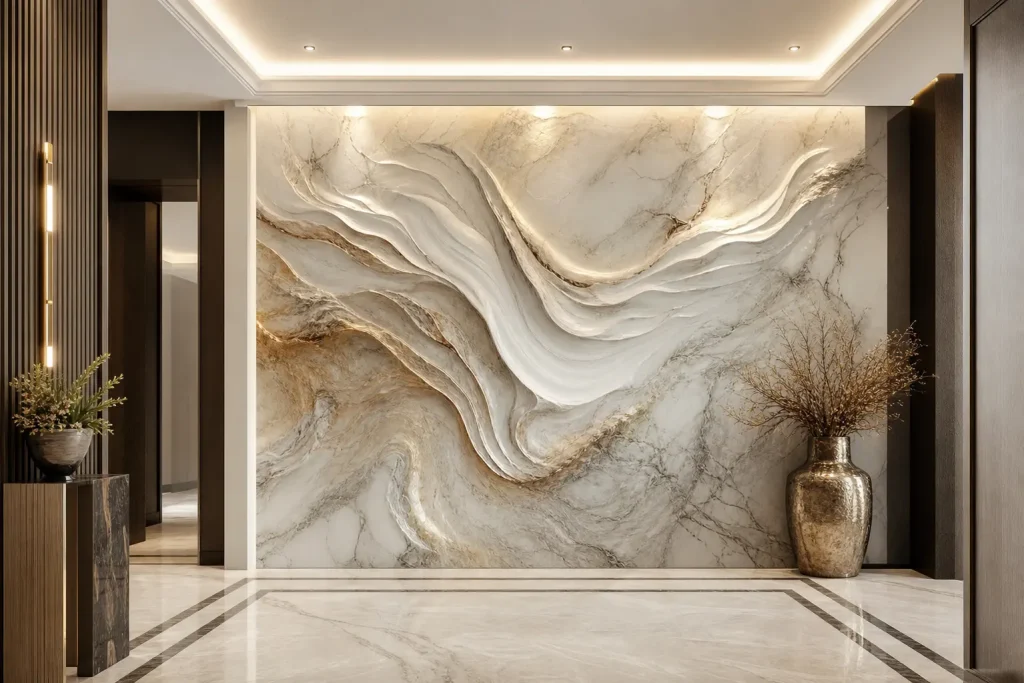
Marble look panels with a subtle raised veining pattern give an entryway a genuinely high end feel without the cost or maintenance of real marble slabs, which can run into the thousands of dollars installed. The 3D veining catches light in a way that flat marble printed wallpaper simply can’t replicate.
Pair this style with brass or gold hardware elsewhere in the entryway, on a light fixture, mirror frame, or door handle, to keep the material palette feeling intentional rather than mismatched.
5. An Abstract Wave Panel Mural for a Modern Curved Wall
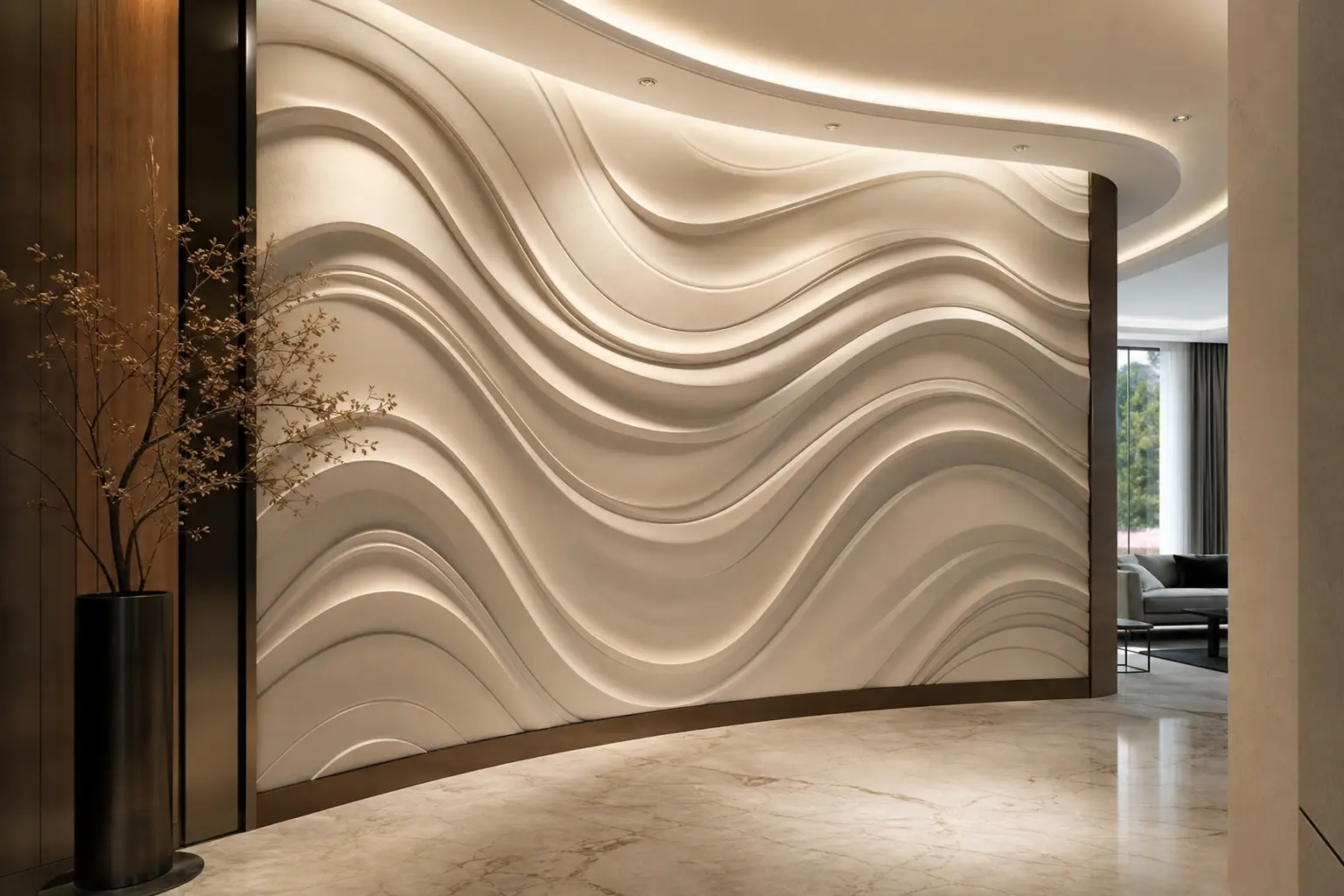
Wave patterned 3D panels use flowing, curved ridges instead of straight geometric lines. If your entryway has any curved architectural elements already, an arched doorway, a rounded console table, this mural style continues that soft line language onto the wall itself.
Lighting the waves
A single directional light, like a small picture light mounted above the mural, dramatically increases the shadow effect along the curves. Flat overhead lighting tends to wash out the texture, so a side angled light source makes a noticeable difference here.
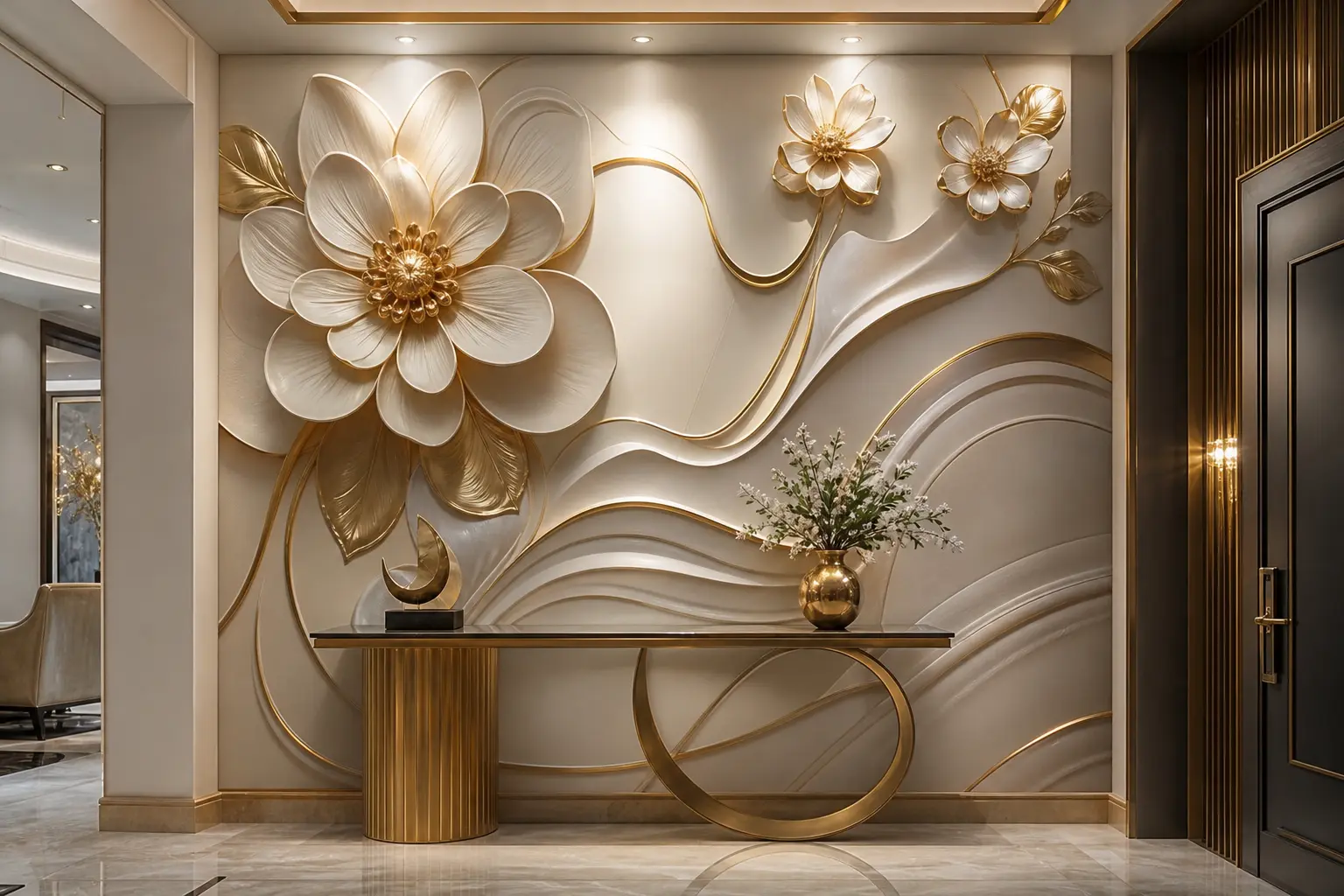
6. A Gold Accented 3D Mural for a Glamorous Entryway
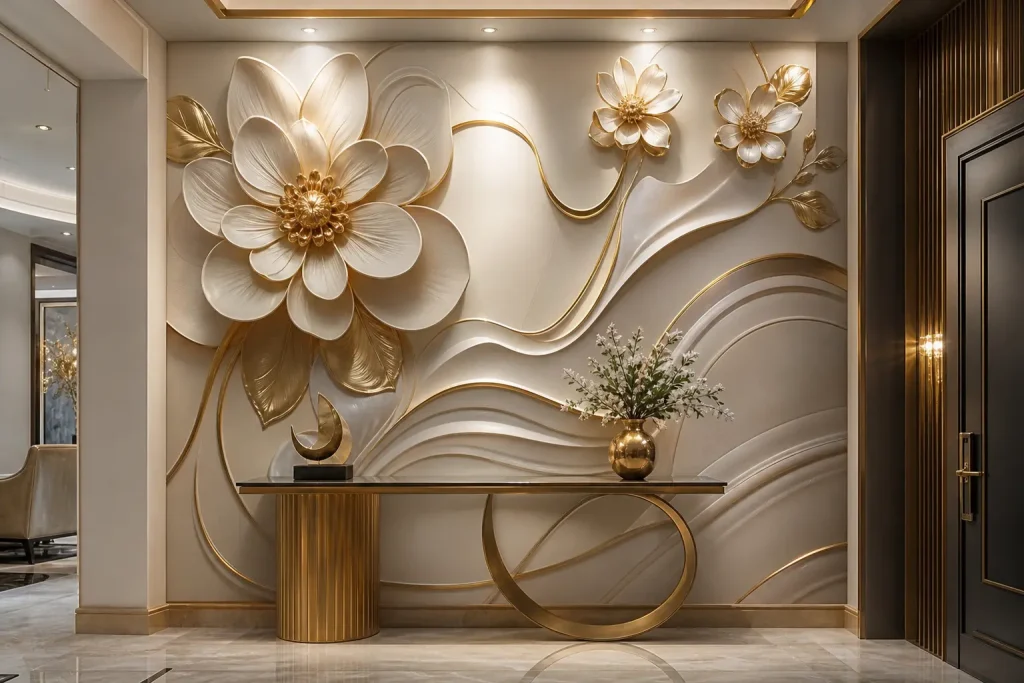
Some 3D panels come pre finished in gold, brass, or metallic tones rather than requiring paint after installation. This works well for entryways aiming for a more glamorous, formal look, think art deco influences, mirrored furniture, statement lighting.
Balance a gold mural with darker flooring or a darker console table beneath it. Without that contrast, an entirely light and metallic entryway can start to feel flat rather than luxurious.
7. A Brick and Stone Combination Mural for an Industrial Foyer
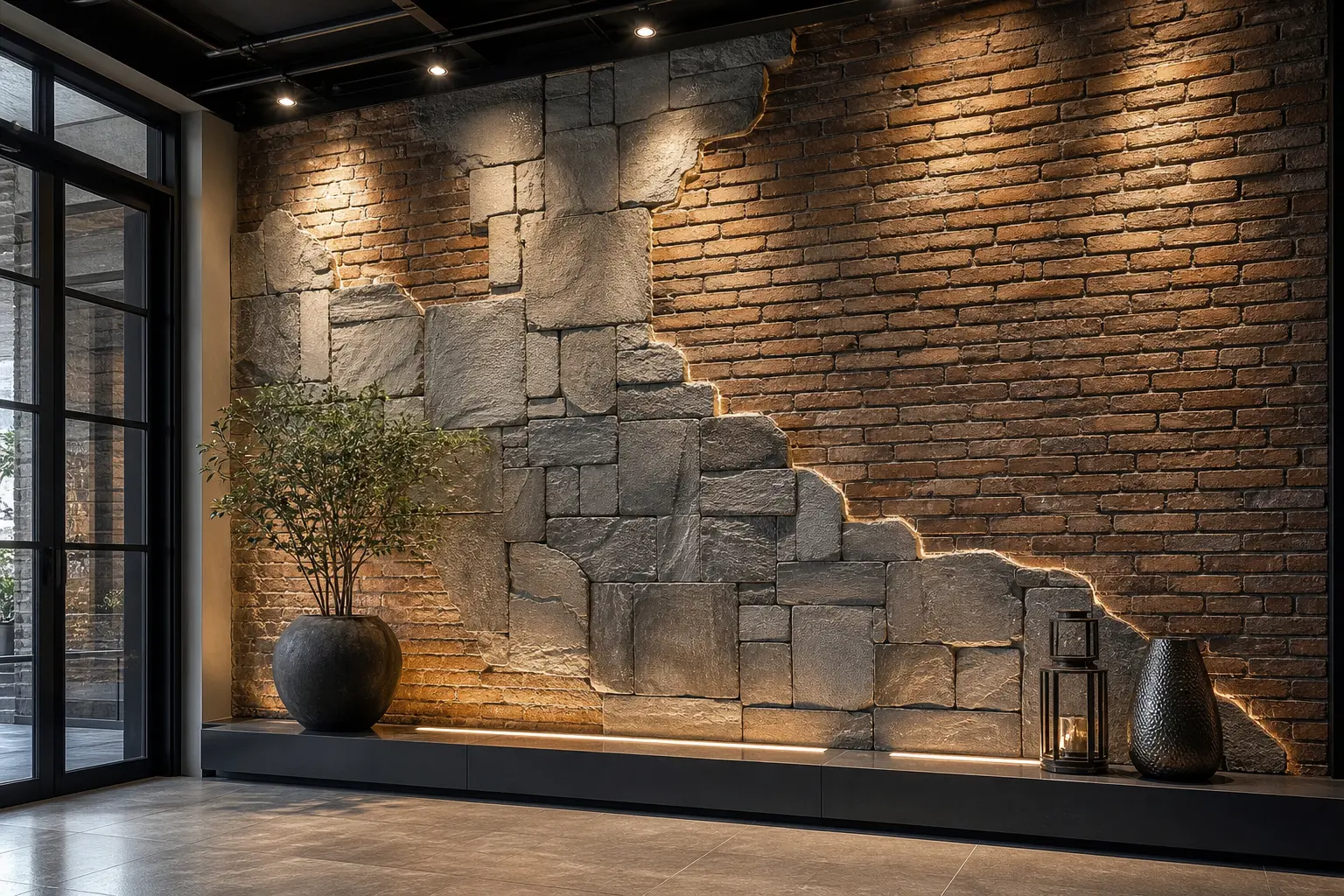
Panels combining faux brick texture with stone accents suit entryways connected to open concept homes with exposed structural elements, like visible beams or ductwork elsewhere in the main living space. It extends that industrial material language into the entrance without needing actual brick demolition or construction.
Keep the color palette in this style muted, grays, warm browns, off whites, since brick and stone combinations already carry a lot of natural texture variation on their own.
8. A Circular Medallion 3D Mural as a Statement Focal Point
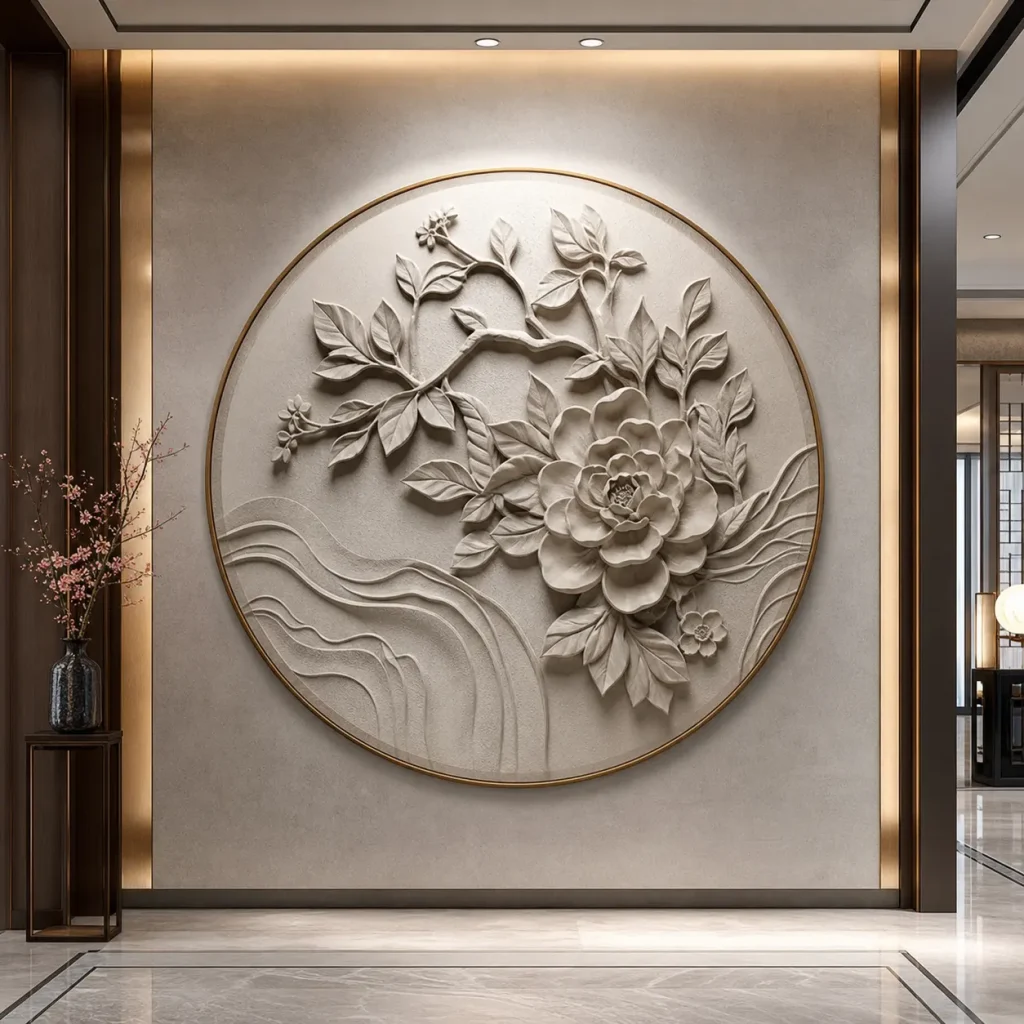
Rather than covering an entire wall, a single large circular medallion panel, often two to four feet in diameter, works as a standalone focal point centered on a smaller entryway wall. This suits entryways too narrow for a full wall treatment but still wanting a strong first impression.
Sizing the medallion correctly
A medallion should generally take up no more than sixty percent of the available wall height, leaving clear space above and below so it reads as an intentional focal piece rather than an oversized decoration crammed into too small a space.
9. A Wood Grain 3D Panel Mural for a Warm Entryway

Wood textured 3D panels, often arranged in a chevron or slat pattern, bring warmth into an entryway that might otherwise feel cold, especially in homes with a lot of tile or stone flooring near the front door. The raised slat pattern adds real dimension compared to flat wood look wallpaper.
Match the panel’s wood tone to at least one other wood element nearby, a console table leg or a picture frame, so the mural doesn’t feel like an unrelated addition to the space.
10. A Monochrome Textured Mural for a Compact Hallway Entrance
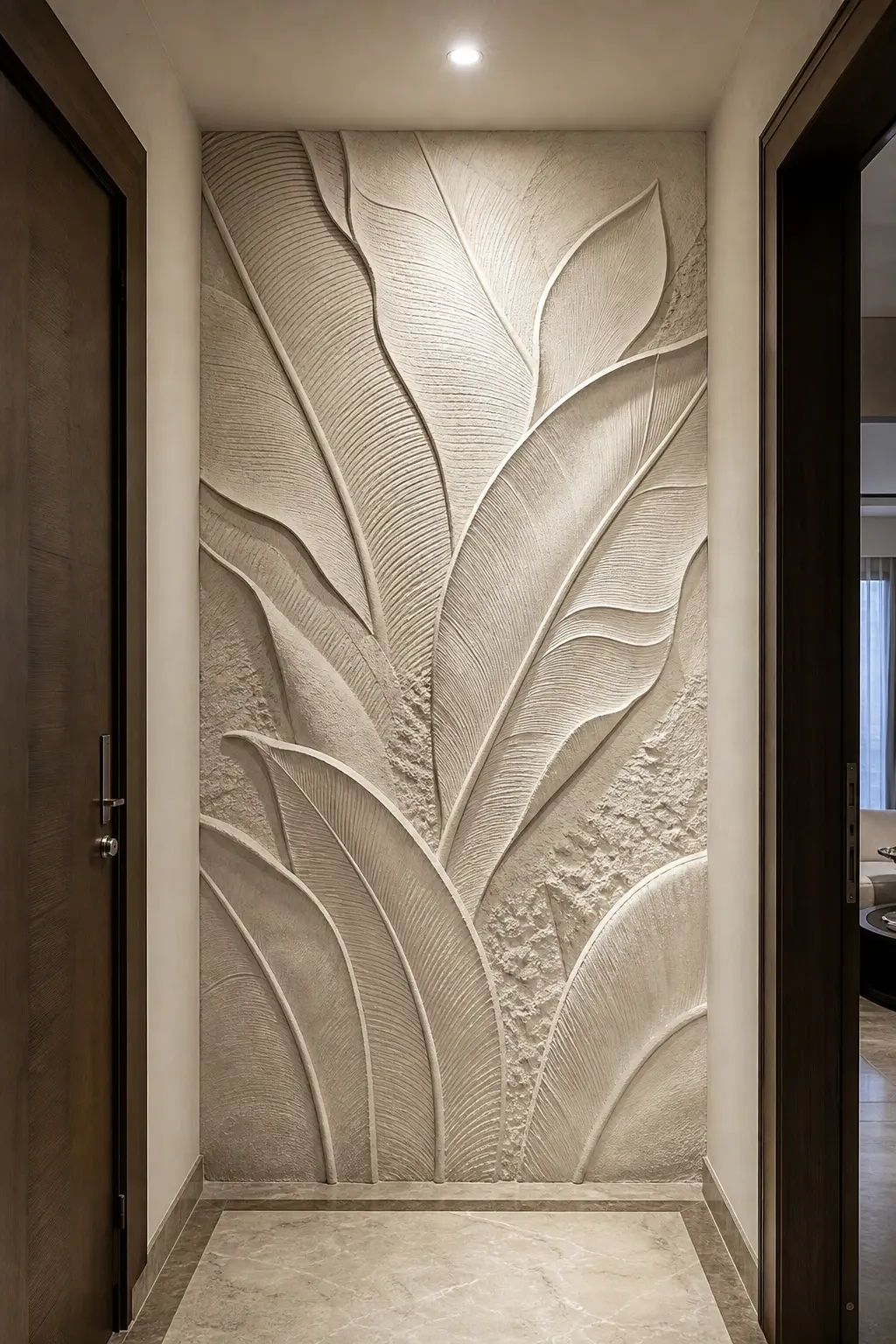
For very narrow entryways, sometimes just a hallway leading to the front door, an all white or all gray textured panel keeps the space from feeling visually heavier while still adding the dimensional interest a 3D mural provides. Sticking to one color lets the shadow lines from the texture do all the visual work.
Pair a monochrome mural with a slim console table or a wall mounted shelf rather than a bulky piece of furniture, since narrow entryways need to preserve walking space above everything else.
Mistakes to Avoid
- Choosing a heavily textured, dark colored mural for a small entryway with little natural light, which can make the space feel smaller and dimmer instead of more dramatic.
- Skipping a test panel or sample before ordering the full wall quantity, since colors and textures can look different in photos than in person.
- Installing directly over a wall with existing wallpaper, which can cause adhesion problems, since most 3D panels need a smooth, primed surface underneath.
- Overcrowding the mural wall with too much furniture or decor in front of it, which blocks the texture and shadow effect the panel is designed to create.
- Ignoring the panel’s weight when using adhesive only installation, since heavier materials like faux stone often need additional mechanical fasteners, not just adhesive.
- Mixing too many different 3D textures in one small entryway, like stone panels next to wood slats next to geometric tiles, which can feel chaotic rather than curated.
Frequently Asked Questions
Can 3D wall murals be installed without professional help? Many lightweight panel systems are designed for straightforward DIY installation using adhesive or basic fasteners, though larger stone effect panels sometimes benefit from a second person to help with placement and leveling.
How do I clean a textured 3D wall mural? A soft brush attachment on a vacuum or a dry microfiber cloth works well for regular dusting, since the raised texture collects more dust than a flat wall. Avoid wet cleaning unless the specific product states it’s moisture resistant.
Will a 3D mural make a small entryway feel cramped? Not necessarily, especially with lighter colors and geometric or wave patterns that use shadow rather than bulk to create depth. Darker, heavily dimensional textures are the ones more likely to make a small space feel tighter.
How much does a 3D wall mural typically cost compared to wallpaper? 3D textured panels generally cost more than standard printed wallpaper per square foot, since they involve more material and a manufacturing process to create the raised texture, though prices vary widely by material and brand.
Do 3D wall murals work well with existing entryway lighting? Yes, and in most cases they benefit from it. Angled or directional lighting actually enhances the shadow and depth effect, so an entryway with a side positioned sconce or picture light will show off the texture more than flat overhead lighting alone.
Can these panels be removed if I move or change my mind? It depends on the installation method. Adhesive only panels are generally easier to remove than ones installed with construction adhesive or mechanical fasteners, so it’s worth checking the manufacturer’s removal guidance before installing if that flexibility matters to you.
Conclusion
A 3D wall mural gives an entryway the kind of depth and presence that flat paint or basic wallpaper simply can’t match, and it does it without a renovation budget or a construction crew. Pick a texture and pattern that fits your entryway’s actual size and existing light, keep the surrounding decor simple enough to let the mural do the visual work, and you end up with a first impression that feels genuinely custom.