10 Lavender Farmhouse Decor That Feels Cozy, Collected, and Beautiful
Farmhouse decor has a reputation for shiplap, barn doors, and a strictly neutral palette of cream and gray, which makes lavender feel like an unlikely fit at first glance. Look closer at where the style is actually heading this year, though, and chalky lavender shows up repeatedly alongside dusty rose and soft sage as one of the updated pastels defining modern farmhouse color schemes. Farmhouse design has evolved well past shiplap and neutral tones alone, and lavender fits naturally into that evolution as long as it’s handled with the same restraint and natural materials the rest of the style depends on.
1. Choose Chalky Lavender Over a Bright, Saturated Purple
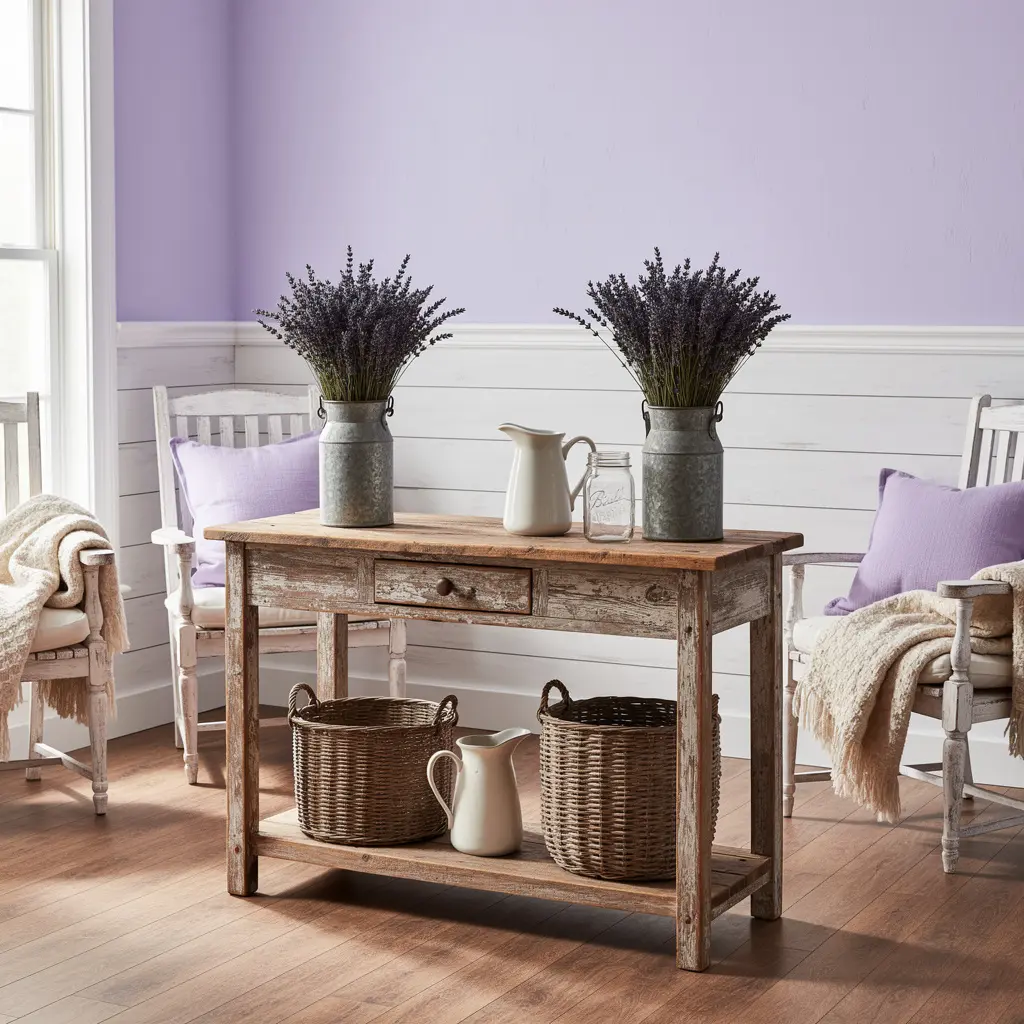
A chalky, muted lavender behaves closer to a neutral than a bright, saturated purple ever could, which is exactly why it pairs so easily with the earthy, natural tones already common in farmhouse rooms. Camel, clay, and mushroom taupe sit right alongside this softer lavender in current farmhouse color schemes, giving the whole palette a grounded, cohesive feel rather than one color standing apart from the rest.
Why Chalky Tones Work Better in a Rustic Room
A glossy, saturated color reads as more contemporary and can clash with farmhouse’s inherently textured, slightly imperfect materials. A chalkier, more matte lavender sits comfortably alongside reclaimed wood and worn stone instead of fighting against their natural texture.
2. Pair Lavender With Dark Wood Beams for Contrast
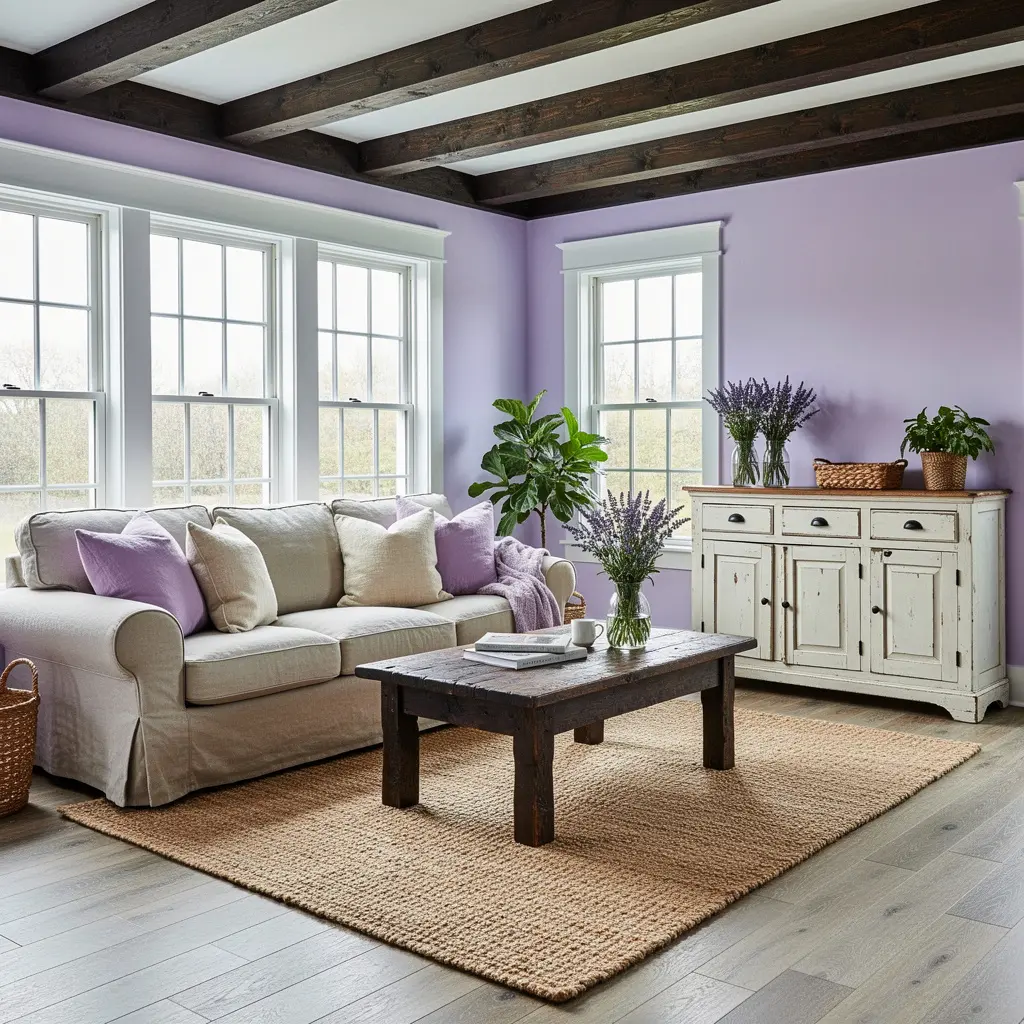
White plaster walls and ceilings highlighted with dark solid wood beams is a defining contrast in current farmhouse decor, and lavender slots easily into that same formula in place of a plain white wall. The dark wood grounds the softer color overhead or alongside it, keeping the room from feeling too delicate the way lavender might if it were paired only with other pale, pastel tones.
3. Display Dried Lavender in Copper or Glass Vessels
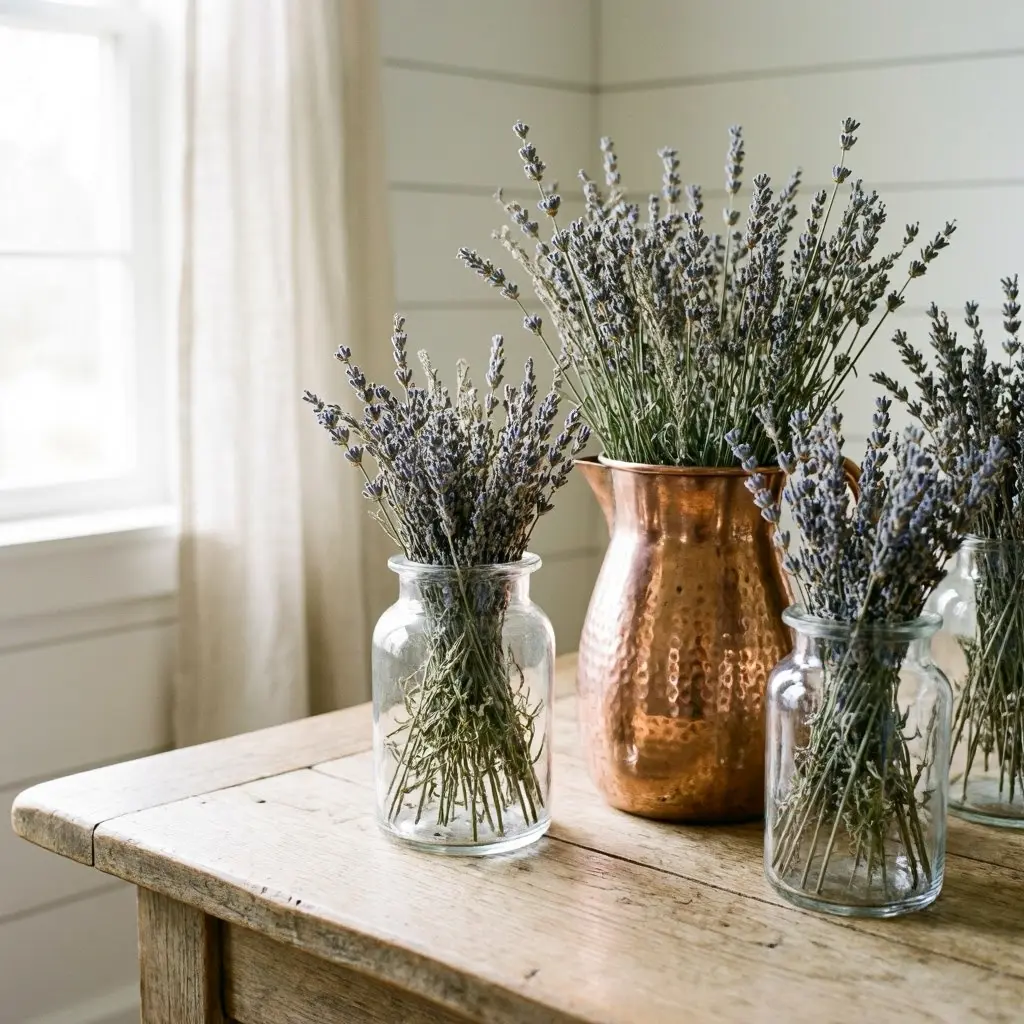
An old jug, a copper flowerpot, or a simple glass vase filled with dried lavender brings the actual plant into a farmhouse room, and lavender specifically is called out as a favorite choice for exactly this kind of display. This detail does double duty, since it introduces color and texture at the same time as a subtle, natural fragrance that manufactured decor can’t replicate.
Grouping two or three vessels of varying heights, rather than a single vase, echoes the layered, gathered over time feeling farmhouse decor depends on, and it costs very little to build up gradually with pieces found at estate sales or flea markets.
4. Lean on French Farmhouse Details for a Softer Edge
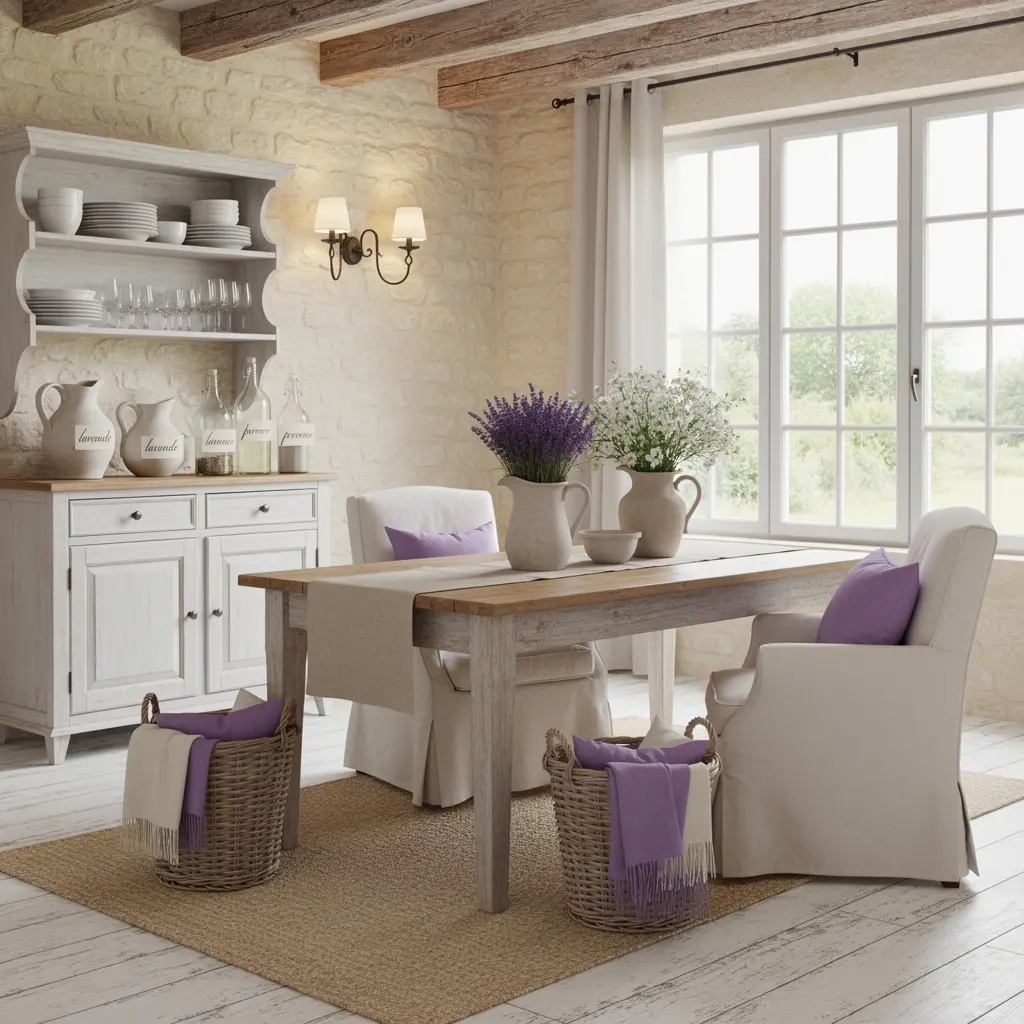
French farmhouse style introduces toile, lavender, and more ornate curves on top of the same foundation, a neutral palette, natural materials, and comfortable scale, that grounds every version of farmhouse decor. Leaning into this particular branch of the style, rather than a more rustic American version, gives lavender a more natural home, since French country design has long embraced softer colors and more delicate detailing than its more rugged counterpart.
5. Mix Old and New Without Overthinking It
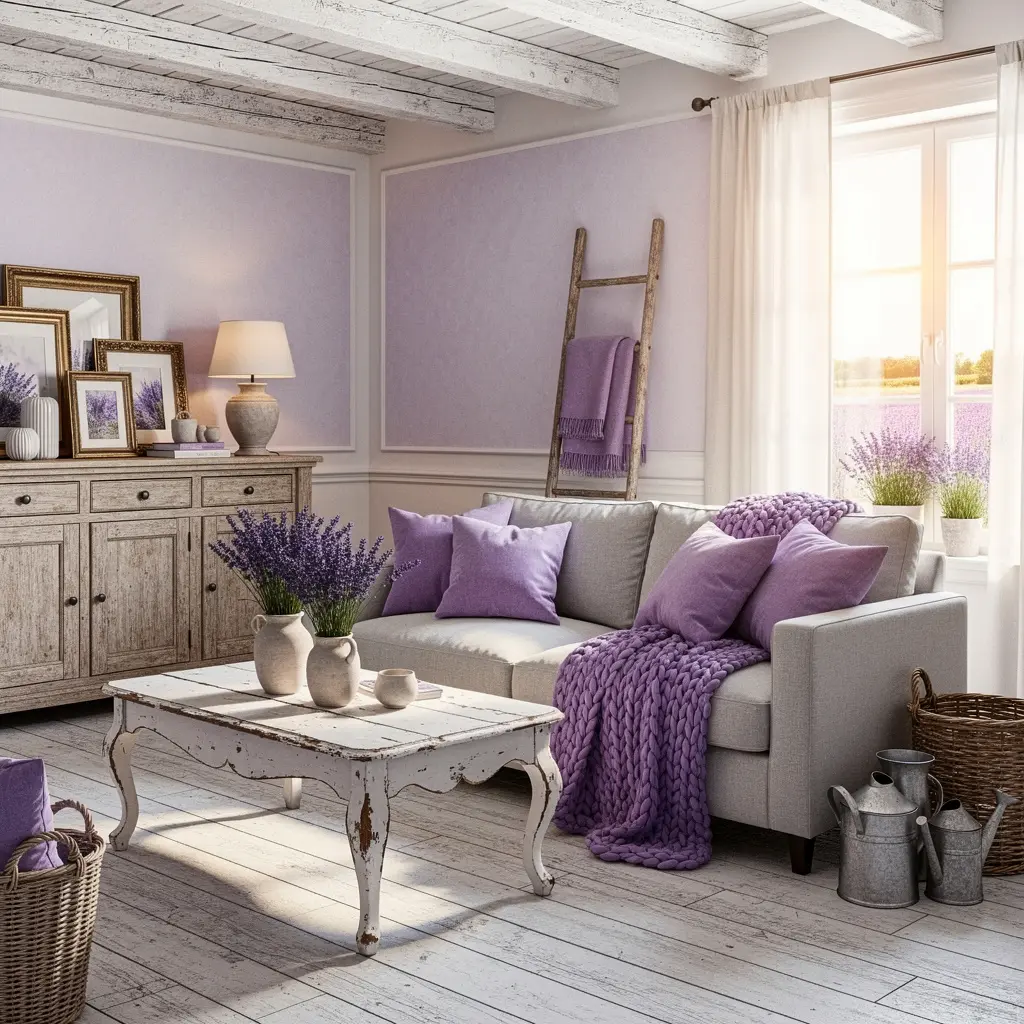
A flea market find sitting happily beside a modern appliance, or a hand painted sign above a sleek marble countertop, captures exactly the kind of imperfect, resourceful mixing that makes farmhouse decor work. A lavender accessory or textile doesn’t need to match everything around it. In fact, farmhouse style specifically thrives when new and old pieces sit together without looking overly coordinated.
6. Use a Painted Hutch as a Lavender Focal Point
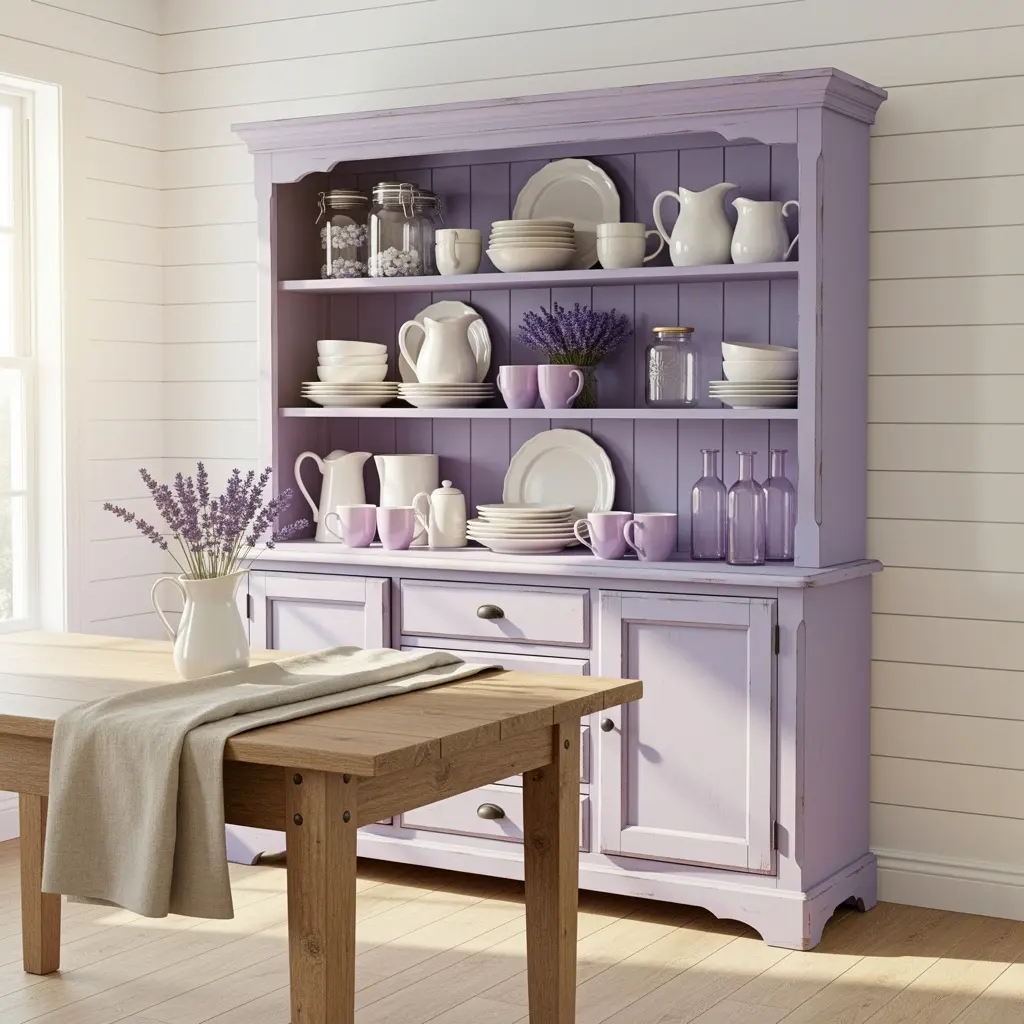
A tall painted hutch in a soft lavender, used for both storage and display, echoes traditional farmhouse furniture while updating it with restraint. Glass front doors and simple hardware keep this kind of piece feeling elegant rather than overly nostalgic, and it becomes the kind of furniture that feels like it’s been in the home forever rather than recently purchased.
Choosing Hardware for a Painted Hutch
Brushed gold or simple black hardware both work well against a lavender painted hutch, though brushed gold leans slightly warmer and softer, which tends to suit lavender’s cooler undertone a bit more naturally than a starker black finish would.
7. Add Muted Blue or Sage as a Supporting Color
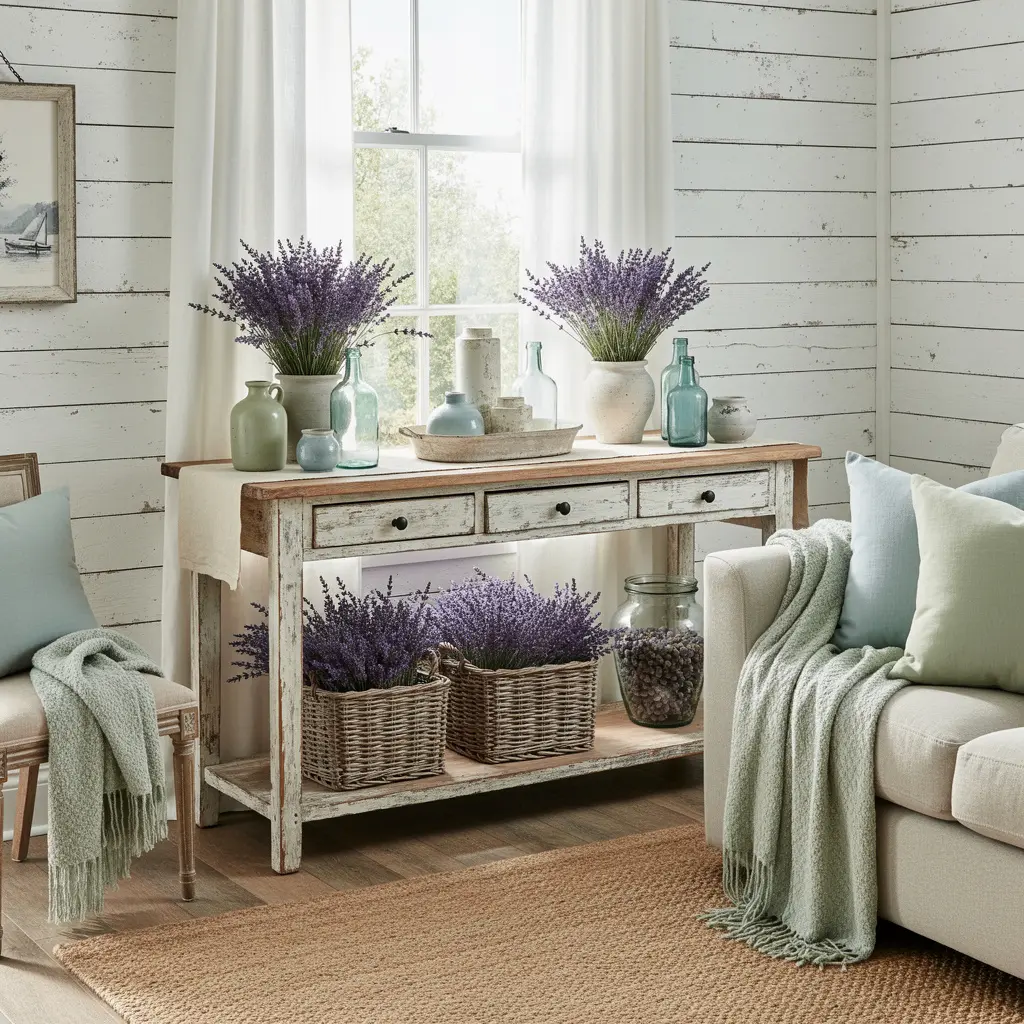
Muted blue adds real depth to a farmhouse entry or living space without overpowering the natural materials around it, and the same principle applies when pairing it with lavender instead of a plain neutral. Soft sage does similar work, and either color, used in a smaller dose alongside lavender, keeps the overall palette feeling layered rather than relying on a single pastel note throughout the whole room.
8. Choose Linen and Soft Textiles Over Anything Glossy
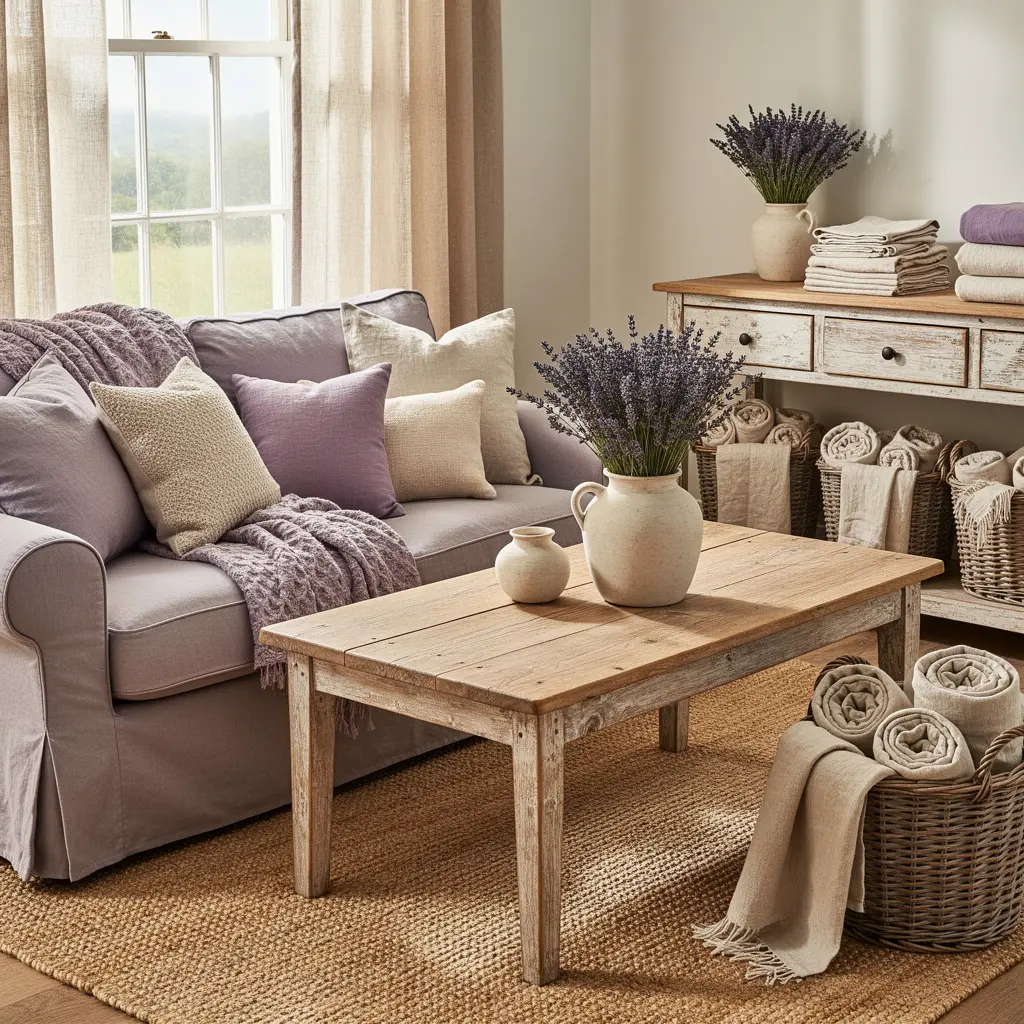
Soft textiles on stools, relaxed linen curtains, and neutral, textured seating all support the effortless, lived in quality farmhouse design is built around. A lavender textile in linen or a similarly matte fabric fits this quality far better than anything with a glossy or synthetic finish, which can read as out of place against the rest of the room’s natural materials.
Washed or slightly rumpled linen in particular suits lavender better than a crisp, perfectly pressed version, since the relaxed texture matches the same unfussy, lived in feeling the rest of a farmhouse room is working to achieve.
9. Keep Storage Handcrafted and Restrained
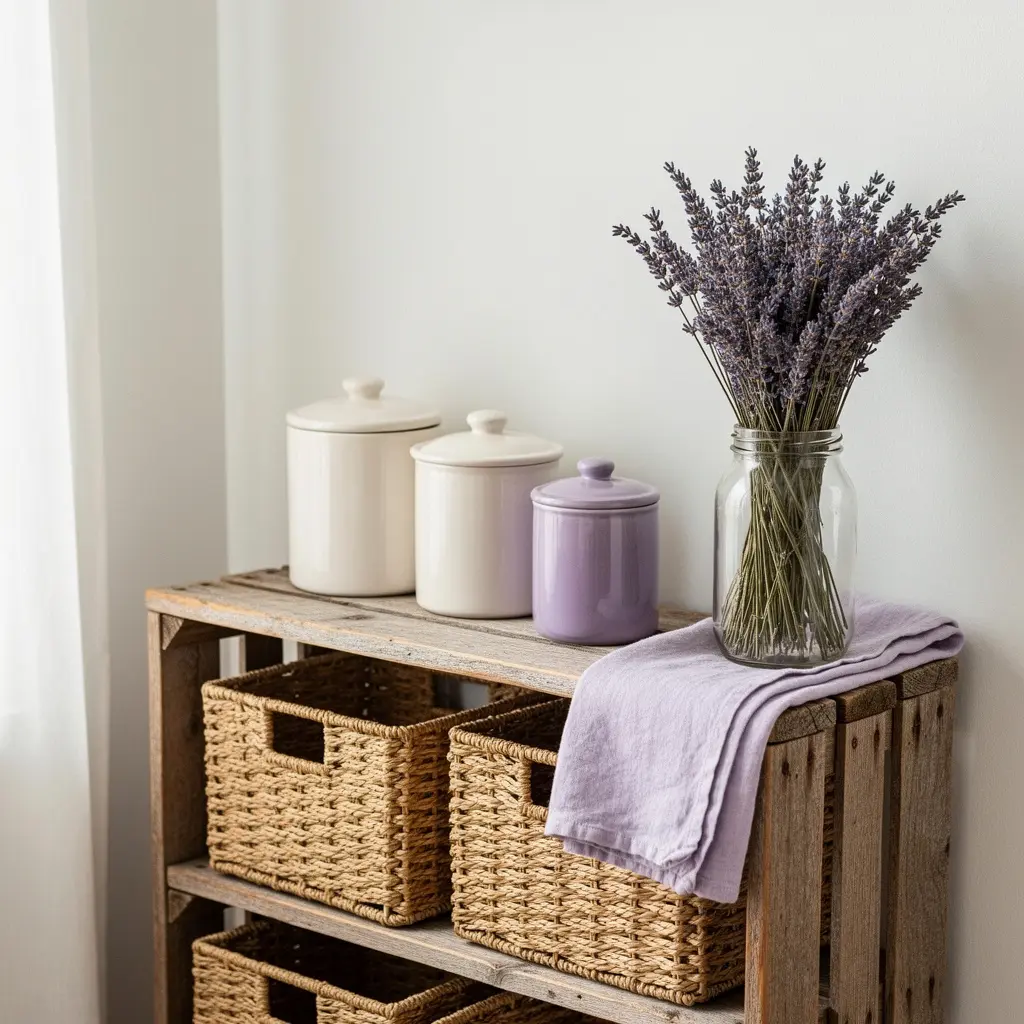
Built in storage with a handcrafted feel, rather than anything mass produced or overly polished, keeps a lavender farmhouse room feeling genuine instead of themed. This matters specifically because farmhouse decor loses its charm quickly when it starts to feel overly styled or crowded with too many decorative signs and accessories competing for attention.
10. Let Natural Light Lead the Room
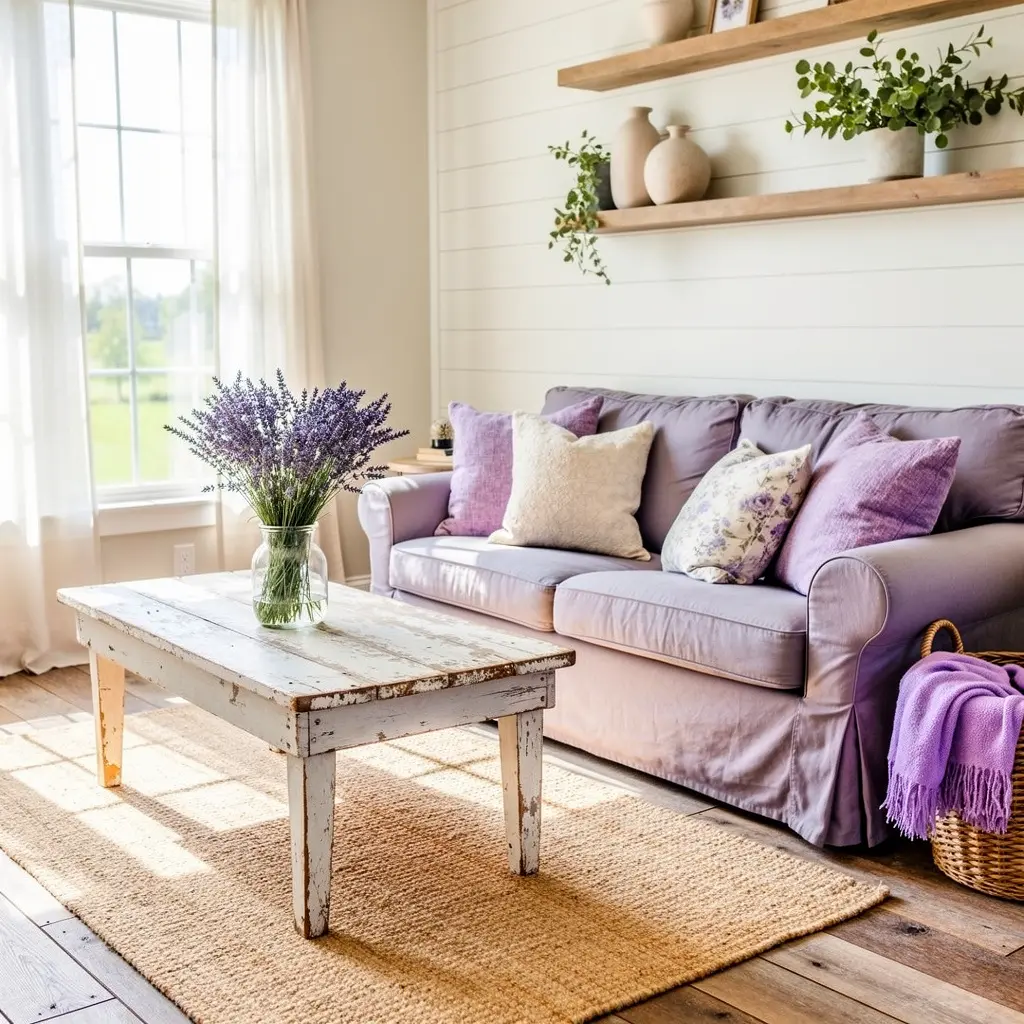
Windows that flood every room with light remain one of the defining features people associate with a real farmhouse feel, and that natural light does real work for a lavender color scheme specifically, since the color shifts and softens throughout the day as sunlight moves across the room. Oversized doors and strategically placed windows, where possible, extend this same quality even further, blurring the line between indoor and outdoor space the way classic farmhouse architecture always has.
Mistakes to Avoid
- Choosing a bright, saturated purple instead of a chalky, muted lavender that behaves more like a neutral
- Pairing lavender only with other pale pastels instead of grounding it with dark wood or a deeper accent
- Overcrowding the room with decorative farmhouse signs and accessories instead of keeping storage and styling restrained
- Choosing glossy or synthetic textiles instead of natural, matte materials like linen
- Skipping dried lavender or fresh greenery, which is one of the easiest ways to bring real texture and fragrance into the room
- Matching every piece too closely instead of mixing old and new the way genuine farmhouse decor is built to do
Frequently Asked Questions
Is lavender actually a farmhouse appropriate color, or does it clash with the style? Chalky lavender is specifically named among the updated pastels shaping current farmhouse color schemes, which makes it a genuine fit as long as it’s paired with the style’s usual natural materials and restraint.
What wood tone works best with lavender in a farmhouse room? Dark, solid wood beams create strong contrast against a softer lavender wall or ceiling, echoing the classic farmhouse pairing of white plaster with dark wood.
Should I choose American or French farmhouse style for a lavender room? French farmhouse leans more naturally toward lavender, since the style already embraces softer colors, toile patterns, and more ornate curves compared to a more rugged, rustic American version.
How do I keep a lavender farmhouse room from feeling overly sweet? Ground the color with dark wood, muted blue or sage accents, and natural, imperfect materials rather than pairing it only with other pale, delicate tones.
What’s an easy way to add lavender without repainting a farmhouse room? Dried lavender bundles displayed in a copper flowerpot, an old jug, or a simple glass vase bring the color and a subtle fragrance into the room without any commitment to paint or new furniture.
Conclusion
Lavender fits into farmhouse decor more naturally than its reputation might suggest, especially in its chalkier, more muted form. Pair it with dark wood beams, dried lavender displays, and restrained, handcrafted storage, and lean toward French farmhouse detailing if you want the color to feel even more at home. The result is a room that stays true to farmhouse’s collected, lived in character while still carrying a soft, distinctive color story.
Start with one or two changes, a dried lavender display or a single painted piece, rather than overhauling the whole room at once. Farmhouse decor has always favored a gradual, gathered approach over anything that looks freshly assembled in a single weekend.