10 Lavender Home Office Ideas for a Calm, Focused Workspace
The sterile, corporate feeling home office is fading fast, replaced by spaces built specifically to feel warm, personal, and inspiring rather than purely functional. Lavender fits directly into this shift, showing up repeatedly in current office color recommendations alongside sage, dusty rose, and warm cream as a palette that creates a calming yet sophisticated environment. Color psychology research even points to warm neutrals reducing stress, which makes the case for lavender in a workspace about more than just how the room looks in photos.
1. Choose a Muted Lavender Over Anything Bright or Saturated
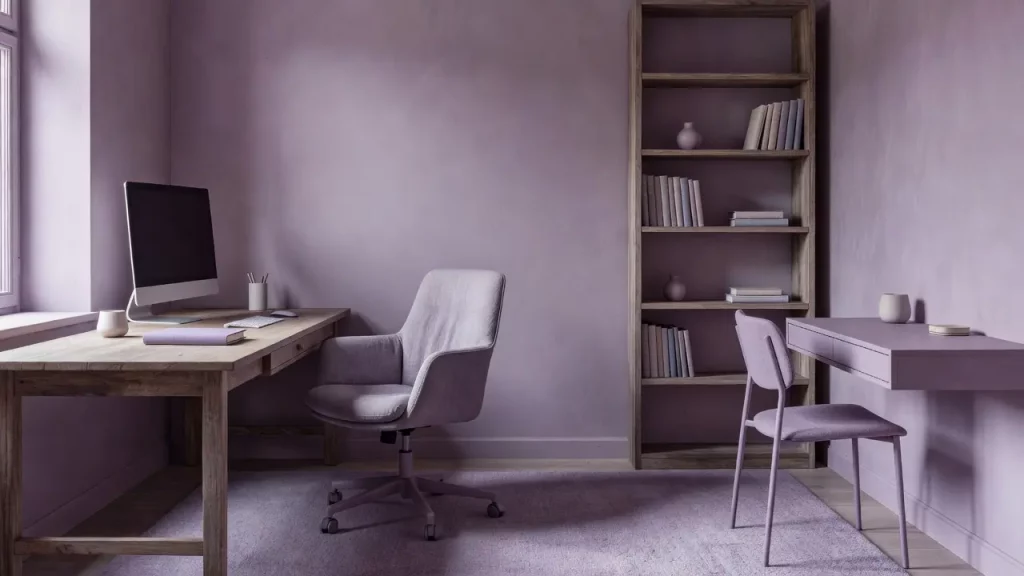
A softer, muted lavender behaves closer to a neutral than a bright, saturated purple, which matters in a room meant to support long stretches of focused work rather than visual stimulation. This more grounded version of the color holds up well across the varied lighting a home office sees throughout the day, from morning daylight through a window to task lighting once the sun goes down.
Testing the Shade During Actual Work Hours
Paint a sample directly behind the desk and observe it during a real work session, not just in passing, since the goal is a color that supports concentration over several hours rather than one that simply looks good for a moment.
2. Pair Lavender With Warm Neutrals for Balance
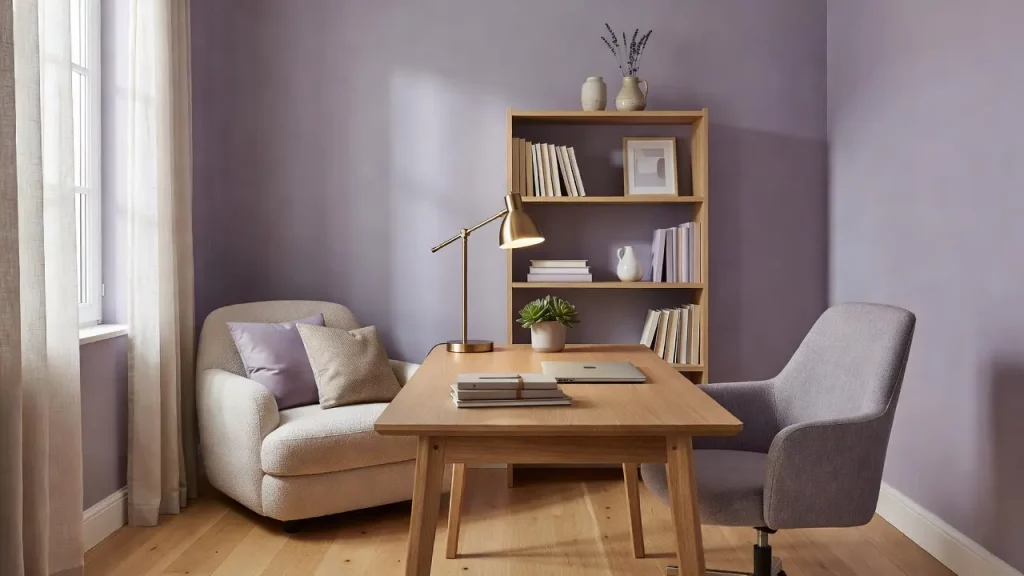
Warm cream, dusty rose, and soft sage all pair naturally with lavender to create a calming yet sophisticated office environment, and for a bolder approach, deep teal with brass accents offers a richer alternative. Choosing one or two of these supporting tones rather than several at once keeps the room feeling considered rather than visually busy, which matters in a space where visual clutter can measurably raise cognitive load.
3. Prioritize Ergonomic Layout Before Styling

A well decorated office still needs to function, and organized surfaces lower cognitive load in a way that lets you focus on actual work rather than visual distraction. Proper task lighting prevents eye strain and headaches over long sessions, and this practical foundation should get decided before any color or decor choices, since no amount of styling compensates for a setup that’s uncomfortable to actually work in.
Desk height, monitor position, and chair support all matter more to daily comfort than any single decor decision, so it’s worth confirming those basics are right before spending time or money on paint or accessories.
4. Add a Tufted Velvet Chair as a Focal Point
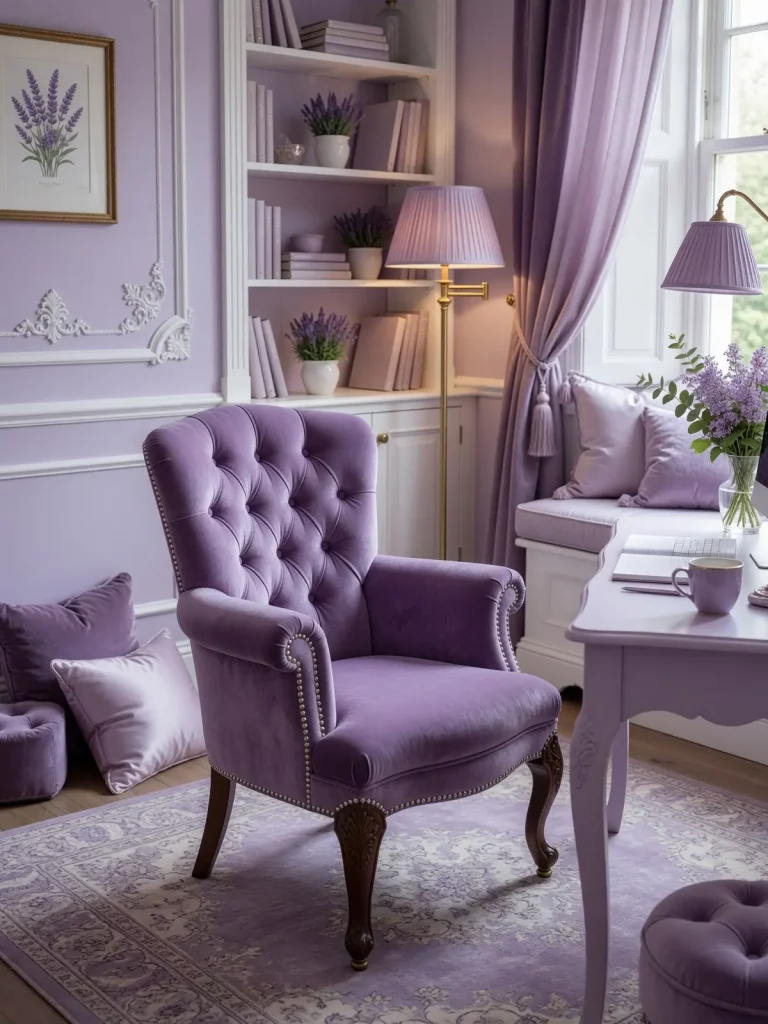
A tufted velvet chair, especially in a soft purple or lilac tone, brings texture and a sense of comfort that a standard office chair rarely achieves, making it easy to settle in for paying bills, video calls, or focused work. Velvet catches light differently than flatter fabrics, which adds visual richness to a lavender colored room without requiring any additional decor.
5. Layer Warm String Lights for a Cozy Glow
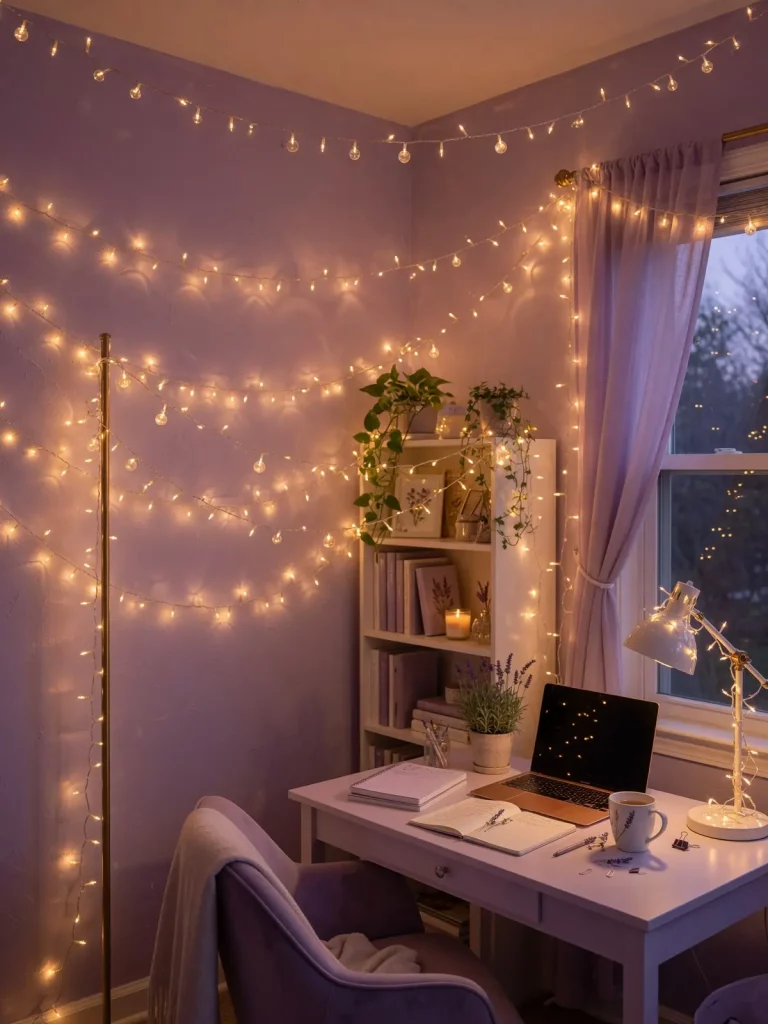
Fairy lights in soft warm white, draped in gentle loops above the desk, add a personal, cozy quality that overhead fluorescent lighting simply can’t replicate. This detail works especially well paired with a lavender accent pillow or chair nearby, since the warm light flatters the cooler undertone of the color rather than washing it out the way harsher lighting can.
6. Hide Technology Instead of Displaying It
Current home office design increasingly treats visible technology as something to minimize rather than showcase, with outlets recessed into surfaces and cords matched to the material around them. In a lavender office specifically, this matters even more, since a tangle of visible cables competing with a carefully chosen color palette undercuts the calm the room is otherwise working to create.
A Simple Fix for Existing Cable Clutter
An under desk cable tray or a small woven basket to hold a power strip handles most visible cord clutter without requiring any of the built in solutions a full renovation would call for.
7. Bring In a Large Potted Plant for Focus

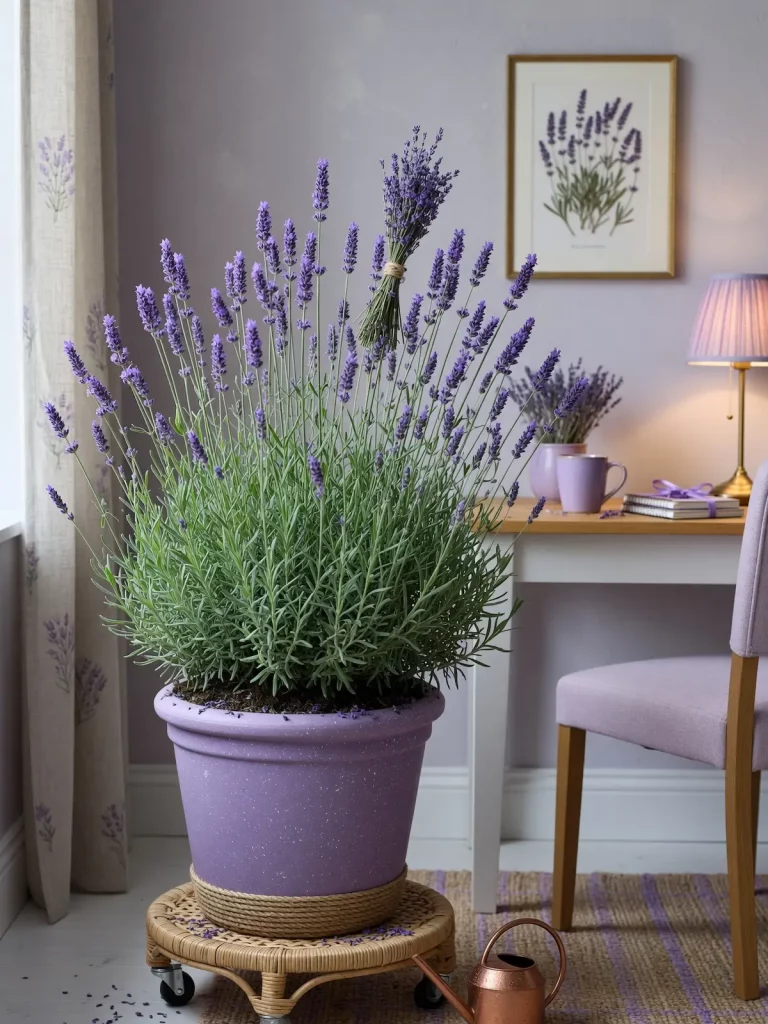
A single large potted plant, a fiddle leaf fig or something similarly leafy, brings the same biophilic benefit into a lavender office that greenery brings to any workspace, adding life and a sense of calm without competing with the wall color. This kind of statement plant also fills a corner that might otherwise feel empty, doing real visual work with very little ongoing effort beyond regular watering.
A plant positioned within eyesight of the desk, rather than tucked behind it, gets more actual benefit throughout the workday, since glancing at greenery periodically is part of what supports the mental reset this kind of biophilic detail is meant to provide.
8. Add Wall Mounted Shelving in Warm Wood
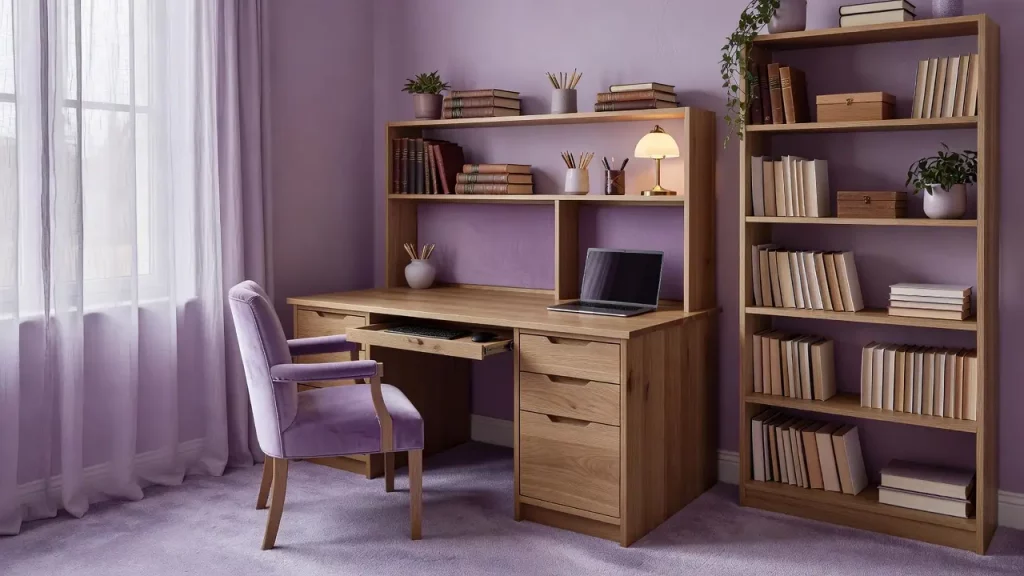
Wall mounted shelving in a warm wood tone, floated above the desk for both storage and display, adds function while grounding a lavender room’s cooler undertone the same way wood grounds the color in a bedroom or kitchen. This kind of shelving also keeps the desk surface itself clearer, which supports the organized, low clutter environment that current office design research consistently points to for better focus.
9. Use Lavender in Smaller Doses if Committing Fully Feels Risky
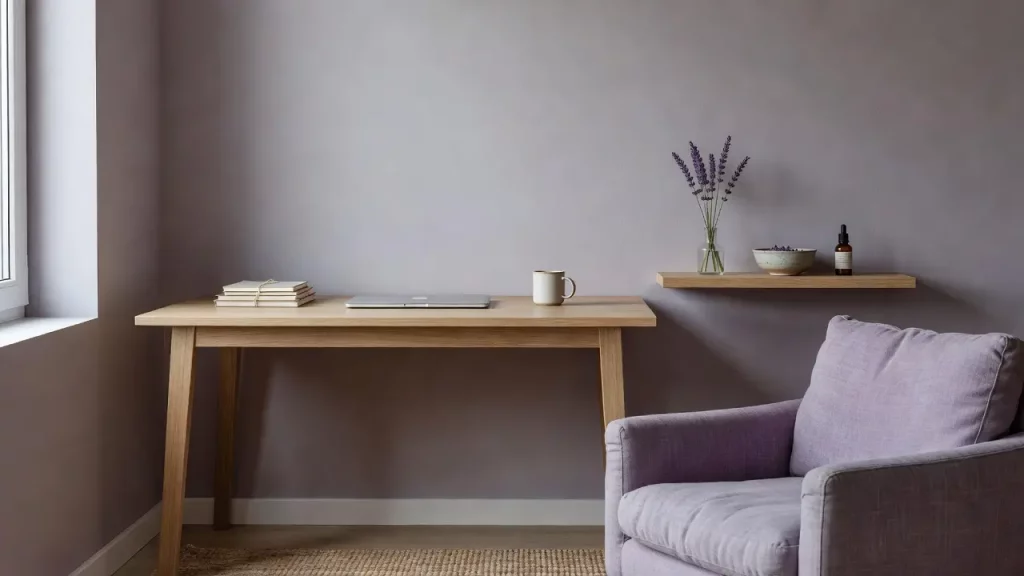
A lavender pillow on a chair, a small piece of purple toned wall art, or a set of desk accessories in the color let you test lavender in an office without a full repaint. This lower commitment approach works especially well for a shared or multipurpose space, where a full lavender wall might not suit every use the room needs to serve throughout the week.
Living with a small dose of the color for a few weeks before deciding whether to expand it also gives you real information about how the shade behaves under your specific lighting, which a paint swatch alone can’t fully predict.
10. Let the Office Blend Into the Rest of the Home

The dedicated, single purpose home office is dissolving in current design thinking, replaced by work zones distributed across a home rather than confined to one closed off room. A lavender desk nook built into a hallway console or a window bay benefits from the same color choices as a full office, letting the calming palette extend into a space that also serves other functions throughout the day.
This shift also means a lavender work zone can echo colors already used elsewhere in the home, rather than needing to establish an entirely separate palette just for the corner where the desk happens to sit.
Mistakes to Avoid
- Choosing a bright, saturated purple instead of a muted lavender that holds up better across a full workday
- Prioritizing color and decor before settling the room’s actual ergonomic layout and lighting
- Leaving cables and cords visible instead of managing them with trays, baskets, or recessed solutions
- Skipping natural light and warm task lighting, which increases eye strain over long work sessions
- Overcrowding the desk surface with decor instead of keeping it organized to reduce visual clutter
- Committing to a full lavender room before testing the color through smaller accessories first
Frequently Asked Questions
Does lavender actually help with focus in a home office? Color psychology research points to warm neutrals reducing stress and blue or green tones boosting concentration, and a muted, grounded lavender functions similarly to a warm neutral rather than a distracting bold color.
What colors pair best with lavender in a home office? Warm cream, dusty rose, and soft sage are commonly recommended pairings for a calming effect, while deep teal with brass accents offers a bolder, richer alternative.
Is a fully lavender office too much for a small or shared space? Not necessarily, though a smaller dose through accessories, a pillow, art, or desk items, works well for a multipurpose room that needs to serve more than one function throughout the day.
What furniture works best in a lavender home office? A tufted velvet chair in a soft purple tone and warm wood shelving are both consistently recommended, since they add texture and warmth that balance lavender’s cooler undertone.
How do I keep a lavender office from feeling cluttered? Prioritize an organized desk surface and hidden cable management, since visual clutter raises cognitive load regardless of how calming the wall color itself is.
Conclusion
A lavender home office works because the color supports the same calm, focused mood good ergonomic design is already trying to create. Choose a muted shade, pair it with warm neutrals like cream or sage, and prioritize a comfortable, organized layout before adding decor. A velvet chair, warm string lights, and a large plant round out the space without competing with the wall color, and even a small lavender accent works if a full commitment feels like too much for now.