10 Modern Emerald & Charcoal Living Room Decor Ideas | Aesthetic Home Interior Inspiration
Most living rooms default to beige, gray or white because it feels like the safe choice. But safe often means forgettable. Emerald and charcoal living room decor ideas take a different approach, pairing a deep jewel toned green with a sophisticated dark gray for a space that feels intentional and a little dramatic. Done right, this combination doesn’t feel dark or heavy. It feels rich. The trick is balancing both colors with warm materials and enough light so the room stays inviting rather than closing in on itself.
1. Decide Whether Emerald or Charcoal Leads the Room
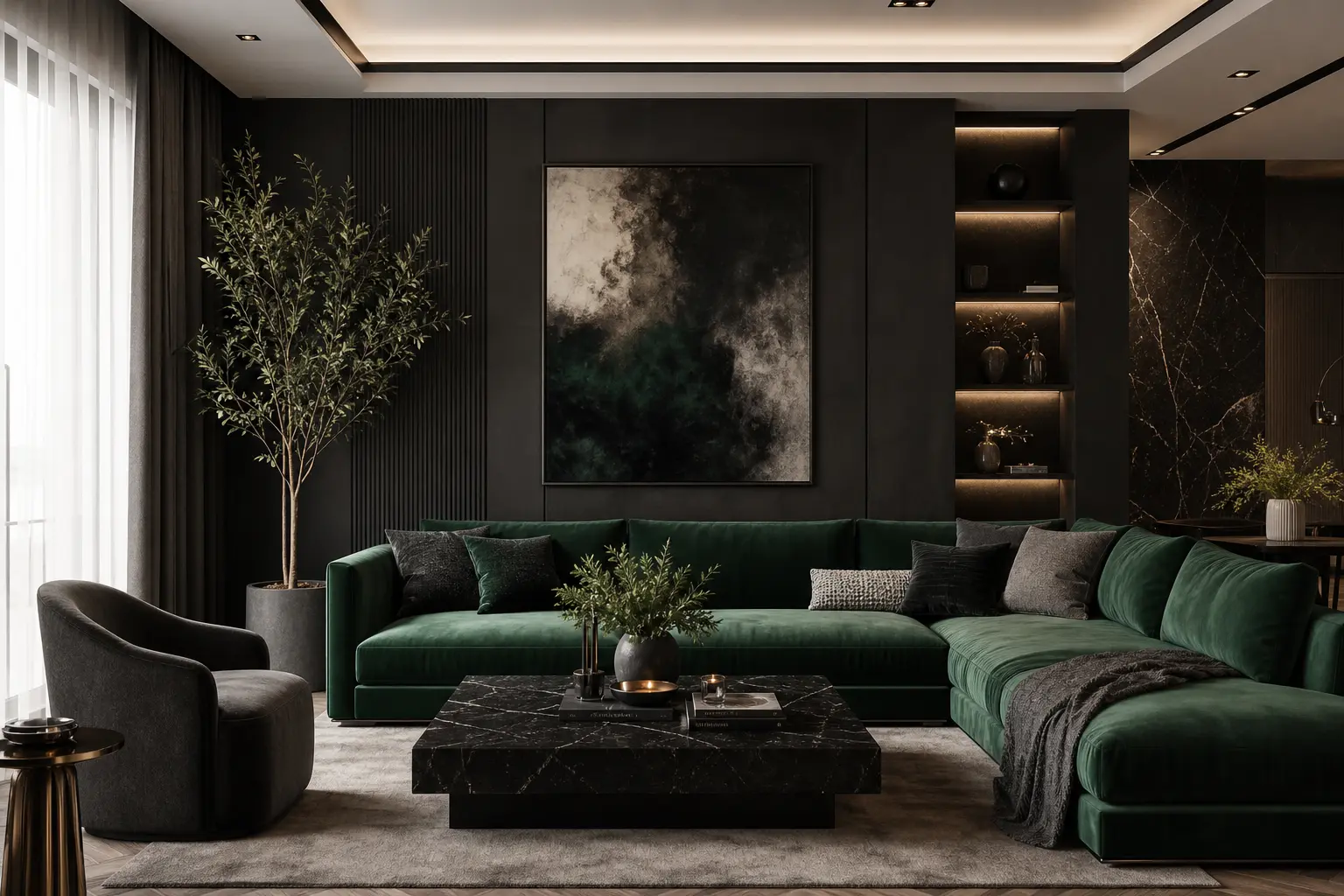
Before buying anything, pick which color covers more surface area. Emerald as the wall color with charcoal furniture creates a jewel box effect, where the wall feels like a backdrop. Charcoal walls with emerald furniture flips that, making the green sofa or accent chair the clear focal point. Both work, but mixing them at roughly equal amounts tends to feel busy rather than intentional.
2. Use an Emerald Accent Wall Behind a Charcoal Sofa
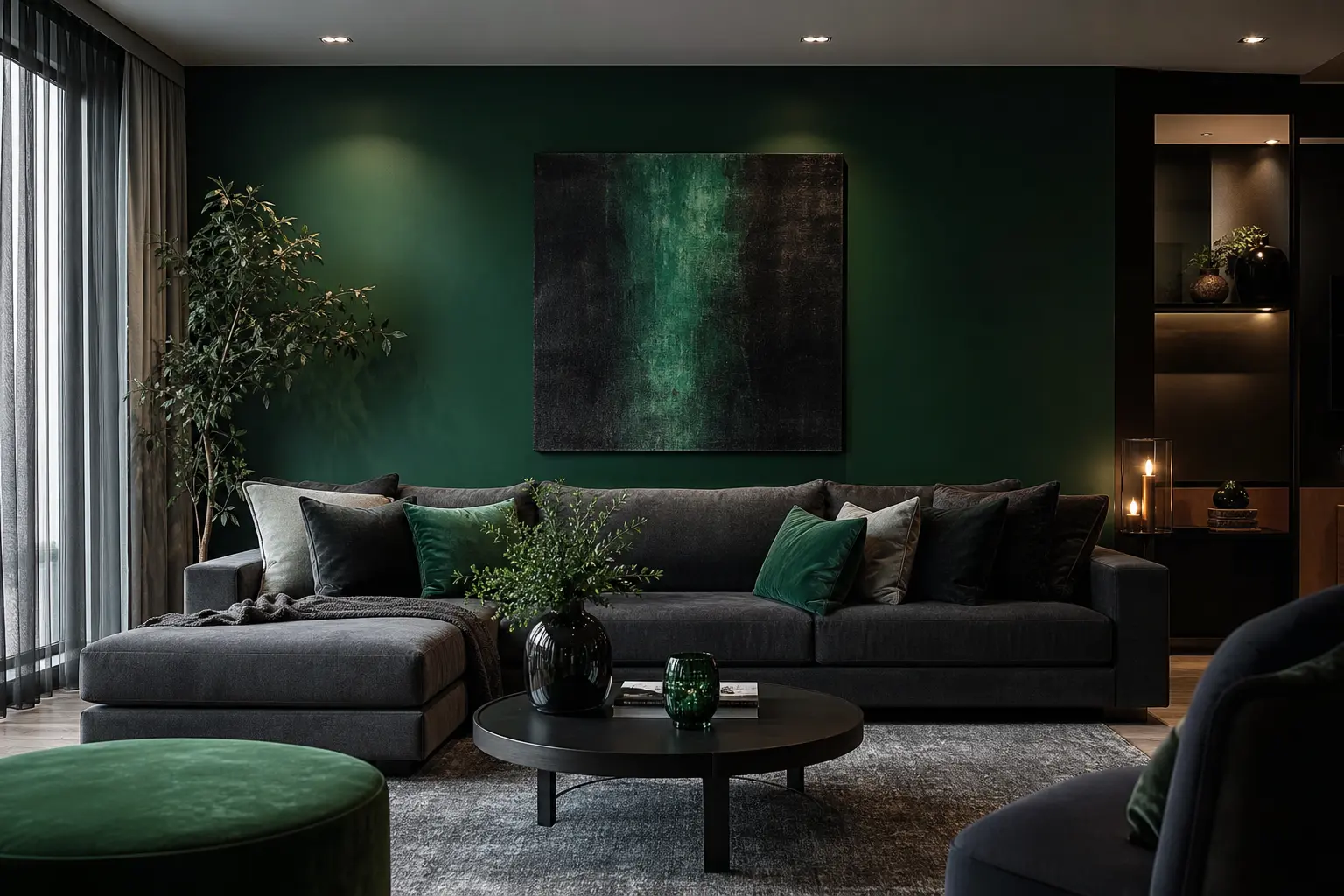
A single emerald wall, ideally the one your sofa backs onto, gives the room a strong focal point without covering every surface in a dark color. Charcoal upholstery against that wall creates contrast without a jarring color clash, since both tones share a similar depth and saturation. This setup works especially well in rooms with decent natural light, since the wall color needs some daylight to read as rich rather than dark.
Choosing the Right Wall
Pick the wall your eye lands on first when entering the room, usually the one directly opposite the doorway, rather than a side wall that gets less visual attention.
3. Choose Warm Metals to Keep the Palette From Feeling Cold

Emerald and charcoal are both cool leaning colors on their own, so warm metal accents matter more here than in most color schemes. Brass, aged brass or warm bronze fixtures, whether on a floor lamp, coffee table legs or picture frames, keep the room from feeling sterile. Avoid chrome or silver tones, which push the whole palette further into cold territory.
4. Add Texture Through Velvet and Boucle Upholstery
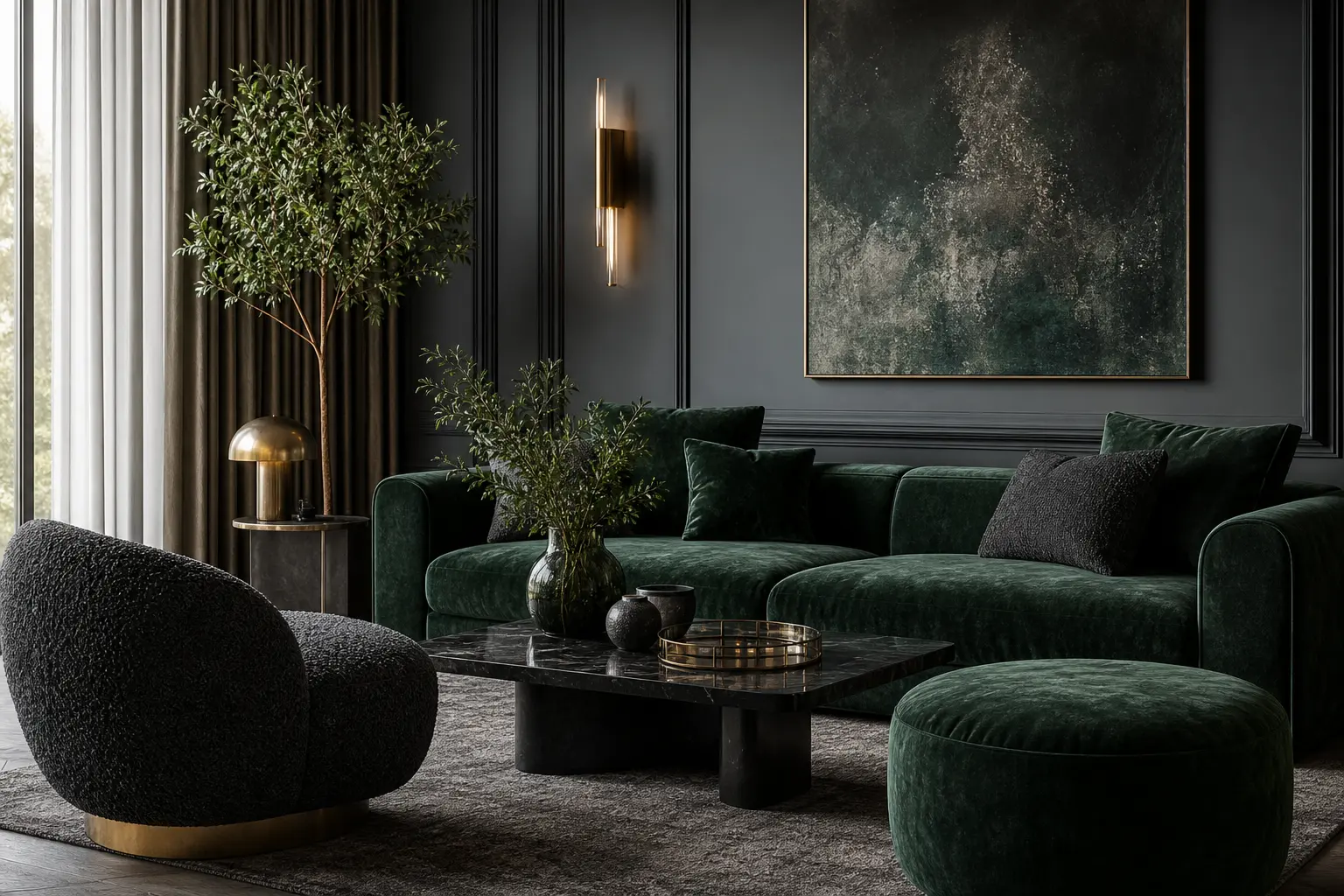
Flat, smooth fabrics can make dark colors look almost like a void from across the room. Velvet upholstery on an emerald accent chair catches light differently depending on the angle, adding visual movement that a matte fabric can’t. A boucle textured throw or cushion in a lighter neutral tone adds contrast in both color and texture against the deeper emerald and charcoal pieces.
5. Layer a Patterned Rug That Bridges Both Colors
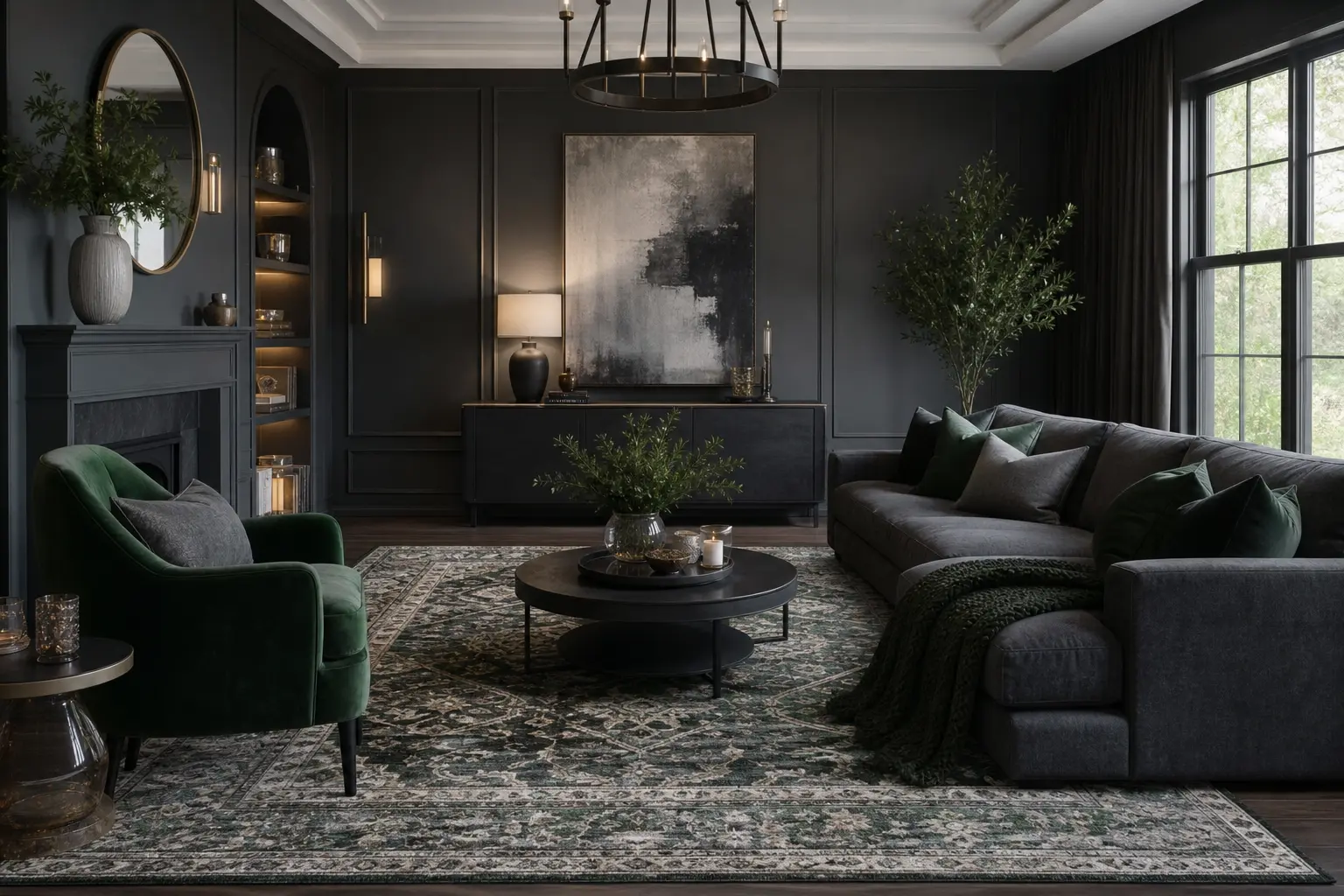
A rug that includes both emerald and charcoal in its pattern, along with a lighter neutral like cream or camel, helps connect the wall color to the furniture without requiring an exact match. Look for a rug with some visual movement, like a subtle geometric or traditional pattern, rather than a solid dark color that would disappear into the rest of the room’s palette.
6. Use Wood Furniture to Soften the Darker Palette
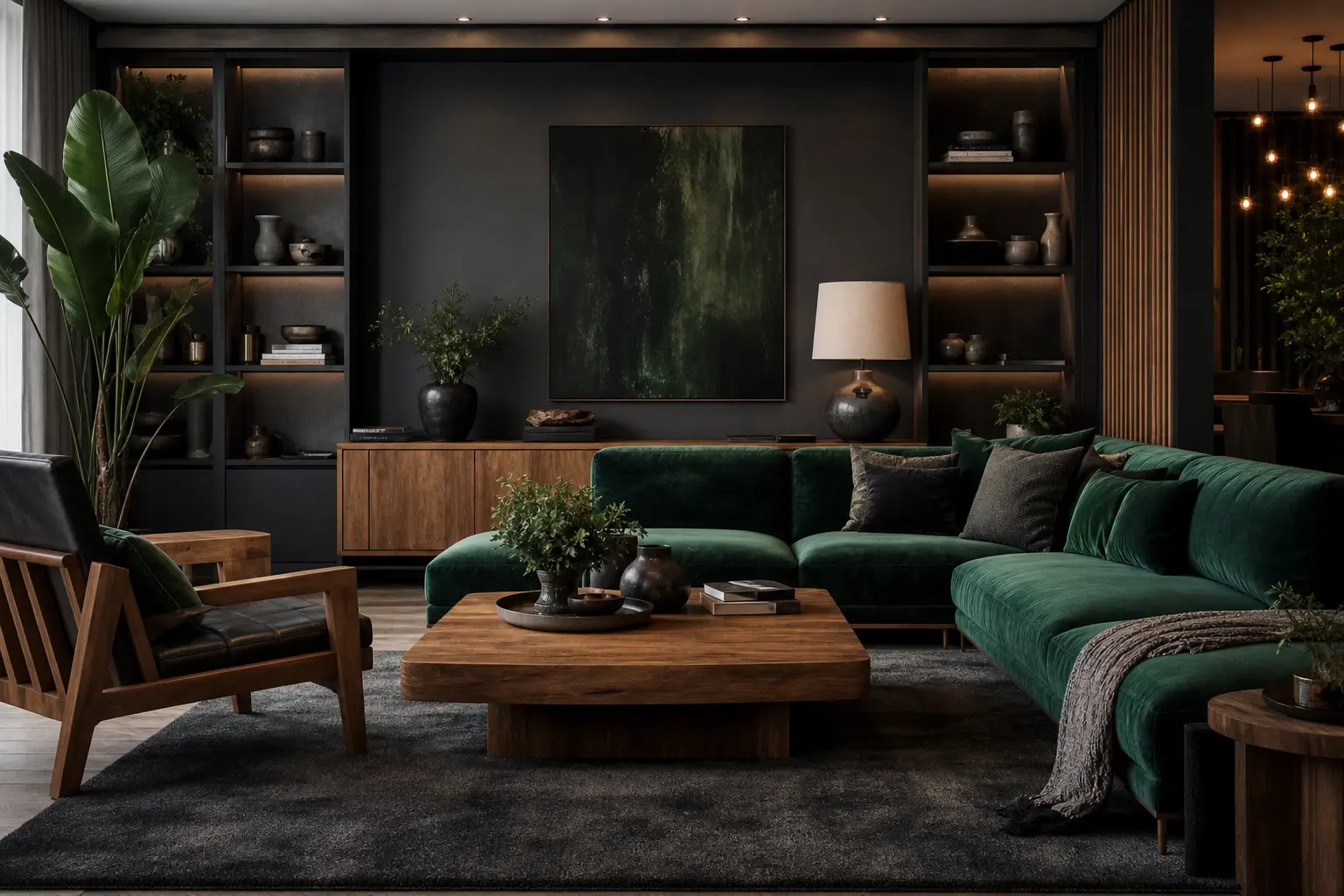
A coffee table, side table or shelving unit in a warm wood tone, like walnut or oak, breaks up the cool green and gray with something organic. Wood also reflects light differently than fabric or paint, adding another layer of warmth to a room that could otherwise feel entirely cool toned. Keep wood tones consistent across pieces so the room doesn’t end up with three different competing finishes.
7. Choose Layered Lighting to Prevent a Cave Like Feel
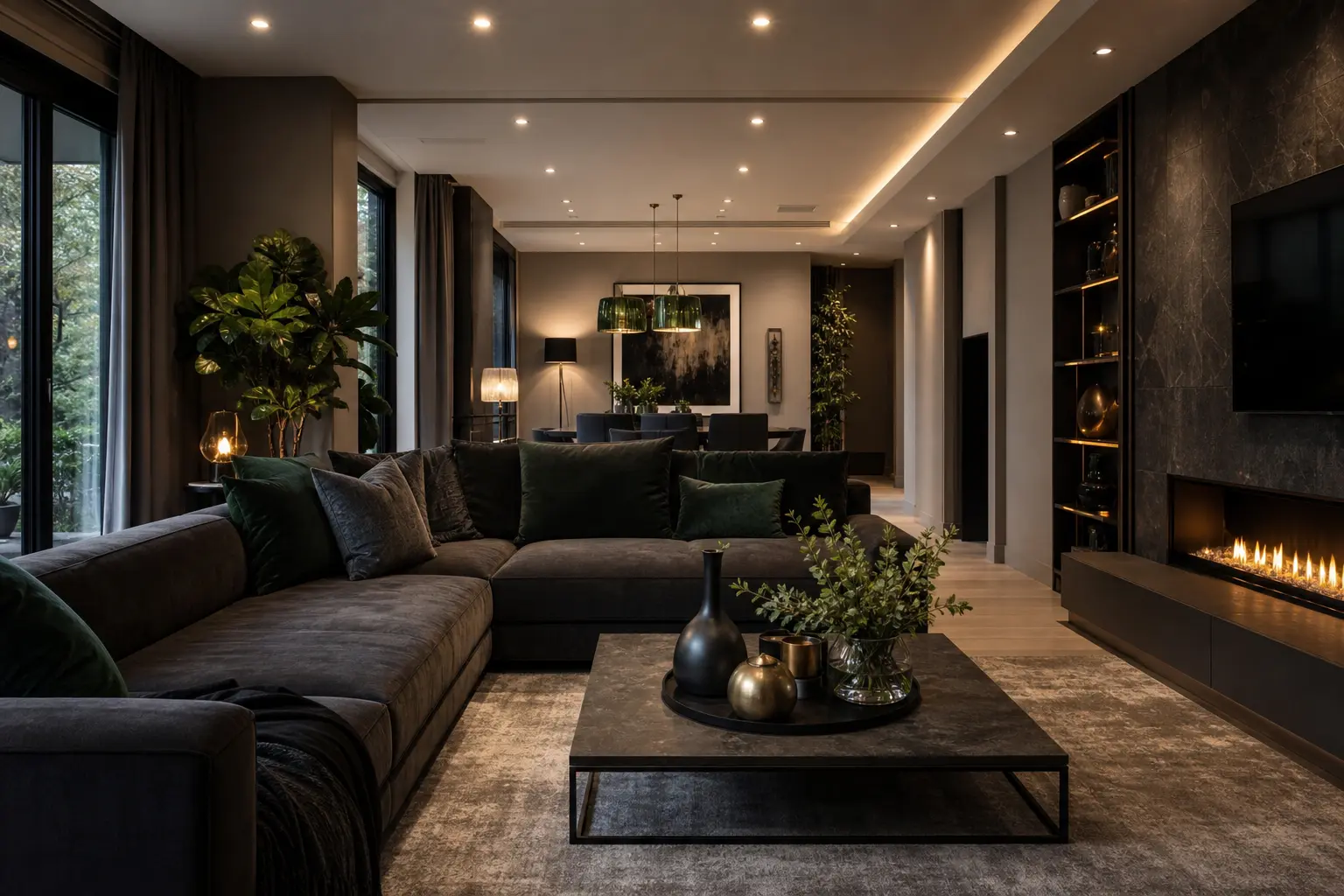
Dark colors absorb more light than pale ones, so a single overhead fixture usually isn’t enough in an emerald and charcoal room. Add at least two additional light sources, like a floor lamp and a table lamp, using warm white bulbs around 2700K. This layered approach keeps corners from disappearing into shadow once natural light fades in the evening.
8. Add Greenery That Complements Rather Than Competes
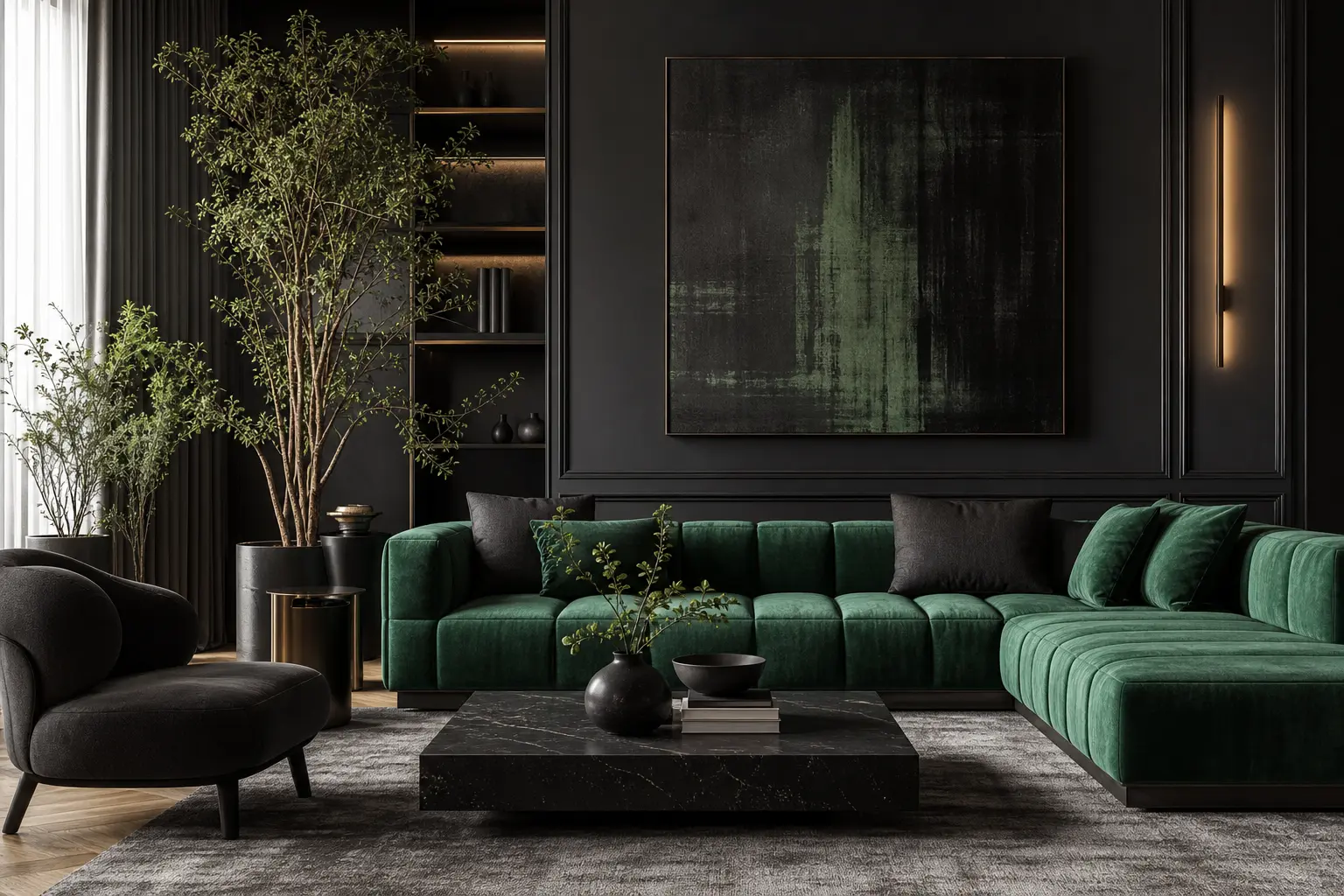
Live plants can feel redundant against an emerald wall if you’re not careful, since you already have a strong green statement. Choose plants with darker, more structural leaves, like a fiddle leaf fig or a snake plant, rather than bright lime green foliage that might clash with the wall’s specific shade of green. One or two well placed plants read as intentional, while too many can start to overwhelm the space.
9. Bring in Art or Textiles With a Third Accent Color
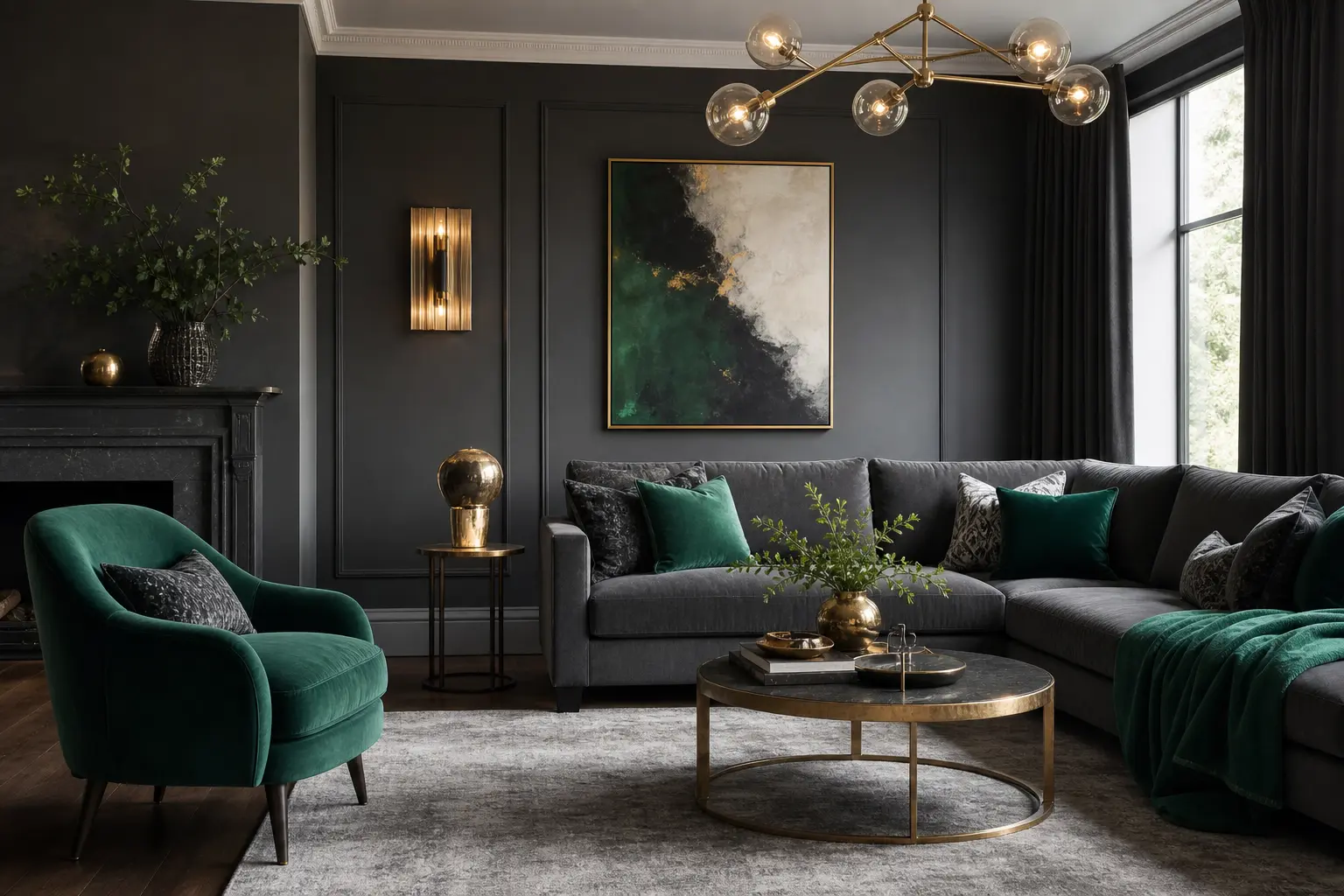
Emerald and charcoal alone can start to feel one note after a while, so a third accent color, like a warm terracotta, mustard or dusty rose, in a piece of art or a set of cushions gives the eye somewhere else to land. Keep this third color to one or two spots in the room rather than repeating it everywhere, so it reads as an accent and not a competing color scheme.
10. Balance the Room With Enough Light Surfaces
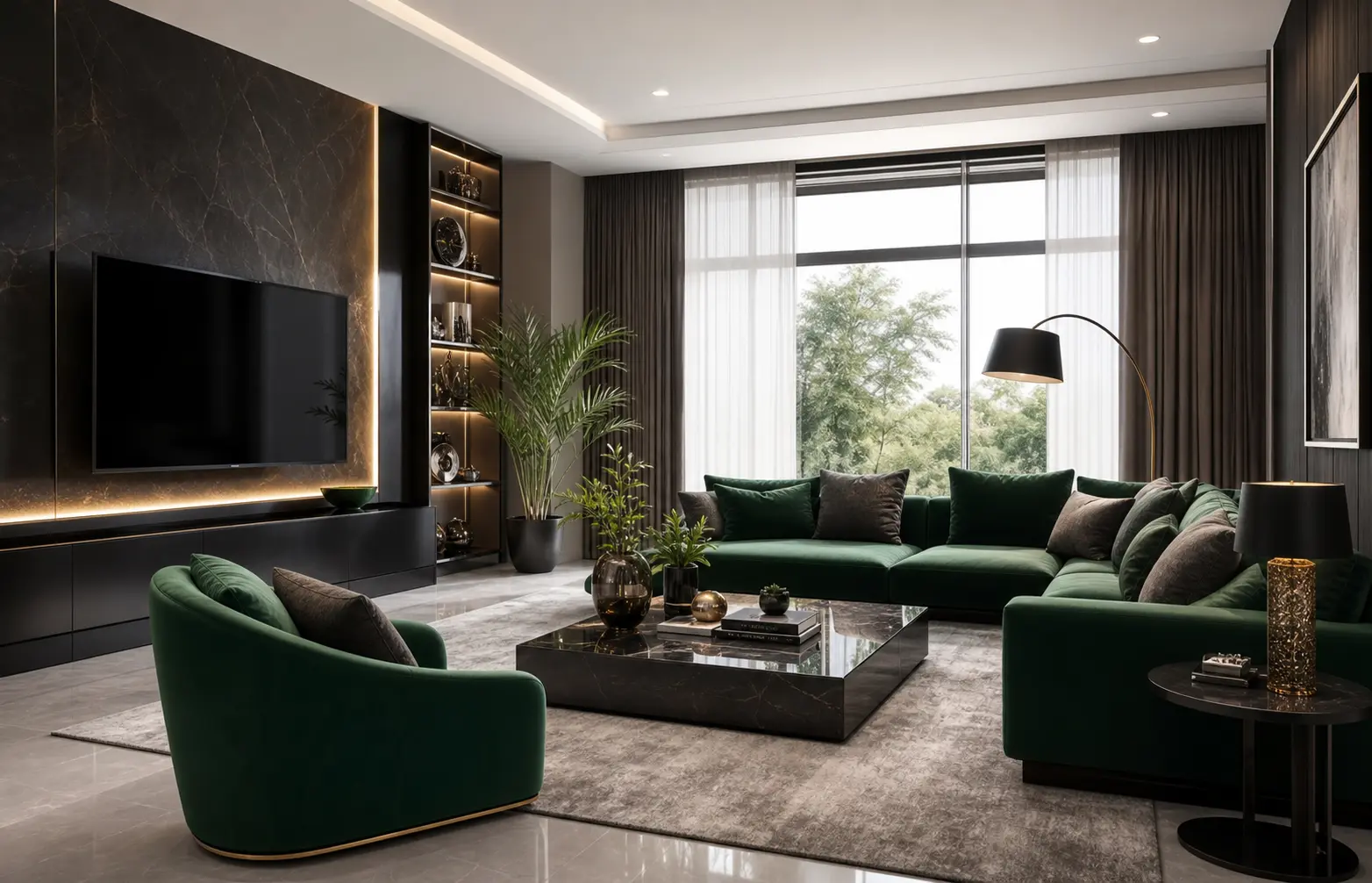
A room that’s entirely dark furniture against a dark wall can feel closed in, no matter how well styled it is. Keep your ceiling, and ideally your flooring or a large area rug, in a lighter tone to give the eye a place to rest. This contrast is what makes the emerald and charcoal feel deliberate and rich rather than simply dim.
Mistakes to Avoid
- Painting every wall in emerald or charcoal, which can make a room feel smaller and heavier than intended
- Using only cool metals like chrome, which strips warmth from an already cool palette
- Relying on a single overhead light, which leaves the room feeling dark once the sun sets
- Skipping texture and using only flat, matte fabrics throughout the room
- Choosing a rug or artwork that ignores the existing color palette entirely
Frequently Asked Questions
Will an emerald and charcoal living room feel too dark for a small space? It can, unless you balance it with a lighter ceiling, good lighting and at least one lighter surface like a cream rug or light wood floor. A small room with strong natural light can generally handle this palette better than a small room with limited windows.
What’s the best way to test this color combination before committing? Paint a sample of emerald on your intended wall and bring in a charcoal cushion or throw to see how the two look together in your actual lighting, both during the day and in the evening.
Do I need both colors on walls, or can one just be furniture? One color as the wall and the other as furniture upholstery is often the easier, less risky approach, especially for a first attempt at a bold color scheme.
What flooring works best with an emerald and charcoal room? Warm toned wood flooring helps balance the cool undertones of both colors. A lighter rug on top of darker flooring also helps keep the room from feeling too heavy.
Can this color scheme work in a rental where I can’t paint? Yes, through a charcoal sofa or armchair, emerald cushions and throws, and a rug that ties both colors together. This delivers the same aesthetic without any permanent changes to the walls.
Conclusion
Emerald and charcoal give a living room a sense of depth that safer, more neutral palettes rarely achieve. The key is balance. Let one color lead, add warm metals and wood to counter the coolness, and layer your lighting so the room stays inviting after dark. Done thoughtfully, this pairing turns an ordinary living room into a space that actually feels designed.


