10 Industrial Pipe Wall Shelves: Rustic Wood Floating Shelving Ideas
A plain floating shelf can start to feel a little too polished for a room that’s meant to feel lived in and a little rugged. Industrial pipe shelving solves that by pairing the warmth of rough, rustic wood with the raw, mechanical look of black pipe brackets. The combination gives a wall real character instead of just filling empty space.
These ten ideas cover how to plan, mount, and style pipe and wood shelving so the finished result feels intentional rather than like leftover construction materials. From pipe finish to wood selection, here’s how to build this look correctly.
1. Understand the Industrial Pipe and Wood Combination
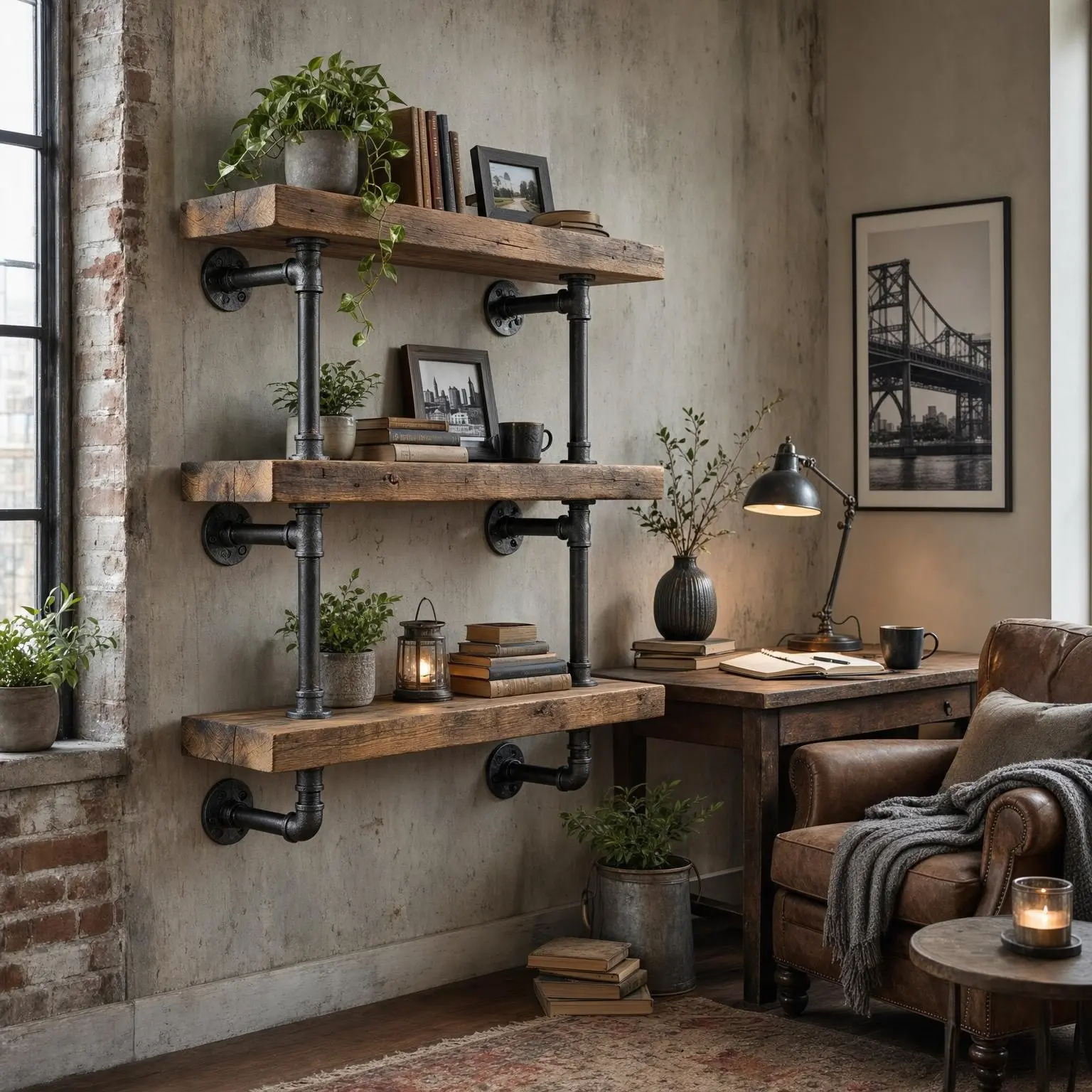
The appeal of pipe and wood shelving comes from the contrast between two very different materials. Black iron pipe is hard, cold, and mechanical, while a rustic wood board is warm, organic, and full of natural texture. Neither material alone tells the full story, but together they create a look that feels both functional and considered.
This combination works especially well in spaces that already lean toward exposed brick, concrete, or raw wood beams, since the shelving echoes materials already present in the room rather than introducing something completely unrelated.
2. Choose the Right Pipe Finish for Your Room
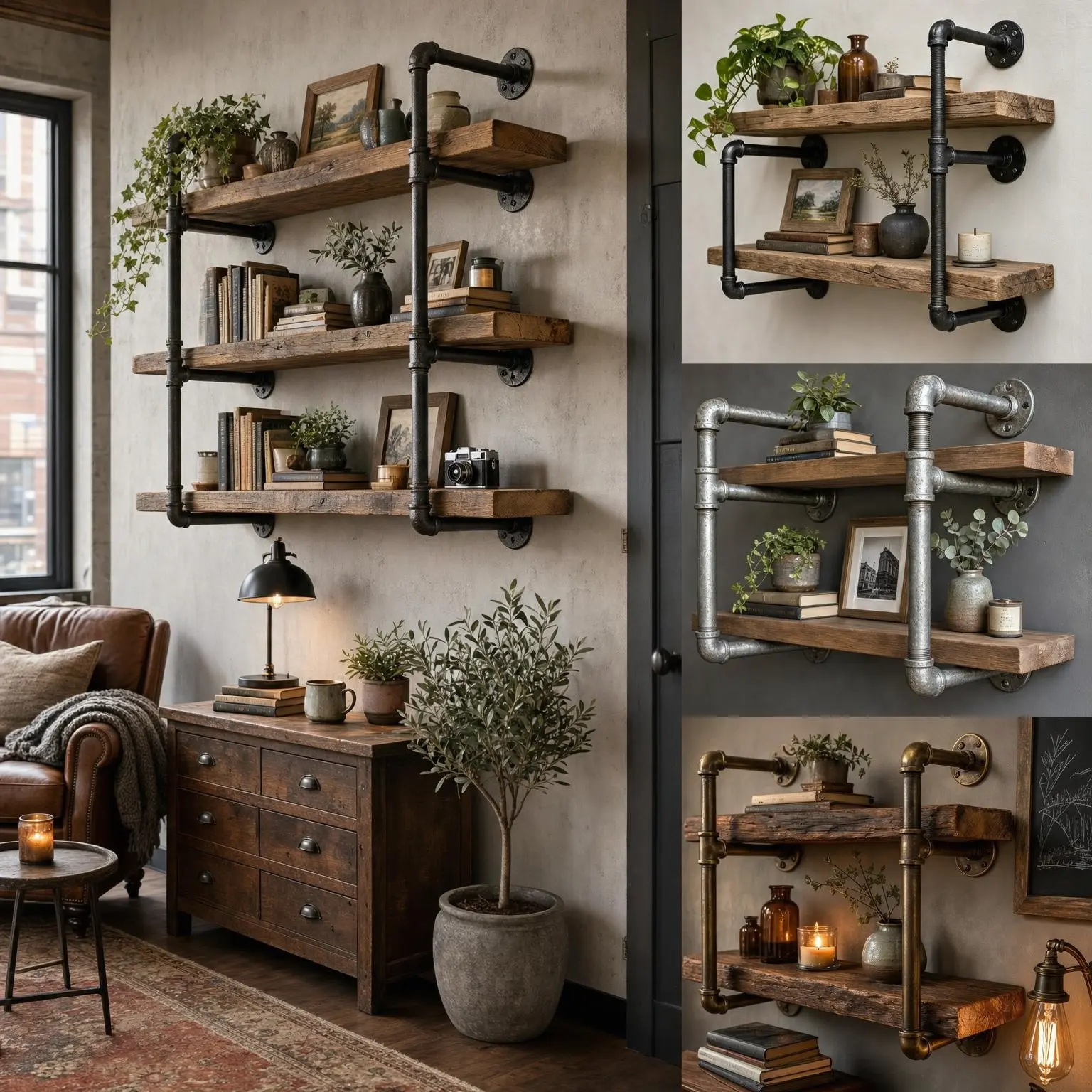
Most pipe shelving brackets come in a few standard finishes. Black iron or matte black is the most common and traditional choice, giving the strongest industrial look. Galvanized steel, with its lighter, slightly silver toned finish, offers a softer take on the same style. Aged or antique brass pipe fittings are less common but work well in a space leaning more vintage than strictly industrial.
Matching Pipe Finish to Existing Hardware
If your room already has black door hardware, light fixtures, or window frames, matte black pipe shelving will tie in most naturally. If your existing hardware leans warmer, like brass or bronze, consider whether an aged brass pipe fitting might work better than the more common black option.
3. Pick Reclaimed or Rustic Wood for the Shelf Boards
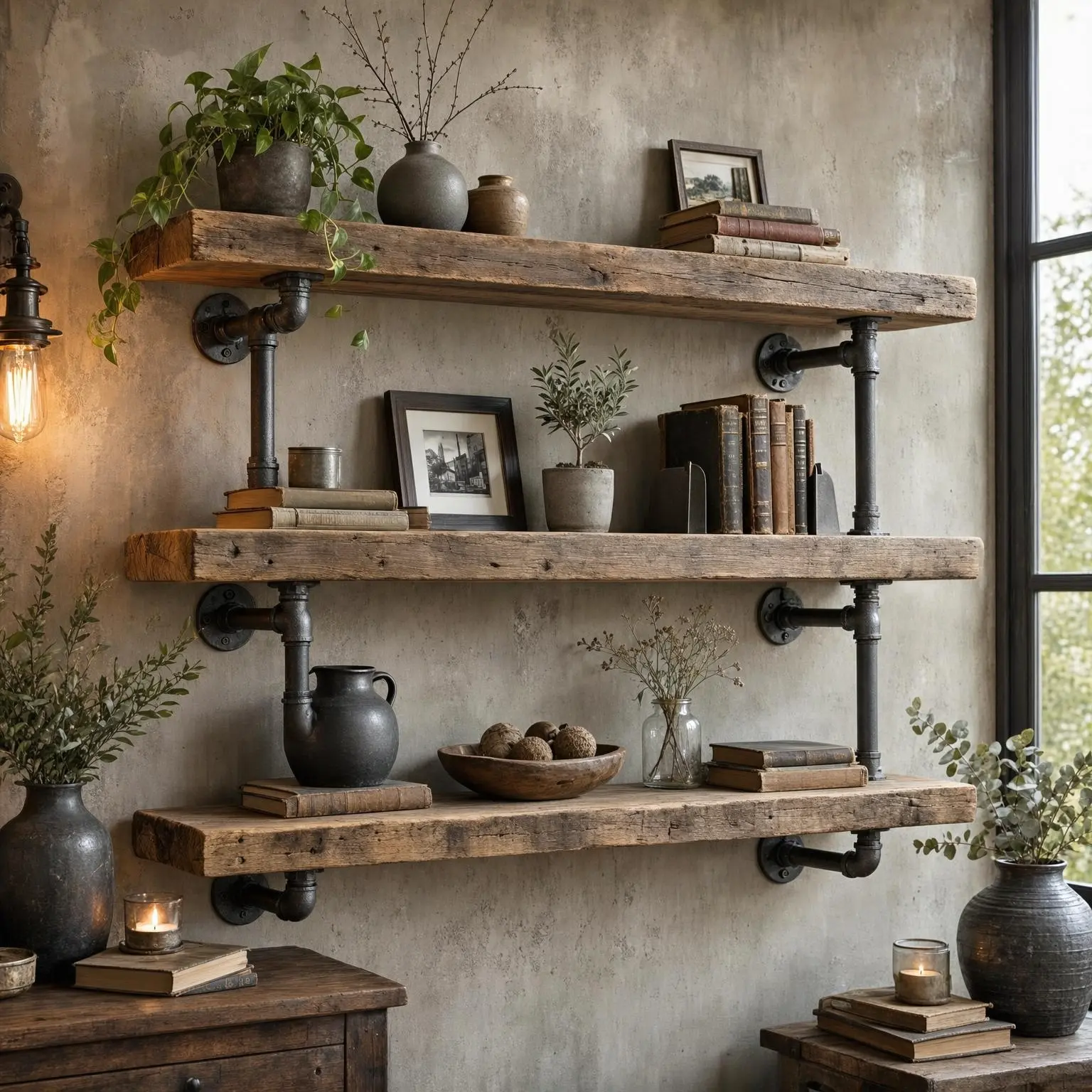
The wood board is just as important to the overall look as the pipe brackets themselves. Reclaimed wood, with visible grain, knots, and some natural variation in tone, reads as authentically rustic rather than manufactured. If true reclaimed wood isn’t available or fits your budget, a distressed or hand scraped finish on new wood can achieve a similar look.
Avoid a wood board with a very smooth, uniform finish, since this can clash with the raw, slightly rough character of the pipe brackets. The wood is meant to look like it has some history, even if it’s actually new material finished to look that way.
4. Decide Between Exposed Brackets and Full Pipe Shelving Units

There are two common approaches to pipe shelving. Exposed bracket style uses simple flange and pipe brackets mounted directly to the wall, with the wood board resting on top, showing the full pipe structure. A full pipe shelving unit, by contrast, uses a more complete pipe frame that the shelves slot into, often as a freestanding or wall anchored unit spanning multiple shelves.
Exposed brackets tend to look more minimal and work well for one or two individual shelves. A full pipe unit makes more sense when you want several shelves stacked together as one cohesive piece, like in a kitchen or a home office setup.
5. Get the Spacing and Size Right for Your Wall
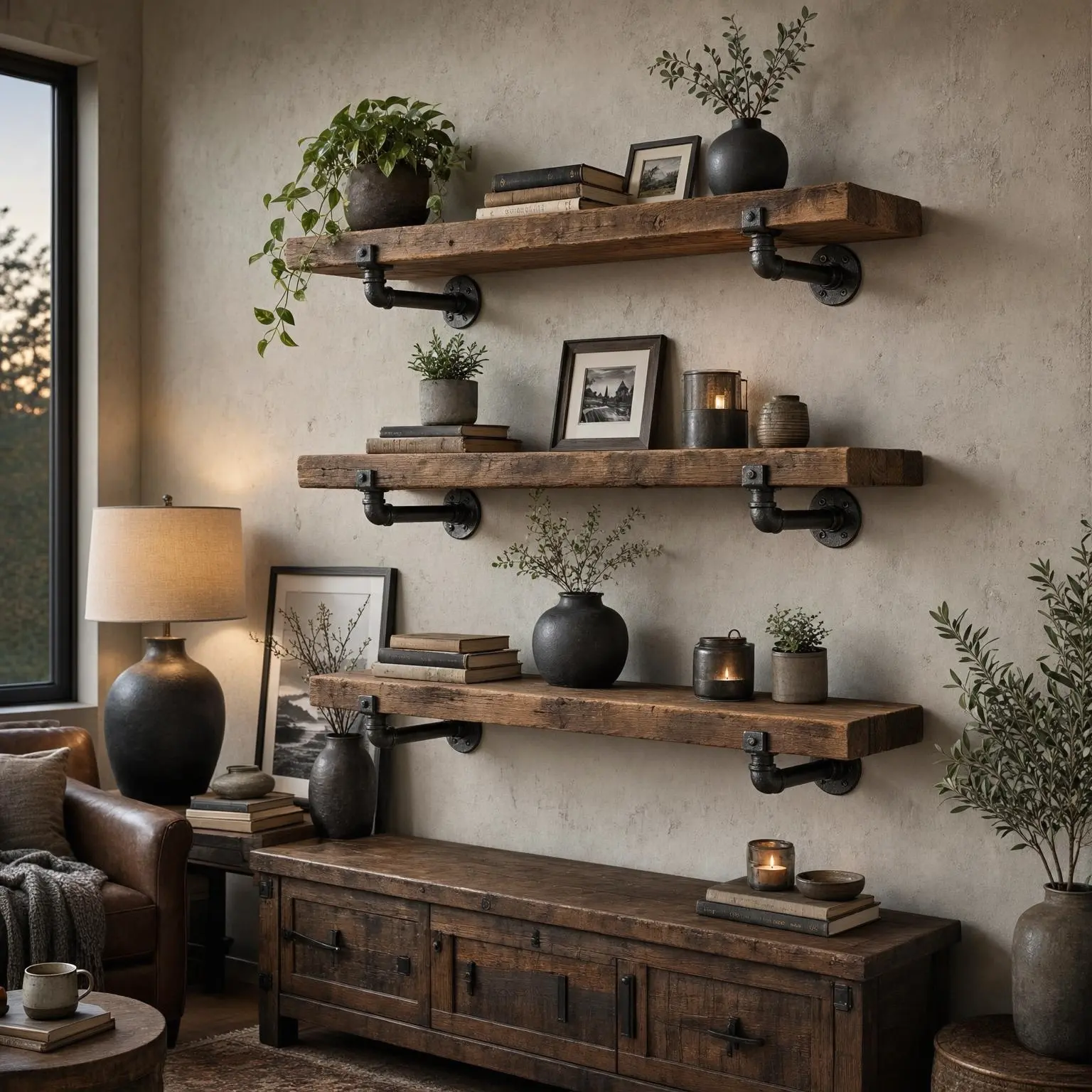
For a stacked set of pipe shelves, spacing of about 12 to 14 inches between shelves generally gives enough clearance for most everyday items, from books to kitchen jars to small plants. Wider spacing, closer to 16 to 18 inches, works better if you plan to store taller items regularly.
As with any shelving project, measure your specific items before finalizing spacing, especially if you already know you’ll be storing something unusually tall, like a stand mixer in a kitchen application or a row of binders in a home office.
6. Style Shelves With Industrial and Vintage Accents
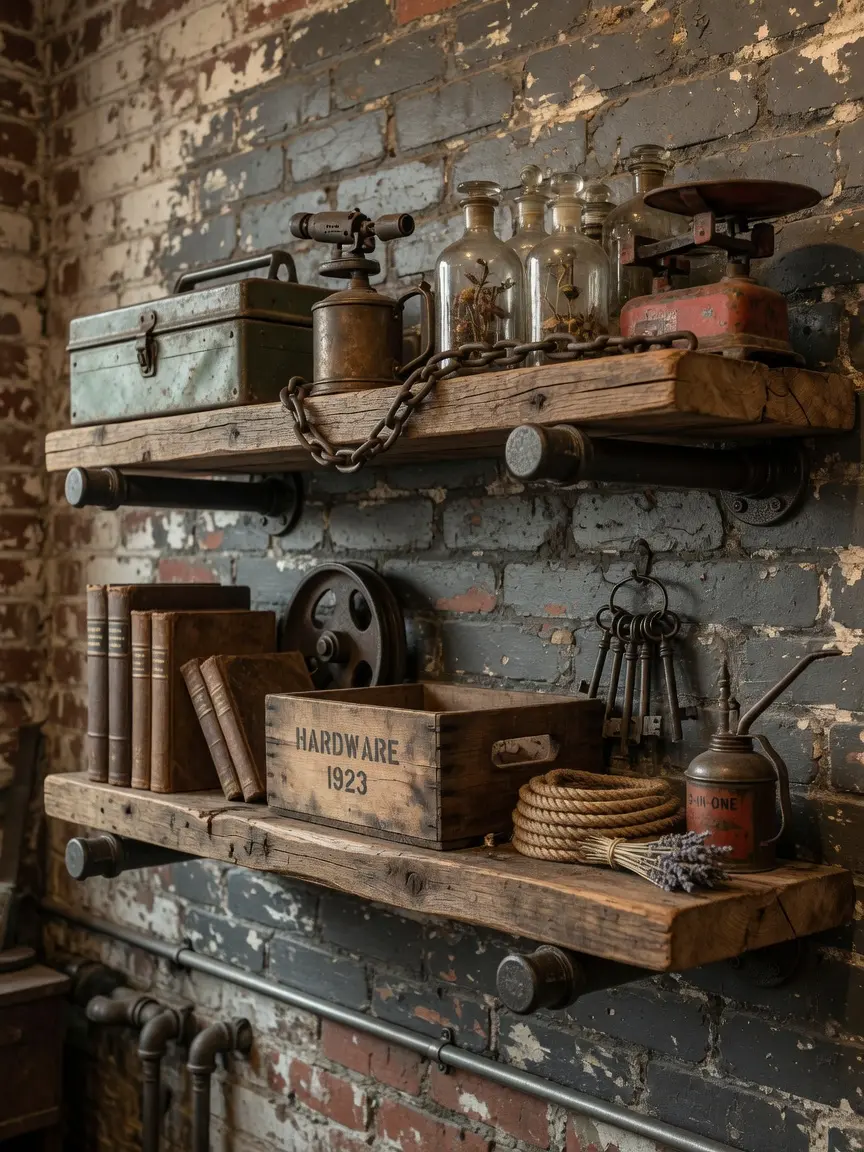
Lean into the industrial theme with what you place on the shelves. Glass jars with metal lids, vintage style tin canisters, exposed filament light bulbs used as decor, and books with worn or textured covers all reinforce the overall look. Avoid anything too polished or glossy, which can feel out of place against the raw pipe and wood materials.
A small collection of plants in simple terracotta or concrete pots also works well here, adding a natural, organic element that softens the otherwise fairly hard and mechanical materials in the rest of the shelving unit.
7. Use Pipe Shelves in a Kitchen for Open Storage

A kitchen is one of the most practical spots for pipe and wood shelving, especially in a space already leaning industrial or farmhouse in style. Use the shelves for everyday items like glass jars of dry goods, a stack of plates, or a row of cookbooks, keeping frequently used items within easy reach.
Because a kitchen shelf sees regular handling, make sure the wood is properly sealed against moisture and occasional spills. An unsealed reclaimed wood board can absorb kitchen grease and moisture over time, which affects both appearance and longevity.
8. Add Pipe Shelving in a Home Office or Studio
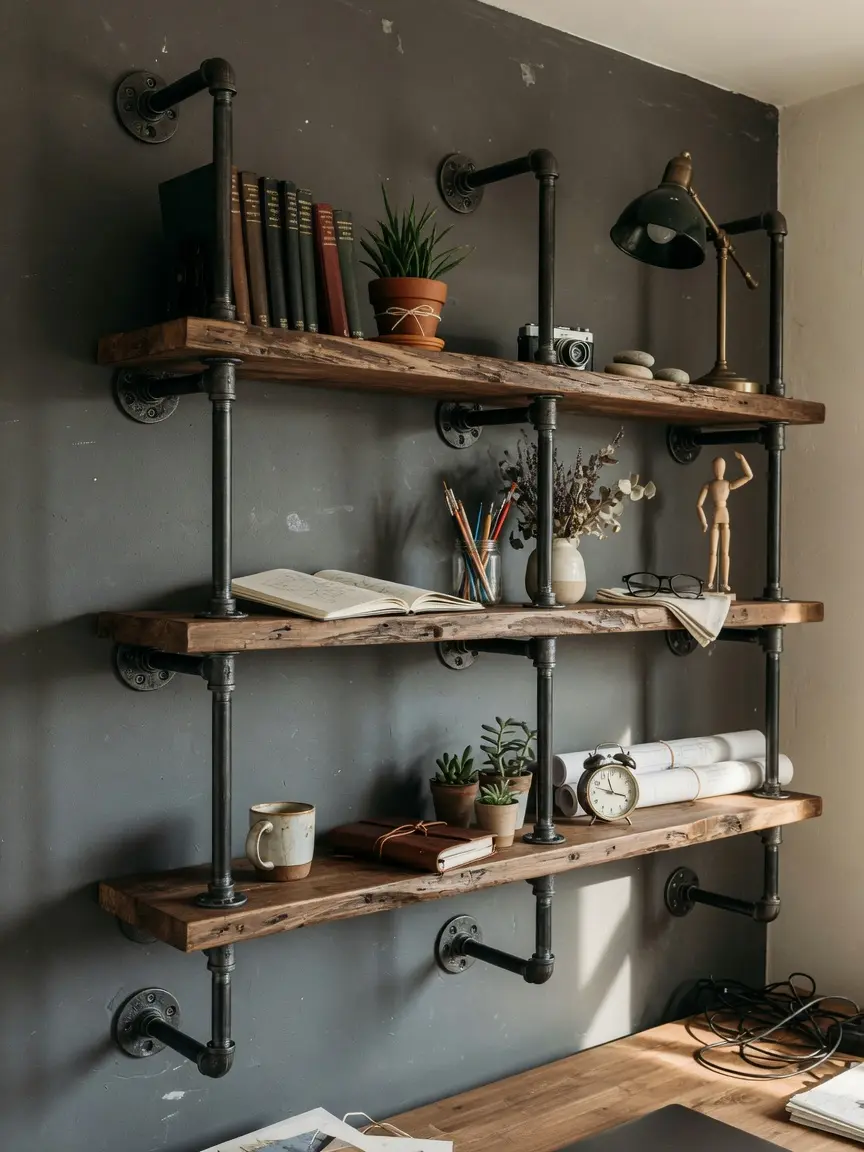
A home office or creative studio space is another natural fit for this style, especially if the room already has an exposed or raw aesthetic to it. Use the shelves for books, supply storage, or as a display spot for finished work or personal items, giving the workspace some visual interest beyond a plain desk and chair.
Because a studio space often benefits from a slightly more relaxed, imperfect look than a formal living room, this is a good spot to lean further into visible wood grain, knots, and other natural imperfections in the wood board.
9. Mount Pipe Shelves Correctly for the Weight They’ll Hold
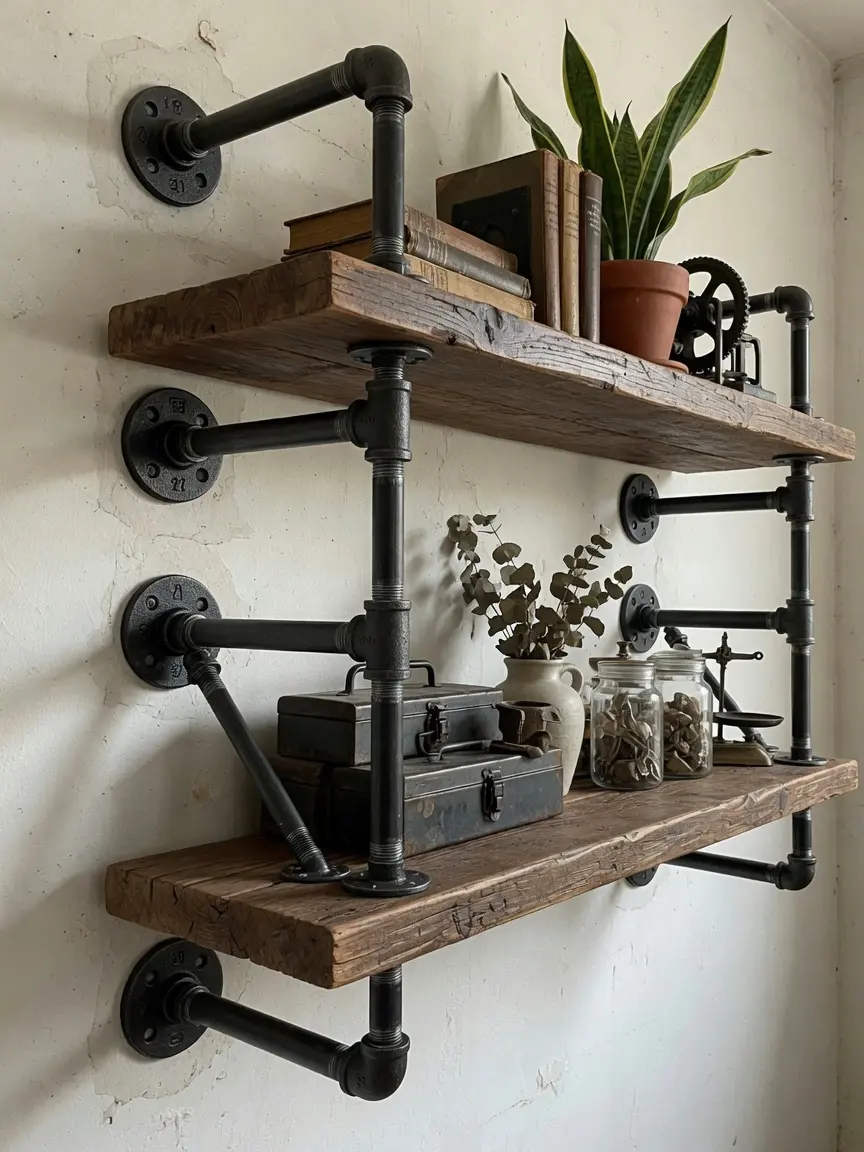
Pipe shelving is generally quite strong when mounted correctly, since the pipe brackets distribute weight differently than a simple hidden bracket system. Even so, always mount the wall flange into wall studs wherever possible, rather than relying solely on drywall anchors, especially for shelves that will hold books or heavier kitchen items.
Check the specific weight rating for your chosen bracket and pipe diameter, since thicker pipe generally supports more weight than a thinner, more decorative option. If you’re unsure about proper mounting, professional installation is worth the cost for a shelving system meant to hold significant weight.
10. Light the Shelves for an Industrial Ambiance
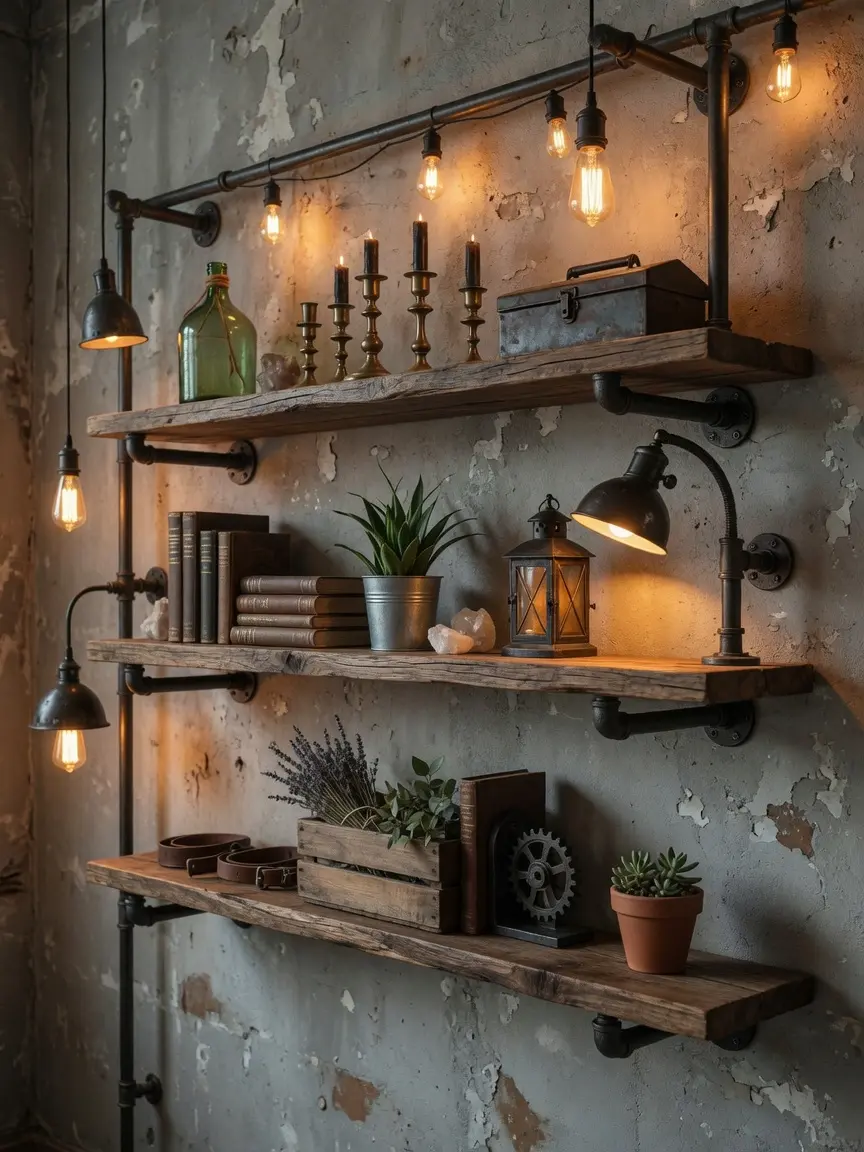
A string of small exposed filament bulbs, or a warm toned LED strip tucked along the underside of each shelf, reinforces the industrial character of the space while making the shelving more functional after dark. This kind of lighting works especially well with this style, since exposed bulb fixtures are already a common element in industrial design more broadly.
Stick to warm toned lighting, generally in the 2400 to 2700 Kelvin range, for a slightly amber, vintage feeling glow that suits the overall rustic and industrial materials better than a cooler, whiter light.
Mistakes to Avoid
- Pairing black pipe with a very smooth, glossy wood finish that clashes with the raw material
- Skipping wall stud mounting on a shelf meant to hold books or heavy kitchen items
- Choosing spacing too tight for the items you actually plan to store
- Overstyling shelves with too many small objects, losing the clean industrial look
- Using an unsealed wood board in a kitchen where grease and moisture are a regular concern
- Mixing pipe finishes, like combining black iron and galvanized steel, without a clear reason for the contrast
Frequently Asked Questions
How much weight can pipe shelving hold? It depends on the pipe diameter and how it’s mounted, but properly installed pipe shelving into wall studs is generally quite strong, often holding significantly more weight than a standard hidden bracket shelf of the same size. Always check the specific rating from the manufacturer.
Does pipe shelving work outside of industrial style homes? Yes. Pipe and wood shelving also works well in farmhouse, modern rustic, and eclectic spaces, since the raw materials read as a texture choice rather than a strict style requirement. It pairs particularly well with any room that already has some exposed brick, concrete, or wood beam elements.
Can I install pipe shelving myself? Many pipe shelving kits are designed for straightforward installation with basic tools, as long as you can locate wall studs accurately. For shelves meant to hold significant weight, like a full row of books, professional installation is worth considering if you’re not confident in your mounting.
What wood works best for pipe shelving? Reclaimed wood with visible grain and some natural variation gives the most authentic rustic look. If reclaimed wood isn’t available, a distressed or hand scraped finish on new wood can achieve a similar effect at a lower cost.
Is black pipe the only finish option? No. Galvanized steel offers a lighter, softer industrial look, and aged brass pipe fittings work well in a more vintage leaning space. Black iron remains the most common choice for a strong, traditional industrial look.
Conclusion
Industrial pipe and rustic wood shelving works because it pairs two very different materials that both carry real character on their own. Choose a pipe finish that matches your existing hardware, pick wood with genuine texture and grain, and mount everything securely into wall studs. Done this way, the shelving becomes a genuine feature in the room rather than just a place to set things down.