10 Terracotta & Sand Beige Living Room Ideas for a Warm & Elegant Space
Terracotta and sand beige share the same earthy family, but they bring different energy to a room. Sand beige is quiet and grounding. Terracotta adds warmth and a bit of drama. Together they create a living room that feels sun warmed and elegant without leaning on any one bold color to carry the whole look.
This pairing works well because both tones come from the same place, clay and earth, so nothing ever feels forced or out of place. It’s a combination that reads as timeless rather than trend driven.
Here are 10 ways to bring terracotta and sand beige into a living room for a space that feels both warm and elegant. A few of these are quick swaps. Others take more planning if you’re starting from a blank room.
1. Paint the Walls a Soft Sand Beige
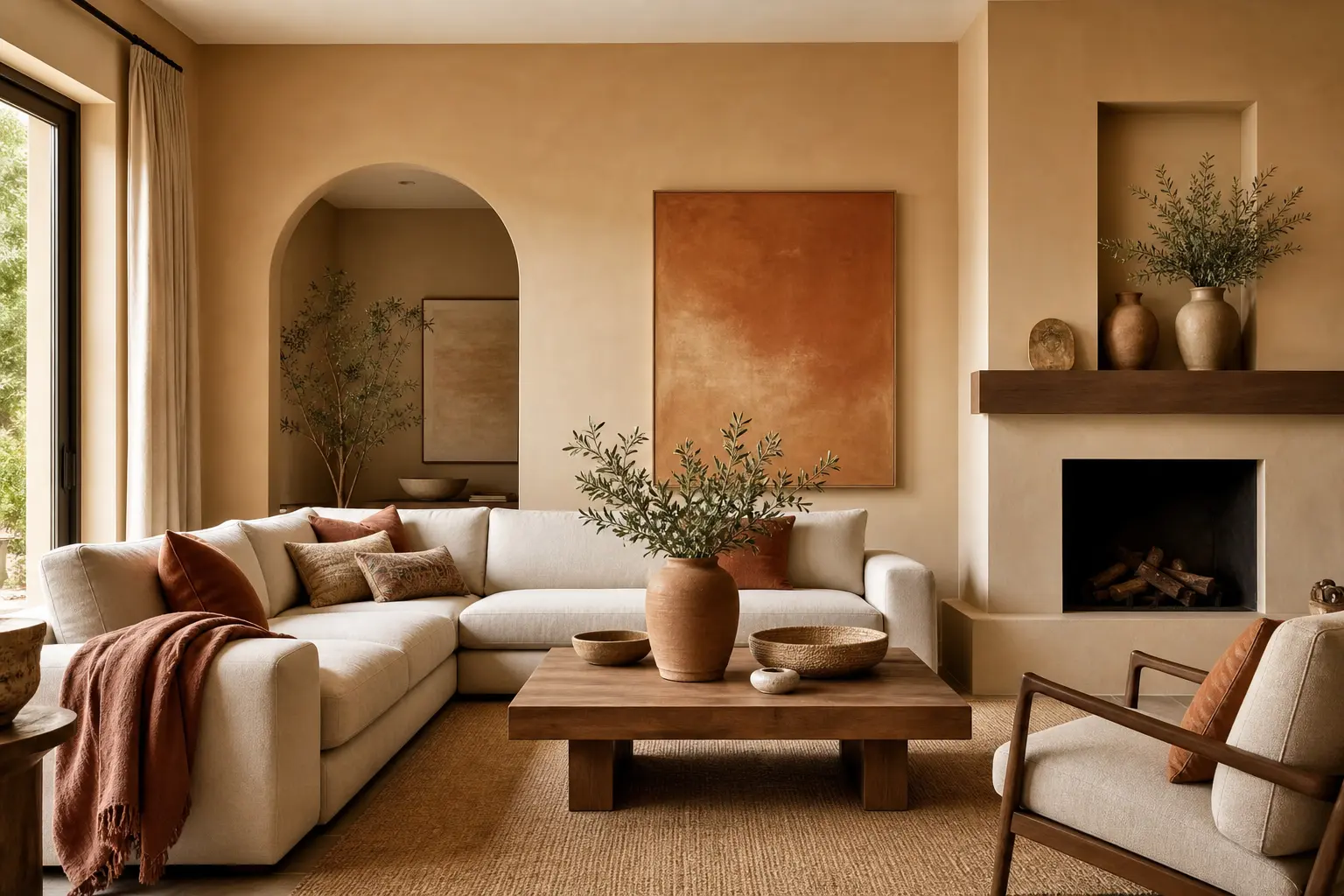
A full sand beige wall color sets a warm, neutral base for the rest of the room. Choose a beige with a slight warmth to it rather than a cooler, grayer tone, since the warmth is what lets terracotta accents feel connected instead of random.
Test the paint under both natural daylight and evening lamp light before committing. Beige tones shift more than people expect depending on the light source in the room.
A Note on Undertones
Some beige paints lean pink or yellow once on the wall, even if the swatch looked neutral in the store. A small test patch saves you from an unpleasant surprise after a full repaint.
A satin finish tends to work better than flat paint in a living room too, since it holds up to everyday wear and reflects a bit more warmth from nearby lamps.
2. Add a Terracotta Accent Wall or Alcove
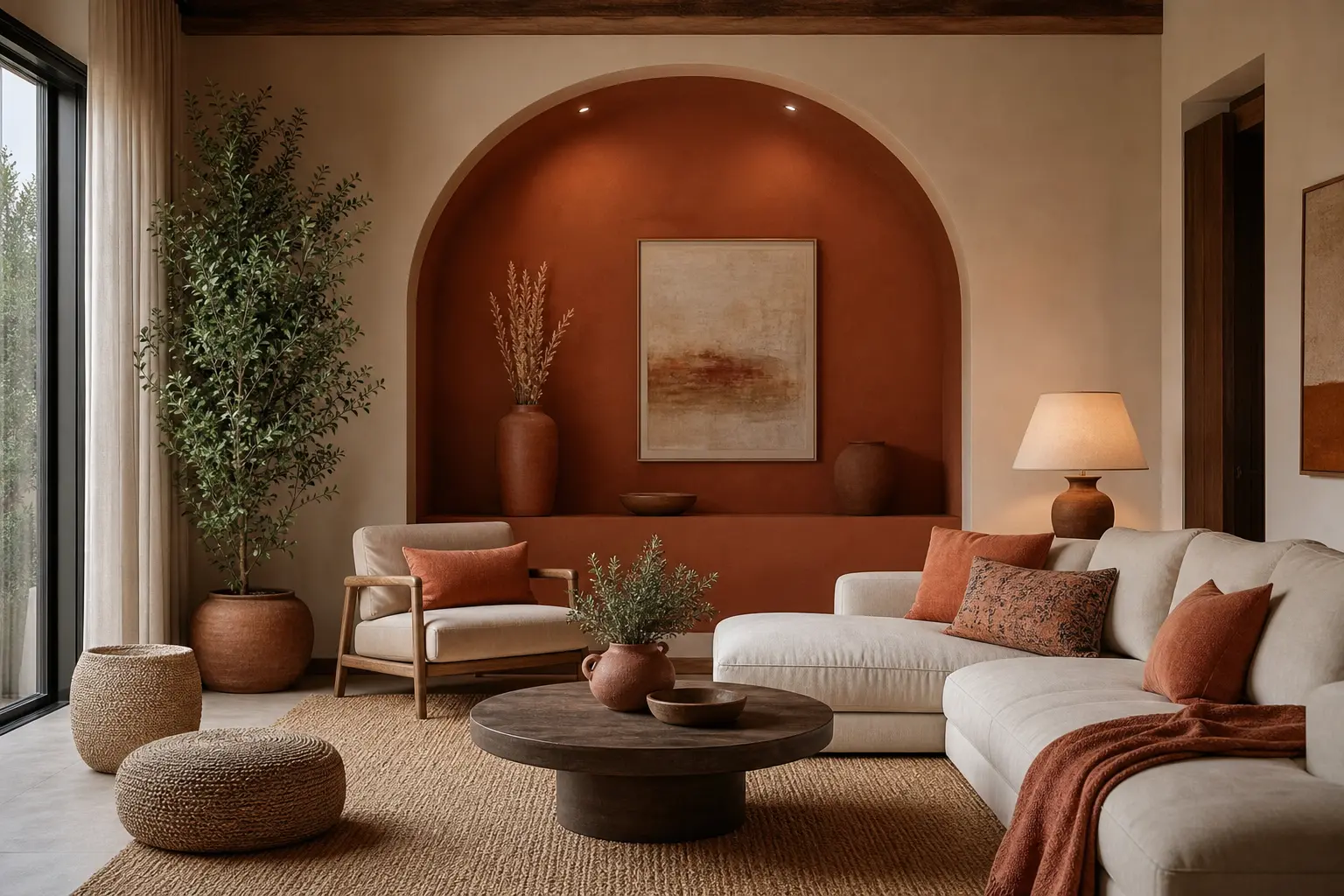
A terracotta accent wall, or a smaller painted alcove or niche, adds warmth without overwhelming the room. This works especially well behind a sofa or in a reading nook, where the color can act as a backdrop rather than the main event.
Keep the surrounding walls in sand beige or a soft white. This contrast lets the terracotta stand out clearly instead of blending into an already warm color palette.
A small alcove, even one built from a simple painted plywood insert, gives you most of the visual effect without the commitment of a full accent wall. It’s a good middle ground if you’re not ready to go all in.
3. Bring in Terracotta Through Upholstery
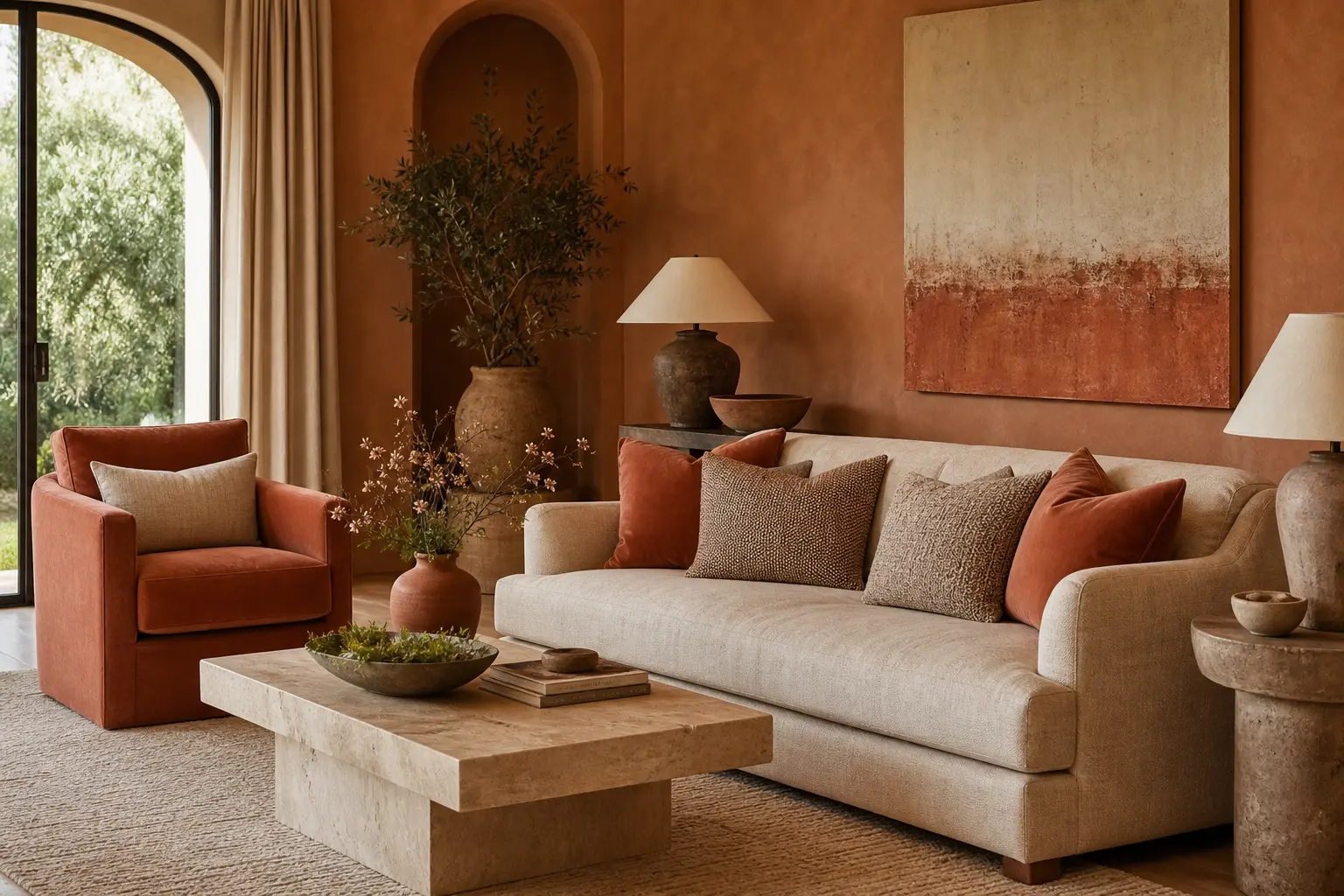
A terracotta accent chair or a set of dining chairs brings the color in at furniture scale, which is often easier to commit to than a full wall. Boucle or linen upholstery both work well, adding texture alongside the color itself.
Place the terracotta piece somewhere it’ll get noticed, like near a window or across from the main seating area, so it reads as an intentional accent rather than an afterthought.
Consider a slipcovered option if you’re testing the color before fully committing. A removable cover lets you swap terracotta for something else later without replacing the whole piece of furniture.
4. Layer Sand Beige and Terracotta Textiles

Pillows, throws, and table runners in both sand beige and terracotta let you mix the two tones without a big furniture commitment. Vary the textures too, mixing a nubby wool throw with a smoother linen pillow for added depth.
This approach is especially useful for renters or anyone who wants to test the color pairing before making a bigger investment in furniture or paint.
Rotate a few pieces seasonally too. Swapping a terracotta throw for a lighter sand beige one in summer keeps the room feeling current without buying anything new each time.
5. Add Warm Wood Furniture to the Mix
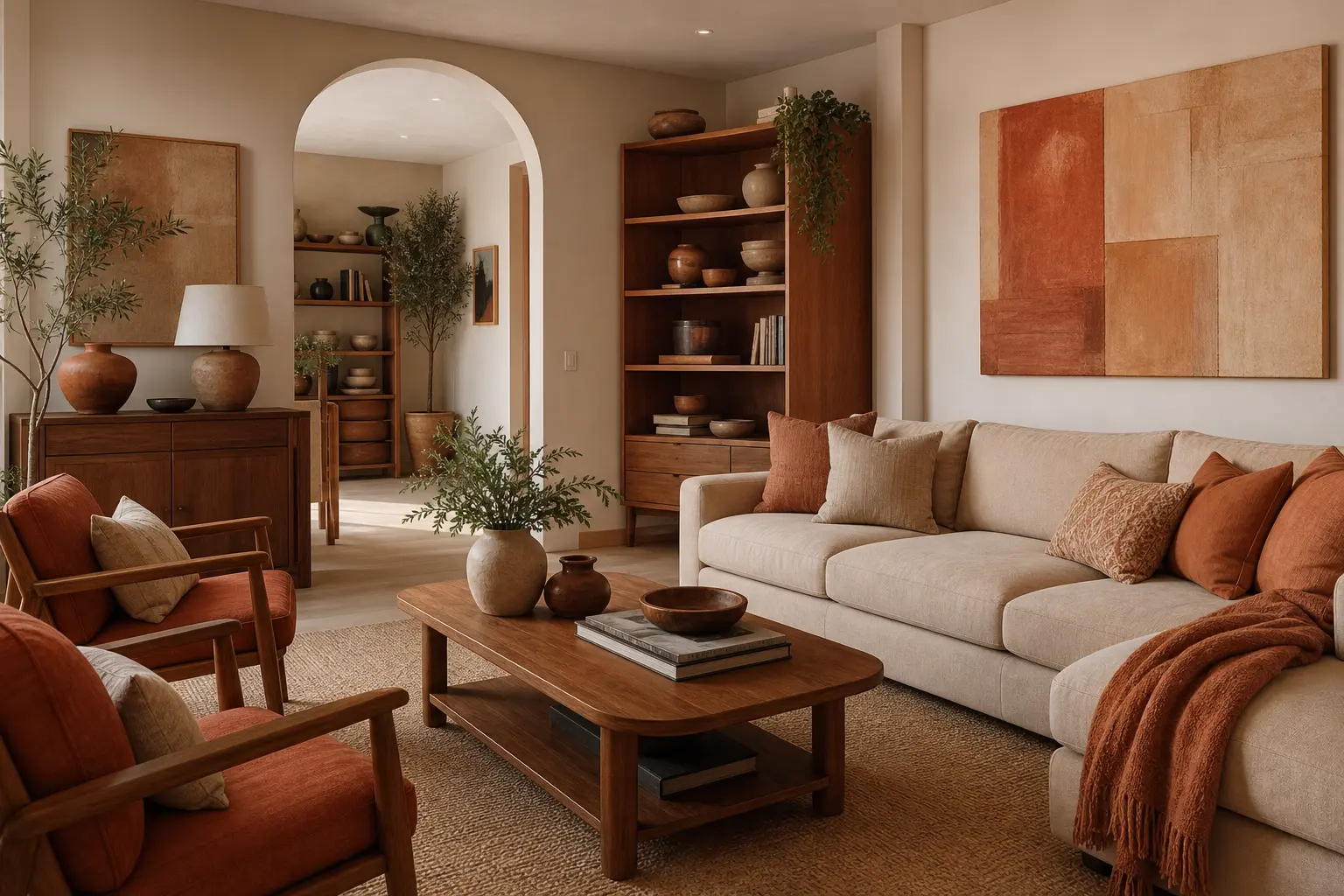
Warm, medium toned wood furniture pairs naturally with both terracotta and sand beige, since all three sit within the same earthy color family. A wood coffee table or media console ties the whole room together.
Avoid cool gray washed wood tones here. They tend to clash slightly with the warmth of terracotta and beige, creating a subtle mismatch once the room is fully styled.
Vintage or reclaimed pieces work particularly well in this palette. Small imperfections in the wood grain echo the same organic, earthy feel that terracotta and sand beige already bring to the room.
6. Use Terracotta Pottery as Decor

Terracotta planters, vases, or ceramic bowls bring the color in at a small flexible scale. This is one of the easiest ways to test the look before committing to paint or furniture, and it works in almost any room style.
Group a few pieces together on a shelf or console table rather than scattering single items around the room. Clusters read as more intentional than pieces placed one at a time.
Vary the pot sizes and shapes within a grouping. A tall, narrow vase next to a squat, rounded bowl creates visual rhythm that identical pieces lined up in a row simply can’t match.
7. Add a Jute or Wool Rug for Texture
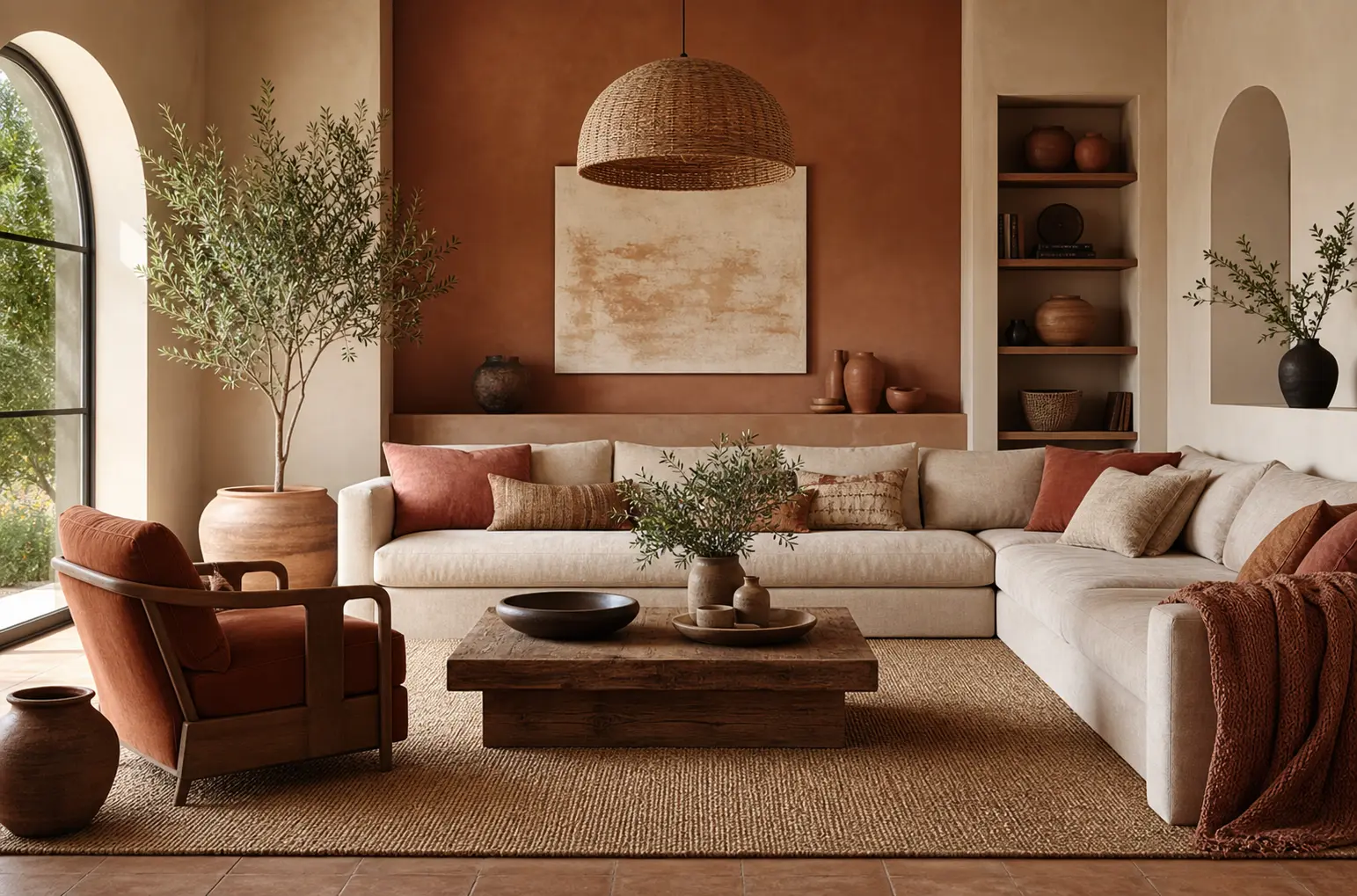
A jute or wool rug in a natural, undyed tone grounds a terracotta and sand beige living room without introducing another competing color. The texture also adds visual interest in a room built mostly around soft, warm neutrals.
Size the rug generously, so at least the front legs of your main seating rest on it. A too small rug makes the whole layout look disconnected, no matter how nice the individual pieces are.
A natural fiber rug also ages well in this palette, since any wear or slight fading tends to blend into the earthy tones instead of standing out the way it might against a bolder colored rug.
8. Bring In Greenery to Balance the Warmth
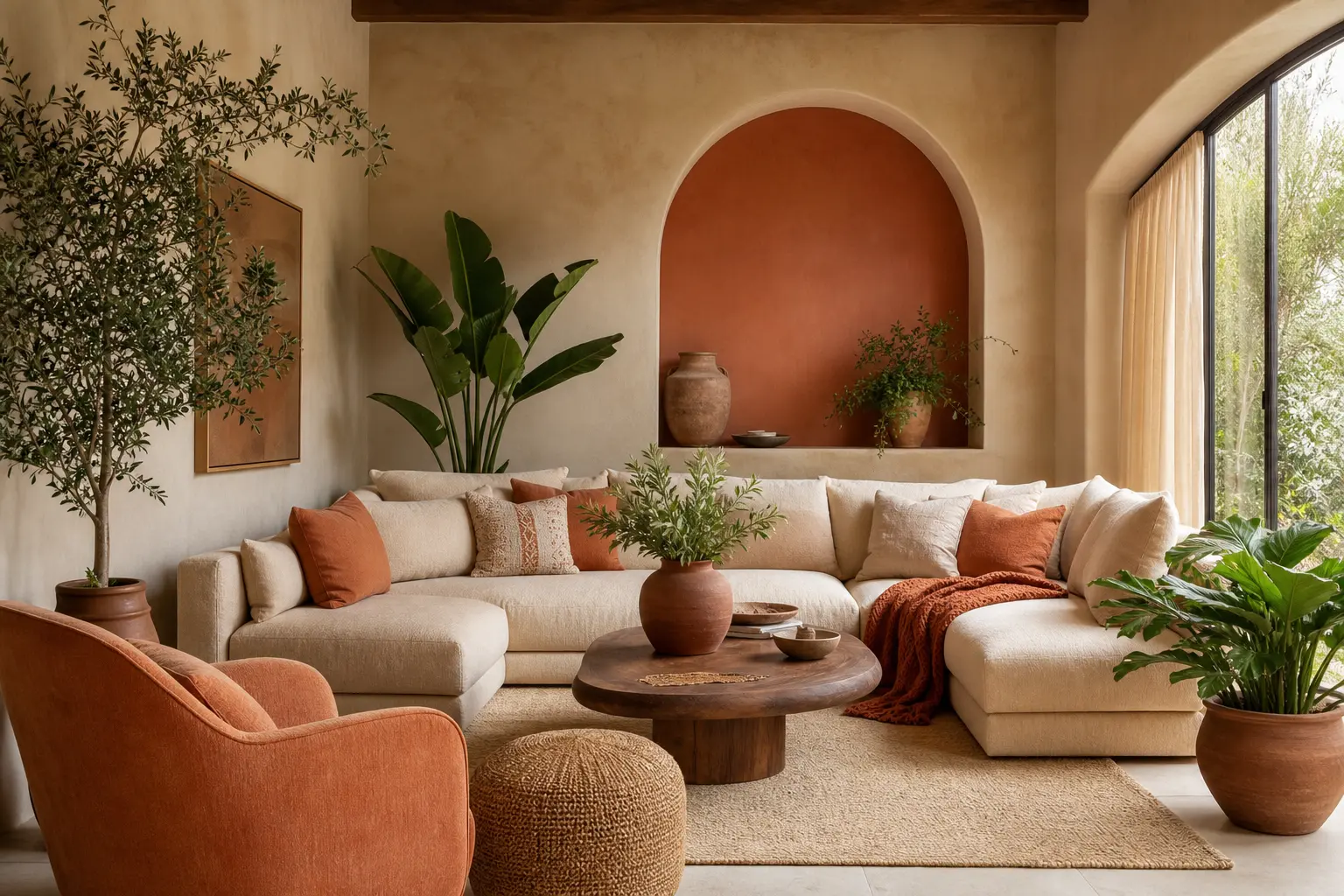
Plants add a cooling, organic contrast to a room full of warm terracotta and sand tones. Deep green leaves stand out clearly against the warm palette, adding life to the space without introducing another dominant color.
A large leafy plant in a terracotta pot ties the greenery directly back into the room’s color story, rather than feeling like a separate, unrelated addition.
Vary the plant heights around the room too. A tall fiddle leaf fig in one corner paired with a smaller trailing pothos on a shelf gives the greenery its own sense of layering, similar to how the textiles are layered elsewhere.
9. Use Sand Beige Curtains for Softness

Sand beige curtains add softness to a living room without competing with a terracotta accent wall or furniture piece. The neutral tone lets the curtains blend into the room while still adding texture and warmth.
Choose a lightweight linen for a relaxed, everyday feel. Heavier fabrics work too, but they suit a more formal living room better than a casual, lived in space.
Hang the curtains slightly above the window frame and let them extend just past the sill or floor. This small adjustment makes the window feel larger and lets in more light when the curtains are open.
10. Add Black or Bronze Accents for Contrast
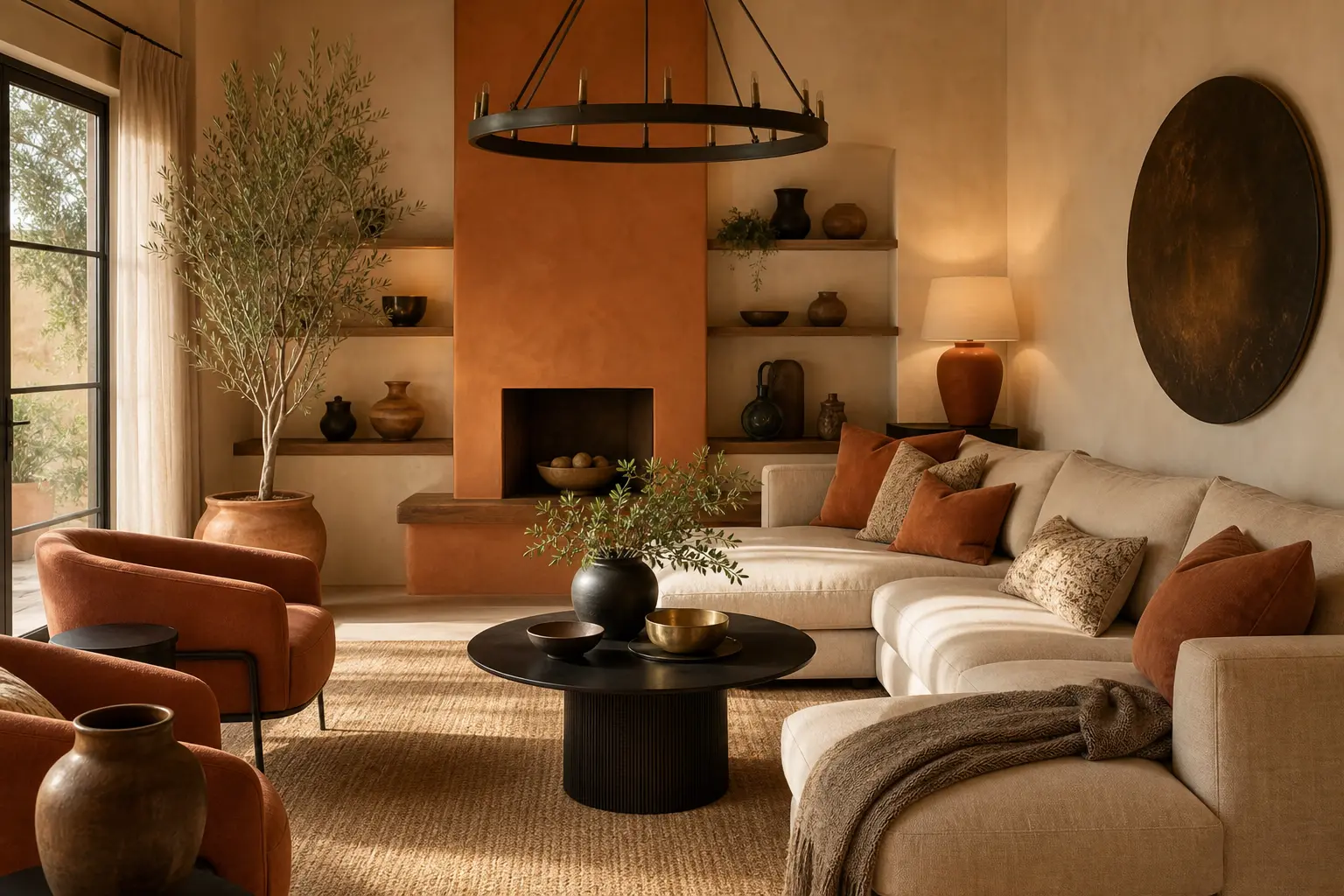
A few black or bronze details, like a black metal lamp base or bronze picture frames, add contrast and depth to an otherwise warm room. This small addition keeps the space from feeling flat or overly monochromatic.
Keep these accents smaller in scale compared to the terracotta and sand beige pieces. The goal is a touch of contrast, not a third dominant tone competing for attention.
A single black framed mirror or a bronze coffee table tray usually does the job. Adding more than a couple of these darker accents starts to pull focus away from the warm palette the rest of the room is built around.
Mistakes to Avoid
- Choosing a cool, gray leaning beige instead of a warmer, sand toned neutral
- Skipping texture on rugs and textiles, which can make an earthy palette feel flat
- Using too much terracotta at once, which can start to feel heavy in a small room
- Ignoring how beige paint shifts under different lighting throughout the day
- Pairing terracotta with cool undertoned wood instead of warmer, medium wood tones
FAQ
Does terracotta work in a small living room? Yes, especially in smaller doses like pillows, pottery, or a single accent chair, since a full room of bold color can feel heavy in a tight space.
What colors pair best with terracotta and sand beige? Warm wood tones, cream, and deep green all pair well. Small touches of black or bronze add contrast too.
Is terracotta a passing trend or a lasting color choice? Terracotta has stayed popular for years. Its earthy, muted quality doesn’t date as quickly as brighter, more saturated colors.
Can this color pairing work with a modern living room style? Yes, especially paired with clean lined furniture and simple textiles, which keeps the overall look feeling current rather than rustic.
What wood tone pairs best with terracotta and sand beige? Medium, warm toned woods like oak or walnut tend to balance both colors better than very dark or very light finishes.
Conclusion
Terracotta and sand beige bring a warm, elegant feel to a living room without relying on any single bold statement piece. Start small with pottery or textiles, or commit fully with painted walls if you’re ready for a bigger change. Either way, the earthy pairing brings a sense of calm that feels both grounded and refined.