10 Modern Luxury Bedroom Ideas for a Warm & Cozy Retreat
A bedroom that just holds a bed and a dresser gets the job done, but it doesn’t feel like anywhere you’d actually want to spend time outside of sleeping. A modern luxury bedroom fixes that by combining clean, intentional design with real warmth, layered textures, soft lighting, and materials that feel good to be around. This article covers ten real ways to bring that balance into a bedroom, so it reads as elevated without losing the cozy, restful feeling a bedroom actually needs.
1. Why Modern Luxury Bedrooms Rely on Warmth, Not Just Minimalism

Modern design often gets reduced to just minimalism, empty surfaces, neutral colors, sharp lines. On its own, that combination can feel a bit cold for a room meant for rest.
Real luxury in a bedroom comes from warmth layered on top of that clean structure. Soft textiles, warm wood, gentle lighting. The bones stay modern, but the materials do the emotional work.
Think about the best hotel room you’ve stayed in. It probably wasn’t bare. It had layered bedding, warm lighting, and a few considered details that made it feel inviting rather than just clean.
A modern luxury bedroom isn’t about having less. It’s about choosing fewer things, but making sure each one feels good.
2. Choosing a Headboard That Anchors the Whole Room

An upholstered headboard in a soft, textured fabric, boucle, linen, or velvet, immediately adds a tactile warmth that a bare wall or a plain metal frame doesn’t offer.
A wood headboard in a warm tone, walnut or oak, brings a different kind of grounding, especially in a room that leans more natural and earthy than plush and upholstered.
Sizing the Headboard to the Bed
A headboard slightly wider than the mattress itself, rather than an exact match, gives the bed a more substantial, intentional presence in the room instead of looking undersized against the wall behind it.
3. Layering Bedding for a Genuinely Cozy Look

A flat, single layer duvet rarely looks as inviting as a bed built with multiple layers, a fitted sheet, a duvet, and a folded throw or extra blanket at the foot of the bed.
Mixing textures within a neutral palette, a linen duvet cover with a knit throw and a couple of velvet or boucle pillows, adds depth without needing to introduce a lot of color.
Vary pillow sizes and shapes rather than lining up identical pillows in a row. A mix of standard, lumbar, and one larger euro pillow creates a fuller, more considered look at the head of the bed.
4. Lighting That Sets a Calm, Elevated Mood

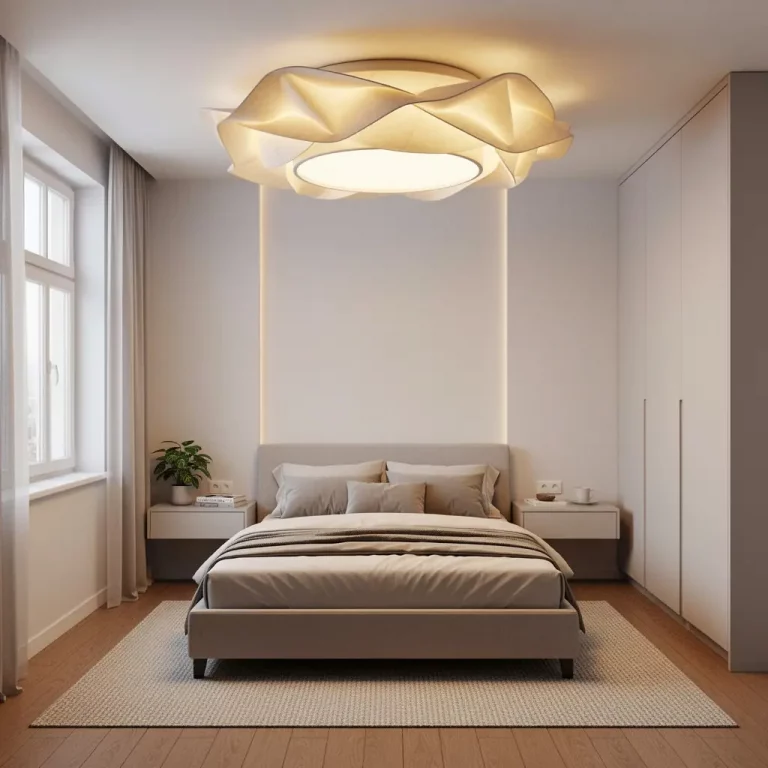
Warm white bulbs, in the 2700K to 3000K range, keep the whole room feeling soft and inviting, especially important in a bedroom where harsh, cool light works against the restful mood you’re going for.
Bedside lamps with a fabric or frosted shade diffuse light gently, working better for both reading and general ambiance than an open bulb or a bright overhead fixture used alone.
A dimmer switch on any overhead lighting lets you keep brighter light available for cleaning or getting dressed, while dropping it low for the evening without needing a separate lamp for that purpose.
5. Choosing a Warm, Restrained Color Palette

Warm neutrals, cream, soft taupe, warm gray, keep a bedroom feeling calm without tipping into the coldness a stark white and black palette can sometimes bring.
A single deeper accent color, a rich terracotta, deep olive, or warm charcoal, works well on one wall or through bedding accents, without overwhelming the overall restrained palette.
Limit the total color count to two or three throughout the room. A modern luxury bedroom relies on restraint, and too many competing colors starts to undercut the calm, intentional feeling that makes the style work.
6. Adding Texture Through Rugs and Textiles

A large area rug, ideally extending at least a couple feet beyond the sides of the bed, grounds the furniture and adds warmth underfoot, especially on a hardwood or cooler toned flooring.
Curtains in a heavier, more substantial fabric, velvet or a thick linen, add both texture and a sense of quality that thin, lightweight curtains don’t provide, even if the actual room square footage stays the same.
A bench or ottoman at the foot of the bed, upholstered in a complementary texture to the headboard, adds both function and a layer of visual interest to what’s often an underused stretch of floor space.
7. Nightstands and Small Details That Elevate the Space

Matching nightstands in a warm wood or a soft, muted color keep the room feeling cohesive, though a slight variation in style between the two can also work if done intentionally rather than by accident.
A small tray on each nightstand for a candle, a small dish, or a stack of books keeps items contained rather than scattered loosely across the surface, which reads as more elevated even with the same number of items present.
A single piece of art above the bed, chosen for a calm rather than busy composition, finishes the space without introducing visual clutter into a room meant for winding down.
8. Budget Friendly Ways to Get the Look

Layering existing bedding with a new throw blanket and a couple of textured pillow covers typically costs 40 to 80 dollars, and it’s one of the highest impact, lowest cost changes available for this look.
Swapping bright, cool bulbs for warm white ones in existing lamps and fixtures costs very little but changes the entire feel of the room almost immediately.
A new throw, a couple of textured pillows, and a warm bulb swap can transform a bedroom’s whole mood for under 100 dollars total, without touching any furniture.
9. Storage Solutions That Keep the Room Feeling Calm

Closed storage, drawers, a closet, an ottoman with hidden storage, keeps daily clutter out of sight, which matters a lot in a room meant to feel calm rather than busy.
Under bed storage bins make use of otherwise wasted space for out of season items, freeing up closet and dresser space for what’s actually in regular rotation.
A designated spot for everyday items, jewelry, chargers, reading glasses, prevents the nightstand or dresser surface from slowly accumulating clutter that undercuts the room’s overall elevated feel.
10. Small Bedroom Adjustments for the Same Luxury Feel

In a smaller bedroom, choose a slightly smaller scale headboard and nightstands rather than trying to fit oversized furniture into a tight footprint, which can make the whole room feel cramped instead of luxurious.
Keep the color palette lighter overall in a small room, using darker accent tones sparingly rather than across a full wall, since a smaller space with limited light can feel closed in by too much deep color.
A single well chosen piece, a textured headboard or a quality rug, can carry the luxury feel in a small bedroom without needing every element in the room to be elevated at the same level.
Mistakes to Avoid
- Relying on a single flat layer of bedding instead of building in texture and depth
- Using bright, cool white bulbs instead of warm tones that support a restful mood
- Overcrowding the room with too many accent colors or patterns at once
- Leaving daily clutter visible on nightstands or dressers instead of using closed storage
- Choosing oversized furniture that overwhelms a smaller bedroom’s actual footprint
Frequently Asked Questions
Do I need to replace my furniture to get this look? Not necessarily. Layering bedding, swapping bulbs, and adding a rug or throw can shift the feel of a room significantly without any furniture changes at all.
What’s the easiest first step toward a modern luxury bedroom? Layering the bedding with a few different textures and warm bulbs are usually the lowest cost, highest impact changes to start with.
How many colors should a bedroom like this use? Two or three throughout the room usually works best, keeping the palette restrained rather than competing for attention.
Is this style achievable in a rental? Yes. Most of the changes, bedding, lighting, a rug, curtains, don’t require any permanent changes to the space itself.
Do I need a large bedroom to pull this off? No. A smaller room can achieve the same feeling by scaling furniture appropriately and choosing a few well made pieces rather than trying to fit everything a larger room might hold.
What fabric works best for a luxury feeling headboard? Boucle, velvet, or a substantial linen all read as elevated and add texture, more so than a thin or overly shiny fabric.
Conclusion
A modern luxury bedroom comes down to combining clean, intentional design with real warmth, layered bedding, soft lighting, and a restrained but considered color palette. None of it requires a full renovation. Start with the bedding and the lighting, since those two changes alone shift a room’s entire mood, then build outward from there as budget and space allow.