10 Smart Vanity Organizer Desk Ideas for Small Spaces
Picture a corner of a bedroom just wide enough for a chair, where makeup, skincare, and hair tools end up piled on a shared dresser because there’s nowhere else to put them. A smart vanity organizer desk solves that exact problem by combining a compact work surface with built in or added storage, so a space too small for a traditional vanity still gets a real, functional spot to get ready.
1. What Counts as a Smart Vanity Organizer Desk
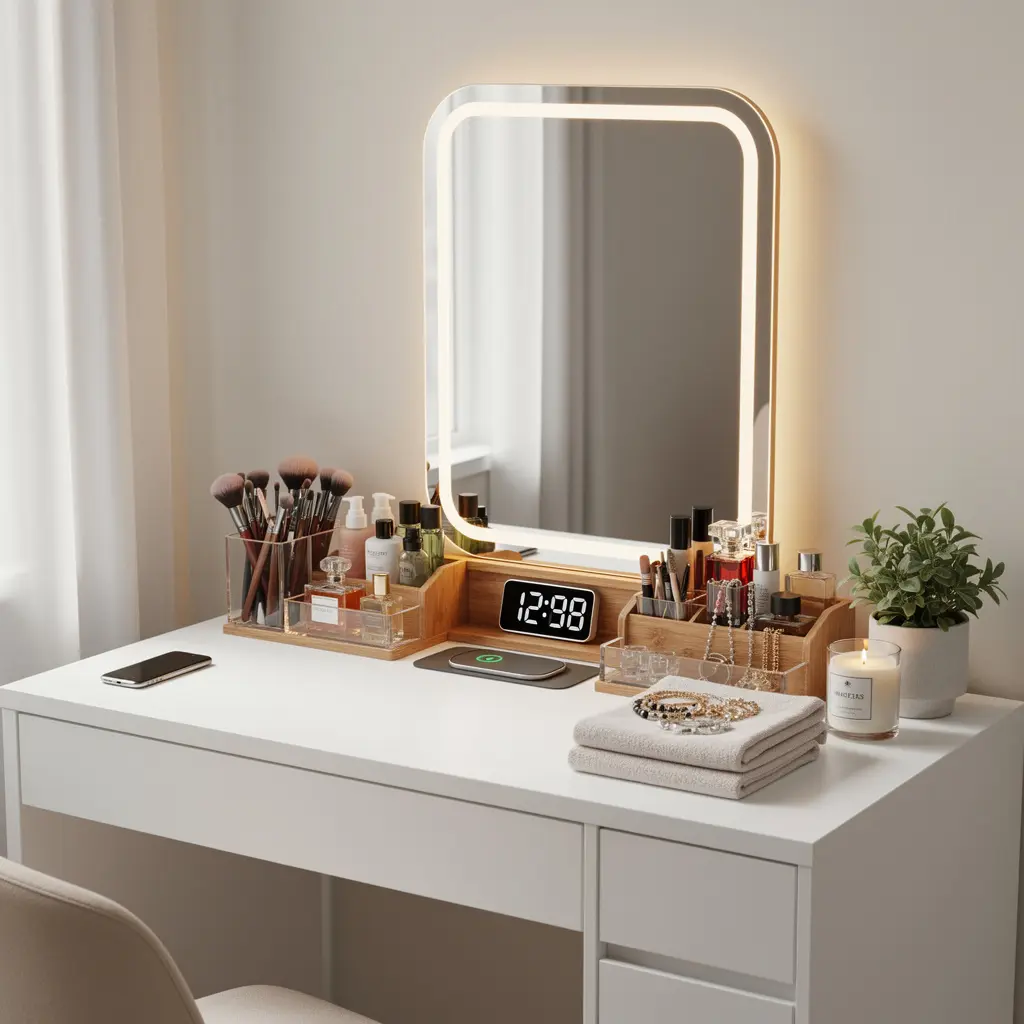
A smart vanity organizer desk is a compact desk, usually 24 to 36 inches wide, built or styled specifically around beauty and grooming storage rather than general desk work. The “smart” part usually refers to built in features like a fold up mirror, hidden drawers, or a slide out tray, not literal smart technology, though some newer models do include built in outlets or USB ports.
The goal is different from a regular desk. Every inch is meant to hold something specific, whether that’s a drawer sized for palettes, a slot for brushes, or a small shelf for a diffuser.
Desk vs Traditional Vanity Table
A traditional vanity table usually comes with a large attached mirror and a fixed bench, taking up more floor depth. A vanity organizer desk skips the oversized mirror and pairs a slim desk with a wall mounted or tabletop mirror instead, which is what makes it work in rooms a full vanity set never would fit into.
2. Why Small Spaces Need a Different Approach Than a Standard Vanity
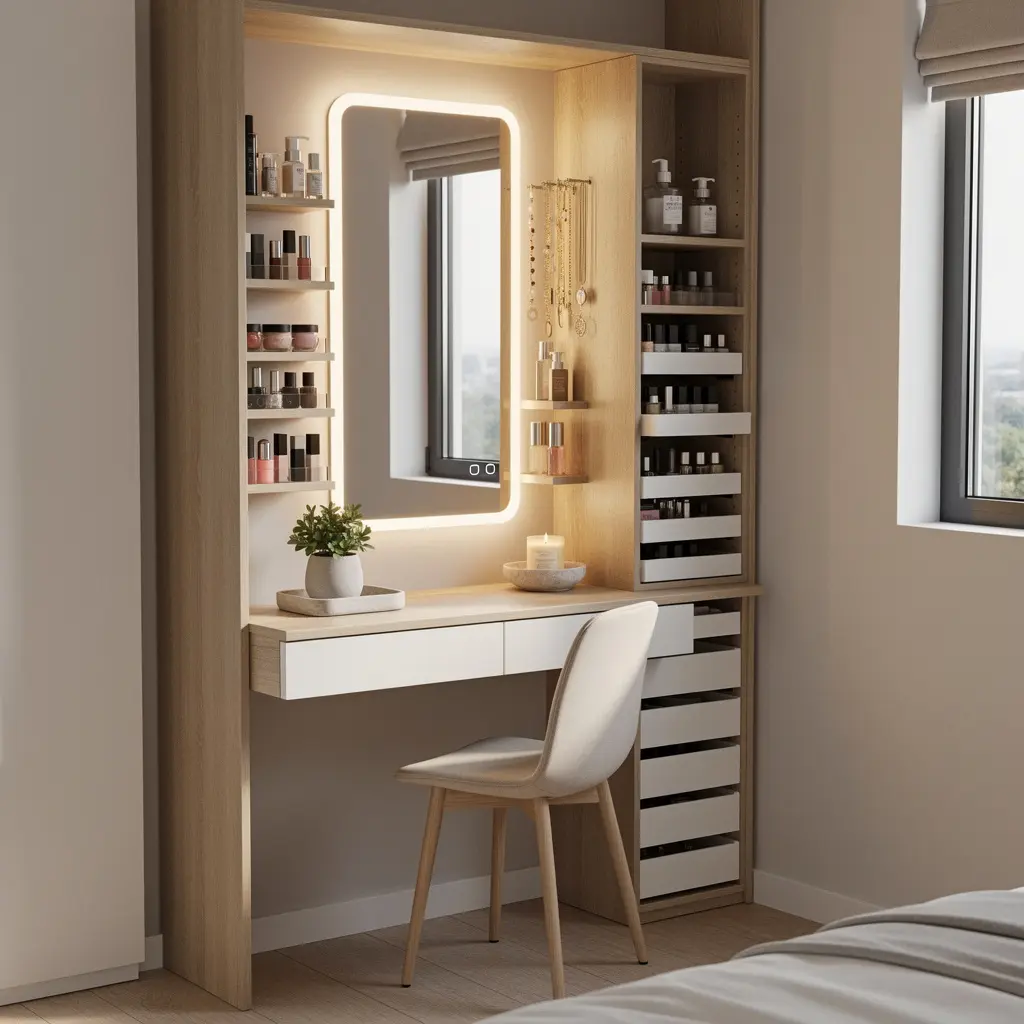
A standard vanity assumes you have a dedicated wall and several feet of floor space to spare. Most small bedrooms, shared apartments, or studio layouts don’t have that luxury.
The smarter approach starts with function first. Instead of buying a full vanity set and hoping it fits, you build the setup around what you actually store, whether that’s a large skincare collection, hair tools, or just daily makeup, then choose a desk and organizers sized to match.
This also means the desk often does double duty. It might work as a vanity in the morning and a small desk for a laptop or journaling in the evening, which matters more in a smaller home where every piece of furniture needs to earn its space.
3. Choosing the Right Desk Size for Your Room
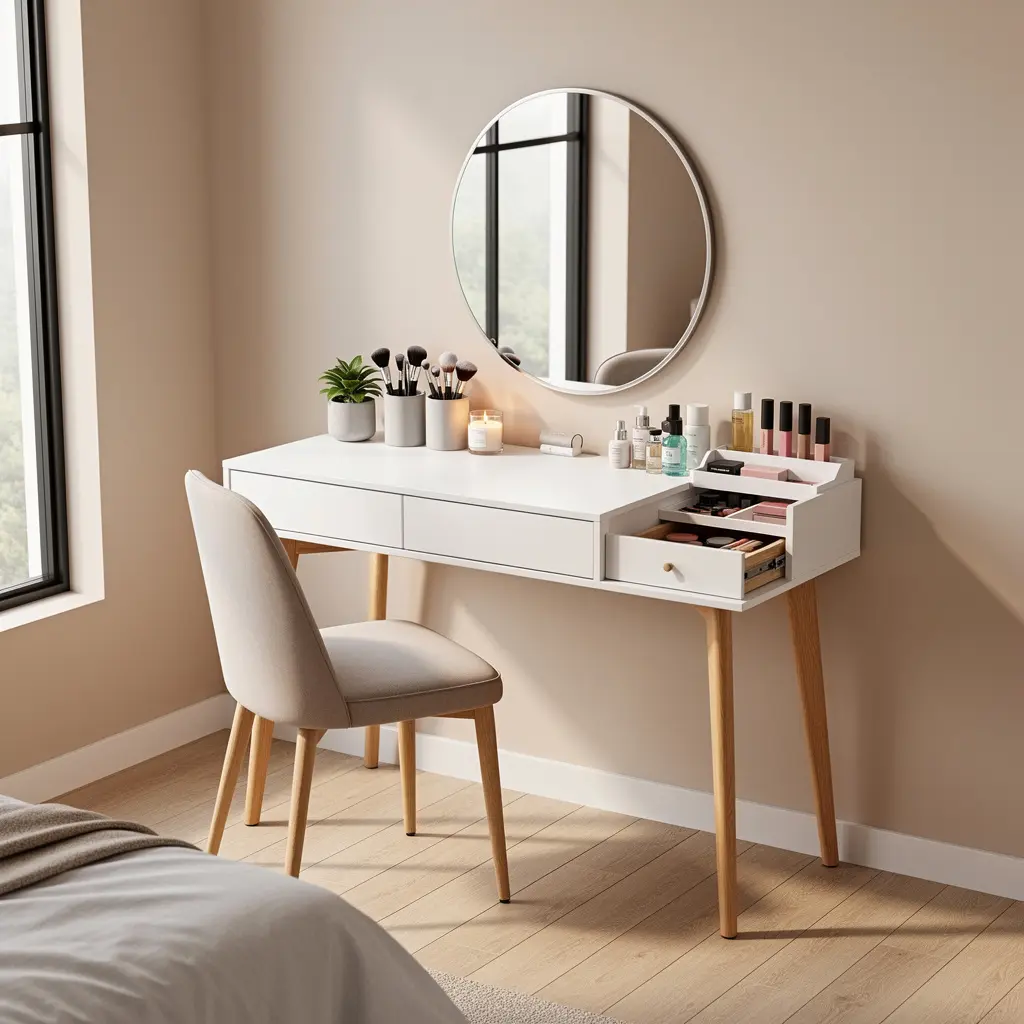
Measure the corner or wall space before shopping, not after. A desk between 24 and 28 inches wide fits most narrow corners and still holds a small mirror and a tray of daily items.
For rooms with a bit more room, a 30 to 36 inch desk allows for a proper drawer unit underneath, which matters if you’re storing more than the basics. Depth matters just as much as width here. An 18 inch deep desk is usually the smallest workable size, since anything shallower makes it hard to sit comfortably and still have room for a mirror.
A quick tip that helps: measure your existing chair first, since a chair that’s too wide for the desk gap is one of the most common fit issues people run into after buying.
Wall Mounted vs Freestanding
A wall mounted fold down desk is worth considering in very tight spaces, since it can fold flat against the wall when not in use. Freestanding desks are more practical if you want permanent storage underneath, like drawers or an open shelf.
4. Drawer Organizers That Actually Keep Things Tidy
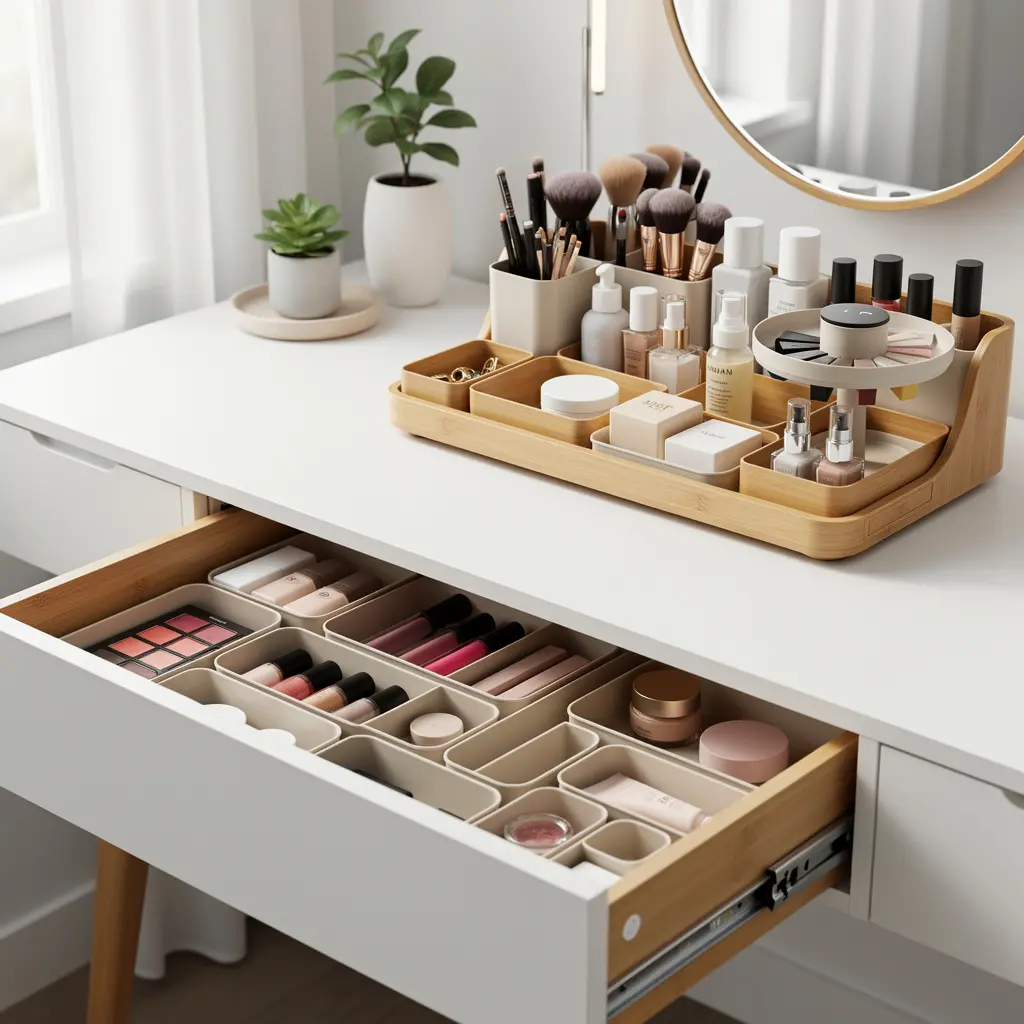
The desk itself rarely solves clutter on its own. What goes inside the drawers matters more.
Acrylic drawer dividers sized for makeup, generally in small rectangular or square shapes, keep lipsticks, brushes, and palettes from sliding into one pile every time the drawer opens. Stackable trays work well for deeper drawers, letting you use vertical space instead of one flat layer of products.
For narrower desks with shallow drawers, a slim tray insert designed for skincare bottles keeps taller items upright instead of tipping over every time the drawer moves.
Matching Organizers to Drawer Depth
Before buying organizers, measure the drawer’s interior height, not just width and depth. A tray that’s too tall to let the drawer close fully is a common and avoidable mistake, especially with skincare bottles that vary a lot in height.
5. Mirror Options for Tight Corners
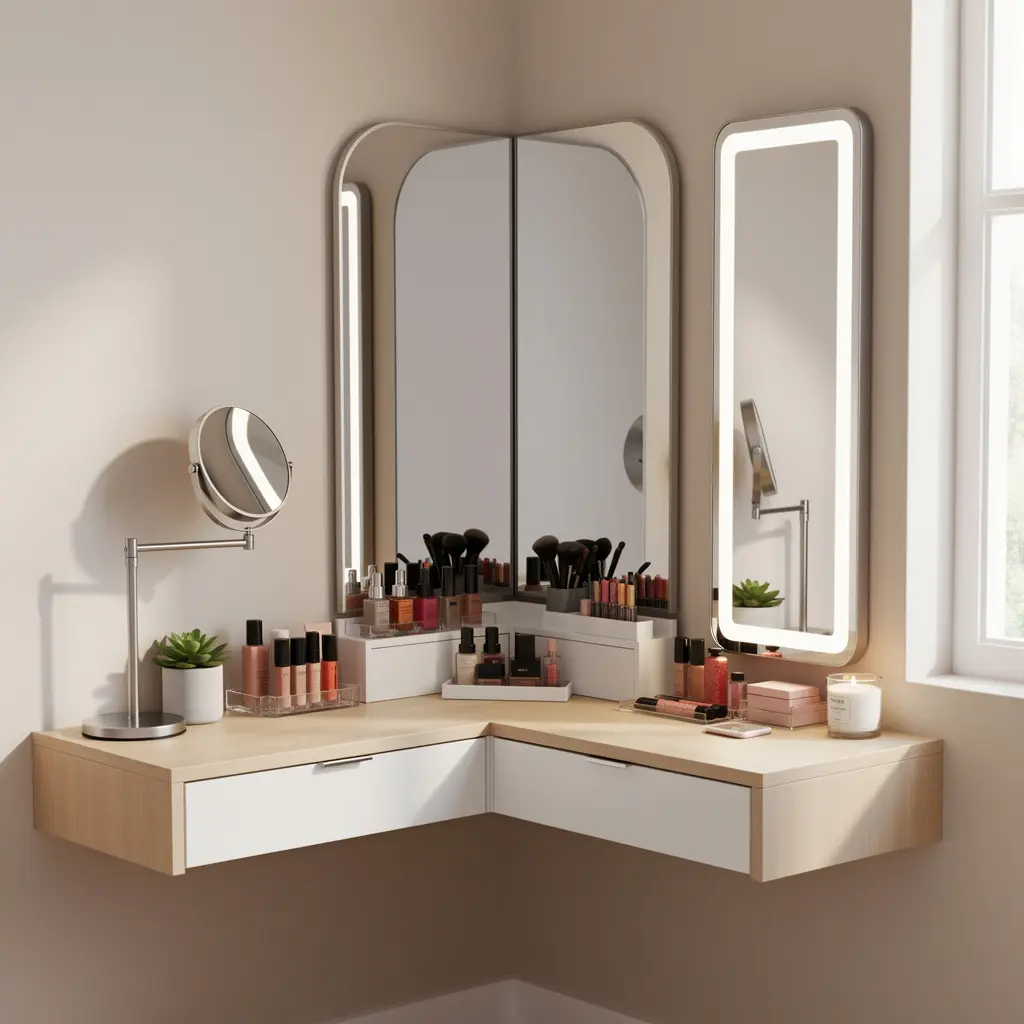
A large wall mirror can overwhelm a small desk visually and physically. Smaller, purpose built options usually work better.
A tabletop mirror with a fold out base takes up desk space only when in use and can be stored flat or moved aside for other tasks. Wall mounted mirrors, especially slim rectangular ones between 12 and 18 inches wide, free up the entire desk surface and work well when paired with a small vanity light on either side.
Lighted mirrors with a built in ring light are popular for makeup application specifically, though they tend to cost more and need an outlet nearby, which matters if your desk isn’t near existing wiring.
6. Lighting Setups That Work Without a Wall Outlet Nearby
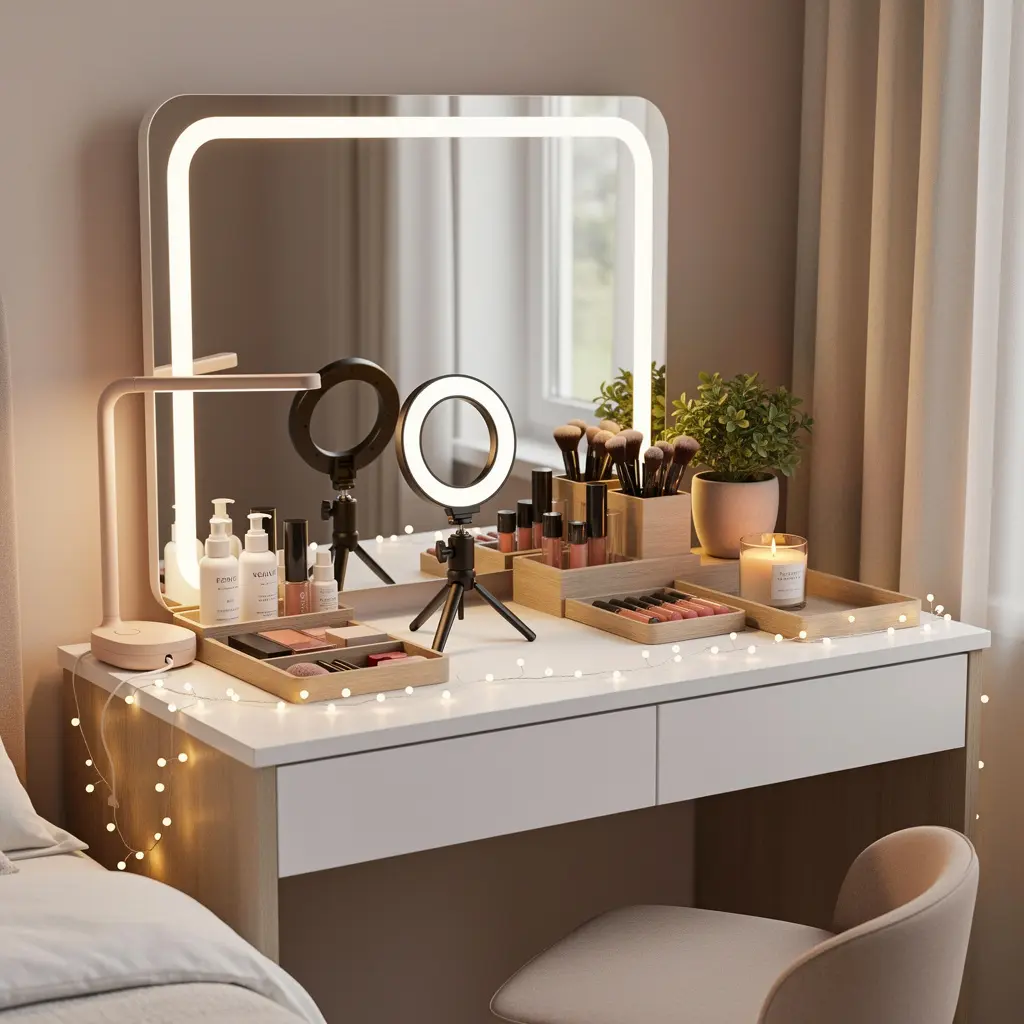
Not every small space corner has an outlet within reach, which limits lighting options more than people expect when planning a vanity desk.
Battery powered LED strip lights or small battery operated sconces solve this without needing an electrician or a visible extension cord. For corners near a window, natural light during the day covers most needs, with a small rechargeable desk lamp as backup for evening use.
Warm white lighting, generally in the 3000K range, tends to be more flattering for makeup application than very cool or very warm extremes, which can distort how colors actually look on skin.
7. Storage Ideas Beyond the Desk Surface
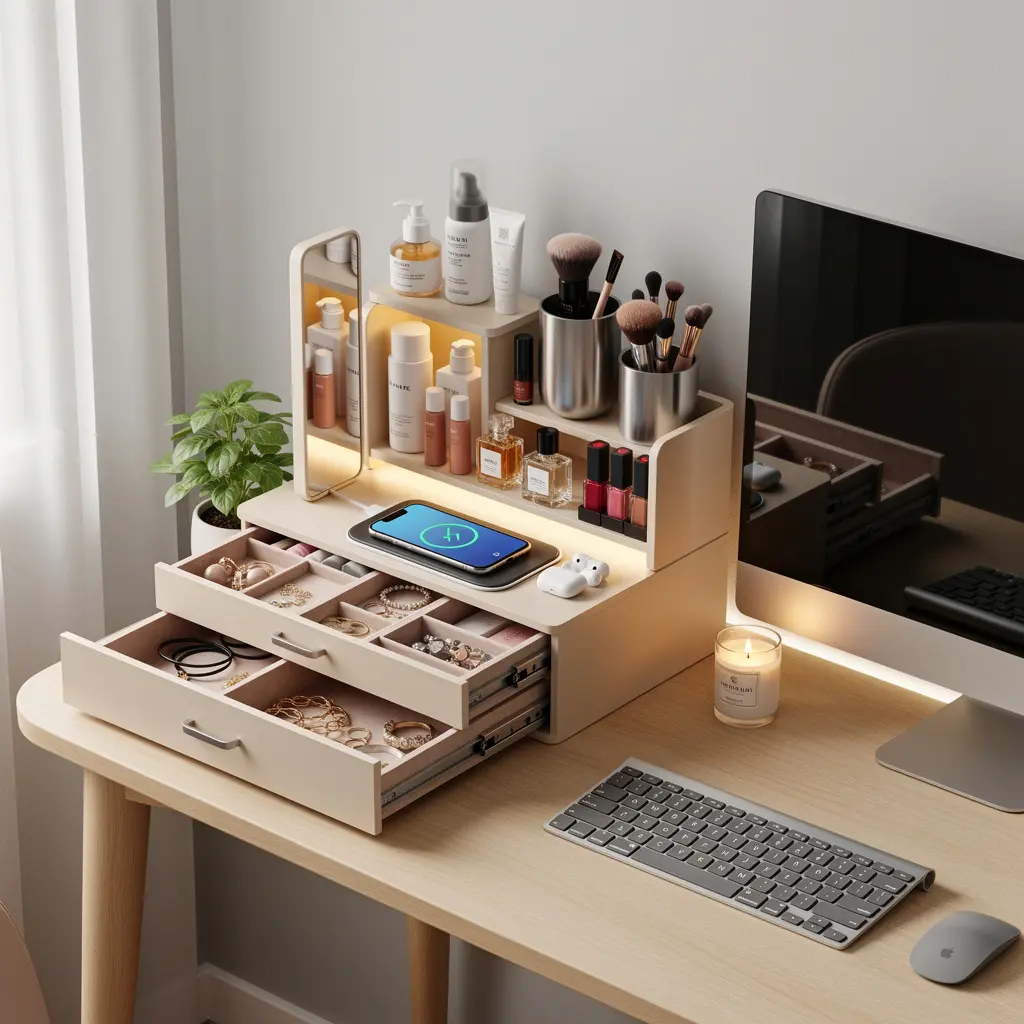
Even a well organized desk runs out of room eventually, especially with a larger skincare or makeup collection.
A slim rolling cart beside the desk adds extra drawer space without needing a wider desk, and it can be tucked away when not needed. Wall mounted floating shelves above the desk work well for items used less often, like extra hair tools or backup product, keeping the desk surface itself clearer for daily use.
Over the door organizers are another option worth considering in a bedroom with limited wall space, particularly for larger items like hair dryers or curling irons that don’t fit neatly in a drawer.
8. Styling the Desktop Without Cluttering It
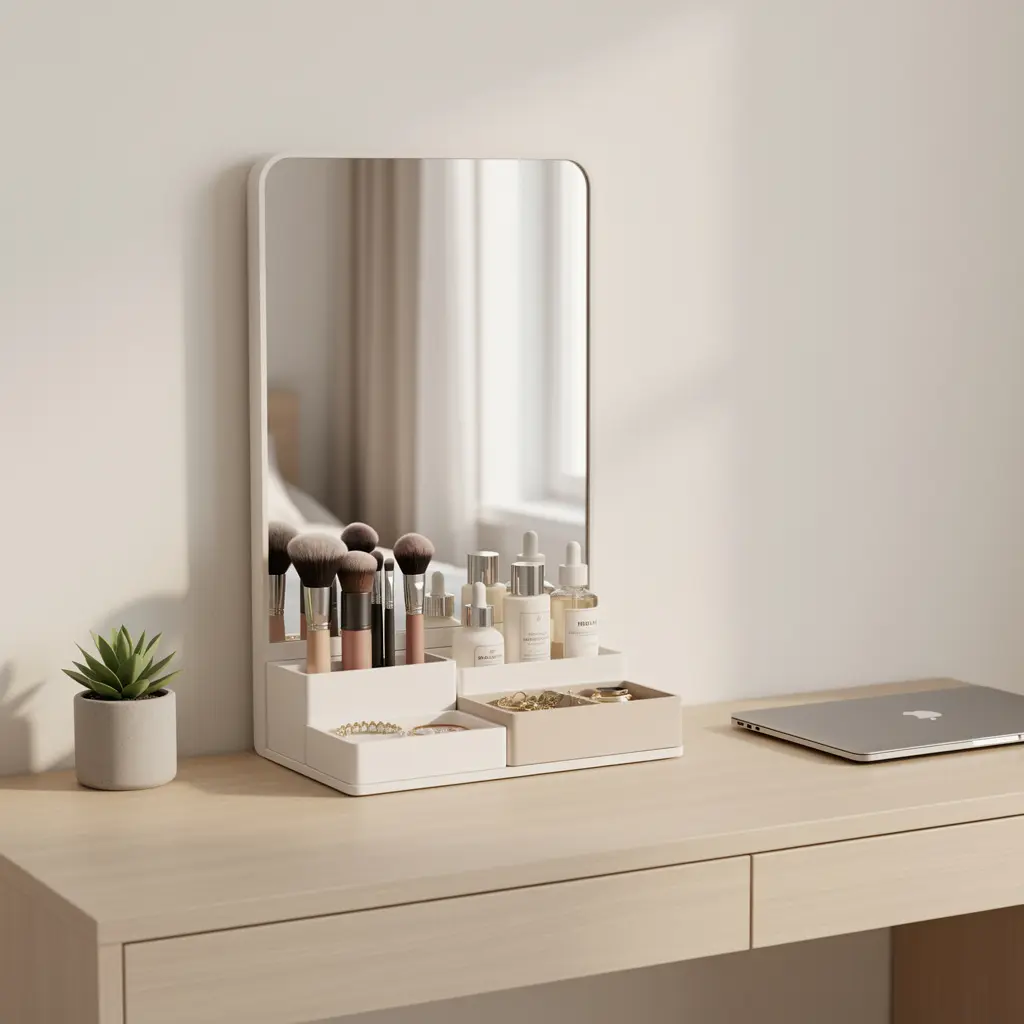
The desk surface itself should hold only what’s used daily. Everything else belongs in a drawer, shelf, or cart.
A small tray for the two or three most used items, like a favorite lipstick and a hairbrush, keeps the surface functional instead of becoming a dumping ground for everything at once. Leaving visible empty space around the tray and mirror actually makes the desk look more put together, the same way a cluttered countertop reads as chaotic no matter how nice the individual items are.
Key takeaway: a vanity desk that holds fewer visible items but has everything organized behind a drawer front will always look calmer than one where every item is left out on display.
9. Budget Ranges and What You Get at Each Price Point
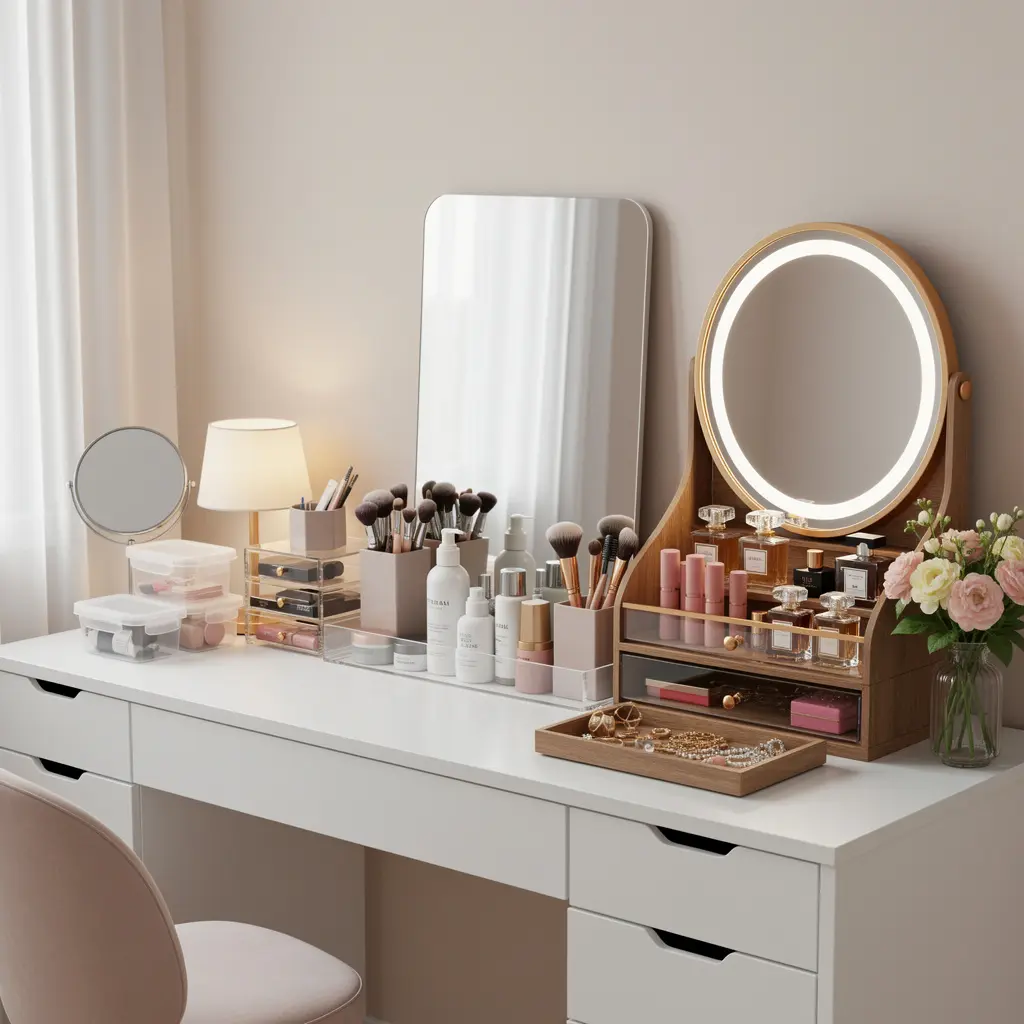
A basic compact desk without built in drawers typically runs 40 to 80 dollars, and works fine if you’re pairing it with separate storage like a rolling cart or wall shelf. Mid range vanity desks with one or two built in drawers generally fall between 90 and 180 dollars.
Desks with a built in lighted mirror or multiple organized drawer compartments tend to start around 180 dollars and can run higher depending on materials, with solid wood versions costing more than particleboard or MDF options. Add on organizers, trays, and dividers usually add another 20 to 50 dollars total, depending on how much storage the drawers need.
If budget is the main concern, a secondhand desk paired with new drawer organizers is often the better value than a brand new all in one vanity set, since the organizers matter more for daily function than the desk frame itself.
10. Keeping the Setup Organized Week to Week
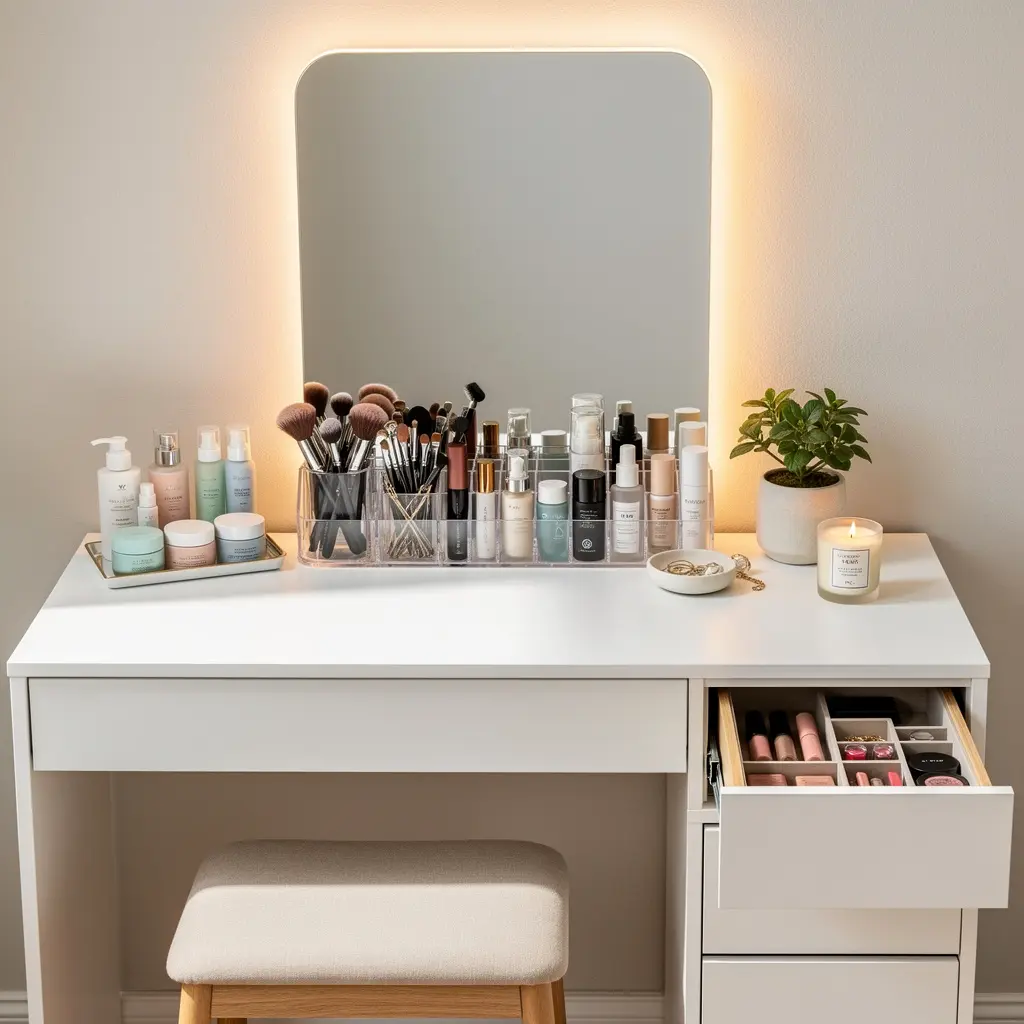
Even a well designed system falls apart without a bit of regular upkeep, especially with products that get used daily.
Setting a quick five minute reset at the end of each week, wiping the desk surface and returning stray items to their drawer spot, keeps small clutter from building into a bigger reorganizing project later. Rotating out empty or expired products every few months also frees up drawer space that tends to quietly disappear over time.
For anyone sharing the space with a roommate or partner, assigning specific drawers or shelf sections to each person avoids the most common source of vanity clutter, which is simply too many items with no assigned spot.
Mistakes to Avoid
- Buying a desk before measuring the actual corner or wall space available
- Choosing drawer organizers that are too tall for the drawer, which stops it from closing fully
- Picking a large wall mirror that overwhelms a small desk both visually and physically
- Skipping a lighting plan for spaces without a nearby outlet
- Leaving every product out on the desk surface instead of using drawers or a cart
- Ignoring chair width when the desk itself fits but the chair doesn’t
Frequently Asked Questions
How much desk space do I actually need for a vanity setup? A desk between 24 and 28 inches wide and at least 18 inches deep is usually the minimum for comfortable use, though narrower options exist for extremely tight corners if paired with wall mounted storage instead of drawers.
Can I use a regular desk instead of buying a specific vanity desk? Yes, a slim regular desk works fine as long as it’s paired with the right organizers and a mirror suited to the space. The main difference with a dedicated vanity desk is that storage is already built in.
What’s the best lighting for makeup application in a small space? Warm white lighting, generally around 3000K, positioned at eye level on either side of the mirror rather than only from above, tends to give the most accurate, flattering light for makeup application.
How do I keep a small vanity desk from looking cluttered? Store most items in drawers or on a nearby cart, and keep only two or three frequently used pieces visible on the desk surface itself. Visible empty space around those items helps the setup read as organized rather than crowded.
Is a wall mounted fold down desk a good option for a vanity? It can work well in very tight spaces, especially if the desk isn’t used daily for other tasks, though it usually offers less built in storage than a freestanding desk with drawers.
Conclusion
A smart vanity organizer desk works because it treats storage as the starting point, not an afterthought squeezed in after the desk is already chosen. Measure your space first, pick organizers sized to what you actually own, and resist filling the desk surface with everything at once. A smaller, better organized setup will function better day to day than a larger one with no real system behind it.